



Energy Management Systems Market Size, Key Companies, Company Market Share, User Adoption, Technology Deployment, Revenue Growth, Competitive Positioning, and Demand Forecast
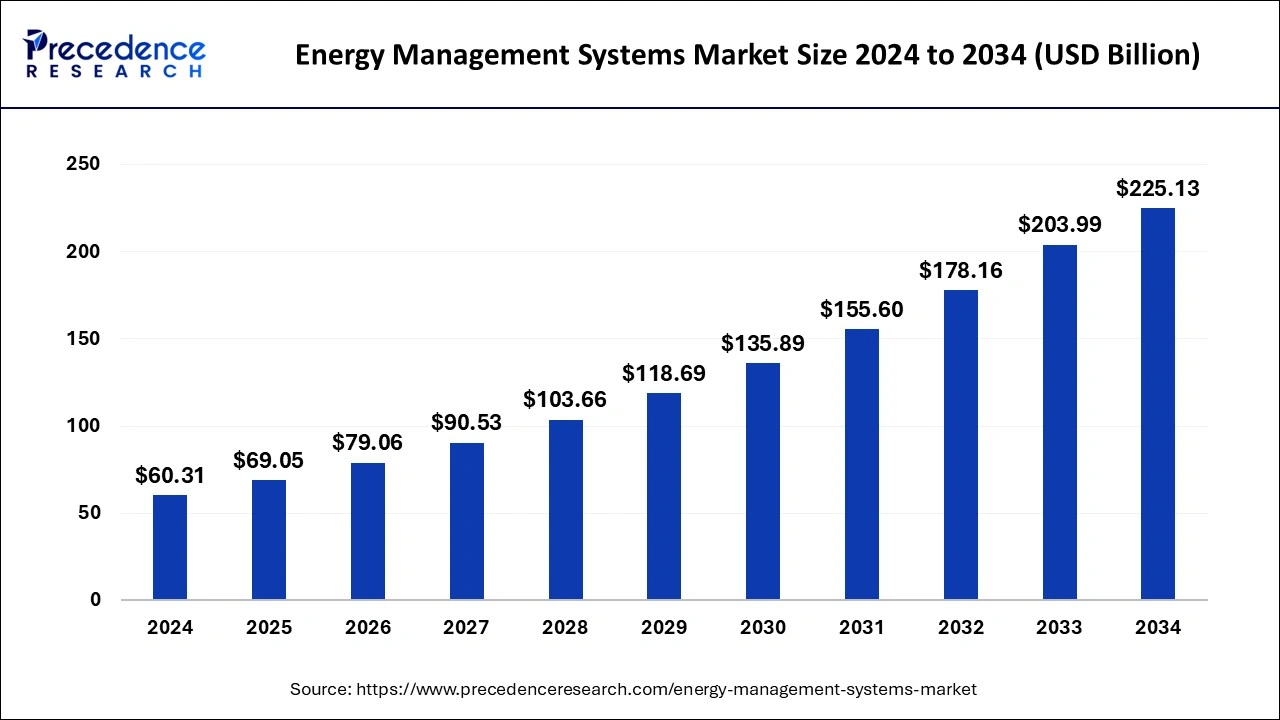
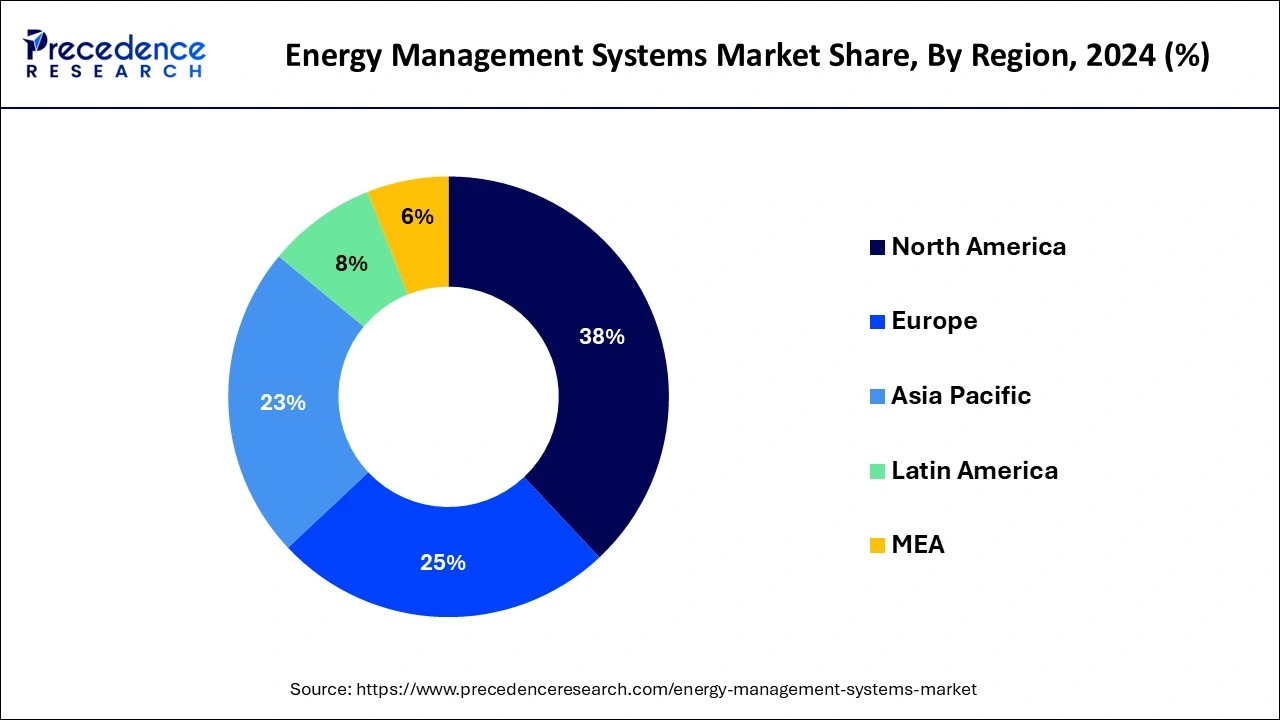
The global energy management systems market was valued at USD 79.06 billion in 2026 and is projected to reach USD 246.27 billion by 2035, growing at a CAGR of 13.56% from 2026 to 2035. The market is driven by rising energy costs, increasing adoption of renewable energy, government energy-efficiency initiatives, and growing demand for smart energy monitoring and optimization. North America held the largest market share of around 38% in 2025, while AI, cloud-based solutions, predictive analytics, and smart-grid technologies are creating new opportunities for market expansion.
Source: https://www.precedenceresearch.com/energy-management-systems-market
 Get a Sample
 Table Of Content


What is the Energy Management Systems Market Size?
The global energy management systems market size is accounted at USD 69.05 billion in 2025 and predicted to increase from USD 79.06 billion in 2026 to approximately USD 246.27 billion by 2035 with a registered CAGR of 13.56% from 2026 to 2035. The growing need for environmental sustainability, stringent regulatory policies, and technological advancements drive the market.
Energy Management Systems Market Key Takeaways
- By system type, the industrial energy management system (IEMS) segment has held the highest market share of 71% in 2025.
- By component, the hardware segment has accounted highest market share of around 62% in 2025.
- By deployment, the on-premises segment has generated a market share of around 82% in 2025.
- By vertical, the manufacturing segment has captured a market share of around 23% in 2025.
- The North America region has contributed the highest market share of around 38% in 2025.
Market Overview
The energy management systems market encompasses the development and deployment of hardware and software tools that monitor, control, and optimize the energy consumption of buildings, facilities, and power grids. Energy management systems (EMS) can limit operating costs, track machine performance, and support environmental sustainability. EMS provides better control over technical processes and improves productivity and process stability. Advanced EMS systems can automatically detect system-level faults and diagnose their causes.
How is AI contributing to the Energy Management Systems Market?
Artificial intelligence (AI) is one of the main contributors to the Energy Management Systems (EMS) market as it empowers predictive maintenance, real-time energy analysis, and grid optimization. Besides, it supports the development of renewable integration, energy forecasting, and operational efficiency in all industry sectors. AI, by means of automating and applying intelligent analytics, is the source of energy waste reduction, grid reliability enhancement, and, ultimately, decarbonization, thus rendering the whole energy system resilient, economical, and eco-friendly.
Energy Management Systems Market Growth Factors
The energy management systems are helping in the reduction of energy costs. Even government of established and emerging nations is implementing various programs and policies in favor of adoption and acceptance of energy management systems in the global market. The energy management systems are being considered as one of the innovative technologies for the power and energy sectors.
The small and medium enterprises along with every type of industry are deploying energy management systems. Due to benefits provided by energy management systems, the demand for energy management systems is increasing at a rapid pace. One of the prominent factors driving the growth of the global energy management systems market is technological developments. In addition, the government is highly investing for the development of the energy management systems. This factor is boosting the growth of the global energy management systems market over the projected period.
The energy management systems are gaining momentum in the global market. Since few decades, the adoption of automatic energy management systems had increased at a rapid pace. The growing concerns regarding pollution and carbon emissions are supporting the expansion and development of the energy management systems market. Furthermore, the government is emphasizing the importance of energy consumption which is boosting the energy management systems market growth.
In addition, the growing use of renewable energy sources is driving the demand and need for energy management systems. The major market players are collaborating with government agencies for the development of the global energy management systems market. The energy management systems are cost effective and efficient in nature, which is creating growth prospects for the energy management systems market growth and development globally during the forecast period.
Market Outlook
- Overview of Industry Growth: Energy management systems are moving towards a digital age where they will be able to utilize the technology of artificial intelligence, automation, and sustainability goals that would help to upgrade the smart infrastructure, industrial efficiency, and the overall connected ecosystem.
Trends in Sustainability: Circular energy systems and intelligent automation are on the rise, placing a strong significance on AI-powered grid transparency, hybrid storage, and emission tracking to make energy management techniques coincide with the net-zero sustainability and resource resilience goals. - Expansion Worldwide: The international market is developing through borderless cooperation, increasing renewable energy grids, and adaptable cloud-based systems that allow multinationals to enhance energy efficiency through common digital solutions.
- Big Investors: Investment is gradually moving towards start-ups that are heavily reliant on AI, as well as those dealing with hybrid energy, and venture capital in conjunction with institutional funds is fast-tracking partnership-based ecosystem development that is focused on decarbonization and efficiency technologies.
- Ecosystem of Startups: New companies are bringing a change in energy management systems with the help of real-time analytics, blockchain-based energy trading, and digital twins for grid forecasting, thus speeding up the development of the smart, decentralized, and automated energy management solutions.
Market Scope
| Report Coverage | Details |
| Market Size in 2025 | USD 69.05 Billion |
| Market Size in 2026 | USD 79.06 Billion |
| Market Size by 2035 | USD 246.27 Billion |
| Growth Rate from 2026 to 2035 | CAGR of 13.56% |
| Largest Market | North America |
| Base Year | 2025 |
| Forecast Period | 2026 to 2035 |
| Segments Covered | By Product, By Component, By Solution, By Vertical, and By End Use |
| Regions Covered |
North America, Europe, Asia-Pacific, Latin America, and Middle East & Africa |
Segments Insights
Product Insights
The industrial energy management systems (IEMS) segment dominated the market in 2025. The energy management systems are highly adopted in various industries and sectors. The energy management systems are adopted in manufacturing sector on large scale.
The building energy management systems (BEMS) segment is fastest growing segment of the energy management systems market in 2024. The growing awareness about energy management systems combined with growing number of building and construction projects is contributing to the expansion of the segment over the forecast period.
Component Insights
The sensors segment accounted largest revenue share in 2025. The factors such as technological developments and adoption of innovative products are boosting the segment growth. There is surge in demand for sensors due to rising emphasis on tracking and monitoring data. In addition, the sensors are efficient in nature, which is boosting the growth of the energy management systems market.
The software segment is fastest growing segment of the energy management systems market in 2024. The major market players are integrating data analytics and software with energy management systems, which is driving the growth of the global energy management systems market over the projected period.
Solution Insights
The carbon energy management segment led the market in 2025. The factors such as depletion of fossil fuels and growing concerns for environment are driving demand for carbon energy management systems. Furthermore, the carbon energy management systems are used to curb the adverse effects of carbon emissions and greenhouse gases emissions in the environment.
The utility billing and customer information system segment is fastest growing segment of the energy management systems market in 2024. The utilization of utility billing and customer information system helps in the management of customer information effectively and efficiently. This system or solution helps to reduce high costs associated with the management of customer information. It also helps to carry out day to day operations smoothly.
Vertical Insights
The power and energy segment garnered largest market share in 2025. The energy management systems are widely used in power and energy sectors. The energy management systems help to track and monitor energy utilization on a regular basis. This also helps to smooth out the operations of the industries. Thus, this factor is driving the growth of the segment.
The retail and offices segment are fastest growing segment of the energy management systems market in 2024. The adoption of energy management systems for retail and offices help to utilize energy and power without any wastage. Also, the energy consumption can be tracked through energy management systems.
End Use Insights
The residential segment accounted largest market share in 2025. The energy management systems are being utilized for residential sector. The rising electricity billing costs in residential areas are propelling the growth of the global energy management systems market over the forecast period.
The commercial segment is fastest growing segment of the energy management systems market in 2024. The energy management systems are being utilized in various shopping malls, theatres, and business spaces. This is creating demand for energy management systems for the commercial areas and sectors.
Regional Insights
Why Does North America Dominate the Global Energy Management Systems Market?
North America dominated the energy management systems market in 2025. The lack of electricity in some areas of Asia-Pacific is creating demand for energy management systems on a large scale. The rapid industrialization and urbanization are also driving the market growth. The high investments in the development of energy management systems are contributing towards the growth of energy management systems market in Asia-Pacific region.
U.S. Energy Management Systems Market Size and Growth 2026 to 2035
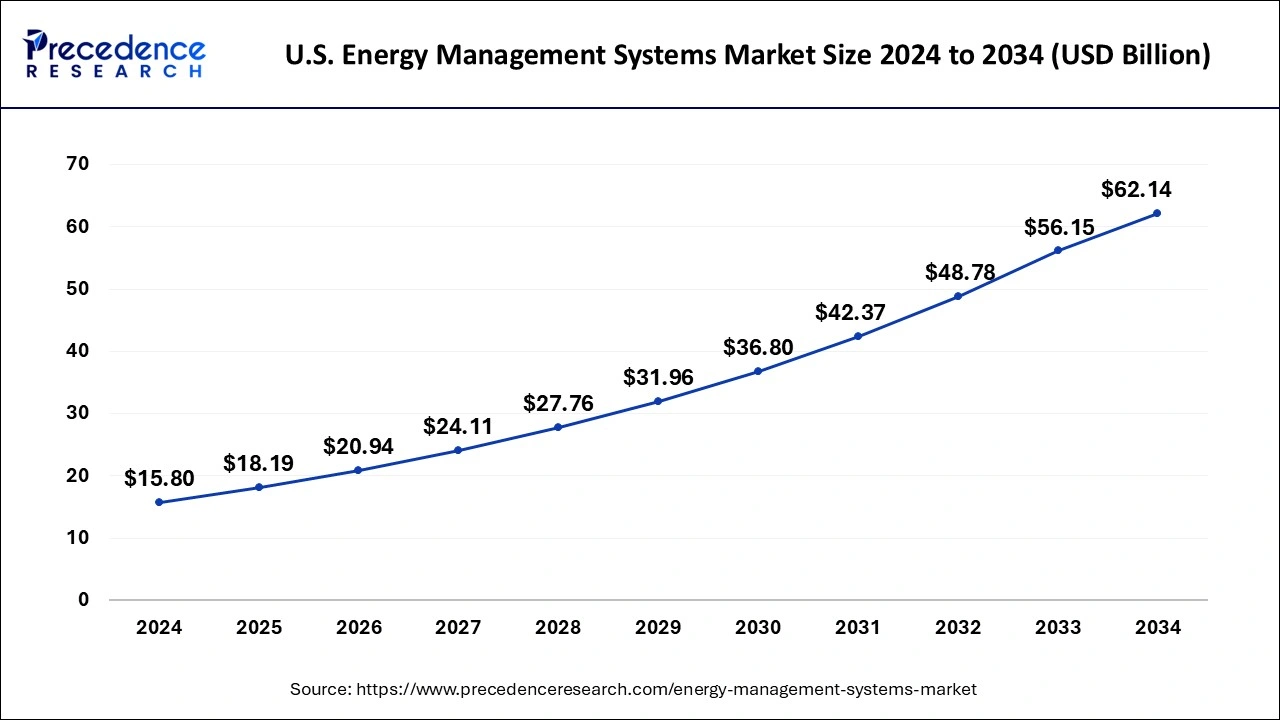
The U.S. energy management systems market size is estimated at USD 18.19 billion in 2025 and is predicted to be worth around USD 68.13 billion by 2035, at a CAGR of 14.12% from 2026 to 2035.
The U.S. and Canada, as pioneers in integrating IoT technologies and smart grid infrastructures, boast a significant installed base, establishing a comprehensive ecosystem that supports the deployment of EMS across diverse sectors including commercial, industrial, and residential applications.
- Government regulations, including energy efficiency mandates and targets for reducing carbon emissions, serve as strong incentives, promoting the wider adoption of energy-saving technologies such as EMS.
United States Energy Management Systems Market Trends:
The U.S. is main on the modernizing front regarding its energy infrastructure on AI-powered grid systems, renewable integration, and smart energy monitoring. The government backing and private-sector funding act as a catalyst for the sustainable innovative practices and energy-efficient technologies adoption across the board of various sectors.
As awareness regarding the tangible benefits of automation and energy efficiency rises, demand for these systems is escalating, particularly in environments where high energy consumption can lead to substantial cost savings and environmental benefits.
Why Is Europe Experiencing Rapid Growth in the Energy Management Systems Market?
In Europe, the energy management systems market is experiencing rapid expansion, spurred by urbanization, population growth, and a pronounced emphasis on sustainability and energy efficiency. The European Union has established ambitious objectives for reducing greenhouse gas emissions, prompting increased investment in smart grids, smart meters, and cutting-edge energy management solutions. Moreover, with a significant portion of the population migrating to urban centers—a trend exacerbated by rising temperatures and climate change—there is a burgeoning demand for HVAC systems and related energy management strategies. This evolving landscape presents a compelling opportunity for innovations that optimize energy consumption and distribution, ensuring a more sustainable future.
UK Market Trends
Key players like Enersee, Enepaq, Jutton Energy, and Bueno Analytics are major contributors to the market. The UK government's Department for Energy Security and Net Zero launches initiatives to support environmental sustainability and cut industrial carbon emissions. In addition, the National Engineering Policy Center encouraged the use of a permanent digitalization coordination function to maintain system resilience and reduce energy costs.
How is Asia-Pacific Growing in the Energy Management Systems Market?
Asia-Pacific is expected to host the fastest-growing market in the coming years due to growing awareness of sustainability trends and the increasing adoption of advanced technologies. The rapidly expanding power and utility sector and increasing investments by government and private organizations augment the market. The growing adoption of solar technology and the increasing sales of electric vehicles (EVs) potentiate the demand for EMS. Several people from high-income groups deploy smart appliances in their households.
China Energy Management Systems Market Trends:
China's adoption of EMS technology is mainly due to its reliance on AI for the purpose of optimizing smart grids, controlling emissions, and integrating renewables. The combination of technological progress and energy transition policies that are favorable to the industry results in faster power and manufacturing sector efficiency upgrades.
Industrial Energy Management Systems Market in Latin America
Latin America shows a notable growth during the forecast period. It is driven by the demand for industrial decarbonization, renewable energy integration, such as solar or wind, and severe energy cost pressures. Latin America is aiming to expand and modernize its power infrastructure to integrate renewable energy sources, thus creating a high need for smart monitoring and energy management solutions to handle variable energy loads.
Brazil Energy Management Systems Market Trends
Brazil's market is rapidly expanding as industries, buildings, and homes adopt digital solutions to monitor, optimize, and reduce energy consumption, driven by rising energy costs and government policies promoting efficiency and sustainability.
Cloud-Based Energy Management Systems Market in MEA
MEA shows a rapid growth during the forecast period. It is driven by the need for improved energy efficiency, sustainability initiatives, and the adoption of IoT-driven smart technology. The increase in solar energy adoption and even smart city initiatives requires advanced systems to handle renewable variability and optimize energy consumption. Businesses are adopting cloud-driven EMS for better flexibility, scalability, and to decrease operational expenses without relying on heavy on-site infrastructure.
Saudi Arabia Energy Management Systems Market Trends
The Saudi Arabia market is growing rapidly as government initiatives under Vision 2030 and rising energy efficiency goals drive adoption of advanced systems across industrial, commercial, and residential sectors, supported by smart grid technologies and IoT enabled monitoring. Demand is also supported by sustainability initiatives, regulations, and cost reduction needs.
How do Government Organizations Support the Energy Management System Market?
- The U.S. Department of Energy's Office of Electricity (OE) announced an investment of $1.9 billion to accelerate urgently required upgrades to the nation's power grid and meet rising electricity demands. (Source: https://www.energy.gov)
- The Canadian government announced $10 billion in funding to expand clean electricity generation and transmission. This supports Canada's forthcoming National Electricity Strategy. (Source: https://www.canada.ca)
- The Chinese government unveiled its 15th Five-Year Plan for the oil and gas sector, setting new targets for energy infrastructure development, including 200 million tonnes of LNG receiving capacity by 2030; natural gas storage capacity exceeding 13% of national consumption by 2030; and 114 billion cubic meters of total capacity to import natural gas via onshore pipelines by 2030. (Source: https://www.reuters.com)
- The Japanese government supports clean-energy users with an investment of 210 billion yen ($1.34 billion) to boost the demand for renewable energy and spur growth in regional areas. This subsidy helps the nation achieve its clean energy targets and reduce reliance on imported fossil fuels. (Source: https://www.reuters.com/sustainability/boards-policy-regulation/japan-back-clean-energy-users-with-13-billion-investment-subsidies-2025-12-23/)
- The German government spends 15 to 17 billion euros annually from the state budget to drive the global rollout of sustainable technologies like solar photovoltaics and wind turbines. (Source: https://www.cleanenergywire.org)
Value Chain Analysis
- Inbound Logistics: The first stage of the value chain, which is the reception, storage, and management of raw materials and other inputs supplied by the suppliers.
Key Players: Schneider Electric or Siemens - Operations: The processing of raw materials and inputs into the final EMS products and solutions.
Key Players: Siemens, Schneider Electric, Honeywell - Outbound Logistics: The efficient collection, storage, and distribution of finished EMS products to customers.
Key players: Siemens, IBM - Marketing and Sales: The steps involved in making potential customers aware and persuading them to buy EMS technologies.
Key players: Honeywell - Service: The activities aimed at adding to or preserving the product's worth through installation, maintenance, and the provision of customer support.
Key players: IBM, Honeywell, Schneider Electric
Top Companies in the Energy Management Systems Market & Their Offerings
- Siemens AG: Siemens AG provides a comprehensive suite of energy management systems (EMS) under its Siemens Xcelerator, along with SIMATIC portfolios, aiming at industrial automation, IoT-enabled analytics, and sustainability.
- Honeywell Inc.: Honeywell Inc aimed at AI-powered analytics, cloud software, hardware, and services to reduce energy consumption, monitor carbon emissions, and manage building assets.
- General Electric Company: GE Vernova is programmed for utility-scale grid optimization, resilience, along with software-driven energy management. Their solutions aim on enhancing transmission reliability, decrease operational costs, manage renewable energy integration, and improve grid cybersecurity via digital technology, including AI-based forecasting and analytics.
- Emerson Process Management: Emerson Process Management offers advanced energy management systems programmed to monitor, analyze, and optimize energy consumption along with production in industrial and renewable sectors.
Energy Management Systems Market Companies
- Siemens AG
- Honeywell Inc.
- General Electric Company
- Emerson Process Management
- Elster Group GmbH
- Daintree Networks
- Schneider Electric
- C3 Energy
- Daikin Industries
- Gridpoint Inc.
Recent Developments
- In May 2025, AEIDTH Technologies, an innovative firm specializing in power electronics and battery management located in Noida, unveiled its highly advanced Battery Management System (BMS). This new system is meticulously engineered for Energy Storage Systems (ESS), showcasing cutting-edge technology designed to optimize energy efficiency and storage capabilities in both residential and commercial applications.
- In May 2025, GoodWe solidified its status as a leader in the global energy storage sector by launching a suite of new solar storage solutions aimed at both residential users and the commercial and industrial (C&I) markets. These solutions are expected to enhance energy independence and reduce reliance on traditional power sources, catering to the growing need for sustainable energy management.
- In February 2025, ABB and Samsung Electronics collaborated to significantly improve the user experience within energy management systems, focusing on the integration of advanced features that simplify monitoring and control for end-users.
- In October 2025, Schneider Boost Pro is a local battery energy storage solution for commercial and industrial sites, aimed at reducing energy costs and carbon footprint while ensuring operational continuity and enhancing power supply flexibility and efficiency. (Source: https://www.arcweb.com)
- In October 2025, Prime Minister Olzhas Bektenov directed the Kazakh Energy Ministry to implement the Unified State System for Managing the Fuel and Energy Complex by year-end, as discussed in an Oct. 28 meeting. (Source: https://astanatimes.com)
Segments Covered in the Report
By Product
- Industrial Energy Management Systems (IEMS)
- Building Energy Management Systems (BEMS)
- Home Energy Management Systems (HEMS)
By Component
- Sensors
- Controllers
- Software
- Batteries
- Display Devices
- Others
By Solution
- Carbon Energy Management
- Demand Response Management
- Utility Billing and Customer Information System
By Deployment
- On-Premises
- Cloud
By Vertical
- Power & Energy
- Telecom & IT
- Manufacturing
- Retail & Offices
- Healthcare
- Others
By End Use
- Residential
- Commercial
By Geography
- North America
- U.S.
- Canada
- Europe
- U.K.
- Germany
- France
- Asia-Pacific
- China
- India
- Japan
- South Korea
- Malaysia
- Philippines
- Latin America
- Brazil
- Rest of Latin America
- Middle East & Africa (MEA)
- GCC
- North Africa
- South Africa
- Rest of the Middle East & Africa
For inquiries regarding discounts, bulk purchases, or customization requests, please contact us at sales@precedenceresearch.com
Frequently Asked Questions





Ask For Sample
No cookie-cutter, only authentic analysis – take the 1st step to become a Precedence Research client
 Get a Sample




 sales@precedenceresearch.com
 Schedule a Meeting
