



Exosome Therapy Market Size, Companies, Share, Patient Volume, Treatment Adoption Rates, Pricing Analysis, Regulatory Landscape, Competitive Positioning, and Demand Forecast
Exosome Therapy Market (By Therapy Modality: Autologous Exosome Therapy, Patient-derived cell exosomes, Point-of-care or near-patient processing; By Treatment Setting: Hospital-based therapies, Specialty clinics, Orthopedic clinics; By Therapeutic Use Case: Regenerative therapies, Musculoskeletal repair, Wound healing, Anti-inflammatory therapies; By Administration Approach: Systemic therapy, IV-based exosome therapy; By Exosome Source Type: Stem cell–derived exosomes, Immune cell–derived exosomes; By Regulatory Classification: Regulated therapeutic procedures, Compassionate-use / experimental therapies, Non-regulated / wellness-based therapies) - Global Industry Analysis, Size, Trends, Leading Companies, Regional Outlook, and Forecast 2026 to 2035
Source: https://www.precedenceresearch.com/exosome-therapy-market
 Get a Sample
 Table Of Content


What is the Exosome Therapy Market Size?
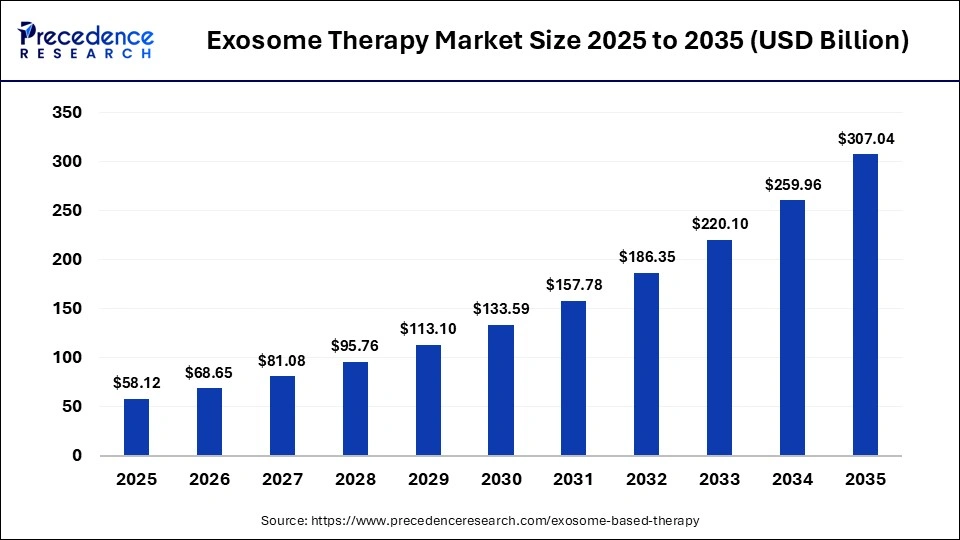
The global exosome therapy market size was calculated at USD 58.12 billion in 2025 and is predicted to increase from USD 68.65 billion in 2026 to approximately USD 307.04 billion by 2035, expanding at a CAGR of 18.11% from 2026 to 2035. The market is growing due to the increasing adoption of regenerative medicine and personalized treatment approaches targeting chronic diseases and tissue repair.
Market Highlights
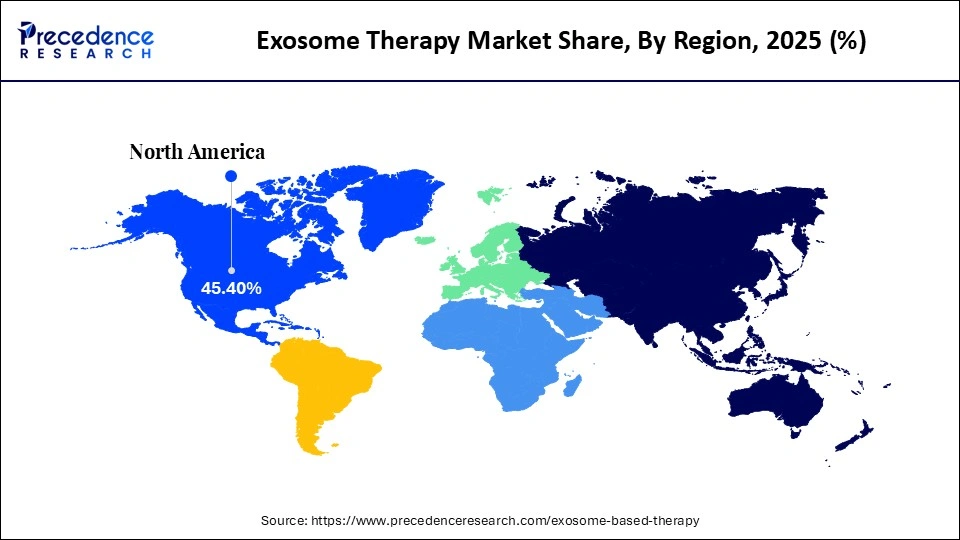
- North America dominated the global exosome therapy market with the largest market share of 45.40% in 2025.
- The Asia Pacific is expected to grow at the fastest CAGR between 2026 and 2035.
- By therapy modality, the autologous exosome therapy segment generated the biggest market share of 58% in 2025.
- By therapy modality, the allogeneic exosome therapy segment is expanding at the fastest CAGR between 2026 and 2035.
- By treatment setting, the hospital-based therapies segment contributed the highest market share of 38% in 2025.
- By treatment setting, the wellness/aesthetic centers segment is growing at a strong CAGR between 2026 and 2035.
- By therapeutic use case, the regenerative therapies segment held a major market share of 53% in 2025.
- By therapeutic use case, the aesthetic & cosmetic therapies segment is expected to expand at a notable CAGR from 2026 to 2035.
- By the administration approach, the local therapy segment captured the highest market share of 63% in 2025.
- By the administration approach, the systemic therapy (IV based) segment is poised to grow at a healthy CAGR between 2026 and 2035.
- By exosome source type, the steam cell-derived exosomes segment contributed the highest market share of 63% in 2025.
- By exosome source type, the plant-derived exosomes segment is growing at a strong CAGR between 2026 and 2035.
- By regulatory classification, the non-regulated/wellness-based therapies segment held a major market share of 48% in 2025.
- By regulatory classification, the regulated therapeutic procedures segment is expected to expand at a notable CAGR from 2026 to 2035.
Exosome Therapy: The Next Frontier in Cellular Healing
The exosome therapy market is witnessing rapid growth as scientists and medical professionals continue to investigate exosomes' potential for regeneration and treatment. These nanoscale extracellular vesicles are being used to treat inflammatory diseases, tissue damage, and chronic illnesses. Global market adoption is being further propelled by increasing biotechnology investments as well as improvements in isolation and delivery methods. Exosome-based therapies are expanding as a result of growing awareness of personalized medicine.
Case Study: Codiak BioSciences Drives Innovation in Exosome Therapy
In 2025, Codiak BioSciences made a breakthrough with its engEx platform, showing strong results in targeted drug delivery for cancer and neurological disorders. The business was able to achieve precise therapeutic delivery with few side effects by utilizing exosome's inherent ability to communicate. The achievement attracted attention from all over the world and was a significant step toward the development of cell-free next-generation personalized medicine treatments.
Market Trends
- Industry Growth Overview: Thanks to advances in targeted drug delivery, regenerative medicine, and personalized therapies, the exosome therapy market is growing quickly. Growing clinical research, the need for minimally invasive treatment, and the rising incidence of chronic illnesses are the main factors driving market expansion. Product development and commercialization are also being accelerated by partnerships between biotech companies and academic institutions.
- Sustainability Trends: Sustainable practices in exosome therapy are gaining attention, with companies focusing on eco-friendly production methods, reducing reagent waste, and improving energy efficiency in manufacturing processes. There is also a shift toward using biodegradable and biocompatible materials in exosome isolation and delivery systems.
- Startup Economy: With many biotech startups developing novel exosome isolation technologies, therapeutic applications, and diagnostic solutions, the exosome therapy startup ecosystem is flourishing. These startups frequently receive support from incubators, venture capital, and alliances with well-established pharmaceutical companies, which promotes the industry's quick expansion and technological advancements.
Market Scope
| Report Coverage | Details |
| Market Size in 2025 | USD 58.12 Billion |
| Market Size in 2026 | USD 68.65 Billion |
| Market Size by 2035 | USD 307.04 Billion |
| Market Growth Rate from 2026 to 2035 | CAGR of 18.11% |
| Dominating Region | North America |
| Fastest Growing Region | Asia Pacific |
| Base Year | 2025 |
| Forecast Period | 2026 to 2035 |
| Segments Covered | Therapy Modality, Treatment Setting, Therapeutic Use Case, Administration Approach, Exosome Source Type, Regulatory Classification, and Region |
| Regions Covered | North America, Europe, Asia-Pacific, Latin America, and Middle East & Africa |
Emerging Opportunities in the Exosome Therapy Market
| Category | Key Trend | Market Impact |
| Tech Innovation | AI and nanotech integration for precision exosome design | Improves targeting accuracy and therapy efficiency |
| Clinical Expansion | New trials in cardiovascular and metabolic diseases | Broadens the therapeutic scope beyond oncology |
| Manufacturing | Shift toward automated, closed-system production | Reduces contamination risks and scales GMP output |
| Regulatory Progress | Fast-track review pathways for exosome therapies | Speeds commercialization and attracts investors |
| Partnerships | Biotech AI and academia industry collaborations | Accelerates R&D and product development timelines |
| Investment Focus | Rising VC and government-backed funding | Strengthens startup innovation and market entry |
Segmental Insights
Therapy Modality Insights
What made the autologous exosome therapy segment dominate the exosome therapy market?
The autologous exosome therapy segment is dominating the market with a 58% market share because it uses patient-derived material, which lowers the possibility of immunological rejection and safety issues. It remains at the forefront due to its widespread use in personalized and regenerative medicine as well as its familiarity with regulations. For improved patient safety, traceability, and efficacy in orthopedic, dermatological, and anti-inflammatory applications, clinicians rely on autologous methods.
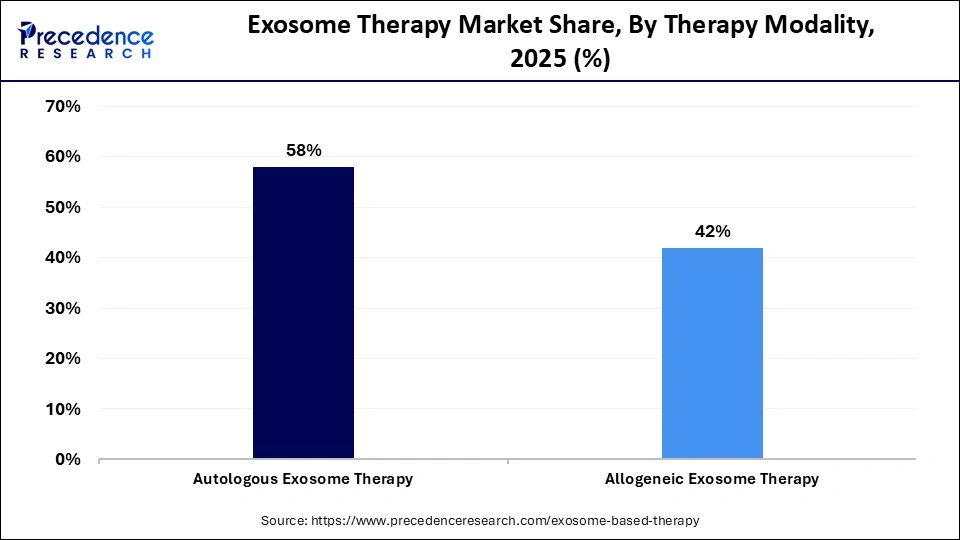
The allogeneic exosome therapy segment is the fastest growing, with a growth rate of 40-45% its growth is fueled by its scalability, reduced production costs, and increased research and development efforts concentrating on commercially available exosome products, which are all credited with the surge. Its adoption is being accelerated by growing collaborations between biotech companies and research centers, and market expansion is being further supported by regulatory approvals in several nations.
Treatment Setting Insights
Why did hospital-based therapies segment dominate the exosome therapy market?
Hospital-based therapies dominate the market, accounting for 38% of the share because clinical professionals prefer standardized and regulated treatment settings, particularly for intricate regenerative procedures. Additionally, hospitals are equipped to manage cutting-edge exosome therapies, guaranteeing patient safety and efficiently tracking results. Additionally, hospital reimbursement policies encourage greater access to expensive treatments.
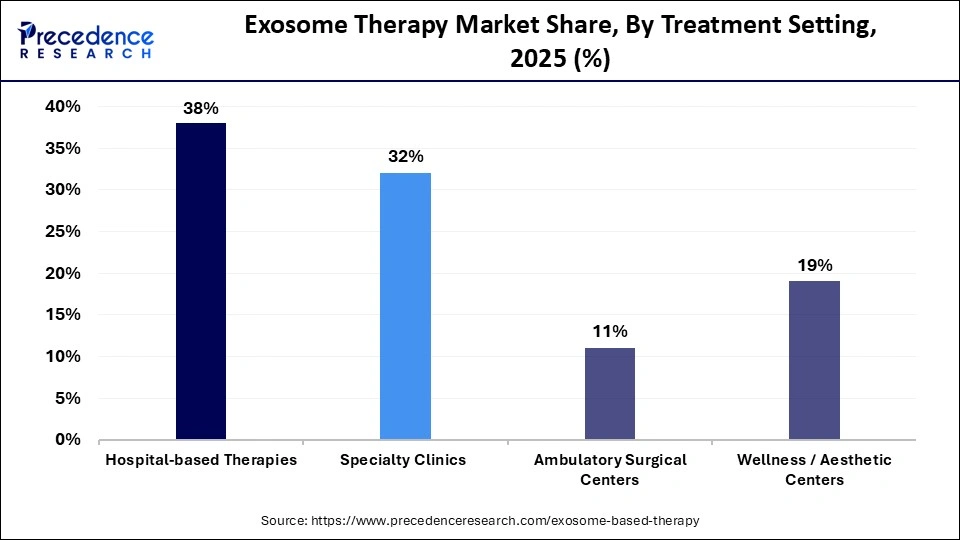
Wellness/aesthetic centers are the fastest growing segment, expanding at solid growth as consumers looking for outpatient and spa-based treatments become more interested in non-invasive cosmetic and anti-aging exosome therapies. Consumer demand is also being driven by influencer endorsements and rising social media awareness, and these therapies are becoming more widely available due to their competitive pricing and flexible treatment plans.
Therapeutic Use Case Insights
Why did regenerative therapies segment dominate the exosome therapy market?
The regenerative therapies segment dominates the exosome therapy market with a 53% share, driven by its efficacy in tissue repair, wound healing, and chronic disease management, making it the primary focus of clinical applications. The segment's dominance is further strengthened by ongoing clinical trials demonstrating high success rates in musculoskeletal and cardiovascular conditions. Increasing collaborations between hospitals and biotech companies also contribute to its strong market presence.
The aesthetic & cosmetic therapies segment is the fastest growing driven by the growing demand for minimally invasive cosmetic procedures, skin rejuvenation, and anti-aging treatments. Rapid adoption is also a result of rising disposable income and growing consumer preference for non-surgical procedures. Additionally, technological advancements in topical applications and microneedling are improving the effectiveness and appeal of treatments.
Administration Approach Insights
What made local therapy segment dominate the exosome therapy market?
Local therapy dominates the market, holding a 63% share, as targeted delivery ensures higher efficacy and reduced systemic side effects in regenerative and aesthetic applications. Clinicians favor this method due to precise dosing and better patient outcomes. Furthermore, local therapy has a well-established safety profile, making it the preferred choice for both hospital-based and wellness applications.
Systemic therapy (IV-based) segment is growing at a healthy CAGR, fueled by improvements in formulation and a rise in clinical trials investigating the delivery of systemic exosomes for various indications. Growth is being fueled by growing interest in treating systemic diseases like metabolic disorders and autoimmune disorders. In order to improve patient convenience and bioavailability, businesses are also investing in innovative IV delivery systems.
Exosome Source Type Insights
Why did steam cell-derived exosomes segment dominate the exosome therapy market?
Steam cell-derived exosomes dominate with a 63% market share because of their increased bioactivity, demonstrated therapeutic potential, and extensive support from regenerative medicine research. They are highly favored in tissue repair applications due to their reliable quality, repeatability, and robust clinical validation. Established supply chains and collaborations with top biotech companies are also advantageous to the segment.
Plant-derived exosomes are the fastest-growing segment, as interest grows in natural, plant-based alternatives for cosmetic and wellness applications. This growth is fueled by rising consumer preference for natural products, increasing awareness of plant-based bioactives, and research demonstrating their potential in skin and hair health. Startups are actively exploring novel plant sources, which is driving innovation and adoption
Regulatory Classification Insights
What made the non-regulated/wellness-based therapies segment dominate the exosome therapy market?
Non-regulated/wellness-based therapies dominate with a 48% share, gaining from increased consumer demand for wellness treatments, quicker commercialization, and fewer regulatory obstacles. These treatments offer flexibility in treatment regimens and marketing tactics, and they can enter the market swiftly. Growing consumer awareness of wellness and anti-aging trends worldwide contributes to the segment's expansion.
Regulated therapeutic procedures segment is expanding at a strong CAGR, wth bolstered by a rise in clinical approvals, more stringent safety regulations, and incorporation into hospital-based treatment plans. Healthcare providers are becoming more confident as a result of governments and regulatory agencies encouraging standardized protocols. As more treatments gain regulatory approval for clinical use, the market is anticipated to expand.
Regional Insights
How Big is the North America Exosome Therapy Market Size?
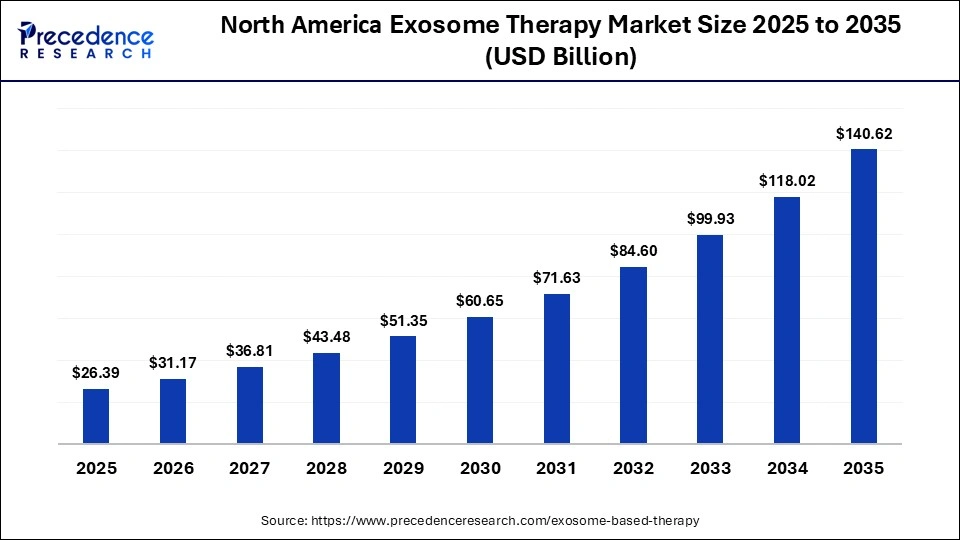
The North America exosome therapy market size is estimated at USD 26.39 billion in 2025 and is projected to reach approximately USD 140.62 billion by 2035, with a 18.21% CAGR from 2026 to 2035.
What made North America dominate the Exosome Therapy market?
North America dominates the exosome therapy market because of its robust research and development ecosystem, cutting-edge healthcare infrastructure, and early adoption of innovative treatments. The existence of reputable clinical trial networks and top biotech companies benefits the area. Advanced exosome therapies are highly trusted by patients and healthcare professionals, and reimbursement practices encourage greater accessibility. Furthermore, regulatory frameworks offer precise guidelines that promote both wellness-focused and hospital-based applications
What is the Size of the U.S. Exosome Therapy Market?
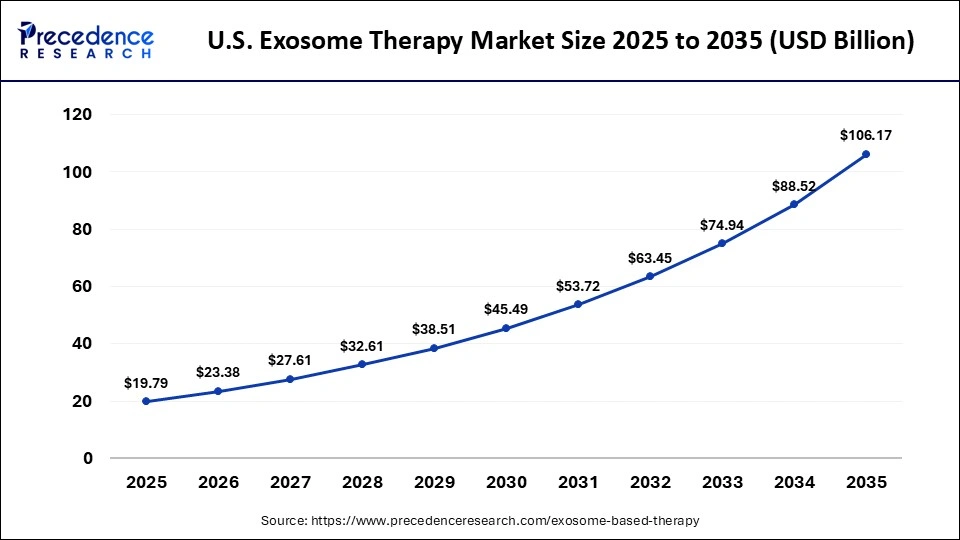
The U.S. exosome therapy market size is calculated at USD 19.79 billion in 2025 and is expected to reach nearly USD 106.17 billion in 2035, accelerating at a strong CAGR of 18.29% between 2026 and 2035.
U.S. Exosome Therapy Market Trends
The U.S. is the largest contributor within North America, driving the regions propelling the dominance of the region. It has a competitive advantage due to its robust investment in biotechnology, strong patent protections, and the presence of world leaders in exosome therapy. The U.S., through hospital partnerships and insurance coverage, the healthcare system encourages the use of novel treatments. Ongoing clinical trials and high patient awareness guarantee that the U.S. continues to be the main hub for advanced treatment deployment, commercialization, and research.
Why Is Asia Pacific Considered to Be the Fastest-Growing Region in the Gene-Replacement Therapy Market in 2025?
Asia Pacific is the fastest-growing region in the exosome therapy market, backed by growing urban healthcare facilities, growing biotechnology investments, and expanding healthcare infrastructure. Exosome therapies for both regenerative and cosmetic purposes are gaining popularity in the area. Adoption is being encouraged in hospitals and wellness centers by government initiatives and advantageous policies. Additionally, more patients are being drawn in, and new therapies are becoming more accessible due to their affordability when compared to developed nations.
India Exosome Therapy Market Trends
India is at the forefront of Asia Pacific growth, emerging as a key market for exosome therapies. Rapid adoption is fueled by growing public and private healthcare facilities, growing investments from biotech startups, and increased awareness of regenerative treatments. Both domestic and foreign patients are being drawn in by lower treatment costs and an increase in medical tourism. Furthermore Indias standing as a high-growth market in the exosome therapy space is being reinforced by government support for biotechnology innovation and growing partnerships with international businesses.
Exosome Therapy Market Value Chain Analysis
- R&D: R&D concentrates on creating exosomes for regenerative applications, disease diagnosis, and targeted drug delivery in the exosome therapy market. Businesses are making significant investments to advance scalability and isolation methods to move exosome-based treatments closer to clinical and commercial application.
- Retail Sales and Marketing: Sales and marketing initiatives, while still in their infancy, are focused on collaborations with biotech companies and healthcare providers. Campaigns to raise awareness of the therapeutic potential of exosome platforms in the treatment of rare diseases, cancer, and neurological conditions encourage early adoption among investors and clinicians.
- Waste Management and Recycling: Cell culture and biological materials are used in the development of exosome therapy, which calls for cautious waste management. To minimize the environmental impact of research and production, laboratories are putting biohazard waste management systems into place to guarantee sustainable disposal and recycling of single-use plastics and reagents.
Who are the Major Players in the Global Exosome Therapy Market?
The major players in the exosome therapy market include Evox Therapeutics, Codiak BioSciences, ExoCoBio, ILIAS Biologics, Aruna Bio, Capricor Therapeutics, EV Therapeutics, Kimera Labs, Aethlon Medical, Coya Therapeutics, BREXOGEN, Exostemtech, EXO Biologics
Recent Developments
- In October 2025, EVerZom (France) raised €10 million to develop exosome-based biotherapies for inflammatory diseases and scale up its bioproduction technologies.(Source: https://www.globenewswire.com)
- In July 2025, Tulsi Therapeutics (India) announced the world's first successful animal trial of a stem cell–exosome combination therapy (Tulsi28X) for chronic liver failure.(Source: https://exosome-rna.com)
Segments Covered in the Report
By Therapy Modality
- Autologous Exosome Therapy
- Patient-derived cell exosomes
- Point-of-care or near-patient processing
- Allogeneic Exosome Therapy
- Donor-derived standardized exosomes
- Off-the-shelf exosome preparations
By Treatment Setting
- Hospital-based therapies
- Specialty clinics
- Orthopedic clinics
- Neurology clinics
- Oncology clinics
- Ambulatory surgical centers
- Wellness/aesthetic centers
By Therapeutic Use Case
- Regenerative therapies
- Musculoskeletal repair
- Wound healing
- Anti-inflammatory therapies
- Neurorestorative therapies
- Cardiometabolic therapies
- Aesthetic & cosmetic therapies
- Skin rejuvenation
- Hair restoration
- Supportive/adjunctive therapies
By Administration Approach
- Systemic therapy
- IV-based exosome therapy
- Local therapy
- Intra-articular
- Intradermal
- Intrathecal
- Topical application
By Exosome Source Type
- Stem cell–derived exosomes
- Immune cell–derived exosomes
- Tissue-derived exosomes
- Plant-derived exosomes
By Regulatory Classification
- Regulated therapeutic procedures
- Compassionate-use / experimental therapies
- Non-regulated / wellness-based therapies
By Region
- North America
- Asia Pacific
- Europe
- Latin America
- Middle East and Africa
For inquiries regarding discounts, bulk purchases, or customization requests, please contact us at sales@precedenceresearch.com
Frequently Asked Questions
Tags





Ask For Sample
No cookie-cutter, only authentic analysis – take the 1st step to become a Precedence Research client
 Get a Sample
.webp)



 sales@precedenceresearch.com
 Schedule a Meeting
