



Exosome Drug Delivery Services Market Size, Companies, Share, Patient Volume, Treatment Adoption Rates, Pricing Analysis, Regulatory Landscape, Competitive Positioning, and Demand Forecast
Gautam Mahajan, a Healthcare Industry Expert, highlights that the exosome drug delivery services market has reached USD 5.70 billion in 2026 and is on track to reach USD 24.33 billion by 2035, advancing at a CAGR of 17.50%. Key exosome drug delivery services market companies shaping the market include CD Bioarticles, Danaher, Fujifilm, Illumina, while major growth segments span service type, exosome source, therapeutic payload, application, development stage, end user, service provider model, type.
Source: https://www.precedenceresearch.com/exosome-drug-delivery-services-market
 Get a Sample
 Table Of Content


Exosome Drug Delivery Services Market Size and Forecast 2026 to 2035
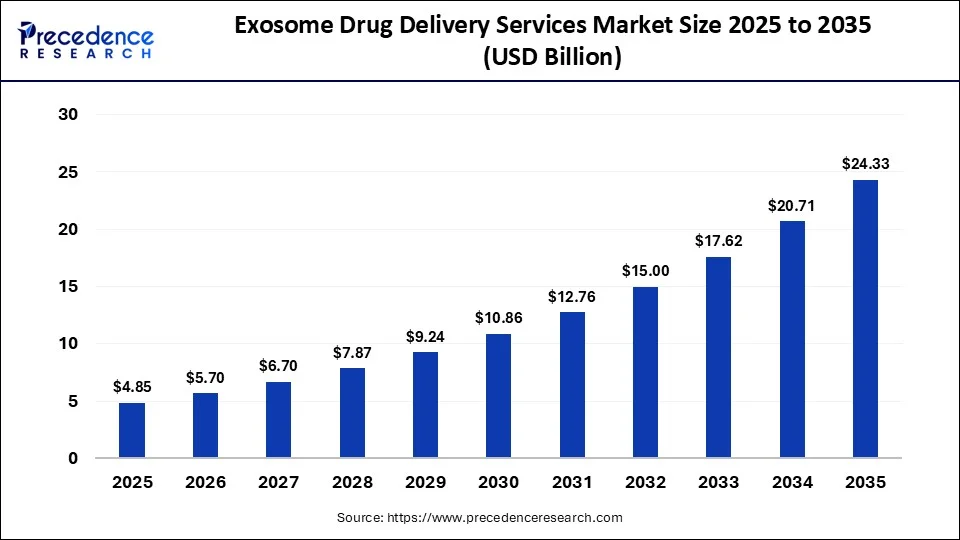
The global exosome drug delivery services market size accounted for USD 4.85 billion in 2025 and is predicted to increase from USD 5.70 billion in 2026 to approximately USD 24.33 billion by 2035, expanding at a CAGR of 17.50% from 2026 to 2035.
Key Takeaways
- By service type, the exosome isolation & purification services segment held 18% of market share in 2025.
- By service type, the exosome engineering & surface modification services segment held 12% of market share and is expected to grow at the highest CAGR of 19.2% between 2026 and 2035.
- By application, the cancer drug delivery segment held a major market share of 32% in 2025.
- By application, the RNA therapeutics delivery segment held 15% of market share in 2025 and is expected to register the fastest growth of 21% CAGR during 2026 and 2035.
- The RION 2025 Lonza collaboration marks a major step forward for CDMOs in the field of exosome production, making the industry a viable candidate for commercialization.
- Capricor's PDUFA date in August 2026 may be the first milestone for the exosome therapeutics industry hit by the FDA.
- The granting of NurExone's 2026 global patents further enhances IP protection, further enhancing the confidence of investors in the delivery services sector.
- The FDA's 2025-2026 warning-letter campaign reveals a regulatory risk that is impacting the entire exosome drug delivery market.
- Gene-editing payloads within the larger field of vesicle-based therapeutics are gaining in opportunity with the launch of ARENEX's CRISPR-loaded exosome project.
Market Size Description
The exosome drug delivery services market is poised to grow at a serious pace going into 2026. Demand for outsourcing continues to increase as biotech companies look for specialized manufacturing partners. Contract development organizations are gaining the momentum over the construction of the in-house capacity. The transition comes as a sign of increasing awareness that the difficult bottleneck in the field is scalable production. In 2025, RION, a clinical-stage regenerative medicine company using platelet-derived exosomes, agreed with Lonza to receive commercial scale cGMP manufacturing support. These partnerships represent an industry trend for well-established CDMOs to move into the exosome space. These collaborations represent a step from academic to commercialization.
Multiple therapeutic areas are seeing clinical translation efforts pick up at the same time. The applications for oncology are also moving forward, especially in the field of breast cancer research programs. A recent review published in Pharmaceutical Research in 2026 pointed out that significant knowledge deficits in standard manufacturing procedures and pharmacokinetic knowledge still exist, which hinder clinical translation. Closing these gaps is the key to making exosome platforms a commercial reality, researchers now stress. Clear regulations are as essential to continued development as is manufacturing capacity. Each progress in one field usually opens the door to other difficulties.
Manufacturers are taking a new look at the process of large-scale exosome production with technological innovation. A 2025 review published in ScienceDirect suggested that emerging technologies like bioreactor production, microfluidic separation, and AI-driven characterization will play a key role in scaling production and simplifying clinical translation. These approaches seek to address the reproducibility issues that have been a challenge in the therapeutic use of exosomes.
Consistency from batch to batch is key to any product wanting regulatory approval. These production enhancements are being paralleled by engineering improvements, which enable precise loading of the cargo in the form of mRNA and proteins. Companies are currently far from satisfied with providing simple isolation services. Competitive positioning has become integrated, from cell source selection to the end product. The mix of engineering complexity and manufacturing volume is subtly changing the expectations of outsourcing partners with clients in the future.
Market Size and Growth Outlook
Exosomes drug delivery services market opened in 2025 with a value of USD 4.85 billion. The forecast CAGR for the market is 17.50% till 2035. This increase is indicative of a growing investment in the biopharma industry in extracellular vesicle platforms. Demand for outsourced manufacturing continues to grow, with therapeutic pipelines maturing quickly. There will be a gradual increase in each of the service areas during the coming years.
Leading and Fastest-Growing Service Segments
The largest and fastest-growing services in the market are the exosome isolation and purification services. These are the key upstream processing steps of most therapeutic programs that begin. The services of engineering and surface modification, on the other hand, are growing at a much quicker pace today. The use of emerging technologies like EXODUS systems and microfluidic chips is enhancing extraction efficiency and purity. These tools can assist in the precision engineering of exosomes for targeting and delivery.
Dominant Exosome Source and Emerging Source
Mesenchymal stem cell derived exosomes dominated the market with an estimated market share of about 48% in 2025. This leadership is due to their wide range of regenerative powers and their well-defined manufacturing procedures. Exosomes derived from plants, on the other hand, are the fastest rising group with approximately 20.5% momentum. Plant sources are considered to be more economical and more convenient than cell culture systems by researchers. This new product may change the sourcing economics of the industry as a whole.
Leading and Fastest-Growing Therapeutic Payloads
The most loaded payloads in exosome carriers are small molecule drugs, and they are the fastest-growing therapeutic payloads. The proven formulation science of these vesicles makes it relatively easy for developers to encapsulate them. The largest growth opportunity, however, is for mRNA payloads in this area. There is growing interest in the use of exosome-based systems as the next-generation platforms for the delivery of gene therapy.
Leading and Fastest-Growing Applications
The application segment receiving the most research funds and attention is the delivery of cancer drugs, which is the leading and fastest-growing application. Unlike traditional nanoparticles, exosomes have the capacity to target tumors. RNA therapeutics delivery is moving at a much faster pace, on the other hand. In the context of breast cancer exosomes, a 2026 review pointed to improved therapeutic effects and decreased off-target toxicity. Most of the published clinical and preclinical studies continue to focus on oncology applications.
Development Pipeline Maturity
Most of the candidates for exosomes are still at the stage of discovery and preclinical development. This field involves more than one hundred treatment therapies currently being worked on by more than a dozen companies all over the world. A smaller group of patients has now moved on to Phase II clinical testing. There is also regulatory progress, with regulators actively reviewing applications submitted.
Regional Growth Outlook
As per the regional growth outlook for North America, the global exosome drug delivery services market is in the growth phase. The area's dominance is fueled by robust biotech funding, research infrastructure, and familiarity with the regulatory framework. Asia-Pacific, however, is emerging as the fastest growing region of the world. The Chinese, Japanese, and Korean government-sponsored biotech programs are driving investment.
Market Overview
What Are Exosome Drug Delivery Services?
Exosome drug delivery services include expert assistance throughout the drug development process. Providers perform characterization, engineering, and payload loading for therapeutic developers while also isolating and characterizing. They also oversee formulation, testing, clinical development assistance, and regulatory compliance advice. This full-service package is completed by manufacturing scale-up.
How Exosomes Function as Drug Delivery Platforms
Exosomes are naturally released vesicles used by cells to communicate with each other. The lipid bilayer structure provides them with an outstanding biocompatibility. This exceeds that of synthetic alternatives to nanoparticles. Exosomes are easily taken up by cells via membrane fusion, endocytosis, and recognition receptors. This natural uptake process enables efficient delivery of proteins, RNA, and small molecule drugs in the exosomes. Further paving the way towards their commercialization.
Evolution of the Exosome Drug Delivery Services Industry
The industry started strong on the academic bench with basic vesicle biology studies. Researchers slowly began to take note of its commercial potential. Particular biotechnology firms began to develop around isolation methods. Osmilies outsourcing services were then created, enabling therapeutic companies to tap into knowledge without significant investment in infrastructure. Additionally, the field is increasingly connected to clinical development and manufacturing support, and services are expanded to a unified service platform.
Market Scope and Service Boundaries
This market covers isolation and purification, including engineering, formulation, and analytical testing services, and regulatory consulting services. It is inclusive of contract manufacturers, specialized biotech companies, and academic spinout companies addressing a range of clients. Examples of payloads range from small molecules, proteins, mRNA or siRNA to gene-editing components. Coverage spans preclinical, clinical, and commercial stages, and features a range of clients from global pharmaceutical and biotechnology companies to research institutions around the world across all major geographic regions.
Market Trends
- Shift from Basic Exosome Research Toward Therapeutic Development: There is a clear shift in the demand for services beyond mere isolation and characterization. Engineered exosomes, targeted drug loading, and clinical translation support are highlighted as key strengths in the current offerings.
- Rising Demand for Engineered and Targeted Exosome Platforms: Surface modification and molecular engineering are making great strides in tissue targeting. These methods are employed by researchers to enhance cellular uptake and therapeutic effects. The 2025 ARENEX project entails the development of CRISPER-encoded engineered exosomes for in vivo gene editing.
- Increasing Outsourcing by Biopharmaceutical Developers: Specialized CROs and CDMOs are becoming increasingly important for pharmaceutical companies for their technical expertise. For most developers, developing in-house exosome manufacturing remains expensive and complicated. The basic formation of a new subsidiary, Exo-Top, under NurExone's name in 2026 highlights this outsourcing-to-integration trend.
- Growth of RNA and Genetic Medicine Applications: siRNA, miRNA, and mRNA payload delivery are being actively investigated on exosome platforms. Exosomes show some significant advantages over lipid nanoparticles in the delivery of CRISPR-Cas9 gene editing. The number of researchers publishing studies on delivering CRISPR with exosomes to treat cartilage and joint disease continues to grow in 2026.
- Increasing Focus on Reproducibility and Quality Characterization: Acceptable manufacturing standards are industry-wide now dictated by identity, purity, and potency tests. The importance of batch-to-batch consistency continues to be of paramount concern. Leading to the use of bioreactor and AI-based characterization techniques. As regulators become more demanding on standardized consistency data of cargo. They are pushing candidates further along the trials.
- Emergence of Plant-Derived Exosome-like Delivery Platforms: Exosomes derived from plants are becoming increasingly popular as scalable, low-cost alternatives. Vesicles derived from citrus, berry, and grapefruit have the potential to be natural nanocarriers for drug delivery. These plant platforms are progressing toward cancer therapy applications with several 2026 reviews.
Market Report Coverage and Key Metrics
| Report Coverage | Details |
| Market Size in 2025 | USD 4.85 Billion |
| Market Size in 2026 | USD 5.70 Billion |
| Market Size by 2035 | USD 24.33 Billion |
| Market Growth Rate from 2026 to 2035 | CAGR of 17.50% |
| Dominating Region | North America |
| Fastest Growing Region | Asia Paicfic |
| Base Year | 2025 |
| Forecast Period | 2026 to 2035 |
| Segments Covered | Service Type, Exosome Source, Therapeutic Payload, Application, Development Stage, End User, Service Provider Model, and Region |
| Regions Covered | North America, Europe, Asia-Pacific, Latin America, and Middle East & Africa |
Market Segmentation Analysis
Service Type Insights
What Made Exosome Isolation & Purification Services Lead the Global Exosome Drug Delivery Services Market?
The exosome isolation & purification services segment dominated the market with a share of 18% in 2025, due to the essential requirement for obtaining highly pure extracellular vesicles before downstream development.
Exosome Drug Delivery Services Market Share, By Service Type, 2025 (%)
| Service Type | 2025 Share (%) | 2035 Share (%) | CAGR (2025-2035) |
| Exosome Isolation & Purification Services | 18% | 15% | 15.50% |
| Exosome Characterization & Quality Testing Services | 14% | 13% | 16.60% |
| Exosome Engineering & Surface Modification Services | 12% | 14% | 19.20% |
| Drug Loading & Encapsulation Services | 16% | 18% | 19.00% |
| Exosome Formulation & Stabilization Services | 8% | 9% | 19.00% |
| Preclinical Testing Services | 15% | 14% | 16.70% |
| Clinical Development Support Services | 7% | 8% | 18.90% |
| Regulatory & Compliance Services | 3% | 3% | 17.50% |
| Manufacturing & Scale-up Services | 7% | 6% | 15.60% |
The exosome engineering & surface modification services segment held 12 of the market share in 2025 and is expected to grow at the fastest CAGR of 19.2% between 2026 and 2035, driven by precision delivery has become a central objective across advanced therapeutic development.
Exosome Source Insights
Why Were Mesenchymal Stem Cell-derived Exosomes the Preferred Choice in the Global Exosome Drug Delivery Services Market?
The mesenchymal stem cell-derived exosomes segment dominated the market with a share of 48% in 2025, due to the extensive clinical validation supporting regenerative medicine and therapeutic delivery applications.
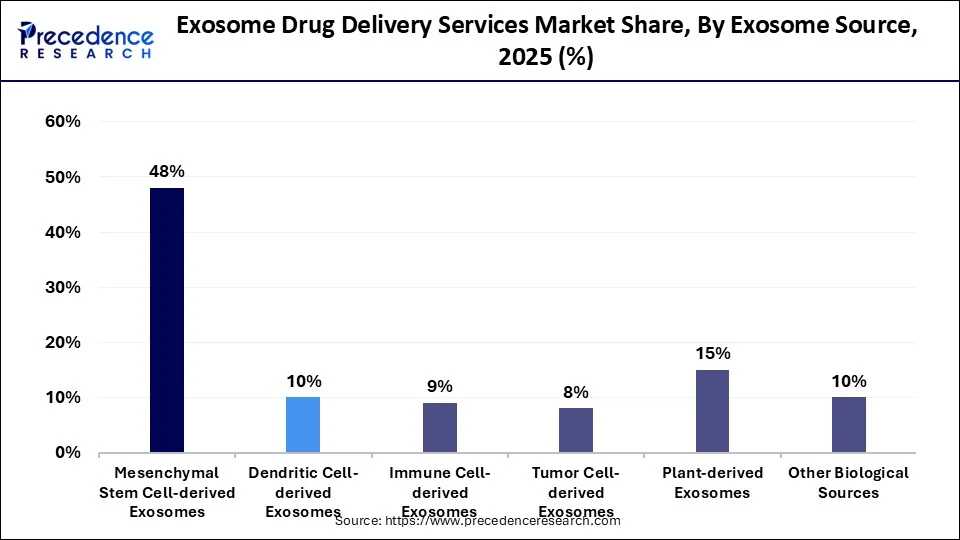
The plant-derived exosomes segment held a 15% share of the market in 2025 and is expected to grow at the fastest CAGR of 20.5% between 2026 and 2035, driven by researchers increasingly seeking scalable, sustainable, and naturally abundant biological delivery systems.
Therapeutic Payloads Insights
How Did Small-Molecule Drugs Secure Leadership in the Global Exosome Drug Delivery Services Market?
The small-molecule drugs segment dominated the market with a share of 27% in 2025, due to its extensive pharmaceutical experience supporting formulation, loading efficiency, and therapeutic validation.
Exosome Drug Delivery Services Market Share, By Therapeutic Payload, 2025 (%)
| Therapeutic Payload | 2025 Share (%) | 2035 Share (%) | CAGR (2025-2035) |
| Small-Molecule Drugs | 27% | 23% | 15.80% |
| Nucleic Acids | 21% | 22% | 18.00% |
| siRNA & miRNA | 18% | 19% | 18.10% |
| mRNA | 10% | 14% | 24.00% |
| Proteins & Peptides | 12% | 11% | 16.10% |
| Gene Editing Components | 7% | 8% | 20.80% |
| Combination Payloads | 5% | 3% | 12.50% |
The mRNA segment held 10% of market share and is expected to grow at the highest CAGR of 24% between 2026 and 2035, owing to developers increasingly pursuing safer and more precise intracellular genetic medicine delivery.
Application Insights
What Positioned Cancer Drug Delivery at the Forefront of the Global Exosome Drug Delivery Services Market?
The cancer drug delivery segment dominated the market with a share of 32% in 2025, owing to the strong global focus on precision oncology and targeted therapeutic development.
Exosome Drug Delivery Services Market Share, By Application, 2025 (%)
| Application | 2025 Share (%) | 2035 Share (%) | CAGR (2025-2035) |
| Cancer Drug Delivery | 32% | 30% | 16.80% |
| Gene Therapy Delivery | 16% | 18% | 19.20% |
| RNA Therapeutics Delivery | 15% | 18% | 21.00% |
| Vaccines | 8% | 8% | 17.50% |
| Regenerative Medicine | 12% | 11% | 16.60% |
| Neurological Disorders | 7% | 8% | 19.10% |
| Cardiovascular Disorders | 4% | 3% | 14.80% |
| Infectious Diseases | 3% | 2% | 13.80% |
| Autoimmune Diseases | 2% | 2% | 17.50% |
| Other Applications | 1% | 0% | 12.50% |
The RNA therapeutics delivery segment held a 15% share of the market in 2025 and is expected to grow at the fastest CAGR of 21% between 2026 and 2035, driven by developers increasingly seeking efficient carriers for fragile genetic payloads.
Development Stage Insights
What Drove Discovery & Research to the Top of the Global Exosome Drug Delivery Services Market?
The discovery & research segment dominated the market with a share of 31% in 2025, owing to the continuous expansion of extracellular vesicle biology and therapeutic platform investigations.
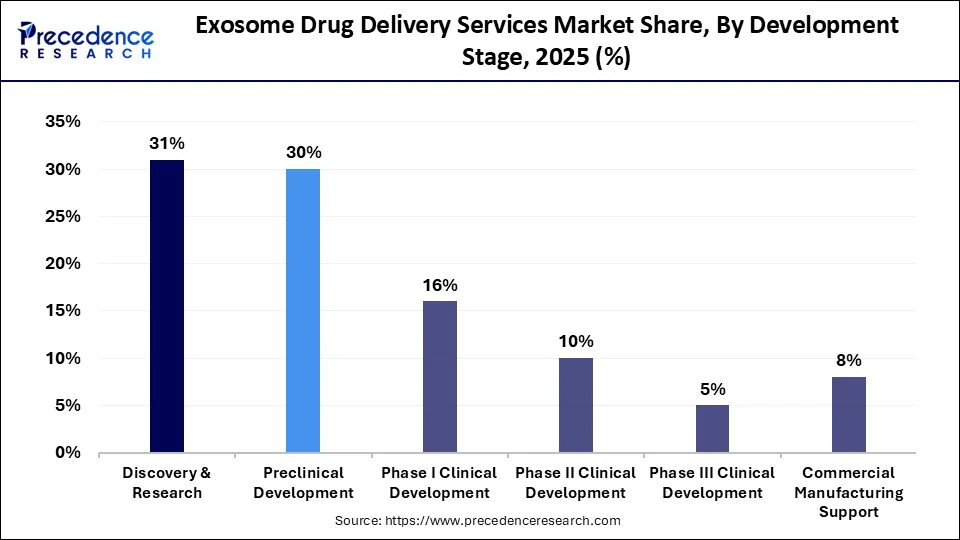
The phase III clinical development segment held a 5% share of the market in 2025 and is expected to grow at the fastest CAGR of 27% between 2026 and 2035, driven by the fact that more exosome-based candidates are advancing toward late-stage clinical evaluation.
End User Insights
How Did Pharmaceutical Companies Become the Largest End Users in the Global Exosome Drug Delivery Services Market?
The pharmaceutical companies segment dominated the market with a share of 32% in 2025, due to the strong investment in advanced biologics, targeted therapeutics, and late-stage clinical development.
Exosome Drug Delivery Services Market Share, By End User, 2025 (%)
| End User | 2025 Share (%) | 2035 Share (%) | CAGR (2025-2035) |
| Pharmaceutical Companies | 32% | 31% | 17.20% |
| Biotechnology Companies | 29% | 33% | 19.00% |
| Contract Development & Manufacturing Organizations (CDMOs) | 15% | 17% | 19.00% |
| Contract Research Organizations (CROs) | 10% | 9% | 15.80% |
| Academic & Research Institutes | 8% | 6% | 12.50% |
| Hospitals & Specialized Medical Centers | 4% | 3% | 14.00% |
| Government & Public Research Organizations | 2% | 1% | 11.50% |
The biotechnology companies segment held a 29% share of the market in 2025 and is expected to grow at the fastest CAGR of 19% between 2026 and 2035, driven by continuous platform innovation, which is anticipated to increase outsourcing of specialized development services.
Service Provider Model Insights
What Helped Integrated Full-Service Providers Emerge as the Leading Segment in the Global Exosome Drug Delivery Services Market?
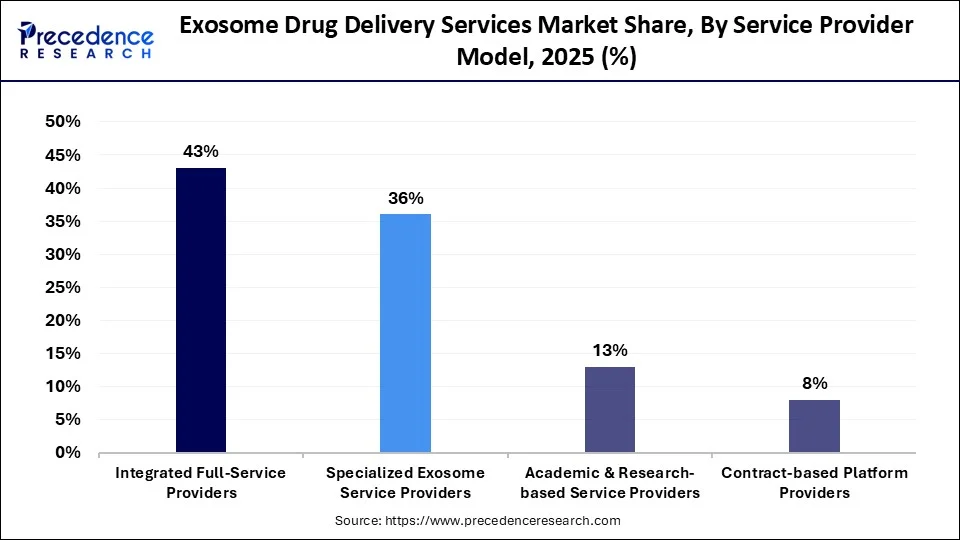
The integrated full-service providers segment dominated the market with a share of 43% in 2025 and is expected to grow at the fastest CAGR of 18.8% between 2026 and 2035, driven by the ability to deliver end-to-end solutions from discovery through GMP manufacturing under one organization.
Market Dynamics
Market Drivers
Expansion of Advanced Biologics and Genetic Medicine Pipelines
The field of RNA therapeutics and precision gene therapy pipelines is growing at a fast pace in biopharma. The increase in growth presents an immediate need for delivery systems that can safely deliver sensitive genetic payloads. In 2025, Lexeo Therapeutics joined with prominent life-sciences investors to further develop non-viral delivery of RNA for cardiac genetic diseases. But as the field of precision medicine grows, exosome carriers are well-suited for the growing market.
Rising Investment in Exosome Research and Therapeutic Development
The investment activity in exosome research and therapeutic development is still very strong in 2025 and 2026. The funding from companies such as EXO Biologics has been significant. This has been raised for the purpose of supporting the supply of clinically grade exosomes. This is clearly a long-term growth opportunity area for investors.
Increasing Need for Non-Viral Drug Delivery Systems
There are very real challenges in the immunogenic nature of viral vectors, manufacturing complexity, and restrictions on repeat dosing. In comparison, exosomes represent an intriguing alternative to viral methods and are naturally less immune-activating. There are now a number of companies in the 2026 cell and gene therapy space targeting the ability to make certified non-viral platforms along with viral platforms. This is a strategy that is being adopted by the industry as they have come to realize that non-viral systems are addressing clinical issues.
Growing Complexity of Exosome Development Workflows
Each of these requires an expert technical skill, including isolation, engineering, payload loading, and testing. Few biopharma companies have a strong in-house resource at each of these stages of the workflow. This increasing complexity creates a challenge for developers and drives them toward more skilled and experienced outsourced service providers that provide end to end platform support. Specialized CDMOs are steadily emerging as single-source partners from discovery to commercial manufacturing scale-up.
Market Restraints
Lack of Complete Standardization Across Exosome Workflows
There are still variations between labs in the source of exosomes, methods used to isolate them, characterization methods, and potency testing. The variations make it difficult to compare studies and contribute directly to greater regulatory requirements.
Complex Regulatory and Quality Requirements
Before an exosome-based therapy is approved, regulators must ensure that there is product identity, consistency in manufacturing, a safety assessment, and quality control. Such changing needs add to the complexity of development before expanding manufacturing operations.
High Cost of Advanced Development and Manufacturing
With advanced production of exosomes. The development costs are higher due to the requirement of specialized equipment, GMP facilities, analytical platforms, and extensive process optimisation. Despite the cost incurred in these commercial exosome development programs, these investments are still vital.
Market Opportunities
Integrated End-to-End Exosome Development Services
Providers with unified discovery to manufacturing platforms have a competitive edge. Clients are demanding one partner instead of a multitude of disjointed vendors at various points in development. The ISEV's MISEV2023 update encourages providers to move towards consistent reporting from isolation to functional characterization. This integration will help minimize handoff times and increase candidates progressing toward clinical trials.
mRNA and Gene-Editing Payload Delivery
The commercial potential for exosome-based carriers is huge as the genetic medicine pipeline grows rapidly. A scalable engineered exosome specifically designed for the delivery of CRISPR ribonucleoprotein is being developed by programs such as ARENEX. The exosomes solve important problems still unresolved in lipid nanoparticles and viral vectors. The providers that are netting in on gene editing payloads look set to benefit from enormous pipeline growth in 2026.
AI-Assisted Exosome Engineering and Characterization
AI is joining the exosome workflow to enhance analytical accuracy and speed up interpretation. In 2026, the combination of Raman spectroscopy and AI was used in a study. Enhancing the use of exosomes for biomarker and characterization analysis. AI tools can also forecast optimal changes to the surface for enhanced targeting performance.
Expansion of Asia-Pacific Biotech Outsourcing
Asia-Pacific is becoming an appealing region to outsource exosome development services. A bibliometric study indicates that China, Japan, and Taiwan have already become the top countries in terms of publications on stem cell-derived exosomes. Reducing development costs and improving the biotech infrastructure further enhances the region's outsourcing appeal. This change is likely to be further driven in the coming years by growing government research budget trends in these countries through 2026 and beyond.
Market Challenges
Scaling from Laboratory Production to Commercial Manufacturing
To scale exosome production from the laboratory to commercial scale, with preservation of potency, purity and batch consistency, is technically challenging. These manufacturing challenges add to the demand for quality assessment methods that are harmonised.
Establishing Comparable Potency and Quality Standards
Even within the industry, there is no consensus on analytical methods to measure the potency, biological activity, or product quality of exosomes across different developers. National Institute of Standards and Technology (NIST) ramped up efforts in measurement science of advanced biologics in 2025. Malvern Panalytical (MP) increased the particle characterization technologies that enable the characterization of extracellular vesicles (EVs). These continue to widen the demand for technical specialists with experience.
Limited Availability of Specialized Technical Expertise
The market is very low in terms of skilled professionals in the field of exosome biology and regulatory development. As commercial exosome programs continue to grow, technical skills will be crucial.
Exosome Drug Delivery Services Market Ecosystem Analysis
Exosome Drug Delivery Value Chain
The ecosystem starts with the biological source provider. They provide stem cell or platelet or plant material. Foundational biology is then provided by research institutions, with service providers taking over the isolation and engineering. The clinical development and manufacturing scale-up for pharmaceutical clients downstream is handled by CROs and CDMOs. This journey of the interconnected value chain concludes with the determination of market access by regulators and healthcare systems.
Key Stakeholders Across the Ecosystem
Biotechnology firms are leading the development of proprietary exosome engineering in early-stage innovations. Pharmaceutical developers contribute to partnerships with their therapeutic pipelines, clinical infrastructure, and regulatory submission expertise. Academic institutions provide basic research, which may be done under a contract and by using special laboratory facilities.
The 2026 partnership between ReNeuron and Swansea University demonstrates how biotechnology companies can benefit from the resources and expertise of universities.
Partnership and Collaboration Landscape
Successful partnerships between biotechnology, pharmaceutical and academic organizations are increasingly defined by the concept of collaboration. Exopharm has also established closer research relationships with the Australian National University, University of Queensland and industry partners such as Cytiva. Recent innovation drug approvals were sponsored by emerging biotechs, further changing CDMO expectations for more long-term collaboration.
Service Provider Capability Analysis
Isolation and Purification Capabilities
Ultracentrifugation has been mostly replaced by Tangential Flow Filtration in scalable, GMP compliant exosome processing. Application note 2026 describes the TFDF process for the preservation of vesicle integrity across multiple scales from multi-liter to 200-liter. As TFF becomes more popular. There is a growing trend to combine it with size-exclusion chromatography to achieve high purity.
Characterization and Quality Testing Capabilities
New analytical tools need to be able to handle identity, purity, size distribution, and functional potency assessment. A 2026 research study used Raman spectroscopy in combination with AI. Enhancing the accuracy of exosome biomarker characterization. Enhanced regulatory submission packages are created by providers who provide multi-orthogonal analytical validation.
Engineering and Payload Loading Capabilities
Surface modification is essential to the success of exosome delivery to certain tissues and cell types. In 2025, ARENEX's project centered on the manipulation of exosomes for the delivery of CRISPR ribonucleoprotein complexes for gene editing. Providers with a clear track in their intracellular delivery skills become competitive.
Preclinical and Clinical Development Capabilities
Good toxicity, pharmacokinetic, and biodistribution study capabilities are essential for translational development. Deramiocel is part of Capricor's program that has been targeted to receive approval by August 22, 2026. This is a highly anticipated milestone for the approval of new drugs. Providers that back studies that support IND qualification have a higher level of credibility with pharmaceutical sponsors.
Manufacturing and Scale-Up Capabilities
GMP manufacturing and technology transfer exist as a bridge between mature providers and early-stage research labs. A study from 2025 on ScienceDirect involved upstream scaling using a bioreactor. Followed by an endonuclease treatment and diafiltration downstream. Only truly competitive service providers are ready for the commercial scale.
Technology and Innovation Landscape
Exosome Isolation Technologies
Although it is still widely used in research. It is not readily used commercially due to its scalability problems. Industry wide, filtration-based approaches are now the preferred process for GMP compliant production, and TFF is a leading method. Therapeutic scale processing is now available for single-use SEC chromatography workflows with GMP compatibility, supporting Cytiva's chromatography resins.
Exosome Engineering Technologies
Surface engineering has come a long way from mere chemical conjugation methods. In 2025, a review discussed exosomes loaded with brain-homing peptides, such as RVG and TfR ligands, to deliver drugs to the CNS. An overview of genetic modification, click chemistry, and hybrid vesicle fusion for the precise targeting of molecules at the molecular level was conducted in 2026.
Payload Loading Technologies
For small, lipophilic molecules, passive loading is performed by simply mixing intact exosomes. There is a study from 2026 that has confirmed that active loading is superior to passive loading overall. However, there are concerns about membrane damage from electroporation and RNA aggregation. It is suggested that the loading efficiency of larger protein-based enzyme load cargoes is enhanced using sonication.
Advanced Characterization and Analytical Technologies
The scope of particle analysis is now much more than simple size and concentration determination. In 2026, scientists used Raman spectroscopy and artificial intelligence. This enhances the accuracy of interpreting exosome biomarkers. These physical characterisation techniques are complemented by increasing use of omics-based profiling for further molecular understanding.
AI and Computational Tools in Exosome Development
The use of computational tools is becoming more common to aid in payload selection and to predict exosome behavior. These models can help researchers predict the outcomes of quality before investing in expensive experiments.
Therapeutic Payload Development Analysis
Small-Molecule Drug Delivery
Exosomes provide a more targeted delivery method and significantly limit exposure and toxicity issues to the body. The researchers encapsulated paclitaxel in exosomes modified with targeting peptides. Derived from pancreatic tumors, which they then introduced into mice, achieving significantly greater cytotoxicity against the pancreatic tumors. This is a targeted treatment, avoiding unnecessary chemotherapy to healthy tissue.
Nucleic Acid Delivery
The demand for delivery of genetic material with exosomes continues to rise within oncology and neurology programs. Exosome-mimetic nanocarriers are used for delivery of RNA therapeutics. They are considered an ideal vehicle for fragile genetic payloads by researchers.
siRNA and miRNA Delivery
The application of gene silencing is steadily advancing the exosome-based siRNA and miRNA research. The single most important hurdle in the field is still delivery and not effectiveness.
mRNA Delivery
With increasing RNA therapeutic pipelines across the industry. mRNA is becoming the fastest-growing payload category. Exosomes are far more effective than many synthetic options at preventing the degradation of fragile mRNA molecules by enzymes.
Protein and Peptide Delivery
Exosomes protect biologic payloads from early degradation during systemic circulation and transport. This protective function makes it much more stable when administered as a biologic than when it is given without protection.
Gene-Editing Payload Delivery
The CRISPR and associated gene editing systems are a very high value emerging application area. These sensitive payloads are less immunogenic when delivered via exosomes than viral vectors.
Regulatory and Compliance Landscape
Regulatory Classification of Exosome-Based Products
There are three categories of exosome-based therapies, including cargo and clinical applications. Under federal law, exosome products intended for therapeutic use are considered both drug and biological products. The type of cell manipulation and the manufacturing process are also significant factors for classification. There is currently no standard category of exosome products for evaluation by regulators. Each candidate is evaluated on an individual basis.
Quality and Manufacturing Requirements
The inconsistent manufacturing practices and lack of batch-to-batch reproducibility are among the major unsolved problems in the industry. For most exosome manufacturing programs currently in place, validated reference standards are still lacking. These gaps remain a challenge in maintaining quality assurance from one production facility to another around the globe.
Clinical Development Requirements
As of 2026, several exosome therapeutics have advanced to Phase I and Phase II trials, having received FDA IND clearance. These trials include trials on cardiovascular disease and neurodegenerative conditions. The safety data generated will progressively influence the general regulatory expectations of the whole therapeutic class.
Regulatory Risk Assessment
The lack of consistency in classification and the FDA's active and aggressive enforcement environment are the main factors for major uncertainty. By 2025, the agency had sent out many warning letters to exosome manufacturers, and enforcement was ongoing at a steady pace through 2026. This enforcement environment adds real timeliness and investment risks for developers.
Pricing and Commercial Model Analysis
Service Pricing Structure
The pricing of exosome services depends on the level of service. Ranging from basic research support to more advanced services. Characterization and analytical testing are generally less expensive than the full engineering or clinical support. Furthermore, the highest fees are charged for manufacturing and technology transfer services. Due to infrastructure and regulatory complexity.
Project-Based Versus Platform-Based Pricing
This is for one-time project contracts, where the company requires a narrow, well-defined scope of work, such as initial characterization work. Platform-based access, however, works better for developers who are interested in multi-stage, longer-term therapeutic programs. CDMO collaborations in many ways now extend beyond procurement to transfer of IP and manufacturing know-how.
Cost Drivers
The level of technical expertise required plays a big role in the cost of an exosome. Especially when engineered with gene-editing payloads. The stage of development is also important, as clinical-grade GMP material will be a lot more expensive than research-grade material. Project costs are further increased by the analytical requirements and manufacturing scale.
Outsourcing Economics
Most emerging biotechnology companies today simply cannot afford to build infrastructure for their internal exosome. In Phase 1 and Phase 2, most biotechs rely on CDMOs. This is still not economically viable to deploy specific assets internally. Outsourcing thus enables capital to be saved for research while still acquiring world class manufacturing know-how.
Supply Chain and Infrastructure Analysis
Biological Source Supply
The availability and quality of biological source materials is still a challenge faced by industry. The mesenchymal stem cell platforms, such as those from companies like RoosterBio. Dominate the market while companies are building up sourcing systems. These are Good Manufacturing Practice (GMP) compliant. Plant-based sources are also becoming more popular, as they can provide potentially more scalable and consistent alternatives. On the other hand, donor variability still makes reproducibility more challenging between different batches of biological sources.
Specialized Equipment and Technology Supply
Modern exosome manufacturing infrastructure consists of bioreactors, chromatography systems, and purification equipment. Equipment suppliers are increasingly competing based on scalability, sterility assurance, and documentation support for regulations.
Laboratory-to-GMP Supply Chain
To move research-grade protocols to regulated manufacturing processes requires careful and systematic process validation. According to Lonza's leadership, exosomes are biologically variable, and standardized technology transfer is difficult. Every parameter change needs to be documented in detail. Further, meeting regulatory requirements for downstream scrutiny that must be met by the developers.
Supply Chain Risks
Manufacturing timelines are threatened by raw material shortages, equipment backlogs, and skilled technical talent shortages. The 2026 BIOSECURE Act is changing the way the world sources, with priority going to CDMOs that are not exposed to the Chinese component. Regulatory changes add another layer of uncertainty. This can also sometimes require expensive process and/or supplier changes at the very last minute.
Customer Buying Behavior and Procurement Analysis
Key Service Selection Criteria
Providers are assessed by customers based on technical expertise, reproducibility, and proven regulatory support capacity. When programs are in later stages of development, turnaround time and scalability of manufacturing are significant factors. Clinical timing is critical. Cost is not the only consideration, and reliability has proven more important.
Pharmaceutical Company Procurement Priorities
Documented quality systems and demonstrated regulatory readiness are of paramount consideration to pharmaceutical buyers. The Australian patent was granted to NurExone in April 2026. Providing a good example of the benefit that IP protection provides to prospective pharmaceutical partners. A clinical translation track record is an important factor to consider when evaluating and selecting vendors.
Biotechnology Company Procurement Priorities
Smaller biotech firms are most interested in flexibility, velocity, and true specialized technical skills. Nimble and responsive partners are more important than big manufacturing when it comes to emerging companies. Furthermore, for such small engineers, usage of advanced engineering technologies is more important than just cost.
CRO and CDMO Selection Criteria
Built-in functionality is a huge deal and can help save sponsors the trouble of having to deal with numerous different service vendors one by one. Now granted in the United States, Japan, Israel, Russia, and South Korea, NurExone reports that ExoPTEN patents have received worldwide protection. Other factors are capacity, strong quality systems, and successful technology transfer experience. More CDMOs are being preferred by sponsors who have a high awareness of IP and not just manufacturing capabilities.
Market Regional Analysis: North America, Europe, Asia-Pacific
Why Did North America Dominate the Market?
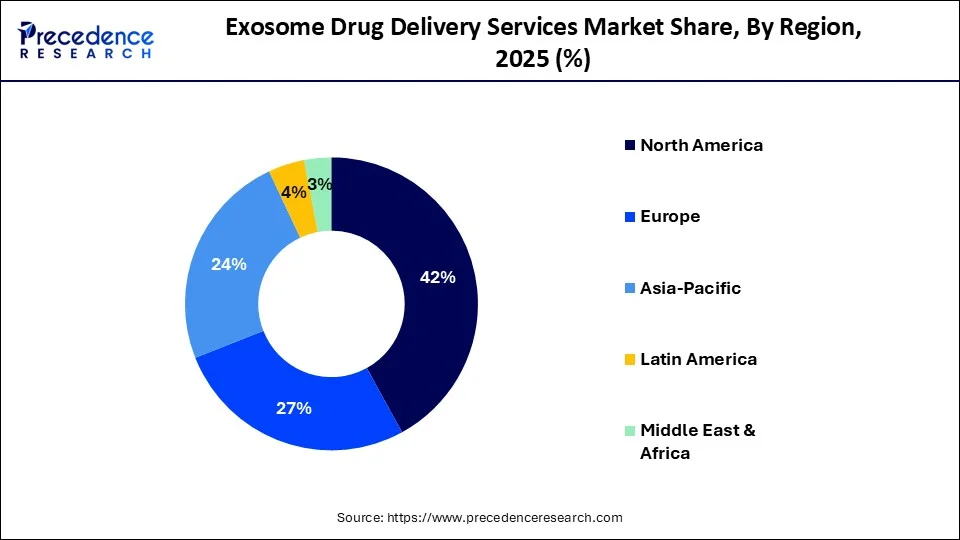
North America led the market, capturing the largest revenue share in 2025, accounting for an estimated 42%, due to strong biotechnology investment and a well-established ecosystem of specialized exosome service providers.
U.S. Exosome Drug Delivery Services Market Size and Growth 2026 to 2035
The U.S. exosome drug delivery services market size was evaluated at USD 1.53 billion in 2025 and is projected to reach around USD 7.03 billion by 2035, growing at a CAGR of 16.47% from 2026 to 2035.
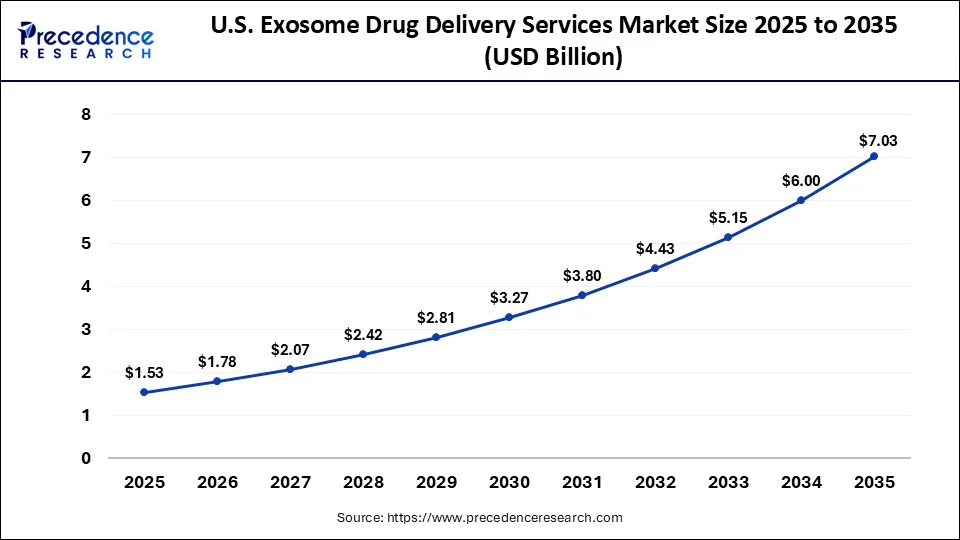
United States
Advanced therapeutic development and commercialization of exosomes was underpinned by strong biotechnology funding and widespread pharmaceutical R&D efforts.
Global leaders in the field of CROs, CDMOs, academic institutions, and specialized analytical laboratories enhanced the country's worldwide leadership in exosome services.
Canada
New opportunities emerged with the expansion of research in regenerative medicine for engineering exosomes and the development of translated therapeutic programs.
Mexico
Advanced biologics and drug delivery development services were adopted to a greater extent as a result of the expansion of pharmaceutical manufacturing.
Asia Pacific Region Growing with Fastest CAGR of 21%
Asia Pacific held a 24% share of the market in 2025 and is expected to grow at a 21% CAGR between 2026 and 2035, driven by biotechnology expansion, research funding, and outsourcing activities continuing to accelerate rapidly.
China
A major investment in biotechnology to support the development of therapeutics and enhance extracellular vesicle research.
Japan
Academic and industry collaborations were strong and facilitated the development of next-generation extracellular vesicle therapeutics.
India
Exosome R&D and analytical characterization services were outsourced to this cost-effective research platform on a global level.
Europe Expected to Held Market Share of 27% in 2025
Europe is expected to hold 27% of the market in 2025 and is estimated to grow at a considerable CAGR of 16.5% over the projected period, supported by strong growth through regenerative medicine innovation and a mature regulatory ecosystem supporting advanced therapies.
Germany
Continued development of sophisticated exosome technologies was supported by strong pharmaceutical manufacturing and biotechnology research.
United Kingdom
Exosome engineering and precision medicine advanced with the help of advanced life sciences research, both in academic and industrial communities.
France
The development of next-generation biological delivery platforms was quickened through strong public-private partnerships.
Latin America Held Notable Market Share with 4% in 2025
The Latin America region is expected to grow at a notable CAGR of 14.5% between 2026 and 2035, due to growing research activities and increasing adoption of advanced therapeutic development services.
Brazil
Academic and industry collaborations grew, leading to the development of extracellular vesicles for therapeutics.
Argentina
The ability of strong scientific research led to the growth of biotechnology innovation and the development of translational medicine.
Middle East & Africa Held a Considerable Market Share of 3% in 2025
The Middle East & Africa region is expected to grow at a strong CAGR of 16% between 2026 and 2035, driven by healthcare modernization and research infrastructure supporting future therapeutic innovation.
GCC
Growing healthcare infrastructure boosted the adoption of more advanced biologics and therapeutic technologies.
South Africa
Biomedical research institutions were created, fostering pharmaceutical development and the ability to do translational research.
Competitive Landscape
Market Structure and Competitive Intensity
The market is very fragmented, and the market can be divided into a number of large integrated CDMOs and a number of smaller niche specialists. Easy new entry is hampered by high technical barriers such as GMP compliance and characterization expertise. This fragmentation is expected to slowly coalesce as clinical programs move towards commercial scale manufacturing requirements.
Capability-Based Competitive Benchmarking
The depth of support in regulations, payload loading, engineering, and isolation are ways providers stand out. The acquisition of Codiak BioSciences' former exosome manufacturing facility in 2021 by Lonza is a key milestone in the industry. There are definite competitive advantages to companies that provide a more comprehensive capability from discovery through GMP manufacturing.
Service Portfolio Benchmarking
More services facilites more competition, as market leaders grow apart from their more limited rivals. Exo-Top, a subsidiary of the company, signed a distribution MOU for naïve exosome products in Mexico for Exo-Top. This will be marketed by the company under the NurExone brand. Clients are more likely to stay in programs with providers that support programs at all stages of development.
Technology and Platform Benchmarking
The true differentiators between players are proprietary engineering platforms and analytical tools. With the acquisition, Lonza acquired sub-licensable rights to Codiak's new high throughput manufacturing process for cGMP. Defensible and validated platform technologies give companies better negotiating leverage in partner deals.
Strategic Developments
Competitive dynamics continue to evolve throughout 2025 and 2026, through partnerships, licensing, and facility expansion. In the end of 2025, Exousia Bio acquired exclusive exosome technology. That licenses for applications in cancer worldwide. The addition of the patent granted in May 2026 in South Korea to NurExone's growing patent portfolio. This further enhances its strategic market positioning even more.
Exosome Drug Delivery Services Market Companies
- CD Bioarticles
- Danaher
- Fujifilm
- Illumina
- Lonza
- Magtech
- Malvern Instruments
- MBL International
- Miltenyi Biotec
- Qiagen
- Takara Bio
- Theraxyte
- Thermo Fisher Scientific
- Company Profiles
- Lonza
Lonza is one of the world's largest CDMOs, providing biologic and advanced therapy manufacturing worldwide. Davide Zocco is responsible for the commercial development of Lonza's Exosomes and mRNA Technologies. Further leading manufacturing collaborations in new therapeutic areas. Lonza joined RION in September 2025 to provide cGMP manufacturing support in the production of platelet-derived exosome drug substances.
NurExone Biologic
NurExone, a Toronto and Haifa-based biopharmaceutical company, is developing exosome therapies for central nervous system injuries. Its U.S. affiliate, Exo-Top, started GMP-compliant manufacturing and signed a distribution MOU for naïve exosomes in Mexico. This will enable the company to expand its product offerings across the Americas. The company's intellectual property portfolio is still growing. The company is moving ExoPTEN forward into wider clinical development.
Investment and Funding Analysis
Investment Trends in Exosome Technology
Exosome technology continues to receive a steady flow of funding from a variety of sources. This includes venture capital, government grants, and pharmaceutical companies. ARPA-H continues to have active funding opportunities of interest for advanced manufacturing and health technology translation. This mix of funding sources helps to minimize the capital's dependence on a single source for developers.
Funding by Development Stage
Discovery and preclinical programs are eligible for widespread investor and grant funding. ExTReMe will specifically enable extracellular vesicle therapeutics to be translated to clinical applications in regenerative medicine. More focused and directed capital comes to the clinical stage. Especially where programs are close to regulatory milestones. Investment in manufacturing products has increasingly gone towards providers that are truly commercially ready to scale.
Investment Opportunity Areas
Two promising fields for future investment are engineered exosomes and RNA delivery systems. Investors also focus on manufacturing platforms to solve problems of reproducibility in 2025 and 2026. The EXOFASTTRACK consortium of Origens is funded by the Walloon government. They aim at improvements in manufacturing, loading, and quality control. Remaining high-potential investment opportunities are complemented by quality testing and end-to-end service platforms.
M&A and Strategic Partnership Outlook
The acquisition of Exousia AI by Exousia Bio was announced late last week of 2025. This is a continuation of the consolidation that has been ongoing in exosome-centric biotech. Therapeutic developers should continue to foster strategic collaborations with CDMOs. That should grow through 2026. Other projects under the auspices of the government, such as EXOFASTTRACK, serve as other examples of industry-wide multi-stakeholder, collaborative development strategies.
Future Outlook (2025-2035)
Short-Term Outlook: 2025-2028
Research outsourcing and platform validation are likely to continue to be a strong feature of activities in this period. In these years, most companies are concerned with preclinical development. The exosome therapeutics field as a whole faces challenges with standardisation as it moves forward in 2026.
Medium-Term Outlook: 2028-2032
More of these candidates should move forward in Phase II and III clinical trials. This will lead to meaningful clinical translation. Regulatory standardization will likely become more advanced to give better pathways for engineered exosome products. Targeting and payload technologies are becoming increasingly sophisticated. They are likely to increase in size and scale for engineered exosome services.
Long-Term Outlook: 2032-2035
Next generation payload delivery systems, from gene editing to complex biologics, should be clinically mainstreamed. The licensing agreement with Brexogen in South Korea was the first step in the region's exosome therapeutic out-licensing success, demonstrating commercial maturity. Consolidation, too, is likely, with larger, integrated providers taking over smaller niche providers.
Strategic Recommendations
Recommendations for Exosome Service Providers
Providers should focus on creating joined up discovery to manufacture capabilities within an integrated platform. The fact that strong quality systems are still essential today is just as important. They involve extensive potency and reproducibility testing. Closed, GMP compatible processing technologies, such as tangential flow depth filtration. Making a significant investment in competitive positioning.
Recommendations for Pharmaceutical and Biotechnology Companies
Businesses need to hire outsourcing partners that are prepared and have the depth of knowledge to handle regulations. In 2026, industry experts observed that collaborating with CDMO partners who adopted a collaborative and agile approach could significantly minimize development risks and delays. Having a manufacturing partner early on prevents getting into last-minute technology transfer issues.
Recommendations for CROs and CDMOs
CROs and CDMOs need to make a conscious effort to diversify. They should ecome a provider of analytical, engineering, and preclinical services for exosomes. In 2026, AI is becoming a key driver of faster, more accurate development and manufacturing services throughout the CDMO industry. Providers should also look into establishing collaborations with educational institutions to gain the latest in engineering innovations.
Recommendations for Investors
Engineered exosomes, RNA and mRNA delivery platforms, and integrated service models are the top focus areas for investors. The Asia-Pacific region in particular holds excellent growth prospects. Special translation programs are being sponsored by the governments of China, Japan, and South Korea. The exosome platforms derived from plants are a new investment opportunity. That may prove to be more economical and of significant interest to be considered.
Complete Market Segmentation
By Service Type
- Exosome Isolation & Purification Services
- Exosome Characterization & Quality Testing Services
- Exosome Engineering & Surface Modification Services
- Drug Loading & Encapsulation Services
- Exosome Formulation & Stabilization Services
- Preclinical Testing Services
- Clinical Development Support Services
- Regulatory & Compliance Services
- Manufacturing & Scale-up Services
By Exosome Source
- Mesenchymal Stem Cell-derived Exosomes
- Dendritic Cell-derived Exosomes
- Immune Cell-derived Exosomes
- Tumor Cell-derived Exosomes
- Plant-derived Exosomes
- Other Biological Sources
By Therapeutic Payload
- Small-Molecule Drug
- Nucleic Acids
- siRNA & miRNA
- mRNA
- Proteins & Peptides
- Gene Editing Components
- Combination Payloads
By Application
- Cancer Drug Delivery
- Gene Therapy Delivery
- RNA Therapeutics Delivery
- Vaccines
- Regenerative Medicine
- Neurological Disorders
- Cardiovascular Disorders
- Infectious Diseases
- Autoimmune Diseases
- Other Applications
By Development Stage
- Discovery & Research
- Preclinical Development
- Phase I Clinical Development
- Phase II Clinical Development
- Phase III Clinical Development
- Commercial Manufacturing Support
By End User
- Pharmaceutical Companies
- Biotechnology Companies
- Contract Development & Manufacturing Organizations (CDMOs)
- Contract Research Organizations (CROs)
- Academic & Research Institutes
- Hospitals & Specialized Medical Centers
- Government & Public Research Organizations
By Service Provider Model
- Integrated Full-Service Providers
- Specialized Exosome Service Providers
- Academic & Research-based Service Providers
- Contract-based Platform Providers
By Region
- North America
- Latin America
- Europe
- Asia-pacific
- Middle and East Africa
For inquiries regarding discounts, bulk purchases, or customization requests, please contact us at sales@precedenceresearch.com
Frequently Asked Questions





Ask For Sample
No cookie-cutter, only authentic analysis – take the 1st step to become a Precedence Research client
 Get a Sample




 sales@precedenceresearch.com
 Schedule a Meeting
