



Gastro-retentive Drug Delivery Systems Outsourcing Market Size, Companies, Share, Patient Volume, Treatment Adoption Rates, Pricing Analysis, Regulatory Landscape, Competitive Positioning, and Demand Forecast
Gastro-retentive Drug Delivery Systems Outsourcing Market (By Drug Type: Biologics, Small Molecules, Generics; By Technology: Floating Drug Delivery Systems, Swelling and Expanding Systems, Mucoadhesive Systems; By Application: Anti-Ulcer Drugs, Cardiovascular Drugs, Anti-Inflammatory Drugs, Others; By Route of Administration: Oral, Transdermal, Nasal, Rectal) - Global Industry Analysis, Size, Trends, Leading Companies, Regional Outlook, and Forecast 2026 to 2035
Source: https://www.precedenceresearch.com/gastro-retentive-drug-delivery-systems-outsourcing-market
 Get a Sample
 Table Of Content


What is the Gastro-retentive Drug Delivery Systems Outsourcing Market Size?
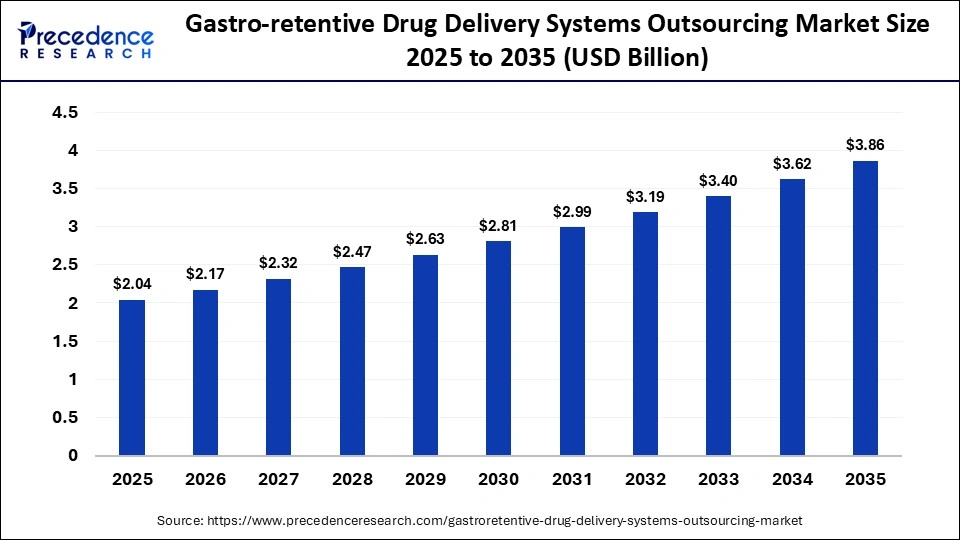
The global gastro-retentive drug delivery systems outsourcing market size was calculated at USD 2.04 billion in 2025 and is predicted to increase from USD 2.17 billion in 2026 to approximately USD 3.86 billion by 2035, expanding at a CAGR of 6.58% from 2026 to 2035. The market is growing because of the rising prevalence of chronic disease, the need for controlled-release oral formulations, and low-cost medication.
Market Highlights
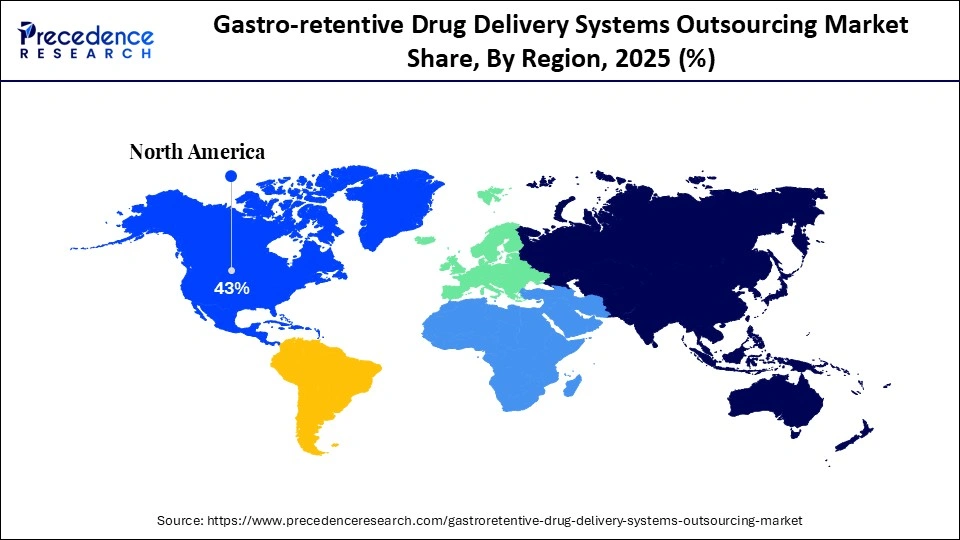
- North America dominated the market with the largest market share of 43% in 2025.
- Asia-Pacific is expected to be the fastest-growing region during the forecast period.
- By drug type, the biologics segment held a dominant position in the market in 2025.
- By drug type, the generics segment is expected to grow at the fastest CAGR during the forecast period.
- By technology type, the floating drug delivery segment dominated the market in 2025.
- By technology type, the mucoadhesive systems segment is expected to show the fastest growth over the forecast period.
- By application, the anti-ulcer drugs segment led the global gastro-retentive drug delivery systems outsourcing market in 2025.
- By application, the cardiovascular drugs segment is expected to witness the fastest growth in the market over the forecast period.
- By route of administration, the oral segment registered its dominance over the global market in 2025.
- By route of administration, the transdermal segment is expected to expand rapidly in the market in the coming years.
Market Overview
The global gastro-retentive drug delivery systems outsourcing market focuses on specialized formulation and development services designed to enhance gastric residence time and improve drug bioavailability. These systems are commonly used for drugs with a narrow absorption window or requiring prolonged local action in the stomach. Outsourced services include formulation development, selection of functional excipients and polymers, in-vitro and in-vivo testing, and regulatory documentation. Market growth is driven by rising demand for controlled-release oral formulations, and pharmaceutical companies prefer outsourcing to reduce developmental costs.
How AI Is Transforming the Market?
Artificial intelligence is slowly changing the gastro-retentive drug delivery systems outsourcing market, particularly in formulation design and development stages. AI helps to predict drug-polymer interactions and release profiles before large-scale trial initiations, which helps in reducing time and cost. Outsourcing companies are using data-driven simulations to select suitable excipients and optimize formulation parameter as tablet density and gastric retention time. Machine learning tools assist in the formulation of database management, reproducibility improvement, and maintaining regulatory documentation. By reducing trial-and-error work and saving development time, AI allows outsourcing partners to offer more reliable and cost-effective services to pharmaceutical companies.
Market Trends
- Rising prevalence of chronic disease and long-term therapy is pushing demand for gastro-retentive systems, as this system improves drug absorption and patient compliance over conventional options.
- Continuous improvement in polymers and excipients is expanding formulation, leading developers to outsource experimentation rather than invest heavily in new tools and internal infrastructure.
- There is a growing preference for extended-release formulations, as they help maintain steady drug levels, reduce dosing frequency, and improve patient adherence, leading more companies to outsource gastro-retentive formulation development.
- The need for a cost-effective drug development is driving the gastro-retentive drug delivery systems outsourcing market, as outsourcing can reduce developmental cost and time significantly.
- Regulatory authorities are showing strong support for innovative drug delivery systems, encouraging pharmaceutical companies to invest in advanced gastro-retentive formulation development.
Market Scope
| Report Coverage | Details |
| Market Size in 2025 | USD 2.04 Billion |
| Market Size in 2026 | USD 2.17 Billion |
| Market Size by 2035 | USD 3.86 Billion |
| Market Growth Rate from 2026 to 2035 | CAGR of 6.58% |
| Dominating Region | North America |
| Fastest Growing Region | Asia Pacific |
| Base Year | 2025 |
| Forecast Period | 2026 to 2035 |
| Segments Covered | Drug Type, Technology, Application, Route of administration, and Region |
| Regions Covered | North America, Europe, Asia-Pacific, Latin America, and Middle East & Africa |
Segmental Insights
Drug Type Insights
Why the Biologics Segment Dominated the Market in 2025?
The biologics segment held a dominant position in the gastro-retentive drug delivery systems outsourcing market in 2025 due to the complex nature of these drugs. Biologics often show poor stability and limited absorption when delivered through conventional oral dosage forms. Gastro-retentive systems help improve their retention time in the stomach, which supports better absorption and therapeutic performance. Developing such formulations requires specialized expertise, advanced polymers, and detailed testing, which pushes pharmaceutical companies to outsource the work.
The generics segment is expected to grow with the highest CAGR in the market during the studied years as pharmaceutical companies focus on improving existing drugs rather than developing new molecules. Many generic drugs face absorption challenges or require frequent dosing, which makes them suitable candidates for a gastro-retentive delivery system. By using gastro-retentive formulations, companies can enhance product performance and differentiate their product in competitive markets. Cost sensitivity also plays a major role.
Technology Insights
How the Floating Drug Delivery Systems Segment Dominated the Market in 2025?
The floating drug delivery systems segment dominated the global gastro-retentive drug delivery systems outsourcing market in 2025 because it is the most established and widely accepted gastro-retentive technology. These systems are designed to remain buoyant in the stomach, allowing drugs to stay longer in the gastric environment. Floating drug delivery systems are easier to design, scale up, and manufacture compared to other gastro-retentive approaches. This makes them the preferred choice for pharmaceutical companies and outsourcing partners. They are commonly used for drugs that absorb better in acidic conditions or need extended release.
The mucoadhesive systems segment is expected to grow at the fastest CAGR in the market during the forecast period because companies focus more on precise and targeted gastro-retentive solutions. These systems work by attaching to the stomach lining, allowing the drug to remain at the site for a longer period. This approach is especially useful for drugs that require localized action. Recent advancements in polymer science have improved the safety and effectiveness of mucoadhesive materials, making them a more preferred choice for development.
Application Insights
Why the Anti-Ulcer Drugs Segment Dominated the Market in 2025?
The anti-ulcer drugs segment registered its dominance over the global gastro-retentive drug delivery systems outsourcing market in 2025 because these drugs benefit from prolonged gastric retention. Conditions such as peptic ulcers, acid reflux, and Helicobacter pylori infections require medicines to remain in the stomach for effective treatment. Gastro-retentive systems help maintain drug concentration at the target site for a longer time, improving therapeutic outcomes. Pharmaceutical companies often outsource formulation development for a drug for precise release control and consistent performance.
The cardiovascular drugs segment is expected to gain the highest share of the market during the forecast period due to rising cases of cardiovascular disease worldwide. Many cardiovascular drugs require controlled and sustained drug release to reduce dosing frequency. Pharmaceutical companies are exploring gastro-retentive approaches for cardiovascular drugs with narrow absorption windows. Outsourcing plays an important role, as developing such formulations involves complex testing and optimization.
Route of Administration Insights
Why the Oral Segment Dominated the Market in 2025?
The oral segment registered its dominance over the global gastro-retentive drug delivery systems outsourcing market in 2025 because it is the most preferred and widely accepted method for drug administration. Oral formulations are easy to manufacture, cost-effective, and known to both patients and healthcare providers. Gastro-retentive systems are mainly designed to enhance oral drug performance by extending gastric residence time. Many chronic therapies, including gastrointestinal and cardiovascular treatments, rely on oral dosage forms for long-term use.
The transdermal segment is expected to witness the fastest growth in the market over the forecast period because companies explore alternative delivery routes to improve patient comfort and compliance. Transdermal systems help avoid gastrointestinal side effects and first-pass metabolism. Pharmaceutical companies are outsourcing transdermal development to access specialized expertise and reduce development costs. Increasing focus on non-invasive and long-acting therapies is also supporting growth.
Regional Insights
How Big is the North America Gastro-retentive Drug Delivery Systems Outsourcing Market Size?
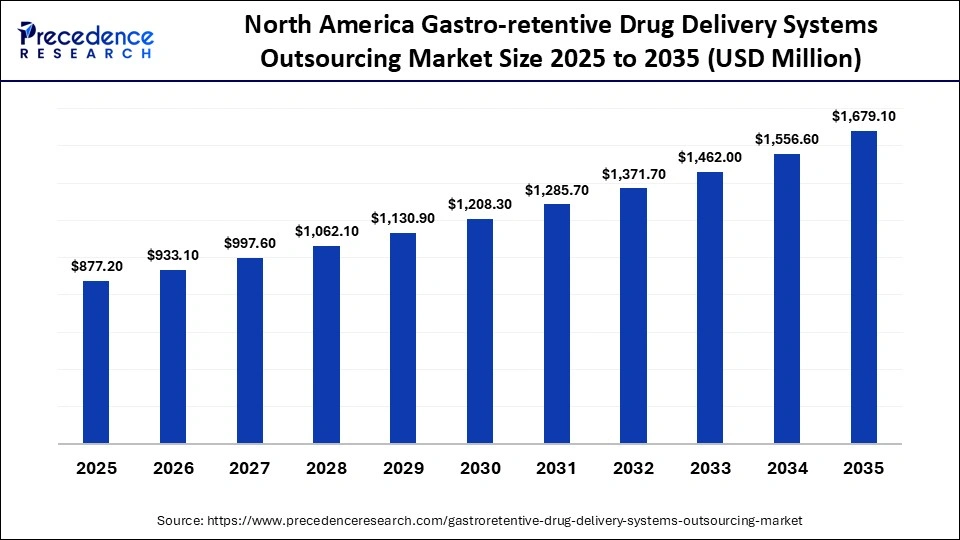
The North America gastro-retentive drug delivery systems outsourcing market size is estimated at USD 877.20 million in 2025 and is projected to reach approximately USD 1,679.10 million by 2035, with a 6.71% CAGR from 2026 to 2035.
What Factors Made the North America Region the Dominant Region in the Market?
North America dominated the global gastro-retentive drug delivery systems outsourcing market in 2025 due to its advanced pharmaceutical infrastructure and early adoption of innovative drug delivery systems. The region has a strong focus on research, quality testing, and regulatory compliance, which supports the development of gastro-retentive systems. Increasing cases of chronic diseases, such as gastrointestinal and metabolic disorders, demands for extended and controlled-release oral drugs. Regulatory support and guidance further encourage innovation, which makes the north America dominate the market.
What is the Size of the U.S. Gastro-retentive Drug Delivery Systems Outsourcing Market?
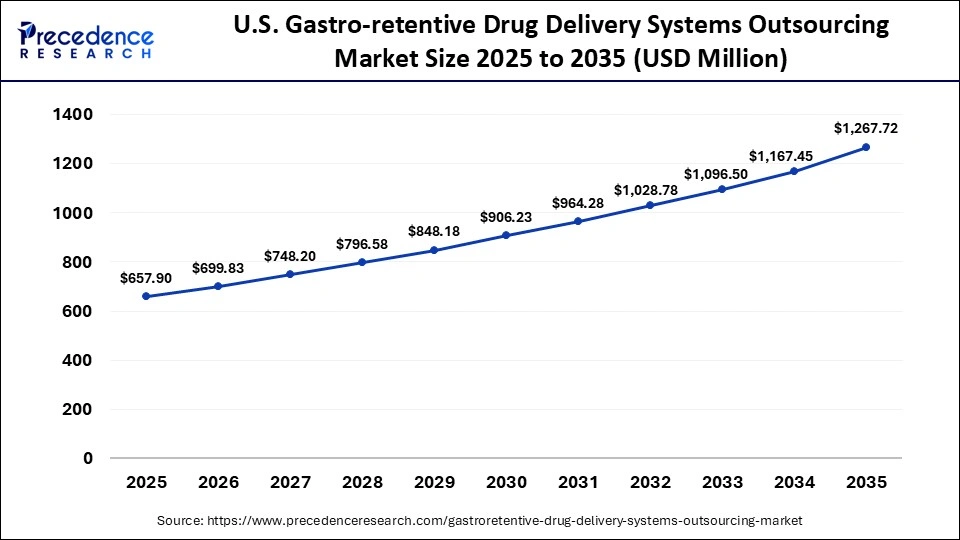
The U.S. gastro-retentive drug delivery systems outsourcing market size is calculated at USD 657.90 million in 2025 and is expected to reach nearly USD 1,267.72 million in 2035, accelerating at a strong CAGR of 6.78% between 2026 and 2035.
U.S. Market Trends
The U.S. market plays a major role in the gastro-retentive drug delivery systems outsourcing market due to its focus on innovation and faster drug development timelines. Pharmaceutical companies prefer outsourcing gastro-retentive formulation work to reduce costs. There is growing interest in extended-release and patient-friendly oral dosage forms, which is supporting market demand. Strong connections between industry, research institutions, and academic centres also help advance new formulation approaches.
Which Factors Influence the Fastest Growth of the Asia Pacific Market?
Asia Pacific is expected to grow at the fastest CAGR in the market during the forecast period because pharmaceutical manufacturing and research capabilities are expanding across the region. Countries like China, India, and South Korea are investing in formulation development facilities and technical skills. Lower development costs make the region attractive for outsourcing compared to Western markets. At the same time, rising healthcare needs and a large patient population are increasing demand for advanced drug delivery systems.
India Market Trends
India is emerging as an important outsourcing market due to its strong generic manufacturing base and growing focus on advanced formulations. Many Indian companies are expanding their capabilities in controlled and gastro-retentive drug delivery systems. Improving regulatory guidelines, competitive pricing, and the availability of skilled professional support will drive market growth. Rising cases of gastric disorders and chronic conditions are increasing local demand as well.
Which Factors Made Europe a Significantly Growing Region in the Market?
Europe is expected to grow at a considerable CAGR in the gastro-retentive drug delivery systems outsourcing market in the upcoming period due to increasing investment in pharmaceutical research and a strong focus on quality standards. Countries such as Germany, the UK, and France are gaining higher demand for advanced oral drug delivery systems. Pharmaceutical companies in the region often outsource gastro-retentive formulation to manage development costs and meet strict regulatory requirements. An ageing population and rising cases of gastric disorders are also demanding controlled-release therapies.
UK Market Trends
The UK gastro-retentive drug delivery systems outsourcing market is growing, driven by demands for improved bioavailability and patient-centric, controlled-release formulations. Trends include 3D printing and AI-driven design, with opportunities in floating/mucoadhesive capsules for chronic care and growing contract manufacturing partnerships.
Who are the Major Players in the Global Gastro-Retentive Drug Delivery Systems Outsourcing Market?
The major players in the gastro-retentive drug delivery systems outsourcing market include Aptar Pharma, Lonza Group, Catalent Pharma Solutions, Evonik Industries, Coloron, Inc., Patheon, Skyepharma, Baxter Bio Pharma Solutions, Recipharm, Vetter Pharma, PCI Pharma Services, Next Pharma, Sharp Packaging Services, Famar, Aenova Group, Alcami Corporation, Corden Pharma, Pharmaceutics International, Rottendorf Pharma, and Aesica Pharmaceuticals.
Recent Developments
- In November 2025, researchers developed a 3D-printed gastro-retentive floating tablet of famotidine designed to prolong stomach residence and enhance drug release. Using hot-melt extrusion and fused deposition modelling, the formulation demonstrated sustained buoyancy and controlled release, potentially improving bioavailability and treatment outcomes.(Source: https://www.pharmaexcipients.com)
- In November 2025, researchers developed a mucoadhesive gastro-retentive drug delivery system (M-GRDDS) for effective delivery of antibiotics to the gastric mucosa. The GRDDS system was formulated using the ion-gelation method, and results are improved local bioavailability, contributing to the eradication of H. pylori-based gastric ulcers. (Source: https://pmc.ncbi.nlm.nih.gov)
- In December 2024, researchers unveiled advancements in floating drug delivery systems, enabling prolonged gastric retention and controlled oral release. The innovation promises improved bioavailability, reduced dosing frequency, and enhanced outcomes for patients.(Source: https://www.ijpsjournal.com)
Segments Covered in the Report
By Drug Type
- Biologics
- Small Molecules
- Generics
By Technology
- Floating Drug Delivery Systems
- Swelling and Expanding Systems
- Mucoadhesive Systems
By Application
- Anti-Ulcer Drugs
- Cardiovascular Drugs
- Anti-Inflammatory Drugs
- Others
By Route of Administration
- Oral
- Transdermal
- Nasal
- Rectal
By Region 
- North America
- Europe
- Asia-Pacific
- Latin America
- Middle East & Africa
For inquiries regarding discounts, bulk purchases, or customization requests, please contact us at sales@precedenceresearch.com
Frequently Asked Questions





Ask For Sample
No cookie-cutter, only authentic analysis – take the 1st step to become a Precedence Research client
 Get a Sample




 sales@precedenceresearch.com
 Schedule a Meeting
