



Hematopoietic Stem Cell Transplantation Market Size, Companies, Share, Patient Volume, Treatment Adoption Rates, Pricing Analysis, Regulatory Landscape, Competitive Positioning, and Demand Forecast
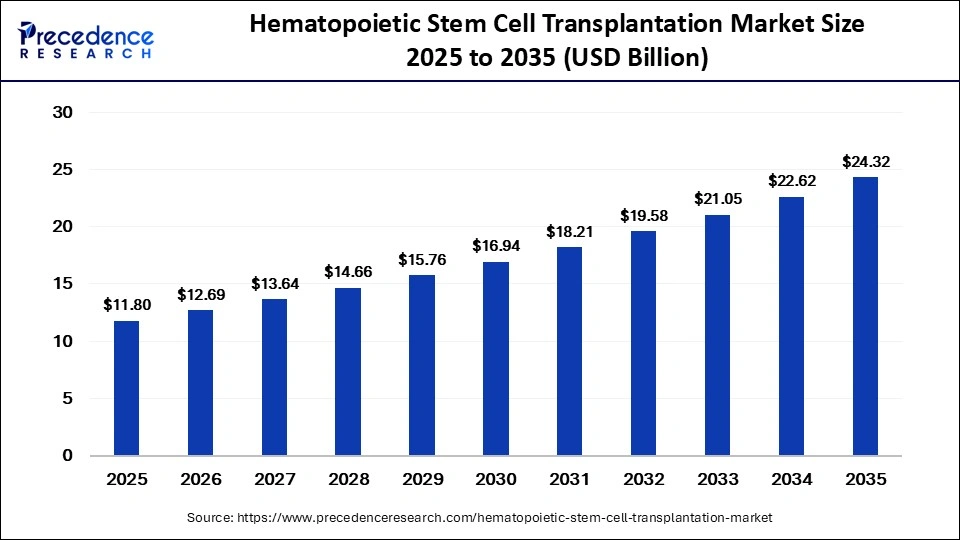
Rohan Patil, a Healthcare Industry Expert, highlights that the hematopoietic stem cell transplantation market has reached USD 12.69 billion in 2026 and is on track to reach USD 24.32 billion by 2035, advancing at a CAGR of 7.50%. Key hematopoietic stem cell transplantation market companies shaping the market include Novartis, Gilead Sciences, Baxter International, Fresenius Kabi, while major growth segments span By Type of Transplant, By Stem Cell Source, By Conditioning Regimen, By Application, By End-Use.
Source: https://www.precedenceresearch.com/hematopoietic-stem-cell-transplantation-market
 Get a Sample
 Table Of Content


What is the Hematopoietic Stem Cell Transplantation Market Size in 2026?
The global hematopoietic stem cell transplantation market size accounted for USD 11.80 billion in 2025 and is predicted to increase from USD 12.69 billion in 2026 to approximately USD 24.32 billion by 2035, expanding at a CAGR of 7.50% from 2026 to 2035. The rising incidence of blood cancers and advancements in stem cell transplant technologies drive the market.
Key Takeaways
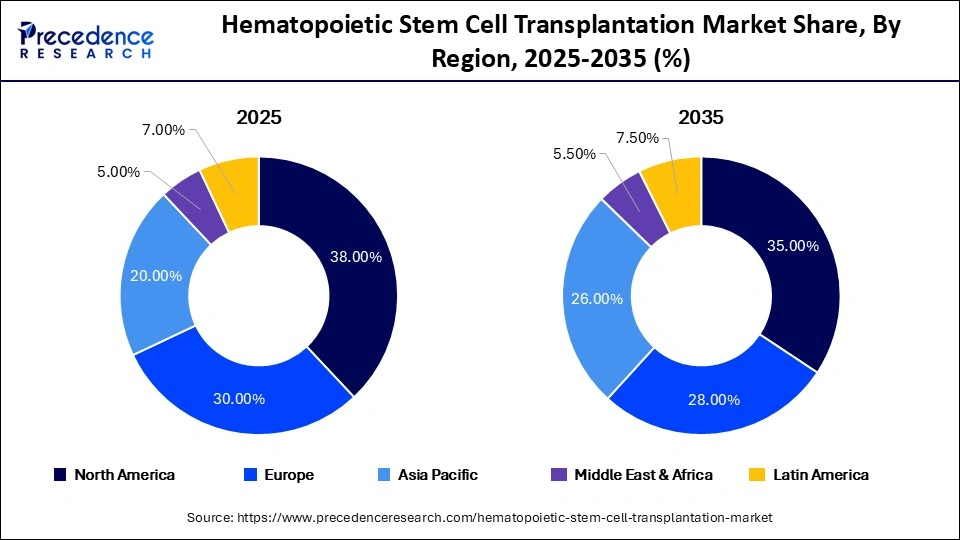
- North America dominated the global hematopoietic stem cell transplantation market, accounting for a 38% share in 2025.
- Asia-Pacific is expected to grow at the fastest CAGR of 9.2% during the forecast period.
- By type of transplant, the autologous stem cell transplantation (ASCT) segment held a dominant position in the market, accounting for 50% of the market share in 2025.
- By type of transplant, the allogeneic stem cell transplantation (AlloSCT) segment is expected to grow at the fastest CAGR of 7.8% CAGR between 2026 and 2035.
- By stem cell source, the bone marrow-derived stem cells segment accounted for a considerable revenue share of 40% in the market in 2025.
- By stem cell source, the umbilical cord blood stem cells segment is expected to grow at the highest CAGR of 7.8% CAGR between 2026 and 2035.
- By application, the hematologic malignancies segment led the global market with a share of 50% in 2025.
- By application, the autoimmune diseases segment is expected to expand rapidly with a CAGR of 8% between 2026 and 2035.
- By end-use, the hospitals segment accounted for a considerable revenue share of 60% in the market in 2025.
- By end-use, the research institutes segment is expected to grow at the fastest CAGR of 8.5% between 2026 and 2035.
Advancing Hematopoietic Stem Cell Transplantation Through Innovative Therapeutic Solutions
The prevalence of hematologic diseases like leukaemia, lymphoma, anaemia, and inherited immune deficiencies is creating significant growth opportunities for the market. A very specific technique that is employed when healthy stem cells are transplanted into the patient to restore normal blood cell formation in intensive therapy. Growth of awareness about early diagnosis and development of advanced health care infrastructure is further propelling the growth of the market. Significant population ageing and widening contribution of blood cancer and genetic disorders in this ageing population have provided a significant drive for the demand for autologous and allogeneic stem cell transplantation procedures.
Key AI Integration in the Hematopoietic Stem Cell Transplantation Market
AI is transforming the market, including greater accuracy in diagnosis, donor and recipient matching, and treatment planning. The use of AI in stem cell research is accelerating drug developments and the optimisation of stem cell transplantation techniques. AI-driven platforms are becoming a staple in hospitals and research labs to use for their operations, track patient recovery, and boost the success rates of transplants in the long term.
Hematopoietic Stem Cell Transplantation Market Trends
- Increased success in the grafting of patients with leukaemia and lymphoma is being realised by these methods through new methods of matching donors, expanding donor panels globally, and the development of new immunosuppressive therapies to reduce the likelihood of rejection and other complications.
- Genomic manipulation and technologies utilising “regen” are increasingly converging to find innovative and new ways of eliminating inherited blood disorders and prolonging patient lives globally, and improving the survival rate.
- The growing availability of cord blood, decreased risk of graft-versus-host disease (GVHD), and increasing use from around the world for treatment of pediatric and adult hematologic disorders are propelling growth in the U.S. market.
- The expansion of healthcare facilities, along with the growing investment from government bodies in the treatment of cancer and rare diseases, is giving a fillip to the availability of stem cell transplantation (SCT) services, augmenting the clinical research activities, and enhancing the global market.
Market Scope
| Report Coverage | Details |
| Market Size in 2025 | USD 11.80 Billion |
| Market Size in 2026 | USD 12.69 Billion |
| Market Size by 2035 | USD 24.32 Billion |
| Market Growth Rate from 2026 to 2035 | CAGR of 7.50% |
| Dominating Region | North America |
| Fastest Growing Region | Asia Pacific |
| Base Year | 2025 |
| Forecast Period | 2026 to 2035 |
| Segments Covered | Type of Transplant, Stem Cell Source, Conditioning Regimen, Application, End-Use, and Region |
| Regions Covered | North America, Europe, Asia-Pacific, Latin America, and Middle East & Africa |
Market Dynamics
Drivers
Rising Incidence of Hematologic Disorders
Leukaemia, lymphoma, multiple myeloma, and other inherited blood diseases are rapidly increasing and compelling the growth of the market. The use of HSCT has emerged as a key therapy for those patients who need restoration of bone marrow and long-term disease control. The transplantation technique has steadily progressed with better donor compatibility tests, techniques of stem cell preservation, and post-transplantation care, which increases the probability of a successful treatment and survival.
Restraints
Financial Barriers and Limited Accessibility
The high cost of the HSCT procedure is one of the biggest challenges for market growth, although there have been tremendous advancements in the HSCT procedures. In the process of stem cell transplantation, a thorough examination/s is followed by the patient being hospitalized, complex medical technology, searching for the donor, and costs of follow-up care after transplantation, and the financial burden may be significant for patients. The situation has been further worsened by low funding of health care and a lack of advanced reimbursement policies in a number of developing and underdeveloped parts of the world.
Opportunity
Gene Editing and Personalized Medicine
Rise of gene editing and personalized medicine for hematopoietic stem cell transplantation, driving transformation development opportunities. Patient-specific transplantation protocols, tailored to individual patients on the basis of their genetics, disease, and compatibilities, are also being developed using personalized medicine approaches, resulting in improved treatment outcomes and fewer side effects. These advances are greatly enhancing the accuracy and security of HSCT methods and minimising the risk of transplant denials and problems.
Segmental Insights
Type of Transplant Insights
Hematopoietic Stem Cell Transplantation Market Share, By Type of Transplant, 2025-2035 (%)
| Type of Transplant | 2025 | 2035 | CAGR (%) |
| Autologous Stem Cell Transplantation (ASCT) | 50.00% | 48.00% | 6.20% |
| Allogeneic Stem Cell Transplantation (AlloSCT) | 40.00% | 42.00% | 7.80% |
| Syngeneic Stem Cell Transplantation | 10.00% | 10.00% | 5.00% |
The Autologous Stem Cell Transplantation Segment Held the Largest Market Share of 50% in 2025
The autologous stem cell transplantation (ASCT) segment held a dominant position in the hematopoietic stem cell transplantation market with a share of 50% in 2025, due to the improvements and trends in individualized transplantation techniques, together with the rise in haematological malignancies. However, with diseases like lymphoma and multiple myeloma, the technique of "autologous transplantation" is the preferred method because it can be used to decrease the chances of developing graft-versus-host disease and increase the patient's compatibility. The increasing variety of cancer survivors with persistent cancer management and cancer prevention issues will also drive businesses in these segments.
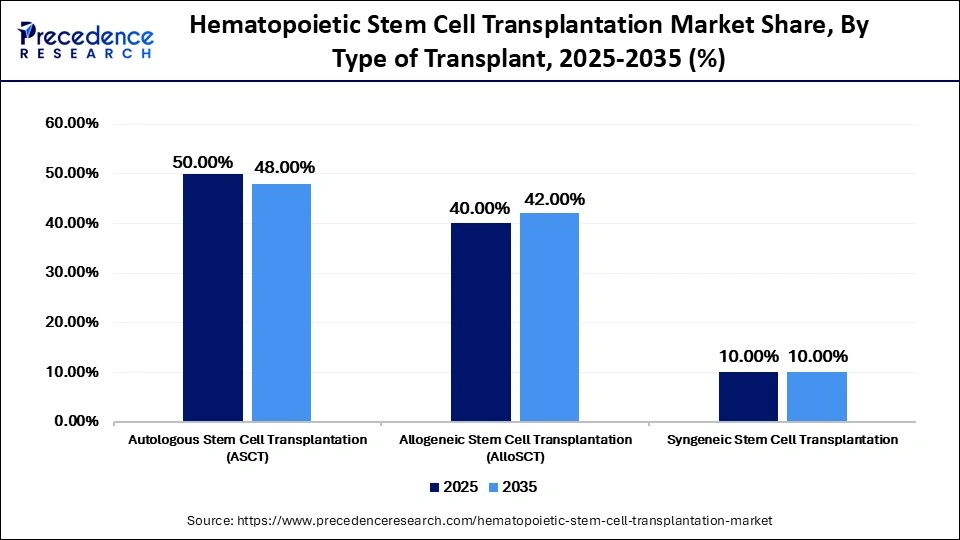
The allogeneic stem cell transplantation (AlloSCT) segment held a 40% of the market share in 2025 and is expected to grow at the fastest CAGR of 7.8% during the projection period, driven by the rising incidence of leukaemia, lymphoma, and other forms of cancer of the blood, which are aggressive or lethal. The rising number of procedures for unrelated stem cell transplantation (UCT) and the expanding global donor registries further propel the growth in the stem cell transplantation market. Patients who need full bone marrow replacement and restoration of their immune system are increasingly being treated with allogeneic transplantations.
The syngeneic stem cell transplantation segment held a 10% of the market in 2025 and is expected to grow at a notable CAGR of 5% during the projection period, due to the increased research efforts and interest in genetically compatible stem cell therapies. Syngeneic transplantation limits rejection of the transplant and graft versus host disease due to the donor's committed stem cells that are genetically identical to the recipient. New techniques and approaches of personalized medicine are helping to improve donor identification and more precise treatment.
Stem Cell Source Insights
Hematopoietic Stem Cell Transplantation Market Share, By Stem Cell Source, 2025-2035 (%)
| Stem Cell Source | 2025 | 2035 | CAGR (%) |
| Bone Marrow-derived Stem Cells | 40.00% | 38.00% | 5.2% |
| Peripheral Blood Stem Cells | 35.00% | 37.00% | 6.0% |
| Umbilical Cord Blood Stem Cells | 25.00% | 25.00% | 7.8% |
The Bone Marrow-derived Stem Cells Dominated the Market with 40% of Market Share in 2025
The bone marrow-derived stem cells segment registered its dominance over the global hematopoietic stem cell transplantation market with a share of 40% in 2025, due to its clinical efficacy and its wide range of applications in the treatment of hematologic malignancies. Bone marrow remains the preferred source of stem cells for the treatment of leukaemia, lymphoma, and other blood diseases, and although the success rate of other sources is likely to improve. Autologous and allogeneic transplantation are growing areas of the market and have seen significant use of bone marrow-derived stem cells.
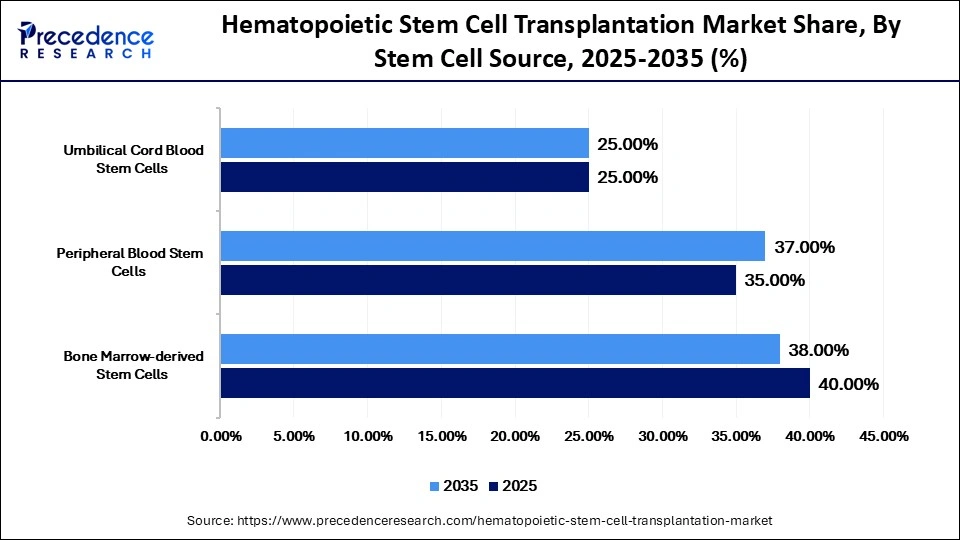
The peripheral blood stem cells segment held a 35% of the market in 2025 and is expected to grow at the fastest CAGR of 6% during the projection period, due to the improved collection process and patients' rapid recovery. Peripheral blood stem cells are the superior choice for both allogeneic and autologous transplantations, and will generally cause less pain and distress in the actual donor. The continued growth is expected to occur in the long term with continued improvements in transplantation technology and supportive care.
The umbilical cord blood stem cells segment held a 25% of the market share in 2025 and is expected to grow at the fastest CAGR of 7.8% during the projection period, due to the increased use of alternative sources of stem cells and effective transplantations in children. The benefits of using umbilical cord blood are numerous, such as increasing supply, reducing GVHD risk, and reducing donor requirements. The number of cord blood banks and cord blood donor registries is growing.
Application Insights
The Hematologic Malignancies Led the Market with 50% of Market Share in 2025
The hematologic malignancies segment registered its dominance over the global hematopoietic stem cell transplantation market with a share of 50% in 2025, due to the rise in the incidence of leukaemia, lymphoma, and multiple myeloma, which have contributed to developing these causes. Stem cell transplantation is one of the most effective treatments available for the blood cancers that are extremely sensitive to high doses of chemotherapy to destroy bone marrow. The number of survivors of the disease and growing interest in the number of post-cancer treatments, which cure the condition.
The non-malignant haematological disorders segment held a 20% of the market share in 2025 and is expected to grow at the fastest CAGR of 6.2% during the projection period, due to the increased incidence of sickle cell, thalassemia, and inherited immune deficiencies. In addition to its therapeutic use for the treatment of many malignant haematological disorders, stem cell transplantation is increasingly being used as a potential cure for patients. The growing knowledge about the enhanced stem cell treatments and the greater availability of advanced healthcare facilities are contributing to the segment's growth.
The autoimmune diseases segment held a 10% of the market share in 2025 and is expected to grow at the highest CAGR of 8% during the projection period, due to the rapid expansion of research and developments in regenerative medicine and immune system therapies. Severe autoimmune diseases, like lupus, multiple sclerosis, and rheumatoid arthritis, are also seeing stem cell transplantation as a treatment area, especially for people who are unresponsive to normal therapies. The invention of the clinical trial & personalized treatment strategy will probably drive the segment growth.
The genetic disorders segment held a 20% of the market in 2025 and is expected to grow at a significant CAGR of 6.3% during the projection period, due to the inherited blood diseases and the development of gene-based therapies. More rare genetic illnesses, including severe combined immune deficiencies, inherited metabolic and haemoglobin diseases, are being successfully treated by stem cell transplantation. Combining genetic editing techniques and personalised medicine strategies is greatly enhancing the accuracy of treatments and sustained success.
End-use Insights
The Hospitals Dominated the Market with 60% of Market Share in 2025
The hospitals segment registered its dominance over the global hematopoietic stem cell transplantation market with a share of 60% in 2025, driven by the growing number of complex stem cell transplants and a growing demand for specialized patient care. Stem cell transplantation continues to happen mainly in hospitals because they have top-notch medical premises, access to multi-speciality health care teams, and extensive intensive care units. Market growth is being driven by an increasing number of hospitals establishing transplantation-specific units and oncology departments.
The research institutes segment held a 10% of the market share in 2025 and is expected to grow at the fastest CAGR of 8.5% during the projection period, driven by the growing investments in research of regenerative medicine and stem cell biology. Research institutes serve as a key agent in the development and advancement of transplantation technologies, the creation of innovative therapies, and clinical studies of hematologic and genetic disorders. The partnerships between academic institutions, biotechnology companies, and a growing number of pharmaceutical companies in stem cell engineering and personalised medicine have stimulated research.
Hematopoietic Stem Cell Transplantation Market Share, By End-Use, 2025-2035 (%)
| End-Use | 2025 | 2035 | CAGR (%) |
| Hospitals | 60.00% | 58.00% | 7.0% |
| Specialized Hematopoietic Transplant Centers | 25.00% | 28.00% | 8.0% |
| Research Institutes | 10.00% | 12.00% | 8.5% |
| Homecare | 5.00% | 5.00% | 6.0% |
The specialized hematopoietic transplant centers segment held a 25% of the market share in 2025 and is expected to grow at a notable CAGR of 8% during the projection period, because of its increased demand for cutting-edge transplantation techniques and greater transplantation success after surgery. They provide the patient with the specific care facility, specialised doctors of the transplant, and a wide range of patient monitoring facilities, which ensure more precise results and benefits to the patient. Stem cell transplant treatment centres have given a huge boost to the growth plans of the existing stem cell transplant centres in the world's developed and emerging healthcare markets.
The homecare segment held a 5% of the market share in 2025 and is expected to grow at a significant CAGR of 6% during the projection period, driven by the rising need for simple recovery solutions and rising home healthcare services. Leveraging homecare, post-transplant recovery services, chronic disease monitoring, medication management, and supportive care after hospital discharge services are all being rolled out all the time. The needs arising from the administration of home nursing services, the improvement of health monitoring systems at home, and connecting with the patient through the use of telemedicine software.
Regional Insights
North America Hematopoietic Stem Cell Transplantation Market Size and Growth 2026 to 2035
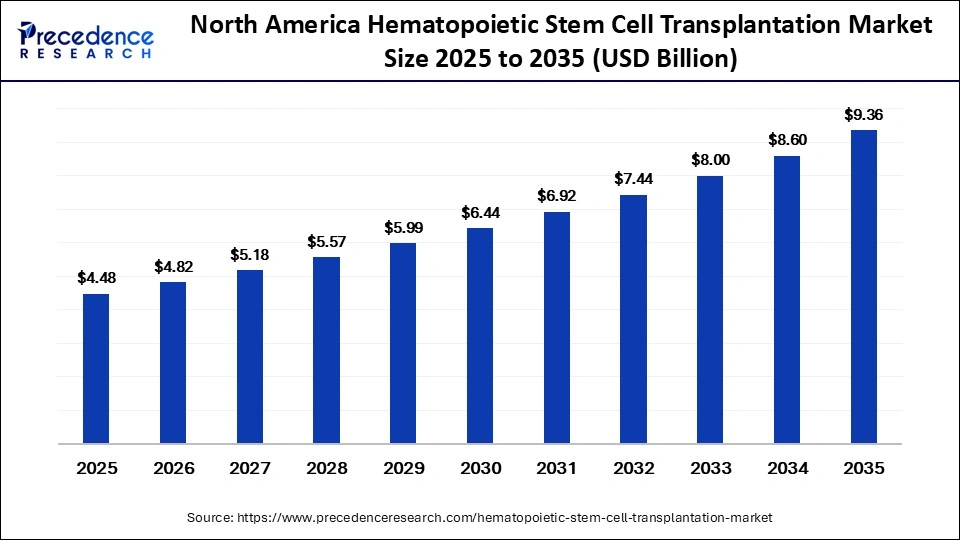
The North America hematopoietic stem cell transplantation market size is estimated at USD 4.48 billion in 2025 and is projected to reach approximately USD 9.36 billion by 2035, with a 7.65% CAGR from 2026 to 2035.
Which Factors Drive the Hematopoietic Stem Cell Transplantation Market in North America?
North America dominated the global market with a share of 38% in 2025, owing to the leading-edge healthcare amenities, highly developed clinical research choices, and extensive adoption of new and ground-breaking stem cell transplantation technology. The region boasts several specialized transplant institutions, in addition to incubating biotechnology companies and huge donor registries. Support for regenerative medicine research continues, along with a new environment of reimbursement and growing investment in precision medicine, further boosting regional growth.
U.S. Hematopoietic Stem Cell Transplantation Market Size and Growth 2026 to 2035
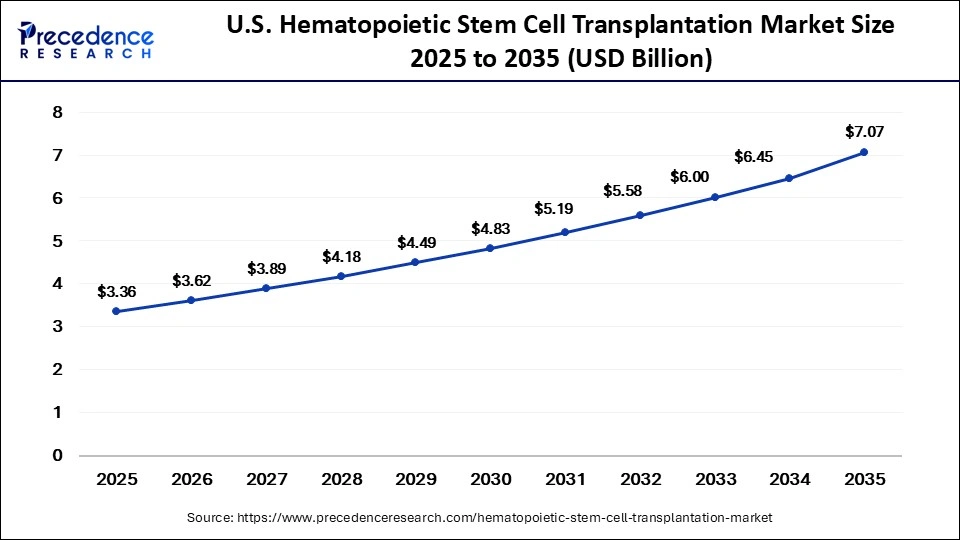
The U.S. hematopoietic stem cell transplantation market size is calculated at USD 3.36 billion in 2025 and is expected to reach nearly USD 7.07 billion in 2035, accelerating at a strong CAGR of 7.72% between 2026 and 2035.
U.S. Market Trends
The U.S. leads the market in North America, as the country's healthcare system is robust and has a well-established infrastructure, and hematologic malignancies have a rising trend of occurrence in the country. The incidence of blood cancers like leukaemia, lymphoma, and multiple myeloma is going up, and this has led to a high demand for both autologous and allogeneic stem cell transplantation therapies. Additionally, the research and development spending of the pharmaceutical and biotechnology companies specializing in drugs for the field of regenerative medicine, gene editing technologies, and personalised medicines is bringing innovation to the forefront.
How is Asia-Pacific Growing in the Hematopoietic Stem Cell Transplantation Market?
Asia-Pacific held a 20% of the market in 2025 and is expected to grow at the fastest CAGR of 9.2% during the projection period, attributing to rapid growth in the region's healthcare institutes and enhanced investments in advanced healthcare technologies. The growing prevalence of hematologic malignancies, inherited hemopathies, and immune deficiencies is greatly contributing to the need for stem cell transplantation throughout the region. The Government is actively making efforts to modernise health facilities, introduce programs of stem cells research, and expand specialised transplant centers.
Japan Market Trends
Japan has a huge investment in the health care field, and plenty of research in regenerative medicine, making it a very dynamic market for hematopoietic stem cell transplantation. Leukaemia, lymphoma, and inherited haematological disorders have become more common in older age groups, and the demand for stem cell transplantation is high in the country. Stem cell therapy innovation and personalised medicine approaches are supported by the government, which contributes to a well-developed healthcare system in Japan.
Why is Europe Experiencing Notable Growth in the Hematopoietic Stem Cell Transplantation Market?
Europe held a 30% of the market share in 2025 and is expected to grow at a notable CAGR of 6.7% during the projection period, due to advanced stem cell therapy and an increase in the transplantation infrastructure. The region is well supported by government investment in medicines research, has well-established health systems, and is seeing increased investment in stem cell banking and individualized treatment methods. An increase in the incidence of hematologic cancers, autoimmune diseases, and genetic blood disorders is playing a significant role in the demand for stem cell transplantation services.
UK Market Trends
The UK has become an important market for hematopoietic stem cell transplantation with its superior overall healthcare system quality, brilliant clinical research structure, and the adoption of advanced stem cell-based therapies. Focused research efforts in the area of regenerative medicine, the development of gene editing, and an increasingly specialised transplant centres of excellence across the country. In the United Kingdom, the number of blood cancers, such as leukaemia and lymphoma, has increased, making Stem Cell Transplantation a growing demand.
Hematopoietic Stem Cell Transplantation Market Companies
- Novartis
- Gilead Sciences
- Baxter International
- Fresenius Kabi
- Celgene (Bristol Myers Squibb)
- Medtronic
- Amgen
- Miltenyi Biotec
- AllCells
- Thermo Fisher Scientific
- Hematologic Technologies
- Bio-Rad Laboratories
- Takeda Pharmaceutical Company
- Sandoz (Novartis)
- Oasis Diagnostics
Recent Developments
- In January 2026, the FDA approved the use of narsoplimab-wuug (Yartemlea) for treating hematopoietic stem cell transplant–associated thrombotic microangiopathy (TA-TMA) in patients 2 years old and older. Omeros' therapy involves selectively inhibiting the function of a key enzyme, MASP-2, in the lectin complement pathway while sparing the normal function of other enzymes in the complement pathway.(Source: https://www.cancernetwork.com)
- In September 2025, Limula and Institut Paoli-Calmettes (IPC) are partnering to test LimONE technology for applications related to Hematopoietic Stem Cell Transplantation (HSCT). The system is designed to enhance the quality of the transplants by removing cryoprotectants and cell debris from the thawed apheresis samples, and thus create consistency in cell processing.(Source: https://www.biopharminternational.com)
- In January 2025, Medexus received FDA approval of GRAFAPEX (treosulfan) injection as part of a preparative regimen for allogeneic transplantation of bone marrow and peripheral blood stem cells. Treatment has been approved for the treatment of children 1 year+ with AML and MDS and adults with acute myeloid leukaemia (AML) and myelodysplastic syndromes (MDS).(Source: https://www.medexus.com)
Segments Covered in the Report
By Type of Transplant
- Autologous Stem Cell Transplantation (ASCT)
- Allogeneic Stem Cell Transplantation (AlloSCT)
- Syngeneic Stem Cell Transplantation
By Stem Cell Source
- Bone Marrow-derived Stem Cells
- Peripheral Blood Stem Cells
- Umbilical Cord Blood Stem Cells
By Conditioning Regimen
- Myeloablative Conditioning
- Non-myeloablative Conditioning
- Reduced Intensity Conditioning
By Application
- Hematologic Malignancies
- Non-malignant Hematological Disorders
- Autoimmune Diseases
- Genetic Disorders
By End-Use
- Hospitals
- Specialized Hematopoietic Transplant Centers
- Research Institutes
- Homecare
By Region
- North America
- Latin America
- Europe
- Asia-pacific
- Middle and East Africa
For inquiries regarding discounts, bulk purchases, or customization requests, please contact us at sales@precedenceresearch.com
Frequently Asked Questions





Ask For Sample
No cookie-cutter, only authentic analysis – take the 1st step to become a Precedence Research client
 Get a Sample




 sales@precedenceresearch.com
 Schedule a Meeting
