



Hexanal Market Size, Companies, Share, Production Capacity, Raw Material Pricing, Export & Import Analysis, Manufacturing Cost, Competitive Positioning, and Demand Forecast
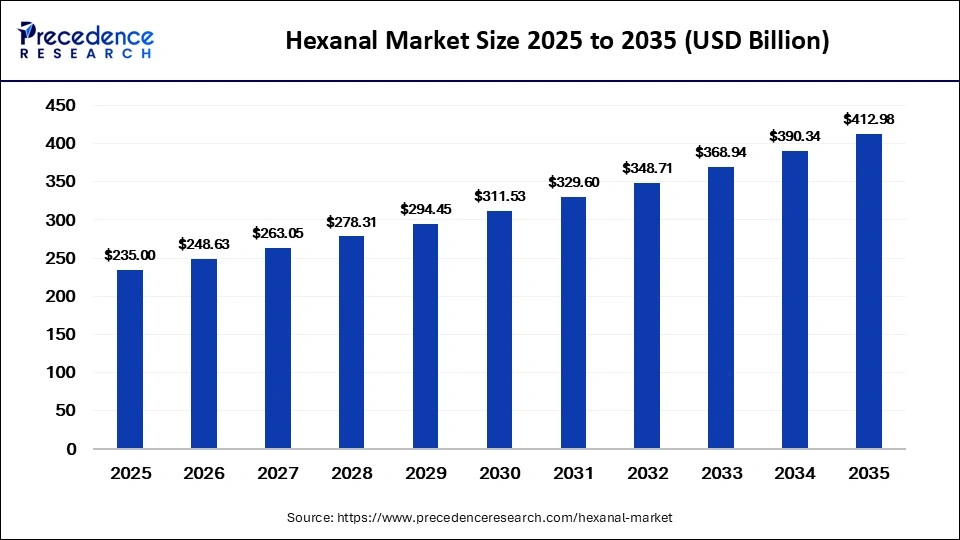
Yogesh Kulkarni, a Chemical and Materials Industry Expert, estimates the hexanal market at USD 248.63 billion in 2026, with the market projected to reach USD 412.98 billion by 2035 at a CAGR of 5.80%. Major hexanal market companies such as BASF SE, Merck KGaA (Sigma-Aldrich), TCI Chemicals are competing across key material and application segments, including product grade, source, application, end use industry, distribution channel.
Source: https://www.precedenceresearch.com/hexanal-market
 Get a Sample
 Table Of Content


Hexanal Market Size and Forecast 2026 to 2035
The global hexanal market size accounted for USD 235.00 billion in 2025 and is predicted to increase from USD 248.63 billion in 2026 to approximately USD 412.98 billion by 2035, expanding at a CAGR of 5.80% from 2026 to 2035. The market is driven by the surging user and commercial demand for natural flavors and fragrances.
Key Takeaways
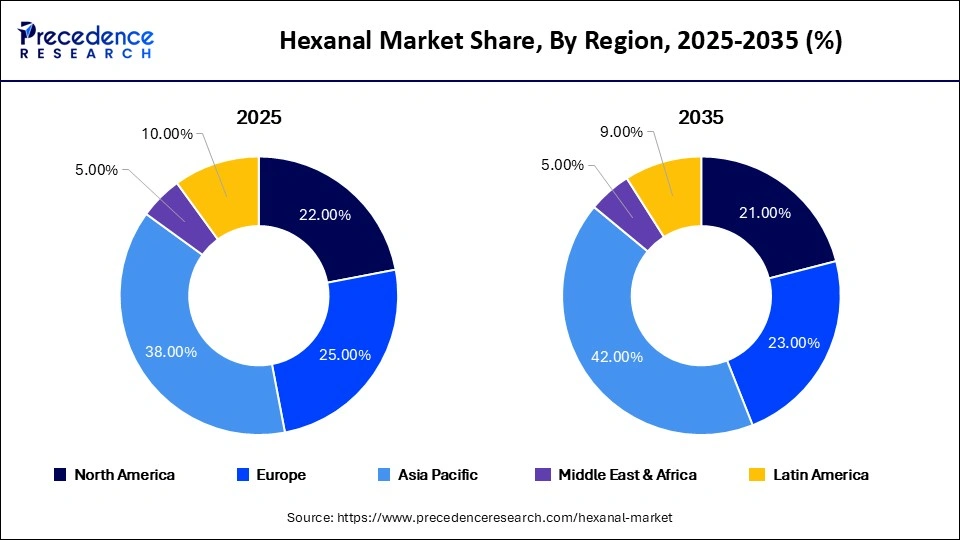
- Asia-Pacific dominated the hexanal market with a share of 38% in 2025 and is expected to grow at the fastest CAGR of 6.8% in the coming years.
- Europe held the second-largest market share of 25% in 2025.
- By product grade, the technical grade segment led the global market with a share of 32% in 2025.
- By product grade, the high purity grade segment is expected to grow at the fastest CAGR of 7.4% between 2026 and 2035.
- By source, the synthetic hexanal segment accounted for the highest revenue share of 78% in the market in 2025.
- By source, the natural hexanal segment is expected to grow at the fastest 8.4% CAGR between 2026 and 2035.
- By application, the flavors and fragrances segment held the largest revenue share of 31% in the hexanal market in 2025.
- By application, the food preservation segment is expected to grow at the highest CAGR of 7.2% between 2026 and 2035.
- By end use industry, the food and beverage segment dominated the market with a share of 34% in 2025 and is expected to grow at the fastest CAGR of 6.9% in the coming years.
- By end use industry, the chemicals segment held the second-largest market share of 25% in 2025.
- By distribution channel, the direct sales segment led the market with a share of 42% in 2025.
- By distribution channel, the online platforms segment is expected to grow at the fastest 10.1% CAGR between 2026 and 2035.
Market Overview
The hexanal industry refers to the global trade and industrial production of hexanal, a volatile six-carbon aldehyde naturally occurring in plants. The global market is primarily driven by the expanding food and beverage sector, the rising need for natural preservatives, and the requirement to extend the shelf life of perishable agricultural produce. Its growing application as a natural flavoring agent and anti-spoilage spray significantly benefits fruit farmers by delaying harvests and reducing waste.
Hexanal Market Trends
- Hexanal is a vital player in active food packaging and agricultural sprays. Because of its approved use as a food additive, it is increasingly utilized to inhibit phospholipase D (delaying ripening) and even extend the shelf life of fresh fruits and vegetables.
- The fragrance industry is the largest consumer sector. Manufacturers are utilizing hexanal to impart fresh, "grassy" notes to personal care and household cleaning products.
- Strict regulations on synthetic ingredients have spurred research into natural extraction techniques. The push for "green chemistry" guarantees that naturally-derived hexanal sees higher adoption rates.
Market Report Coverage and Key Metrics
| Report Coverage | Details |
| Market Size in 2025 | USD 235.00 Billion |
| Market Size in 2026 | USD 248.63 Billion |
| Market Size by 2035 | USD 412.98 Billion |
| Market Growth Rate from 2026 to 2035 | CAGR of 5.80% |
| Dominating Region | Asia Paicfic |
| Fastest Growing Region | Europe |
| Base Year | 2025 |
| Forecast Period | 2026 to 2035 |
| Segments Covered | Product Grade, Source, Application, End Use Industry, Distribution Channel, and Region |
| Regions Covered | North America, Europe, Asia-Pacific, Latin America, and Middle East & Africa |
Market Dynamics
Drivers
Increasing Consumer Preference for Natural Food Flavors
Increasing consumer demand for clean-label, plant-based, and chemical-free products drives the natural flavors industry. Hexanal, a volatile organic compound naturally found in fruits, plays a vital role as an organic flavoring agent and a biopreservative, aligning perfectly with this user shift away from artificial additives. Consumers want healthy foods that retain their freshness without depending on chemical fungicides or artificial preservatives. Hexanal acts as a potent natural antimicrobial and antioxidant that inhibits fungal growth and delays spoilage in fresh produce.
Restraint
Strict Regulations on Synthetic Flavor Additives
Strict regulations on synthetic flavor additives restrain the hexanal market because authorities enforce strict safety profiles and dosage limits on artificial ingredients. Consumer preferences have shifted toward natural, organic food, forcing industries to navigate complex compliance burdens rather than relying on cheaper synthetic options. Modern consumers exhibit a strong preference for "clean label" products. There is widespread pushback against artificial preservatives and flavorings, which are usually associated with adverse health effects and hypersensitive reactions.
Opportunity
Eco-Friendly Food Preservatives
Eco-friendly preservatives represent a massive opportunity in the market because consumers and regulators are demanding safe, "clean-label" options to synthetic chemicals. As a naturally occurring, plant-driven volatile that holds GRAS (Generally Recognized as Safe) status, hexanal extends the shelf life of fresh produce by suppressing ripening and preventing microbial decay. Regulatory bodies worldwide are limiting the usage of traditional artificial preservatives, forcing the food industry to reformulate and adopt natural biopreservatives.
Market Segmentation Analysis
Product Grade Insights
The Technical Grade Segment Held the Largest Market Share of 32% in 2025
The technical grade segment dominated the hexanal market with a share of 32% in 2025, owing to its cost efficiency, bulk consumption, and broad availability. Technical grade hexanal is a potent, natural inhibitor of the enzyme phospholipase D, which causes cell membrane deterioration. By slowing down ripening and reducing ethylene production, it is increasingly sprayed on fruits such as apples, mangoes, and tomatoes to slow down ripening and reduce ethylene production, maintain firmness, and extend shelf life.
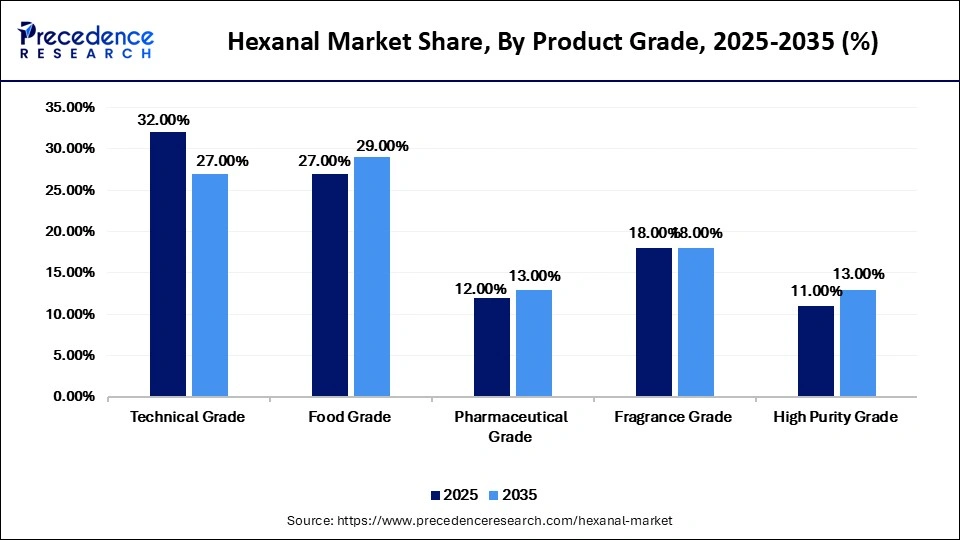
The high purity grade segment held an 11% share of the market in 2025 and is expected to grow at the fastest CAGR of 7.4% during the projection period. This is mainly due to the advanced applications, research activities, and premium formulations. Hexanal acts as a natural inhibitor of plant enzymes, which cause spoilage, effectively doubling the shelf life of fresh produce. High-purity grades are needed to prevent toxic or foul-tasting residues from touching consumable goods. Stringent regulatory standards for Active Pharmaceutical Ingredients (APIs) dictate the usage of ultra-pure chemicals to guarantee drug safety and efficacy.
The food grade segment held a 27% share of the market in 2025 and is expected to grow at a CAGR of 6.5% during the projection period. This is mainly due to the shelf-life enhancement and processed food growth. Fresh produce is highly susceptible to spoilage during transit and storage, resulting in massive economic losses. Pre-harvest sprays and post-harvest dips or vapor treatments utilizing hexanal are proven to extend the shelf life of highly perishable crops, like tomatoes, cherries, mangoes, and berries, by slowing down aging and softening.
Source Insights
The Synthetic Hexanal Segment Held the Largest Market Share of 78% in 2025
The synthetic hexanal segment held the largest revenue share of 78% in the hexanal market in 2025, owing to cost-effective production, large-scale manufacturing, and consistent quality. Synthetic production provides a much lower cost structure compared to natural extraction, making it highly scalable for commercial-scale agriculture and industrial applications. Hexanal is a powerful volatile compound that slows down fruit ripening, reduces ethylene evolution, and stabilizes cell membranes. Its synthetic form is highly favored for commercial agricultural pre-harvest sprays and active food packaging.
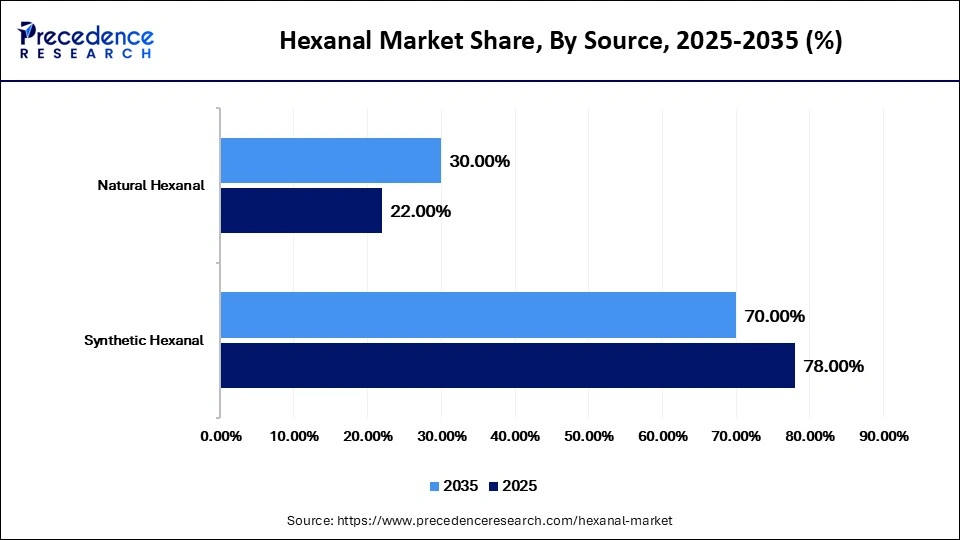
The natural hexanal segment held a 22% share of the market in 2025 and is expected to grow at the fastest CAGR of 8.4% during the projection period. This is mainly due to natural ingredient demand, clean-label trends, and sustainable sourcing. Shoppers are demanding natural, chemical-free preservatives. As it is a naturally occurring plant volatile with a GRAS (Generally Recognized as Safe) status, it perfectly fits the clean-label trend.
Application Insights
Why Did the Flavors and Fragrances Segment Lead the Hexanal Market?
The flavors and fragrances segment held a dominant position in the market, with a 31% share in 2025, driven by the demand for aroma chemicals, food flavor innovation, and personal care applications. Users increasingly associate "synthetic" chemicals with health risks, driving a strong need for natural aroma compounds. Hexanal meets this demand perfectly as a sought-after natural additive.
Hexanal Market Share, By Application, 2025-2035 (%)
| Application | 2025 | 2035 | CAGR (%) |
| Flavors & Fragrances | 31.00% | 29.00% | 5.5% |
| Food Preservation | 21.00% | 24.00% | 7.2% |
| Agrochemicals | 13.00% | 14.00% | 6.3% |
| Chemical Intermediates | 18.00% | 16.00% | 4.9% |
| Pharmaceuticals | 9.00% | 9.00% | 5.8% |
| Research & Laboratory Applications | 6.00% | 6.00% | 5.0% |
| Others | 2.00% | 2.00% | 4.3% |
The food preservation segment held a 21% share of the market in 2025 and is expected to grow at the fastest CAGR of 7.2% during the projection period. This is mainly due to shelf-life extension technologies and food waste reduction. Hexanal can be applied at multiple stages of the supply chain. Pre-harvest sprays keep fruit on the tree longer; meanwhile, post-harvest dips and nanotech-driven packaging protect produce during overseas transit.
The chemical intermediates segment held an 18% share of the market in 2025 and is expected to grow at a CAGR of 4.9% during the projection period. This is due to intermediate demand, product development, and process chemistry. Hexanal acts as a crucial precursor to synthesize complex aroma compounds, allowing producers to create crisp, green, and natural fruity notes, such as apple and pear, for perfumes, cosmetics, and even household products.
End Use Industry Insights
Which End Use Industry Segment Dominated the Hexanal Market?
The food and beverage segment held the largest revenue share of 34% in 2025 and is expected to grow at the fastest CAGR of 6.9% in the coming years. This is due to intermediate applications, specialty chemical production, and manufacturing expansion. Hexanal is used in nanotechnology to inhibit microbial growth, delay fruit senescence, and inhibit lipid oxidation. This enables produce and perishables to remain fresh significantly longer, preventing food waste across the supply chain. Elevated hexanal levels are a known indicator of lipid oxidation, off-flavors, and spoilage in sensitive goods such as nuts and processed meats. Major food testers use hexanal monitoring to guarantee sensory quality, freshness, and regulatory compliance.
Hexanal Market Share, By End Use Industry, 2025-2035 (%)
| End Use Industry | 2025 | 2035 | CAGR (%) |
| Food & Beverage | 34.00% | 37.00% | 6.9% |
| Chemicals | 25.00% | 22.00% | 4.8% |
| Agriculture | 15.00% | 16.00% | 6.1% |
| Pharmaceuticals | 11.00% | 11.00% | 5.6% |
| Personal Care & Cosmetics | 10.00% | 11.00% | 6.3% |
| Research Institutions | 3.00% | 2.00% | 4.4% |
| Others | 2.00% | 1.00% | 4.0% |
The chemicals segment held a 25% share of the market in 2025 and is expected to grow at a significant CAGR of 4.8% during the projection period, driven by intermediate applications, specialty chemical production, and manufacturing expansion. Hexanal acts as an intermediate and building block to manufacture longer-chain alcohols, acids, plasticizers, synthetic resins, and dyes. The growing industrial demand and process optimization in the chemical industry augment the segment's growth.
The agriculture segment held a 15% share of the market in 2025 and is expected to grow at a CAGR of 6.1% during the projection period. This is due to its post-harvest preservation, crop quality improvement, and export-oriented farming. Hexanal is a volatile organic compound found naturally in plants. It holds FDA Generally Recognized as Safe (GRAS) status, making it a highly desirable, eco-friendly option to synthetic chemical preservatives.
Distribution Channel Insights
What Made the Direct Sales Segment Dominant in the Hexanal Market?
The direct sales segment dominated the global market with the largest share of 42% in 2025. This is due to the large-volume buyers, long-term supply contracts, and technical support. Hexanal demands specialized knowledge regarding its application as a pre-harvest spray or post-harvest dip. Direct sales enable agricultural experts and brand representatives to offer tailored instructions on exact mixing ratios and application timing.
Hexanal Market Share, By Distribution Channel, 2025-2035 (%)
| Distribution Channel | 2025 | 2035 | CAGR (%) |
| Direct Sales | 42.00% | 40.00% | 5.7% |
| Chemical Distributors | 33.00% | 28.00% | 4.7% |
| Specialty Ingredient Suppliers | 19.00% | 20.00% | 6.3% |
| Online Platforms | 6.00% | 12.00% | 10.1% |
The online platforms segment held a 6% share of the market in 2025 and is expected to grow at the fastest CAGR of 10.1% during the projection period. This is mainly due to digital procurement growth, small-volume purchases, and improved accessibility. Buyers can compare numerous purity grades and formulations, finding specific hexanal products for food flavoring, perfumery, and agricultural antifungal treatments.
The chemical distributors segment held a 33% share of the market in 2025 and is expected to grow at the fastest CAGR of 4.7% during the projection period. This is mainly due to regional coverage and customer relationships. Hexanal is an active organic aldehyde utilized in volatile, highly sensitive formulations. Distributors offer necessary safety handling, strict quality tracking, and even compliance certifications. Outsourcing logistics to distributors enables producers to focus on core chemical manufacturing while guaranteeing just-in-time deliveries and stabilized inventory management.
Market Regional Analysis: North America, Europe, Asia-Pacific
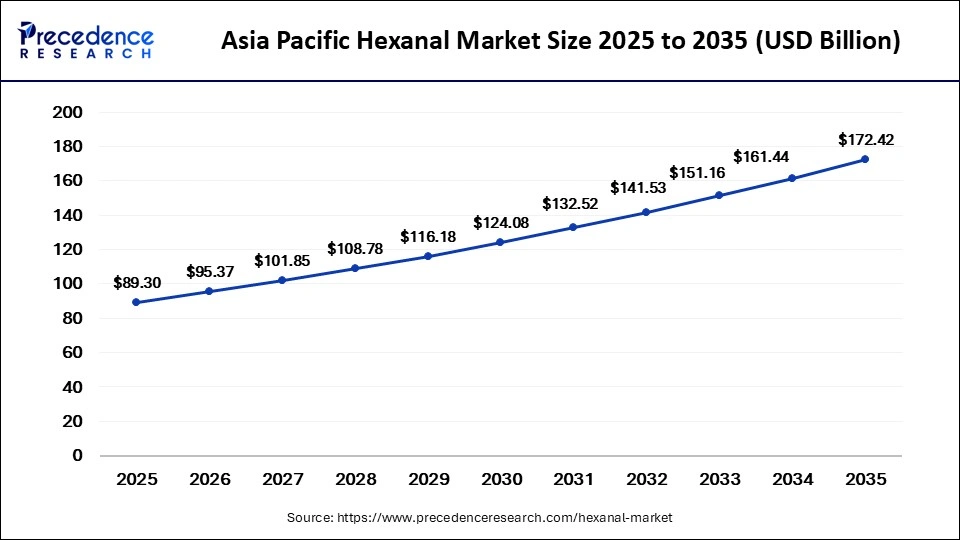
Asia Pacific Hexanal Market Size and Growth 2026 to 2035
The Asia Pacific hexanal market size was evaluated at USD 89.30 billion in 2025 and is projected to reach around USD 172.42 billion by 2035, growing at a CAGR of 6.80% from 2026 to 2035.
How Asia-Pacific Dominated the Hexanal Market?
Asia-Pacific held a major market share of 38% in 2025 and is expected to experience the fastest growth with a CAGR of 6.8% during the predicted timeframe. This is due to the expanding food processing industry, chemical manufacturing growth, and rising agricultural applications. The rising need for natural flavor additives and even premium fragrance formulations in personal care and household goods necessitates robust hexanal production.
China Market Analysis
China's dominance in the market is driven by its massive, highly integrated chemical manufacturing infrastructure, favorable government subsidies, and even booming domestic demand in the food, flavor, and pharmaceutical sectors.
Europe: The Second-Largest Market
Europe held the second-largest market share of 25% in 2025 and is expected to grow at a notable CAGR of 5.3% during the projection period, driven mainly by the fragrance industry strength, food safety regulations, and specialty chemicals demand. The EU strictly regulates chemical food additives, authorizing hexanal under EU regulations as a safe flavoring substance. It is widely used to enhance the palatability of the region's vast food and beverage output.
UK Market Analysis
The UK market is growing due to surging consumer need for plant-based ingredients, strict regulations on artificial food additives, and the demand to reduce food waste. Hexanal is naturally derived and highly valued for its antimicrobial properties, which thus extend the shelf life and freshness of perishable produce.
Which Factors Drive the Hexanal Market in North America?
North America held a 22% share of the market in 2025 and is expected to grow at a significant CAGR of 5.1% during the projection period, driven by the advanced chemical industry and R&D activities. The U.S. is home to robust consumer packaged goods (CPG) firms and major flavor houses. Hexanal is widely utilized as a major raw material for floral and citrus top notes in premium perfumes, body sprays, and cosmetics. User shifts toward organic, plant-derived, and green ingredients have boosted hexanal adoption. It acts as a bio-friendly, natural flavoring agent and even an effective post-harvest preservative to extend the shelf life of fruits and crops.
U.S. Market Analysis
The U.S. market is experiencing significant expansion due to the U.S. FDA's approval of hexanal as a safe food additive, surging consumer need for eco-friendly, natural ingredients, and its high efficacy in reducing food waste by extending the shelf life of fresh fruits and vegetables.
What Drives the Hexanal Market in Latin America?
Latin America held a 10% share of the market in 2025 and is expected to grow at a lucrative CAGR of 5.5% during the projection period, driven by export agriculture and manufacturing expansion. Increased investments in infrastructure and the integration of strict global safety standards have enabled local agricultural and food-ingredient industries to use hexanal to meet the high demands of North American and European supply chains.
Brazil Market Analysis
Brazil is a major driver in the market due to its massive agribusiness sector, surging need for processed foods, and the booming popularity of natural, plant-based preservatives. As a global agricultural powerhouse, Brazil leverages hexanal, a natural volatile compound with antimicrobial properties, to extend the shelf life of highly perishable crops and decrease post-harvest food waste.
How is the Opportunistic Rise of the Middle East and Africa in the Hexanal Market?
The Middle East and Africa held a 5% share of the market in 2025 and are expected to grow at a notable CAGR of 5.2% during the projection period, driven by agricultural modernization and specialty chemical demand. Developing agricultural sectors in Sub-Saharan Africa experience massive spoilage rates for fresh produce because of inadequate cold chain infrastructure. Hexanal application is heavily adopted as a cost-effective, non-toxic bio-preservative to prolong the shelf life of local crops such as tomatoes, bananas, and mangoes.
Saudi Arabia Market Analysis
Saudi Arabia's market is largely due to its massive, low-cost petrochemical industry, which provides the foundational raw materials required to produce the six-carbon aldehyde. Additionally, heavy regional investments in specialty chemicals and localized supply chain frameworks have solidified the Kingdom's leadership in this sector.
Market Competitive Landscape: Leading Companies and Strategies
The hexanal market is moderately consolidated, with major players focusing on product quality, capacity expansion, and even strategic collaborations to strengthen their market presence. Major companies include Merck KGaA, Alfa Aesar, Thermo Fisher Scientific, Tokyo Chemical Industry Co., Ltd., and Santa Cruz Biotechnology. Competition is driven by need from the food and beverage, fragrance, flavor, and even agricultural sectors. Companies are investing in research and development to enhance purity levels and expand application areas. Regional producers also contribute to market competitiveness by providing cost-effective solutions and catering to local demand, mainly in the Asia-Pacific and Europe.
Hexanal Market Companies
- BASF SE
- Merck KGaA (Sigma-Aldrich)
- TCI Chemicals
- Tokyo Chemical Industry Co., Ltd.
- Alfa Aesar (Thermo Fisher Scientific)
- Merck Life Science
- Parchem Fine & Specialty Chemicals
- Acros Organics (Thermo Fisher Scientific)
- Central Drug House (CDH)
- Loba Chemie Pvt. Ltd.
- Otto Chemie Pvt. Ltd.
- Sisco Research Laboratories (SRL)
- Aroma Chemical Services International (ACS International)
- Vigon International
- Treatt Plc
Segments Covered in the Report
By Product Grade
- Technical Grade
- Food Grade
- Pharmaceutical Grade
- Fragrance Grade
- High Purity Grade
By Source
- Synthetic Hexanal
- Natural Hexanal
By Application
- Flavors and Fragrances
- Food Preservation
- Agrochemicals
- Chemical Intermediates
- Pharmaceuticals
- Research and Laboratory Applications
- Others
By End Use Industry
- Food and Beverage
- Chemicals
- Agriculture
- Pharmaceuticals
- Personal Care and Cosmetics
- Research Institutions
- Others
By Distribution Channel
- Direct Sales
- Chemical Distributors
- Specialty Ingredient Suppliers
- Online Platforms
By Region
- North America
- Latin America
- Europe
- Asia-pacific
- Middle and East Africa
For inquiries regarding discounts, bulk purchases, or customization requests, please contact us at sales@precedenceresearch.com
Frequently Asked Questions
Tags





Ask For Sample
No cookie-cutter, only authentic analysis – take the 1st step to become a Precedence Research client
 Get a Sample




 sales@precedenceresearch.com
 Schedule a Meeting
