



Hydroponics Market Size, Share and Trends 2026 to 2035
Hydroponics Market (By Type: Aggregate Systems, EBB & Flow Systems, Wick Systems, Drip Systems, Liquid Systems, Deep Water Culture, Aeroponics, Nutrient Film Technique (NFT); By Crop Type: Tomatoes, Peppers, Lettuce, Herbs, Cucumbers, Others; By Crop Area: Upto 1000 sq.ft., 1000-50,000 sq.ft., Above 50,000 sq.ft.) - Global Industry Analysis, Size, Trends, Leading Companies, Regional Outlook, and Forecast 2026 to 2035
Source: https://www.precedenceresearch.com/hydroponics-market
 Get a Sample
 Table Of Content


What is the Hydroponics Market Size?
The global hydroponics market size is calculated at USD 6.23 billion in 2025 and is predicted to increase from USD 7.01 billion in 2026 to approximately USD 20.00 billion by 2035, expanding at a CAGR of 12.37% from 2026 to 2035.
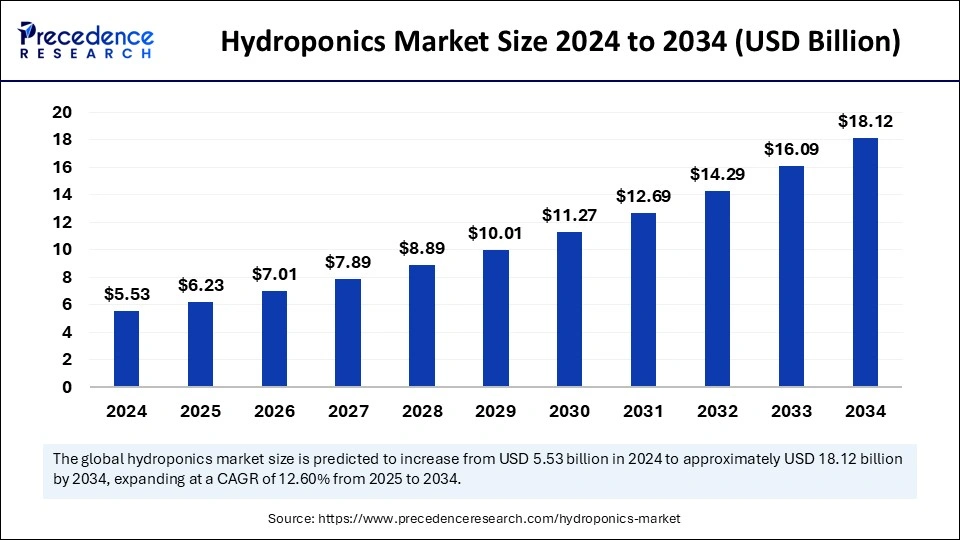
Hydroponics Market Key Takeaways
- Asia Pacific led the global hydroponics market with the largest share of 36% in 2025.
- Europe is estimated to expand at the fastest CAGR in the market between 2026 and 2035.
- By type, the aggregate segment held the biggest market share of 54% in 2025.
- By type, the liquid segment is anticipated to grow at a remarkable CAGR of 14.4% during the forecast period.
- By crop type, the tomatoes segment captured the largest share of 46% in 2025.
- By crop type, the lettuce segment is expected to expand at the highest CAGR of 15.6% over the studied period.
- By crop area, the above 50,000 sq.ft. led the market in 2025.
Hydroponics Revolution: Sustainable, High-tech Farming for the Future
Hydroponics is a type of horticulture that involves growing plants using water-based solutions. The hydroponics market operates on several foundational elements, all of which are directed toward optimizing plant growth in environments devoid of traditional soil. A primary focus lies in meticulously creating and maintaining ideal growing conditions. This involves the careful regulation of several critical factors, such as temperature, humidity, light, and nutrient delivery systems. A notable advantage of hydroponic systems is their design, which minimizes resource wastage, particularly when it comes to water and nutrients. Innovative technologies, such as LED lighting tailored for maximized plant growth, along with sensors and advanced data analytics, are integral to monitoring and controlling these sophisticated irrigation and nutrient delivery systems.
The market primarily aims to produce various crops, particularly leafy greens, fruits, and cannabis (where legal). The hydroponics market is witnessing significant growth due to the increasing focus on sustainable agricultural practices. Hydroponics emerged as a viable solution to reduce water consumption, limit pesticide usage, enable food production within urban locales, and decrease the carbon footprint associated with food transportation.
How does AI Impact the Hydroponics Market?
The integration of artificial intelligence is significantly transforming the hydroponics market, enhancing its efficiency, sustainability, and overall productivity. By employing sophisticated AI algorithms, operators can analyze an array of data collected from various sensors. This allows for extremely precise control of water and nutrient delivery systems, effectively minimizing waste while maximizing the utilization of valuable resources. Advanced AI systems can anticipate and adjust critical environmental parameters, including temperature, humidity, and light intensity, thereby creating ideal conditions for plant growth.
AI-powered cameras and sensors play a crucial role in continuously monitoring plant health. They can swiftly detect early indicators of potential issues, such as diseases, nutrient deficiencies, or pest infestations. This proactive approach enables timely interventions, which can prevent extensive crop damage and ensure the production of healthier yields. The automation of numerous hydroponic processes, such as seeding, transplanting, harvesting, and even packaging, is facilitated by AI technologies. Robotics guided by AI systems can efficiently execute repetitive tasks with remarkable precision, significantly reducing labor costs while enhancing productivity. The optimization of growing conditions and the prevention of crop diseases further contribute to increased crop yields and improved produce quality.
Additionally, AI systems can provide detailed insights into current environmental conditions, predicting the optimal times for harvest and ensuring that crops are collected at their peak ripeness for the best flavor and nutritional value.
Hydroponics Market Growth Factors
- Population Growth and Food Security: The global population continues to rise relentlessly, which intensifies the demand for high-quality produce. Hydroponics offers a pragmatic solution to growing larger quantities of food in confined spaces, making it particularly appealing for regions facing food security challenges, especially in areas where arable land is scarce or climates are rigorously harsh.
- Limited Availability of Arable Land: The rapid urbanization and environmental degradation are diminishing the amount of arable land suitable for traditional agricultural practices. Hydroponics provides an innovative alternative, allowing for crop cultivation in urban settings. Hydroponics make it feasible to grow food even in spaces where conventional farming would be impossible.
- Technological Advancements: Breakthroughs in LED lighting technology, nutrient delivery systems, automation, and sensor technology are continuously enhancing the efficiency and productivity of hydroponic setups. The incorporation of AI and sophisticated data analytics empowers growers to fine-tune growing conditions and maximize yield outputs.
- High-Quality Production: More consumers are preferring fresh, locally sourced, and pesticide-free produce. Hydroponics enables the year-round cultivation of high-quality crops, often in closer proximity to the point of sale, reducing transportation costs and the environmental impact.
- Government Initiatives: Governments worldwide are actively promoting sustainable agricultural practices, including hydroponics, through dedicated funding for research and the implementation of supportive policy initiatives.
Market Outlook
- Market Growth Overview: The hydroponics market is expected to grow significantly between 2025 and 2034, driven by the growing consumer demand, resource efficiency, and technological innovations.
- Sustainability Trends: Sustainability trends involve water conservation, renewable energy integration, and smart farming and automation.
- Major Investors: Major investors in the market include AeroFarms, BrightFarms, Gotham Greens, ScottsMiracle-Gro, and Freight Farms.
- Startup Economy: The startup economy is focused on rising urbanization, limited land, government support and investment, and water efficiency.
Market Scope
| Report Coverage | Details |
| Market Size by 2035 | USD 20 Billion |
| Market Size in 2025 | USD 6.23 Billion |
| Market Size in 2026 | USD 7.01 Billion |
| Market Growth Rate from 2026 to 2035 | CAGR of 12.37% |
| Dominating Region | Asia Pacific |
| Fastest Growing Region | Europe |
| Base Year | 2025 |
| Forecast Period | 2026 to 2035 |
| Segments Covered | Type, Crop Type, Crop Area and Regions. |
| Regions Covered | North America, Europe, Asia-Pacific, Latin America, and Middle East & Africa |
Market Dynamics
Drivers
Rising Demand for Food
The escalating global demand for food, combined with the limitations of arable land, serves as a significant impetus for the growth of the hydroponics market. This innovative agricultural method utilizes advanced technologies such as LED lighting, optimized nutrient delivery systems, and automated processes to enhance efficiency. Hydroponics allows for the cultivation of fresh produce in proximity to consumers, which reduces transportation costs and carbon footprints, aligning with the values of environmentally conscious shoppers. Moreover, as consumers become more discerning about their food choices, the demand for high-quality and locally sourced produce increases that hydroponics can readily supply. In addition, the growing awareness about the benefits of hydroponics, such as food security, environmental sustainability, and less water consumption than traditional farming, is contributing to market growth.
Restraint
High Investment and Complexity
There are several factors limiting the growth of the hydroponics market. Firstly, establishing a hydroponic system requires substantial investment, which may deter potential growers. Secondly, the complexity of hydroponics requires a certain level of technical expertise and practical skills, posing a challenge for those unfamiliar with this agricultural method. Hydroponic systems often rely on electricity for essential functions such as lighting, climate regulation, and nutrient circulation, adding to operational costs. Moreover, public awareness about the benefits of hydroponically grown produce remains limited, which limits broader acceptance.
Opportunity
Growing Trend of Vertical Farming and Technological Advancements
On a more optimistic note, there are numerous opportunities within the hydroponics market. Vertical farming techniques that stack crops in layers can significantly optimize space and enhance overall yields. Moreover, continuous advancements in artificial intelligence (AI), automation, and sensor technologies present avenues for enhancing the capabilities of hydroponic systems. Hydroponics allows for the cultivation of a wide variety of crops, enabling growers to diversify and meet the increasing demand for locally sourced food in urban environments. As government support for sustainable agricultural practices intensifies, there is also potential for the creation of tailored nutrient solutions designed to meet the specific needs of different crops.
Segment Insights
Type Insights
The aggregate systems dominated the hydroponics market by capturing the largest share in 2024. The aggregate system has gained immense popularity due to its user-friendly design, where inert and solid materials such as peat, vermiculite, rock wool, sawdust, sand, perlite, or coconut coir serve as a stable base for plant growth. The integration of key technologies, including ebb and flow methods, drip irrigation systems, and wick systems, further enhances the efficiency of the system. Moreover, this system is suitable for both large-scale as well as smaller-scale setups.
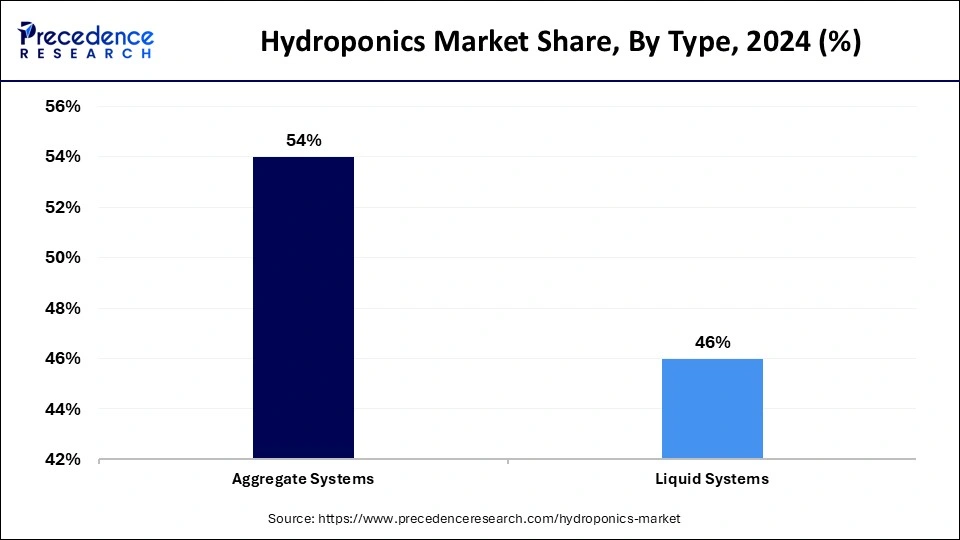
The liquid systems segment is projected to expand at a remarkable CAGR in the coming years. This is mainly due to the increasing adoption of closed-system cultivation among farmers. Techniques such as deep-water culture (DWC) and nutrient film technique (NFT) are gaining traction, particularly for cultivating leafy greens like lettuce. In liquid systems, the absence of solid media means that plant roots are submerged directly in nutrient-rich solutions, streamlining the cultivation process and promoting rapid growth. By facilitating direct nutrient delivery to the roots, these systems can yield superior harvests in terms of both quantity and quality.
Crop Type Insights
The tomatoes segment accounted for the largest market share in 2024. Tomatoes are the most widely cultivated hydroponic crop across the globe, primarily because they can be grown rapidly and require significantly less water than their conventionally farmed counterparts. Typically, indoor farmers utilize growing mediums such as perlite, rock wool, or coconut coir to optimize the conditions for hydroponic tomato cultivation, allowing for efficient nutrient uptake and root development.
The lettuce segment is projected to experience the fastest growth during the forecast period. Among indoor farmers, green and red leaf lettuce has emerged as the most commonly grown hydroponic vegetable, largely due to its high usage in fresh salads and other dishes, boosting consumption rates. The increasing demand for lettuce from households and fast-food chains worldwide is boosting interest in hydroponic methods, making it a popular choice for those looking for high-quality lettuce.
Crop Area Insights
The above 50,000 sq.ft. segment led the hydroponics market in 2024 and is expected to grow at the fastest rate in the foreseeable future. Larger crop areas provide farmers with the ability to cultivate a variety of high-quality produce simultaneously. Additionally, the ability to install multiple hydroponic systems to boost productivity. A larger area allows for the implementation of multiple cutting-edge machinery and technology, which together enhance operational efficiency and overall profitability. The efficiency of hydroponic systems also plays a critical role in water conservation by significantly reducing water wastage than traditional soil-based farming methods. This impressive scalability and efficiency position hydroponics as an attractive option for improving agricultural practices on a larger scale.
Regional Insights
What is the Asia Pacific Hydroponics Market Size?
Asia Pacific hydroponics market size was exhibited at USD 2.24 billion in 2025 and is projected to be worth around USD 7.32 billion by 2035, growing at a CAGR of 12.57% from 2026 to 2035.
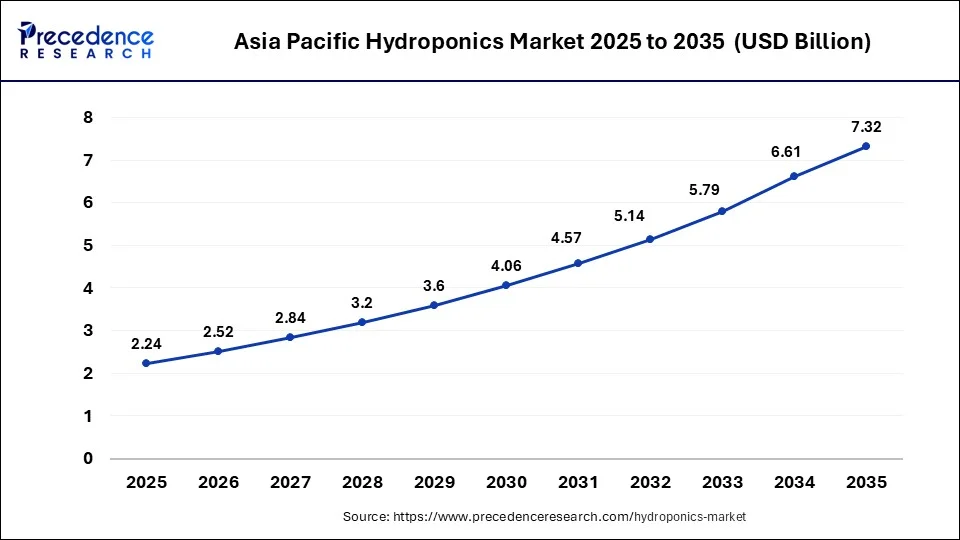
Asia Pacific dominated the hydroponics market by holding the largest share in 2025. The region's dominance is mainly attributed to the increased acceptance of hydroponic systems, especially in countries like China, Australia, and South Korea. Rapid urbanization in this region has resulted in limited arable land and an escalating demand for urban farming solutions, making hydroponics exceptionally suited to urban settings. With substantial population growth, the pressure on food production continues to mount, and hydroponics provides a viable solution for increasing yield and enhancing food security. India, being a predominantly agricultural nation, is increasingly aware of the necessity for sustainable farming practices. The Indian government actively promotes advanced agricultural technologies, including hydroponics, for improving crop yields and addressing food security challenges.
Asia Pacific Leads the Way in Hydroponics with Urban and Sustainable Farming Solutions
Indian Hydroponics Market Trends
The Indian hydroponics market is expected to witness the fastest growth rate during the foreseeable period, as the Indian agricultural ecosystem is beginning to adopt modern agricultural methods for maximum yield to solve challenges like less food production as compared to the population, and environmental concerns. Hydroponics is therefore expected to create lucrative opportunities for the Indian landscape of farming with innovative solutions.
Japan Hydroponics Market Trends
The hydroponics market in Japan is anticipated to witness significant growth in the upcoming period. The growth of this area is related to reasons like prioritizing innovation and sustainability in the agriculture field, which the Japanese government backs to produce maximum food production along with expansion in farming technology.
Europe
The UK Hydroponics Market Trends
The UK hydroponics market showcased a substantial market share in 2024 in the European market. The growth of this region is attributed to factors like the growing demand for agriculture practices that are eco-friendly and sustainable. Also, the genetically modifying crop method is becoming popular in the UK is another driving factor for the market.
Germany Hydroponics Market Trends
The hydroponics market in Germany is anticipated to witness notable growth during the foreseeable period. The growth of this region is attributed to the growing demand from consumers for locally grown vegetables with sustainable farming practise and technologically advanced methods to produce maximum yield.
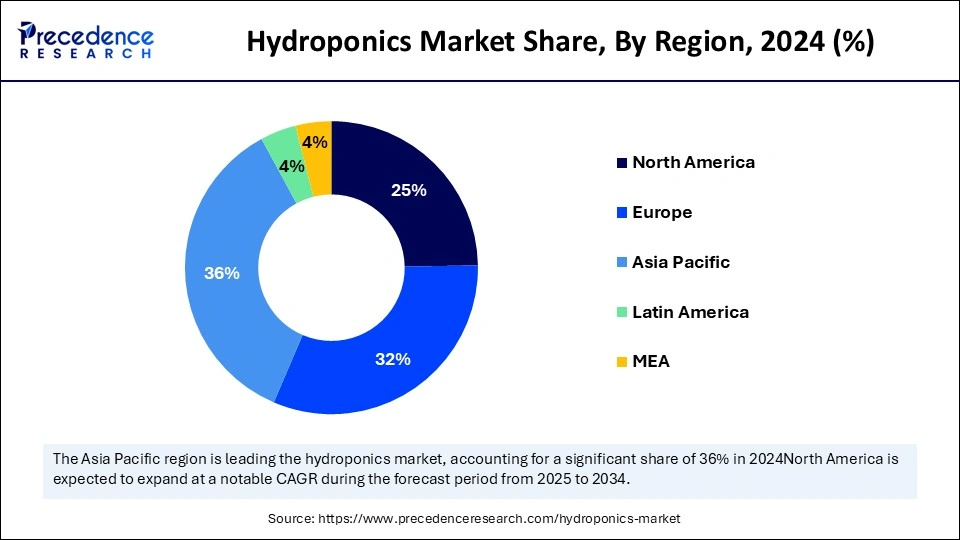
The European hydroponics market is anticipated to expand at the highest CAGR in the coming years. This is mainly due to the increasing demand for innovative solutions for efficient, controlled cultivation in indoor environments, effectively navigating the constraints associated with traditional agricultural methods. Numerous European nations have made strong commitments to environmental sustainability, making hydroponics ideal due to its reduced water consumption and minimal pesticide use. European governments are promoting sustainable agriculture practices through various initiatives and funding programs that encourage the adoption of hydroponic setups. Germany stands out as a leader in engineering and technology, contributing to the advancements and implementation of sophisticated hydroponic systems.
U.S. Hydroponics Market Trends
The U.S.'s rising preference for local, fresh, nutritious, and chemical-free produce, significant water conservation and efficient use of space compared to traditional farming, and innovation in nutrient management, efficient LED lighting, and smart home integration are boosting efficiency and accessibility. Rising demand for locally grown produce, driven by food safety concerns, sustainability goals, and supply chain disruptions, is encouraging investment in hydroponic farms and controlled-environment agriculture.
North America is expected to observe significant growth in the foreseeable future. This is mainly due to the presence of numerous hydroponics-focused firms and the increasing acceptance of alternative farming methods in urban environments. North American consumers are becoming more health-conscious, prioritizing fresh, locally sourced, and sustainably produced food, driving the demand for hydroponically grown vegetables and fruits. With a well-established technological infrastructure, North America is a hotspot for agricultural innovation. The region's harsh winters, particularly in Canada, pose challenges to traditional farming, making hydroponics a favorable solution for year-round food production within controlled indoor systems. Urban farming initiatives are gaining momentum in Canada, and hydroponics is essential in supplying fresh, locally cultivated produce to urban dwellers, effectively catering to the growing appetite for healthful and sustainable food options.
Middle East and Africa Embrace Hydroponics for Sustainable and Efficient Farming
The Middle East and Africa hydroponics market is growing due to water scarcity, limited arable land, and rising food security concerns. Urbanization and population growth drive demand for sustainable, high-yield farming solutions. Government initiatives and investments in controlled-environment agriculture, along with the adoption of advanced technologies like nutrient management and LED lighting, further accelerate the hydroponics market expansion in the region.
UAE Hydroponics Market Trends
The UAE market is growing due to extreme arid conditions, limited arable land, and a strong focus on food security. Government support, investments in smart farming technologies, and rising demand for locally grown, fresh, and sustainable produce drive the adoption of hydroponic systems, enabling year-round cultivation and efficient resource use in urban and desert environments.
Latin America Expands Hydroponics Market with Urban and Sustainable Agriculture
The Latin American market is expanding due to increasing urbanization, rising demand for fresh and safe produce, and the need to optimize limited arable land. Adoption of advanced farming technologies, supportive government initiatives, and growing awareness of sustainable agricultural practices are driving investment in hydroponic systems, enhancing crop yields and ensuring year-round food production across the region.
Brazil Hydroponics Market Trends
Brazil's market is expanding due to growing demand for high-quality, locally grown fruits and vegetables and increasing adoption of sustainable farming practices. Supportive government policies, rising urbanization, and the need for efficient land and water use drive investment in controlled-environment agriculture, while technological advancements in nutrient management and hydroponic systems further boost market growth.
Value Chain Analysis of the Hydroponics Market
- Research & Development (R&D) and Technology Design
This foundational stage involves innovating and refining hydroponic systems, nutrient formulas, and automation technologies.
Key Players: Heliospectra and Argus Control Systems - Raw Material Sourcing and Production
This stage focuses on acquiring and producing the essential components for hydroponic operations.
Key Players: Grodan - Manufacturing and Assembly
Once raw materials are sourced, this stage involves the manufacturing of physical hydroponic equipment and entire systems.
Key Players: Hydrofarm and General Hydroponics
Hydroponics Market Companies
- AeroFarms: This company is a leader in indoor vertical farming, utilizing patented aeroponic technology to grow crops with up to 95% less water and zero pesticides compared to traditional field farming.
- AmHydro: AmHydro specializes in the design and manufacture of complete, commercial-grade hydroponic systems, particularly the Nutrient Film Technique (NFT).
- Argus Control Systems Limited: Argus provides advanced environmental control and automation systems for greenhouses and indoor growing facilities.
- Emirates Hydroponics Farms: This company contributes by developing and operating large-scale hydroponic farms in a challenging desert environment, demonstrating the technology's viability in arid regions to enhance local food security.
- Freight Farms, Inc.: Freight Farms is a pioneer in modular, "containerized" hydroponic farming, converting shipping containers into complete, climate-controlled vertical farms.
- BrightFarms: This company builds and operates a network of local greenhouse farms that supply fresh, pesticide-free leafy greens to supermarkets, reducing the distance food travels from farm to shelf.
- Heliospectra: Heliospectra contributes to the market through its advanced LED grow lighting systems specifically designed for precision agriculture.
- Signify Holding: Signify (formerly Philips Lighting) is a major player in horticultural lighting, providing the Philips GreenPower LED systems widely used in professional hydroponic and vertical farms.
- Nutrifresh India: Nutrifresh operates in the Indian market, focusing on growing clean, residue-free produce through sustainable hydroponic and soilless methods.
- UrbanKisaan: This company develops and implements modular hydroponic farming units within urban centers in India, such as on rooftops and in commercial building interiors.
Key Companies for the Hydroponics Market
- Urban Crop: The Urban Crop Company provides end-to-end farming solutions with the help of indoor vertical farming practices. The company is offering customized products for indoor vertical farming, along with automated and smart technologies designed for hydroponic solutions.
- AmHydro: AmHydro is a popular company offering systems for agricultural cultivation. It provides comprehensive hydroponic growing systems, such as nutrient delivery methods with a designed system, channels, and basic farming components, which help optimize plant growth by offering accurate control over factors like pH of soil, nutrient level, and oxygenation.
Recent Developments
- In December 2025, Priva and Bluelab launched new models featuring "Predictive Dosing.” The model uses machine learning to adjust pH and EC levels in real-time based on the plant's current transpiration rates.
(Source: https://www.eurekalert.org ) - In December 2024, Tripura introduced commercial portable hydroponics for climate-smart agriculture. The state also took the initiative to adopt hydroponic farming technology.
- In August 2024, two engineers from Udupi in Karnataka, India, built an AI-enabled hydroponic setup to revolutionize farming practices and grow exotic plants.
- In June 2024, La Sapienza University of Rome and the FAO enhanced their collaboration by unveiling an innovative, eco-friendly hydroponic garden on the FAO terrace. This project, based on research into advanced water-based cultivation methods, reinforces their partnership in promoting sustainable agricultural practices.
(Source: https://www.fao.org)
Segments Covered in the Report
By Type
- Aggregate Systems
- EBB & Flow Systems
- Wick Systems
- Drip Systems
- Liquid Systems
- Deep Water Culture
- Aeroponics
- Nutrient Film Technique (NFT)
By Crop Type
- Tomatoes
- Peppers
- Lettuce
- Herbs
- Cucumbers
- Others
By Crop Area
- Upto 1000 sq.ft.
- 1000-50,000 sq.ft.
- Above 50,000 sq.ft
By Geography
- North America
- Asia Pacific
- Europe
- South America
- Middle East and Africa (MEA)
For inquiries regarding discounts, bulk purchases, or customization requests, please contact us at sales@precedenceresearch.com
Frequently Asked Questions
Tags





Ask For Sample
No cookie-cutter, only authentic analysis – take the 1st step to become a Precedence Research client
 Get a Sample



 sales@precedenceresearch.com
 Schedule a Meeting
