






 Request Consultation
A holistic look at skin health, combining nutrition, functional foods, and dermatology to promote long-lasting skin wellness and vitality.
Abstract
Skin health is increasingly recognized as a reflection of internal physiological balance influenced by nutrition, metabolism, and immune regulation. Functional foods enriched with bioactive compounds that provide benefits beyond basic nutrition have emerged as a promising approach for supporting dermatological health. These foods contain nutrients, such as antioxidants, probiotics, vitamins, minerals, and botanical extracts, that contribute to skin protection, repair, and cellular regeneration. Recent scientific interest has focused on the interaction between diet, the gut microbiome, and skin physiology, often referred to as the gut-skin axis. This review explores the role of functional foods in dermatology, key bioactive ingredients influencing skin health, and emerging research directions in nutritional dermatology.
Setting the Stage: A Captivating Introduction
Skin is the major physical protection of the body and carries out many physiological roles such as thermoregulation, immune defense, and safeguarding against physical environmental stress. But contemporary lifestyle determinants, including pollution, UV radiation, stress, and unhealthy eating habits, can interfere with skin homeostasis and improve dermatological conditions. Historically, dermatological care has been centered on external care like creams, ointments, and cosmetic surgery. Although these approaches are still vital, modern studies show the importance of the inner nutritional factors in the determination of skin health.
Nutritional dermatology has thus developed to investigate the effects of components in nutrition on skin physiology, inflammation, and regeneration. Functional foods offer a novel solution to the health of the skin by offering biologically active nutrients that can assist in skin functioning at the cellular and molecular levels. These foods have systemic effects, which include an anti-oxidative stress-regulating effect, skin barrier fortification, collagen-enhancing effect, and gut-microbiome modulation.
From Amrita to Antioxidants: The Timeless Quest to Defy Skin Aging
Skin aging is a complicated biological process affected by both intrinsic and extrinsic components, such as heredity and cellular metabolism, and externals such as ultraviolet light, pollution, and lifestyle patterns. With age, the skin gradually becomes less collagenous, elastic, and moist, which results in a loss of elasticity and appearance of fine lines, pigmentation anomalies, and weakening of the protective barrier. Cellular factors related to oxidative stress, inflammation, and impaired regenerative ability result in structural alterations in the dermis and epidermis.
Current dermatological research is growing to realize that skin aging is not just a cosmetic issue at hand, but a physiological process that indicates the general health of the body. Accordingly, modern skincare practices are based on preventive measures like antioxidant supplements and functional food, or more modern methods such as dermatological instruments used to maintain skin fitness or delay the biological processes that accompany aging.
What is the Skin Health Dermatology Functional Foods Market Size in 2026?
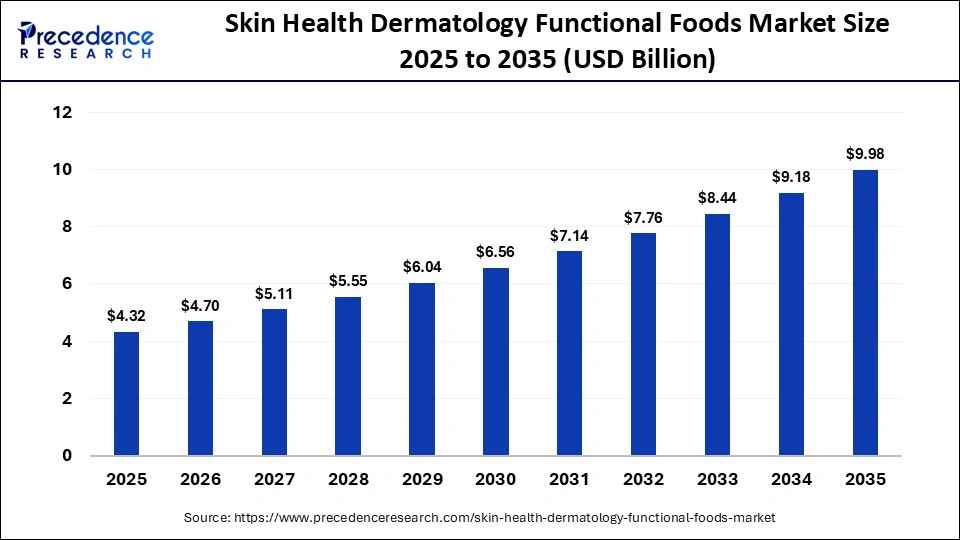
The global skin health dermatology functional foods market size accounted for USD 4.32 billion in 2025 and is predicted to increase from USD 4.70 billion in 2026 to approximately USD 9.98 billion by 2035, expanding at a CAGR of 8.73% from 2026 to 2035.
Key Takeaways
- North America dominated the global skin health dermatology functional foods market in 2025.
- Asia-Pacific is expected to grow at the fastest CAGR in the market during the forecast period.
- By product type, the dietary supplements segment held a dominant position in the market in 2025.
- By product type, the fortified foods segment is expected to grow at the fastest CAGR in the market between 2026 and 2035. 
- By ingredient type, the botanical extracts segment led the global market by holding a share in 2025. 
- By ingredient type, the vitamins and minerals segment is expected to grow with the highest CAGR in the market during the studied years.
- By distribution channel, the direct to consumer segment led the global market in 2025. 
- By distribution channel, the e-commerce segment is expected to grow with the highest CAGR in the market during the studied years.
- By application, the anti-aging segment led the global market in 2025. 
- By application, the UV protection segment is expected to grow with the highest CAGR in the market during the studied years.
Peptides and Skin Longevity: The Science of Anti-Aging Bioactive Peptides
Peptides have become one of the greatest advances in contemporary dermatology and cosmeceutical science. These small peptides serve as biological signals that are received by skin cells to carry out necessary processes like collagen synthesis, tissue repair, and cell regeneration. With aging of the skin, the number of structural proteins like collagen and elastin decreases, leading to wrinkles, loss of elasticity, and loss of hydration. Anti-aging peptides are used in countering such effects by promoting fibroblast action and the strength of the dermal matrix. As such, peptide compounds are progressively being added to high-tech cosmetic applications (skin, hair/scalp, nail, and hair), nutraceuticals, and functional cosmetics aimed at enhancing skin elasticity, skin softness, and skin beauty.
- Collagen Peptides: Collagen peptides are bioactive fragments of collagen proteins that are enzymatic hydrolysis of collagen proteins. These peptides are common in both topical preparations and ingestible beauty preparations because they have the power to uphold the dermal framework and elasticity. After getting absorbed, collagen peptides activate the fibroblasts to create more collagen, elastin, and hyaluronic acid, major elements that ensure that the skin is moist and firm. Collagen peptides also help augment the skin barrier functioning and diminish wrinkle depth by augmenting the health of the extracellular environment.
- Synthetic Peptides: Synthetic peptides are synthetic molecules that replicate naturally occurring signalling peptides in the body. Such peptides are designed to bind to the receptors of certain cells and trigger specific biological processes in the skin. Synthetic peptides can be stabilized, optimized in penetration, and efficacy in cosmetic formulas, unlike naturally produced peptides. A wide variety of synthetic peptides are created to minimize the development of wrinkles by affecting neurotransmitter levels and thus relaxing the muscles of the face that cause expression lines.
- Palmitoyl Peptides: Palmitoyl peptides are lipid-conjugated peptides, which comprise a fatty acid chain (palmitic acid) bound to a sequence of peptides. This lipid modification helps the peptide to better penetrate the skin barrier to deeper dermal levels. The role of palmitoyl peptides is primarily as a signal peptide that triggers fibroblast cells to produce more collagen, elastin, and glycosaminoglycans. These are molecules that are important in ensuring the skin remains firm and elastic.
- Acetyl Peptides: Another useful group of bioactive peptides utilized in skincare products by dermatologists is acetyl peptides. The acetyl group is modified to the molecular structure of these peptides and increases their bioavailability and stability. The mode of action of acetyl peptides is that they act on neuromuscular signalling in the skin. These peptides help smooth the dynamic facial lines by inhibiting the strength of muscle contractions that cause wrinkles during expression. Moreover, acetyl peptides play a role in the skin repair mechanism as they promote collagen synthesis and enhance dermal regeneration.
Use of Polypeptides in Cosmeceutical Skin Products
Polypeptides are longer and have more complex chains of amino acids compared to peptides, and they are increasingly being incorporated into cosmetic formulations due to their impressive regenerative and protective properties. These molecules play a crucial role in a variety of biological processes that contribute to improving the overall structure and functioning of the skin.
Major Applications of Polypeptides in Skincare
- Collagen Stimulation: Polypeptides are known to stimulate fibroblast cells, which are essential for collagen production. By promoting collagen and elastin, polypeptides help maintain the skin's firmness, elasticity, and overall youthful appearance. This added collagen can significantly contribute to a plumper and more resilient skin texture.
- Wrinkle Reduction: Certain polypeptides exhibit the capability to reduce the formation of wrinkles. They achieve this by promoting skin healing processes and mitigating the appearance of fine lines and expression lines that develop over time. By enhancing the skin's natural repair mechanisms, polypeptides can lead to smoother skin with a more even tone.
- Skin Barrier Restoration: Polypeptides play a pivotal role in supporting the renewal of epidermal cells, thereby reinforcing the skin's protective barrier against environmental aggressors. This restoration is vital for maintaining optimal skin health, as it helps to prevent moisture loss and shields the skin from pollutants and harmful bacteria.
- Anti-Inflammatory Effects: Certain peptide compounds exhibit significant anti-inflammatory properties. They work to calm irritated skin, reduce redness, and soothe sensitivity, making them particularly valuable for individuals with reactive or inflamed skin conditions. This calming effect can enhance overall skin comfort and promote a more balanced complexion.
- Enhanced Skin Hydration: Polypeptides are instrumental in improving the skin's ability to retain moisture. They stimulate the production of hyaluronic acid, a powerful humectant that draws water to the skin. By boosting hyaluronic acid levels, polypeptides help to increase skin hydration, making it look plump, dewy, and revitalized.
Overall, the incorporation of polypeptides in skincare products presents a multifaceted approach to promoting healthier, more resilient skin, addressing various concerns from aging to barrier dysfunction and hydration.
Bioactive Ingredients Supporting Skin Health
The integration of functional foods into dermatological care represents a significant advancement in understanding skin health through a nutritional lens. Functional foods, laden with bioactive compounds, extend far beyond basic dietary needs, providing essential nutrients that play a pivotal role in skin protection, repair, and regeneration. Key ingredients such as antioxidants, probiotics, vitamins, and botanical extracts not only contribute to the maintenance of skin barrier integrity but also modulate cellular processes that combat oxidative stress and inflammation.
Emerging evidence highlights the intricate relationship between the gut microbiome and skin physiology, often referred to as the gut-skin axis, suggesting that dietary interventions can positively influence skin conditions and aging. This paradigm shift towards nutritional dermatology underscores the importance of holistic approaches that merge traditional wisdom with contemporary scientific research, paving the way for innovative strategies in skin care management that prioritize both internal and external factors in maintaining skin health and longevity.
The Gut-Skin Axis
Among the most significant ideas of contemporary dermatology, there is the gut-skin axis that explains the sophisticated interdependence of intestinal microbiota and skin well-being. The gut microbiome modulates systemic immune reactions, inflammatory pathways, and metabolism that ultimately have an impact on the physiology of skin. Dysbiosis has been related to several dermatological conditions such as acne, psoriasis, and atopic dermatitis.
Some essential gut-skin axis mechanisms include:
- Immune System Regulation: Good intestinal microbes are useful in the regulation of the immune system, which can lead to abnormal inflammation, which may destroy the skin tissues.
- Bioactive Metabolites Production: Short-chain fatty acids produced during microbial fermentation mediate effects on epithelial barrier integrity and inflammatory signaling.
- Interactions between Hormones and Metabolism: Gut microbes have the power to affect hormonal regulation and metabolic rate, which can have an impact on sebum production and skin hydration. These processes show how dietary interventions may indirectly affect skin health through microbiome modulation.
Future Outlook of the Industry
As the intersection of nutrition and dermatology continues to flourish, the potential for functional foods to revolutionize skin health is immense. Future research is likely to refine our understanding of the gut-skin axis, emphasizing the intricate relationship between dietary choices, gut microbiome health, and skin conditions. The exploration of personalized nutrition based on genetic, microbiomics, and lifestyle factors may pave the way for customized dietary interventions that specifically target individual skin concerns, leading to more effective outcomes.
Emerging technologies such as AI-driven analysis of dietary patterns and advanced microbiome profiling could further enhance our ability to tailor dietary recommendations. Additionally, the synthesis of new bioactive compounds through biotechnology may lead to the development of innovative functional foods that provide robust protective and reparative benefits for the skin.
Moreover, the integration of traditional knowledge systems, such as Ayurveda and Traditional Chinese Medicine, with modern scientific research presents a unique opportunity to uncover new functional ingredients that promote skin health. This synergy could lead to a holistic approach that not only addresses the symptoms of dermatological conditions but also focuses on their root causes.
Conclusion
In conclusion, as awareness of the role of nutrition in skin health continues to grow, functional foods enriched with bioactive compounds represent a promising frontier in dermatological care. By combining age-old wisdom with cutting-edge research and technologies, we can look forward to a future where skin health is nurtured from within, empowering individuals to achieve and maintain youthful, vibrant skin while promoting overall well-being. The path ahead is one of possibility, innovation, and a renewed understanding of the profound impact that nutrition has on the body’s largest organ.
Expert Advise
According to Precedence Research, focus on skin health, dermatology, and functional foods is emerging with advancements in diagnostics and personalized care. People are increasingly focusing on collagen-supporting nutrients, antioxidant-rich functional foods, and supporting the skin barrier with healthy fats. AI-based tools are being developed to provide personalized recommendations based on a person’s skin health. Moreover, novel nutraceuticals are identified that provide enhanced skin benefits.
About the Authors

Aditi Shivarkar
Aditi, Vice President at Precedence Research, brings over 15 years of expertise at the intersection of technology, innovation, and strategic market intelligence. A visionary leader, she excels in transforming complex data into actionable insights that empower businesses to thrive in dynamic markets. Her leadership combines analytical precision with forward-thinking strategy, driving measurable growth, competitive advantage, and lasting impact across industries.



Aman Singh
Aman Singh with over 13 years of progressive expertise at the intersection of technology, innovation, and strategic market intelligence, Aman Singh stands as a leading authority in global research and consulting. Renowned for his ability to decode complex technological transformations, he provides forward-looking insights that drive strategic decision-making. At Precedence Research, Aman leads a global team of analysts, fostering a culture of research excellence, analytical precision, and visionary thinking.

Piyush Pawar
Piyush Pawar brings over a decade of experience as Senior Manager, Sales & Business Growth, acting as the essential liaison between clients and our research authors. He translates sophisticated insights into practical strategies, ensuring client objectives are met with precision. Piyush’s expertise in market dynamics, relationship management, and strategic execution enables organizations to leverage intelligence effectively, achieving operational excellence, innovation, and sustained growth.