



Skin Health Dermatology Functional Foods Market Size, Companies, Share, Patient Volume, Treatment Adoption Rates, Pricing Analysis, Regulatory Landscape, Competitive Positioning, and Demand Forecast
Skin Health Dermatology Functional Foods Market (By Product Type: Dietary Supplements, Fortified Beverages, Fortified Foods; By Ingredient Type: Botanical Extracts, Aloe Vera, Green Tea Extract, Collagen, Vitamin E, Zinc; By Distribution Channel: E-commerce, Direct To Consumer, Marketplace, Social Commerce, Pharmacies & Drugstores, Supermarkets & Hypermarkets; By Application: Acne Management, Anti-Aging, Skin Brightening, Skin Moisturizing, UV Protection) - Global Industry Analysis, Size, Trends, Leading Companies, Regional Outlook, and Forecast 2026 to 2035
Source: https://www.precedenceresearch.com/skin-health-dermatology-functional-foods-market
 Get a Sample
 Table Of Content


What is the Skin Health Dermatology Functional Foods Market Size in 2026?
The global skin health dermatology functional foods market size was calculated at USD 4.32 billion in 2025 and is predicted to increase from USD 4.70 billion in 2026 to approximately USD 9.98 billion by 2035, expanding at a CAGR of 8.73% from 2026 to 2035. The market is experiencing tremendous growth due to consumers' interest in the relationship between nutrition and skin vitality. Self-enriched functional foods containing bioactive compounds are being adopted as preventive measures to improve skin health, support collagen synthesis, and alleviate internal dermatological issues.
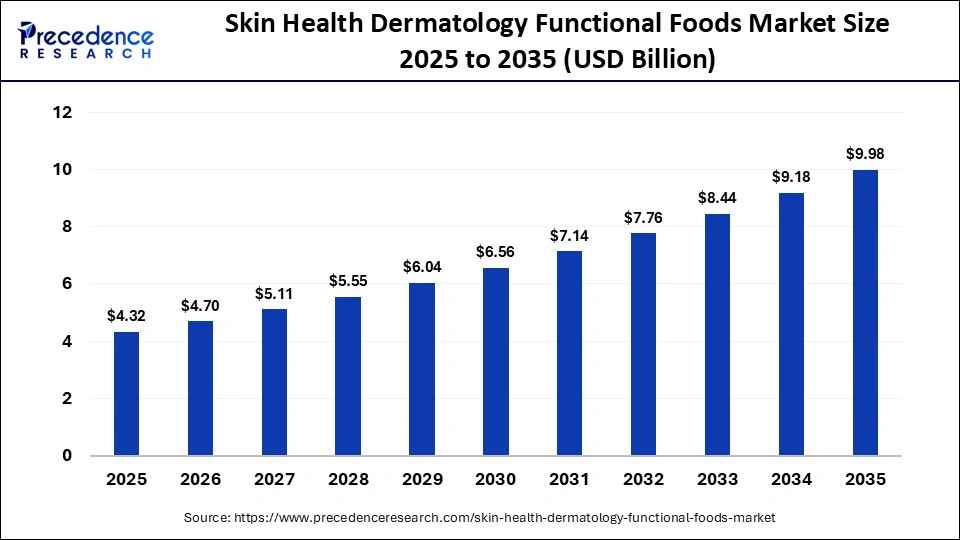
Key Takeaways
- North America dominated the global skin health dermatology functional foods market in 2025.
- Asia-Pacific is expected to grow at the fastest CAGR in the market during the forecast period.
- By product type, the dietary supplements segment held a dominant position in the market in 2025.
- By product type, the fortified foods segment is expected to grow at the fastest CAGR in the market between 2026 and 2035.
- By ingredient type, the botanical extracts segment led the global market by holding a share in 2025.
- By ingredient type, the vitamins and minerals segment is expected to grow with the highest CAGR in the market during the studied years.
- By distribution channel, the direct to consumer segment led the global market in 2025.
- By distribution channel, the e-commerce segment is expected to grow with the highest CAGR in the market during the studied years.
- By application, the anti-aging segment led the global market in 2025.
- By application, the UV protection segment is expected to grow with the highest CAGR in the market during the studied years.
Skin Health Dermatology Functional Foods: The Emerging Ingestible Dermatology
The skin health dermatology functional foods market is developing as a nexus of nutrition, dermatology, and wellness innovation. There has been a shift in consumers toward reactive skincare and proactive nutritional strategies that aid in maintaining skin structure, hydration, and elasticity. Collagen peptides, antioxidants, probiotics, and vitamin-enriched functional foods are emerging as everyday dietary supplements for maintaining skin. In addition, the market is experiencing a healthy growth as an increasing number of consumers are demanding the use of the beauty-from-within solutions, especially the millennials who are health-conscious and younger age brackets, which have been growing older.
How is AI Transforming Skin Health, Dermatology, and Functional Foods?
Artificial intelligence (AI) is changing the layout of functional foods by making specific recommendations regarding skin nutrition depending on genetic information, microbiome analysis, and lifestyle. AI-based systems can be used to develop individualized dietary remedies by examining biomarkers related to the consumer to address issues like inflammation, pigmentation, or collagen breakdown. Along with this, machine learning algorithms are driving the identification of new bioactive components that have dermatological applicability faster. Such innovations are facilitating the firms to come up with accuracy functional foods that suit the needs of the skin of individuals.
Skin Health Dermatology Functional Foods Market Trends
- Demand for Nutricosmetics: The ingestible beauty, commonly called nutricosmetics, is emerging as a pillar of the market of skin health functional foods. The growing trend towards nutritional solutions with collagen peptides, hyaluronic acid, antioxidants, and vitamins that help in promoting skin hydration, elasticity, and anti-aging properties.
- Ingested Ingredients and Formulation Innovation: The innovation of ingredients is defining the functional foods that are the result of research targeted towards dermatological advantage. Scientifically proven compounds are being included in products by manufacturers to aid skin repair and protection, including marine collagen, ceramides, polyphenols, carotenoids, and plant-based antioxidants.
- Increasing Understanding of the Gut-Skin Axis: Gut-skin axis scientific knowledge is having a major impact on consumer beliefs on the management of skin health. Studies are becoming increasingly focused on the importance of intestinal microbiota.
- Conveniently packaged products: The format is increasing the availability of functional products in skin care. Firms are launching ready-to-consume beauty drinks, fortified snack bars, gummies, and powdered supplements, which are easily absorbed in everyday lifestyles.
Market Scope
| Report Coverage | Details |
| Market Size in 2025 | USD 4.32 Billion |
| Market Size in 2026 | USD 4.70 Billion |
| Market Size by 2035 | USD 9.98 Billion |
| Market Growth Rate from 2026 to 2035 | CAGR of 8.73% |
| Dominating Region | North America |
| Fastest Growing Region | Asia Pacific |
| Base Year | 2025 |
| Forecast Period | 2026 to 2035 |
| Segments Covered | Product Type , Ingredient Type, Distribution Channel, Application, and region |
| Regions Covered | North America, Europe, Asia-Pacific, Latin America, and Middle East & Africa |
Segments Insights
Product Type Insights
Which Product Type Segment Dominated the Skin Health Dermatology Functional Foods Market?
The dietary supplements segment dominated the market in 2025, as they have a high level of specific nutrients that contribute to skin health. Skin hydration, elasticity, and appearance are highly promoted using products in the form of capsules, tablets, powders, and gummies that contain collagen peptides, antioxidants, and probiotics.
Supplements are gaining popularity among consumers since it provides the exact dose and scientifically developed ingredients targeting certain dermatological issues. The increasing demand in this segment is also being enhanced by the increased popularity of ingestible beauty items and nutricosmetics. Moreover, the dietary supplements are being adopted faster among consumers due to heavy marketing by wellness and nutraceutical brands.
The fortified foods segment is expected to show the fastest growth in the forecast period, because consumers want to find easy ways of incorporating skincare nutrients into their daily meals. Vitamins, collagen, and antioxidant-enriched functional beverages, snack bars, dairy products, and cereals are on the rise among health-conscious consumers.
The benefits of these products include nutrition and skin care benefits in common food packages. The current trend toward preventive healthcare and holistic wellness is making food manufacturers create new fortified products to promote skin health. Consequently, the fortified foods category will experience a high level of growth in the next few years.
Ingredient Type Insights
Why Did the Botanical Extracts Segment Dominate the Market?
The botanical extracts segment held the largest revenue share in the skin health dermatology functional foods market in 2025, as there is an increasing preference towards natural ingredients and plant ingredients in the skincare nutrition sector. Plant-based ingredients like green tea, turmeric, aloe vera, and grape seed are well known because of their antioxidant and anti-inflammatory effects.These substances assist in the antioxidation of skin cells, collagen production, and the enhancement of skin well-being overall. Adoption of botanical extracts is also increasing due to the growing demand for clean-label and organic functional foods. Moreover, the potency and bioavailability of plant-based ingredients used in functional foods are also becoming better due to progress in the extraction technologies.
The vitamins and minerals segment is expected to gain the highest market share between 2026 and 2035, as these nutrients are crucial to the skin's structure and functioning. Vitamin C, vitamin E, zinc, and biotin are common examples of nutrients included in functional foods to prevent collagen synthesis, skin repair, and antioxidant activity. There is an increase in awareness among consumers regarding the role of micronutrients in healthy skin and in preventing early aging. Manufacturers are thus coming up with fortified products that provide the best concentration of these nutrients to provide dermatological advantages. With the rising level of nutritional awareness, the demand for functional food with vitamins and minerals is growing.
Distribution Channel Insights
How the Direct to Consumer Segment Dominated the Market?
The direct to consumer segment contributed the biggest skin health dermatology functional foods market share in 2025, as more brands shifting to personalized marketing and direct sales content. Numerous nutraceutical firms are marketing their products on their own websites, subscriptions, and wellness apps, providing a closer interaction with the consumers. This model enables businesses to provide highly tailored skin health solutions to different customers following their specific nutritional goals. It is also through direct communication with customers that the brands can develop trust and loyalty and collect consumer insights. Consequently, ingestible skincare products have adopted the direct-to-consumer strategy as an interface to make significant sales.
The e-commerce segment is expected to witness the fastest growth in the market over the forecast period, because digital sales stores offer convenient access to a broad selection of functional foods based on protecting skin health. The purchase of supplements and fortified foods via online markets, health centers, and wellness stores is progressively on the increase among consumers. Social media platforms allow customers to compare ingredients of the products, read product reviews, and receive educational materials in terms of skin nutrition. Moreover, online sales of nutricosmetic products are being increased due to the increasing power of social media marketing and the use of influencers. Global online trade is thus increasing the business in this segment.
Application Insights
Which Application Segment Led the Market?
The anti-aging segment led the skin health dermatology functional foods market in 2025, due to increasing consumer demand for products that promote youthful skin. With a focus on preventing signs of aging, items rich in collagen, antioxidants, and vitamins are particularly sought after. Consumers are becoming more aware of the role nutrition plays in maintaining skin vitality, driving growth in this segment. Additionally, the rise of innovative formulations that combine these ingredients enhances their appeal to health-conscious individuals. As more people seek proactive solutions to aging, the anti-aging category is expected to continue flourishing in the market.
The UV protection segment is expected to expand rapidly in the market in the coming years. As awareness of the harmful effects of UV exposure increases, consumers are seeking innovative dietary solutions that offer protective benefits against sun damage. These functional foods, enriched with antioxidants, polyphenols, and specific vitamins, play a crucial role in fortifying the skin's defenses. Additionally, the growing trend of preventive skincare has led to a surge in demand for products that enhance natural UV resistance from within. As a result, companies are rapidly developing formulations specifically designed to support skin protection and overall health in response to this rising consumer interest.
Regional Insights
Why North America Dominated the Skin Health Dermatology Functional Foods Market?
North America held a major market share in 2025 because of the high customer awareness of the importance of preventive healthcare and nutritional health. The area possesses one of the most developed nutraceuticals markets, and the demand for functional foods with beauty and skincare purposes is high.
Ingestible beauty products are becoming a common practice among consumers in this region in their wellness programs. The availability of leading research institutes and innovation-oriented corporations is also playing a role in product development in the market. Also, there exist robust distribution channels and online retail systems that are facilitating market growth. All these facts make North America the market leader in the region.
Country-Level Analysis
The U.S. because of high consumer spending on health, wellness, and beauty products. There are a great number of nutraceutical brands in the country that specialize in collagen supplements, beverages rich in antioxidants, and products that support the microbiome. The situation in Canada is also characterized by the growing use of functional foods because of the growing awareness of nutritional dermatology.
Consumer interests in the region include healthy skin, clean label, and natural ingredients, which are particularly in demand. Market growth is also reinforced by the growth of online stores and wellness-oriented startups. These developments at the country level make North America more dominant in the world market.
Why is Asia-Pacific the Fastest-Growing Region in the Market?
Asia Pacific is expected to host the fastest-growing skin health dermatology functional foods market in the coming years because of the increase in disposable income and the increasing beauty-conscious population. Consumers in the region are shifting towards skincare and wellness products that help them to be beautiful inside and out. There is a high cultural focus on skin health and preventive nutrition, which is driving the use of functional foods and nutraceutical products. Moreover, the fast urbanization and the transformation of lifestyle are also promoting the use of convenient eating habits by consumers to have healthy skin. Local manufacturers are coming up with new formulations that meet the local preferences. These are also contributing to the fast expansion of the market in the Asia-Pacific.
Country-Level Analysis
Japan is among the top markets in the region because of the culture of functional foods and nutraceutical innovation that is quite long-standing. The growth in China is high because of the increasing demand for high-end beauty and wellness products by the urban population. India is also becoming a major market with the growing awareness of nutritional skincare and the growing channels of e-commerce. South Korea is very instrumental in the innovation in pretty nutrition products as the industry is well developed in terms of beauty and skincare products. Also, the remaining expansion of collagen beverages and probiotic supplements in Southeast Asia is favoring market growth.
Will Europe Grow in the Skin Health Dermatology Functional Foods Market?
Europe is expected to grow at a notable CAGR in the foreseeable future, as consumers pay more attention to holistic health and natural wellness products. The market is highly established in terms of functional food and dietary supplements to promote health in general. Ingestible skincare products are also being widely embraced as a complementary alternative to topical cosmetics by consumers. The increasing popularity of organic and plant-based products is also affecting product innovation in the market. Also, high-quality regulation guarantees high-quality products. These are some of the factors that are leading to the gradual growth of the market in Europe.
Country-Level Analysis
Germany is regarded as one of the major markets in the region, due to its robust nutraceutical industry and ever-increasing demand for health functional foods. The situation in the United Kingdom is characterized by the growing number of consumers interested in collagen supplements, antioxidant drinks, and products that support the microbiome. France is also contributing to the growth of the market by its contribution towards high-end beauty nutrition products and health innovation.
The Nordic countries are becoming significant markets because of their health-conscious people and their high demand for natural ingredients. Also, the regional market is being empowered by making more investments in functional food development and research. These trends at the country level are facilitating the overall development of the skin health dermatological functional foods market in Europe.
Skin Health Dermatology Functional Foods Market Value Chain Analysis
- R&D
The research and development is the initial phase of the functional food supply chain, whereby the discovery and validation of bioactive compounds that enhance the health of the skin is of concern.
Key players: Nestle Health Science, BASF SE, Lonza Group, DSM-Firmenich, and Amway
- Clinical Trials
The safety and efficacy of the functional food ingredients in dermatology-based products can only be established through clinical trials.
Key players: Unilever, Nestle, Herbalife Nutrition, Amway, and Givaudan
- Formulation and Final Dosage Preparation
After the validation of functional ingredients, manufacturers concentrate on formulating products that are optimized in terms of stability, taste, absorption, and convenience to the consumer.
Key players: Kerry Group, ADM (Archer Daniels Midland), Ingredion, Tate & Lyle and BASF
- Packaging and Sterilization
The production of functional food products is done in large-scale manufacturing and quality control. At this phase, a raw material is refined, mixed, and transformed into a final consumer.
Key players: Lonza, Catalent, Glanbia Nutritionals, ADM and Kerry Group
- Distribution to Hospitals, Pharmacies
The distribution networks are crucial in the product distribution of dermatology-oriented functional foods to the healthcare providers, pharmacies, and consumers.
Key players: McKesson Corporation, Cardinal Health, Walgreens Boots Alliance, CVS Health, and AmerisourceBergen
- Patient Support and Services
The importance of the functional dermatology market is shifting towards patient support programs and educational programs.
Key players: Nestle Health Science, Amway, Herbalife Nutrition, Unilever, and Haleon
Skin Health Dermatology Functional Foods Market Companies
- BASF SE
- ADM
- DuPont
- Cargill, Incorporated
- Arla Foods Amba
- Nestlé
- DSM
- Glanbia PLC
- Herbalife International of America, Inc.
- Amway Corp.
- Amway Corp.
- BASF SE
- Bayer AG
- Blackmores Ltd.
- Botanic Healthcare Group Ltd.
- Chr. Hansen Holding A/S
- Danone S.A.
- FANCL Corporation
- Feel Holdings Limited
- Fermentis Life Sciences SA
- Glanbia plc
- Halenko Group Ltd.
- Herbalife Nutrition Ltd.
- Ingredion Incorporated
- Kao Corporation
- Kemin Industries, Inc.
- Kerry Group plc
- Koninklijke DSM N.V.
- Lonza Group AG
- Meiji Holdings Co., Ltd.
- Nestlé S.A.
- Norax Supplements, Inc.
- Nutra Healthcare Private Limited
- Yakult Honsha Co., Ltd.
Recent Developments
- In January 2026, innovative food products developed by ICAR-CIFT were launched in Kochi, showcasing organic snacks, gluten-free options, and fortified foods. The expo emphasized sustainability and health awareness, with local entrepreneurs highlighting diet-specific offerings. Government support for the health food market reflects growing consumer demand, promoting a shift toward healthier lifestyles and nutritional innovation.(Source: https://timesofindia.indiatimes.com)
- In December 2025, a study published in the Journal of Investigative Dermatology found that diet can boost vitamin C content and influence skin structure, while also revealing clear limits to its effects on collagen formation and UV protection. The study evaluated how skin compartments responded to dietary ascorbate and whether these changes translate to measurable improvements in skin function. (Source: https://www.news-medical.net)
Segments Covered in the Report
By Product Type
- Dietary Supplements
- Fortified Beverages
- Fortified Foods
By Ingredient Type
- Botanical Extracts
- Aloe Vera
- Green Tea Extract
- Collagen
- Probiotics
- Vitamins & Minerals
- Vitamin C
- Vitamin E
- Zinc
By Distribution Channel
- E-commerce
- Direct To Consumer
- Marketplace
- Social Commerce
- Pharmacies & Drugstores
- Specialty Retail
- Beauty Clinics & Dermatology Centers
- Spas & Salons
- Supermarkets & Hypermarkets
By Application
- Acne Management
- Anti-Aging
- Skin Brightening
- Skin Moisturizing
- UV Protection
By Region
- North America
- Latin America
- Europe
- Asia-pacific
- Middle and East Africa
For inquiries regarding discounts, bulk purchases, or customization requests, please contact us at sales@precedenceresearch.com
Frequently Asked Questions





Ask For Sample
No cookie-cutter, only authentic analysis – take the 1st step to become a Precedence Research client
 Get a Sample




 sales@precedenceresearch.com
 Schedule a Meeting
