



Iris Recognition Market Trends, Companies, Revenue / Sales Performance, Subscriber Growth, Pricing Strategies, Cloud Adoption, Infrastructure Expansion, Competitive Landscape, and Industry Outlook
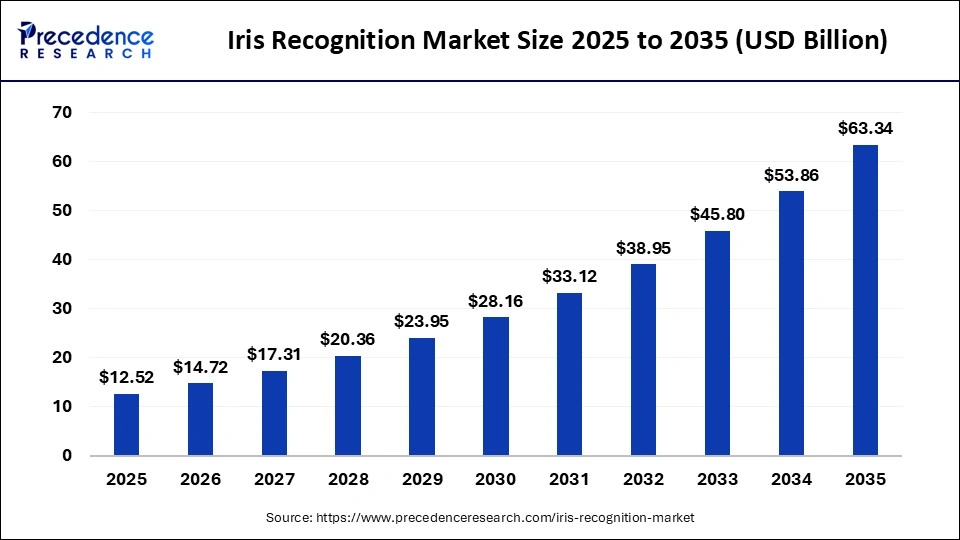
ICT industry specialist Shivani Zoting, estimates the iris recognition market at USD 14.72 billion in 2026, with continued technology adoption expected to take the market to USD 63.34 billion by 2035 at a CAGR of 17.60%. Leading iris recognition market providers such as Iris ID Systems, HID Global, NEC Corporation, Cognitec Systems, IDEMIA are expanding their capabilities across segments including By Component, By Application, By End User, By Region.
Source: https://www.precedenceresearch.com/iris-recognition-market
 Get a Sample
 Table Of Content


What is the Iris Recognition Market Size in 2026?
The global iris recognition market size was calculated at USD 12.52 billion in 2025 and is predicted to increase from USD 14.72 billion in 2026 to approximately USD 63.34 billion by 2035, expanding at a CAGR of 17.60% from 2026 to 2035. The market is mainly driven by increasing demand for secure biometric authentication in government and banking sectors, as well as mobile devices.
Key Takeaways
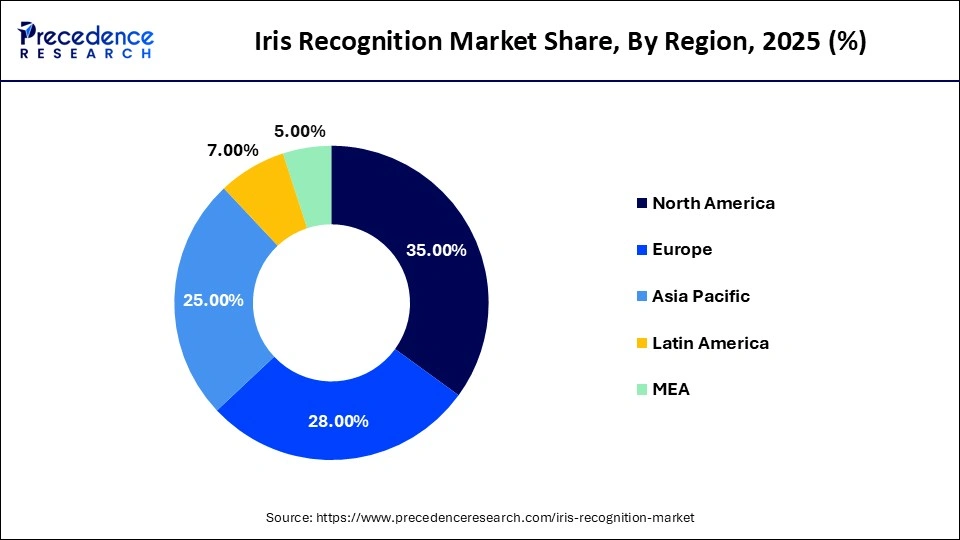
- North America dominated the global iris recognition market with a 35% share in 2025.
- Asia Pacific is expected to grow at the fastest CAGR of 18.0% between 2026 and 2035.
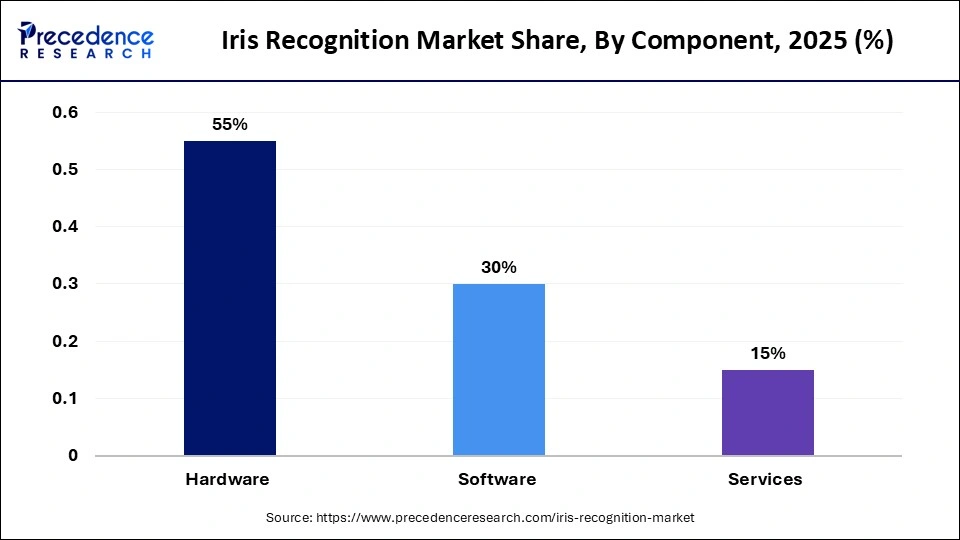
- By component, the hardware segment held the biggest market share of 55% in 2025.
- By component, the software segment is expected to expand at the fastest CAGR of 15.9% between 2026 and 2035.
- By application, the government & defense segment contributed to the highest market share of 38% in 2025.
- By application, the mobile & consumer electronics segment is expected to grow at the fastest CAGR of 16.2% between 2026 and 2035.
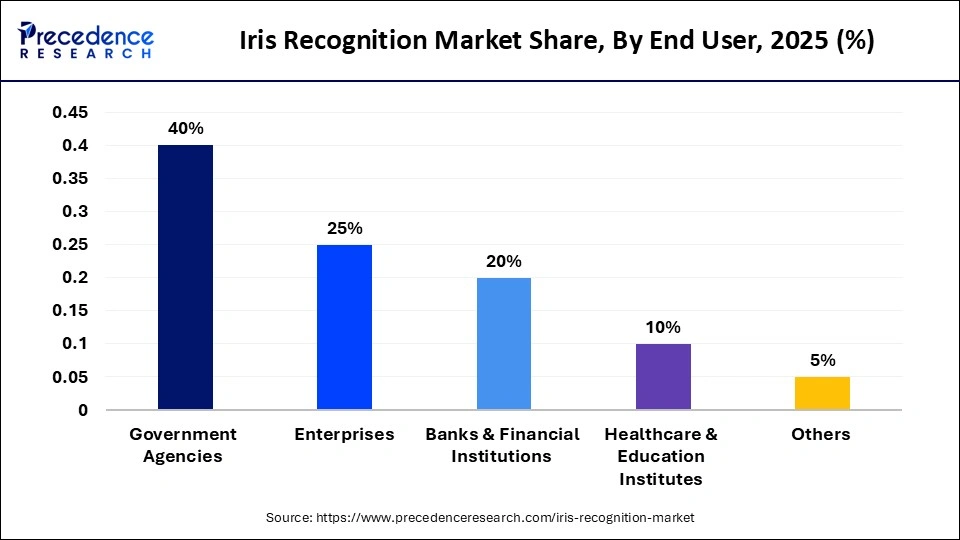
- By end user, the government agencies segment held a major market share of 40% in 2025.
- By end user, the enterprises segment is expected to expand at the fastest CAGR of 16.6% from 2026 to 2035.
Marke Overview
The iris recognition market involves biometric systems that identify individuals based on the unique patterns of the iris. These systems use high-resolution cameras and advanced algorithms for authentication in security, access control, border management, banking, and mobile applications. The market is witnessing strong growth because a variety of industries are increasingly in need of highly secure and dependable biometric authentication systems. Iris recognition technology is widely used in government identification programs, border control, banking, and mobile device security due to its high accuracy and low false acceptance rates.
Organizations are being encouraged to adopt sophisticated biometric solutions due to growing concerns about identity theft and data security. Further promoting market growth is the increasing incorporation of biometric authentication into smartphones, smart access control systems, and digital payment platforms. The speed and accuracy of iris recognition systems are also being improved by technological developments in AI-based image processing and sensor technologies, which are encouraging their adoption in a variety of industries.
Future Market Overview
- Expansion of Digital Identity Programs: The rapid implementation of digital identity initiatives by governments is creating significant opportunities for iris recognition technology providers.
- Increasing Deployment in Smart Cities: Smart city projects are integrating advanced surveillance and biometric identification systems, creating demand for iris recognition technologies.
- Growth of Contactless Security Solutions: The rising need for touchless authentication systems in public spaces and workplaces is expected to boost the adoption of iris recognition solutions.
- Rising Demand for Biometric Payment Systems: The growing use of biometric authentication in digital payments and financial transactions presents new opportunities for iris recognition technologies.
- Increasing Security Needs in Critical Infrastructure: High-security sectors such as defense, research centers, and data centers are increasingly adopting advanced iris recognition systems.
Government Initiatives Supporting the Market
| Region/Country | Year | Government Initiatives | Description |
| Asia Pacific | 2025 | Digital Identity & Smart Border Programs | Governments across Asia Pacific are investing in biometric identification systems and smart border control programs, increasing the adoption of iris recognition for secure identity verification. |
| India | 2025 | Aadhaar Biometric Identification Program | The government continues expanding the Aadhaar digital identity system, which uses biometric authentication, including iris recognition, for secure citizen identification and service delivery. |
| North America | 2025 | Biometric Border Security Initiatives | Governments are implementing biometric technologies such as iris recognition for immigration control, airport security, and identity verification systems. |
| United States | 2026 | Homeland Security Biometric Programs | U.S. government agencies are deploying advanced biometric identification technologies, including iris recognition, for border management and law enforcement applications. |
| Europe | 2025 | Digital Identity and Border Management Systems | European governments are implementing biometric authentication systems for digital identity verification and secure border control operations. |
| Germany | 2025 | Smart Security and Digital Identification Projects | Germany is promoting advanced biometric technologies for secure identification in public services, transportation systems, and government facilities. |
| UAE | 2025 | Biometric Border Control Initiative | The UAE government is using iris recognition technology at airports and border checkpoints to enhance traveler identification and security monitoring. |
| MEA | 2025 | National Biometric Identification Programs | Governments across the MEA region are implementing biometric national ID and security systems that incorporate iris recognition technology for accurate identity verification. |
How is Artificial Intelligence Influencing the Iris Recognition Market?
By enabling sophisticated pattern recognition, pattern recognition, and real-time authentication, artificial intelligence (AI) is dramatically increasing the effectiveness and accuracy of iris recognition systems. Even in difficult situations like dim lighting, motion, or partial obstruction, AI algorithms aid in the more accurate analysis of iris patterns. By lowering false acceptance and rejection rates and facilitating quicker identity verification, AI integration also increases the dependability of biometric systems. The adoption of iris recognition systems in the government, banking, and consumer electronics sectors is further accelerated by the integration of these systems with smart security platforms, border control systems, and digital identity verification solutions made possible by AI-driven analytics.
Iris Recognition Market Trends
- Growing Adoption in Government Identification Programs: Governments worldwide are increasingly implementing biometric identification systems for national ID programs, border control, and voter registration, driving the demand for iris recognition technology.
- Integration with Smartphones and Consumer Electronics: Smartphone manufacturers are integrating iris recognition technology to enhance device security and enable secure user authentication.
- Rising Demand for Contactless Biometric Authentication: Contactless identification technologies are gaining popularity in airports, workplaces, and public facilities, boosting the adoption of iris recognition systems.
- Increasing Use in Border Security and Immigration Control: Airports and border authorities are adopting iris recognition systems to improve passenger identification, security screening, and automated immigration processes.
- Advancements in AI and Image Processing Technologies: Technological developments in artificial intelligence and machine learning are enhancing the accuracy, speed, and reliability of iris recognition systems.
- Expansion of Biometric Access Control Systems: Organizations are increasingly adopting iris-based access control systems in corporate offices, research laboratories, and high-security facilities.
- Growing Adoption in Banking and Financial Services: Banks and financial institutions are using iris recognition for secure authentication in digital banking, ATMs, and payment verification.
- Increasing Demand in Healthcare and Patient Identification: Hospitals and healthcare providers are adopting biometric identification systems to ensure accurate patient identification and improve data security.
Market Scope
| Report Coverage | Details |
| Market Size in 2025 | USD 12.52 Billion |
| Market Size in 2026 | USD 14.72 Billion |
| Market Size by 2035 | USD 63.34 Billion |
| Market Growth Rate from 2026 to 2035 | CAGR of 17.60% |
| Dominating Region | North America |
| Fastest Growing Region | Asia-Pacific |
| Base Year | 2025 |
| Forecast Period | 2026 to 2035 |
| Segments Covered | Component, ApplicationEnd User, and Region |
| Regions Covered | North America, Europe, Asia-Pacific, Latin America, and Middle East & Africa |
Segment Insights
Component Insights
Iris Recognition Market Share, By Component, 2025 (%)
| Component | 2025 |
| Hardware | 55% |
| Software | 30% |
| Services | 15% |
What Made Hardware the Dominant Segment in the Iris Recognition Market?
The hardware segment dominated the market with the largest share of 55% in 2025. The segment's dominance is driven by the extensive use of iris scanners, cameras, and biometric capture devices in border control facilities, airports, and government ID systems. These hardware solutions offer dependable identity verification and extremely accurate biometric authentication. The hardware segment's dominance is further reinforced by rising investments in security infrastructure and biometric enrollment schemes.
The software segment is expected to grow at the fastest CAGR of 15.9% in the coming years because of the growing adoption of cloud-based identity management systems, AI-based recognition systems, and sophisticated biometric algorithms. For large-scale authentication systems, iris recognition software is required to facilitate quick pattern matching and effective database administration. Adoption is being accelerated by the increasing incorporation of biometric authentication into digital services.
Application Insights
Why Did the Government & Defense Segment Dominate the Iris Recognition Market?
The government & defense segment dominated the market with a 38% share in 2025, since iris recognition systems are extensively utilized in law enforcement, national ID programs, and border security. To boost security and streamline identity verification procedures, governments are spending more money on biometric identification technologies. Iris recognition is appropriate for crucial security operations because of its exceptionally high accuracy and low error rates. Growing geopolitical tensions and greater emphasis on national security are contributing factors to this segment's dominance.
Iris Recognition Market Share, By Application, 2025 (%)
| Application | 2025 |
| Government and Defense | 38% |
| Banking and Finance | 22% |
| Mobile and Consumer Electronics | 18% |
| Healthcare and Education | 12% |
| Others | 10% |
The mobile & consumer electronics segment is expected to grow at the fastest CAGR of 16.2% in the coming years because biometric authentication is becoming increasingly integrated into smartphones and other smart devices. Iris recognition technologies support digital payments, mobile banking, and the protection of personal data by offering safe and contactless user verification. Manufacturers are being encouraged to use cutting-edge biometric technologies as consumer awareness of device security grows. Compact imaging sensors are becoming more widely used in portable devices thanks to ongoing advancements.
End User Insights
Iris Recognition Market Share, By End User, 2025 (%)
| End User | 2025 |
| Government Agencies | 40% |
| Enterprises | 25% |
| Banks & Financial Institutions | 20% |
| Healthcare & Education Institutes | 10% |
| Others | 5% |
What Made Government Agencies the Leading Segment in the Iris Recognition Market?
The government agencies segment led the market with a major share of 40% in 2025, driven by the increasing adoption of biometric systems in databases used by law enforcement, immigration control, and national identity programs. Iris recognition technology provides very precise identification with low error rates. To reduce identity fraud and increase administrative efficiency, governments are increasingly using biometric verification. The need for iris recognition systems is increasing due to extensive digital identity initiatives.
The enterprises segment is expected to grow at the fastest CAGR of 16.6% in the coming years because biometric authentication is widely used for employee identification, access control, and workplace security. Iris recognition systems are being used by organizations to improve data security and stop illegal access. Additionally, corporate identity management systems and secure facility access solutions are being integrated with technology. The need for sophisticated biometric security systems is being further driven by the increasing digitalization of various industries.
Regional Insights
North America Iris Recognition Market Size and Growth 2026 to 2035
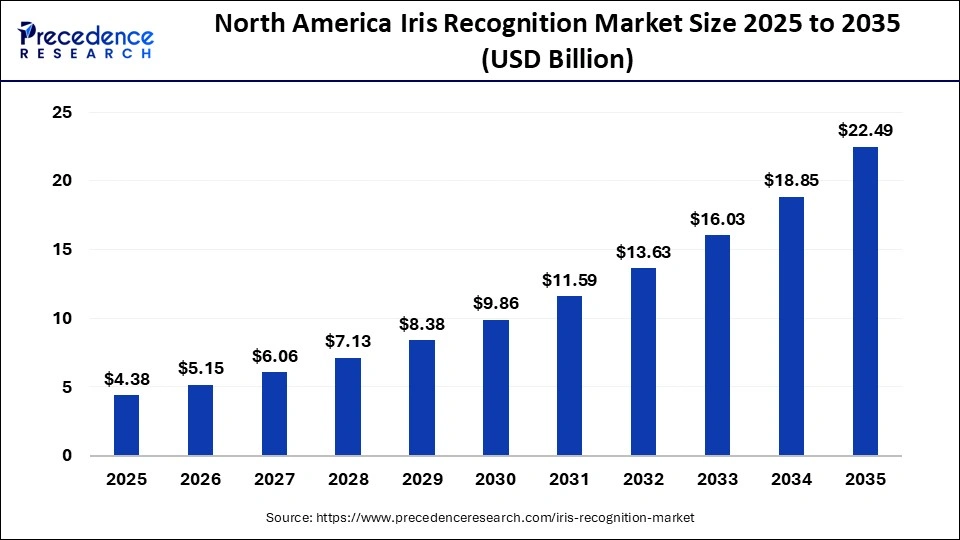
The North America iris recognition market size is estimated at USD 4.38 billion in 2025 and is projected to reach approximately USD 22.49 billion by 2035, with a 17.77% CAGR from 2026 to 2035.
Why Did North America Dominate the Iris Recognition Market?
North America dominated the market while capturing a 35% share in 2025, driven by the widespread use of biometric security technologies in the commercial, defense, and government sectors. The area has been significantly investing in security solutions and sophisticated technology infrastructure. The region also benefits from the presence of leading suppliers of biometric solutions and ongoing advancements in identity verification systems. The region's dominance is further strengthened by the growing use of biometric systems in financial services, border control, and airports.
U.S. Iris Recognition Market Size and Growth 2026 to 2035
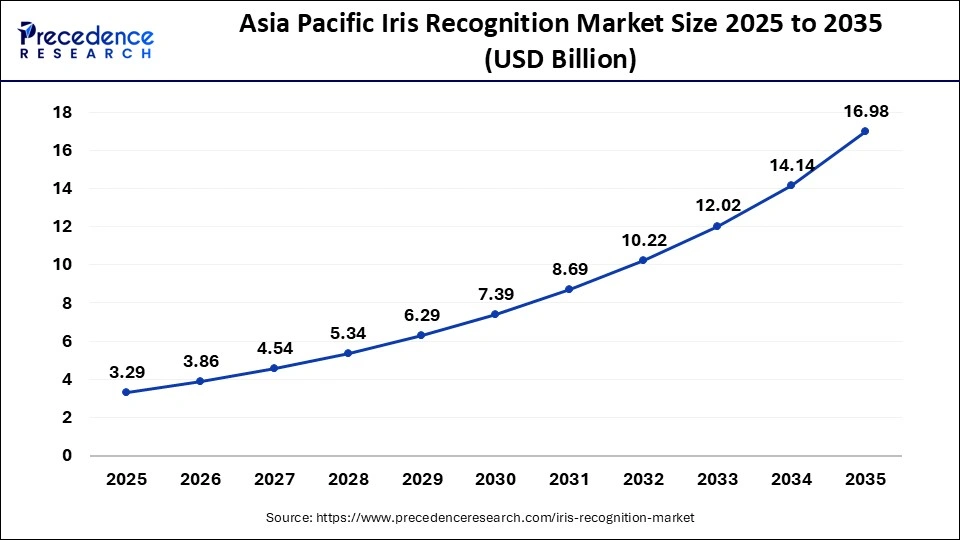
The U.S. iris recognition market size is calculated at USD 3.29 billion in 2025 and is expected to reach nearly USD 16.98 billion in 2035, accelerating at a strong CAGR of 17.83% between 2026 and 2035.
U.S. Iris Recognition Market Trends
The U.S. plays a key role in the regional market due to the extensive use of biometric systems in law enforcement, homeland security, and airport security. Market expansion is supported by ongoing investments in cutting-edge cybersecurity and authentication technologies. The nation's demand is further driven by the increasing use of biometric identification in digital services and banking.
How is the Opportunistic Rise of Asia Pacific in the Market?
Asia Pacific is expected to grow at the fastest CAGR of 18.0% in the coming years due to the increasing adoption of biometric identification systems and rapid digital transformation across emerging economies. Governments around the region are making significant investments in cutting-edge digital identity platforms and security infrastructure. The market is expanding due to rising urbanization and increased demand for secure authentication systems. Increased adoption of biometric technologies is also a result of growing consumer electronics manufacturing.
India Iris Recognition Market Trends
India is emerging as a key market due to extensive biometric identification programs and the expanding use of biometric authentication in banking and government services. The use of iris recognition technology is being encouraged by growing fintech services and digitalization initiatives. The government's emphasis on providing public services and safe digital identities is fueling market expansion.
Iris Recognition Market Companies
- Iris ID Systems
- HID Global
- NEC Corporation
- Cognitec Systems
- IDEMIA
- Crossmatch Technologies
- Princeton Identity
- EyeLock LLC
- Gemalto (Thales Group)
- ZKTeco
- Hitachi Ltd.
- Fujitsu Ltd.
- IrisGuard
- Aware Inc.
- Dermalog Identification Systems
Recent Developments
- In January 2025, Smart Eye AB announced that it had licensed iris recognition technology from Fingerprint Cards to integrate biometric iris authentication into its driver monitoring and automotive safety systems, enabling more secure identity verification in vehicles.(Source: https://view.news.eu.nasdaq.com)
- In May 2025, Tools for Humanity (World) launched its World ID iris-scanning system in several U.S. cities to create a digital identity that verifies whether a user is a real human. The system uses a specialized device called the Orb to scan a person's iris and generate a unique, encrypted identity.(Source: https://www.fintechweekly.com)
- In August 2025, U.S. Immigration and Customs Enforcement (ICE) deployed mobile iris-scanning systems to support rapid biometric identification in field operations. The system enables officers to identify individuals within seconds by accessing national biometric databases.(Source: https://idtechwire.com)
Segments Covered in the Report
By Component
- Hardware
- Software
- Services
By Application
- Government & Defense
- Banking & Finance
- Mobile & Consumer Electronics
- Healthcare & Education
- Others
By End User
- Government Agencies
- Enterprises
- Banks & Financial Institutions
- Healthcare & Education Institutes
- Others
By Region
- North America
- Latin America
- Europe
- Asia-pacific
- Middle and East Africa
For inquiries regarding discounts, bulk purchases, or customization requests, please contact us at sales@precedenceresearch.com
Frequently Asked Questions
Tags





Ask For Sample
No cookie-cutter, only authentic analysis – take the 1st step to become a Precedence Research client
 Get a Sample




 sales@precedenceresearch.com
 Schedule a Meeting
