



Medical Plastics Market Size, Key Companies, Company Market Share, Patient Volume, Treatment Adoption Rates, Pricing Analysis, Regulatory Landscape, Competitive Positioning, and Demand Forecast
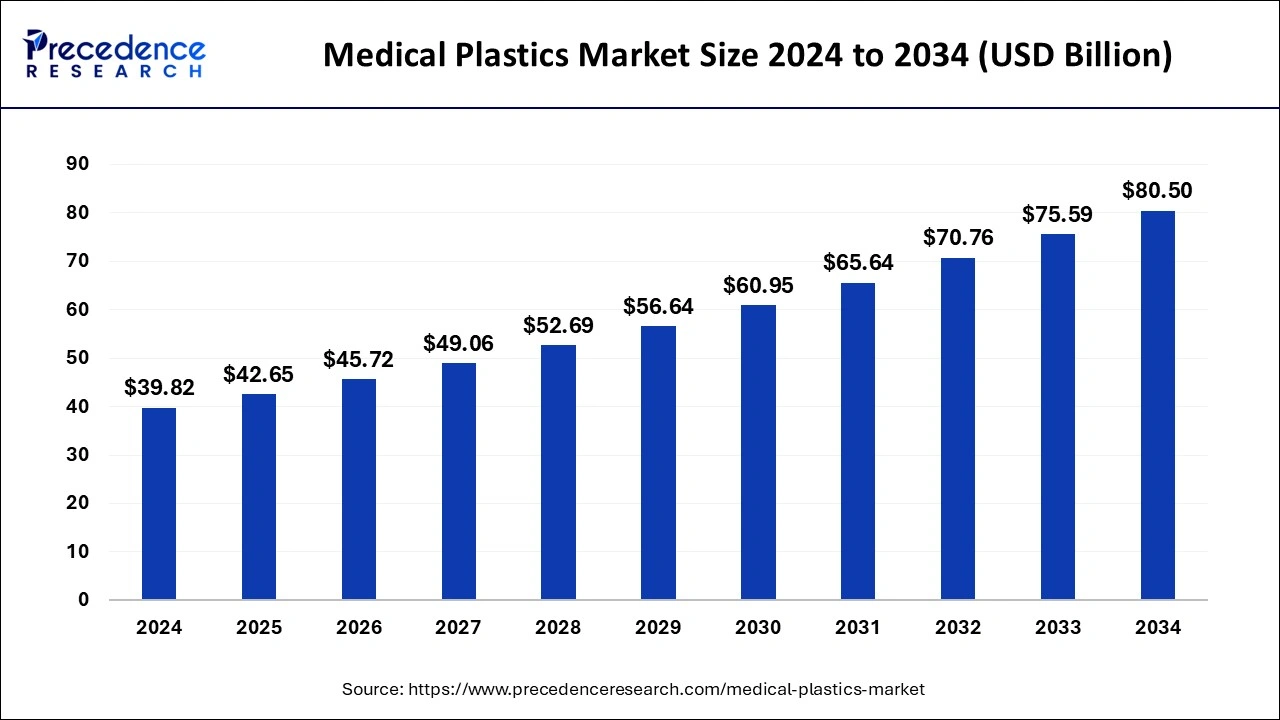
Vidyesh Swar, a Chemical and Materials Industry Expert, estimates the medical plastics market at USD 45.72 billion in 2026, with the market projected to reach USD 85.36 billion by 2035 at a CAGR of 7.18%. Major medical plastics market companies such as SABIC, BASF, Celanese Corporation are competing across key material and application segments, including By Type, Application.
Source: https://www.precedenceresearch.com/medical-plastics-market
 Get a Sample
 Table Of Content


What is the Medical Plastics Market Size?
The global medical plastics market size is calculated at USD 42.65 billion in 2025 and is predicted to increase from USD 45.72 billion in 2026 to approximately USD 85.36 billion by 2035, expanding at a CAGR of 7.18% from 2026 to 2035. The growing demand for well-packaged and several medical equipment has boosted the medical plastics market development.
Medical Plastics Market Key Takeaways
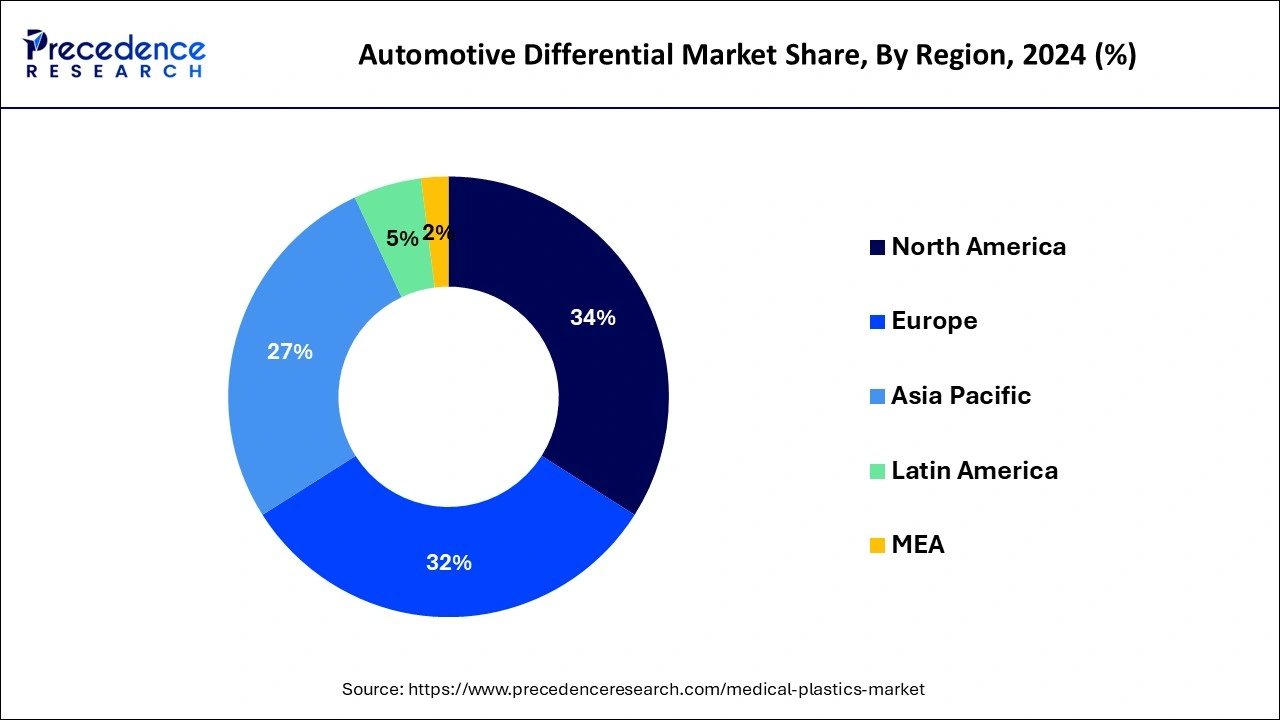
- North America dominated the global market with the largest market share of 34% in 2025.
- Asia Pacific region is estimated to expand the fastest CAGR between 2026 and 2035.
- By Type, the engineering plastics segment has held the largest market share in 2025.
- By Application, the medical components segment captured the biggest market share in 2025.
AI Integration in the Medical Plastics Market
Integration of artificial intelligence has contributed profoundly to the medical plastics market by bringing advancement in manufacturing and quality of the plastics used in medicals. This supports in customization of products according to the requirement which boosts the demand in the medical plastics market. It has made designing products convenient by predicting the market performance of plastic products. Artificial intelligence enhances the method of automation, decreases errors, and increases efficiency. It checks the quality of the products which will enhance the reliability of this market and increase the scope of development.
Medical Plastics Market Growth Factors
- Growing demand for advanced medical devices from ageing populations and growing investment in healthcare in emerging economies such as China and India. In addition, increasing disposable income and changing lifestyles, the need for efficient and affordable healthcare systems, and the increasing use of advanced medical technologies, such as implants 3D printed grafts, and personalized devices are driving the market.
- Enforcement and renewal of various infection prevention standards, coupled with an increase in surgical, hospital, and outpatient procedures, is expected to drive the medical plastics market growth over the forecast period. Fluctuations in oil prices are a major factor in price volatility in polyvinyl chloride (PVC), polyethylene (PE), polypropylene (PP), and polystyrene (PS). Expansion and contraction of capacity also contribute to market price fluctuations. In addition, increased overproduction in the Chinese market is expected to affect raw material prices.
- There has been an increase in the demand for plastic as it is an integral raw material used in the manufacture of medical devices and instruments and medical packaging. This has fueled the growth of the market over the past few years.
- The growing number of policyholders in the United States, coupled with the demand for medical devices is expected to have a positive impact on industry growth over the forecast years. In addition, the market is characterized by the presence of a large number of companies engaged in the production of high-grade plastics for industrial use. This industry is characterized by extensive integration at different stages of the value chain.
Market Scope
| Report Coverage | Details |
| Market Size in 2025 | USD 42.65 Billion |
| Market Size in 2026 | USD 45.72 Billion |
| Market Size by 2035 | USD 85.36 Billion |
| Growth Rate from 2026 to 2035 | CAGR of 7.18% |
| Dominating Region | North America |
| Base Year | 2025 |
| Forecast Period | 2026 to 2035 |
| Segments Covered | Type, Application, Geography |
| Regions Covered | North America, Europe, Asia-Pacific, Latin America, and Middle East & Africa |
Segments Insights
Type Insights
The engineering plastics segment is a major revenue-generating segment in the medical plastics market and is expected to dominate during the forecast period. Engineering plastics offer many advantages over standard plastics, such as good ductility, faster production times, low weight, high impact, resistance to fire, impact, and chemicals, and reduced friction. Improved standards and regulations requiring high-quality plastics used in medical applications are responsible for the large market size in this segment. In addition, the increasing use of engineering plastics in robotic aids, AI-driven processes, 3D printing of implants and prostheses, and more, is driving the use of engineering plastics.
Application Insights
Depending on the application, the market is divided into prosthetics, drug delivery, medical instruments & tools, medical disposables, and others. The medical components segment dominated the market and garnered a revenue share of around 40% in 2025.
The disposable medical segment is predicted to show the highest growth rate during the forecast period. The usage of medical plastics is rising owing to their versatility. Disposable medical items can be defined as single-use products used in surgical and procedural applications. The use of these medical products in general health check-ups and procedural applications is increasing. Furthermore, the use of these disposable products in accordance with the guidelines of various agencies, such as the US FDA and the European FDA, drives the demand for medical plastics globally. The rising prevalence of chronic diseases, changing lifestyles of middle-income groups, demand for better healthcare facilities, and increasing aging population are the main drivers of the market.
Regional Insights
North America's Dominance in the Medical Plastics Market
North America is the dominating region in the medical plastics market and hit a revenue share of around 34%. With per capita healthcare spending increasing in the United States, the demand for medical equipment will increase significantly over the next few years. This is expected to boost demand for products in the region. In addition, the presence of key manufacturers such as Dow Inc., DuPont, Celanese Corp., and Eastman Chemical Co., in the region is expected to have a positive impact on the overall growth of the market during the forecast period.
What is the U.S. Medical Plastics Market Size?
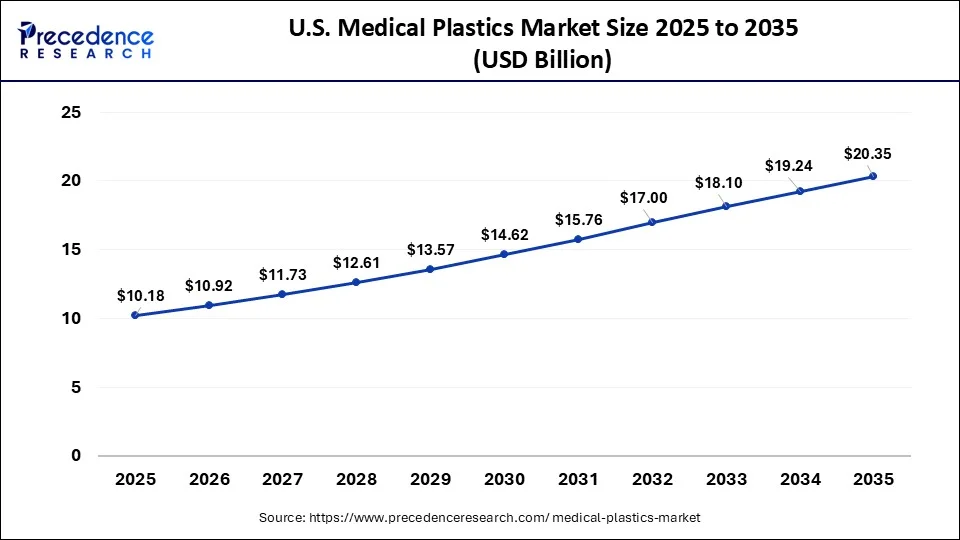
The U.S. medical plastics market size was exhibited at USD 10.18 billion in 2025 and is projected to be worth around USD 20.35 billion by 2035, growing at a CAGR of 7.17% from 2026 to 2035.
U.S. Medical Plastics Market Analysis
The U.S. industry experiences the expansion of home healthcare, the rising healthcare spending, and technological innovations like advancements in 3D printing. Growth in outpatient procedures and minimally invasive surgeries is increasing the need for precisely engineered plastic parts that offer cost-effectiveness and regulatory compliance.
Asia Pacific's Leading Growth in the Medical Plastics Market
Asia-Pacific is expected to be the largest medical plastics market during the forecast period. This is primarily due rapid growth of industrialization and urbanization in this region. In addition, the region has immense growth potential driven by the increasing demand for a better healthcare system. Asia-Pacific region covers some vast and rapidly growing economies, including China, India, Indonesia, Malaysia, Vietnam, and Thailand. Across these economies, local governments are restructuring regulations in fields including advanced materials, IT integration, and others in the healthcare industry to increase the efficiency and efficacy of medical devices and related healthcare services. Key drivers for the medical device industry in APAC are value-based care reform in legacy systems, ecosystem partnerships across the value chain, increased research and development, and digitalization medical system.
India Medical Plastics Market Trends
The government policy and incentives, the rising demand for healthcare and infrastructure, and sustainable innovation are driving the growth of the Indian market. Growth in domestic manufacturing, coupled with government initiatives to strengthen the medical device sector, is boosting local production and reducing reliance on imports.
Europe's Notable Reach in the Medical Plastics Market
Europe is expected to grow at a notable rate in the market, owing to stricter safety regulations, sustainability initiatives, and increasing investments in recyclable, bio-based, and biodegradable medical plastics. Innovations in high-performance polymers and sustainable alternatives are helping reduce environmental impact while meeting stringent EU regulatory and safety standards. Additionally, focus on circular economy principles and recyclable materials is shaping product development strategies as stakeholders balance healthcare needs with environmental sustainability goals.
Germany Medical Plastics Market Analysis
The innovations in high-performance materials, robust R&D investments, and advanced manufacturing are expanding the German market for medical plastics. Adoption of high-performance, biocompatible, and sterilizable plastics is supporting applications in minimally invasive surgery, drug delivery systems, and disposable medical products.
How will Latin America Emerge in the Medical Plastics Market?
Latin America is emerging as a significantly growing region in the global market, mainly due to its intense requirement for chronic disease management and expanding healthcare accessibility. Infection control protocols and expanded use of disposable syringes, IV bags, and protective gear raise baseline plastic consumption. Concurrently, higher rates of non-communicable and chronic conditions increase demand for diagnostic and wearable medical tools, along with advanced medical component manufacturing in the region, especially in hubs like Mexico and Brazil.
Brazil Market Trends
Brazil is a key contributor in the region, mainly because it is a primary growth hub for medical device plastics, driven by expansions in public-private health infrastructure and universal coverage systems. ANVISA further implemented modified risk classification frameworks, aligning local compliance closer with international standards. Brazil must prioritize investment in healthcare infrastructure, workforce development, and digital integration technologies to ensure universal access to quality care for all.
How will the Middle East and Africa grow in the Medical Plastics Market?
The Middle East and Africa (MEA) region is witnessing significant growth during the forecast period, mainly due to increasing rates of diabetes, obesity, and cardiovascular issues across the region that require expanded diagnostic and treatment capabilities, increasing the consumption of polymer-based medical devices and disposables. This also attracts skilled expatriate health care providers to favorable conditions for the market in the region. The GCC would seem to represent fertile ground for the development of medical technologies, those aligned with the regional health priorities of the respective member states.
The UAE Market Trends
The UAE plays a distinctive role within the region, mainly due to its increasing demand for imported high-grade sterilizable plastics, smart medical packaging, and traceable drug-delivery devices. Operates the National Zero Bureaucracy Program via the Ministry of Health and Prevention (MoHAP) to re-engineer and accelerate medical establishment licensing and digital portal submissions. Furthermore, it leverages traceability platforms like Tatmeen to monitor supply chain integrity for sensitive medical products.
Value Chain Analysis of the Medical Plastics Market
- Feedstock Procurement: In this stage, the procurement teams focus on balancing bulk feedstocks, and manufacturers make efforts to simplify the quality control.
Key Players: BASF SE, SABIC, Covestro AG, Celanese Corporation, Solvay SA, Evonik Industries AG, Dow Inc., Eastman Chemical Company. - Waste Management and Recycling: This stage focuses on chemical, mechanical, and quaternary recycling processes, and stricter regulatory and safety requirements.
Key Players: Stericycle, Inc., Veolia Environnement, Waste Management, Clean Harbors, Republic Services. - Regulatory Compliance and Safety Monitoring: This stage is accelerated by the increasing integration of data by surveillance systems from electronic health records and registries.
Key Players: MiCOM Labs, UL Solutions, SGS & TÜV SÜD, Pure Global, Spectrum Plastics Group (DuPont), TPI Plastics, Viant Medical, IQVIA, Veeva Systems.
Competitive Landscape
The medical plastics market is moderately consolidated and dominated by established multinational chemical and polymer producers with high capital requirements. Its competition intensity is moderate to high, as many leading players include BASF SEDow Inc., SABIC, Celanese Corporation, and Solvay S.A., emphasizing research and development for next-generation medical-grade compounds over price wars. Stringent FDA, EMA, and biocompatibility testing frameworks limit new players.
Regulatory compliance further offers certified medical-grade polymers with verified low chemical leaching and stable sterilization performance. Material innovation advances engineering and high-performance plastics for robotic assistance and 3D-printed implants. Sustainability and safety are being addressed by developing eco-friendly or biodegradable polymer alternatives and reducing harmful plasticizers like DEHP and BPA to address clinical waste and toxicity concerns documented in public health studies.
The frequent and growing use of disposable plastic products due to potential but largely unsubstantiated infection challenges or convenience cannot be used by healthcare to exempt itself from the broad global imperative to reduce reliance on plastics. This requires us to question the linear model of plastic production, consumption, and disposal.
Medical Plastics Market Companies
- SABIC
- BASF
- Celanese Corporation
- Evonik
- Solvay S.A.
- Covestro
- Trelleborg Sealing Solutions
- Trinseo S.A.
- Dow Inc.
- Saint-Gobain Performance Plastics
Recent Developments
- In October 2024, Americhem Healthcare announced the launch of a medical-grade polymers product line in Europe.
- In April 2024, ORCHARD PARK announced the launch of Polymer Medical.inc. It is to provide healthcare and biosciences clients with contract injection moulding and assembly services.
- In February 2024, MGS announced the launch of Global Engineering Services Group.
Segments Covered in the Report
By Type
- Engineering plastics
- High performance plastics (HPP)
- Standard plastics
- Silicone
- Polyvinyl Chloride (PVC)
- Polypropylene (PP)
- Polyethylene (PE)
- Polystyrene (PS)
- Others
By Application
- Medical Disposables
- Prosthetics
- Medical Instruments & Tools
- Drug Delivery
- Medical Device Packaging
- Medical Components
- Orthopedic Implant Packaging
- Orthopedic Soft Goods
- Wound Care
- Cleanroom Supplies
- BioPharm Devices
- Mobility Aids
- Sterilization & Infection Prevention
- Tooth Implants
- Denture Base Material
- Others
By Geography
- North America
- U.S.
- Canada
- Europe
- U.K.
- Germany
- France
- Asia-Pacific
- China
- India
- Japan
- South Korea
- Malaysia
- Philippines
- Latin America
- Brazil
- Rest of Latin America
- Middle East & Africa (MEA)
- GCC
- North Africa
- South Africa
- Rest of the Middle East & Africa
For inquiries regarding discounts, bulk purchases, or customization requests, please contact us at sales@precedenceresearch.com
Frequently Asked Questions
Tags





Ask For Sample
No cookie-cutter, only authentic analysis – take the 1st step to become a Precedence Research client
 Get a Sample




 sales@precedenceresearch.com
 Schedule a Meeting
