



North America Cardiovascular and Soft Tissue Repair Patches Market Trends, Leading Companies, Company Revenue / Sales Performance, Procedure Volume, Healthcare Spending, Technology Adoption
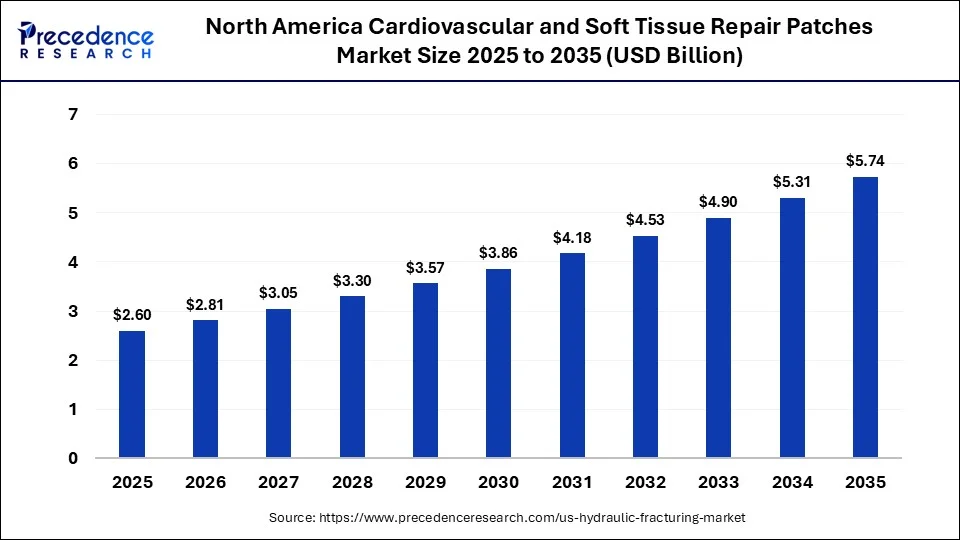
The North America cardiovascular and soft tissue repair patches market is projected to grow to USD 2.81 billion in 2026. The increase in cardiovascular disease, congenital heart disease, hernia, and musculoskeletal injury, as well as utilization of biologic and synthetic patches in cardiac operations, vascular reconstruction, hernia repair, and tendon and ligament repair, have been cited as reasons for growth. These trends have been analysed by Deepa Pandey, Senior Research Analyst. The outcomes of the research will be useful to medical device manufacturers, biomaterial suppliers, hospitals and ambulatory surgical centers
Source: https://www.precedenceresearch.com/north-america-cardiovascular-and-soft-tissue-repair-patches-market
 Get a Sample
 Table Of Content


North America Cardiovascular and Soft Tissue Repair Patches Market Size, Demand, and Trends Analysis 2035
The North America cardiovascular and soft tissue repair patches market is forecasted to expand from USD 2.81 billion in 2026 to USD 5.74 billion by 2035, growing at a CAGR of 8.25% from 2026 to 2035. Factors that contribute to demand include the aging population as well as an increasing number of cardiac and vascular procedures, and the increased use of minimally invasive and reconstructive surgery. A preference towards patches that encourage tissue regeneration, minimize infection risk and adhesion, and minimize re-operation is also gaining popularity. Advanced patch materials, such as decellularized extracellular matrix (ECM) scaffolds, bovine and porcine pericardium, and next-generation synthetic polymers, are receiving more development interest from manufacturers, said Deepa Pandey, who has more than five years of experience in the healthcare measurement industry.
Key Takeaways
- Commercially established products include GORE-TEX Cardiovascular Patch, XenoSure, CardioCel, Edwards bovine pericardial patches, and OviTex.
- The market is expected to grow through continued demand for established products and gradual adoption of biologic and specialized reconstruction patches.
- Soft tissue repair represented approximately 40.45% of U.S. market revenue in 2025, driven by hernia repair and abdominal wall reconstruction procedures.
- The cardiac repair segment is projected to grow at an 8.46% CAGR during 2026-2031, reflecting increasing demand for cardiovascular reconstruction.
- Hospitals remain the primary purchasers and users of repair patches, while ASCs and specialty surgical centers are emerging growth channels.
- Cardiovascular reconstruction, vascular procedures, hernia repair, complex abdominal wall reconstruction, and other tissue reinforcement applications drive demand.
- Adoption of new patch technologies depends heavily on proven clinical outcomes, durability, infection risk reduction, ease of handling, and economic value.
- Competitive differentiation increasingly depends on balancing biocompatibility, tissue integration, durability, mechanical performance, and clinical outcomes rather than material innovation alone.
- Regulatory approval, clinical validation, manufacturing scalability, and quality-system compliance are critical factors determining commercial success and market adoption.
Overview - A Large Surgical Patch Market Is Being Reshaped by Biomaterial Selection, Procedure Mix and Clinical Performance
The North American cardiovascular and soft tissue repair patches market sits at the intersection of cardiovascular surgery, vascular reconstruction, hernia repair, dural repair, and complex tissue reconstruction. Demand is driven by the need to reinforce, replace, or reconstruct damaged anatomical structures using synthetic polymers, biologically derived tissues, and engineered extracellular matrix materials. Unlike conventional commodity medical devices, patch selection depends heavily on anatomical location, mechanical strength, biocompatibility, infection risk, tissue integration, surgeon familiarity, and long-term clinical outcomes.
Available market estimates indicate that the global cardiovascular and soft tissue repair patches market reached approximately, with North America accounting for an estimated 35% of global revenue, equivalent to approximately USD 1.82 billion. However, published estimates vary materially according to product inclusion, application coverage, and market-definition methodology. A separate U.S. focused estimate places the 2025 market at USD 1.38 billion, illustrating why geographic aggregation and product-scope normalization are essential when evaluating regional opportunities.
The competitive structure is characterized by established synthetic patch technologies, biologics tissue products, and emerging regenerative materials. Synthetic patches accounted for approximately 54.2% of U.S. market revenue in 2025 under one market definition, while soft tissue repair represented approximately 40.5% of U.S. application revenue. These figures indicate that established materials and high-volume reconstructive procedures remain commercially important, even as biologic and tissue-engineered products create opportunities for differentiation.
Strategic interpretation: North America is not a single, uniform patch market. It comprises several clinically distinct revenue pools with different purchasing criteria, regulatory pathways, price sensitivities, and competitive barriers. Cardiovascular applications prioritize reliable handling, mechanical integrity, and durability, whereas soft tissue reconstruction may place greater emphasis on tissue integration, resorption characteristics, infection management, and reconstructive flexibility.
Key Coverage
- Regional market size, historical development, and forecast scenarios.
- U.S., Canadian and other North American demand characteristics.
- Synthetic, biologic and tissue-engineered patch technologies.
- Cardiovascular, vascular, pericardial, dural and soft tissue applications.
- Hospital procurement, clinical adoption and competitive positioning.
- Emerging material platforms and application-level white spaces.
Market Size and Forecast - Procedure Volumes and Material Substitution Define the Revenue Opportunity
The North American cardiovascular and soft tissue repair patches market represents a substantial revenue opportunity, with an estimated 2025 global market value of USD 5.2 billion and North America accounting for approximately 35% of global revenue, implying a regional benchmark of around USD 1.82 billion. Separately, one U.S. market forecast projects revenue increasing from USD 2.81 billion in 2026 to USD 2.18 billion by 2031, equivalent to a 7.9% CAGR over 2026-2031 and approximately USD 800 million in additional annual market revenue. These estimates reflect potentially different product and market definitions and should therefore be interpreted independently. Our analysis indicates that the scale of the revenue opportunity depends not only on procedure growth but also on how product categories, material adoption and market boundaries are defined. Differences in the inclusion of surgical meshes, specialty patches, biologic matrices and adjacent reconstructive products can materially influence reported market size and growth comparisons.
Our assessment is that procedure volumes provide the underlying demand foundation, while material substitution and product mix will influence the pace and distribution of incremental revenue. Population aging, cardiovascular interventions and reconstructive surgery support demand, but the commercial impact will depend on clinical adoption, pricing, reimbursement and the relative uptake of conventional synthetic materials, biologic patches and tissue-engineering solutions. We believe that emerging technologies represent a potential source of incremental value, although broader adoption will depend on clinical evidence, manufacturing scalability and acceptance beyond specialized applications. In our view, the key strategic implication is that manufacturers and investors should distinguish procedure-driven expansion from revenue gains associated with premium product adoption, pricing changes, and new clinical indications rather than treating headline market growth as a uniform opportunity across all segments.
The full report develops historical market estimates and a forecast through 2030-2031, with longer-term scenarios where evidence supports them. It examines revenue opportunities by application, material and country, separating the contributions of procedure volumes, pricing and product-mix shifts. Base, upside and downside scenarios assess the sensitivity of the market trajectory to adoption rates, reimbursement conditions, clinical evidence and purchasing behavior, helping decision-makers evaluate potential growth pockets, downside exposure and investment priorities. The analysis also documents forecast assumptions and market-definition differences to support more consistent comparisons across regional estimates and product categories.
The accompanying structured dataset can track market size, historical revenue, forecast revenue, CAGR, country-level contribution, application mix, material segment, pricing assumptions, procedure-volume drivers, and scenario-specific growth estimates by year and geography, subject to data availability. Users can filter and benchmark segments by application, material, country, and forecast scenario, while comparing the relative contributions of volume growth, pricing, and product-mix changes. This dataset complements the strategic report by providing a granular basis for market sizing, revenue forecasting, sensitivity analysis, and commercial opportunity assessment.
Segmentation Analysis - Established Synthetic Materials Lead Revenue While Biologics Create Differentiated Growth Opportunities
Material, application, and end-user segmentation reveal different competitive dynamics. Synthetic patches, including expanded polytetrafluoroethylene (ePTFE), polyester, and polypropylene-based products, benefit from manufacturing consistency, predictable handling characteristics, and established clinical familiarity. One U.S. market estimate places synthetic materials at 54.2% of 2025 revenue, making them an important reference segment for pricing and competitive benchmarking.
Biologic products, including bovine pericardium, porcine small-intestinal submucosa, human-derived matrices and extracellular-matrix scaffolds, serve applications where tissue interaction, anatomical adaptability or reconstructive requirements influence product selection. One U.S. estimate projects biologic patches to grow at an 8.52% CAGR during 2026-2031. The difference between the synthetic revenue share and biologic growth rate highlights the importance of separating current market leadership from future expansion potential.
Application segmentation includes cardiac repair, vascular repair and reconstruction, pericardial repair, dural repair, and soft tissue repair. Soft tissue repair accounted for approximately 40.45% of U.S. market revenue in 2025 under one estimate, supported by applications such as hernia repair and abdominal wall reconstruction. Cardiac repair has been projected to grow at an 8.46% CAGR over 2026-2031, reflecting the importance of specialized cardiovascular procedures and reconstructive requirements.
Hospitals remain the principal purchasing environment, although ambulatory surgical centers and specialty surgical facilities create additional opportunities as suitable procedures migrate toward outpatient settings.
Strategic interpretation: The commercially relevant segmentation question is not simply which material is largest. It is where a particular material delivers sufficient clinical differentiation to justify its price premium, and where procedural frequency creates a scalable revenue opportunity.
Key Coverage
- Synthetic, biologic and tissue-engineered product segmentation.
- ePTFE, polyester, polypropylene, bovine pericardium and ECM-based materials.
- Application revenue, growth rates and procedural demand indicators.
- Hospital, ambulatory and specialty-center purchasing patterns.
- Segment-level pricing, product positioning and adoption opportunities.
Market Dynamics - Clinical Requirements, Product Economics and Evidence Determine Adoption
Demand is supported by cardiovascular reconstruction, vascular procedures, hernia repair, complex abdominal wall reconstruction, and other interventions requiring durable tissue reinforcement. Aging populations, chronic disease burden, and continued surgical treatment of congenital and acquired conditions contribute to the underlying procedure base. Repeat and revision procedures also create demand, although individual patient pathways differ considerably by indication.
The principal restraint is the evidence and adoption burden associated with implantable medical materials. Surgeons and procurement teams assess not only initial performance but also complications, durability, ease of handling, infection risk, and potential revision requirements. A biologic patch may offer advantages in a specific clinical context without necessarily being suitable for every procedure or economically attractive at every institution.
Cost containment presents another challenge. Hospitals evaluate total procedural economics, including product price, operating-room time, inventory requirements, potential complications, and downstream treatment costs. Consequently, lower acquisition cost does not automatically translate into lower total treatment cost, while a premium-priced product must demonstrate a sufficiently compelling clinical or operational benefit.
Key Coverage
- Procedure-led demand drivers and unmet clinical needs.
- Clinical adoption barriers and evidence requirements.
- Hospital purchasing behavior and cost-containment pressures.
- Material substitution and product differentiation.
- Growth sensitivity to reimbursement, outcomes, and surgical practice.
Pricing Analysis - Material Complexity and Clinical Differentiation Shape Realized Selling Prices
Pricing varies by material, product configuration, anatomical indication, regulatory status, processing requirements, and distribution arrangement. Standard synthetic patches generally compete through consistency, availability, and established performance. Biologic and tissue-engineered products may command higher prices where specialized processing, tissue sourcing, preservation, decellularization, or proprietary manufacturing adds complexity.
A single average selling price would therefore obscure the economics of the market. Meaningful pricing analysis requires product-level comparisons, normalized patch dimensions, price per unit or treated area where relevant, and adjustments for clinical indication. List prices also need to be distinguished from realized hospital procurement prices, contract pricing, and distributor economics.
Publicly comparable transaction prices are not consistently available across the full product universe. Accordingly, reliable price ranges should be established through validated product quotations, purchasing information, and comparable configurations rather than unsupported numerical estimates.
Strategic interpretation: The central pricing question is whether a products incremental acquisition cost can be supported by measurable improvements in handling, procedural efficiency, clinical outcomes, or total treatment economics.
Key Coverage
- Product-level pricing and comparable patch configurations.
- Synthetic-versus-biologic pricing differentials.
- Hospital contracts, distributor margins and realized prices.
- Manufacturing, processing, preservation and logistics cost drivers.
- Price sensitivity, premium positioning and future pricing pressure.
Demand-Supply, Value Chain and Supply Chain - Specialized Manufacturing and Product Qualification Influence Availability
The value chain begins with polymer production, animal-tissue sourcing or biological scaffold development, followed by material processing, sterilization, quality control, packaging, regulatory compliance and distribution. In biologic products, tissue traceability, donor or animal-source controls, preservation, and processing consistency introduce additional requirements beyond conventional polymer manufacturing.
Supply continuity depends on qualified suppliers, validated processes, regulatory documentation, and the ability to maintain consistent product performance. Biologic materials may face sourcing and processing constraints, while synthetic materials depend on polymer quality, specialized manufacturing, and reliable sterilization and packaging operations.
Hospitals and distributors influence inventory requirements through purchasing agreements, product standardization, and preferences for reliable availability. Import dependency and cross-border logistics can also affect product lead times, although the scale of these effects differs by manufacturer and material.
Trade analysis must account for the limitations of customs classifications: broad medical-device and biomaterial categories do not always isolate cardiovascular and soft tissue repair patches. Consequently, import and export values require product-level validation before being interpreted as market-specific trade flows.
Key Coverage
- Raw-material sourcing and manufacturing economics.
- Capacity, supplier qualification and production bottlenecks.
- Sterilization, packaging, inventory and distribution requirements.
- North American manufacturing footprint and import exposure.
- Value capture across material suppliers, manufacturers and distributors.
Technology, Regulation and Clinical Adoption - Tissue Integration is a Key Area of Product Differentiation
The cardiovascular and soft tissue repair patches market spans conventional synthetic polymers, processed biologic tissues, decellularized matrices, composite scaffolds, and emerging regenerative technologies. Product differentiation increasingly depends on balancing mechanical reliability, biocompatibility, tissue integration, structural durability, and controlled resorption, while accommodating evolving surgical workflows, including minimally invasive and robotic procedures. In cardiovascular applications, calcification, inflammatory response, and long-term structural performance remain important evaluation criteria, whereas soft tissue repair places greater emphasis on scaffold architecture, tissue remodeling, reinforcement, and postoperative complications. Our analysis indicates that material innovation alone is unlikely to establish sustainable competitive differentiation unless it translates into clinically meaningful performance improvements. The commercial significance of a technology therefore depends on its application-specific suitability, supporting clinical evidence, and ability to address identifiable limitations of existing products.
Our assessment is that regulatory readiness, clinical validation, and manufacturing feasibility are equally important determinants of technology adoption. In the United States, the applicable regulatory pathway depends on device characteristics and may include 510(k) clearance, alongside relevant manufacturing controls, labeling, and supporting evidence. Canadian commercialization involves separate medical-device licensing and quality-system requirements. We believe these requirements create a meaningful distinction between technologies with promising laboratory or early-stage clinical results and products capable of achieving broader commercial adoption. For manufacturers, the strategic implication is that investment priorities should extend beyond biomaterial research to include evidence generation, regulatory planning, reproducible manufacturing and a clear value proposition for surgeons and healthcare providers.
Technologies demonstrating a credible balance between clinical performance, regulatory feasibility and production scalability may be better positioned to progress from product development to routine clinical use, although adoption will remain dependent on indication-specific evidence and purchasing considerations.
The full report provides a comparative assessment of established and emerging biomaterial platforms, clinical evidence, product approvals, development pipelines, intellectual property, product launches, research partnerships and market-access requirements. It examines how tissue integration, durability, degradation or resorption characteristics, and next-generation patch designs influence product positioning across cardiovascular and soft tissue repair applications. Where sufficiently available, the analysis also distinguishes technologies by development stage, regulatory status, intended application, and commercial readiness, helping decision-makers identify capability gaps, evaluate innovation priorities, and assess potential technology-partnership opportunities.
The associated structured dataset can track company, product, biomaterial platform, intended application, regulatory pathway, approval or clearance status, clinical evidence, development stage, product launch year, intellectual property activity, and research partnerships. Records can be filtered and benchmarked by technology type, geography, application, and development status, enabling users to compare competing platforms, monitor pipeline progression, and identify potential collaboration opportunities. This dataset complements the strategic report by providing a granular, updatable view of the technology and regulatory landscape alongside the broader analysis of clinical adoption and commercial differentiation.
Competitive Landscape - Established Device Platforms Compete with Biologic Specialists and Regenerative-Material Innovators
Competition in North America spans established medical-device manufacturers, vascular specialists, cardiovascular tissue-product developers, and companies focused on biologic scaffolds. Competitive advantage is application-specific, such as a strong position in peripheral vascular repair does not automatically translate into leadership in cardiac reconstruction, dural repair, or hernia reinforcement.
The markets competitive structure is best understood through four strategic groups:
- Established synthetic-material suppliers: Compete on product reliability, surgeon familiarity, portfolio breadth, manufacturing consistency, and hospital access.
- Biologic and cardiovascular tissue specialists: Differentiate through tissue processing, preservation, durability characteristics, and application-specific clinical evidence.
- Soft tissue reconstruction specialists: Focus on hernia repair, abdominal wall reconstruction, and specialized extracellular-matrix products.
- Emerging technology developers: Target tissue remodeling, resorbable materials, advanced scaffold designs, and minimally invasive surgical applications.
- Market concentration appears moderate in available U.S. estimates, but concentration varies by product category. A manufacturer may hold a strong position in a narrowly defined patch category while representing a much smaller share of the combined cardiovascular and soft tissue repair market.
- Strategic interpretation: Portfolio breadth and overall corporate revenue are insufficient indicators of market leadership. Competitive analysis needs to distinguish patch-specific commercial exposure from revenue generated by unrelated medical devices, surgical instruments, implants, and broader healthcare products.
Key Coverage
- Market structure and category-level concentration.
- Established suppliers, niche specialists, and emerging challengers.
- Product breadth, clinical positioning, and geographic reach.
- Differentiation by application and material platform.
- Competitive entry barriers and potential disruption.
Tentative Leading Company Universe - Which Participants Have Relevant Products and Application Exposure?
| Company | Headquarters | Market position/core strength | Major applications or segments |
| W. L. Gore & Associates | Newark, Delaware, USA | Synthetic biomaterials | Cardiovascular and vascular repair |
| LeMaitre Vascular | Burlington, Massachusetts, USA | Vascular surgical products | Peripheral vascular reconstruction |
| Artivion | Kennesaw, Georgia, USA | Cardiovascular surgical technologies | Cardiac and vascular repair |
| Baxter International | Deerfield, Illinois, USA | Surgical and biologic materials | Soft tissue and cardiovascular repair |
| Edwards Lifesciences | Irvine, California, USA | Cardiovascular biomaterials | Cardiac reconstruction |
| B. Braun | Melsungen, Germany | Surgical and vascular devices | Vascular repair |
| Terumo | Tokyo, Japan | Cardiovascular and vascular devices | Vascular reconstruction |
| Abbott | Abbott Park, Illinois, USA | Cardiovascular devices | Cardiac repair |
| Integra LifeSciences | Princeton, New Jersey, USA | Regenerative and reconstructive materials | Dural and soft tissue repair |
| Getinge | Gothenburg, Sweden | Cardiovascular surgical products | Vascular and cardiac repair |
| TELA Bio | Malvern, Pennsylvania, USA | Biologic soft tissue reinforcement | Hernia and abdominal wall repair |
| AROA Biosurgery | Auckland, New Zealand | Extracellular matrix technology | Soft tissue reconstruction |
| Tissue Regenix | Leeds, United Kingdom | Decellularized tissue technology | Soft tissue repair |
| LifeNet Health | Virginia Beach, Virginia, USA | Human tissue-based products | Reconstructive applications |
| Cook Medical | Bloomington, Indiana, USA | Interventional and vascular devices | Vascular applications |
| Stryker | Portage, Michigan, USA | Surgical and reconstructive devices | Selected tissue-repair applications |
| Smith+Nephew | Watford, United Kingdom | Advanced wound and tissue management | Reconstructive applications |
| Organogenesis | Canton, Massachusetts, USA | Regenerative medicine | Tissue repair and reconstruction |
| CorMatrix Cardiovascular | Roswell, Georgia, USA | Extracellular matrix cardiovascular products | Cardiac and vascular repair |
| Tisgenx | Irvine, California, USA | Biologic tissue products | Soft tissue and vascular applications |
The following 20 companies constitute a tentative research universe based on identified product relevance, material technologies, vascular or cardiovascular applications, and soft tissue reconstruction exposure. Inclusion does not imply a validated market-share ranking or equal participation across all market segments.
The universe is intended for product-level validation. Some participants have stronger exposure to adjacent reconstructive categories than to the narrowly defined patch market, and their inclusion requires confirmation of current commercial availability, North American distribution, and relevant product indications.
Market Share and Competitive Ranking - Product-Level Revenue Matters More Than Corporate Scale
A defensible competitive ranking requires market-specific revenue estimates rather than total company sales. Public financial disclosures frequently combine cardiovascular devices, surgical technologies, wound care, biologic implants, and other product categories, preventing direct attribution to repair patches.
The research therefore distinguishes three levels of competitive measurement: verified product-specific revenue where disclosed, estimated market participation where defensible, and qualitative competitive presence where revenue attribution is unavailable. Market shares should be reported as estimates with transparent confidence levels rather than presented as precise measurements unsupported by public data.
Key Coverage
- Estimated market shares and competitive positions by application.
- Top-five and top-ten concentration where validated.
- Company-level patch revenue and broader segment revenue distinctions.
- Share changes, new entrants, and product-category expansion.
- Competitive concentration by material, country, and indication.
Competitive Benchmarking - Clinical Breadth, Distribution and Product Specialization: Define Relative Position
| Benchmarking dimension | Evidence assessed | Commercial relevance |
| Product portfolio | Patch types and approved indications | Addressable market breadth |
| Clinical evidence | Published outcomes and follow-up | Adoption and confidence |
| Technology | Synthetic, biologic, or ECM platform | Differentiation |
| Manufacturing | Process controls and supply continuity | Reliability and scalability |
| Geographic reach | North American sales and distribution | Market access |
| Financial exposure | Relevant product revenue, where available | Commercial scale |
| Innovation | Product launches and development programs | Future positioning |
Competitive benchmarking evaluates companies against market-specific criteria: relevant product availability, material technology, application coverage, clinical evidence, regulatory status, manufacturing capabilities, geographic presence, and hospital access.
A broad cardiovascular portfolio can provide advantages in physician relationships and contracting, while specialists may differentiate through focused clinical expertise or distinctive material platforms. Neither strategy guarantees superior commercial performance. Outcomes depend on the addressable procedure base, product acceptance, and realized pricing.
Product Portfolio and Technology Benchmarking - Material Platforms Create Different Competitive Advantages
Synthetic platforms compete through dimensional consistency, mechanical properties, availability, and familiarity. Biologic platforms differentiate through tissue sourcing, processing, matrix structure, and intended interaction with surrounding tissue. Engineered and composite approaches seek to combine reinforcement with biological integration or controlled remodeling.
Representative commercially marketed technologies include ePTFE cardiovascular patches, bovine pericardial patches, decellularized bovine pericardium, and extracellular-matrix-based soft tissue reinforcement. Established examples include GORE-TEX Cardiovascular Patch, XenoSure, CardioCel, Edwards bovine pericardial patches, and OviTex products.
These products address different indications and should not be treated as interchangeable. Portfolio benchmarking examines intended use, regulatory labeling, material composition, dimensions, handling characteristics, evidence base, and availability.
Key Coverage
- Product families and indication-level coverage.
- Synthetic-versus-biologic portfolio positioning.
- Differentiation in processing, scaffold design, and tissue interaction.
- Product gaps, adjacent applications and potential portfolio expansion.
- Evidence-backed comparisons without unsupported clinical superiority claims.
Application and Geographic Competitive Benchmarking - Local Access and Surgical Specialization Shape Market Reach
Cardiovascular and soft tissue repair patches serve distinct clinical applications, including cardiac repair, peripheral vascular reconstruction, pericardial repair, dural reconstruction, and soft tissue reinforcement. Each application presents different requirements for product design, clinical evidence, surgeon familiarity, and distribution support. Geographically, the United States represents the principal demand center identified in the market assessment, while Canada introduces additional considerations related to device licensing, purchasing practices, and distribution. Our analysis indicates that competitive presence should be evaluated at the application and country level rather than inferred from a companys overall portfolio or global sales. A manufacturer with a broad product range may have limited penetration in a specific procedure category, while a specialized supplier may achieve stronger positioning through established surgeon relationships, application-specific evidence, and reliable product availability.
We assess that local market access and clinical specialization can be as important as portfolio breadth in determining commercial reach. Regulatory status, distribution coverage, hospital procurement relationships, and surgeon adoption influence whether a product can translate technical capabilities into actual regional sales. We believe that distinguishing commercial presence from local manufacturing is particularly important: products may reach North American hospitals through imports, distributors, or regional subsidiaries without being manufactured within the region. Consequently, the presence of a sales organization or product listing should not automatically be interpreted as evidence of substantial market share, local production capacity, or broad clinical adoption. In our view, this distinction is essential for identifying genuine competitive advantages, assessing expansion opportunities and evaluating potential gaps in geographic coverage.
The full report provides application-level and country-level competitive benchmarking, examining relevant product availability, clinical positioning, regulatory status, distribution reach and regional expansion activity. It distinguishes the United States and Canadian markets while evaluating manufacturers across individual repair applications, helping identify where specialized capabilities, established commercial relationships, or product-access limitations influence competitive positioning. Where reliable data are available, the analysis also differentiates regional commercial presence from manufacturing footprint and assesses the implications for market entry, distribution partnerships, and geographic expansion.
The associated structured dataset can track company, product, clinical application, country, regulatory status, distribution model, regional subsidiary presence, manufacturing location, and documented commercial availability. Records can be filtered by application and geography to compare competitive coverage, identify underserved segments, and distinguish locally manufactured products from imported or distributor-supplied offerings. This dataset complements the strategic report by providing a granular view of competitive access and geographic positioning without treating product availability as a proxy for market share or sales performance.
Manufacturing Capacity and Customer-Channel Benchmarking - Supply Reliability Is a Competitive Differentiator
Manufacturing capabilities influence product consistency, availability, and the ability to serve specialized surgical indications. Synthetic patches require controlled polymer processing, dimensional accuracy, sterilization, and validated packaging. Biologic products additionally require tissue sourcing, preservation, processing controls, and traceability.
Capacity comparisons must distinguish disclosed facility information from actual patch-specific production capacity. Many manufacturers do not publish unit shipments, utilization rates, or product-level capital expenditure. These metrics should therefore be quantified where verifiable and classified as unavailable where disclosure is insufficient.
Hospitals remain important customers because of their cardiovascular surgical infrastructure, procurement scale, and specialist capabilities. Ambulatory surgical centers provide an additional channel for suitable soft tissue procedures. Competitive benchmarking examines direct hospital relationships, distributor dependence, surgeon education, inventory support, and purchasing-contract participation.
Key Coverage
- Manufacturing footprint, qualified processes and capacity disclosures.
- Hospital, distributor and specialty-center relationships.
- Product availability, inventory management and technical support.
- Localization, supply continuity and channel economics.
Strategic Developments and M&A - Portfolio Expansion and Biomaterial Expertise Are Key Areas to Monitor
Strategic developments in this market include new product introductions, indication expansion, regulatory clearances, distribution partnerships, manufacturing investments, and acquisitions involving complementary biomaterial technologies.
M&A analysis focuses on transactions that add patch-specific products, extracellular-matrix capabilities, tissue-processing expertise, geographic reach, or access to established surgical channels. Deal value, acquired revenue, and valuation multiples should be included only where disclosed and attributable to the relevant transaction.
Because many medical-device acquisitions combine multiple product categories, transaction-level analysis must distinguish the value of the overall acquired business from the contribution of repair patches. The same distinction applies to research partnerships and broader regenerative-medicine investments.
Strategic interpretation: Portfolio expansion can accelerate market access, but integration value depends on complementary indications, regulatory compatibility, manufacturing readiness, and the ability to introduce products through established clinical relationships.
Key Coverage
- Recent product launches, clearances, and commercial expansions.
- Relevant acquisitions, partnerships, and joint ventures.
- Manufacturing and distribution investments.
- Strategic rationale and potential portfolio synergies.
- Emerging consolidation opportunities.
Company Profiles and Strategic Positioning - Distinguishing Market Presence from Proven Competitive Strength
Company profiles provide structured intelligence on the leading participants identified in the tentative company universe. Each profile separates overall corporate scale from relevant product exposure and evaluates the companys position in the North American cardiovascular and soft tissue repair patches market.
Coverage includes headquarters, ownership, business segments, financial performance, product portfolio, target applications, manufacturing footprint, regulatory status, research activity, partnerships, and recent strategic developments. Relevant revenue, operating margins, R&D expenditure, and capital investment are included where publicly disclosed, with limitations clearly identified.
Strategic positioning distinguishes established market participants, application specialists, biologic technology developers, regional suppliers, and emerging challengers. These are descriptive categories, not a numerical ranking or a prediction of future commercial success.
Key Coverage
- Corporate and market-specific financial profiles.
- Relevant product revenue and geographic exposure.
- Clinical, technological and manufacturing capabilities.
- Strategic strengths, vulnerabilities and competitive risks.
- Portfolio development and potential expansion pathways.
Opportunity and White-Space Analysis - Where Can Differentiated Products Address Unmet Clinical and Commercial Needs?
Potential opportunities span biologic cardiovascular reconstruction, specialized vascular repair, complex soft tissue reconstruction, extracellular-matrix technologies, and products designed for specific surgical workflows. However, the addressable opportunity depends on indication-specific eligibility, clinical evidence, reimbursement, and competitive substitution.
White-space assessment identifies applications in which existing products may not fully satisfy surgeon requirements for handling, integration, durability, or procedural efficiency. It also examines whether product differentiation can support premium pricing, whether current distribution networks adequately reach specialist customers, and whether manufacturers can expand into adjacent indications without disproportionate regulatory or manufacturing investment.
Quantified opportunities require a procedure-based model that combines annual eligible procedures, patch utilization, product adoption, average selling price, and realistic market penetration. This approach avoids treating the entire surgical procedure market as addressable patch revenue.
Industry Structure, PESTLE and Market Attractiveness - Entry Barriers Depend on Clinical and Regulatory Requirements
Porters Five Forces analysis assesses competition among established suppliers, the bargaining power of hospitals and group purchasing organizations, supplier dependence, substitute materials and barriers facing new entrants. Product qualification, clinical evidence, regulatory compliance and surgeon acceptance can create meaningful barriers, while established synthetic technologies and alternative reinforcement approaches constrain pricing in selected applications.
PESTLE analysis examines healthcare expenditure, procurement policy, demogaphic trends, biomaterial innovation, device regulation, product liability and relevant environmental or tissue-sourcing considerations.
Market attractiveness is assessed separately by application and material using addressable procedure volumes, growth potential, pricing, competitive intensity, regulatory burden, manufacturing complexity and customer access. Rather than applying a single market-wide classification, the analysis identifies the underlying factors that make particular product categories commercially distinct.
Future Outlook - Material Innovation and Application-Specific Adoption Will Shape Growth Through 2030-2031
The North American market outlook depends on the interaction of established synthetic product demand, biologic-material adoption, procedure volumes, new indications, and purchasing economics. The U.S. forecast of USD 2.18 billion by 2031 under one market definition provides a reference scenario, but it should not be interpreted as a directly comparable forecast for every definition of the broader North American market.
The base case examines continued demand for established products alongside gradual expansion of biologic and specialized reconstruction applications. An upside scenario considers faster clinical adoption, stronger evidence supporting differentiated products, and successful expansion into additional indications. A downside scenario examines slower adoption, pricing pressure, reimbursement constraints, supply disruption, and more restrictive procurement behavior.
Future growth will depend not only on material innovation but also on clinical validation, manufacturing consistency, product availability, and the ability to demonstrate meaningful value to hospitals and surgeons.
Key Coverage
- Forecast scenarios through 2030–2031.
- Application- and material-specific growth drivers.
- Pricing, product-mix and margin considerations.
- Competitive expansion, partnerships and M&A themes.
- Emerging technologies and unmet clinical requirements.
Experts Insights
According to our Senior Researcher, Aditi Shivarkar, the cardiovascular and soft tissue repair patches market in North America is moving from traditional, single-use patch material to bioengineered and regenerative patches. This enables tissue remodeling and provides longer-lasting results. Surgeons are becoming more aware of the importance of avoiding re-operation, infection, and adhesion complication risks and therefore are urging them to use advanced bio or hybrid patches. Key players mainly focus on decellularized ECM scaffolds, improved suture retention and handling, antimicrobial and anti-calcification treatments, and bioresorbable composites. Data from procedure volumes, biologic-to-synthetic mix, ASP, re-operation and complication rates, and approvals by the hospital value analysis committee give a clearer picture of the fundamental growth trends in the market.
Our Experts
The overall research methodology was designed and developed by Deepa Pandey, Senior Research Analyst, and the process of primary research was performed by Deepa Pandey.
Aman Singh, Head of Research, collected and validated regulatory policies, competitive analysis, and information on the finance/value of the companies (collected separately and increased the quantity of evidence used for the calculations of the market values).
Inaccuracies and inconsistencies were identified and rectified by checking and polishing research material and validating facts; completed and polished research documents via Aditi Shivarkar, VP Research.
Key Strategic Questions Addressed
- What is the addressable size of the North American cardiovascular and soft tissue repair patches market under clearly defined product boundaries?
- How do U.S. and Canadian demand patterns differ by application, material, and purchasing environment?
- Which materials account for the largest revenue pools, and which are gaining adoption?
- How do cardiac, vascular, pericardial, dural, and soft tissue applications differ in growth drivers and purchasing criteria?
- What factors explain pricing differences between synthetic, biologic, and tissue-engineered patches?
- Where do clinical evidence, reimbursement, and procurement practices constrain product adoption?
- Which companies have demonstrable patch-specific product exposure and relevant North American market access?
- How concentrated is competition within individual material and application categories?
- Which manufacturers possess differentiated technology, regulatory capabilities, and established surgical relationships?
- What manufacturing, sourcing, and distribution constraints could affect product availability?
- Which product launches, partnerships, and acquisitions are changing competitive positioning?
- Where do unmet clinical needs create potential opportunities for specialized biomaterial platforms?
- How could pricing pressure, product substitution, and new technologies affect market revenue through 2031?
- Which market segments offer distinct combinations of procedure growth, clinical differentiation, and commercial scalability?
- What strategic priorities should manufacturers evaluate when expanding their North American product portfolios?
Segments Covered in the Report
By Product Type
- Cardiovascular Repair Patches
- Soft Tissue Repair Patches
- Vascular Repair Patches
- Pericardial Repair Patches
- Dural Repair Patches
- Other Specialty Repair Patches
By Material Type
- Synthetic Materials
- Expanded Polytetrafluoroethylene (ePTFE)
- Polyester
- Polypropylene
- Other Synthetic Polymers
- Biologic Materials
- Bovine Pericardium
- Porcine Small Intestinal Submucosa (SIS)
- Acellular Dermal Matrix
- Other Biologic Tissues
- Composite Materials
- Tissue-Engineered and Regenerative Materials
By Application
- Cardiac Repair
- Peripheral Vascular Reconstruction
- Pericardial Repair
- Hernia and Abdominal Wall Repair
- Soft Tissue Reinforcement
- Dural Reconstruction
- Other Surgical Reconstruction Applications
By Absorbability
- Non-Absorbable Patches
- Absorbable Patches
- Partially Absorbable Patches
By Technology
- Conventional Synthetic Patch Technology
- Biologic Tissue-Based Technology
- Decellularized Extracellular Matrix Technology
- Composite Scaffold Technology
- Tissue-Engineered Patch Technology
- Regenerative Biomaterial Technology
By Surgical Approach
- Open Surgical Procedures
- Minimally Invasive Surgical Procedures
- Robotic-Assisted Surgical Procedures
By End User
- Hospitals
- Specialty Cardiovascular Centers
- Ambulatory Surgical Centers
- Specialty Surgical Clinics
- Other Healthcare Facilities
By Distribution Channel
- Direct Sales
- Medical Device Distributors
- Group Purchasing Organizations (GPOs)
- Hospital Procurement Networks
- Other Distribution Channels
By Country
- United States
- Canada
By Customer Type
- Public Healthcare Institutions
- Private Healthcare Institutions
- Academic and Research Hospitals
- Specialty Surgical Facilities
By Clinical Application Setting
- Cardiovascular Surgery
- Vascular Surgery
- General Surgery
- Plastic and Reconstructive Surgery
- Neurosurgery
- Other Surgical Specialties
For inquiries regarding discounts, bulk purchases, or customization requests, please contact us at sales@precedenceresearch.com
Frequently Asked Questions





Ask For Sample
No cookie-cutter, only authentic analysis – take the 1st step to become a Precedence Research client
 Get a Sample
.webp)



 sales@precedenceresearch.com
 Schedule a Meeting
