



North America Cardiovascular Repair and Reconstruction Devices Market Size, Key Companies, Company Product Portfolio, Hospital Procurement Trends, Manufacturing Capacity, Sales Performance, Regulatory Approvals, Company Market Share, and Forecast
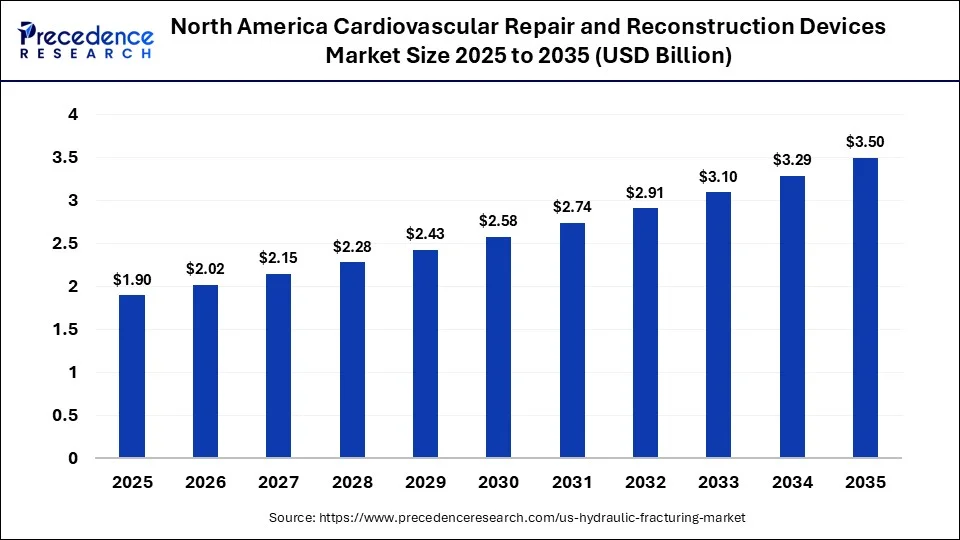
The North America cardiovascular repair and reconstruction devices market was valued at USD 1.9 billion in 2025, expanding at a CAGR of 6.3% during the forecast period from 2026 to 2035. The driving factor for the market is basically huge investments and high healthcare budgets in the U.S. and Canada, which enable hospitals to buy expensive, state-of-the-art medical devices, and the region features top hospitals, skilled heart specialists, and strong support from FDA regulations that encourage medical innovation. Our healthcare research analyst, Deepa Pandey, analysed this value. She has researched mainly material types, clinical applications, regional growth drivers, and competitive landscapes. Her research is useful for medical product producers, healthcare providers, biotechnology firms, and even investors for competitive benchmarking and strategic decision-making.
Source: https://www.precedenceresearch.com/north-america-cardiovascular-repair-and-reconstruction-devices-market
 Get a Sample
 Table Of Content


North America Cardiovascular Repair and Reconstruction Devices Market Growth, Innovations, and Market Size Forecast 2035
The rising cases of hypertension, diabetes, obesity, and physical inactivity add to the overall cardiovascular disease burden and are eventually responsible for the growth of the North America cardiovascular repair and reconstruction devices market. The North America cardiovascular repair and reconstruction devices market is forecasted to expand from USD 2.02 billion in 2026 to USD 3.50 billion by 2035, growing at a CAGR of 6.3% from 2026 to 2035. The market is driven by well-established reimbursement frameworks and supportive regulatory pathways from the U.S. FDA, along with substantial healthcare spending, funding fast market access and high-tech adoption.
Key Takeaways
- By product type, the heart valves & repair devices segment led the market with a 25.40% share in 2025.
- By material, the ePTFE segment captured a major revenue share of 27.85% in 2025.
- By procedure, the coronary revascularization segment captured the largest market share of 24.65% in 2025.
- By application, the coronary artery repair segment led the market with a share of 25.85% in 2025.
- By end user, the hospitals segment led the market with a share of 61.85% in 2025.
- By distribution channel, the direct manufacturer sales segment led the market with a share of 46.85% in 2025.
- The United States accounts for 92.15% of the North American market in 2025.
- Statistics Canada reported 57,890 heart-disease deaths in 2023, thus, making heart disease the country's second-leading cause of death.
- Medtronic's Cardiovascular business generated $12.481 billion in FY2025 net sales, rising 5% year over year.
- Boston Scientific reported $13.25 billion in 2025 cardiovascular sales, representing nearly 22.5% operational growth.
Introduction
The global landscape for cardiovascular repair and reconstruction is undergoing a significant transformation propelled by the integration of regenerative medicine along with advanced biomaterials. Competition remains moderately consolidated at the platform level, with Edwards Lifesciences, Abbott, and Medtronic holding strong positions, while targeted acquisitions along with investments continue to reshape white-space areas like aortic arch repair and TAVR platform expansion. Based on the analysis, the market is anticipated to have USD 1.9 billion in 2025 at a 6.3% CAGR.
Analyst View
The principal growth opportunity is changing toward structural heart repair, transcatheter valve replacement or repair, advanced biological materials, and less-invasive vascular reconstruction. Moreover, Edwards reported 2025 TAVR sales of $4.49 billion, while its transcatheter mitral and tricuspid therapies have reached $550.6 million, illustrating the commercial growth of catheter-based structural-heart therapies. Abbott's Structural Heart sales also increased 11.5% on a constant-currency basis in 2025, propelled by Navitor, TriClip, and MitraClip.
Market Segmentation By Product Type
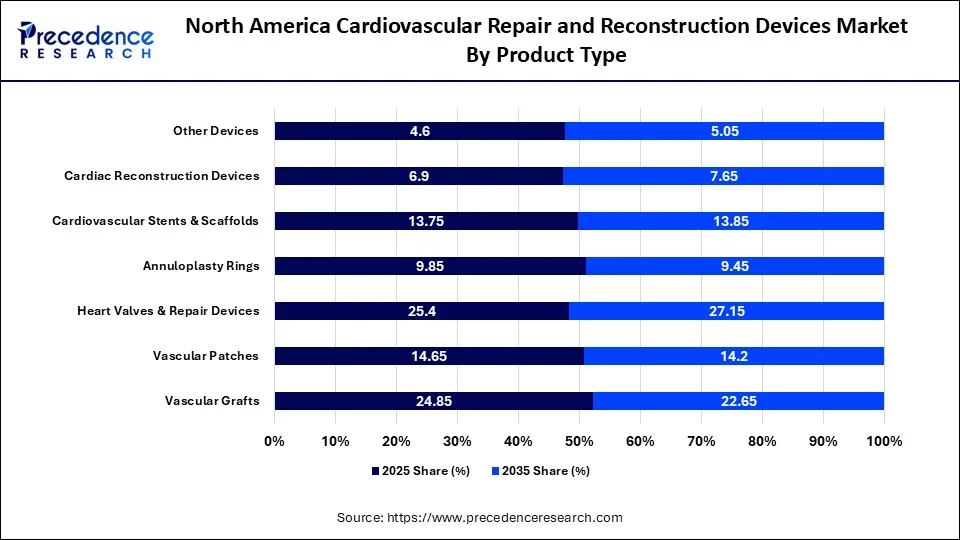
The heart valves and repair devices segment dominated the market with a share of 25.40% in 2025 as older adults face a significantly higher risk of degenerative and age-linked valvular heart diseases, boosting overall procedure volumes, and enhanced tissue technologies, like durable bioprosthetic tissue valves, extend product longevity and safety, enabling younger and lower-risk patients to opt for these treatments. The cardiac reconstruction devices segment is the fastest growing with a CAGR of 7.4% as the rise of transcatheter and catheter-based procedures reduces recovery times and risks, thus expanding the patient pool who can safely undergo reconstruction.
Analyst View
The share shift toward heart valves is consistent with continuing growth of transcatheter structural-heart procedures. FDA approved Edwards' SAPIEN M3 transcatheter mitral valve replacement system in December 2025, thus expanding the U.S. transcatheter mitral treatment landscape for patients unsuitable for surgery or TEER. Moreover, Abbott's Tendyne system was also approved in the U.S. in May 2025 for selected individuals with severe mitral dysfunction and numerous mitral annular calcifications who were unsuitable for surgery or TEER.
Market Segmentation By Material
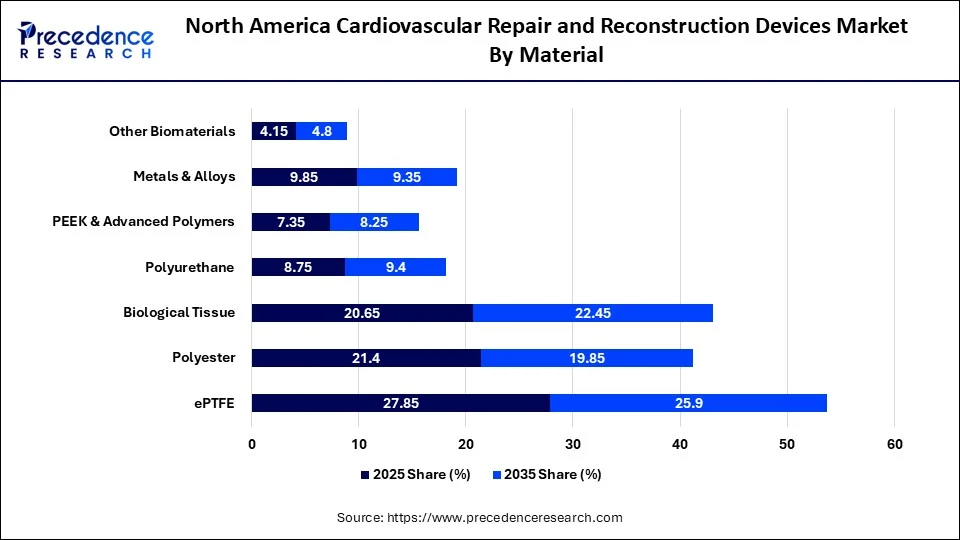
The ePTFE segment dominated the market with a share of 27.85% in 2025, as the material offers high tensile strength alongside flexibility, enabling it to mimic natural arterial compliance and then withstand continuous hemodynamic pressure without tearing or dilating.
The biological tissue segment is the second largest, with a market share of 20.65% in 2025, as healthcare providers increasingly favor natural grafts and tissue-preserved heart valves for complex procedures such as congenital defect correction and valve replacement because of their superior anatomical adaptability.
Analyst View
Material innovation is increasingly associated with durability, thrombogenicity, tissue integration, flexibility, and long-term implant performance. The faster expansion of biological tissue and advanced polymers suggests an increasing need for materials that can fund less-invasive repair while addressing long-term biocompatibility requirements. This trend is mainly relevant to valves and structural-heart devices, where tissue-engineering alongside biologically treated materials are integrated into increasingly sophisticated delivery systems.
Market Segmentation By Procedure
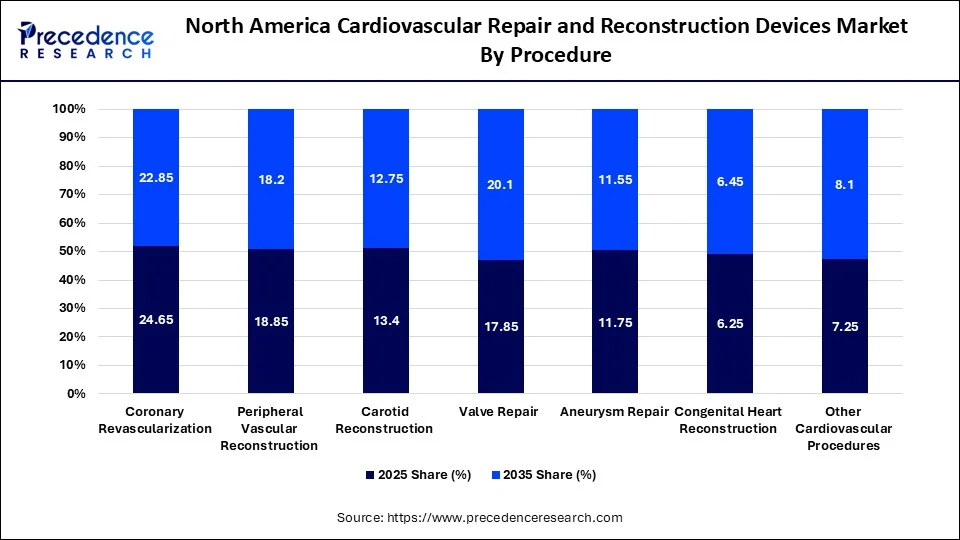
The coronary revascularization segment dominated, with a market share of 24.65%, because rising rates of atherosclerosis, diabetes, obesity, and aging populations have dramatically raised the number of blocked arteries demanding treatment. Unlike single-repair structural solutions, coronary devices such as stents need sophisticated, customized, and continuously updated technology to maintain high commercial turnover and adoption rates.
The valve repair segment is the fastest growing with a CAGR of 7.7%, as transcatheter technologies and clip-based edge-to-edge repairs provide safer, faster recovery options than traditional open-heart surgery, and even repairing native heart valves preserves natural ventricular function better than full valve replacement for many patients.
Analyst View
The procedure mix shows a gradual movement from traditional high-volume coronary along with vascular interventions toward structural-heart procedures. CMS updated Medicare's TAVR national coverage determination on September 10, 2026, thus ending Coverage with Evidence Development demands for symptomatic severe aortic stenosis while expanding CED coverage for selected asymptomatic severe AS patients. Meanwhile, this policy change can influence hospital adoption, heart-team activity, along with future procedural capacity.
Market Segmentation By Application
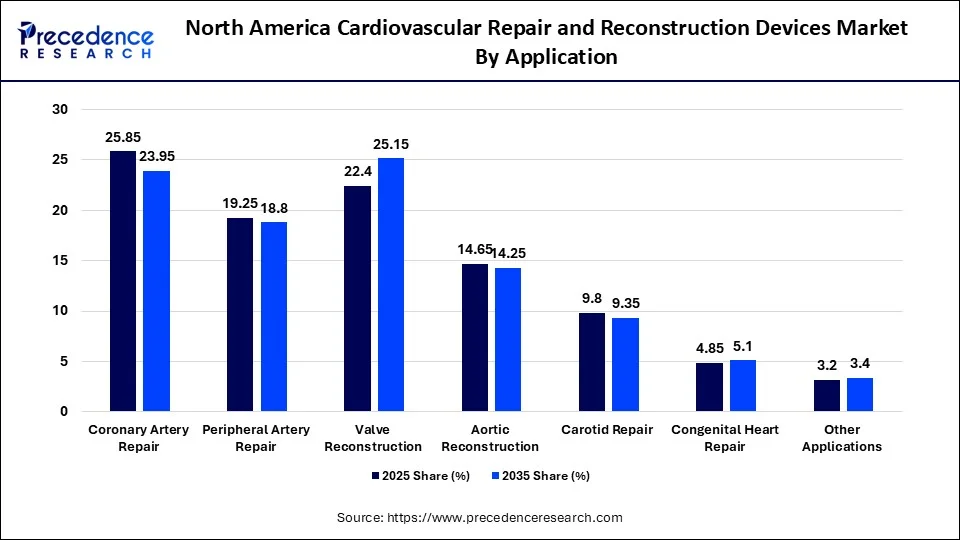
The coronary artery repair segment dominated the market with a share of 25.85%, as continuous advancements in coronary angiography devices, minimally invasive catheter-based techniques, and drug-eluting stents make these procedures safer, highly effective, along with widely adopted across general hospitals as well as specialized cardiac centers.
The valve reconstruction segment is the fastest growing with a CAGR of 7.6%, as it maintains the heart's native anatomy alongside structural integrity, reducing the risk of long-term complications compared to complete mechanical or biological valve replacement.
Analyst View
The transition toward valve reconstruction is considered one of the clearest structural opportunities in the market. Edwards' 2025 structural-heart sales demonstrate the commercial scale of TAVR and emerging mitral or tricuspid therapies: TAVR generated $4.49 billion, and TMTT generated $550.6 million, alongside surgical structural heart generated $1.03 billion. The combination of edge-to-edge repair, transcatheter replacement, and surgical reconstruction widens the addressable patient population.
Market Segmentation By End User
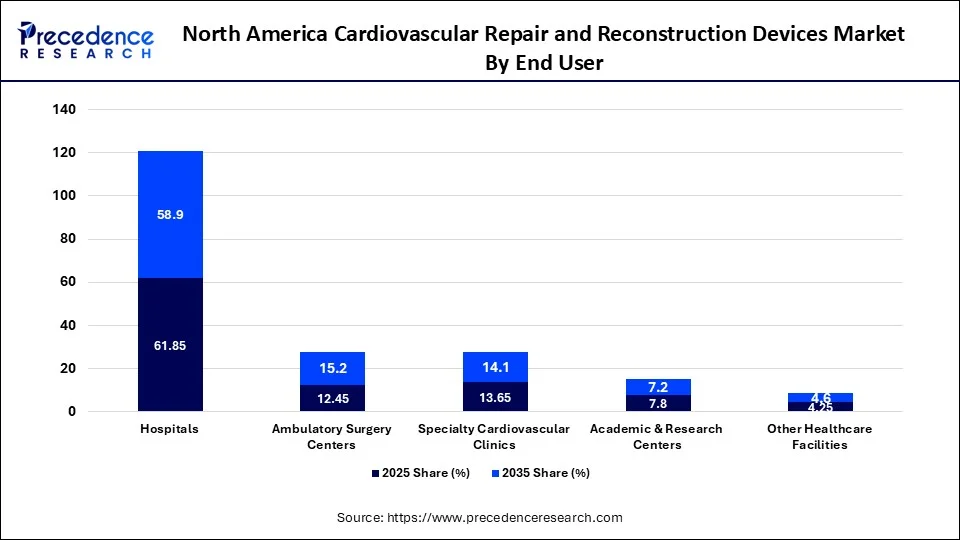
The hospitals segment dominated, with a market share of 61.85% in 2025, as hospitals are equipped to handle sudden adverse reactions or emergency complications during critical cardiovascular interventions, and advanced cardiac care demands coordinated teams of cardiac surgeons, interventional cardiologists, along with specialized nurses available continuously inside major medical centers. The ambulatory surgery centers segment is the fastest-growing, with a CAGR of 8.5% as it offers procedures at rates significantly lower than traditional hospitals by reducing overhead and eliminating overnight hospital stays. Outpatient centers offer greater scheduling flexibility, lower infection risks from extended hospital stays, and also a more streamlined patient experience.
Analyst View
The expansion of outpatient cardiovascular care creates a second need channel beyond major tertiary hospitals. CMS manages dedicated ASC procedure and payment frameworks and even continues to update eligible procedure codes alongside payment rates. For producers, this increases the significance of compact delivery systems, simplified inventory, shorter procedure times, and predictable reimbursement economics.
Market Segmentation By Distribution Channel
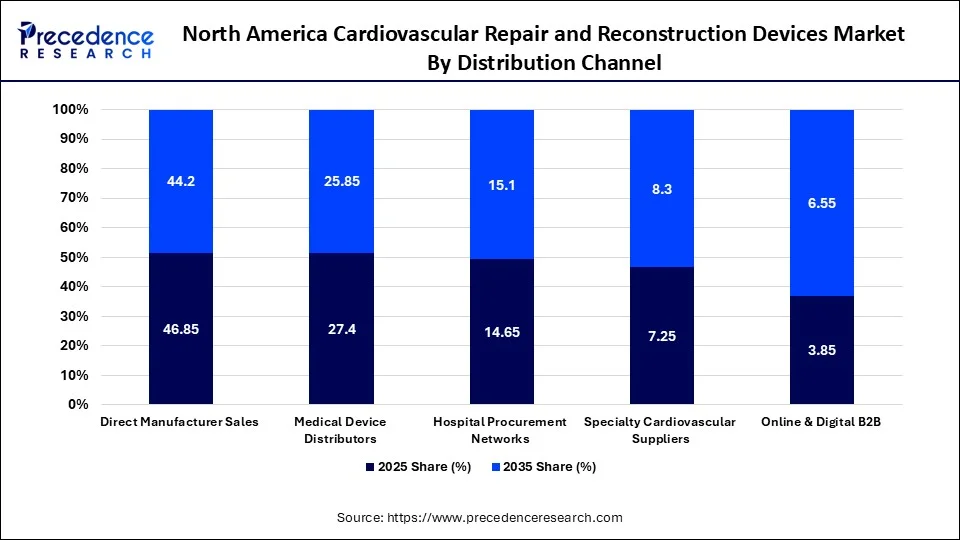
The direct manufacturer sales segment dominated the market with a 46.85% share in 2025 because these high-risk, specialized surgical implants demand intense technical collaboration, strict regulatory traceability, and also direct relationships with hospitals. Implantable cardiac devices need absolute sterility, cold-chain compliance for tissue-based products, along with end-to-end traceability. Bypassing third-party intermediaries decreases contamination or handling risks.
The online and digital B2B segment is the fastest growing with a CAGR of 11.3%, as it streamlines complex hospital supply chains and lessens administrative expenses. Moreover, real-time digital tracking prevents stockouts of critical, time-sensitive life-saving implants and also reduces costly hospital inventory overhead.
Analyst View
Cardiovascular devices remain highly specialized and procedure-based, which supports clinical training, direct manufacturer relationships, and hospital contracts. However, digital procurement is likely to grow faster as health systems standardize supplier management and even purchasing workflows. Moreover, specialty cardiovascular suppliers can also gain share where products demand procedure-specific expertise and regional distribution.
Country Analysis
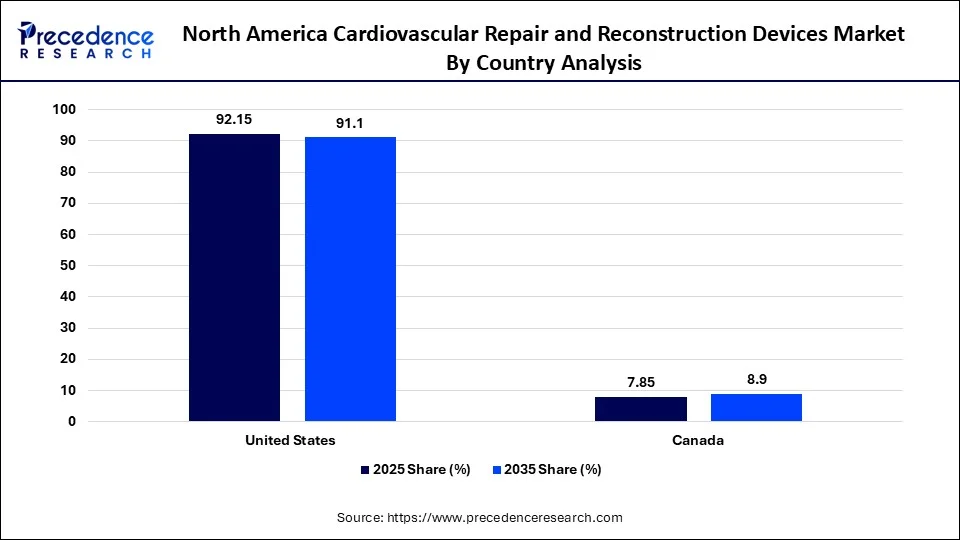
The United States accounts for 92.15% of the North American market in 2025 because well-established healthcare reimbursement policies fund the high-cost adoption of innovative surgical and therapeutic cardiac devices. Further, a dense network of well-equipped hospitals, specialized cardiac centers, and also catheterization laboratories guarantees high procedural volumes and advanced patient care. Canada is the fastest growing with a 7.7% CAGR, as the pairing of remote monitoring tools, AI diagnostics, along with virtual hospital networks maximizes patient treatment tracking and thus drives continuous device utilization. Canadian hospitals readily absorb advanced, less-invasive technologies such as transcatheter aortic valve replacement (TAVR) and structural repair solutions.
Analyst View - United States
The U.S. opportunity is driven by a very large cardiovascular disease burden. The American Heart Association recorded 915,973 cardiovascular disease deaths in 2023, which includes 349,470 deaths from coronary heart disease and even 162,639 from stroke. The structural-heart segment is also receiving continued regulatory support alongside reimbursement development. The September 2026 CMS TAVR update expanded coverage for selected asymptomatic severe aortic stenosis patients, and then removed CED requirements for symptomatic severe AS.
Analyst View - Canada
Canada offers a smaller but expanding opportunity. Statistics Canada recorded 57,890 heart-disease deaths in 2023, thus making heart disease the country's second-leading cause of death. In the same year, 6.3% of Canadians aged 18 and older have been reported as having been diagnosed with heart disease or having experienced a heart attack. The geographic burden is uneven; heart-disease prevalence reached 8.7% in Nova Scotia, 8.4% in Newfoundland and also Labrador and 7.5% in Saskatchewan, compared with 6.3% nationally excluding the territories.
Cardiovascular Disease & Demand Indicators
| Indicator | Latest Reported Value | Year |
| U.S. CVD deaths | 915,973 | 2023 |
| U.S. coronary heart disease deaths | 349,470 | 2023 |
| U.S. stroke deaths | 162,639 | 2023 |
| Canada heart-disease deaths | 57,890 | 2023 |
| Canadians aged 18+ reporting heart disease/heart attack | 6.3% | 2023 |
| Canadians living with heart disease or stroke | ~6 million | 2026 report |
Analyst View
The underlying disease burden creates a wide procedural base for repair and reconstruction devices, but device need is not determined by disease prevalence alone. Procedure eligibility, physician adoption, hospital capacity, reimbursement, clinical outcomes, competing therapies, and regulatory approvals determine how much of that disease burden converts into device utilization.
Competitive & Company Intelligence
Edwards Lifesciences
Edwards offers one of the clearest structural-heart indicators for the market. In 2025, its TAVR sales were $4.488 billion, compared with $4.106 billion in 2024. Moreover, transcatheter mitral and tricuspid therapies reached $550.6 million, up from $352.1 million, while surgical structural-heart sales reached $1.029 billion. The firm also obtained U.S. FDA approval for SAPIEN M3 in December 2025 for selected individuals with symptomatic moderate-to-severe or severe mitral regurgitation or mitral valve dysfunction linked with mitral annular calcification who are unsuitable for surgery or TEER.
Analyst View
Edwards' product mix states how structural-heart growth can increasingly come from multiple repair or replacement modalities rather than conventional open surgery alone.
Abbott
Abbott recorded $2.523 billion in 2025 Structural Heart sales, compared with $2.246 billion in 2024. Structural Heart sales raised 11.5% excluding foreign exchange, mainly driven by TriClip, Navitor and MitraClip. Abbott's Tendyne transcatheter mitral valve has received U.S. FDA approval in May 2025 for a defined high-risk patient population with severe mitral annular calcification and even unsuitable surgical or TEER options.
Analyst View
Abbott's combination of transcatheter edge-to-edge repair, TAVR, along with transcatheter mitral replacement positions structural heart as an increasingly diversified product ecosystem.
Medtronic
Medtronic's cardiovascular business has generated $12.481 billion in FY2025 net sales, increasing 5% year over year. Structural Heart & Aortic increased 6%, bolstered by continued adoption of the Evolut FX+ TAVR system, while Cardiac Surgery benefited from expansion in perfusion and surgical valves.
Analyst View
Medtronic's combination of structural heart, aortic, coronary or peripheral vascular and cardiac surgery offers exposure across several of the market's major product categories rather than a single device class.
Boston Scientific
Boston Scientific reported $13.25 billion in 2025 cardiovascular sales, thus representing nearly 22.5% operational growth. The firm's 2025 portfolio expansion included coronary and peripheral vascular technologies, which includes its acquisition of Bolt Medical and the SEISMIQ intravascular lithotripsy system. U.S. sales demonstrated 64.1% of total company sales in 2025, highlighting the significance of the U.S. market to its overall commercial footprint.
Analyst View
Boston Scientific's activity illustrates a wider trend toward minimally invasive vascular intervention, mainly technologies that can expand treatment alternatives for calcified or complex lesions.
LeMaitre Vascular
LeMaitre stated $249.6 million in 2025 net sales, compared with $219.9 million in 2024. R&D expenses were $14.1 million in 2025. The company is mainly relevant to the vascular-reconstruction portion of the market, where products like vascular grafts, patches, and surgical instruments serve peripheral and even vascular-surgery procedures.
Analyst View
LeMaitre offers an example of the specialized supplier segment that can remain relevant despite consolidation among large medical-device firms, mainly where surgeons require procedure-specific vascular products.
Regulatory & Reimbursement Environment
The U.S. market is characterized by FDA device authorization combined with CMS reimbursement along with hospital-level procurement. Structural-heart technologies usually require evidence demonstrating safety, effectiveness, and appropriate patient selection. The regulatory pipeline has remained active. Additionally, for SAPIEN M3 and Tendyne, FDA records show continuing supplements and post-approval studies for transcatheter mitral devices during 2026.
CMS's September 2026 TAVR decision is mainly relevant because it changes the Medicare coverage framework for symptomatic severe aortic stenosis and then expands CED coverage for selected asymptomatic patients.
Analyst View
For producers, the commercial opportunity is increasingly dependent on the combined pathway of FDA approval, clinical evidence, reimbursement, heart-team adoption, and hospital procurement. Products that decrease procedural complexity while demonstrating durable results can potentially address several points in this chain simultaneously.
Buyer Intelligence
| Buyer Group | Key Purchase Priorities | Relevant Device Categories |
| Integrated Health Systems | Clinical outcomes, reimbursement, standardization, total cost | Valves, grafts, stents |
| Cardiovascular Hospitals | Procedure performance, physician preference, inventory | Structural-heart and vascular devices |
| Academic Medical Centers | Clinical evidence, innovation, trials | Advanced reconstruction and valves |
| Ambulatory Surgery Centers | Procedure time, device simplicity, cost | Minimally invasive devices |
| Specialty Cardiovascular Clinics | Patient selection, workflow, specialized technology | Repair devices and catheter systems |
| Procurement Organizations | Contract pricing, supplier reliability, standardization | High-volume device categories |
| Cardiovascular Surgeons | Handling, durability, anatomical fit | Grafts, patches, rings |
| Interventional Cardiologists | Delivery system, procedural efficiency, outcomes | TAVR, TEER, stents |
Intelligence on value-driven contracting enables companies to prove long-term device durability and also cost-effectiveness to buyers. It is essential for the cardiovascular repair and joint reconstruction devices market because it assists medical device companies in navigating high capital expenses, complex hospital purchasing committees, and even strict value-based care requirements.
Analyst View
Buyer behavior is increasingly multidimensional. Hospitals evaluate not only device acquisition price but also inventory requirements, procedure duration, physician training, complications, readmissions, reimbursement, and overall episode economics. For structural-heart products, clinical evidence along with heart-team acceptance remain especially important, while vascular reconstruction purchases are more closely associated with surgeon preference, durability, product handling, and availability.
Major Growth Drivers
- Expansion of Structural-Heart Procedures: Transcatheter valve replacement and repair are now expanding the addressable treatment population. Edwards as well as Abbott both reported strong structural-heart growth in 2025.
Aging Cardiovascular Patient Population: Older populations have a greater prevalence of aortic disease, valve disease, and peripheral vascular disease, supporting need for repair and reconstruction. - Shift Toward Minimally Invasive Intervention: Catheter-based approaches can reduce the demand for open procedures in selected patients and support shorter recovery pathways.
- Advanced Biomaterials: Biological tissueI, advanced polymers, along with engineered materials are becoming increasingly important in valve, graft, and even reconstruction applications.
- Increasing Outpatient Care: The supplied ASC CAGR of 8.5% indicates a faster growth rate than hospitals, supporting device designs optimized for shorter procedural workflows.
- Continued Innovation in Complex Vascular Disease: New technologies addressing complex lesions, calcification, and difficult anatomy are expanding the procedural toolkit. Moreover, Boston Scientific's 2025 expansion into intravascular lithotripsy is one example.
Key Market Challenges
| Challenge | Market Impact |
| High device development costs | Increases capital requirements for manufacturers |
| Regulatory requirements | Lengthens commercialization timelines |
| Clinical evidence requirements | Can delay adoption of novel technologies |
| Hospital procurement consolidation | Increases pricing pressure |
| Physician training requirements | Slows adoption of complex technologies |
| Procedure reimbursement | Determines economic viability |
| Competition from alternative therapies | Limits adoption of individual devices |
| Device durability expectations | Raises R&D and clinical-evidence requirements |
Analyst View
The market's principal challenge is not simply technological development but stating clinical and economic value at scale. A new cardiovascular device must usually compete against established surgical procedures, incumbent transcatheter technologies along with alternative treatment pathways while navigating regulatory, reimbursement, and hospital purchasing requirements.
Strategic Outlook 2026-2035
The North American cardiovascular repair and reconstruction devices market is positioned for sustained growth from USD 1.9 billion in 2025 to nearly USD 3.50 billion by 2035, based on the supplied 6.3% CAGR. The most important structural change is the rising weight of structural-heart and minimally invasive cardiovascular intervention. Further, heart valves and repair devices rise from 25.40% to 27.15%, and valve repair rises from 17.85% to 20.10%, alongside valve reconstruction reaches 25.15% of application need by 2035.
At the same time, the vascular reconstruction market remains strategically essential because of the continuing burden of coronary, carotid, peripheral, and aortic disease. The U.S. remains the dominant commercial market, while Canada represents a smaller but faster-growing opportunity based on the supplied country forecast.
For producers, the strongest strategic opportunities are likely to involve:
- Transcatheter valve replacement and repair
- Biological and advanced-polymer materials
- Mitral and tricuspid interventions
- Complex aortic and peripheral reconstruction
- ASC-compatible cardiovascular devices
- Minimally invasive vascular technologies
- Procedure-specific specialty products
- Evidence-based clinical and economic differentiation
- Digital procurement and hospital-contract optimization
Final Analyst View
The market is evolving from a predominantly surgical reconstruction model toward a hybrid cardiovascular repair ecosystem thus combining open surgery, minimally invasive vascular intervention, and transcatheter structural-heart technologies. The supplied segmentation data indicates that traditional categories like vascular grafts and coronary repair will continue to generate substantial need, but their relative share is gradually being redistributed toward cardiac reconstruction, valve reconstruction, and other advanced procedures.
The commercial evidence from major producers reinforces this direction: Edwards' TAVR and transcatheter mitral or tricuspid businesses expanded in 2025, Abbott's Structural Heart business grew at a double-digit constant-currency rate, alongside Medtronic reported growth in Structural Heart & Aortic. Regulatory and reimbursement developments, mainly the September 2026 CMS TAVR coverage update, further show how clinical innovation and payment policy are jointly shaping adoption.
Expert Insights
North America's cardiovascular repair and reconstruction devices market is a critical market for medical tools that are used to restore normal heart and blood vessel function by fixing, supporting, or replacing damaged tissues. Moreover, cardiovascular repair and reconstruction devices are critical in North America because of high rates of heart disease, a rapidly aging population, and even advanced healthcare infrastructure that drives early medical intervention. I believe that the region benefits from a robust healthcare infrastructure along with high clinical adoption rates for advanced prosthetic grafts and patches. As material science advances, the industry is increasingly focused on biocompatible and regenerative solutions designed to tackle complex structural heart diseases effectively.
Our Experts
- The primary market research process was carried out by Deepa Pandey, Senior Research Associate, who also designed the methodology and conducted market segmentation, regional trend analysis, competitive analysis, recycling technology analysis, and forecasts, laying the foundation for the analytical part of the report.
- Aman Singh, Head of Research, has gathered and checked regulatory policies, information on recycling capacity, company financial information, production information, commodity price information, and numerous other quantitative information sources, which are obtained independently, thereby increasing the quality of evidence supporting calculations of the market values.
- Aditi Shivarkar, VP Research, has validated and refined the research material, verified facts, corrected inconsistencies, and completed the research document, making it accurate and to the point.
North America Cardiovascular Repair and Reconstruction Devices Market Segments Covered in This Report
By Product Type
- Vascular Grafts
- Vascular Patches
- Heart Valves & Repair Devices
- Annuloplasty Rings
- Cardiovascular Stents & Scaffolds
- Cardiac Reconstruction Devices
- Other Devices
By Material
- ePTFE
- Polyester
- Biological Tissue
- Polyurethane
- PEEK & Advanced Polymers
- Metals & Alloys
- Other Biomaterials
By Procedure
- Coronary Revascularization
- Peripheral Vascular Reconstruction
- Carotid Reconstruction
- Valve Repair
- Aneurysm Repair
- Congenital Heart Reconstruction
- Other Cardiovascular Procedures
By Application
- Coronary Artery Repair
- Peripheral Artery Repair
- Valve Reconstruction
- Aortic Reconstruction
- Carotid Repair
- Congenital Heart Repair
- Other Applications
By End User
- Hospitals
- Ambulatory Surgery Centers
- Specialty Cardiovascular Clinics
- Academic & Research Centers
- Other Healthcare Facilities
By Distribution Channel
- Direct Manufacturer Sales
- Medical Device Distributors
- Hospital Procurement Networks
- Specialty Cardiovascular Suppliers
- Online & Digital B2B
By Country
- United States
- Canada
For inquiries regarding discounts, bulk purchases, or customization requests, please contact us at sales@precedenceresearch.com
Frequently Asked Questions





Ask For Sample
No cookie-cutter, only authentic analysis – take the 1st step to become a Precedence Research client
 Get a Sample
.webp)



 sales@precedenceresearch.com
 Schedule a Meeting
