



PET Radioactive Tracers Market Size, Companies, Share, Patient Volume, Treatment Adoption Rates, Pricing Analysis, Regulatory Landscape, Competitive Positioning, and Demand Forecast
PET Radioactive Tracers Market (By Product Type: FDG (Fluorodeoxyglucose), Non-FDG Tracers (e.g., FET, FAPI, others); By Application: Oncology, Neurology, Cardiology; By Distribution Channel: Direct Sales, Distributors/Wholesalers, Online Platforms, Pharmacies/Retail Chains & Lab Channels; By End User: Hospitals, Diagnostic/Imaging Centers, Research Institutes & Others) - Global Industry Analysis, Size, Trends, Leading Companies, Regional Outlook, and Forecast 2026 to 2035
Source: https://www.precedenceresearch.com/pet-radioactive-tracers-market
 Get a Sample
 Table Of Content


What is the PET Radioactive Tracers Market Size?
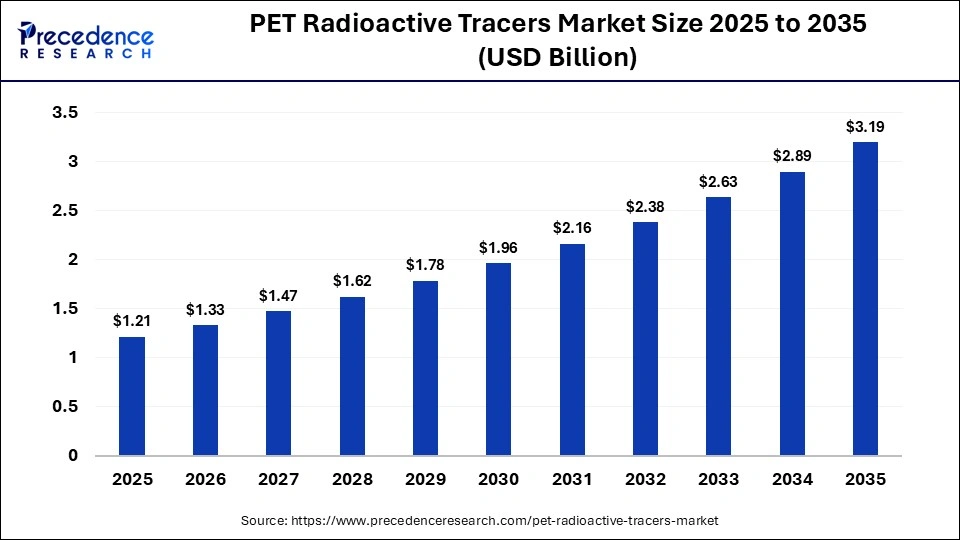
The global pet radioactive tracers market size was calculated at USD 1.21 billion in 2025 and is predicted to increase from USD 1.33 billion in 2026 to approximately USD 3.19 billion by 2035, expanding at a CAGR of 10.15% from 2026 to 2035.The PET radioactive tracers market is boosted by the surging cases of cardiovascular disorders globally, coupled with the technological advancements in the healthcare sector. Also, the rapid investment by governments for opening new healthcare research institutes, as well as the rise in the number of pharmaceutical startups in the APAC region, is playing a crucial role in shaping the industrial landscape.
Market Highlights
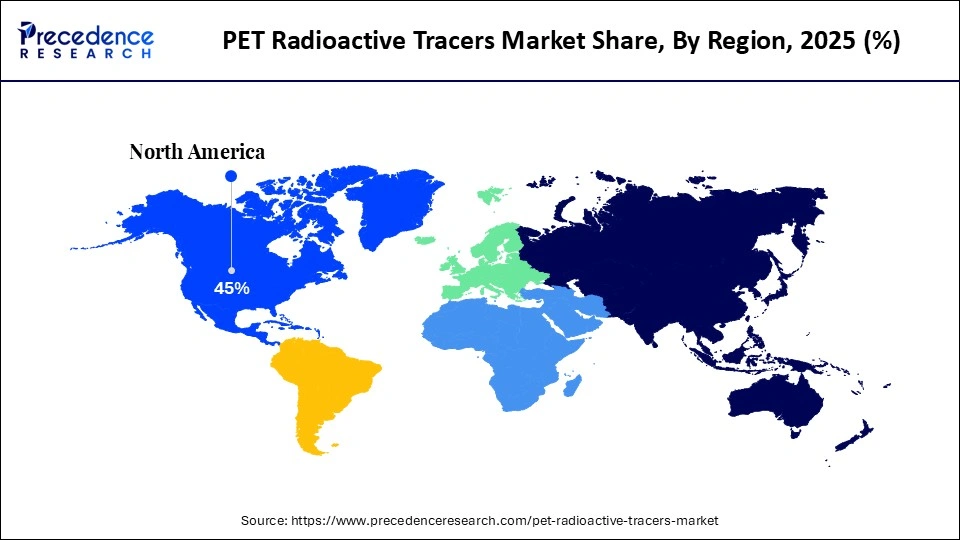
- North America led the market with a share of around 45% in 2025.
- Asia Pacific is expected to rise with the highest CAGR of 10.6% during the forecast period.
- By product type, the FDG (Fluorodeoxyglucose) segment held the largest share of the market with 65% in 2025.
- By product type, the non-FDG tracers segment is expected to grow with the fastest CAGR of 8.4% between 2026 and 2035.
- By application, the oncology segment dominated the PET radioactive tracers market with a share of 65% in 2025.
- By application, the cardiology segment is expected to rise with the highest CAGR of 8.5% during the forecast period.
- By end user, the hospitals segment held the largest share of the market with 50%.
- By end user, the research institutes & others segment is expected to expand with the fastest growth rate of 8.7% during the forecast period.
- By distribution channel, the direct sales segment dominated the PET radioactive tracers market with a share of 50%.
- By distribution channel, the online platforms segment is expected to rise with the highest CAGR of 9.0% during the forecast period.
What is the Landscape of the PET Radioactive Tracers Industry?
The PET radioactive tracers industry is a prominent segment of the massively expanding pharmaceutical industry. This industry deals in the manufacturing and distribution of PET radioactive tracers across the world. The PET (Positron Emission Tomography) radioactive tracers market comprises radiopharmaceutical compounds that are integrated with positron-emitting isotopes used in PET imaging for disease diagnosis, staging, and treatment monitoring in patients suffering from chronic diseases. These tracers are injected into the human body to show metabolic activity, blood flow, or receptor binding in organs and tissues.
The growth of this market is generally driven by rising heart diseases, technological innovations in tracer design, growing nuclear medicine infrastructure, and wider clinical adoption in hospitals and diagnostic centers in different parts of the globe. Growth is further supported by government-led expansion of nuclear medicine facilities in countries such as the United States, Germany, and Japan, where public health systems fund PET imaging for oncology and cardiology workflows. Regulatory approvals and production oversight by national authorities enable standardized tracer manufacturing, supporting consistent clinical supply for short half-life isotopes. Investments by hospital networks and diagnostic chains in PET-CT and PET-MRI systems are increasing routine tracer utilization across cancer screening, neurological disorders, and cardiovascular risk assessment.
Why Is AI Playing an Important Role in the PET Radioactive Tracers Industry?
AI has positively impacted the overall landscape of the pharmaceutical industry. Nowadays, the pharma brands have started deploying AI in their production centers to accelerate drug discovery, advance clinical trials, and improve quality control of finished goods. Also, AI is integrated with radioactive tracers to enhance medical imaging, design radiotracers, and predict dosimetry. Thus, AI has played an important role in shaping the PET radioactive tracers industry.
AI-driven image reconstruction and pattern recognition are increasingly used in PET imaging workflows to improve lesion detection accuracy and reduce scan time in oncology and neurology applications. Regulatory bodies such as the U.S. Food and Drug Administration are supporting the controlled use of AI tools in radiopharmaceutical development through guidance on software validation and data integrity. AI also supports automated synthesis optimization and batch release decision-making in PET tracer production facilities, helping manufacturers improve yield consistency while meeting strict radiological safety standards.
- In January 2026, Variant Bio launched an AI-enabled platform. This AI-based platform is designed to enhance drug discovery.
PET Radioactive Tracers Market Trends
- Growing Prevalence of Cardiovascular Diseases: The surging cases of cardiovascular diseases in several parts of the world have increased the demand for high-quality treatment to get cured.
Business Expansions: Several market players are investing heavily in opening new production centers to increase the manufacturing of PET agents. - Partnerships: Numerous pharmaceutical brands are partnering with CRO providers to enhance the clinical trial of radioactive tracers.
Market Scope
| Report Coverage | Details |
| Market Size in 2025 | USD 1.21 Billion |
| Market Size in 2026 | USD 1.33 Billion |
| Market Size by 2035 | USD 3.19 Billion |
| Market Growth Rate from 2026 to 2035 | CAGR of 10.15% |
| Dominating Region | North America |
| Fastest Growing Region | Asia Pacific |
| Base Year | 2025 |
| Forecast Period | 2026 to 2035 |
| Segments Covered | Product Type, Application, Distribution Channel, End User, and Region |
| Regions Covered | North America, Europe, Asia-Pacific, Latin America, and Middle East & Africa |
Segmental Insights
Product Type Insights
Why did the FDG (Fluorodeoxyglucose) dominate the PET Radioactive Tracers Market?
The FDG (fluorodeoxyglucose) segment dominated the PET radioactive tracers market with 65% in 2025, as the growing use of fluorodeoxyglucose for staging, diagnosing, and monitoring cancers has driven the market expansion. Also, the rapid adoption of these tracing agents by the neurology sector for detecting brain tumors and epilepsy is expected to propel the growth of the PET radioactive tracers industry.
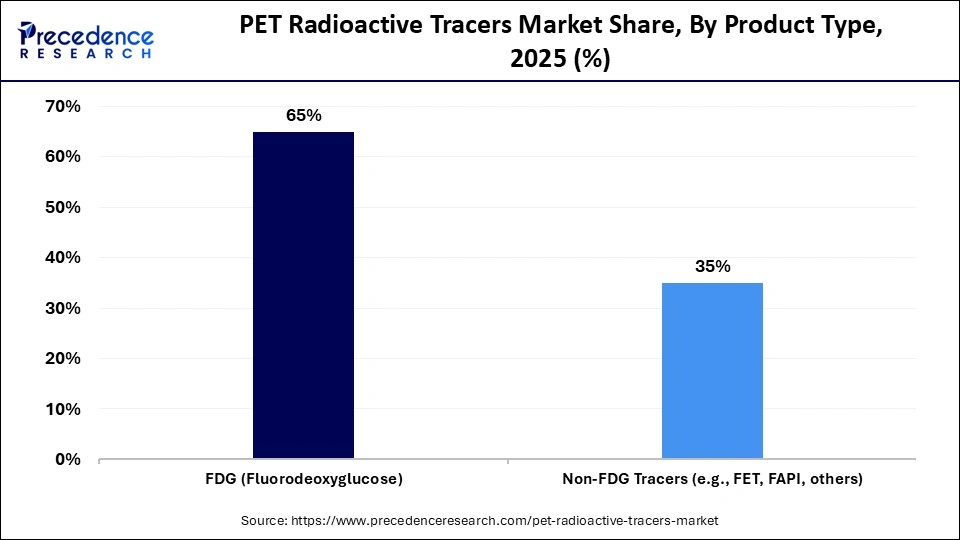
The non-FDG tracers (e.g., FET, FAPI, and others) segment is expected to expand with the fastest CAGR of 8.4% during the forecasted period, due to the surging use of non-FDG tracers by the oncology sector for detecting prostate cancer and renal cancer, which has boosted the market growth. Moreover, several advantages of non-FDG (Fluorodeoxyglucose) PET tracers, such as improved specificity, superior brain imaging, and high theranostic potential, are driving the industrial expansion.
Application Insights
What Made Oncology Lead the PET Radioactive Tracers Market in 2025?
The oncology segment led the PET radioactive tracers market with a share of 65% in 2025, because of the rising prevalence of leukemia in various nations, including the U.S., China, India, the UK, and Japan, has increased the demand for advanced treatment, thereby driving the market expansion. Also, the rapid investment by the governments for constructing cancer hospitals in remote areas, as well as technological advancements in the oncology sector, is playing a prominent role in shaping the industrial landscape. Moreover, the surging adoption of PET radioactive tracers by cancer institutions is expected to drive the market growth.
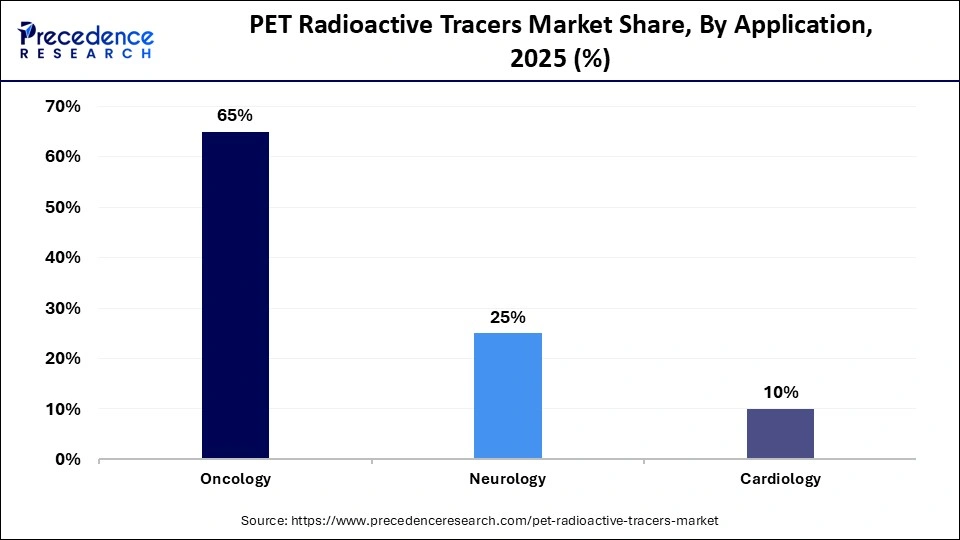
The cardiology segment is expected to rise with the fastest CAGR of 8.5% during the forecast period, with increasing cases of coronary artery diseases in the Asia Pacific region have increased the application of PET tracers for early diagnosis, thereby fostering the industrial expansion. Also, numerous government initiatives aimed at modernizing the cardiology sector, along with the rapid investment by the pharma companies for advancing the research of radioactive tracers that are essential for cardiac assessment, are playing a vital role in positively shaping the industry.
Distribution Channel Insights
What Made the Direct Sales Segment Lead the PET Radioactive Tracers Market During 2025?
The direct sales segment leads the PET radioactive tracers market with a share of 50%, due to increasing emphasis of pharmaceutical companies on opening new retail outlets has boosted the market growth. Also, the rapid investment by the government for opening hospital pharmacies, as well as the availability of pharmaceutical goods at discounted prices, is playing a prominent role in shaping the industrial landscape. Moreover, the surging focus of consumers on purchasing medicinal items from retail outlets is boosting the market expansion.
The online platforms segment is expected to expand with the highest CAGR of 9% during the forecast period, attributable to a growing focus of consumers to sell and purchase items through online platforms has boosted the market expansion. Additionally, the availability of a wide range of PET tracers in online pharmacies, coupled with numerous offers and benefits provided by e-commerce platforms are positively contributing to the industry. Moreover, partnerships among e-commerce platforms and logistics companies to deliver pharma products in different parts of the world are driving the market growth.
End-User Insights
Why Did the Hospitals Dominate the PET Radioactive Tracers Market in 2025?
The hospitals segment dominated the PET radioactive tracers market with a share of 50%, because of the rising focus of patients to visit private hospitals for getting immediate treatment with superior facilities has driven the market growth. Also, the rapid investment by the government in constructing new neurological hospitals, as well as technological advancements in public hospitals, is positively contributing to the industry. Moreover, partnerships among hospital chains and AI developers to design advanced software for hospitals are expected to propel the growth of the PET radioactive tracers industry.
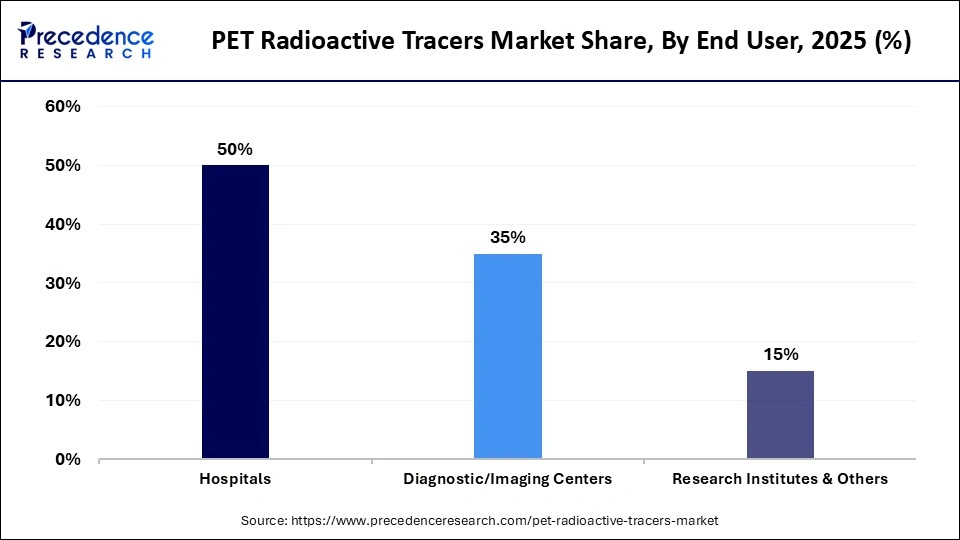
The research institutes & others segment is expected to grow with the fastest growth rate of 8.7% during the forecast period, owing to growing investments by the governments of several nations in opening new research institutes that have boosted the market expansion. Additionally, the surging adoption of fluorodeoxyglucose tracers by the research centers is playing a prominent role in shaping the industrial landscape. Moreover, the increasing focus of pharma companies on constructing new research institutes in developed nations is accelerating the market growth.
Regional Insights
How Big is the North America PET Radioactive Tracers Market Size?
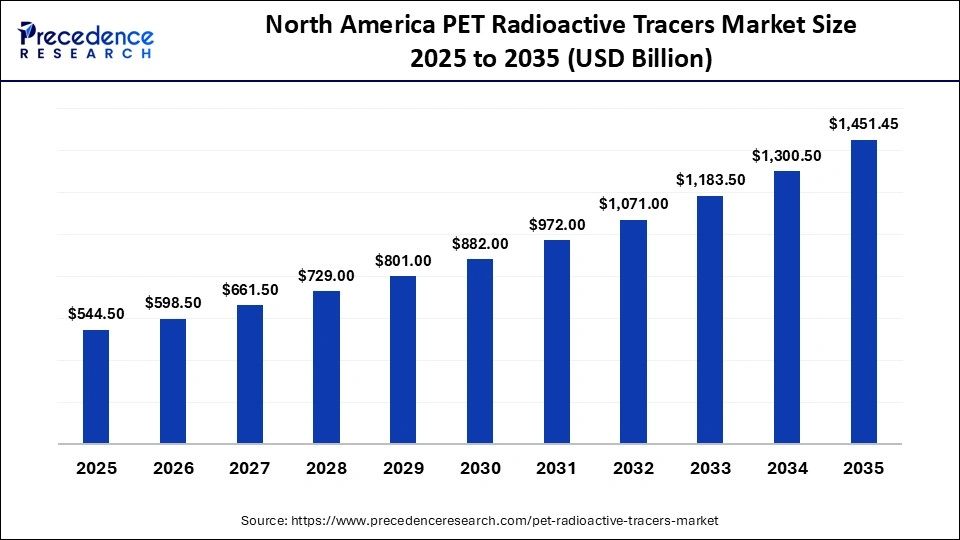
The North America PET radioactive tracers market size is estimated at USD 544.50 billion in 2025 and is projected to reach approximately USD 1,451.45 billion by 2035, with a 10.3% CAGR from 2026 to 2035.
Why Did North America Dominate the PET Radioactive Tracers Market in 2025?
North America dominated the PET radioactive tracers industry with a share of around 45% in 2025. The growing cases of cardiovascular diseases in several nations, such as Canada, the U.S., and Mexico, have boosted the market growth. Also, the rapid investment by governments for opening new healthcare research centers, along with the surging prevalence of neuropsychiatric disorders, is playing a vital role in shaping the industrial landscape. Moreover, the presence of numerous radioactive tracer manufacturers, including Eli Lilly and Company (Lilly), GE HealthCare, Cardinal Health, and PerkinElmer, is expected to propel the growth of the PET scanners market in this region.
- In September 2025, Cardinal Health inaugurated a new distribution center in Fort Worth, Texas, U.S. This center is open to cater to the consumers of this nation.
What is the Size of the U.S. PET Radioactive Tracers Market?
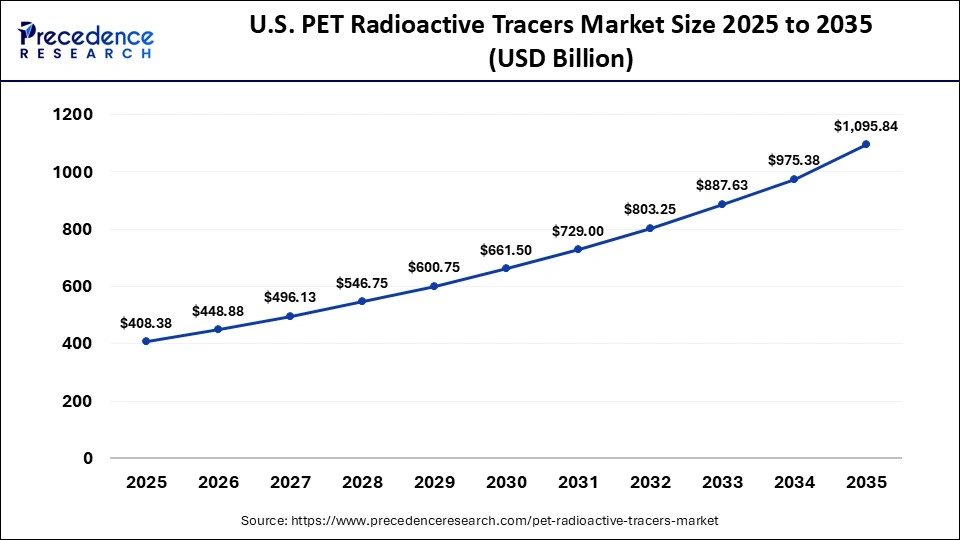
The U.S. PET radioactive tracers market size is calculated at USD 408.38 billion in 2025 and is expected to reach nearly USD 1,095.84 billion in 2035, accelerating at a strong CAGR of 10.37% between 2026 and 2035.
U.S. PET Radioactive Tracers Industry Analysis
The U.S. PET radioactive tracers industry is expanding due to increased investment by pharmaceutical manufacturers in domestic radiopharmaceutical production facilities, combined with the rising clinical burden of blood cancer and colorectal cancer. Federal oversight by the U.S. Food and Drug Administration has encouraged standardized manufacturing and quality control practices, which has supported the commissioning of new cyclotron and radiochemistry sites. In parallel, hospital networks are allocating capital to modernize nuclear medicine and surgical centers to support integrated PET imaging workflows.
Public funding from the National Institutes of Health continues to support clinical research programs that rely on PET tracers for oncology diagnostics, treatment monitoring, and translational imaging studies. Large hospital systems are expanding PET-CT capacity to meet oncology referral volumes, driving sustained demand for short half-life tracers that require localized, reliable supply chains. The industry also benefits from growing adoption of precision oncology protocols, where PET tracers are used to guide therapy selection, assess treatment response, and support value-based care models reimbursed through established U.S. healthcare payment systems.
Why is Asia Pacific Growing with the Highest CAGR During the Forecast Period?
Asia Pacific is expected to grow with the highest CAGR of 10.6% during the forecast period. The surging prevalence of breast cancers in several countries, including India, China, Japan, and South Korea, has boosted the market growth. Additionally, numerous government initiatives aimed at strengthening the pharmaceutical sector, coupled with the rise in the number of diagnostic centres is positively contributing to the industry. Moreover, the presence of various market players, such as Nihon Medi-Physics Co., Ltd, Telix Pharmaceuticals Limited, and Jubilant Radiopharma, is expected to accelerate the growth of the PET radioactive tracers industry in this region.
- In November 2025, Telix Pharmaceuticals Limited opened a new production centre in Yokohama, Japan. This manufacturing plant is inaugurated to increase the production of TLX250-CDx (a kidney cancer imaging candidate) for the APAC region.
China PET Radioactive Tracers Industry Trends
The growing emphasis of healthcare companies to integrate AI in their production centers, as well as the rapid investment by the government for developing the healthcare infrastructure, is driving the market expansion. Additionally, technological advancements in cancer hospitals, as well as the rise in the number of healthcare startups, are playing a prominent role in shaping the industrial landscape.
Who are the Major Players in the Global PET Radioactive Tracers Market?
The major players in the pet radioactive tracers market include Eli Lilly and Company, IBA Radiopharma Solutions, Piramal Imaging (Life Molecular Imaging), Cardinal Health, University of Iowa HealthCare, Telix Pharmaceuticals Limited, DuchemBio, Co., Ltd, Blue Earth Diagnostics, Lantheus, Siemens Healthcare Private Limited, GE Healthcare, Advanced Accelerator Applications (Novartis), Jubilant Radiopharma, TRASIS, RadioMedix Inc.
Recent Developments
- In July 2025, CereMark Pharma launched the phase III trial of its PET imaging agent named F-18 flornaptitril. F-18 flornaptitril is a PET radiotracer designed for the management of neurodegenerative diseases.
- In March 2025, GE Healthcare launched Flyrcado (flurpiridaz F 18) injection in the U.S. Flyrcado (flurpiridaz F18) injection is a PET myocardial imaging agent that helps in the detection of coronary artery disease.
Segments Covered in the Report
By Product Type
- FDG (Fluorodeoxyglucose)
- Non-FDG Tracers (e.g., FET, FAPI, others)
By Application
- Oncology
- Neurology
- Cardiology
By Distribution Channel
- Direct Sales
- Distributors/Wholesalers
- Online Platforms
- Pharmacies/Retail Chains & Lab Channels
By End User
- Hospitals
- Diagnostic/Imaging Centers
- Research Institutes & Others
By Region
- North America
- Europe
- Asia-Pacific
- Latin America
- Middle East & Africa
For inquiries regarding discounts, bulk purchases, or customization requests, please contact us at sales@precedenceresearch.com
Frequently Asked Questions





Ask For Sample
No cookie-cutter, only authentic analysis – take the 1st step to become a Precedence Research client
 Get a Sample
.webp)



 sales@precedenceresearch.com
 Schedule a Meeting
