



Ready to Drink Beverages Market Trends, Companies, Revenue / Sales Performance, Food Production, Processing Capacity, Sales Volume, Distribution Performance, Competitive Landscape, and Industry Outlook
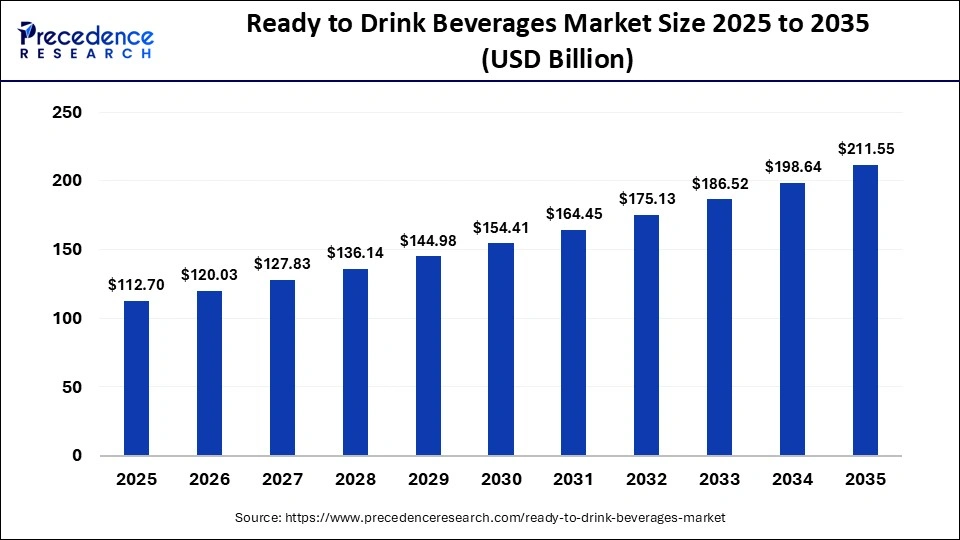
Food and beverage specialist Vidyesh Swar puts the ready to drink beverages market at USD 120.03 billion in 2026, with the market expected to reach USD 211.55 billion by 2035 at a CAGR of 6.50%. Major ready to drink beverages market companies such as Arizona Beverage Company, Asahi Group Holdings, Ltd., Coca-Cola Company, Danone S.A., Keurig Dr Pepper Inc., Maple Leaf Foods Inc. are responding to changing consumer demand across segments including By Product Type, By Distribution Channel, By Packaging, By End User.
Source: https://www.precedenceresearch.com/ready-to-drink-beverages-market
 Get a Sample
 Table Of Content


What is the Ready to Drink Beverages Market Size in 2026?
The global ready to drink beverages market size was calculated at USD 112.70 billion in 2025 and is predicted to increase from USD 120.03 billion in 2026 to approximately USD 211.55 billion by 2035, expanding at a CAGR of 6.50% from 2026 to 2035. The market growth is attributed to rising demand for convenient, functional, and health-oriented beverages among increasingly urban and time-constrained consumers.
Key Takeaways
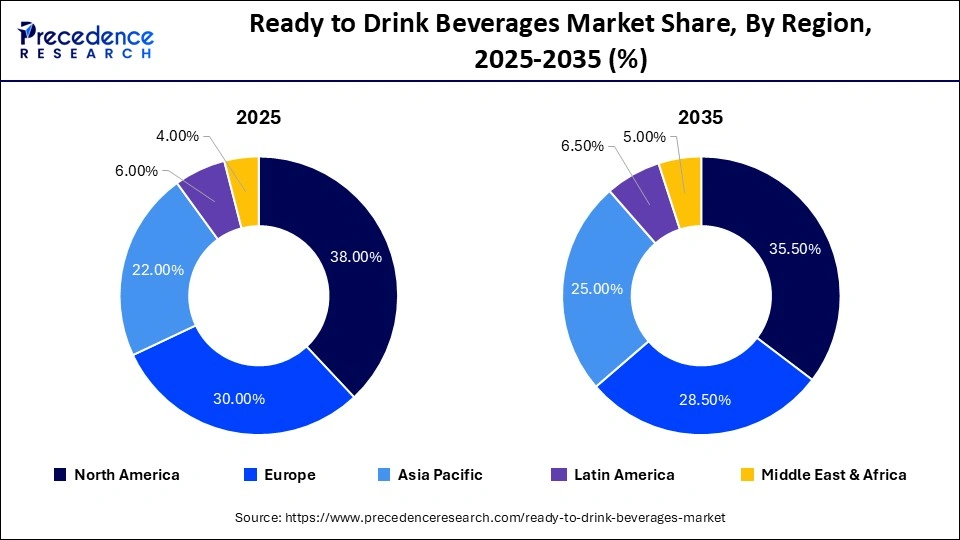
- North America dominated the market with a 38% share in 2025.
- Europe was the second-largest shareholder in 2025 and is expected to grow at the fastest rate between 2026 and 2035.
- By product type, the non-alcoholic beverages segment contributed the highest market share of 75% in 2025.
- By product type, the alcoholic beverages segment held a 25% share of the market in 2025 and is expected to grow at a significant rate in the coming years.
- By distribution channel, the retail stores segment held a major market share of 65% in 2025.
- By distribution channel, the food service & HoReCa segment held a 20% share of the market in 2025 and is expected to grow at a significant rate during the forecast period.
- By packaging, the cans segment held a 45% share of the market in 2025.
- By packaging, the bottles segment held a 40% share of the market in 2025 and is likely to experience robust growth in the forthcoming years.
- By end user, the adults segment contributed the highest market share of 55% in 2025.
- By end user, the teens & youth segment contributed 30% share of the market in 2025 and is estimated to grow at a strong rate over the projected period.
Market Overview
Rising demand for convenient, on-the-go hydration and functional nutrition is driving growth in the ready to drink beverages market globally. RTD beverages are pre-formulated drinks processed using pasteurization and aseptic packaging to ensure safety and extended shelf life. The Food and Agriculture Organization notes that global diets are increasingly shifting toward processed and ready-to-eat food and beverage products.
The growing urbanization is also driving the demand for RTD beverages. According to the United Nations Department of Economic and Social Affairs, over 58% of the world's population lived in urban centers in 2024, accelerating demand for portable, single-serving beverages. Additionally, RTD drinks are being enhanced with vitamins, electrolytes, and plant-based ingredients to meet consumers' hydration, energy, and immunity needs.
Impact of Artificial Intelligence on the Ready to Drink Beverages Market
The ready to drink beverages market is being revolutionized with the introduction of AI that improves product innovation and consumer engagement strategies. Data analytics powered by AI is actively used by companies to learn about consumer preferences. This allows the creation of functional, low-sugar, and plant-based RTD beverages faster. The personalized marketing campaign is another use of AI by brands, which provides specific product suggestions and dynamic pricing policies to find consumers who are active digitally.
Market Trends
- Need for Protein-Infused and Nutrient-Dense RTD Drinks: Protein enriched beverages are expanding beyond the sports nutrition sector into mainstream daily consumption and meal replacement markets. Consumers are increasingly seeking higher protein intake, with beverages providing 20-40 grams per serving gaining popularity. This trend is driving the integration of RTD protein drinks and nutrition products into everyday diets, significantly boosting their market presence.
- Demand for Natural Energy Alternatives to Traditional Stimulants: Consumers are moving to natural energy drinks like matcha, yerba mate, and botanical extracts in ready-to-drink drinks. These choices offer long-term energy with no jitters, which is in line with the increasing preference for clean-label and healthier alternatives. This is changing the energy drink category and influencing reformulation policies in the world beverage portfolio.
- Growth of Urban On-the-Go Lifestyles: Increasing urbanization is fueling demand for convenient, portable beverage formats across fast-paced consumer environments.
- Rising Popularity of Plant-Based Beverages: Expanding vegan and lactose-free preferences are boosting demand for plant-based RTD alternatives globally.
Market Scope
| Report Coverage | Details |
| Market Size in 2025 | USD 112.70 Billion |
| Market Size in 2026 | USD 120.03 Billion |
| Market Size by 2035 | USD 211.55 Billion |
| Market Growth Rate from 2026 to 2035 | CAGR of 6.50% |
| Dominating Region | North America |
| Fastest Growing Region | Asia-Pacific |
| Base Year | 2025 |
| Forecast Period | 2026 to 2035 |
| Segments Covered | Product Type, Distribution Channel, Packaging, End User, and Region |
| Regions Covered | North America, Europe, Asia-Pacific, Latin America, and Middle East & Africa |
Market Dynamics
Drivers
Demand for Functional Nutrition
The increasing demand for functional nutrition is expected to drive the market. Consumers are actively demanding vitamins, minerals, and bioactive-enriched beverages as a way of boosting immunity and energy and enhancing wellness. The growing number of health-conscious urban residents is shifting toward alternative beverages that are functional and have specific benefits in place of traditional sugary drinks.
Restraint
Limited Cold Chain Infrastructure in Emerging Markets
Limited cold chain infrastructure in emerging regions is projected to restrict market growth. Logistical constraints are becoming a problem in rural and semi-urban regions, which restricts the availability of products and quality maintenance. These infrastructure constraints are reducing growth potential in high-demand emerging markets.
Opportunity
Advancements in Aseptic Processing Technologies
Spurring technological advancements in aseptic processing is estimated to create immense opportunities for the players competing in the market. It is possible through advanced processing technologies, which are allowing longer shelf life with no preservatives, and still retain taste and nutritional value. Investments in automation and intelligent manufacturing are streamlining production uniformity and manufacturing performance. This technological advancement is aiding the expansion of geographic scope and operational strength.
Segment Insights
Product Type Insights
Ready to Drink Beverages Market Share, By Product Type, 2025-2035 (%)
| Product Type | 2025 | 2035 |
| Non-Alcoholic Beverages | 75.00% | 71.50% |
| Alcoholic Beverages | 25.00% | 28.50% |
The Non-Alcoholic Beverages Segment Held a 75% Market Share in 2025
The non-alcoholic beverages segment dominated the ready to drink beverages market with the highest share of 75% in 2025. This is mainly due to growing global demand for hydration, wellness, and convenient everyday consumption. Consumers increasingly prefer drinks suitable for exercise, office routines, and general thirst-quenching. Innovations such as low-sugar and clean-label formulations are boosting consumer trust and repeat purchases, while strong marketing strategies targeting health-conscious audiences enhance brand visibility and engagement.
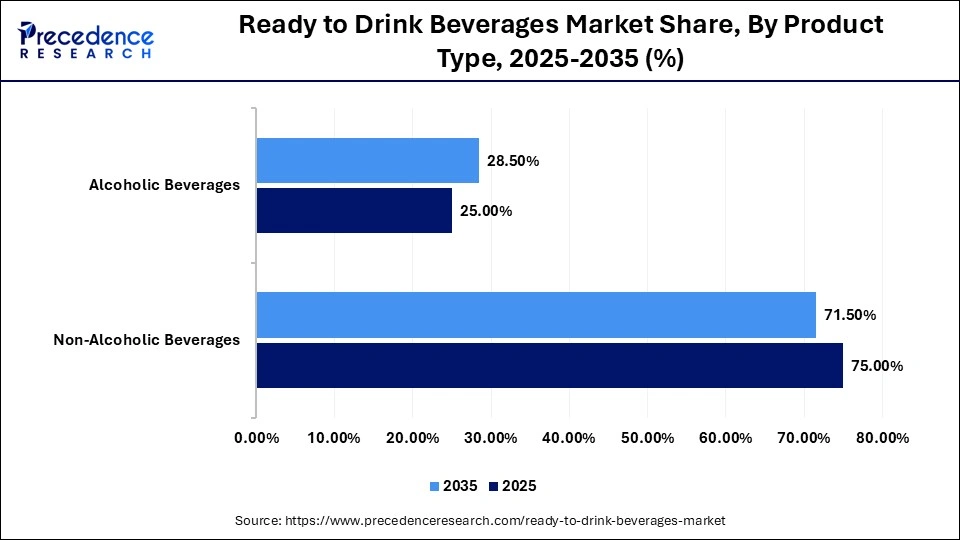
The alcoholic beverages segment held a 25% share of the market in 2025 and is expected to grow at a significant rate during the projection period. The growth of the segment is driven by the growing popularity of ready-to-drink cocktails and flavored alcoholic beverages. The younger consumer is embracing convenient forms of alcohol that are known to provide regulated doses and a variety of flavors.
According to the 2024 National Survey on Drug Use and Health (NSDUH), 228.4 million people ages 12 and older reported that they drank alcohol at some point in their lifetime. The trends of premiumization are motivating brands to promote craft-based and high-quality alcoholic RTDs.
Distribution Channels Insights
The Retail Stores Segment Dominated the Market With a 65% Share in 2025
The retail stores segment dominated the ready to drink beverages market with a major share of 65% in 2025, due to the extensive presence of supermarkets, hypermarkets, and convenience outlets across urban and semi-urban regions. Consumers still desire instant access to products, in-store promotions, and the impulse buying opportunities that are offered in physical outlets.
Ready to Drink Beverages Market Share, By Distribution Channel, 2025-2035 (%)
| Distribution Channel | 2025 | 2035 |
| Retail Stores | 65.00% | 60.00% |
| Online Retailers | 15.00% | 18.00% |
| Foodservice and HoReCa | 20.00% | 22.00% |
The online retailers segment held a 15% share of the market in 2025, driven by the rapid expansion of e-commerce platforms and digital purchasing behavior. Beverage delivery services through subscriptions are becoming popular, which promotes repeat buying and brand loyalty. The expansion of online sales is also being aided by growth in mobile commerce and digital payment systems. Furthermore, this channel is gaining momentum due to increasing internet penetration and evolving consumer shopping habits.
The food services and HoReCa segment held a 20% share of the market in 2025 and is expected to grow at the fastest rate over the forecast period, owing to increasing consumption of beverages in restaurants, hotels, and cafés. The emerging trends in urban dining culture and social consumption are increasing the demand for high-end and specialty RTD beverages in these environments. Hospitality operators are increasing their beverage menu to incorporate functional, artisanal, and ready-to-drink beverages.
Packaging Insights
Ready to Drink Beverages Market Share, By Packaging, 2025-2035 (%)
| Packaging | 2025 | 2035 |
| Cans | 45.00% | 42.50% |
| Bottles | 40.00% | 41.00% |
| Cartons | 8.00% | 9.00% |
| Pouches & Other Formats | 7.00% | 7.50% |
The Cans Segment Dominated the Market With a 45% Share in 2025
The cans segment dominated the ready to drink beverages market with a major share of 45% in 2025, driven by strong demand for lightweight, portable, and quickly chillable packaging formats. Aluminum cans offer advantages in efficient stacking, storage, and transportation across international supply chains. Additionally, the well-established aluminum recycling infrastructure supports sustainability initiatives, particularly in developed markets, further strengthening the segment's market position.
The bottles segment was the second-largest shareholder, holding a 40% share in 2025, due to increasing demand for resealable and multi-serve packaging solutions. Consumers appreciate bottles due to their storage, reusability, and their ability to use them in individual and family consumption events. Manufacturers of drinks like cold brew coffee, juices, and functional drinks increasingly use bottle formats to enhance product appeal.
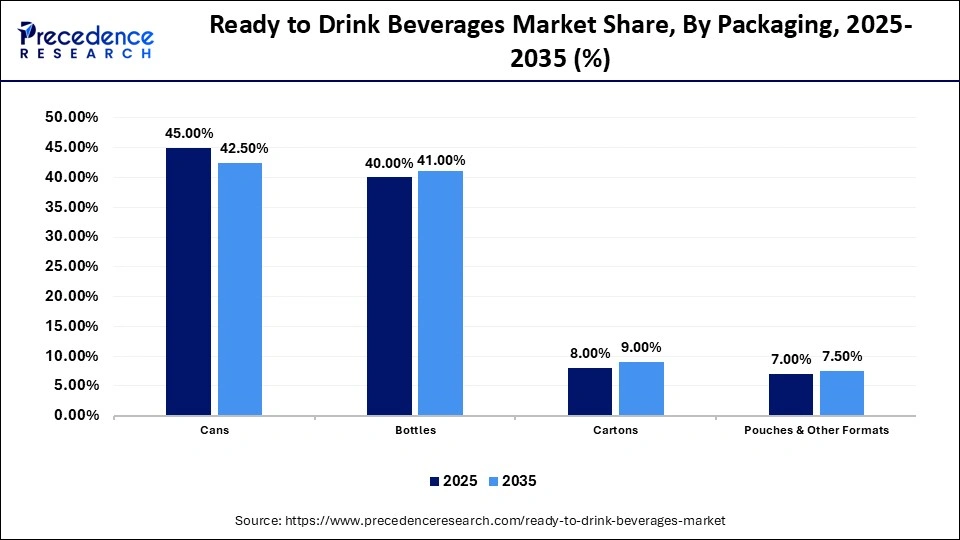
The cartons segment held an 8% share of the market in 2025, driven by growing consumer preference for environmentally friendly and renewable packaging. Cartons are particularly popular for juices, dairy-based, and plant-based beverages. Their long shelf life, enabled by aseptic technology, reduces the need for refrigeration during storage and transportation, making them a sustainable and convenient packaging option.
The pouches segment held a 7% share of the market in 2025, owing to the growing demand for flexible and lightweight packaging solutions. Pouches are highly portable, making them popular for kids' drinks, sports beverages, and other on-the-go formats. The increasing preference for single-serve and portion-controlled consumption is further boosting the adoption of this packaging type.
End User Insights
The Adults Segment Dominated the Market With a 55% Share in 2025
The adults segment dominated the ready to drink beverages market with a major share of 55% in 2025, due to high consumption rates across working professionals and health-conscious consumers. Hectic lifestyles are leading to greater dependence on convenient beverage choices that help maintain hydration, energy, and supplement meal replacement requirements. The increasing trend of fitness among adults is also enhancing the demand for performance-based beverages.
Ready to Drink Beverages Market Share, By End User, 2025-2035 (%)
| End User | 2025 | 2035 |
| Adults | 55.00% | 52.00% |
| Teens & Youth | 30.00% | 32.00% |
| Children | 15.00% | 16.00% |
The teens & youth segment held the second-largest share of 30% in the market in 2025, due to the rising influence of social media and evolving consumption trends. The younger generation is discovering new flavors, forms, and experiences in beverages that are in tandem with their lifestyle.
The children segment held a 15% share of the market in 2025, owing to increasing awareness regarding balanced diets and healthy beverage alternatives among parents. Beverage brands are launching dairy, fruit mixes, and functional beverages, which are specifically targeting younger age groups. According to the International Dairy Federation, fortified dairy-based beverages for children saw increased adoption in 2025 for nutritional awareness among parents.
Regional Insights
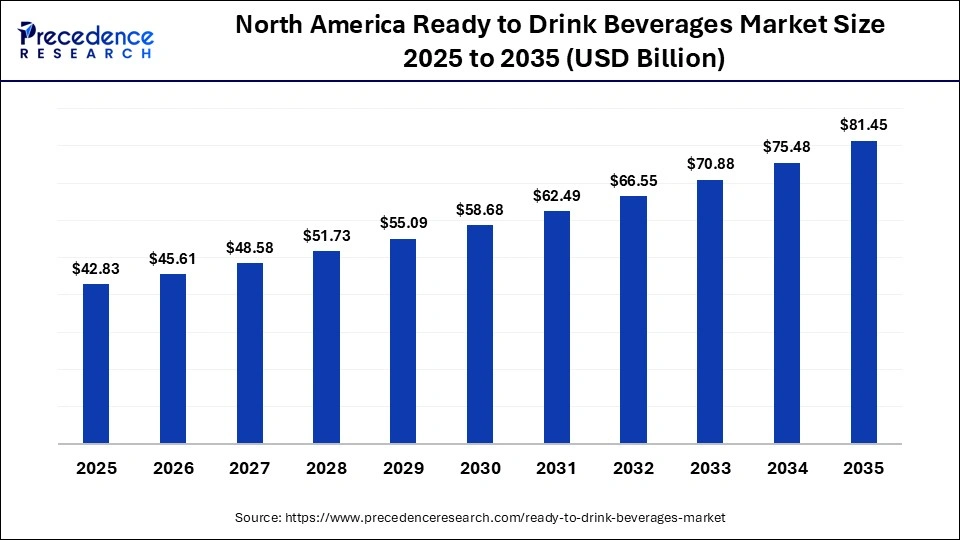
North America Ready to Drink Beverages Market Size and Growth 2026 to 2035
The North America ready to drink beverages market size is estimated at USD 42.83 billion in 2025 and is projected to reach approximately USD 81.45 billion by 2035, with a 6.64% CAGR from 2026 to 2035.
North America Dominated the Market With a 38% Share in 2025
North America led the ready to drink beverages market, capturing the largest share of 38% in 2025. This is mainly due to the strong penetration of premium, functional, and convenience beverage brands. Consumers in the region have been moving toward value-added drinks that provide a combination of taste, nutrition, and alignment with the lifestyle. In 2025, the International Bottled Water Association said that the trends in consumption based on hydration are enhancing the demand for packaged water in North America.
U.S. Ready to Drink Beverages Market Size and Growth 2026 to 2035
The U.S. ready to drink beverages market size is calculated at USD 32.12 billion in 2025 and is expected to reach nearly USD 61.49 billion in 2035, accelerating at a strong CAGR of 6.71% between 2026 and 2035.
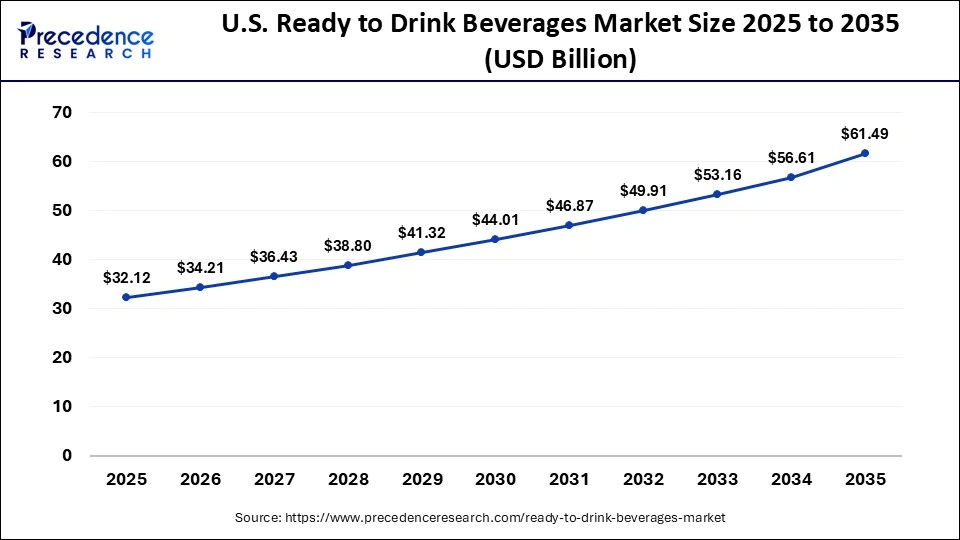
U.S. Ready to Drink Beverages Market Analysis
The U.S. leads the market within North America, driven by strong innovation pipelines and high consumer demand for functional and convenience-oriented products. Consumers in the country increasingly prioritize hydration, energy, and low-sugar beverages that align with active and health-conscious lifestyles.
Europe: The Second-Largest Market
Europe was the second-largest shareholder, holding a 30% share in 2025, and is anticipated to grow at the fastest rate in the upcoming period. This is mainly due to robust regulatory policies promoting healthier formulations and environmentally friendly packaging practices. Rising demand for organic drinks, botanical infusions, and functional hydration beverages is reshaping consumption patterns across the region. Danone reported strong growth in its plant-based and functional beverage segments in Europe in 2025.
Germany Ready to Drink Beverages Market Analysis
Germany is a major contributor to the market in Europe, driven by strong consumer demand for sustainable and high-quality beverage products. Consumers are increasingly shifting toward health- and environment-conscious options, including organic, plant-based, and clean-label drinks, further supporting market growth.
How is the Opportunistic Rise of Asia Pacific in the Ready to Drink Beverages Market?
Asia Pacific held a 22% share of the market in 2025 and is expected to grow at a significant rate in the coming years, driven by the high growth rate of the urban middle-class population and the changing dietary patterns. The growth of the contemporary retail, fast-moving commerce, and mobile purchasing is enhancing accessibility of beverages to various age groups. Beverage companies are scaling localized production to meet regional taste preferences and demand variability, thus facilitating the market growth in the region.
India Ready to Drink Beverages Market Analysis
In India, the market is driven by rising disposable incomes and growing adoption of packaged beverages. In 2025, the Indian Beverage Association reported strong demand for packaged drinks among urban and semi-urban populations, highlighting the market's rapid expansion.
Ready to Drink Beverages Market Supply Chain Analysis
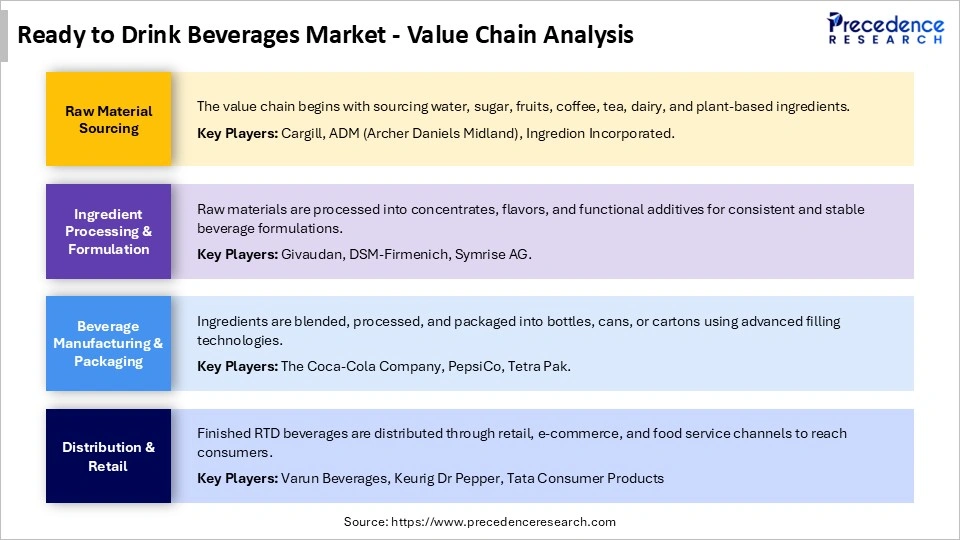
Ready to Drink Beverages Market Companies
- Arizona Beverage Company
- Asahi Group Holdings, Ltd.
- Coca-Cola Company
- Danone S.A.
- Keurig Dr Pepper Inc.
- Maple Leaf Foods Inc.
- Monster Beverage Corporation
- National Beverage Corp.
- Nestle S.A.
- PepsiCo, Inc.
- Red Bull GmbH
- Suntory Beverage & Food Limited
- The Hershey Company
- The Kraft Heinz Company
- Unilever PLC
Recent Developments
- In April 2026, Halo Drinks announced the launch of its India platform, signaling a strategic expansion into a rapidly evolving premium beverage landscape. The company identified India as a high-growth market driven by rising disposable incomes, increasing global exposure, and shifting consumer expectations. This move positions Halo Drinks to capitalize on evolving consumption patterns in one of the fastest-growing beverage markets globally.(Source: https://drinks-intel.com)
- In March 2026, Nestlé, through its Waters & Premium Beverages UK division, introduced a new range of functional soft drinks under the Buxton Peak brand. The product line focuses on supporting modern wellness needs while maintaining strong taste appeal. The launch reflects increasing demand for functional and better-for-you beverage options in the UK market.(Source: https://www.nestle.co.uk)
Segments Covered in the Report
By Product Type
- Non-Alcoholic Beverages
- Soft Drinks
- Bottled Water
- Juice & Juice Drinks
- Tea & Coffee Beverages
- Sports & Energy Drinks
- Dairy-based Drinks
- Others
- Alcoholic Beverages
- Beer
- Wine
- Cider
- Ready-to-Drink (RTD) Cocktails
- Spirits
By Distribution Channel
- Retail Stores
- Supermarkets
- Hypermarkets
- Convenience Stores
- Online Retailers
- Foodservice & HoRea
- Restaurants
- Cafes & Bars
- Fast Food Chains
By Packaging
- Cans
- Bottles
- Glass Bottles
- Plastic Bottles
- Cartons
- Pouches
- Others
By End User
- Adults
- Teens & Youth
- Children
By Region
- North America
- Latin America
- Europe
- Asia-pacific
- Middle and East Africa
For inquiries regarding discounts, bulk purchases, or customization requests, please contact us at sales@precedenceresearch.com
Frequently Asked Questions





Ask For Sample
No cookie-cutter, only authentic analysis – take the 1st step to become a Precedence Research client
 Get a Sample




 sales@precedenceresearch.com
 Schedule a Meeting
