



Respiratory Syncytial Virus (RSV) Diagnostic Market Size, Companies, Share, Patient Volume, Treatment Adoption Rates, Pricing Analysis, Regulatory Landscape, Competitive Positioning, and Demand Forecast
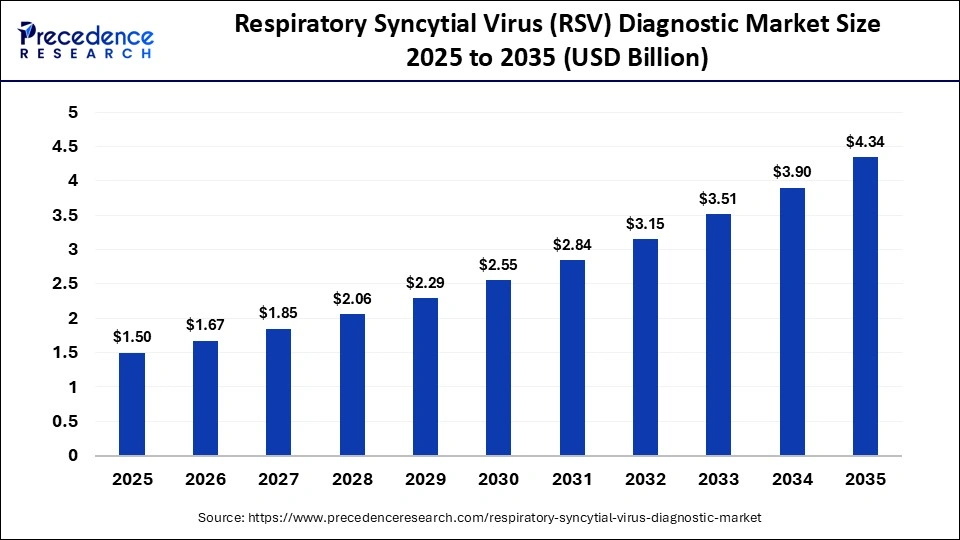
Deepa Pandey, a Healthcare Industry Expert, highlights that the respiratory syncytial virus diagnostic market has reached USD 1.67 billion in 2026 and is on track to reach USD 4.34 billion by 2035, advancing at a CAGR of 11.20%. Key respiratory syncytial virus diagnostic market companies shaping the market include Abbott Laboratories, F. Hoffmann-La Roche Ltd., Becton, Dickinson and Company (BD), Danaher Corporation (Cepheid), while major growth segments span By Product & Service, By Technology, By End-User.
Source: https://www.precedenceresearch.com/respiratory-syncytial-virus-diagnostic-market
 Get a Sample
 Table Of Content


What is the Respiratory Syncytial Virus (RSV) Diagnostic Market Size in 2026?
The global respiratory syncytial virus diagnostic market size accounted for USD 1.50 billion in 2025 and is predicted to increase from USD 1.67 billion in 2026 to approximately USD 4.34 billion by 2035, expanding at a CAGR of 11.20% from 2026 to 2035. This market growth is associated with an elevation in the incidence of respiratory infections, an increasing neonatal population, and a considerable demand for in-vitro diagnostics along with point-of-care services. The pace and precision of RSV detection have been enhanced with the use of diagnostic tools, and this has created several promising prospects for firms in this space.
Key Takeaways
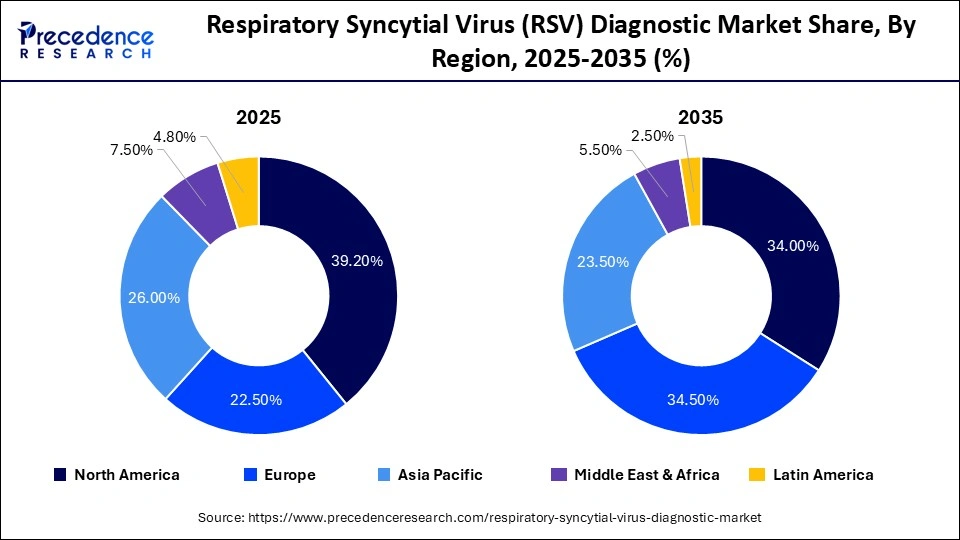
- North America dominated the global respiratory syncytial virus diagnostic market with a market share of 39.2% in 2025.
- Asia-Pacific holds the market share of 22.5% market share and is expected to grow at the fastest CAGR in the market during the forecast period.
- By product and service, the kit and assays segment accounted for a considerable revenue share in the market in 2025.
- By product and service, the software and service segment is expected to witness the fastest growth in the market over the forecast period.
- By technology, the molecular diagnostics segment accounted for a considerable revenue share of 55.0% in the market in 2025.
- By technology, the rapid antigen detection test segment held the second-largest dominance with a market share of 27.0% in 2025.
- By end-user, the hospitals and clinics segment held a major revenue share of 43.1% in the market in 2025.
- By end-user, the diagnostic laboratories segment is the second-largest shareholder with 31.5% market share in 2025.
What is the Respiratory Syncytial Virus Diagnostic Market?
The field of respiratory syncytial virus (RSV) diagnostics has evolved into numerous approaches and tools that help to quickly detect RSV in patients, especially in infants, the elderly, and immunocompromised individuals. This includes rapid antigen testing, molecular techniques, including PCR assays, and a growing number of point-of-care products to provide laboratory-tested findings to patients. One distinct factor pertaining to this respiratory syncytial virus (RSV) diagnostic market is the reliance on demand being dependent on the seasons: during an outbreak, when the demand is higher, the healthcare professionals are compelled to respond quickly without losing dependability. As more information about RSV is received, and in addition to increasingly preventive measures, diagnostics are transitioning from confirmation of cases towards being key instruments for informing timely clinical decision-making.
Impact of AI in the Respiratory Syncytial Virus Diagnostic Market
Artificial intelligence is gradually changing things by improving their timing and application. Algorithms that analyze epidemiological trends, shifts in weather conditions, and hospital statistics are starting to anticipate RSV outbreaks before those cases are admitted. In the field of diagnostics and the respiratory syncytial virus (RSV) diagnostic market, AI integration is refining the interpretation of multiplex test results, clarifying instances where symptoms may overlap with those associated with influenza or COVID-19. This technology supports clinicians in making more informed triaging decisions about which individuals need testing, rather than just observation. As a result, diagnostic practice is evolving to be more proactive rather than reactive, guided equally by data insights and clinical presentations.
Market Trends Influencing the Respiratory Syncytial Virus Diagnostic Market
- Convergence Toward Multiplex Respiratory Testing: Incorporating RSV diagnostic protocols is becoming more common across the rapidly expanding respiratory syncytial virus (RSV) diagnostic market. Integrated RSV diagnostic panels, now capable of identifying multiple pathogens in one examination, are increasingly accepted for routine clinical practice. This reflects a shift: clinicians have a preference for composite results in place of isolated individual RSV tests, because this increases efficiencies and minimizes potential clinical ambiguity.
- Gradual Migration to Point-of-Care Molecular Platforms: The industry is transcending central lab environments. At the same time, smaller molecular gadgets in emergency departments and outpatient facilities are growing more widely available. These technologies offer speed and precision that are as efficient as PCR and eliminate the process bottlenecks of standard laboratory procedures. Fast yet precise, they are already nearing a PCR-level precision.
- Data-Linked Diagnostics and Real-Time Surveillance: Diagnostics are more integrated into a data network than in any of the former systems used across the respiratory syncytial virus (RSV) diagnostic market. Data can combine with computerized surveillance systems to allow doctors to observe RSV trends as they occur in real time and react accordingly more effectively than ever before.
- Pediatric-Focused Product Design and Innovation: Considering the high prevalence of RSV in infants, manufacturers have designed infant-specific diagnostic techniques focused on neonatal care facilities for patients with RSV infection. Relatively gentle, less invasive sampling techniques and time-sensitive turnaround times are implemented to maintain greater and gentler precision in pediatric environments.
Market Scope
| Report Coverage | Details |
| Market Size in 2025 | USD 1.50 Billion |
| Market Size in 2026 | USD 1.67 Billion |
| Market Size by 2035 | USD 4.34 Billion |
| Market Growth Rate from 2026 to 2035 | CAGR of 11.20% |
| Dominating Region | North America |
| Fastest Growing Region | Asia Pacific |
| Base Year | 2025 |
| Forecast Period | 2026 to 2035 |
| Segments Covered | Product & Service, Technology, End-User, and Region |
| Regions Covered | North America, Europe, Asia-Pacific, Latin America, and Middle East & Africa |
Market Dynamics
Drivers
Extending Preventive Therapies and Vaccination Programs
The role of diagnostics is only growing more relevant with the widespread distribution of RSV vaccines and monoclonal antibodies. The scope of screening has now become increasingly tied to treatment eligibility, leading to feedback in which the development of therapeutic alternatives has unwittingly amplified the demand for prompt, accurate diagnostic confirmation. These are the major growth drivers of the respiratory syncytial virus (RSV) diagnostic market.
Restraints
High Cost of Molecular Diagnostic Platforms
There is a high cost of advanced molecular diagnostics, yet they can be seen as an issue that is particularly challenging to coordinate in many healthcare systems across the respiratory syncytial virus (RSV) diagnostic market. The high initial cost of the equipment and the continued use of reagents constitute an impediment, especially in developing areas where money is scarce.
Opportunities
AI-Driven Predictive and Surveillance Diagnostics
A lot of attention, for its significant shift, was observed not just in the diagnosis but also in the time frame with the arrival of artificial intelligence and the implications for diagnosis outcome and timing. For example, predictive analytics that can forecast RSV outbreaks will allow for early assessment of test resources, thus transforming diagnostics from responsive to proactive with a focus on public health.
Segmental Insights
Product & Service Insights
Kits and Assays (Reagents) Segment Led the Respiratory Syncytial Virus Diagnostic Market in 2025
The kits and assays segment accounted for a considerable revenue share in the market in 2025, largely because every test, regardless of its complexity, depends on consumables. A strong position of the respiratory syncytial virus (RSV) diagnostic market is due to volume economics: consistent demand is sustained through repeated use, especially during seasonal peak demand periods. This reliance on reagents for rapid antigen tests and molecular platforms has made them the most consistent source of income in the market.
The software and service segment is expected to witness the fastest growth in the market over the forecast period. As diagnostic procedures are increasingly driven by data, there will be an inevitable need for integrated reporting systems, analytics dashboards, and connectivity solutions. This growth results from a shift towards real-time surveillance capabilities and centralized data analysis, transforming what was previously considered a backend operation into a key competitive advantage.
Instruments/analyzers are still important in RSV diagnostic research, and while they are essential, the development of diagnostic tools is growing at a more modest rate than that of consumables. This growth is tempered by factors such as relatively high initial costs and longer replacement cycles, but their importance is undeniable. As laboratories increasingly transition to automated systems with multiplex testing, the analyzers continue to advance gradually and enable progress in throughput efficiency and diagnostic accuracy.
Technology Insights
Respiratory Syncytial Virus (RSV) Diagnostic Market Share, By Technology , 2025-2035 (%)
| Technology | 2025 | 2035 |
| Molecular Diagnostics | 55.0% | 61.5% |
| Rapid Antigen | 27.0% | 23.5% |
| Immunoassays | 12.0% | 10.5% |
| Others | 6.0% | 4.5% |
Molecular Diagnostics Segment Led the Market with 55.0% of Market Share in 2025
The molecular diagnostics segment accounted for a considerable revenue share of 55.0% in the respiratory syncytial virus (RSV) diagnostic market in 2025. This is due to its more acute sensitivity and also to its greater tendency to favor multiplex panels that will identify RSV, along with influenza and COVID-19 detection, all simultaneously. Overall, the industry is slowly moving towards methods that prioritize accuracy over precision, even at the tradeoff of more sophisticated processes and higher costs.
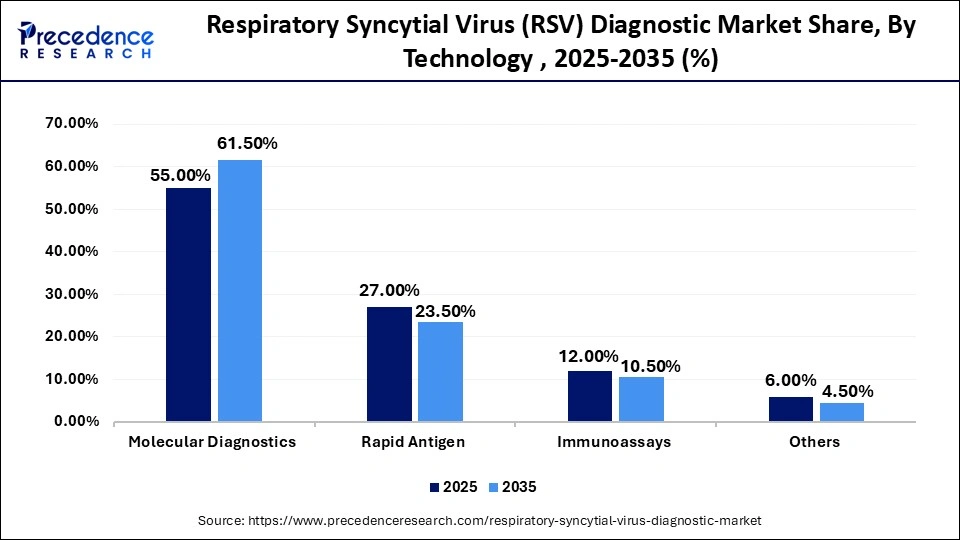
The rapid antigen detection test segment held the second-largest dominance with a market share of 27.0% in 2025. These tests can retain their prominence because they focus on speed and ease of use rather than precision. They are particularly vital in pediatric and geriatric point-of-care settings, where timely clinical decisions may trump pure sensitivity. And their low price keeps them on the radar, even with the incremental development of molecular diagnostics.
The immunoassays segment held 12.0% of the respiratory syncytial virus (RSV) diagnostic market share in 2025. Their benefit is within the normal context of laboratory screening, where the established method of assessment is the focus, and tradition often trumps new attempts at innovation. While these assays may not be at the leading edge of modern technology, their utilization and stability provide a tool that is used in an environment conducive to repeatable actions as opposed to immediate responses.
End-User Insights
Respiratory Syncytial Virus (RSV) Diagnostic Market Share, By End-User, 2025-2035 (%)
| End-User | 2025 | 2035 |
| Hospitals & Clinics | 43.1% | 39.5% |
| Diagnostic Labs | 31.5% | 33.0% |
| Point-of-Care (PoC) | 18.2% | 22.0% |
| Home Care | 7.2% | 5.5% |
Hospitals and Clinics Segment Dominated the Market with 43.1% of Market Share in 2025
The hospitals and clinics segment held a major revenue share of 43.1% in the respiratory syncytial virus (RSV) diagnostic market in 2025, as a high incidence of severe RSV cases among infants and elderly individuals accounted for one of the major industries. This sector's prominence is in full correlation with clinical requirements: such facilities are indispensable for quick, high-resolution diagnosis; they have an impact directly on how to treat people and when a hospital might operate, and so on.
The diagnostic laboratories segment is the second-largest shareholder with 31.5% market share in 2025. The expansion of this sector has been driven by outsourcing, where healthcare providers rely on centralized labs to perform complex diagnoses and the management of data, meaning that demand patterns can be consistent for labs; that growth is a consequence of external outsourcing.
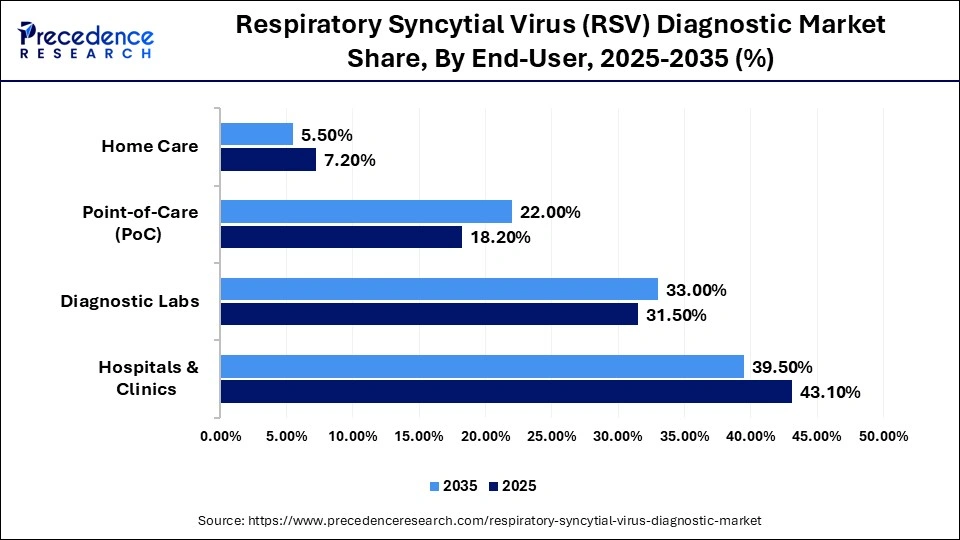
The point-of-care testing centers segment held 18.2% of the respiratory syncytial virus (RSV) diagnostic market share in 2025, driven by the increasing adoption of CLIA-waived rapid tests in urgent care and community clinics. The appeal lies in immediacy, bringing diagnostics closer to patients and enabling faster clinical decisions. This shift reflects a broader decentralization of healthcare delivery.
The home care/ at-home testing segment held 7.2% of market share in 2025, as interest in self-collection kits grew alongside decentralized models for medical care. It has, however, been hindered by a serious regulatory framework coupled with concerns over accuracy. This field is less about how it is realized today and more about something to be arrived at in the future; it really needs a gradual evolution over time.
Regional Insights
North America Respiratory Syncytial Virus Diagnostic Market Size and Growth 2026 to 2035
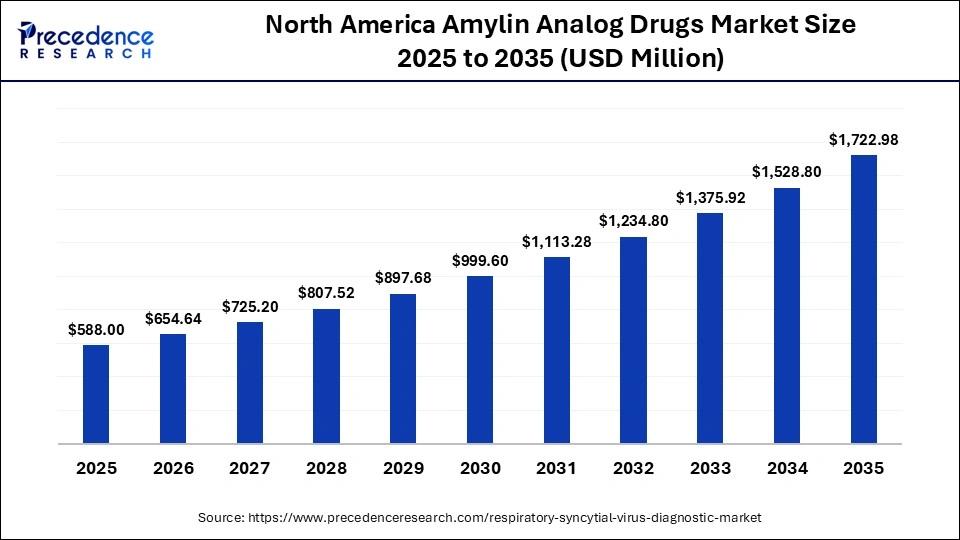
The North America respiratory syncytial virus (RSV) diagnostic market size is estimated at USD 588.00 million in 2025 and is projected to reach approximately USD 1,722.98 million by 2035, with a 11.35% CAGR from 2026 to 2035.
Why North America Dominates the Respiratory Syncytial Virus Diagnostic Market?
North America dominated the global respiratory syncytial virus (RSV) diagnostic market with a market share of 39.2% in 2025. Successful surveillance programs have helped to maintain this advantage, as they have repeatedly improved the ability to track infections. The region's proactive use of automated molecular technologies made it possible for healthcare systems to adapt more quickly without compromising the accuracy of the response, and preparedness was therefore developed as a key performance indicator, being key to the market leadership of the region.
U.S. Respiratory Syncytial Virus Diagnostic Market Size and Growth 2026 to 2035
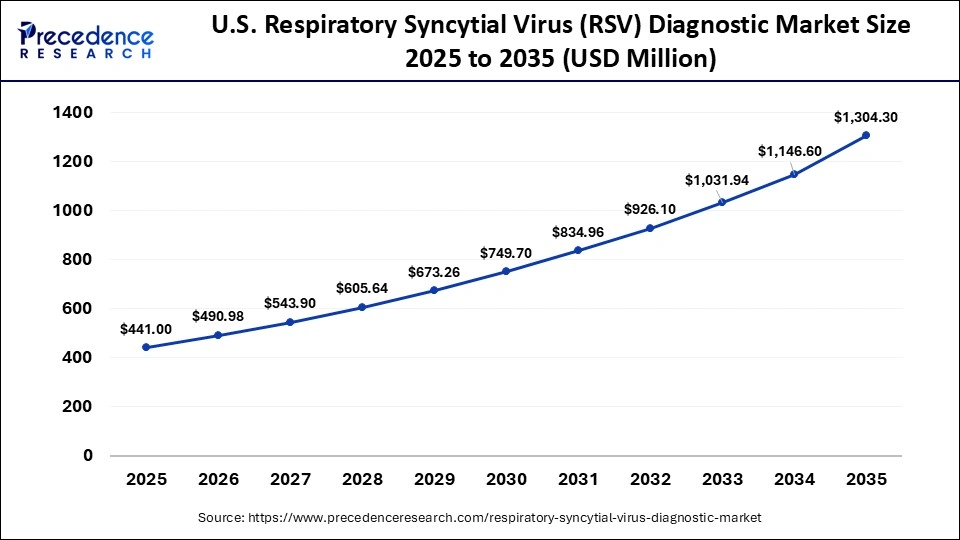
The U.S. respiratory syncytial virus (RSV) diagnostic market size is calculated at USD 441.00 million in 2025 and is expected to reach nearly USD 1,304.30 billion in 2035, accelerating at a strong CAGR of 11.45% between 2026 and 2035.
U.S. Market Trends
The United States dominated the North American market due to its outstanding laboratory infrastructure and rapid adoption of its multiplex PCR technologies. The American healthcare system has maintained a strong interest in precision diagnostics since severe RSV cases are managed in hospitals. Also, good reimbursement systems as well as state-of-the-art technologies from local diagnostic companies secured consistent demand, making the U.S a powerhouse in technology as well as a leading factor in the increasing volume of this regional market.
Why is Asia-Pacific experiencing the Fastest Growth in the Respiratory Syncytial Virus Diagnostic Market?
Asia-Pacific holds the market share of 22.5% market share and is expected to grow at the fastest CAGR in the market during the forecast period, driven by the improvement of diagnostic infrastructure in urban and semi-urban areas. Countries such as China and India are spending massively on molecular testing technology across the respiratory syncytial virus (RSV) diagnostic market as they switch from simple antigen testing. Greater awareness about respiratory infections, as well as access to better healthcare services and programs to promote screening supported by the government, are anticipated to stimulate sustained growth throughout this space.
China Market Trends
China is expected to be the fastest-growing country in the Asia Pacific RSV diagnostics market, due to the rapid development of healthcare infrastructure, coupled with the growing scope of molecular diagnostic platforms. The country's step towards full monitoring for infectious diseases, especially in densely populated urban areas, would probably increase testing volumes sharply. At the same time, investments into domestic manufacturing and innovative diagnostics would gradually reduce the dependence on imports through the development of a more self-reliant and scalable marketplace.
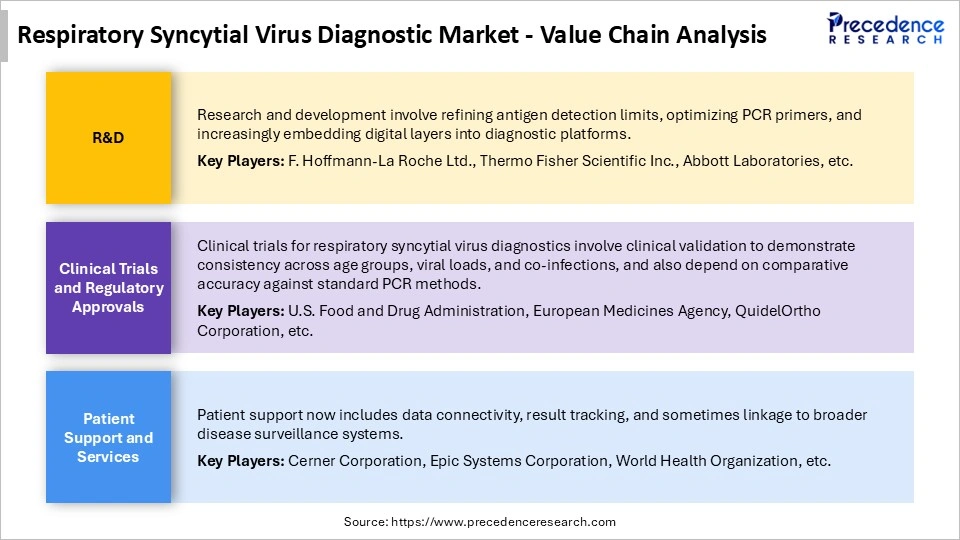
Respiratory Syncytial Virus Diagnostic Market Value Chain Analysis
Respiratory Syncytial Virus (RSV) Diagnostic Market Companies
- Abbott Laboratories
- F. Hoffmann-La Roche Ltd.
- Becton, Dickinson and Company (BD)
- Danaher Corporation (Cepheid)
- bioMérieux SA
- Thermo Fisher Scientific Inc.
- QuidelOrtho Corporation
- Hologic, Inc.
- QIAGEN N.V.
- Siemens Healthineers A
- Bio-Rad Laboratories, Inc
- DiaSorin S.p.A.
- Sekisui Diagnostic
- Meridian Bioscience, Inc.
- Luminex Corporation
Recent Developments
- In January 2026, GSK plc (UK) was granted extended approval by European authorities for its RSV vaccine Arexvy, broadening its application to populations outside the older adult population. While this decision looks like a good signal, in fact, it is a further step up in overall scope for diagnostics. This has led to an increase in demand at pre-vaccination screening sites and after-market monitoring.
- In June 2025, in the US, Merck & Co., Inc. got authorization from the US FDA for Enflonsia (clesrovimab), a preventive antibody marketed as a single dosage for infants. This simple dosing strategy is generally thought to facilitate clinical care at the same time, increasing the reliance on early diagnosis of RSV in order to ensure the timely administration of clinical help.
Segments Covered in the Report
By Product & Service
- Kits and Assays (Reagents)
- Instruments/Analyzers
- Software and Services
By Technology
- Molecular Diagnostics (RT-PCR, NAAT)
- Rapid Antigen Detection Tests (RADTs)
- Immunoassays (ELISA, Chromatographic Immunoassays)
- Direct Fluorescent Antibody (DFA)
- Others (Viral Culture, Serology)
By End-User
- Hospitals and Clinics
- Diagnostic Laboratories
- Point-of-Care (PoC) Testing Centers
- Home Care/At-home Testing
By Region
- North America
- Latin America
- Europe
- Asia-pacific
- Middle and East Africa
For inquiries regarding discounts, bulk purchases, or customization requests, please contact us at sales@precedenceresearch.com
Frequently Asked Questions





Ask For Sample
No cookie-cutter, only authentic analysis – take the 1st step to become a Precedence Research client
 Get a Sample
.webp)



 sales@precedenceresearch.com
 Schedule a Meeting
