



Skin Care Supplement Market Size, Key Companies, Company Market Share, Patient Volume, Treatment Adoption Rates, Pricing Analysis, Regulatory Landscape, Competitive Positioning, and Demand Forecast
Skin Care Supplement Market (By Formulation: Capsules, Tablets, Powders, Liquids; By Distribution Channel: Online, Offline) - Global Industry Analysis, Size, Trends, Leading Companies, Regional Outlook, and Forecast 2026 to 2035
Source: https://www.precedenceresearch.com/skin-care-supplement-market
 Get a Sample
 Table Of Content


What is the Skin Care Supplement Market Size?
The global skin care supplement market size is calculated at USD 4.47 billion in 2025 and is predicted to increase from USD 4.83 billion in 2026 to approximately USD 9.57 billion by 2035, expanding at a CAGR of 7.91% from 2026 to 2035.
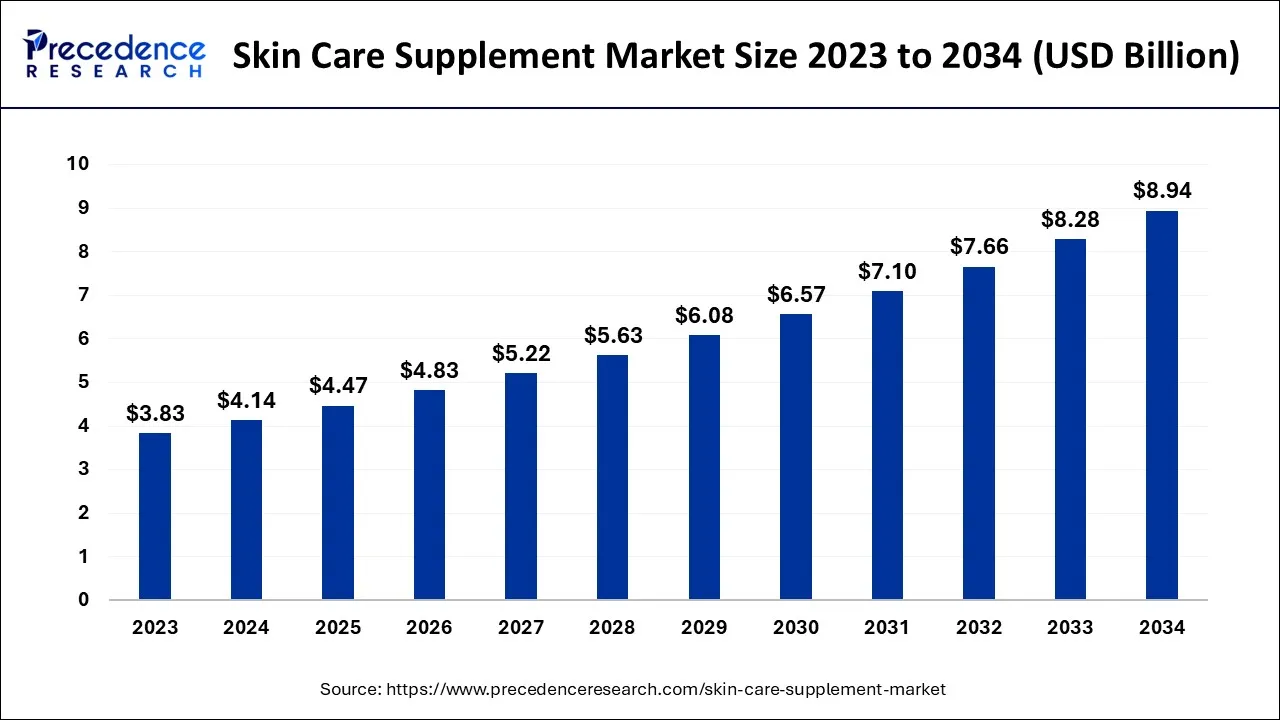
Skin Care Supplement Market Key Takeaways
- Asia Pacific led the global market with the highest market share in 2025.
- By formulation, the capsules segment has held the highest market share in 2025.
- By distribution channel, the offline segment captured the biggest market share in 2025.
What are the Substantial Categories of the Skin Care Supplement?
The skin care supplements market is a rapidly growing industry that encompasses a wide range of products, from vitamins and minerals to herbal extracts and collagen. The market is driven by the growing awareness of the importance of maintaining healthy skin and the desire for effective and natural skin care solutions.
The skin care supplements market is segmented by product type, target audience, distribution channel and region. Some of the main product categories include vitamins and minerals, antioxidants, collagen, hyaluronic acid, and plant extracts. The market is also segmented by target audience including men, women and age groups. Regarding distribution channels, the market for skin care supplements is mainly sold through retail channels such as pharmacies, supermarkets and online retailers. Marketplaces are also sold through direct-to-consumer channels, such as a company's website. The skin care supplement market is highly competitive, with a large number of industry players.
Skin Care Supplement Market Growth Factor
The market for skin care supplements offers a variety of products in different forms, including capsules, tablets, powders, and liquids. However, capsules and tablets are the most commonly used forms. Capsules are popular because they provide flexibility to manufacturers and are convenient to take and store. They also have a longer shelf life compared to liquids or powders. The demand for skin care supplements is expected to grow significantly by 2024 due to increasing awareness of natural and organic products and the growing aging population who want to maintain youthful-looking skin, Increasing popularity of E-Commerce platform.
The beauty and skincare industry continuous innovation and research efforts have also contributed to the market's growth. Advances in formulation technologies and scientific research on the effectiveness of certain ingredients have increased consumer confidence in skin care supplements. Companies are developing products that target various skin types and concerns, which further expands the market's appeal.
The market for skin care supplements offers a variety of products in different forms, including capsules, tablets, powders, and liquids. However, capsules and tablets are the most commonly used forms. Capsules are popular because they provide flexibility to manufacturers and are convenient to take and store. They also have a longer shelf life compared to liquids or powders. The demand for skin care supplements is expected to grow significantly by 2030 due to increasing awareness of natural and organic products and the growing aging population who want to maintain youthful-looking skin.
Trends & Future Outlook of the Skin Care Supplement Market
- Raising Gut-Skin Axis
The market is focusing on probiotics, prebiotics, and gut health supplements, which recognise that a healthy gut equals healthy skin. - Elevating Herbal Extracts
Companies are leveraging antioxidant-rich botanicals, such as Ginkgo leaf extract and Beta-glucan (from mushrooms), for immune support and skin cell regeneration. - Empowering Bioavailability
Day by day, research activities are developing novel delivery systems, like nanotechnology and encapsulation techniques, for accelerating how efficiently active ingredients are absorbed by the body and delivered to skin cells.
Market Scope
| Report Coverage | Details |
| Market Size in 2025 | USD 4.47 Billion |
| Market Size in 2026 | USD 4.83 Billion |
| Market Size by 2035 | USD 9.57 Billion |
| Market Growth Rate from 2026 to 2035 | CAGR of 7.91% |
| Largest Market | Asia Pacific |
| Second Largest Market | North America |
| Third Largest Market | Europe |
| Base Year | 2025 |
| Forecast Period | 2026 to 2035 |
| Segments Covered | By Formulation and By Formulation |
| Regions Covered | North America, Europe, Asia-Pacific, Latin America, and Middle East & Africa |
Market Dynamics
Driver
Increasing popularity of E-commerce platform
The skin care supplement market has been greatly affected by the rise of e-commerce platforms. The increasing popularity of online shopping has made it easier for consumers to find a wider variety of skin care supplements that cater to their specific needs and preferences. Online shopping provides convenience as consumers can buy products from the comfort of their own homes and have them delivered directly to their doorstep. This is especially beneficial for busy individuals who don't have the time to visit physical stores or prefer the convenience of online shopping.
E-commerce platforms offer a greater range of product options, allowing consumers to compare prices and read reviews before making a purchase. This has created more competition in the market and given consumers more control over their spending. The emergence of social media and influencer marketing has made it easier for companies to reach a larger audience and promote their products. Skincare supplement brands can utilize social media platforms to showcase their products, share customer reviews, and interact with their followers. This has resulted in increased brand awareness and boosted sales.
Restraint
Consumer scepticism
There is limited scientific evidence to support claims that beauty supplements can improve skin health. Some studies have shown that certain supplements such as collagen and vitamin C can help improve certain aspects of skin appearance. However, further studies are needed to confirm these results. The FDA does not regulate beauty supplements in the same way it does prescription drugs. This means beauty supplements don't have to go through the same rigorous testing and approval process as prescription drugs. Therefore, there is a risk that beauty supplements may not contain the ingredients they claim to contain or may not be safe to use. Regulatory frameworks for beauty supplements can vary from country to country. This may make it difficult for companies in some regions to market and sell their products.
Beauty supplements can be expensive, which can make them less attractive to some consumers. Despite these concerns, there are also several reasons why consumers choose to take beauty supplements. These include, Beauty supplements are a convenient way to improve skin health. Since it can be taken orally, no special application or removal is required. Many beauty supplements are made from natural ingredients and may appeal to consumers seeking a more holistic approach to skincare. Some consumers simply prefer to take beauty supplements over other forms of skin care such as creams and serums.
Opportunity
Diverse product offerings
The growth potential of the skin care supplement market lies in its ability to cater to diverse consumer needs of different age groups and skin conditions. Companies can capitalize on this opportunity by creating rich and diverse product portfolios that address specific problems faced by individuals. For example, a dietary supplement formulation to combat acne may be aimed at teens and young adults. while an anti-aging solution would appeal to a more mature demographic. Additionally, hyperpigmentation products may appeal to those looking to even out their skin tone and general skin health supplements may appeal to a broader demographic looking to maintain healthy and glowing skin.
Offering a wide range of solutions, companies can effectively attract the attention of consumers with different skin types and concerns about increasing customer loyalty and satisfaction. In addition, by tailoring each product's marketing and messaging to the individual needs of its target audience, it strengthens the brand's presence in the market and makes it the number one choice for individuals seeking effective, specialized skin care supplements.
The cosmetic industry faces the challenge of meeting consumer needs in a world where stress and environmental pollutants are common. It is important for companies to ensure the safety and effectiveness of their products while also maintaining a clean label. To adapt to these changing lifestyles, skincare brands like PROVEN Skincare are now utilizing artificial intelligence (AI) to track daily changes in the skin and provide personalized recommendations.
One example of this is Skin Dossier, a SaaS platform that uses AI to address consumer concerns about their skin. This company's technology and extensive database utilize 3D imaging and consumer health data to analyse the user's skin and hair characteristics. By doing so, they can match the user with the most suitable products to address issues such as dryness and sensitivity. This platform was launched in June 2025.
Segment Insights
Formulation Insights
The skin care supplement market can be divided into capsules, tablets, powders, and liquids. Capsules and tablets are popular because they are easy to take and have a long shelf life. Powders are often used in smoothies or shakes and can be personalized to meet individual needs. Liquids are a convenient option for those who struggle with swallowing pills or want a quick and easy way to take their supplements. Each formulation has its own advantages and disadvantages, and the choice depends on personal preferences and health needs.
Capsules are a commonly used form of skin care supplements. They are made of gelatine or plant-based materials and contain the active ingredients. Capsules are easy to swallow and provide precise dosing. They also have a longer shelf life, which makes them popular among consumers.
Tablets are another popular option for skin care supplements. They are made by compressing the active ingredients into a solid form and come in different shapes and sizes. Tablets often include additional substances to aid in the compression process. Some people prefer tablets because they are familiar and easy to take.
Powdered supplements are becoming more popular, especially among those who want flexibility in dosing or have difficulty swallowing capsules or tablets. Powders can be mixed with water, juice, or smoothies, allowing for a convenient and customizable way to consume the supplements.
Liquid formulations, such as syrups or drops, are another choice for skin care supplements. These formulations are easy to take, especially for people who have trouble swallowing or prefer a different method of intake. Liquids can also be flavored to make them more enjoyable.
Distribution Channel Insights
The online distribution channel has experienced significant growth in recent years, primarily due to the rise of e-commerce platforms and the increasing popularity of online shopping. Online platforms like Amazon, Flipkart, and Myntra offer a wide range of branded skin care products. The convenience of online shopping, discounted offers, cashback options, and easy return policies contribute to the growth of this segment. Many skin care supplement companies have established their official websites or partnered with online retailers to directly sell their products to consumers. Online distribution offers convenience, a wide product selection, and the ability to reach a global audience. Furthermore, digital marketing and social media platforms play a crucial role in promoting and advertising skin care supplements online.
Offline distribution includes traditional brick-and-mortar retail stores, pharmacies, health food stores, and specialty beauty shops. These physical locations allow consumers to see and touch products before making a purchase, which can enhance consumer trust and satisfaction. Additionally, some consumers prefer shopping in physical stores, where they can seek advice from knowledgeable staff and receive immediate assistance.
Both online and offline distribution channels complement each other and cater to different customer preferences. Online channels offer convenience and accessibility, while offline channels provide a personalized shopping experience. Companies in the skin care supplement market often adopt an omnichannel approach, combining both online and offline strategies to maximize their reach and meet the diverse demands of consumers.
Regional Insights
Asia Pacific is the largest market for skin care supplements. This region is expected to continue to grow in the coming years, driven by the increasing demand for natural and holistic beauty products, the growing awareness of the benefits of taking skin care supplements, and the rising disposable income of consumers.
North America is the second largest market for skin care supplements. This region is expected to grow at a steady pace in the coming years, driven by the same factors as Asia Pacific.
Europe is the third largest market for skin care supplements. This region is expected to grow at a slower pace than Asia Pacific and North America, but is still expected to see growth in the coming years.
Latin America is a growing market for skin care supplements. This region is expected to grow at a faster pace than Europe, driven by the increasing demand for natural and holistic beauty products and the rising disposable income of consumers.
The Middle East and Africa is a small but growing market for skin care supplements. This region is expected to grow at a slower pace than other regions but is still expected to see growth in the coming years.
Skin Care Supplement Market- Value Chain Analysis
- R&D
This includes identification of potent natural ingredients, strengthening their delivery via technologies, especially liposomes, and backing them with extensive science, like phytochemistry & clinical trials.
Key Players: P&G, Unilever, L'Oréal, etc. - Formulation and Final Dosage Preparation
Key firms are following a multi-stage process from initial concept and ingredient selection to production, testing, and compliant packaging.
Key Players: Fermentis Life Sciences, HCP Wellness, Zeon Lifesciences, etc. - Patient Support & Services
The market leaders provide general consumer information and education through their brands, with more structured patient support programs (PSPs) facilitated by pharmaceutical companies for particular, medically diagnosed skin conditions.
Key Players: Fullscript, Emerson Ecologics, Roseway Labs, etc.
Skin Care Supplement Market Companies
- The Boots Company PLC: This mainly covers its own-brand products under labels like Boots, HABI, and Modern Chemistry.
- Amway: It offers various products through its Nutrilite brand.
- Hum Nutrition Inc: A company that prominently explores solutions for acne, dryness, ageing, and uneven tone, using clean, clinically tested ingredients.
- Murad, Inc: This facilitates diverse internal skincare supplements for treating acne and ageing by supporting skin health from within.
- Perricone MD: It provides different supplements that highlight issues as part of its holistic, three-tier wellness philosophy.
Other Major Key Players
- Neutrogena
- Meiji Holding Co., Ltd
- Shiseido Company
- Beiersdorf AG
- Loreal SA
- Unilever PLC
Recent Developments
- In November 2025, AxisBiotix unveiled Skin Clear, a first-of-its-kind daily supplement developed to support lowering blemishes and acne. Skin Clear contains both vitamin C and probiotic technology. (Source- https://nutraceuticalbusinessreview.com )
- In March 2025, skinbetter science launched BioRewind, a skin health dietary supplement to enhance visible skin quality. The quality will be enhanced by reducing Advanced Glycation Endproducts (AGEs). (Source- https://www.prnewswire.com )
- In Jan 2023, Nourished and Neutrogena have collaborated to introduce a fresh collection of personalized supplements called The Ageless Skinstack, which are created using 3D printing technology. These supplements aim to enhance skin health by delivering specific nutrients tailored to each person's requirements. The 3D printing process enables precise control over the nutrient composition, guaranteeing that individuals receive the exact nutrients necessary to improve their skin health.
- Ritual, a beauty brand that sells directly to consumers, has recently introduced a new skin care supplement called Hyacera. This supplement is specifically designed to enhance skin hydration and elasticity. Hyacera is a unique supplement that consists of two capsules nested within one another. The combination of these two capsules works in harmony to improve skin hydration and elasticity.
Segments Covered in the Report
By Formulation
- Capsules
- Tablets
- Powders
- Liquids
By Distribution Channel
- Online
- Offline
By Geography
- North America
- Europe
- Asia-Pacific
- Latin America
- Middle East and Africa
For inquiries regarding discounts, bulk purchases, or customization requests, please contact us at sales@precedenceresearch.com
Frequently Asked Questions
Tags





Ask For Sample
No cookie-cutter, only authentic analysis – take the 1st step to become a Precedence Research client
 Get a Sample
.webp)



 sales@precedenceresearch.com
 Schedule a Meeting
