



Small Hydropower Market Trends, Leading Companies, Company Revenue / Sales Performance, Installed Capacity, Production Output, Grid Expansion, Market Share, Technology Adoption, and Industry Outlook
Small Hydropower Market (By Capacity: Up to 1 MW, 1-10 MW; By Component: Civil Construction, Power Infrastructure, Electromechanical Equipment, Others; By Type: Micro Hydropower, Mini Hydropower) - Global Industry Analysis, Size, Trends, Leading Companies, Regional Outlook, and Forecast 2026 to 2035
Source: https://www.precedenceresearch.com/small-hydropower-market
 Get a Sample
 Table Of Content


What is the Small Hydropower Market Size?
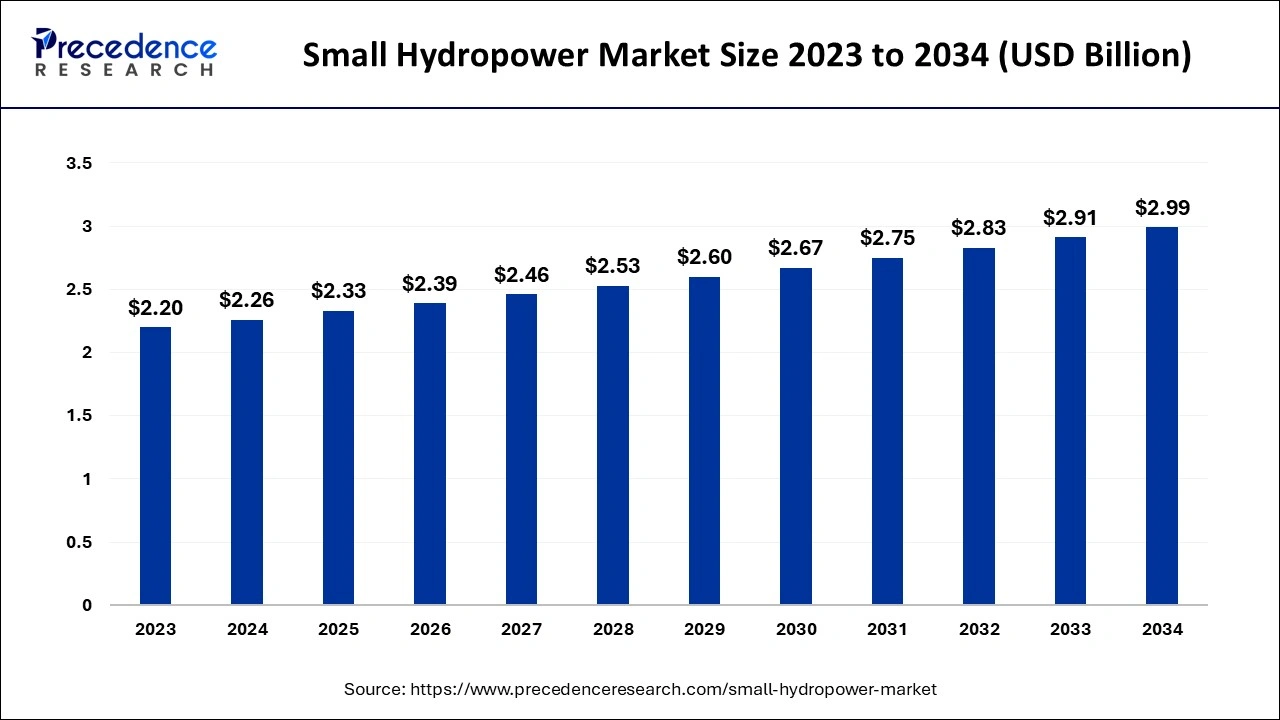
The global small hydropower market size is accounted at USD 2.33 billion in 2025 and predicted to increase from USD 2.39 billion in 2026 to approximately USD 3.07 billion by 2035, growing at a CAGR of 2.80% from 2026 to 2035. The small hydropower market is growing due to increasing demand for clean energy, policies, and technologies, growing focus towards sustainable and renewable power.
Small Hydropower Market Key Takeaways
- The global small hydropower market was valued at USD 2.33 billion in 2025.
- It is projected to reach USD 3.07 billion by 2035.
- The small hydropower market is expected to grow at a CAGR of 2.80% from 2026 to 2035.
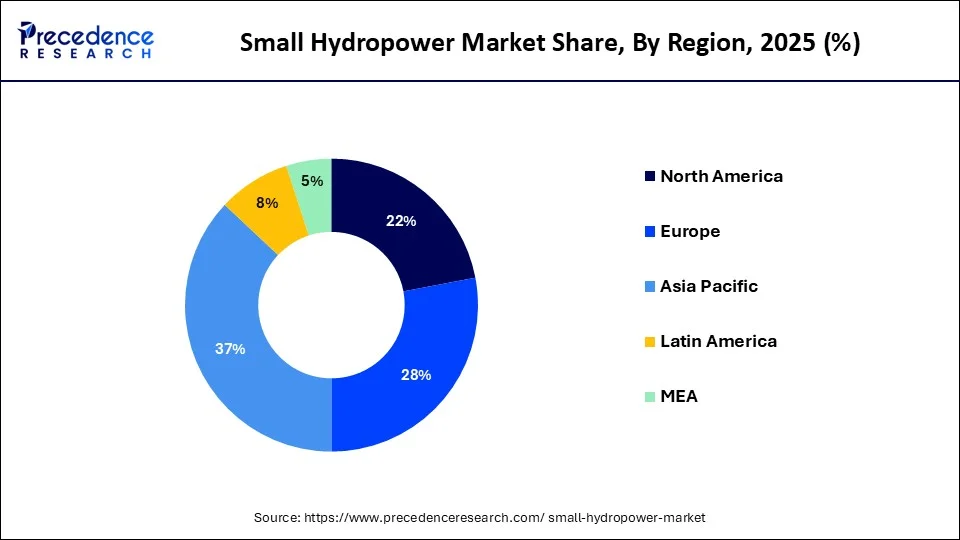
- Asia Pacific dominated the small hydropower market with the biggest market share of 34% in 2025.
- North America is expected to showcase notable growth in the market in the upcoming period.
- By capacity, the up to 1 MW segment accounted for the largest market share of 58% in 2025.
- By capacity, the 1 MW to 10 MW capacity segment will register the fastest growth in the market during the foreseeable period.
- By component, the civil construction segment captured the biggest market share of 34% in 2025.
- By component, the electromechanical equipment segment is expected to grow significantly during the forecast period.
- By type, the micro hydropower segment recorded the highest market share of 57% in 2025.
- By type, the mini segment is expected to grow significantly during the forecast period.
Market Overview
The small hydropower market uses the flow of water on a turbine that is linked to the generator for the generation of power. Small hydropower is the use of hydroelectric power on the scale of local use by small community or industry power needs or to add to the electricity distribution of a region. They can reduce the generation of electricity using dirty diesel generators to clean electricity generation. In areas such as mountainous regions, small hydropower provides a cost-effective means of power generation for such communities. Small hydropower plants are modern and efficient technologies to provide sustainable energy.
AI Impact on the Small Hydropower Market
In the small hydropower market, Artificial Intelligence (AI) and ML algorithms are used to analyze hydropower plant data, identify patterns and trends, predict future conditions, and recommend optimal operating strategies. AI-powered hydropower optimization employs artificial intelligence and machine learning to enhance the performance and operation of hydropower plants. This process is based on the efficient use of data and knowledge, a proactive approach at different stages, and using advanced algorithms to optimize the yield, reduce expenses, and reduce the negative impact of energy production on the environment.
The combination of using AI to optimize the small hydropower market resources and materials improves the effectiveness of climate initiatives through increased energy generation and decreased effects on the environment. As reservoir management, turbines, and grid couplings are maximized, this innovation improves the efficient production of renewable energies and the elimination of fossil fuels and carbon emissions to create a sustainable energy future.
Some hydropower plants in India
| Name | State and river | Year of establishment | Highlights |
| Rangit Dam | State- Sikkim
River- Ranjit |
2000 | It is the highest dam in Sikkim. |
| Teesta Dam |
State- Sikkim River- Teesta |
2003 | This dam comprises 3 turbines for hydropower generation. |
| Indra Sagar Dam |
State- MP River- Narmada river |
2005 | It is the largest reservoir in India. |
| Karcham Wangtoo |
State- Himachal Pradesh River- Satluj |
2005 | - |
| Bansagar |
State- Madhya Pradesh River- Sone |
2006 | - |
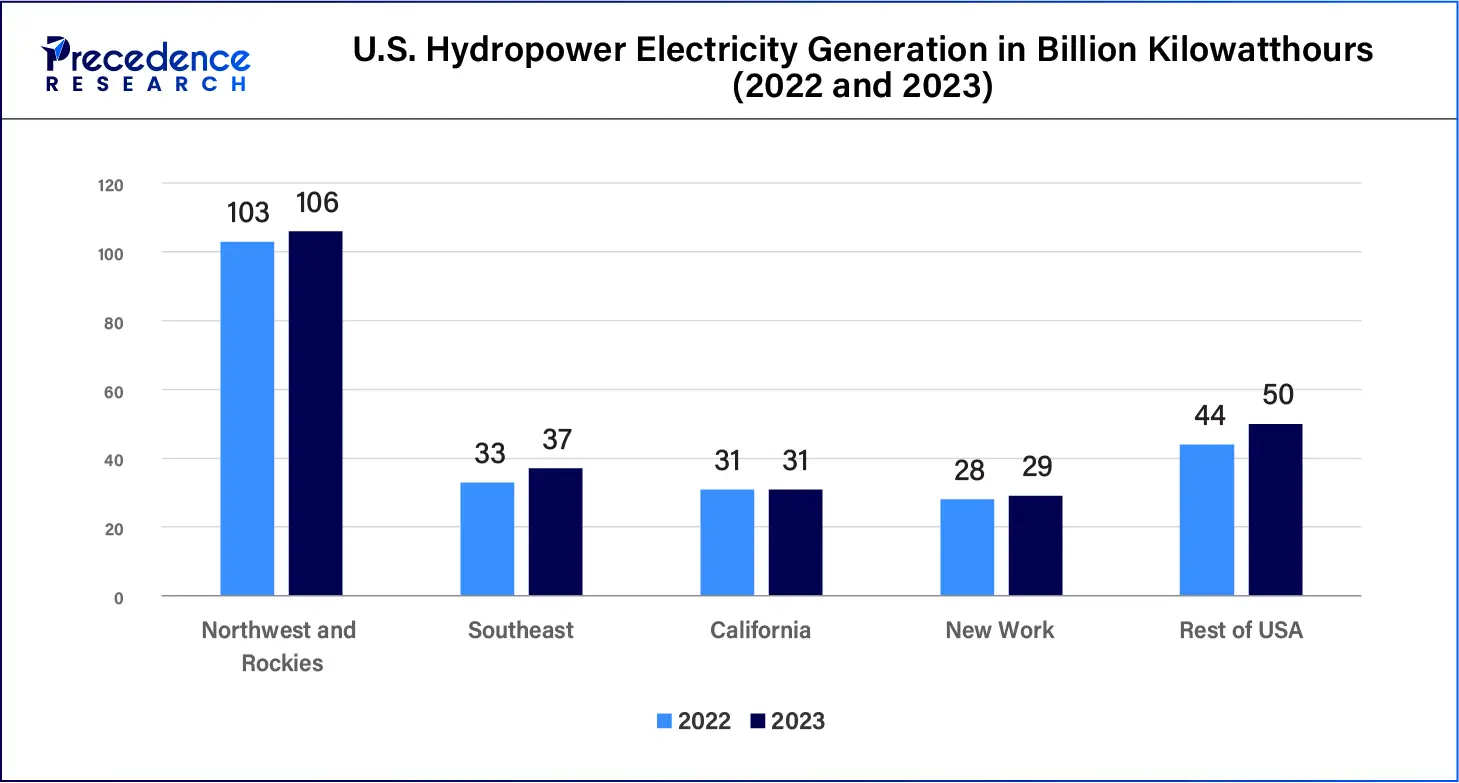
North America is expected to showcase notable growth in the small hydropower market in the upcoming period. This is attributed to increasing off-grid power generation and rural electrification, as well as rising investments in response to climate change, particularly in renewable and small hydropower projects. The market has been established due to government initiatives, infrastructure advancement, and revolutions in technology. Improving the perception of renewable energy and escalating power usage throughout this region.
Small Hydropower Market Growth Factors
- Renewable energy demand: The growing focus towards of sustainable and renewable power is encouraging the small hydropower market.
- Government support: The favorable government policies, incentives, and subsidies for renewable energy beneficial to the markets.
- Rural electrification: Increasing rural electrification projects across developing regions are opportunities for small hydropower as a robust energy system.
Small Hydropower Market Trends
- The trend in small hydropower development is being taken up by the private sector, with growth in the use of PPP and green financing for the sector being noticed in business. Energy systems are dotted in the landscape, and loans with low interest rates and affordable repayment schemes are provided by international energy institutions and development banks.
- Technologies like improving the efficiency of turbines, digital monitoring, and automation can enhance the operating performance of small HPPs. Electricity provider or industry, smart control systems, and predictive maintenance solutions are cutting down on downtime, operational costs, and improving their electricity production's reliability.
- There has been continuous progress towards hybrid renewable energy systems with both small hydropower and solar power, and batteries. They can allow for consistent electricity generation, greater grid flexibility, and cut down the power grid intermittency issues associated with off-grid intermittent energy sources such as solar and wind power.
- Environmental sustainability and minimizing the level of impact are emerging matters in the development of small hydropower. There is a growing trend towards using more environmentally harmonious turbine types and assessment methods, and more run-of-river techniques are being used to satisfy environmental regulations and win community acceptance of hydroelectric generating projects.
Market Scope
| Report Coverage | Details |
| Market Size by 2035 | USD 3.07 Billion |
| Market Size in 2025 | USD 2.33 Billion |
| Market Size in 2026 | USD 2.39 Billion |
| Market Growth Rate from 2026 to 2035 | CAGR of 2.80% |
| Largest Market | Asia Pacific |
| Base Year | 2025 |
| Forecast Period | 2026 to 2035 |
| Segments Covered | Capacity, Component, Type, and Regions |
| Regions Covered | North America, Europe, Asia-Pacific, Latin America, and the Middle East & Africa |
Market Dynamics
Driver
Rising demand for renewable energy
The demand for renewable energy is fostering technological development within the small hydropower market. Small hydropower (SHP) is also called a low-cost energy source and can be used as an optimal solution for regions. Small hydropower presents a reliable and sustainable solution in the assessment of the increasing focus on reducing greenhouse gas emissions and transitioning to cleaner sources of electric power. SHP can also assist in controlling the emission of negative air quality and protect against fuel shortages and high costs. Hydroelectric power is a safe, efficient, and economical solution for clean power generation and, more importantly, water management.
- According to the International Energy Agency (IEA), hydropower accounts for more than 50% of renewable electricity production globally. In 2022, the sector produced about 15% of total electricity generation from all sources.
Restraint
Environmental impact
The small hydropower market is able to produce clean electricity, but it has significant environmental effects that significantly affect the aquatic system. The construction can change the aquatic structure and environment. The fixed investment cost of developing a hydropower plant is very high. Hydropower production will depend on the amount of rainfall in the area, as in dry seasons, there is power rationing, or sometimes it's very low.
Opportunity
Increasing integration of IoT with hydropower
The application of Internet of Things (IoT) technology in the small hydropower market is a great opportunity to improve its productivity. IoT helps manage the collection of real-time data from the hydropower system to help predict maintenance time and improve the use of the systems and resources.
Through the use of smart sensors as well as analyses of data in the small hydropower market, operators can be in a position to maximize the efficiency of energy generation, minimize times when the system is not generating energy, and improve the system's reliability. Moreover, IoT solutions provide an opportunity for remote control and, thus, enhance the availability and profitability of small hydropower.
Segment Insights
Capacity Insights
The up to 1 MW segment accounted for the largest share of the small hydropower market in 2025. Globally, small hydropower plants with installed capacity of up to 1 MW are one of the most significant segments of hydropower. This type of system is installed in regions with water flow, including mountains and foothills, and can be integrated into individual facilities or the grid.
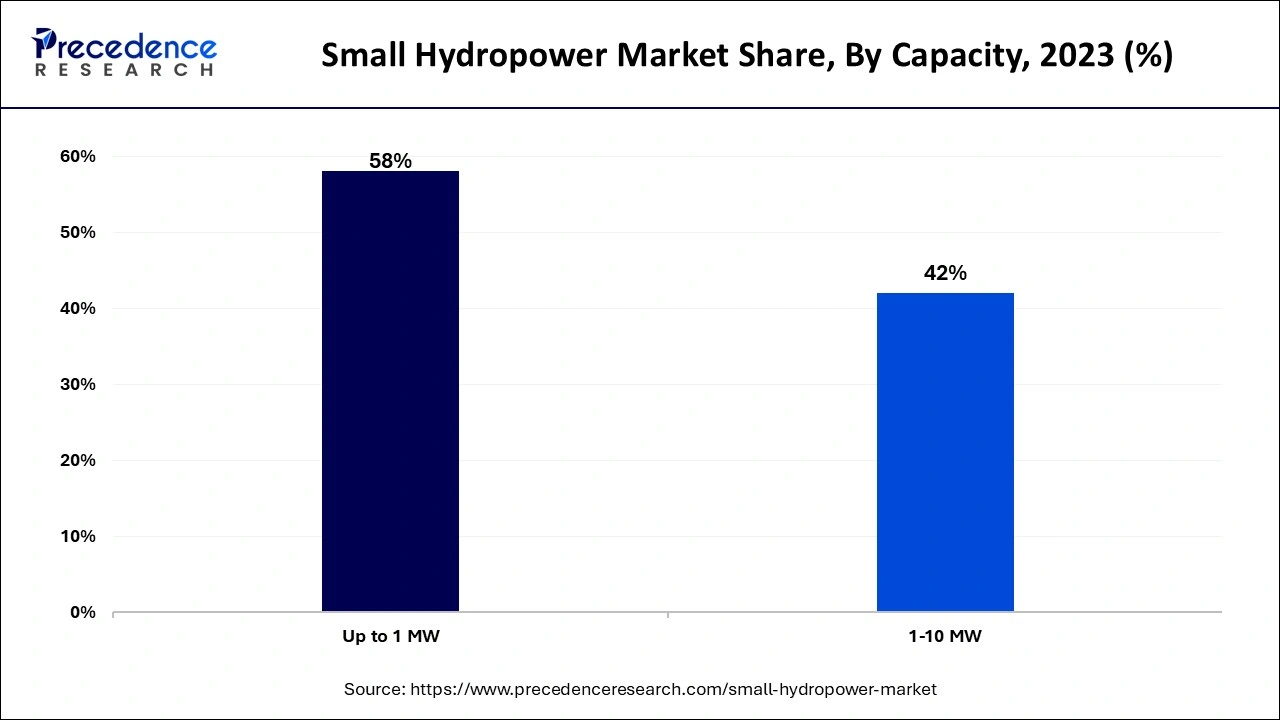
The 1 MW to 10 MW capacity segment will register the fastest growth in the small hydropower market during the foreseeable period. 1 – 10 MW small hydropower having higher head and installed capacity than below 1 MW small hydropower. An analysis based on the investment costs per kW of 1 – 10 MW small hydropower plant projects is substantially lower than below 1 MW small hydropower.
Component Insights
The civil construction segment dominated the global small hydropower market in 2025. Hydroplants are electrical generators that produce electricity based on the flow of water, which makes them very accurate. The most efficient renewable energy process in hydropower engineering. Hydroelectric generators transform the mechanical energy possessed by the water in motion into electricity. Hydropower plants include the use of electrical and mechanical appliances and systems. The mechanical elements are gates, turbine, gear Box, tanks, piping, the hydraulic power unit, and the electrical components include the generator, automatic voltage regulator, transformer, and transmission line.
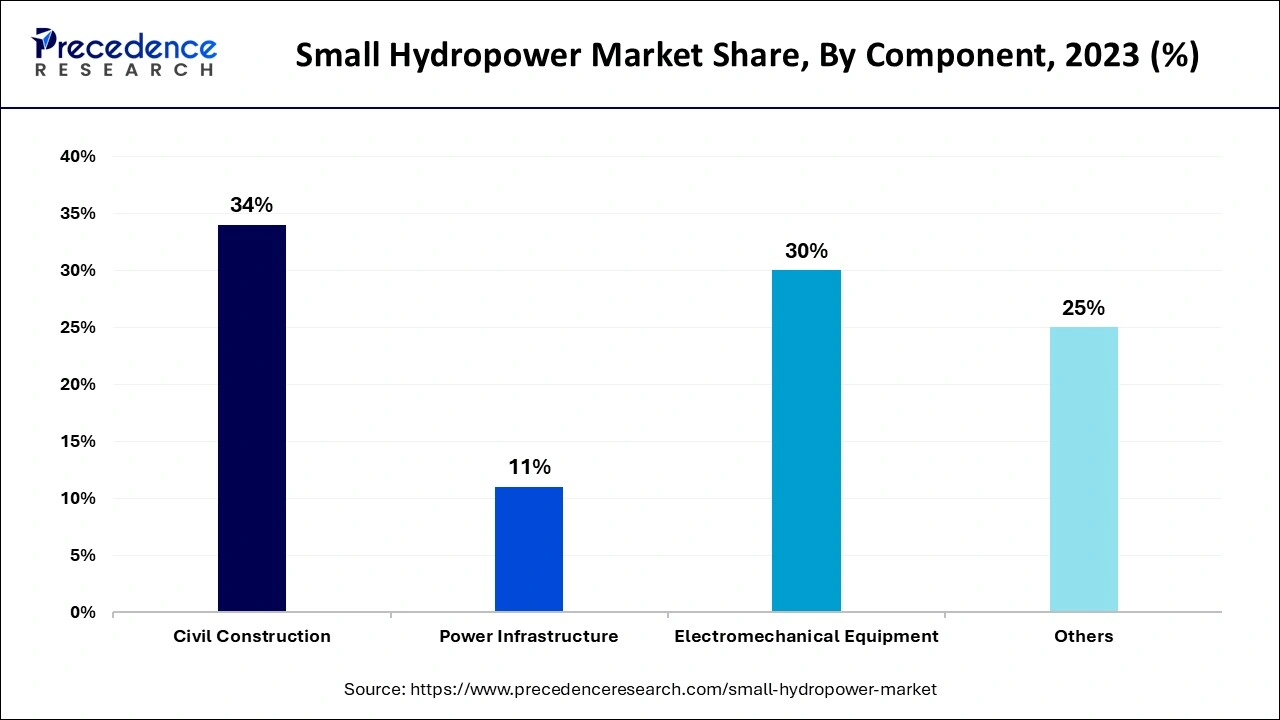
The electromechanical equipment segment is expected to grow significantly in the small hydropower market during the forecast period. Hydropower plants are built to generate electricity from the energy of moving water. Advancements in construction technologies and techniques have facilitated the development of small hydropower projects, making them more efficient and cost-effective.
- In May 2023, the National Development and Reform Commission (NDRC) of China declared approval for the construction of a new hydropower plant in the Xizang autonomous region, with capital raised approximately USD 8.43 billion. The annual average electricity volume produced by the plant will surpass 11.28 billion kilowatt-hours.
Type Insights
The micro hydropower segment held the largest share of the small hydropower market in 2025. Hydropower plant of micro type produces up to 100 kilowatts of electric power. A micro hydro power plant is designed to generate power for a house, farm, ranch, or village. Microhydro power is the simplest and most reliable source of renewable energy for the property. Micro hydropower systems generate a continuous and predictable supply of electrical energy in contrast to other attractive, scalable renewable technologies.
The mini segment is expected to grow significantly in the small hydropower market during the forecast period. These are power plants of less than 10MW, which capitalize on mini water currents and are suitable for offering electricity services to rural or remote regions. A project of these characteristics can continuously generate a massive amount of energy at an incredibly low cost. Existing and new buildings and structures and any other facilities that require a flow of water can install mini-hydroelectric power plants to supply energy to rural areas or any region not connected to the electrical grid. The construction of a mini-hydropower plant not only provides a benefit to society at large by helping to reduce greenhouse gas emissions.
Regional Insights
What is the Asia Pacific Small Hydropower Market Size?
The Asia Pacific small hydropower market size accounted for USD 860 million in 2025 and is expected to be worth around USD 1,153.33 million by 2035, with a CAGR of 2.98% from 2026 to 2035.
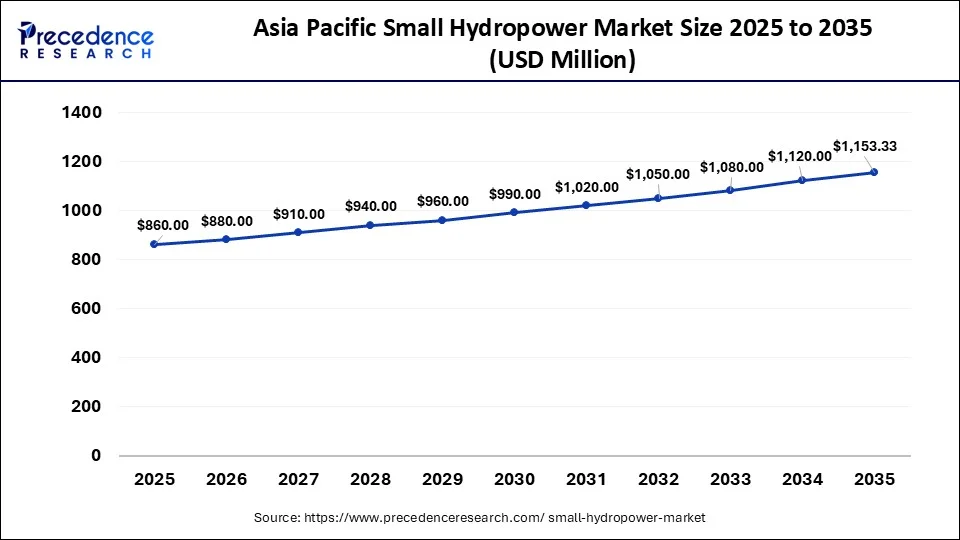
Asia Pacific held the largest share of the small hydropower market in 2025. This is due to the availability of water, rising power consumption, and government policies for renewable power in the area. Governments of the nations, including China, India, Japan, and South Korea, have policies that support small hydropower projects and hence facilitate the development of such facilities. Furthermore, the market has received support from infrastructure investment as well as innovations in technology.
- As reported by the Central Electricity Authority (CEA) in March 2025, the total installed capacity for small hydropower in India reached 5,003.25 MW during the fiscal year 2023-24, all the SHP plants produced 9,485.04 million units (MUs).
- Vietnam announced Power Development Plan 8 or PDP8 in 2021, which aims for 75% renewable energy penetration by 2045. Tries revealed an LCOE range of USD 0.02 to USD 0.10/kWh. The government of the country targets to spend USD 13 billion in the power sector, and among it, 17.7% to 19.5% of the total installed capacity will come from hydropower.
- In February 2023, India Renewable Energy the USD 3.9 billion investment for the 2,880 MW Dibang hydropower project in Arunachal Pradesh to be implemented by the National Hydroelectric Power Corporation (NHPC); it is expected that this project will take nine years to be constructed.
What are the Advancements in the Small Hydropower Market in Europe?
Europe is expected to witness significant market growth over the forecast period. This growth is due to increasing investments in decentralized energy projects. Countries like Norway, France, and Germany are leading players, driven by rural electrification initiatives and governmental support. The European Investment Bank has also funded multiple small hydropower projects, which is propelling the market further.
Germany Small Hydropower Market Trends
Germany is expected to grow significantly over the forecast period. Key market drivers include increased demand for renewable energy and supportive regulatory frameworks that help to enhance project viability.
What are the Key Trends in the Small Hydropower Market in Latin America
Latin America is expected to witness substantial amount of growth in the market, driven by a growing emphasis on renewable energy sources and sustainable development. Countries like Brazil and Mexico are leading players as they have abundant hydrological resources and strong government support for rural electrification. The increasing demand for clean energy solutions, coupled with advancements in technology, suggests a promising future for small hydropower projects in the region.
Brazil Small Hydropower Market Trends
The region benefits from strong government backing, increasing electricity demand, and favorable geographical conditions that support long-term project viability. In addition to that, international funding agencies are seen actively supporting regional development efforts.
How is the Middle East and Africa Region Growing in the Small Hydropower Market?
Middle East and Africa is seen to witness steady growth in the upcoming years. Increasing demand for clean and renewable energy sources is encouraging governments and private sectors to invest in sustainable power generation, especially in remote and off-grid areas. Additionally, supportive policies and regulatory frameworks aimed at reducing carbon emissions and promoting energy diversification boost market expansion. Countries like South Africa, Kenya, the UAE are leading players.
South Africa Small Hydropower Market Trends
The growing rural electrification programs across the country drives market demand as small hydropower offers a reliable and cost-effective solution for energy access in underserved communities. Technological advancements are also helping in improving efficiency, further enhancing market attractiveness and adoption.
Supply Chain Analysis-Small Hydropower Market
- Resource Extraction: Small hydropower projects have to be fully evaluated and developed to consider river flow, water availability, and geographic conditions. The source of construction materials, including turbines, generators, and electromechanical equipment, from local or regional companies to international suppliers around the world, provides enhanced functionality.
Key Players: Voith Hydro, Andritz Hydro, GE Vernova, Siemens Energy - Power Generation: Water from streams must be used in generating electricity in small hydro power plant systems, such that electricity is generated by the use of the water to get mechanical energy from the water for the electric generators. Responsible for reducing environmental impact and for providing a consistent, renewable energy supply in remote locations.
Key Players: NHPC Limited, Tata Power, Brookfield Renewable, Statkraft - Energy Storage Systems: Small hydro projects can be better integrated with the electricity grid, with the support of energy storage systems, such as batteries and pumped hydro storage, which help balance electricity demand and supply.
Key Players: Tesla, Hitachi Energy, Fluence Energy, Schneider Electric
Small Hydropower Market Companies
- ANDRITZ
- Bharat Heavy Electricals Limited
- FLOVEL Energy Private Limited
- General Electric
- Gilkes
- Natel Energy
- Siemens Energy
- SNC Lavalin Group
- TOSHIBA CORPORATION
- Voith GmbH & Co. KGaA
Recent Developments
- In March 2026, the Union government of India approved the implementation of the Small Hydro Power Development Scheme from FY 2026–27 to FY 2030–31 at a total outlay of ₹2,584.6 crore. The main objective of the scheme is to achieve 1,500 MW small hydro capacity (1 MW – 25 MW) with particular emphasis on setting up small hydro in the hilly region and north-eastern parts of the country. (Source: https://www.pmindia.gov.in )
- In June 2025, the World Bank approved a $150 million concessional credit to support the development of Uzbekistan's small hydropower sector and improve the national electricity supply. The project will package the scheme to make it understandable and attractive for private sector small hydropower developers and local banks to work on financing and implementation of the project. (Source: https://www.worldbank.org )
Segments Covered in the Report
By Capacity
- Up to 1 MW
- 1-10 MW
By Component
- Civil Construction
- Power Infrastructure
- Electromechanical Equipment
- Others
By Type
- Micro Hydropower
- Mini Hydropower
By Geography
- North America
- Asia Pacific
- Europe
- Latin America
- Middle East & Africa
For inquiries regarding discounts, bulk purchases, or customization requests, please contact us at sales@precedenceresearch.com
Frequently Asked Questions
Tags





Ask For Sample
No cookie-cutter, only authentic analysis – take the 1st step to become a Precedence Research client
 Get a Sample




 sales@precedenceresearch.com
 Schedule a Meeting
