



Smart Personal Protective Equipment Market Trends, Leading Companies, Company Revenue / Sales Performance, Subscriber Growth, Pricing Strategies, Cloud Adoption, Infrastructure Expansion, Competitive Landscape, and Industry Outlook
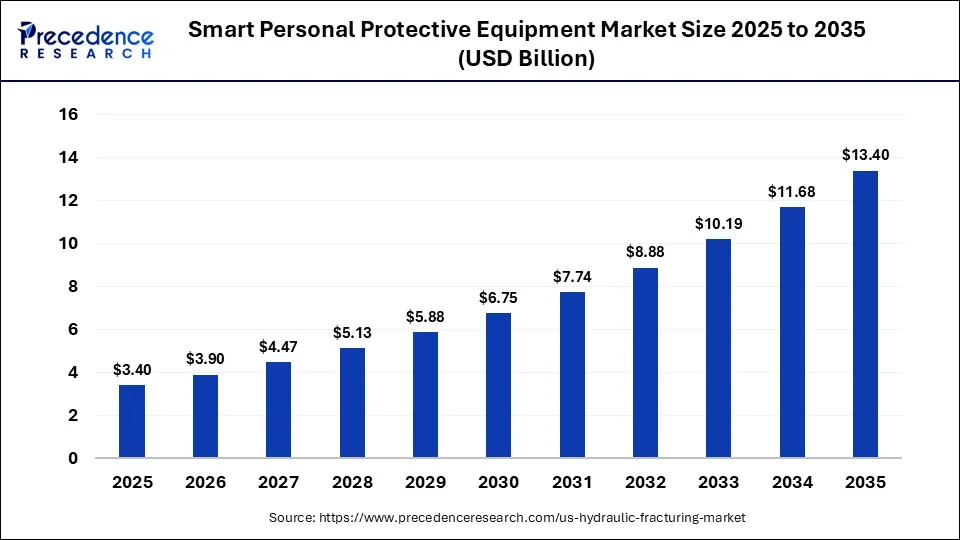
The global smart personal protective equipment market was valued at USD 3.90 billion in 2026. This rapid expansion is driven by increasingly stringent workplace safety regulations, the growing adoption of Internet of Things (IoT)-enabled safety ecosystems, and rising demand for real-time worker health monitoring across hazardous industries. These trends were evaluated by our Senior Research Analyst, Gautam Mahajan, to curate this well-researched report. His analysis benefits PPE manufacturers, distributors, industrial organizations, and other stakeholders in conducting competitive analysis and making informed business decisions.
Source: https://www.precedenceresearch.com/smart-personal-protective-equipment-market
 Get a Sample
 Table Of Content


Smart Personal Protective Equipment Market Trends, Growth, and Market Size Analysis 2035
The smart personal protective equipment market is forecasted to expand from USD 3.90 billion in 2026 to USD 13.40 billion by 2035, growing at a CAGR of 14.6% from 2026 to 2035. The smart personal protective equipment market is experiencing a transformative phase driven by rapid technological advancements, evolving regulatory landscapes, and shifting industry demands. Traditionally, PPE served as a passive barrier protecting workers from hazards through basic materials and designs. However, the integration of digital technologies has revolutionized this sector, enabling proactive safety management, real-time monitoring, and enhanced communication. This evolution aligns with the broader Industry 4.0 movement, where automation, data analytics, and connectivity are reshaping workplace safety paradigms.
Key Takeaways
- North America remains a major commercial hub, while Asia Pacific is emerging as an important growth and manufacturing center, creating a competitive landscape shaped by both technology adoption and supply-chain capabilities.
- Asia Pacific offers an important combination of manufacturing capability, electronics availability, and expanding industrial demand, supporting opportunities for localization and regional supply-chain integration.
- Smart PPE is shifting from standalone protective equipment toward connected, intelligent safety systems that combine hardware, sensors, connectivity, software, and analytics.
- IoT connectivity is becoming the foundation of smart PPE, while AI, computer vision, AR, and multi-sensor technologies are emerging as important differentiation layers.
- The primary supply-side challenge is moving from physical PPE manufacturing capacity to technology integration, particularly the ability to combine electronics with certified protective equipment without compromising safety or reliability.
- Certification, cybersecurity, privacy, and AI governance are becoming strategic considerations, particularly as smart PPE collects increasingly sensitive worker and environmental data.
- Sustainability is becoming increasingly relevant as smart PPE combines traditional protective materials with electronics and batteries, creating new requirements around product lifecycle, repairability, recycling, and electronic-waste management.
Segmentation Analysis Head, Body and Connected Wearables Form the Core Revenue Pools
Body protection represents approximately 29.8% of market value, while IoT-enabled PPE represents approximately 60.9% of the technology market. Environmental sensors account for approximately 42% of sensor demand, reflecting strong adoption of gas, temperature, air-quality, and exposure monitoring.
Head protection remains one of the most established smart-PPE categories, particularly where helmets can incorporate location, impact, communication, environmental sensing or augmented-reality functions. Smart clothing and smart gloves represent higher-growth opportunities, with smart gloves estimated to expand at approximately 14% CAGR through 2031. AR/VR-enabled smart glasses are also growing at approximately 13% CAGR.
Key Coverage
- Smart helmets and head protection
- Smart clothing and vests
- Smart gloves
- Smart eyewear and AR glasses
- Smart respiratory protection
- Smart fall-protection systems
- Environmental, biometric, motion and proximity sensors
- IoT, BLE, Wi-Fi and cellular connectivity
Market Dynamics
The fundamental demand driver is the persistent occupational-safety burden: global estimates indicate that nearly 3 million workers die annually from work-related accidents and diseases, while approximately 395 million workers experience non-fatal work injuries.
Smart PPE addresses a different layer of the safety problem than conventional equipment. Instead of merely reducing injury severity, connected equipment can identify exposure, worker location, abnormal movement, environmental hazards, and potential incidents before or during an event.
The primary restraints faced by the market are equipment cost, battery life, device ruggedization, interoperability, cybersecurity, privacy, and worker acceptance. Data governance is particularly important because wearable systems can collect location, physiological, and behavioral information.
Pricing Analysis
The estimated global blended smart-PPE ASP is approximately USD 445 per unit, compared with conventional PPE that can cost from tens to low hundreds of dollars depending on protection class. Advanced smart-glass systems can exceed USD 2,000 per device, while connected gas-detection and worker-location devices typically occupy the mid-hundreds-to-low-thousands range depending on sensors, communications, and service packages. Current industrial smart-glass products illustrate price points around EUR 2,000 - 2,300 before software, demonstrating the premium commanded by compute, optics, and ruggedization.
The more important commercial shift is recurring monetization. Connected safety platforms can combine hardware with monthly subscriptions, device management, analytics, calibration, connectivity, and support. Mature connected-safety business models can therefore generate substantially higher recurring gross margins than hardware alone; one leading connected-safety specialist reported 80% service gross margin in fiscal 2025.
Key Coverage
- ASP by PPE category
- Hardware versus software revenue
- Subscription pricing
- Cellular/connectivity charges
- Distributor margins
- Service gross-margin benchmarks
- Price elasticity
Demand-Supply Analysis Hardware Capacity is Available, but Integration Capability Is Scarce
A conventional global shortage of physical PPE does not characterize smart PPE. The constraint is increasingly system integration: certified protective equipment must operate reliably with sensors, batteries, communications modules, and software without compromising the underlying protective function.
The estimated 11.1 million-unit 2025 deployment base is still small relative to the global conventional PPE installed base, indicating substantial conversion potential. IoT-enabled equipment already represents approximately 61% of smart-PPE value, suggesting that connected architecture is becoming the dominant deployment model.
Value Chain and Supply Chain Value Is Migrating from Protective Materials Toward Intelligence
The smart-PPE value chain extends from protective polymers, textiles, metals and composites through sensors, batteries, processors, radios, embedded electronics, PPE assembly, certification, connectivity, cloud platforms and analytics.
Hardware manufacturers retain significant value through certification and distribution, but the fastest-growing margin pool is increasingly associated with software, device management, analytics and recurring services. The economic model therefore resembles a hybrid of PPE and industrial IoT.
Key Coverage
- Raw materials
- Electronics and sensor suppliers
- PPE conversion
- Embedded-device manufacturing
- Certification
- Software platforms
- Connectivity
- Distribution
- Service and recurring-revenue pools
Trade and Import - Export Analysis
Unlike conventional PPE, smart PPE is exposed simultaneously to PPE trade flows and electronics supply chains. Sensors, semiconductors, displays, batteries and wireless communication modules introduce additional cross-border dependencies that can increase supply-chain complexity and exposure to component shortages, logistics disruptions and regional manufacturing concentration.
Asia Pacific plays a particularly important dual role, combining a major PPE manufacturing base with a highly developed electronics-production ecosystem. This creates potential advantages in component sourcing, manufacturing integration and cost efficiency, while also concentrating parts of the smart-PPE supply chain within the region. In our view, suppliers with greater localization of critical components and assembly capabilities may be better positioned to manage lead times, tariffs and supply disruptions as connected PPE adoption expands.
Where Will Smart PPE Supply Constraints Emerge as Adoption Scales?
The global smart PPE market had an estimated 11.1 million-unit deployment base in 2025, but this remains small relative to the installed base of conventional PPE, indicating substantial headroom for conversion toward connected products. At the same time, IoT-enabled equipment already represents approximately 61% of smart-PPE market value, demonstrating that connectivity is not a peripheral feature but an increasingly central component of product architecture. The principal supply constraint is therefore shifting away from basic PPE manufacturing capacity toward the ability to integrate certified protective equipment with sensors, batteries, communications modules, embedded electronics and software without compromising protection, reliability or compliance.
Our analysis indicates that the market is unlikely to face a broad-based shortage of physical PPE capacity as adoption accelerates; instead, integration capability is likely to become the more important supply-side differentiator. Smart PPE requires simultaneous competency across protective-material engineering, electronics, firmware, connectivity, cloud platforms, certification, and field support. This creates a higher qualification threshold than conventional PPE and can extend development and enterprise deployment timelines even when underlying hardware components are readily available. In our view, suppliers that can industrialize this integration process while maintaining certification, battery reliability, and interoperability will be better positioned to convert the relatively large conventional-PPE installed base into connected deployments.
In our view, the most significant strategic implication is that supply-chain competitiveness will increasingly depend on technology integration and component resilience rather than manufacturing scale alone. Sensor availability, wireless modules, batteries, and embedded computing components can create localized bottlenecks, while regional manufacturing capabilities and software infrastructure will influence deployment economics. This creates opportunities for vertically integrated suppliers, modular retrofit solutions, and technology partnerships that reduce the complexity of converting existing PPE platforms into connected systems.
The full analysis quantifies global production, smart-PPE deployments, installed base, capacity and utilization, device lead times, sensor and connectivity-component availability, regional manufacturing concentration and hardware/software integration bottlenecks, with comparisons across product categories and geographies. The analysis also assesses where supply-demand imbalances could emerge as adoption moves from early enterprise deployments toward larger-scale fleet replacement and connected-worker programs.
Which Technologies Will Define the Next Wave of Smart PPE Differentiation?
IoT-enabled PPE already represents approximately 60.9% of smart-PPE market value, establishing connectivity as the dominant technology layer, while AR/VR smart glasses are expanding at approximately 13% CAGR. BLE accounts for roughly 49% of connectivity, but cellular connectivity is growing faster, at approximately 14% CAGR, indicating a gradual shift toward always-connected safety applications that can operate beyond local facility networks. These adoption patterns suggest that smart PPE is progressing from isolated connected devices toward continuously connected worker-safety systems.
Our analysis indicates that connectivity itself is becoming less of a differentiator and more of a baseline requirement, with competitive differentiation increasingly moving toward what devices can sense, interpret and communicate. Multi-sensor architectures combining environmental exposure, location, motion, proximity, biometrics, voice and computer vision are expanding the addressable functionality of smart PPE. Our assessment is that edge processing will become particularly important as sensor density increases, because real-time hazard detection requires low latency while minimizing the volume of sensitive worker data transmitted to centralized platforms.
In our view, the most significant strategic implication is the emergence of a technology stack rather than a single “smart” PPE feature. Suppliers capable of integrating sensors, connectivity, edge computing, AI and AR into ruggedized, certified products can potentially capture greater value than suppliers competing primarily on hardware. At the same time, battery life, device weight, interoperability and cybersecurity remain practical constraints that could limit adoption of increasingly sophisticated architectures. From our assessment, the strongest commercial opportunities are therefore likely to emerge where advanced functionality produces a measurable safety, productivity or compliance benefit rather than technology novelty alone.
How Will Regulation and Sustainability Shape the Commercial Adoption of Smart PPE?
Smart PPE operates at the intersection of PPE certification, electronics compliance, cybersecurity, worker-data governance and environmental requirements, making regulatory complexity materially higher than for conventional protective equipment. The regulatory burden therefore extends beyond whether a product provides adequate physical protection to whether embedded sensors, communications modules, and software maintain that protection throughout the product lifecycle.
Our analysis indicates that regulatory compliance is becoming a product-development constraint and a competitive differentiator rather than a final-stage certification exercise. Connected PPE must demonstrate that electronics, batteries, and communications components do not compromise protection, while connected-worker systems introduce additional requirements around cybersecurity and employee data. AI-enabled monitoring adds another layer: European AI rules restrict certain workplace emotion-recognition applications while providing an exception for systems intended for medical or safety purposes. We assess that suppliers able to embed compliance, privacy and cybersecurity into product architecture from the outset will face fewer commercialization barriers as smart-PPE deployments move from pilot programs to enterprise-scale adoption.
In our view, the most significant implication is that regulation could favor established platforms with strong certification, engineering and compliance capabilities while raising the effective entry barrier for technology specialists. At the same time, sustainability requirements are likely to become increasingly relevant as smart PPE combines conventional protective materials with batteries, electronics and connected components. Longer product life, repairability, battery replacement, electronic-waste management and circular design can therefore influence total cost of ownership as well as procurement eligibility. From our assessment, this creates an opportunity for suppliers that can demonstrate both measurable safety benefits and lower lifecycle impact.
The full analysis evaluates PPE certification requirements, helmet, eyewear and glove standards, connected-device compliance, worker privacy, cybersecurity, AI governance, battery requirements, environmental obligations, circularity and product lifecycle considerations across major markets. It further assesses how regulatory requirements can affect product-development timelines, market entry, certification costs, procurement decisions and adoption rates, providing a regulatory-comparison framework by product category, geography, technology and application.
Industry Structure - Porter's Five Forces
- Supplier power - Medium: sensors, batteries and connectivity modules are increasingly standardized, but certification-grade components remain specialized.
- Buyer power - Medium-High: multinational industrial buyers can negotiate volume pricing and demand interoperability.
- Threat of new entrants - Medium: software entry barriers are moderate, but PPE certification, ruggedization, and enterprise qualification are significant.
- Threat of substitutes - Medium: conventional PPE remains the principal substitute, particularly in price-sensitive markets.
- Competitive rivalry - High: traditional PPE companies, connected-safety specialists, and industrial technology firms are converging.
PESTLE Analysis
- Political: workplace-safety enforcement and industrial policy influence adoption.
- Economic: industrial capex and labor costs determine smart-PPE ROI.
- Social: worker acceptance, privacy, and comfort directly affect deployment.
- Technological: sensors, AI, edge computing, and connectivity drive functionality.
- Legal: PPE certification, privacy, cybersecurity, and AI governance increase compliance requirements.
- Environmental: battery lifecycle, electronic waste, durability, and product recyclability increasingly influence procurement.
Market Attractiveness
The market combines approximately 13% annual growth, a relatively low current penetration base, and expanding recurring-service economics. The most attractive opportunity zones are connected detection, smart clothing, industrial AR, construction safety, energy applications, and emerging markets.
Attractiveness is constrained by certification, hardware reliability, privacy, fragmented technology architectures, and long enterprise procurement cycles. The result is a market where technology differentiation alone is insufficient; commercial success requires certification + reliability + distribution + software + measurable ROI.
This creates a fundamentally different economic profile from conventional PPE, where revenue is predominantly generated at the point of product sale. The strongest opportunity pockets are emerging around connected detection, smart clothing, industrial AR, construction safety, energy applications, and high-growth emerging markets, where the value of real-time monitoring can be linked more directly to incident prevention, compliance, workforce productivity, and reduced operational downtime. The relatively early stage of market penetration also leaves substantial scope for conversion from conventional PPE toward connected solutions as enterprises increasingly digitize workplace safety programs.
Geographic Competitive Landscape
North America represents approximately 35-40% of global smart-PPE revenue, while Asia Pacific is expanding at approximately 13% CAGR. India alone is estimated at approximately USD 70 million in 2025, with a projected 16%+ CAGR through the early 2030s.
Local manufacturing, distributor relationships, partnerships, certification capabilities, and region-specific sales support can materially influence adoption and time to market. The full analysis therefore maps manufacturing footprints, sales presence, distributors, partnerships, local certification requirements, and regional competitive positioning across North America, Europe, China, Japan, India, Southeast Asia, the Middle East, and Latin America, highlighting the markets where global suppliers, regional players, and local specialists are competing most actively.
The competitive analysis maps manufacturing, sales, distributors, partnerships, and local certification across North America, Europe, China, Japan, India, Southeast Asia, the Middle East, and Latin America.
Strategic Developments Consolidation Is Accelerating Across Both PPE and Connected Workflows
Recent transactions indicate that consolidation is accelerating across both traditional PPE and connected-worker technologies, with major deals expanding product portfolios, geographic reach, and access to complementary capabilities. The most consequential recent transactions include the USD 1.325 billion acquisition of Honeywell's PPE business by PIP in 2025 and Ansell's approximately USD 640 million acquisition of Kimberly-Clark's PPE business, completed in 2024.
The connected-worker segment is also consolidating: RealWear acquired Almer Technologies in 2024 to expand industrial AR capabilities, while Blackline Safety agreed in 2026 to be acquired for up to approximately USD 850 million, highlighting investor interest in recurring connected-safety models.
Company Strategic Positioning: Four Competitive Archetypes Are Emerging
The market increasingly separates into:
- Scale leaders: broad PPE portfolios and global distribution
- Connected-safety leaders: integrated devices, cloud and recurring services
- Technology specialists: AR, sensing and AI
- Application specialists: deep penetration in energy, construction, logistics or high-risk industrial environments
- The strategic assessment evaluates growth, technology, product breadth, geographic reach, recurring revenue, manufacturing, and customer relationships without applying a proprietary composite score.
Competitive Landscape
The competitive structure is bifurcating between global PPE platforms, specialized connected-safety companies, industrial AR providers, and software-led safety technology companies.
Scale players possess certification infrastructure, manufacturing, distribution, and enterprise relationships. Technology specialists bring faster innovation in sensor, analytics, location intelligence and AR. The strategic battleground is therefore shifting toward who can combine certified protection + reliable connectivity + actionable analytics + scalable deployment.
Market concentration remains moderate-to-low because no single supplier publicly discloses a dominant share of the narrowly defined smart-PPE market. Public company disclosures also generally aggregate smart products with broader safety or PPE revenues. Accordingly, company-level market shares require analytical allocation rather than simple reported-revenue comparisons.
Market Share and Competitive Ranking
Public disclosures do not separately report smart-PPE revenue for most diversified manufacturers. Analytical estimates therefore indicate that the market remains fragmented, with no individual company likely exceeding high-single-digit global share under the narrow connected-PPE definition.
The largest revenue pools are concentrated among diversified safety companies with connected product lines, while pure-play specialists command much higher smart-PPE revenue intensity relative to their total sales.
One important benchmark is 3M's USD 3.54 billion Personal Safety revenue in 2025, demonstrating enormous conventional safety scale, although only a portion is attributable to smart products. MSA generated USD 1.875 billion of total 2025 revenue, with connected gas detection and connected-work solutions forming an increasingly important technology layer. Dräger generated approximately EUR 1.49 billion in 2025 Safety revenue, including approximately EUR 1.44 billion in customer-contract revenue.
Blackline Safety illustrates the opposite model: USD 150.5 million in 2025 revenue, including USD 90.5 million in service revenue, with service gross margin reaching approximately 80%.
Future Outlook Smart PPE to Evolve into a Connected Worker Operating Layer
By 2030, the market is expected to approach USD 9 billion under the central scenario, with connected devices becoming increasingly integrated across safety, productivity and workflow management.
The base case assumes continued approximately 13% annual expansion and steady enterprise adoption. The upside case is driven by faster AI/AR adoption, falling sensor costs, cellular penetration and mandatory digital safety programs. The downside case reflects delayed industrial capex, privacy concerns, certification complexity, and slower replacement of conventional PPE.
Future profit pools are expected to shift toward recurring software, analytics, connectivity, device management, and high-value application-specific PPE rather than commodity protective products alone.
Experts Insights
The smart personal protective equipment market is evolving from just conventional protective gear towards a more data-driven, connected and technologically advanced solution. Increasing emphasis on workplace safety, regulatory compliance, and proactive risk management is encouraging various industrial domains like construction, healthcare, mining, oil and gas, and even logistics to adopt intelligent personal protective equipment solutions.
From a market perspective, the growing adoption of Industry 4.0 and IoT technologies is helping to create numerous opportunities for the seamless integration of worker-safety systems. However, restraints such as high product costs, data privacy concerns, and the need for employee training still restrict high adoption.
Overall, the market is expected to move forward rapidly, where PPE functions will not only act as a physical barrier against workplace hazards, but also as a source of actionable safety data. Manufacturers that can combine robust protection services, reliable technologies, and ergonomic designs are likely to gain market growth and development.
Our Experts
- The primary market research process was carried out by Gautam Mahajan, Senior Research Associate, who also designed the methodology and did market segmentation, regional trend analysis, buyer intelligence, competitive analysis, and forecasts, laying the foundation for the analytical part of the report.
- Aman Singh, Head of Research, has gathered and checked regulatory policies, company financial information, genome sequencing information, production information, commodity price information, and various other quantitative information sources, which were obtained independently, thereby increasing the quality of evidence supporting the calculations of the market values.
- Aditi Shivarkar, VP Research, has validated and refined the research material, verified facts, corrected inconsistencies, and completed the research document, making it accurate and to the point.
Smart Personal Protective Equipment Market Segments Covered in the Report
By Product Type
- Smart Helmets & Head Protection
- Smart Clothing & Vests
- Smart Gloves
- Smart Eyewear & AR Glasses
- Smart Respiratory Protection
- Smart Fall-Protection Systems
- Other Smart PPE
By Technology
- IoT-Enabled PPE
- AI-Enabled PPE
- Computer Vision
- Augmented Reality (AR)
- Virtual Reality (VR)
- Multi-Sensor Technology
- Edge Computing
- Other Technologies
By Sensor Type
- Environmental Sensors
- Gas Sensors
- Temperature Sensors
- Air-Quality Sensors
- Exposure Sensors
- Biometric Sensors
- Motion Sensors
- Proximity Sensors
- Location Sensors
- Impact Sensors
- Other Sensors
By Connectivity
- Bluetooth Low Energy (BLE)
- Wi-Fi
- Cellular
- RFID
- Other Connectivity Technologies
By Application
- Construction
- Oil & Gas
- Mining
- Manufacturing
- Healthcare
- Energy & Utilities
- Transportation & Logistics
- Chemical & Petrochemical
- Firefighting & Emergency Services
- Other Applications
By End User
- Industrial Workers
- Construction Workers
- Healthcare Workers
- Mining Workers
- Oil & Gas Workers
- Emergency Responders
- Other End Users
By Region
- North America
- U.S.
- Canada
- Europe
- Germany
- UK
- France
- Italy
- Spain
- Rest of Europe
- Asia Pacific
- China
- Japan
- India
- Southeast Asia
- South Korea
- Australia
- Rest of Asia Pacific
- Latin America
- Middle East & Africa
For inquiries regarding discounts, bulk purchases, or customization requests, please contact us at sales@precedenceresearch.com
Frequently Asked Questions





Ask For Sample
No cookie-cutter, only authentic analysis – take the 1st step to become a Precedence Research client
 Get a Sample




 sales@precedenceresearch.com
 Schedule a Meeting
