



US Cell and Gene Therapy Market Size, Key Companies, Company Production Capacity, Healthcare Infrastructure Growth, Product Utilization, Regulatory Compliance, Company Expansion Strategies, Company Investment Strategies, and Market Outlook
Rohan Patil, a Healthcare Industry Expert, highlights that the US cell and gene therapy market has reached USD 4.74 billion in 2026 and is on track to reach USD 20.00 billion by 2035, advancing at a CAGR of 17.21%. Key US cell and gene therapy market companies shaping the market include Alnylam Pharmaceuticals Inc., Amgen Inc., Biogen Inc., CORESTEM Inc., while major growth segments span therapy type, indication, vector type, manufacturing type, end use.
Source: https://www.precedenceresearch.com/us-cell-and-gene-therapy-market
 Get a Sample
 Table Of Content


US Cell and Gene Therapy Market Size and Forecast 2026 to 2035
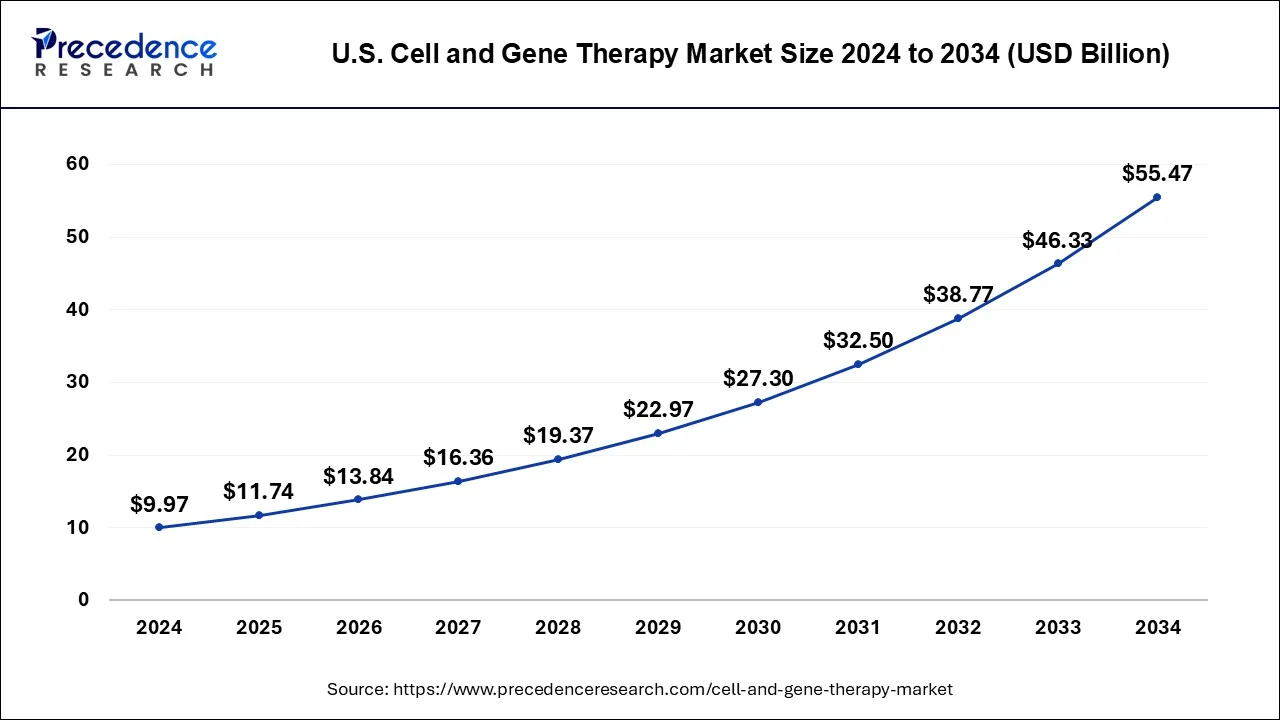
The US cell and gene therapy market size accounted for USD 4.09 billion in 2025 and is predicted to increase from USD 4.74 billion in 2026 to approximately USD 20.00 billion by 2035, expanding at a CAGR of 17.21% from 2026 to 2035. The market is experiencing steady growth due to the rising investments in oncology and rare genetic diseases, strategic alliances between industry players and academic institutions, and personalized solutions for common and rare diseases.
Key Takeaways
- By therapy type, the cell therapy segment dominated the U.S. cell and gene therapy market in 2025.
- By therapy type, the gene therapy segment is expected to grow at the fastest CAGR during the forecast period.
- By indication, the oncology segment dominated the market in 2025.
- By indication, the genetic disorders segment is expected to grow at the fastest CAGR during the forecast period.
- By vector type, the viral vectors segment dominated the market in 2025.
- By vector type, the non-viral vectors segment is expected to grow at the fastest CAGR during the forecast period.
- By manufacturing type, the in-house segment dominated the market in 2025.
- By manufacturing type, the contract development and manufacturing organizations (CDMOs) segment is expected to grow at the fastest CAGR during the forecast period.
- By end use, the hospitals and specialty clinics segment led the market in 2025.
- By end use, the cancer treatment centers segment is expected to grow at the fastest CAGR during the forecast period.
Market Overview
Advanced therapies, such as cell and gene therapy, use live cells, genetics, or modified cells to cure a disease, stop a disease from occurring, or to ultimately heal a disease by stopping its origin. These therapies are changing the way we treat cancer, rare genetic disorders, blood disorders, and neurologic conditions. The market growth is driven by an increase in approved therapies by the FDA, increasing clinical trial activity, growing biotechnology investments, and innovations in CAR-T cell therapies and gene editing technologies.
The U.S. remains the leader in cell and gene therapy and has a positive regulatory system, a comprehensive healthcare system, and ample research funding. The FDA has undertaken several recent initiatives to facilitate therapy development and commercialization, thus positively impacting market growth rates.
How is AI Revolutionizing the U.S. Cell and Gene Therapy Market?
AI is reshaping the market by facilitating drug discovery, clinical trials, and patient selection. AI-enabled data analysis allows researchers to quickly identify genomic targets, anticipate how patients will respond to therapy, and produce complex therapies. By combining machine learning with large datasets, biotech companies can accelerate development cycles, reduce costs, and improve the likelihood of success for individualized therapies. Continued growth of investment in AI healthcare service platforms and support from both regulators and research institutes will continue to drive innovation. In addition, AI will support precision medicine and contribute to the proliferation, efficiency, and effectiveness of cell and gene therapies across the US as they continue to be developed.
U.S. Cell and Gene Therapy Market Trends
- Strong Regulatory Momentum and Product Approvals: The U.S. has an established regulatory environment and mature infrastructure for conducting clinical research. More than 40 cellular and gene therapy products have been approved by the FDA, including CAR-T cellular therapies, gene therapies, and regenerative medicine products. This reflects the rapid growth of this area at the level of product innovation.
- Growing Federal Support for Gene Editing Innovation: The NIH continues to increase the pace of innovation through the SCGE program, which is now in its second phase (FY2023 through FY2027), with an emphasis on transitioning genome editing therapies to the clinical trial stage and developing delivery technologies to challenge tissues/locations that are difficult to treat; e.g., brain, heart, lungs.
- Expansion of Commercial Gene Therapy Launches: Recently approved by the FDA are gene therapies that are indicated for different therapeutic uses and not solely for the treatment of cancer; e.g., ZEVASKYN was approved by the FDA in 2025, and OTARMENI, the first gene therapy for the treatment of inherited hearing loss, was approved by the FDA in 2026. These approvals demonstrate the trend toward increased utilization of personalized genetic medicine within the U.S. healthcare systems.
Market Report Coverage and Key Metrics
| Report Coverage | Details |
| Market Size in 2025 | USD 4.09 Billion |
| Market Size in 2026 | USD 4.74 Billion |
| Market Size by 2035 | USD 20.00 Billion |
| Growth Rate from 2026 to 2035 | CAGR of 17.21% |
| Base Year | 2025 |
| Forecast Period | 2026 to 2035 |
| Segments Covered | Therapy Type, Indication, Vector Type, Manufacturing Type, and End Use |
Market Dynamics
Drivers
Increasing FDA Approvals and Clinical Development Pipeline
The drug discovery pipeline for the U.S. cell and gene therapy industry is becoming large because of continued increases in regulatory approvals (e.g., FDA) and later-stage clinical development programs. The rapidity of product commercialization has been enhanced by continued advancements in gene editing technology, development of viral vectors, and other trends toward more personalized forms of medicine. Extensive funding provided by both biotechnology firms and research institutions are furthering the growth of the industry and spurring future innovation.
Restraint
High Treatment and Manufacturing Costs
The U.S. cell and gene therapy industry has several challenges related to the very high cost of developing, manufacturing, and administering cell and gene therapies. These high costs are exacerbated by complex manufacturing processes, the need for specialized facilities, and regulatory requirements that create additional costs. In particular, these high costs impact patient access and create reimbursement barriers for payers and providers.
Opportunity
Growing Adoption of Novel Gene Editing Technologies
The emergence of new gene editing technologies such as CRISPR and new genome engineering technologies creates numerous new opportunities for the cell and gene therapy industry. These emerging technologies will allow for more accurate and efficient treatment of genetic disorders and cancers compared with traditional methods of treating such diseases. Growth in the number of research collaborations and funding initiatives is expected to enhance innovations and the scope of future therapy opportunities.
Market Segmentation Analysis
Therapy Type Insights
Why Did the Cell Therapy Segment Dominate the U.S. Cell and Gene Therapy Market?
The cell therapy segment accounted for the largest market share in 2025, with factors such as increased adoption of CAR-T therapies, growing clinical evidence, and increased approval for hematological malignancies contributing to making up the majority of that year. Significant investments made by both private industry and academic institutions into developing cellular therapies additionally supported the continued dominance of this sector throughout the U.S., specifically via established commercial distribution pathways.
The gene therapy segment is projected to witness the fastest growth during the forecast period due to improved gene editing technologies, increased regulatory approvals, and broader clinical application across many rare genetic diseases. Continued investment from public and private sectors into research and positive long-term therapeutic outcomes has been driving the broad adoption of these therapies.
Indication Insights
Why Did the Oncology Segment Dominate the U.S. Cell and Gene Therapy Market?
The oncology segment dominated the market in 2025, due to high prevalence rates of cancer as well as a strong, unmet need for highly targeted therapies. The approval of multiple cell and gene therapies for treating hematologic malignancies, in conjunction with large numbers of active clinical trials, also provided compelling reasons for substantial growth within the oncology segment.
The genetic disorders segment is expected to register the highest growth over the studied period, due to the potential of genetic disorders treated through the applications of gene therapy to produce long-term and/or indefinite therapeutic effects. The growth of diagnosed genetic disorders, increased awareness of rare genetic disorders, continuous development of better gene editing technologies, as well as an ever-increasing amount of public funding and investment into research, have also supported this ongoing growth opportunity.
Vector Type Insights
How the Viral Vectors Segment Dominated the U.S. Cell and Gene Therapy Market?
The viral vectors segment held the largest market share in 2025 as viral delivery systems remain the preferred platform for efficient gene transfer and therapeutic effectiveness. Their long histories of clinical efficacy, regulatory acceptance, and widespread use in FDA-approved products have contributed significantly to their market share.
The non-viral vectors segment is expected to expand rapidly in the coming years, primarily due to multiple advantages, including significantly reduced immunogenicity, improved safety profiles, and less complicated manufacturing processes than viral vectors. Additionally, the continuous development of nanoparticle or lipid-based delivery technologies will continue to drive their therapeutic potential, ultimately increasing their level of adoption.
Manufacturing Type Insights
Which Manufacturing Type Segment Dominated the U.S. Cell and Gene Therapy Market?
The in-house segment dominated the market in 2025. This dominance occurred because the majority of biopharmaceutical companies prefer to have complete control over their production processes, including the quality of their products, supply chains, and compliance with applicable regulations. Companies with internal manufacturing capabilities are also best equipped to efficiently manage the unique challenges presented by complex, customized CGT products.
The contract development and manufacturing organizations (CDMOs) segment is expected to show the fastest growth with a CAGR over the forecast period, due to the increased outsourcing activity of biotechnology companies seeking to leverage their expertise, reduce overall costs, and take advantage of the trends resulting from increased demand for scalable manufacturing solutions and accelerated development timelines for CGT therapies.
End Use Insights
Why Did the Hospitals and Specialty Clinics Segment Lead the U.S. Cell and Gene Therapy Market?
The hospitals and specialty clinics led the market in 2025, due to their superior treatment capabilities, quality professionalism in the medical field, and ability to perform advanced cell & gene therapies. Higher patient inflow and access to specialized monitoring services further supported segment dominance.
The cancer treatment centers segment is expected to experience the fastest growth in the forthcoming years, due to the increasing use of innovative applications of existing cancer treatments and the expanding availability of specialized facilities providing these types of services. The segmental growth is attributed to increased spending on private equity investment in advanced treatment centers and growing demand from patients for more individualized forms of treatment.
Market Competitive Landscape: Leading Companies and Strategies
The U.S. cell and gene therapy market is semi-consolidated in nature. Within this marketplace, larger established biopharma firms are positioned beside newer entry-level biotech companies. Large capital investments, stringent governmental regulations, advanced manufacturing capabilities, and high levels of competition mean moderate-to-high barriers to entry into the market.
Many of the leading market participants, such as Novartis, Gilead Sciences, Bristol-Myers Squibb, and Bluebird Bio, have strong positions due to their approved products, diverse pipeline programs, manufacturing proficiency, and broad distribution and commercialization capabilities.
The competition is driven primarily by corporate acquisitions, strategic alliances, production expansion, and ongoing investments in R&D. Nevertheless, high costs to develop therapies, complications associated with clinical research studies, and intellectual property rights (IPR) associated with successful biopharma companies create significant barriers to entering the market. It is expected that competition will escalate over time as novel products become approved and additional firms enter specific therapeutic categories.
U.S. Cell and Gene Therapy Market Companies
- Alnylam Pharmaceuticals Inc.
- Amgen Inc.
- Biogen Inc.
- CORESTEM Inc.
- Dendreon Pharmaceuticals LLC.
- Helixmith Co. Ltd.
- JCR Pharmaceuticals Co. Ltd.
- Kolon TissueGene Inc.
- Pfizer Inc.
Recent Developments U.S. Cell and Gene Therapy Market (2025-2026)
- In June 2026, X-Therma launched its XT-NoVo and TimeSeal cold-chain platform for cell therapies, extending storage and transport times from a few hours to up to five days without freezing, helping improve logistics for advanced biologic treatments.(Source: https://www.pharmaceuticalcommerce.com)
- In March 2026, Rocket Pharmaceuticals received FDA approval for KRESLADI, the first gene therapy for severe Leukocyte Adhesion Deficiency-I (LAD-I). The company is preparing a phased commercial launch, expanding treatment options for children with this rare and life-threatening immune disorder.(Source: https://www.fiercepharma.com)
Segments Covered in the Report
By Therapy Type
- Cell Therapy
- Stem Cell Therapy
- Hematopoietic Stem Cells (HSC)
- Mesenchymal Stem Cells (MSC)
- Induced Pluripotent Stem Cells (iPSC)
- Immune Cell Therapy
- CAR-T Cell Therapy
- TCR (T-cell Receptor) Therapy – targets intracellular antigens
- TIL (Tumor Infiltrating Lymphocyte) Therapy
- NK (Natural Killer) Cell Therapy
- Macrophage Therapies
- Dendritic Cell Therapy
- Others
- Stem Cell Therapy
- Gene Therapy
- In-vivo Gene Therapy
- Ex-vivo Gene Therapy
By Indication / Therapeutic Area
- Oncology
- Hematologic Malignancies
- Acute Lymphoblastic Leukemia (ALL)
- Non-Hodgkin Lymphoma (NHL)
- Chronic Lymphocytic Leukemia (CLL)
- Solid Tumors
- Glioblastoma
- Pancreatic Cancer
- Melanoma
- Prostate, Breast, Lung Cancer
- Others
- Head and Neck cancer
- Sarcomas
- Ovarian cancer (with experimental CGT trials)
- Hematologic Malignancies
- Genetic Disorders
- Hemophilia A and B
- Spinal Muscular Atrophy (SMA)
- Duchenne Muscular Dystrophy (DMD)
- Beta-thalassemia
- Sickle Cell Disease
- X-linked Adrenoleukodystrophy (X-ALD)
- Others
- Neurological Disorders
- Parkinson's Disease
- Alzheimer's Disease
- Batten Disease
- Huntington's Disease
- ALS (Amyotrophic Lateral Sclerosis)
- Others
- Cardiovascular Diseases
- Heart Failure
- Myocardial Infarction
- Peripheral Artery Disease
- Critical Limb Ischemia
- Others
- Ophthalmology
- Musculoskeletal / Orthopedic Disorders
- Infectious Diseases
- Metabolic Disorders
- Others
By Vector Type (Gene Delivery Method)
- Viral Vectors
- Adeno-Associated Virus (AAV)
- Lentivirus
- Retrovirus
- Herpes Simplex Virus (HSV)
- Adenovirus
- Others
- Non-Viral Vectors
- Lipid Nanoparticles (LNPs)
- Naked DNA/RNA Plasmids
- Electroporation
- Gene gun / microinjection
- CRISPR-Cas Delivery Systems (non-viral)
- Others
By Manufacturing Type
- In-house (Biotech/Pharma-Owned Facilities)
- Contract Development & Manufacturing Organizations (CDMOs)
- Hybrid Models (e.g., early stage in-house, scale-up outsourced)
By End Use
- Hospitals and Specialty Clinics (administering therapies)
- Cancer Treatment Centers
- Research Institutes
For inquiries regarding discounts, bulk purchases, or customization requests, please contact us at sales@precedenceresearch.com
Frequently Asked Questions





Ask For Sample
No cookie-cutter, only authentic analysis – take the 1st step to become a Precedence Research client
 Get a Sample




 sales@precedenceresearch.com
 Schedule a Meeting
