



U.S. Diabetic Foot Ulcer Treatment Market Size, Share, Trends, Companies, and Forecast 2026-2035
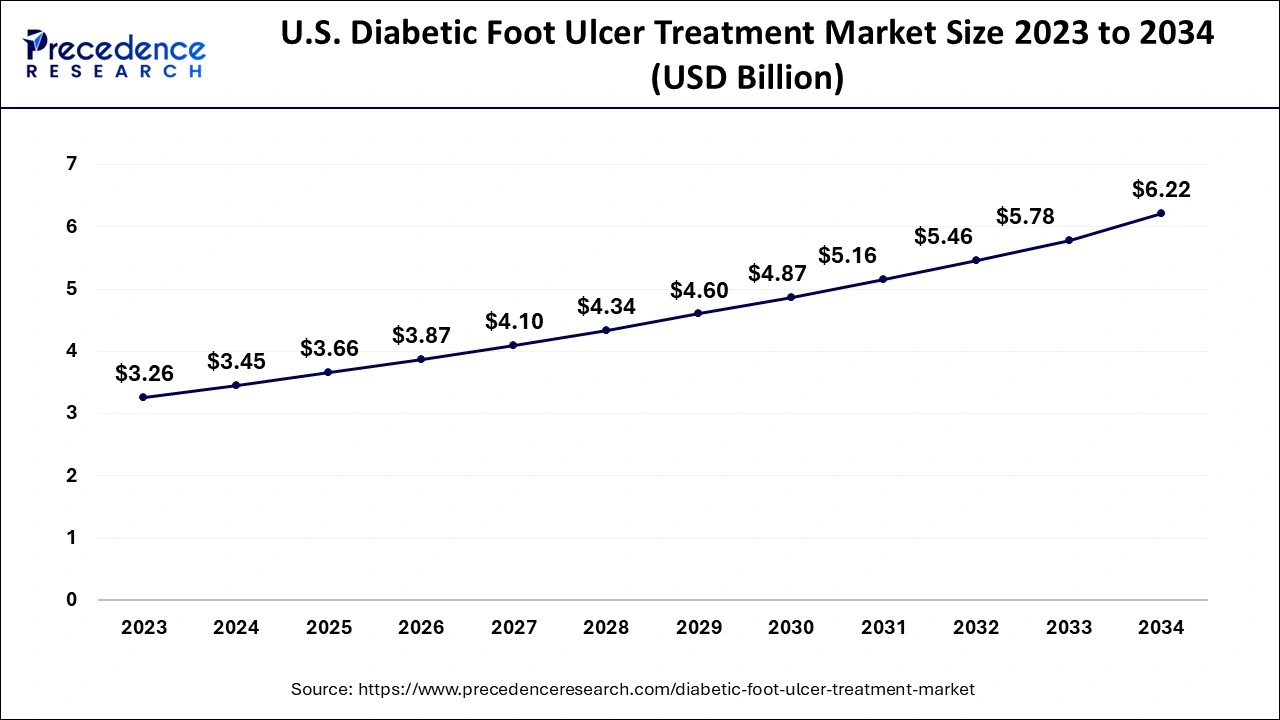
Deepa Pandey, a Healthcare Industry Expert, highlights that the U.S. diabetic foot ulcer treatment market has reached USD 3.87 billion in 2026 and is on track to reach USD 6.58 billion by 2035, advancing at a CAGR of 6.04%. Key U.S. diabetic foot ulcer treatment market companies shaping the market include 3M / Solventum, Smith+Nephew, Mölnlycke Health Care, while major growth segments span By Ulcer Type, By Treatment, By End-User.
Source: https://www.precedenceresearch.com/us-diabetic-foot-ulcer-treatment-market
 Get a Sample
 Table Of Content


U.S. Diabetic Foot Ulcer Treatment Market Size and Forecast 2026 to 2035
The U.S. diabetic foot ulcer treatment market size is predicted to increase from USD 3.87 billion in 2026 to approximately USD 6.58 billion by 2035, expanding at a CAGR of 6.04% from 2026 to 2035. The market is witnessing substantial growth due to the growing diabetic population, along with an aging demographic. The market is further driven by advancements in advanced wound care and regenerative medicine, spurring clinical pipelines for targeted biologics and 3D-bioprinted tissues to improve limb preservation and quality of life.
Key Takeaways
- By ulcer type, the neuro-ischemic ulcer segment held a major market share in 2026.
- By ulcer type, the neuropathic ulcer segment is expected to expand at a significant CAGR from 2026 to 2035.
- By treatment, the wound dressings segment captured the highest market share in 2026.
- By Treatment, the wound care devices segment is poised to grow at a healthy CAGR between 2026 and 2035.
- By end-user, the hospitals segment held the biggest market share in 2026.
- By end-user, the ambulatory surgical centers (ASCs) segment is expected to expand at the fastest CAGR between 2026 and 2035.
Market Overview
The U.S. diabetic foot ulcer treatment market includes therapies, devices, and biologics used to heal non-healing foot wounds in diabetic patients. Diabetic foot ulcers are open wounds that typically occur on the bottom of the foot in individuals with diabetes. Treatment requires a multidisciplinary approach focused on infection control, debridement, offloading, and restoring skin integrity. The market has been witnessing significant growth, driven by the rising demand for advanced therapeutics, regenerative medicines, wound care dressings, and therapy devices aimed at managing these chronic wounds, preventing amputations, and accelerating patient access to advanced therapies.
How is AI Transforming the US Diabetic Foot Ulcer Treatment Market?
Artificial Intelligence (AI) is revolutionizing the market by shifting the focus from reactive, hospital-based care to proactive, personalized medicine. AI plays a crucial role in early detection, remote monitoring, and predicting wound healing trajectories. AI algorithms analyze thermal, spatial, and 3D imaging to identify microscopic signs of ulceration well before traditional clinical observations. AI-powered smartphone applications allow patients to capture images of their feet at home. These tools automatically classify wounds, measure dimensions, and securely transmit data to remote care providers.
Market Dynamics
Drivers
Rising Diabetes Prevalence and Amputation Risks
The alarming rise in diabetes and an increasing geriatric population are significantly driving the U.S. diabetic foot ulcer treatment market. Nearly millions of Americans develop diabetic foot ulcers annually. These chronic, hard-to-heal wounds often require specialized care, extensive surgical interventions, and advanced wound management. As a result, healthcare systems and patients are compelled to prioritize aggressive, early-intervention therapies to mitigate soaring hospitalization and amputation risks.
Restraint
High Treatment Costs and Reimbursement Complexities
Despite advancements in treatment mechanisms, the U.S. diabetic foot ulcer treatment market faces substantial commercialization barriers due to the high costs of specialized devices and biological therapies. Severe ulcers necessitate lengthy recovery periods, resulting in a significant financial and logistical burden on patients, caregivers, and the U.S. healthcare system. Additionally, there is strict regulatory scrutiny, fluctuating health insurance reimbursements, and complex compliance requirements.
Opportunity
Demand for Regenerative Biologics and Tissue-Engineered Skin Substitutes
The shift toward cellular and genetic regenerative therapies presents groundbreaking potential to address the complex pathophysiology of diabetic wounds. By leveraging advanced biomaterials, such as bioactive hydrogels, stem-cell derivatives, and tissue-engineered skin substitutes, this approach actively promotes tissue regeneration and angiogenesis. This shift is accelerated by successful clinical pipelines and increasing FDA approvals, reducing the prolonged recovery times associated with traditional dressings.
How are Government Initiatives Supporting the U.S. Diabetic Foot Ulcer Treatment Market?
The U.S. Food and Drug Administration supports this market by funding research and promoting preventive strategies. The National Institute of Diabetes and Digestive and Kidney Diseases (NIDDK) invests millions in clinical development for advanced biologic and cellular therapies to accelerate DFU wound healing. Additionally, public health initiatives focus on mitigating diabetic limb loss through early diagnostics, integrated telemedicine for remote wound monitoring, and patient education campaigns.
For instance, the FDA granted Breakthrough Therapy Designation to regenerative platforms like SkinTE for Wagner Grade 1 diabetic foot ulcers, facilitating patient access to limb-preservation methods.
Market Segmentation Analysis
Ulcer Type Insights
The neuro-ischemic ulcer segment dominated the U.S. diabetic foot ulcer treatment market in 2026. This dominance mainly stems from its high prevalence and complexity. These ulcers result from a combination of nerve damage and poor blood flow, necessitating costly, multidisciplinary interventions such as advanced wound care and revascularization. Neuro-ischemic ulcers typically occur in patients with both peripheral neuropathy and peripheral artery disease. Their challenging nature and difficulty in healing require significant investments in clinical therapy.
The neuropathic ulcer segment is anticipated to grow at the fastest rate during the forecast period, primarily driven by the increasing prevalence of peripheral neuropathy. The rising demand for continuous wound management further supports this growth. Diabetic neuropathy affects a large segment of the diabetic population, leading to a loss of protective sensation in the feet, which can result in unnoticed injuries and chronic ulcers. These ulcers necessitate extensive, long-term wound care, involving specialized dressings and active biologics, thereby sustaining and expanding the market.
Treatment Insights
The wound dressings segment led the U.S. diabetic foot ulcer treatment market with a major share in 2026. This is mainly due to their effectiveness as the first line of defense in ulcer management. Their affordability, convenience, and non-toxicity promote widespread use. Dressings effectively maintain an optimal moist environment, which is essential for faster tissue regeneration and autolytic debridement. Advanced foam and alginate dressings are specifically designed to absorb moderate to heavy wound drainage, protecting surrounding healthy skin from maceration, significantly enhancing segment growth.
The wound care devices segment is expected to experience the fastest growth during the forecast period, driven by their superior ability to accelerate tissue healing, reduce hospital stays, and provide cost-effective treatment. These devices utilize controlled suction to remove excess fluids and infectious materials, promoting blood flow and tissue granulation. Additionally, they employ high-frequency sound waves to alleviate local inflammation and stimulate cellular healing processes. This technology delivers oxygen-rich blood directly to the wound, stimulating local growth factors and stem cells for tissue repair.
End-User Insights
The hospitals segment dominated the U.S. diabetic foot ulcer treatment market in 2026. This is mainly due to their robust infrastructure, multidisciplinary care teams, and capacity to manage severe infections. Hospitals serve as the primary centers for complex procedures such as debridement, revascularization, and infection control, requiring highly skilled surgical and podiatric specialists. Hospital inpatient settings facilitate close collaboration among vascular surgeons, endocrinologists, podiatrists, and infectious disease specialists to prevent lower-limb amputations in critical cases.
The ambulatory surgical centers (ASCs) segment is expected to witness the fastest growth during the forecast period. This is due to a shift from inpatient hospitalizations toward cost-effective, specialized outpatient care. ASCs provide a more economical alternative to traditional hospital inpatient procedures, resulting in lower out-of-pocket expenses and shorter facility stays for patients. As diabetic foot complications progress, surgical interventions like debridement, skin grafting, and amputations are often required.
US Diabetic Foot Ulcer Treatment Market Country-Level Analysis
- Expanding Advanced Biologics: While standard wound dressings dominate the product segment, advanced therapies like skin substitutes and growth factors are the fastest-growing treatment segment. States with high rates of diabetic foot ulcers and diabetes prevalence, such as Indiana, California, and Nevada, are primary revenue hubs for these innovations.
- Business Expansions in Wound Care: Leading manufacturers like Smith and Nephew, ConvaTec, and 3M are rapidly investing in new production facilities for antimicrobial dressings and negative pressure wound therapy (NPWT) devices to meet surging clinical demands.
- Surging Prevalence of Diabetic Neuropathy: High rates of diabetic peripheral neuropathy, the primary precursor to foot ulcerations, have greatly accelerated the need for specialized clinical centers and off-loading treatment technologies.
- Telehealth and Homecare Adoption: Homecare settings are capturing a significant market share. Rural patient populations in states like Wisconsin face higher odds of major amputation, prompting healthcare networks to rapidly expand telehealth platforms and at-home wound monitoring.
- Opening of New Specialized Hospitals: Major hospital chains are expanding their networks and establishing dedicated diabetic limb salvage centers. Significant investments are being made in regions with large and aging diabetic populations, such as Arizona, Florida, and Texas.
- Government Initiatives and Reimbursement: The U.S. government, through the Centers for Disease Control and Prevention, continues to launch widespread public health awareness initiatives regarding diabetic foot complications. Additionally, Medicare is expanding reimbursement coverage for advanced cellular and tissue-based products.
- Regulatory Approvals: The USFDA rigorously assesses the efficacy of new skin grafts, ointments, and growth factors to ensure that highly effective preventive and recovery drugs are commercially viable for American consumers.
US Diabetic Foot Ulcer Treatment Market Value Chain Analysis
- Research and Development
This stage focuses on identifying target genes, developing therapeutic vectors, and performing initial safety and efficacy testing in labs and animal models.
Key Players: Novartis, Pfizer, Sarepta Therapeutics, Charles River Laboratories, and IQVIA.
- Clinical Trials and Regulatory Approval
This stage involves human trials to prove safety and efficacy, followed by extensive data submission and approval from regulatory bodies to ensure the therapies meet strict therapeutic guidelines.
Key Players: Sarepta Therapeutics, Pfizer, Novartis, and Bluebird Bio.
- Manufacturing
This stage focuses on the highly complex production of viral vectors and the formulation and filling of the final drug product under sterile conditions to maintain therapeutic viability.
Key Players: Catalent, Lonza, FUJIFILM Diosynth Biotechnologies, Biogen, and Gilead Sciences.
- Logistics and Patient Delivery
This stage involves specialized cryogenic and cold chain logistics that are required to transport bespoke therapies safely and effectively from manufacturing sites to hospitals.
Key Players: DHL Group, FedEx Logistics, Marken, and UPS Healthcare.
Competitive Landscape
The U.S. diabetic foot ulcer treatment market is highly consolidated, primarily characterized by the increasing prevalence of diabetes and an aging population. Major players like 3M Healthcare, Smith & Nephew, and ConvaTec are driving market growth through research and development in biologics and strategic acquisitions. For example, 3M has expanded its portfolio with FDA-cleared Veraflo Therapy products for advanced wound management.
Future opportunities lie in remote monitoring and telehealth, but emerging players like BioTissue, Tides Medical, and Orpyx Medical Technologies face market barriers such as strict FDA regulations and the high costs associated with developing advanced cellular therapies. Expensive clinical trials and intense competition from established wound dressing portfolios further restrict rapid market penetration for newer firms.
Companies in the U.S. Diabetic Foot Ulcer Treatment Market
- 3M / Solventum
- Smith+Nephew
- Mölnlycke Health Care
- Coloplast
- Convatec
Recent Developments US Diabetic Foot Ulcer Treatment Market (2025-2026)
- In January 2025, BioStem Technologies launched the BR-AM-DFU clinical trial to evaluate the effectiveness of Vendaje in treating non-healing diabetic foot ulcers. CEO Jason Matuszewski stated that the trial aims to demonstrate Vendaje's superiority over standard care in advanced wound care to preserve the biological properties of amniotic tissue. (Source: https://www.dermatologytimes.com)
- In February 2025, PolarityBio announced that SkinTE received Breakthrough Therapy Designation from the FDA for treating Wagner Grade 1 Diabetic Foot Ulcers. COO Nik Sopko emphasized the designation's importance for addressing unmet medical needs and facilitating patient access. The ongoing COVER DFUS II Phase III trial aims to evaluate SkinTE's safety and efficacy. (Source: https://www.polaritybio.com)
Segments Covered in the Report
By Ulcer Type
- Neuro-Ischemic Ulcers
Neuropathic Ulcers
Ischemic Ulcers
By Treatment
- Wound Dressing
- Non-adhesive Dressings
- Foam and Alginate Dressings
- Hydrogels
- Inadine and Silver Dressings
- Occlusive Dressings
- Wound Care Devices
- Biologics
- Others
By End-user
- Hospitals
- Ambulatory Surgical Centers
- Others
For inquiries regarding discounts, bulk purchases, or customization requests, please contact us at sales@precedenceresearch.com
Frequently Asked Questions





Ask For Sample
No cookie-cutter, only authentic analysis – take the 1st step to become a Precedence Research client
 Get a Sample
.webp)



 sales@precedenceresearch.com
 Schedule a Meeting
