



Wood Coatings Market Size, Key Companies, Company Market Share, Production Capacity, Raw Material Pricing, Export & Import Analysis, Manufacturing Cost, Competitive Positioning, and Demand Forecast
Wood Coatings Market (By Resin Type: Polyurethane, Acrylic, Nitrocellulose, Unsaturated Polyester, Others; By Technology: Waterborne, Solvent-borne, Powder Coating, Radiation Cured, Others; By Application: Furniture, Joinery, Flooring & Decking, Siding, Others) - Global Industry Analysis, Size, Trends, Leading Companies, Regional Outlook, and Forecast 2026 to 2035
Source: https://www.precedenceresearch.com/wood-coatings-market
 Get a Sample
 Table Of Content


What is the Wood Coatings Market Size?
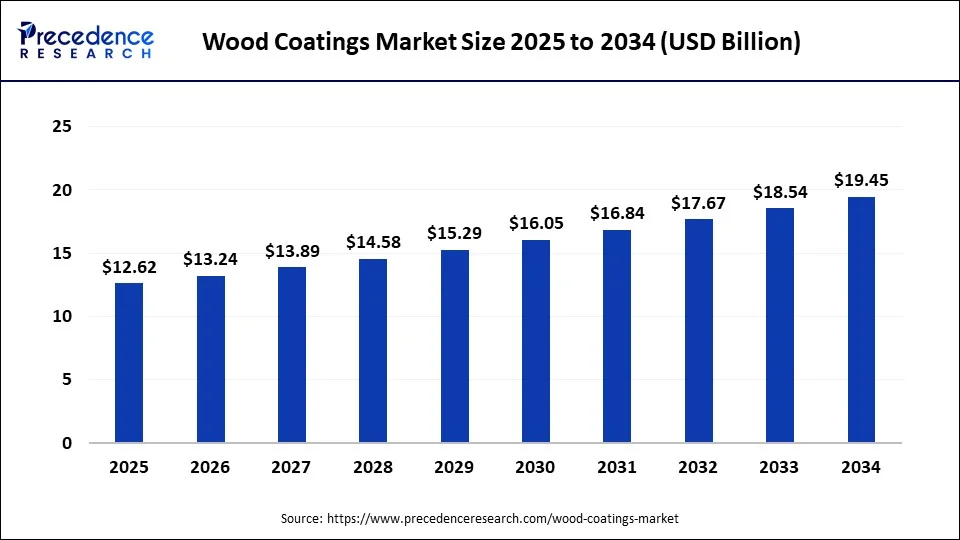
The global wood coatings market size was estimated at USD 12.62 billion in 2025 and is predicted to increase from USD 13.24 billion in 2026 to approximately USD 20.33 billion by 2035, expanding at a CAGR of 4.88% from 2026 and 2035. The growth of the wood coatings market is driven by the increased demand for household furniture and consumer preference for aesthetics.
Wood Coatings Market Key Takeaways
- Asia Pacific dominated the global market with the highest share of 47% in 2025.
- Europe is estimated to expand at the fastest CAGR of 5.24% between 2026 and 2035.
- By resin type, the polyurethane segment captured the biggest share of 42% in 2025.
- By resin type, the nitrocellulose segment is expected to grow at the fastest CAGR over the projection period.
- By technology, the solvent-borne segment contributeed the largest share of 66% in 2025.
- By technology, the water-borne segment is predicted to grow at the fastest CAGR of 5.54% over the forecast period.
- By application, the furniture segment generated the major market share of 59% in 2025.
- By application, the flooring and decking segment is anticipated to expand at the highest CAGR of 4.13% between 2026 and 2035.
What are Wood Coatings?
The wood coatings market is a vibrant and rapidly changing industry, influenced by numerous factors such as construction activity, furniture manufacturing rates, and shifting consumer preferences. A surge in residential and commercial construction projects and an increasing need for stylish and functional furniture are driving forces behind market expansion. Renovation and remodeling activities are rising, fueling the growth of the market. As homeowners and businesses alike seek to renovate their spaces, the demand for high-quality wooden finishes increases.
Protective coatings that guard against environmental challenges such as moisture, UV radiation, and physical scratches are now highly sought after. There is also a notable trend toward eco-friendly products, leading to increased demand for coatings with low volatile organic compound (VOC) emissions. Water-based coatings, renowned for their reduced environmental footprint compared to solvent-based options, are gaining immense traction. Continued research and innovative development endeavors are paving the way for the introduction of advanced coatings that deliver superior performance and resilience. UV-curable coatings, which offer rapid curing times alongside enhanced durability, are also gaining popularity.
How does AI Impact the Wood Coatings Market?
The incorporation of artificial intelligence in the wood coatings market has ushered in a transformative era, revolutionizing everything from manufacturing processes to the overall consumer experience. Cutting-edge AI algorithms are now capable of analyzing high-resolution images of wooden products in real-time, effectively detecting imperfections like knots, cracks, and signs of insect infestation. This advanced technology not only helps ensure that the products meet elevated quality standards but also substantially reduces material waste, achieving a level of consistency that traditional human inspections can not. Moreover, AI systems provide precise measurements, significantly minimizing the likelihood of errors and ensuring that the finished goods conform to strict specifications. With instant feedback from these intelligent systems, manufacturers can make timely adjustments during production, preventing substandard products from reaching consumers.
AI's capabilities extend to optimizing coating formulations by analyzing extensive datasets, resulting in enhancements in durability, aesthetic appeal, and overall product performance. This analytical prowess facilitates the swift development of innovative coatings tailored to meet evolving market demands. Furthermore, AI-driven predictive maintenance tools can foresee when machinery requires servicing, thus reducing operational downtime and bolstering efficiency throughout the production line. In addition to streamlining manufacturing and quality control processes, AI also plays a critical role in distribution and sales. By diving deep into customer data and market trends, AI aids manufacturers in creating bespoke furniture and coatings that cater to specific consumer needs and preferences. AI supports the creation of vivid, realistic virtual models of furniture utilizing advanced 3D visualizations, which enhance the design process.
Growth Factors of the Wood Coatings Market
- High Demand in the Furniture Industry: There is a high demand for wood coatings in the furniture industry. This demand is closely linked to the growth of the construction sector. As both residential and commercial construction projects expand, there is a direct correlation with the heightened need for furniture and, thus, high-quality coatings. Wood, renowned for its timeless aesthetic appeal and exceptional durability, remains a preferred material for furniture makers and consumers alike. This ongoing preference for wooden furnishings increases the need for protective and aesthetically pleasing coatings. Moreover, the rise of the hospitality sector—marked by the construction of new hotels, restaurants, and other establishments—further amplifies the demand for premium wooden furniture, necessitating superior coatings that enhance functionality and visual appeal.
- Consumer Preferences: Today's consumers are placing high emphasis on the visual aspects of their furniture. This trend has sparked a significant demand for coatings that provide a diverse array of finishes and colors, enabling furniture to complement various interior design themes. Additionally, as consumer lifestyles evolve, there is a growing desire for furniture that can endure the rigors of daily life. Consequently, this has increased interest in coatings that offer exceptional durability and protection against wear and tear. A rising consciousness regarding environmental sustainability is shaping purchasing decisions, leading to a marked preference for eco-friendly coatings and those with low volatile organic compound (VOC) emissions. This shift not only caters to consumers' aesthetic and functional needs but also aligns with their values, further driving demand for sustainable options in furniture coatings.
- Technological Advancements: The wood coatings market landscape is being transformed by significant technological advancements. Innovations in coating formulations are paving the way for products that are high-performing and versatile in their applications. For instance, UV-curable coatings and water-based formulations are leading the charge in enhancing product durability while minimizing environmental impact. These coatings offer remarkable resistance to scratches, moisture, and ultraviolet damage, thereby extending the lifespan of wooden furniture.
Trends in the market
- Ongoing innovations in wood coating technologies, such as UV-curable coatings, nanotechnology, and water-based coatings, have presented advanced formulations along with high-quality performance.
- Leading manufacturers are heavily investing in adopting sustainable practices to enhance product quality by keeping environmental concerns as a primary factor to resolve.
- Manufacturers are majorly focusing on developing water-based wood coatings as they are quick to dry and easy to clean up.
Market Scope
| Report Coverage | Details |
| Market Size by 2035 | USD 20.33 Billion |
| Market Size in 2025 | USD 12.62 Billion |
| Market Size in 2026 | USD 13.24 Billion |
| Market Growth Rate from 2026 and 2035 | CAGR of 4.88% |
| Dominating Region | Asia Pacific |
| Fastest Growing Region | Europe |
| Base Year | 2025 |
| Forecast Period | 2026 and 2035 |
| Segments Covered | Resin Type, Technology, Application and Regions. |
| Regions Covered | North America, Europe, Asia-Pacific, Latin America, and Middle East & Africa |
Market Dynamics
Drivers
Rising Construction Activities and Hospitality Sector's Growth
The wood coatings market is experiencing significant growth due to various factors. Firstly, the construction industry is experiencing a surge in activity, encompassing both residential and commercial projects. This uptick in construction activities is boosting the demand for furniture. Secondly, increasing disposable incomes, especially in developing regions with an expanding middle-class population, further support market growth. The hospitality sector's rapid growth is also boosting the adoption of furniture as hotels and restaurants seek to create attractive and sophisticated environments. There is a notable shift towards aesthetically pleasing and durable furniture, with consumers prioritizing long-lasting quality over fleeting trends.
Restraint
Stringent Regulations
Despite the growth potential, the industry faces challenges such as stringent regulations concerning volatile organic compounds (VOCs), which limit the use of solvent-based coatings. Manufacturers are under increasing pressure to transition to eco-friendly alternatives that meet both regulatory standards and consumer expectations. Additionally, fluctuations in the prices of raw materials can pose significant risks, potentially driving up production costs and squeezing profit margins. Competition from alternative materials, including plastics and composites, can hinder the growth of the wood coatings market, as these alternatives offer cost-effective solutions. Economic downturns can also impact consumer spending on furniture, leading to reduced demand for wood coatings.
Opportunity
Demand for Bio-based Coatings
The rising demand for low VOC and bio-based coatings presents an avenue for innovation and market growth. There is a growing focus on developing cutting-edge water-based and UV-curable technologies that align with sustainability trends. Rapid urbanization and industrialization in developing regions and emerging markets provide substantial opportunities for expansion and market penetration. Moreover, there is a high awareness and preference for sustainable and eco-friendly products, which prompts manufacturers to develop innovative sustainable coatings. Personalization is another prominent trend, with consumers increasingly opting for bespoke furniture. Continued research and development in advanced coating technologies will likely uncover new possibilities and propel the wood coatings market growth.
Segment Insights
Resin Type Insights
The acrylic segment is predicted to expand notably, due to its offerings, such as outstanding UV resistance, color retention, fast-drying, & greater flexibility for exterior furniture & cabinetry. Especially, the waterborne acrylic coatings are highly demanded due to their minimal environmental impact & lowered toxic emissions
The unsaturated polyester segment held a lucrative share, due to its high prioritisation for its excellent gloss, high build, & hardness, which provides exceptional scratch & chemical resistance for premium wooden products.
Technology Insights
The powder coating segment accounted for a significant share of the wood coatings market. This has greater environmental sustainability, increased durability, & efficient, solvent-free application. Also, it has broader use in Medium Density Fiberboard (MDF) furniture, kitchen cabinets, & interior architectural components.
The radiation-cured segment is predicted to grow notably, as this enables approximate immediate drying, majorly accelerating production lines & lowering the manufacturing floor space needed for curing ovens. The globe is preferring UV-LED curing, which provides 70% reduction in energy consumption as compared to traditional mercury lamps.
Application Insights
The joinery segment captured a significant share of the wood coatings market. This mainly covers wooden components, including doors, windows, staircases, & specialized architectural woodwork. Another catalyst is the growing demand for high-quality, durable finishes that are also scratch-resistant & protect the wood's longevity.
The siding segment is widely leveraging paints for siding protection, whereas stain-based products are also used for aesthetic, long-lasting finishes. Coatings are offering to withstand harsh environmental conditions, like intense UV radiation & moisture.
Regional Insights
What is the Asia Pacific Wood Coatings Market Size?
Asia Pacific wood coatings market size was exhibited at USD 6.22 billion in 2026 and is projected to be worth around USD 9.69 billion by 2035, growing at a CAGR of 5.03% from 2026 and 2035.
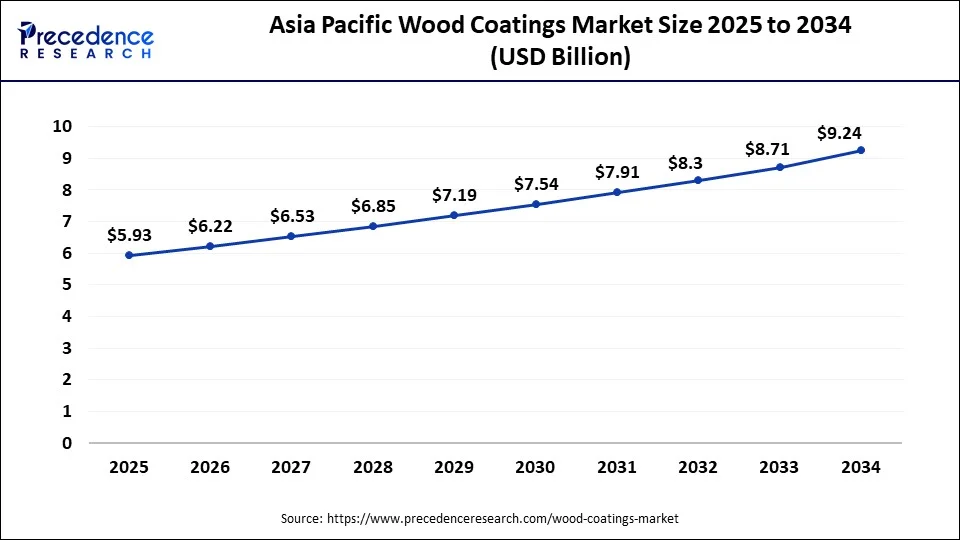
Asia Pacific dominated the wood coatings market with the largest share in 2025. This is mainly due to the increased adoption of aesthetic furniture in emerging economies, combined with an expanding middle-class population. Advancements in material science and application techniques have improved product performance and accessibility, thereby appealing to a broader range of consumers. In addition, a significant increase in construction activities and stringent regulations for the paints & coatings industry bolstered the regional market growth. For instance, China's "GB 18581-2020" standard limits volatile organic compounds (VOCs) in coatings and adhesives and encourages eco-friendly formulations. Japan's Chemical Substances Control Law (CSCL) requires thorough checks of chemical substances to ensure paints and coatings' safety and environmental compatibility.
Japan
The Japanese wood coatings market is significantly expanding due to government-backed initiatives for home renovation, with innovative programs like the ‘renovation support program' by the Japanese government. This program encourages elderly people to renovate their furniture with highly functional and less space occupant features. It involves the replacement of old furniture and flooring with high-quality wood coatings and further propels the market's growth.
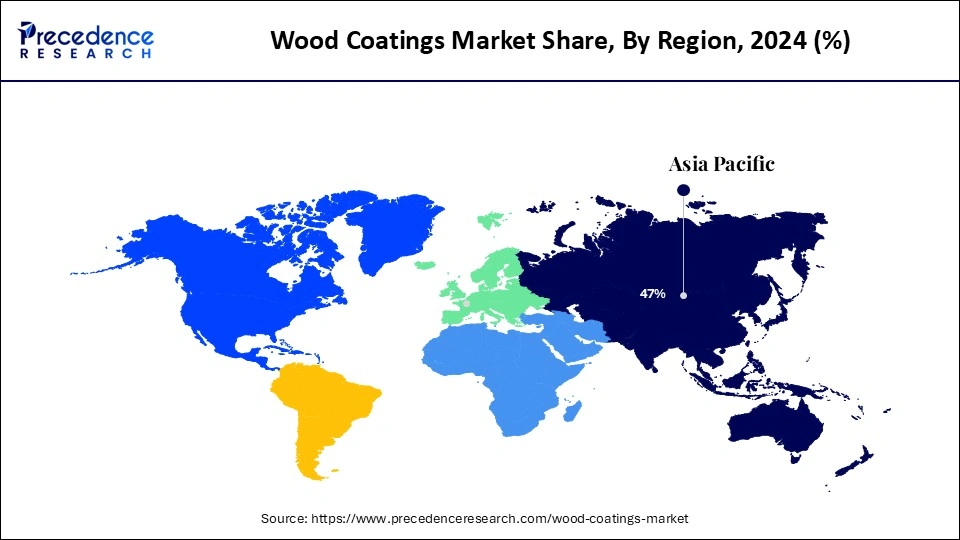
The market in Europe is estimated to expand at the highest CAGR in the coming years. This is mainly due to changing consumer preferences toward environmentally friendly coatings that reduce the environmental impact and boost circular economy. There is a high emphasis on sustainable practices, encouraging the construction and furniture industry to adopt bio-based, low-VOC coatings.
North America
The wood coatings market in North America is expanding at a notable growth rate due to the increasing use of sustainable and renewable raw materials, along with the incorporation of low-volatile organic compounds. Manufacturers are majorly focusing on developing eco-friendly combinations that resist unwanted changes in coating material like decay, rot, wear, and tear. Manufacturers are opting for high-quality coatings while complying with environmental regulations set by authorities. Eco-friendly labels and certifications make companies stand out in the global market.
U.S.
The wood coatings market in the U.S. is expanding at a significant rate due to increased hardware use for flooring in various industries. In an industrial setting, premium hardwood flooring is popular in the U.S. owing to its offerings like strength, durability, and aesthetics. Industries like warehouse factories and major manufacturing plants require high-performance flooring to withstand the heavy-duty operations on the floor. Leading companies like Sherwin-Williams have acknowledged this changing pattern in the market and developed high-performance coatings with extended protection against harmful environmental conditions.
- In Nov 2024, Sherwin-Williams launched innovative water-based wood coatings, made for interior applications, providing long-lasting coverage.
What are the Key Innovations of the Wood Coatings Industry in Europe?
Europe is anticipated to expand at a lucrative CAGR during 2026-2035 in the market. The region is surging with residential renovations & novel construction projects, often reinforced by EU ‘Renovation Wave' programs, which are majorly rising demand for protective wood coatings. Additionally, Europe will implement new regulations, which restrict allowed formaldehyde emissions from finished furniture & wood-based products to 0.062mg/m3.
Germany Wood Coatings Market Trends
Germany is moving with European strict regulations to innovate nanotechnology to facilitate widened durability, superior wear resistance, & an extended lifespan for high-end furniture. Also, preferring zero-smell & antimicrobial coatings, like Berger Imperia Breathe Easy, which employs German technology to enable indoor polishing without irritating occupants.
What are the Advancements of the Wood Coatings Market in Latin America?
Latin America is expected to grow at the fastest CAGR in the market during the forecast period. The presence of key players, favorable government policies, and rapid urbanization drives the market. Latin American countries like Brazil and Argentina are rapidly developing countries that witness continuous infrastructure development, potentiating the need for wood coatings. The growing demand for aesthetic furniture, floorings, and windows augments market growth.
Brazil Market Trends
Brazil leads market growth in Latin America due to government development programs. Key players, such as Lanxess, SciELO Basil, and Protek Paint, are major contributors to the market. Strong sales of consumer durables and advancements in infrastructure projects foster market growth.
Wood Coatings Market Companies
- Asian Paints: Provides decorative paint and wood finishing, such as PU and Touchwood, that have industrial coating and home decorative solutions.
- Akzo Nobel N.V.: Offers sustainable waterborne and UV technologies on industrial wood coatings used in furniture, flooring, and cabinetry, and decorative purposes.
- Axalta Coating Systems, LLC: Produces high-performance coatings on wood finishes that are durable, provide uniform color, and offer the highest level of protection in furniture finishing.
- BASF SE: designs binders, additives, and eco-friendly coatings that increase the durability, safety, and sustainable performance of wood in furniture solutions.
Other Major Key Players
- Diamond Paints
- Eastman Chemical Company
- KANSAI HELIOS
- Nippon Paint Holdings Co., Ltd.
- PPG Industries, Inc.
- RPM International Inc.
- The Sherwin-Williams Company
Recent Developments
- In April 2026, Huber Group Chemicals announced the exhibition of its products at the American Coatings Show 2026, showcasing innovations in specialty chemicals. Highlighted products included sustainable ELARA additive series and UV oligomer UHVPI-222200. (Source: https://www.presseportal.de)
- In June 2025, Kamdhenu Paints introduced a premium wood coating range for interior and exterior uses, featuring Kamwood 2K PU for rich finishes, Kamwood 1K PU for clarity, and the Melamyne system for durability. Additional offerings include vibrant Kamwood Wood Stains, NC Sanding Sealer for grain filling, and Kamwood Thinners for easy application. (Source: https://www.constructionworld.in)
- In February 2025, Scientists at AkzoNobel developed a new waterborne wood coating. This coating features 20% bio-based content, increasing the use of renewable raw materials without compromising on performance.
- In August 2024, Axalta Building Products launched Cerulean, a new generation of waterborne wood coatings. Cerulean coatings are easy to apply, ready to spray, and with excellent flow and leveling properties, offering the feel of solvent-based solutions without sacrificing performance.
Segments Covered in the Report
By Resin Type
- Polyurethane
- Acrylic
- Nitrocellulose
- Unsaturated Polyester
- Others
By Technology
- Waterborne
- Solvent-borne
- Powder Coating
- Radiation Cured
- Others
By Application
- Furniture
- Joinery
- Flooring & Decking
- Siding
- Others
By Geography
- North America
- Asia Pacific
- Europe
- Latin America
- Middle East and Africa
For inquiries regarding discounts, bulk purchases, or customization requests, please contact us at sales@precedenceresearch.com
Frequently Asked Questions
Tags





Ask For Sample
No cookie-cutter, only authentic analysis – take the 1st step to become a Precedence Research client
 Get a Sample




 sales@precedenceresearch.com
 Schedule a Meeting
