



Adhesion Barrier Market Size, Companies, Share, Trends, Pricing Analysis, Regulatory Landscape, Competitive Positioning, and Demand Forecast
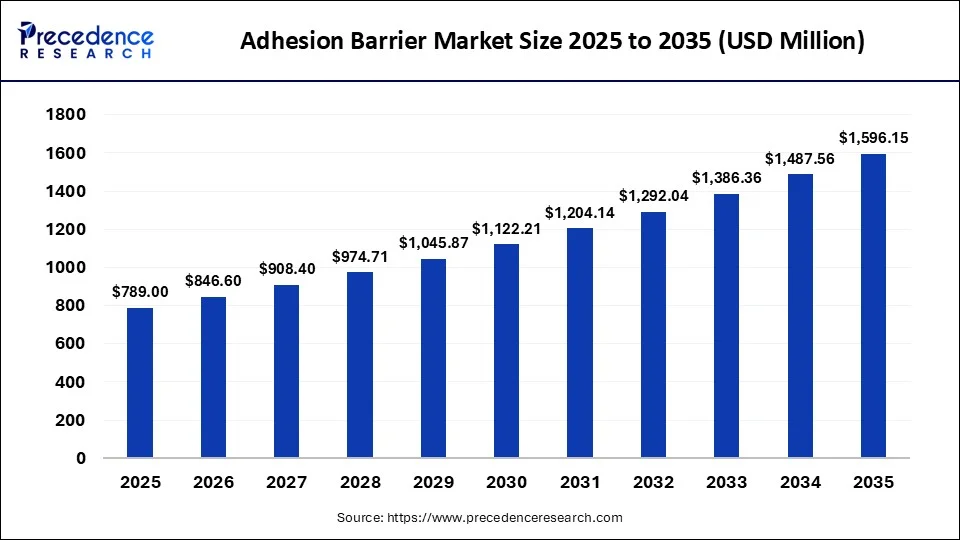
Deepa Pandey, a Healthcare Industry Expert, highlights that the adhesion barrier market has reached USD 846.60 million in 2026 and is on track to reach USD 1,596.15 million by 2035, advancing at a CAGR of 7.30%. Key adhesion barrier market companies shaping the market include Anika Therapeutics, Atrium Medical Corporation, while major growth segments span product type, material, formulation, application, end user, distribution channel, region.
Source: https://www.precedenceresearch.com/adhesion-barrier-market
 Get a Sample
 Table Of Content


Adhesion Barrier Market Size and Forecast 2026 to 2035
The global adhesion barrier market size is predicted to increase from USD 846.60 million in 2026 to approximately USD 1,596.15 million by 2035, expanding at a CAGR of 7.30% from 2026 to 2035.
Key Takeaways
- By product type, the film adhesion barriers segment contributed the highest market share of 42% in 2026.
- By product type, the gel adhesion barriers segment held a 24% share of the market in 2026 and is expected to grow at a significant CAGR of 8.2% between 2026 and 2035.
- By application, the general surgery segment held a major market share of 26% in 2026.
- By application, the gynecological surgery segment held a 21% share in 2026 and is expected to register significant growth of 8.1% CAGR during 2026 and 2035.
- EU MDR extended Class III compliance deadline to December 31, 2027, delaying new barrier product market entry.
- FDA records show that Womed Leaf's PMA was received on May 10, 2024 and approved on September 9, 2025, a 487-day interval.
- US Section 301 tariffs on Chinese healthcare equipment expanded in October 2025, raising manufacturing input costs directly.
- Ambulatory surgical centers hit 80%+ of US surgeries by 2026, expanding adhesion barrier's fastest-growing sales channel.
Market Size Description
In 2026, the global adhesion barrier market was estimated to be worth USD 846.60 million. Analysts project a CAGR of 7.30% between 2026 and 2035. This increase is driven by the increase in surgeries, especially in gynecological, abdominal, orthopedic, and cardiovascular services. With the ability to minimise postoperative complications. Surgeons are commonly turning to adhesion prevention technologies. Untreated surgical adhesions continue to be a risk for chronic pain, infertility, and bowel obstruction. Now, the use of adhesion barriers is an accepted part of routine surgery, particularly in minimally invasive surgery (MIS).
In September 2025, Womed Leaf, the resorbable adhesion barrier product of Womed SAS. Received approval by the U.S. Food and Drug Administration. This authorization broadened therapy choices for adult women undergoing hysteroscopic surgery for symptomatic moderate-to-severe intrauterine adhesions. The FDA approval expands treatment options for eligible patients of the growing confidence in the next generation of barriers using biomaterials. Manufacturers have been working on the formulation. Further ensuring effectiveness, biocompatibility, and a surgeon-friendly procedure during surgery.
The innovation remains a key driver of this market's evolution for the coming year. In November 2025, FzioMed announced its first commercialization in the United States for Oxiplex Gel. The target population is the reduction of postoperative leg pain and neurological symptoms stemming from lumbar spine surgery. On the other hand, Terumo Corporation has progressed AdSpray, a spray-type bioabsorbable barrier system, in the clinical arena with pediatric surgical trials.
Companies such as Baxter, Johnson & Johnson, Medtronic, Integra LifeSciences, and Anika Therapeutics. They are continuing to grow their surgical offerings with new product launches and clinical trials. From the early stages to 2035, the regulatory environment of the U.S., Europe, and the Asia-Pacific will become more developed. This will allow for a growing adoption of adhesion prevention technologies in more surgical specialties.
Adhesion Barrier Market Highlights
Film-based adhesion barriers currently account for the largest product-type share, while gel-based barriers represent a significant and faster-growing product category. They have been chosen because of their conformability during laparoscopies. The spray-based formulations are the highest growth technology segments. Spray systems are ingreagingly being used by surgeons. Because they point in multiple directions when needed without repositioning.
HA is still the most common ingredient in the market of commercial systems. That are used for adhesion. Gynecological surgery represents a major application segment and is expected to grow faster than general surgery during the forecast period. Due to the increasing number of intrauterine adhesions. The largest end user market is hospitals for high surgical throughput and procedural standardization. North America accounts for the highest regional market share. Owing to favourable reimbursement scenario and early adoption of product.
Strategic Market Insights
Technological advancements keep changing the way surgeons deal with the care of the patient after surgery. In 2025, the researchers at Zhejiang University's Fourth Affiliated Hospital conducted a randomized controlled trial with a new anti-adhesion barrier film. This particular study focused on the use of a diaphragm-shaped device for the prevention of intrauterine adhesion. Furthermore, as hospitals in Asia-Pacific continue to expand infrastructure for healthcare delivery. the availability of these advanced materials for surgery is emerging.
The steady demand for surgical procedures. Especially in colorectal and reproductive surgery, continues. Innovation in biomaterials keeps marching on, and Semikal Technology has begun testing a cross-linked hyaluronic acid (HA) gel. That prevents intrauterine adhesion that is being developed for the clinical purpose of 2026. The field of combination products, with anti-adhesion, hemostatic properties combined in a single device, is creating new investment opportunities. Company looking to implement this two-in-one strategy. They can expect to draw in more clinical preference because surgeons want to have less intra-operative steps to take.
Market Overview
Understanding Adhesion Barriers and Their Role in Surgical Care
Adhesion barriers constitute one of the basic groups in current surgical treatment. These devices are used in the course of surgery. Either directly against the tissue surface during surgery or after surgery. Physically the barrier insulates healing organs. So that there are no fibrous bands developed between them. This mechanism is analogous to the clinical aim time the damaged tissue to heal without permitting disabling scar tissue to form and impair its function.
Evolution of Adhesion Prevention Technologies
The only way to reduce adhesion formation has been to do a very careful surgery. Surgeons kept tissue handling to a minimum. Carefully controlled bleeding and did not allow unnecessary drying up of exposed surfaces.
While these methods lessened risk. They did not do away with it. Later came the absorbent films, such as Seprafilm. More recently, gel-, hydrogel-, and spray-based systems that were more conformable. Continuing this development, Zhejiang University researchers performed tests on a new film for anti-adhesion in the intrauterine area in 2026.
Scope of the Adhesion Barrier Market
The market consists of different types and categories of products such as films, gels, liquids, and sprays. The materials in the products include artificial polymers and natural materials such as hyaluronic acid or collagen. The formulation will depend on the amount of absorption. Also the thickness of the gel, as well as application during the surgery.
Hospital, ambulatory surgical center, and specialty clinic applications for gynecology, abdominal, orthopedic, spine and cardiovascular surgery. This distribution covers delivery through direct hospital contract and special medical device distributors in North America, Europe, Asia-Pacific, Latin America and the Middle East.
Clinical Importance of Adhesion Management
Adhesions after surgery are serious and cause problems in the recovery and health of patients. In one multicenter clinical study, 51% of the patients in the Seprafilm group were adhesion free after 12 weeks. Compared to 6% patients in the untreated group. In patients who suffer from untreated adhesions. These conditions can lead to chronic pelvic pain, bowel obstruction and infertility. The up cost of these complications to hospital systems is significant in health care spending due to repeat surgeries. This clinical burden keeps pushing surgeons to employ and use proactively the adhesion barrier. Rather than after a complication has arisen.
Market Trends
- Increasing Adoption of Minimally Invasive Surgical Procedures: Minimally invasive and robotic-assisted techniques continue to transform the way barrier is being applied. Building off that foundation. Successful surgical outcomes have been consistently achieved when the same spray-type adhesion barrier. They were used in repeat robotic liver resections at Kokura Memorial Hospital in Japan.
- Rising Preference for Absorbable Biomaterial-Based Products: The increasing knowledge about absorbable biomaterial-based products has led to a growing preference for them. Clinicians are increasingly using absorbable versions. They are dissolved naturally without second removal procedure. A first in humans study has shown that use of the Actamax hydrogel barrier has led to a 41.4% lower adhesion score. Compared to the untreated control group of patients undergoing gynecological surgery.
- Growth of Advanced Hydrogel and Gel-Based Adhesion Barriers: The innovation in hydrogels surged by 2026. Researchers developed new formulations that tackle more challenging surgical applications. New study in February 2025 presented SECAgel, a PEG-gelatin hydrogel. It seals CSF leaks following spinal laminectomy. Another bioresorbable sheet, VersaWrap made of alginate-hyaluronic acid. This also showed high conformability during posterior lumbar spine decompressions.
- Expansion of Biomaterials and Regenerative Medicine Technologies: New line of expansion and development in biomaterials and regenerative medicine technologies. Including PEG, hyaluronic acid, collagen, and PLA-based chemistries are now used as the next generation biomaterials. In November 2025, BME Horizon published an article about a new generation of adhesive hemostatic hydrogels. They simultaneously block and activate biological coagulation at complex spinal sites. Other researchers are still refining them for introduction via narrow endoscopic or minimally invasive access channels.
- Increasing Adoption in Outpatient Surgical Centers: Ambulatory surgical centres are the cornerstone of an expanding portion of surgical volume in the country. According to the 2026 national statistics, 12,294 ASCs are currently based in the United States. These outpatient settings accounted for over 80% of all surgeries performed in the U.S. Cardiovascular or orthopedic programs were both common adhesion barrier programs. These were in the top ten fastest growing specialty programs for 2026.
- Digital Healthcare Procurement Transformation: Procurement is digitalizing surgical device deliveries in hospitals. FDA's Quality Management System Regulation fully comes into force on February 2, 2026. Bringing device manufacturers into line with global regulations, such as ISO 13485 compliance. This regulatory change compels hospitals and distributors to move towards UDI compliant digital tracking systems with better inventory accuracy and recall.
Market Segmentation Analysis
Product Type Insights
Why Did Film Adhesion Barriers Secure the Largest Share of the Global Adhesion Barrier Market?
The film adhesion barriers segment dominated the market with a share of 42% in 2026, as surgeons preferred their predictable physical separation during tissue healing.
The gel adhesion barriers segment held a 24% share of the market in 2026 and is expected to grow at the fastest CAGR of 8.2% between 2026 and 2035, driven by its ability to cover irregular anatomical surfaces effectively.
Material Insights
What Helped Hyaluronic Acid Dominate the Global Adhesion Barrier Market by Material?
The hyaluronic acid segment dominated the market with a share of 28% in 2026, due to widespread clinical acceptance of its natural biocompatibility and favorable safety profile.
Adhesion Barrier Market Share, By Material, 2026 (%)
| Material | Market Share (%) | CAGR (%) |
| Hyaluronic Acid | 28.00% | 7.5 |
| Oxidized Regenerated Cellulose (ORC) | 21.00% | 7 |
| Carboxymethylcellulose (CMC) | 15.00% | 7.2 |
| Polyethylene Glycol (PEG) | 14.00% | 8.3% |
| Collagen | 8.00% | 7.1 |
| Fibrin | 5.00% | 7.4 |
| Polylactic Acid (PLA) | 5.00% | 7.6 |
| Other Synthetic Polymers | 4.00% |
7.8 |
The polyethylene glycol (PEG) segment held a 14% share of the market in 2026 and is expected to grow at the fastest CAGR of 8.3% between 2026 and 2035, driven by its excellent synthetic stability and customizable formulation properties.
Formulation Insights
How Did Absorbable Formulations Lead the Global Adhesion Barrier Market?
The absorbable segment dominated the market with a share of 84% in 2026 and is expected to grow at the highest CAGR of 7.8% between 2026 and 2035, as they eliminated the need for surgical removal after tissue healing.
Application Insights
Why Did General Surgery Account for the Largest Share of the Global Adhesion Barrier Market?
The general surgery segment dominated the market with a share of 26% in 2026, as abdominal procedures accounted for a substantial share of postoperative adhesion cases.
Adhesion Barrier Market Share, By Application, 2026 (%)
| Application | Market Share (%) | CAGR (%) |
| General Surgery | 26.00% | 7.2 |
| Gynecological Surgery | 21.00% | 8.1% |
| Abdominal Surgery | 18.00% | 7.4 |
| Orthopedic Surgery | 10.00% | 7 |
| Cardiovascular Surgery | 8.00% | 6.9 |
| Neurological Surgery | 6.00% | 7.5 |
| Urological Surgery | 6.00% | 7.3 |
| Reconstructive & Plastic Surgery | 5.00% | 7.6 |
The gynecological surgery segment held a 21% share of the market in 2026 and is expected to grow at a rapid CAGR of 8.1% between 2026 and 2035, as rising numbers of hysterectomy, myomectomy, endometriosis, and ovarian procedures continue to expand demand.
End User Insights
What Made Hospitals Emerge as the Leading End Users in the Global Adhesion Barrier Market?
The hospitals segment dominated the market with a share of 71% in 2026, due to the concentration of high-risk surgical cases, hospitals maintained the largest market share.
The ambulatory surgical centers (ASCs) segment held 17% of market share in 2026 and is expected to grow at the fastest CAGR of 8.4% between 2026 and 2035, as more elective procedures are shifting toward outpatient care.
Distribution Channel Insights
How Did Direct Sales Become the Leading Distribution Channel in the Global Adhesion Barrier Market?
The direct sales segment dominated the market with a share of 54% in 2026, due to the growing demand for dependable supply continuity.
Adhesion Barrier Market Share, By Distribution Channel, 2026 (%)
| Distribution Channel | Market Share (%) | CAGR (%) |
| Direct Sales | 54.00% | 7.1 |
| Medical Device Distributors | 24.00% | 7.4 |
| Hospital Procurement Organizations | 15.00% | 7.5 |
| E-Procurement Platforms | 7.00% | 9.1% |
The e-procurement platforms segment held 7% of market share in 2026 and is expected to grow at the fastest CAGR of 9.1% between 2026 and 2035, owing to healthcare providers increasingly digitizing purchasing and inventory management processes.
Market Dynamics
Market Drivers
Rising Global Surgical Procedure Volumes
The volume of surgical procedures continues to increase in just about every surgical specialty around the globe. One recent study appearing in a PubMed-indexed project projects that the total Medicare volume of total knee arthroplasties will increase from 1,013,533 in 2022 to 2,793,919 by 2040. Abdominal, gynecological, cardiovascular, and reconstructive caseloads are all moving forward at the same pace. Both fields are increasing their pressure on surgeons to use effective adhesion barrio solutions.
Growing Focus on Reducing Postoperative Complications
The clinical evidence has been growing. This is a strong indication to use adhesion barriers routinely during surgery. An early February 2026 pediatric meta-analysis abstract also highlighted a more than 50% decrease in obstruction risk for patients with anti-adhesive barriers compared to those who were left untreated. These results support the clinical argument in favor of preventative rather than reactive repeat surgery.
Increasing Healthcare Infrastructure Development in Emerging Markets
Asia's surgical capacity gaps remain to be filled. Max Healthcare Institute announced that it has plans for an expansion of its beds by 3,700 by 2028. In India which will include units of robotic surgery and cardiac sciences. Its new facility in Dwarka, with ten working theatres and dedicated Cath Labs, opened this year itself. As these facilities expand their surgical services, the need for sophisticated and complex adhesion prevention products should grow as well.
Advancements in Biomaterial Engineering
The list of materials for use in adhesion prevention research continues to grow. Various natural biopolymers, including collagen, gelatin, fibrin and silk fibroin, and polysaccharides such as alginate and chitosan, were documented. Other synthetic polymers, such as PEG, PCL and PLGA, have tunable degradation times which can correspond to the medical scenario. This growing toolbox helps manufacturers create perfect tissue compatibility and absorption rates for every surgical specialty's unique applications.
Market Restraints
High Cost of Advanced Adhesion Barrier Products
These biomaterial developments and high-end formulations are increasingly available. They are likely to be very expensive and will put strain on public health budgets. The high cost sensitivity is a major issue to consider when making decisions on implementing these products in the public health system. Particularly in areas facing cost constraints, despite the strong evidence-based support for their use.
Limited Awareness in Emerging Healthcare Systems
Limited clinical training still restricts the use of these outside the big surgical centers. In low- and middle income countries, the Lancet Commission on Surgical Health Policy estimated that only 41.1% were on track to meet the 2030 surgical workforce targets. In these environments, the surgeons do not always have an organized introduction to newer barrier techniques, and often the legacy techniques remain the standard approach.
Regulatory Approval Complexity
The approval process for complex surgical biomaterials remains languid and uses up a lot of resources. In a review published in 2026 by Frontiers in Medical Technology. The average decision time for a standard PMA has been found to be 399 days, even with the accelerated pathway in the FDA. This is another example of the continuing regulatory slowdown for manufacturers. As it took the manufacturer of Womed's Womed Leaf barrier 487 days from submission to decision in September 2025.
Market Opportunities
Expansion of Gel-Based Adhesion Barrier Technologies
Gel formulations are the next fastest-growing barrier category after these regulations, in surgical specialties. In a 2025 randomized study conducted in JPM, researchers assessed the adhesion barrier efficacy specifically in single-port laparoscopic surgery. These researchers customized barrier selection to individual patient risk factors. Instead of using application protocols that were one size fits all.
Growth Opportunities in Asia-Pacific Surgical Markets
The high potential for the Asia-Pacific surgical device market is continuing to draw sellers of surgical devices looking to new areas of commercialization. MicroPort Scientific was approved by the NMPA for its laparoscopic surgical robot, Toumai, in March 2025. This facilitates minimally invasive surgical access in China. This tandem of favorable change and surgeon education fosters an environment. That is ripe for adhesion barrier use on a nationwide basis.
Development of Multi-functional Adhesion Barrier Solutions
Scientists are creating increasingly smart barriers. Rather than just dissecting healing tissues. Currently reviewed in the orthopedic literature. The Defensive Antibacterial Coating hydrogel is shown to lessen the adhesion of bacteria while providing locally delivered antibiotics directly to the surgical site. Companies aiming for the same antimicrobial plus barrier properties could gain high surgeon preference for infection-prone surgeries.
Increasing Adoption in Ambulatory Surgical Centers
Ambulatory surgery centers continue to increase the volume of high-risk surgeries where adhesion prevention is required. This trend of more complex outpatient orthopedic and gynecological cases opens up the commercial opportunity directly for the adhesion barrier manufacturers.
Market Challenges
Clinical Evidence Requirements for New Products
In light of these reimbursement dynamics. Sufficiently strong clinical evidence is hard to come by for many adhesion barriers. They found that none of the barrier materials clearly outperformed any of the others, an unending challenge in the field.
Pricing Pressure from Healthcare Systems
Reimbursement systems in key markets are becoming increasingly stringent for device manufacturers. High-risk medical devices are not subject to the EU's Health Technology Assessment Regulation. But it will start in 2026, when the Regulation will require data on the comparative effectiveness of these devices.
Adhesion Barrier Market Ecosystem Analysis
Healthcare Value Chain Overview
Building on top of these regulatory frameworks. The adhesion barrier ecosystem is composed of a number of inter-related layers of activity. The raw biomaterial suppliers, including hyaluronic acid and PEG producers form the base of this chain. These are then used by the contract manufacturers. Further createing finished films, gels and sprays for the surgical market.
Medical device companies manage total regulatory submission, clinical validation and commercial distribution to hospitals globally. On the other hand, adoption is ultimately determined by doctors, procurement processes and group purchasing contracts based on clinical evidence and hospital procedures.
Key Stakeholders in the Market
Several distinct groups shape how new adhesion barrier technologies reach operating rooms. Clinical guidelines from medical societies like ASRM and SAGES can have a significant impact on surgeon adoption. Bodies such as the Food and Drug Administration and EMCS decide what products are available in the market and under what conditions. As for the manufacturers, they are battling on clinical grounds and distribution expansion spread across the specialties.
Supplier and Manufacturer Relationship Analysis
Specialized contract development and manufacturing companies are being engaged as the source of raw materials. In June 2025, Lifecore Biomedical, a Nasdaq-listed company that produces injectable-grade hyaluronic acid. signed a new 10-year commercial manufacturing agreement. These long-term supply agreements provide device companies with a steady supply of biomaterials. They are suitable for pharmaceutical applications at a standard quality. This type of relationship is proliferating and will help shape the viability of producing enough surgical products to satisfy increasing demand.
Manufacturing & Production Analysis
Adhesion Barrier Manufacturing Process Overview
Building on these supply relationships. There are significant differences in manufacturing technology, depending on the barrier form. The production of the film is generally carried out by casting or extrusion using any material. That contains solvents, which must form thin and even sheets. Film is generally produced through a casting or extrusion process using solvents that need to make thin, even bioresorbable sheets.
In the case of gel and hydrogel formulations. The resulting product of the chemistries is a result of controlled crosslinking reactions. Spray systems must have very tight viscosity control to achieve uniform tissue coverage when using the device laparoscopically. Most commonly, woven synthetic scaffolds are used in conjunction with a bioactive coating, via dip coating or electrospinning.
Raw Material Supply Analysis
Logistics of important biomaterials are still changing while there is an increasing need for absorbable products. Evonik Industries is upscaling its PLGA and PLA compatible bioresorbable polymer line of production. Collagen sources and cellulose derivatives are still dominated by a handful of other worldly speciality manufacturers of pharmaceutical grade. Such a concentration generates an infrastructure risk within the chain, which manufacturers try to overcome by adopting dual sourcing approaches or regional diversification.
Manufacturing Cost Structure
There are many production cost elements to adhesion barriers other than just the raw material. Specialized facilities and validated protocols are needed for different types of products for sterilization by gamma irradiation or ethylene oxide. Packaging should retain sterility barriers during shelf life. Therefore, adding cost to materials and to the testing process. The overlaid requirements render premium biomaterials significantly more resource-consuming to manufacture than typical surgical materials.
Production Capacity and Expansion Trends
Manufacturers are still investing in new and larger facilities. They are boosting the production of surgical equipment to meet global needs for surgery. Anika Therapeutics plans to file the last module for its Hyalofast scaffold hyaluronic acid PMA with the FDA in October 2025. It has also worked to integrate lean manufacturing concepts within its Bedford, Mass., plant to boost throughput for the plant until 2026. Furthermore, ongoing investments will enable established players to address the increased clinical needs in the gel, film, and spray segments.
Pricing Analysis
Average Manufacturing Price Analysis
These manufacturing investments included a further rise in the average manufacturing price of adhesion barriers to USD 12.9 per unit in 2026. This figure is heavily influenced by the prices of raw materials. Especially the pharmaceutical-grade hyaluronic acid and PEG.
On October 6, 2025, the U.S. imposed Section 301 tariffs on Chinese health care equipment. This would increase the input prices for many health care equipment components. These factors encourage manufacturers to diversify regionalisation and dual sourcing for critical biomaterials.
Average Selling Price Analysis
The average price for adhesion barriers was USD 18.40 per unit. This represents a significant price premium over production cost. Prices are quite different across regions, with North America's rates reflecting greater cost coverage. In most markets, premium gel and multi-functional formulations are selling at a premium price. As compared with legacy film-based ones. Availability of smaller hospital budgets and reimbursements is a reason for lower price per sale in emerging markets.
Pricing Trends Through 2035
Cat pricing is expected to increase slightly in the forecast period. Growing at 1.60% CAGR, on average for the category. This measured pace comes as a sign of growing competitiveness from various regional manufacturers. They are now challenged head-to-head with popular brands and can produce rival products at lower prices.
On the other hand, high-quality multi-functions with antimicrobial & drug delivery can continue to charge upwards of the category average. Such a scenario forces incumbent brands to adopt premium positioning solutions. This further creates barriers for the cheap players.
Regional Pricing Comparison
Regional pricing differences are directly related to heterodoxy in reimbursement systems and purchasing power in healthcare. Combine trusted insurance policy coverage and hospital budgets with higher prices in North America and Western Europe. Price points, on average, are lower in the Asia Pacific. Due to less expensive local competitors and public health budgets. On the other hand, in LATAM, fewer resources for purchasing goods keep prices closer to those in developed markets due to reliance on imported goods.
Technology & Innovation Landscape
Advanced Absorbable Adhesion Barrier Technologies
Following these regional pricing patterns. Researchers continue to diminish the amount of absorbable barriers applied and how they act once applied. Materials of study for the polymer blend in this March 2026 Advanced Healthcare Materials article are mixes of a PLCL and a PEG polymer that can be sprayed. This results in the surface of the material being enriched with hydrophilic PEG chains. Thereby enhancing tissue interaction and handling. Furthermore, this level of precision engineering directly tackles surgeons' century-old complaints of inconsistent handling with previous absorbable formulations.
Hydrogel and Polymer-Based Innovations
Polymer chemistry is still progressing towards smart materials that react appropriately in the surgeon's environment. In a November 2025 review published in the journal Advanced Science. Researchers described biodegradable adhesive systems that are composed of stimuli-responsive bonds. These break up or dissolve under certain conditions. These pH, redox, or enzyme chemistries help to break down (or dissolve) under inflammatory or infection conditions. Such active, feedback responsive polymers represent an important departure from the traditional PEG hydrogel designs.
Combination Adhesion Barrier Technologies
The barriers are beginning to be designed by the manufacturers to serve more than one clinical purpose. Comprehensive review of the literature is evident in the remarkable ability of silk fibroin scaffolds. This prevents adhesion while providing tissue-repair support in the form of an extracellular matrix. These 2-in-1 applications make dual use of hemostatic, regenerative, and barrier products during complex surgical procedures to reduce the need for separate products.
AI and Digital Surgical Integration
Widely used in hospital settings across a wide variety of applications. Artificial intelligence is now revolutionizing the approach to planning and executing surgery with minimal adhesions. Part of a new Go/No-Go AI decision-support system. These "safe-surgical" zones during laparoscopy are indicated to avoid accidental damage.
Clinical Application Analysis
Adhesion Prevention in General Surgery
Building on these advances in robotics and AI. General surgery is the largest clinical volume application segment. The American College of Surgeons estimates that as many as 1.5 million hernia repairs are performed in the United States each year. These operations have significant prospective risk for adhesion. Especially the repeat operations on scar tissue.
Growth of Gynecological Surgical Applications
The use of adhesion barrier in the field of gynecology keeps expanding most rapidly. The trend of increased volumes of fertility procedures. Including laparoscopy and/or myomectomy, further strengthens the need for the effective prevention of adhesions that preserve women's fertility.
Abdominal Surgery Market Potential
Adhesion barrier products have become a commonplace adoption area within the majority of hospital systems around abdominal surgery. Surgeries that include significant tissue manipulation. Such as colorectal, gastrointestinal, and bariatric surgeries, are especially prone to adhesions.
Emerging Applications in Orthopedic and Neurological Surgery
The induction of adhesion barrier technology into spine and neurosurgery is truly a new frontier. MRI assessment of epidural fibrosis is being undertaken at three and six months after lumbar laminectomy. Reaching success in these special applications can have a significant impact in broadening the market for adhesion barrier beyond its legacy abdominal and gynecological mainstays.
Market Regional Analysis: North America, Europe, Asia-Pacific
Why Did North America Lead the Global Adhesion Barrier Market?
North America led the market, capturing the largest revenue share in 2026, accounting for an estimated 39% market share, due to the high adoption of advanced surgical interventions.
U.S. Adhesion Barrier Market Size and Growth 2026 to 2035
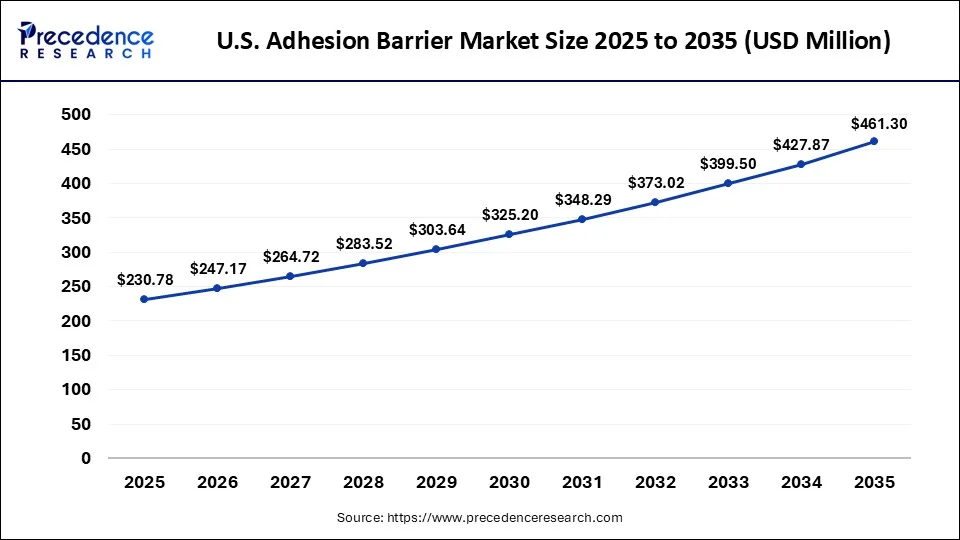
The U.S. adhesion barrier market size was evaluated at USD 247.17 million in 2026 and is projected to reach around USD 461.30 million by 2035, growing at a CAGR of 7.17% from 2026 to 2035.
United States
Continuous commercialization of innovative bioresorbable products and the increased adoption of robotic-assisted surgery bolstered use by key hospital networks.
Canada
Surging minimally invasive surgical trends and increasing evidence-based clinical protocols drove a steady increase in demand for advanced adhesion barriers.
Mexico
Increased private hospital networks increased availability of modern surgical products in key metropolitan health facilities.
The Asia Pacific Region Expected to Grow With a CAGR of 8.6% of Market Share in 2026
Asia Pacific is the region held second largest market share, with contributed 24% to the market in 2026 and is estimated to grow at a strong CAGR of 8.6% over the projected period, supported by the rapid modernization of healthcare infrastructure.
China
The demand for adhesion barrier products was boosted by the rapid expansion of the healthcare industry and the rising number of surgical procedures.
India
The expansion of the capacity of multispecialty hospitals and improvement of healthcare infrastructure was a good growth driver going forward.
Japan
The use of clinically proven adhesion barriers was widespread, thanks to advanced healthcare systems and high surgical precision standards.
South Korea
Higher investment in advanced technologies in hospitals led to wider usage of them in the clinical settings of tertiary care hospitals.
Australia
To promote the routine use of adhesion barriers in postoperative practice, evidence-based surgical techniques were promoted in this region.
Singapore
Innovative surgical biomaterials were adopted quickly with a high level of medical infrastructure and regulatory standards.
Europe Held Significant Market Share of 28% in 2026
The Europe held a 28% share of the global market in 2026 and is expected to grow at a CAGR of 7.0% from 2026 to 2035, driven by regulatory frameworks that encouraged the introduction of innovative and safe biomaterial technologies.
Germany
Germany boasted a well-established health care infrastructure with a high level of adoption of advanced surgical technologies, making it the regional player to benefit.
United Kingdom
Robotic surgery and laparoscopy increased in uptake across the leading NHS and private hospitals, with this rate of market growth becoming faster.
France
The steady growth of the market was encouraged by hospital modernization projects and increasing minimally invasive procedures.
Italy
The volume of surgeries grew, as did investments in OR technologies, which drove up product adoption.
Spain
The growing number of specialized surgical centers fueled demand for more advanced postoperative adhesion management solutions.
Netherlands
The market continued to grow due to the advanced hospital infrastructure and strong clinical research activity.
Latin America Held Notable Market Share with 5% in 2026
The Latin America region is expected to grow at a notable CAGR of 7.2% between 2026 and 2035, due to the healthcare modernization programs supporting the gradual adoption of advanced biomaterials in surgical settings.
Brazil
The modernization of healthcare and increased demand for surgeries made Brazil the top market in the region.
Argentina
Modern postoperative adhesion management products were gradually adopted with the improvement in surgical services.
Chile
The fast-rising investment in healthcare quality and hospital infrastructure further enhanced the demand for advanced surgical biomaterials.
Mexico
Investment in the private healthcare sector increased the availability of new technologies for adhesion barriers.
Middle East & Africa Held a Considerable Market Share of 4% in 2026
The Middle East & Africa region is expected to grow at a strong CAGR of 7.4% between 2026 and 2035, fuelled by increasing awareness of postoperative complications, which encouraged greater adoption of adhesion prevention products.
Saudi Arabia
The demand for high-quality adhesion barrier products rose with the increased use of complex MIP procedures.
United Arab Emirates
Expansion of the use of innovative adhesion prevention products was driven by strong investments in specialized healthcare services.
South Africa
Clinical awareness rose, and a gradual uptake of bioresorbable adhesion barrier technologies was observed as a result.
Egypt
The increased procedural numbers led to increased attention towards minimising complications caused by adhesions after procedures.
Turkey
Increased adoption of laparoscopic and robotic-assisted procedures was a growth driver for modern adhesion barrier solutions.
Supply Chain Analysis
Medical Device Manufacturing Supply Chain
From these clinical application trends, the adhesion barrier supply value chain goes through a few key stages. Specially sourced biomaterials are then shipped to contract manufacturers. They are converted into film, gels, or sprays. Finished products are subsequently distributed via a validated cold-chain or ambient distribution system throughout the country to hospitals and surgical centers.
Supply Chain Risks and Mitigation Strategies
Sterilisation uncertainty adds a real risk to manufacturers' supply chains. B. Braun and DeRoyal Industries are among the 40 commercial sterilizers. These facilities to receive two-year exemptions after the action was taken. EPA's proposed rollback of the underlying emissions rule began in March 2026. But a fight over community health protections continues, allowing manufacturers to plan around real and perceived uncertainty. This makes diversification of raw material sources and sterilizer partners a priority.
Regulatory Landscape
Global Medical Device Regulations
The list of supply chain problems goes on with significant differences in the regulatory environment between the major markets around the world. Most adhesion barriers are FDA Class III devices. These are the strictest regulated category of devices, which must undergo the rigorous Premarket Approval process. According to a survey by the Notified Body in June 2024, 55% of the applications were rejected. Due to the product being outside of the scope of the Notified Body that was responsible for the review.
Clinical Trial and Approval Requirements
Good clinical evidence of safety and effectiveness is required to market adhesion barriers. To use a device under the framework of the FDA's IDIQ application. Clinical testing of devices on humans must be conducted under the auspices of an IRB approved by the FDA. Furthermore, the Evidential hurdles are even higher for manufacturers looking for new biomaterial chemistries, where there are no predicate devices.
Reimbursement Landscape
The method of payment is evolving from a fee-for-service system to a bundled episode-structured reimbursement system. CMS launched its mandatory Transforming Episode Accountability Model in January 2026. Covering 741 hospitals in 188 metro areas. This is a model that includes the price of the device in costs related to five surgical cases, such as spinal fusion and large bowel surgeries. Hospitals participating in TEAM will be awarded additional incentives for choosing a product. That can help reduce readmission and re-operation rates.
Competitive Landscape
Market Competition Structure
Building on these reimbursement trends. Adhesion barrier continues to be moderately competitive, with strong growth expected across just a few major market players. Baxter, Johnson & Johnson, Medtronic, Integra LifeSciences, Anika Therapeutics, and FzioMed are the four key competitive pillars. On the other hand, regional manufacturers from other corners of China and South Korea. They are mounting more competition for such incumbents with competitive prices.
Competitive Benchmarking
Companies stand out for breadth of products, depth of clinical experience, and commercial presence throughout the world. With a strong distribution footprint in over 150 countries. Distribution in this region is exceptional, making Medtronic's MediShield Anti-Adhesion Gel and its wider surgical business easily accessible. Anika Therapeutics has centralized production worldwide in its larger Bedford, Massachusetts plant. On the other hand, Baxter is one of the most researched barrier portfolios with over 10 years of clinical evidence and years of Seprafilm research.
Strategic Developments
Recent activity underscores continued investment in product launches, filings, as well as corporate combinations. Atreon Orthopedics and RenovoDerm announced their plan for a 2026 merger. Atreon's technologies in synthetic biomaterials for tissue repair and reconstruction will be integrated into RenovoDerm. They represent a strong trend within the industry to bundle up functions. This accelerates the development of next-generation surgical biomaterials.
Adhesion Barrier Market Companies
- Anika Therapeutics
- Atrium Medical Corporation
- Baxter
- BD
- Fziomed, Inc.
- Hangzhou Singclean Medical Products Co., Ltd
- Integra Lifescience Holdings Corporation
- Johnson & Johnson
- PlantTec Medical GmbH
- Sanofi
Future Market Outlook (2026–2035)
Short-Term Growth Outlook
The short-term strategy will be to continue with recent refinements of products that are coming into hospitals today and being adopted. Incremental innovation continues, and procedure volumes grow for minimally invasive procedures. This should continue to drive the commercial momentum steadily forward through 2027.
Medium-Term Market Transformation
By the early 2030s, the next big change in product design in the eyes of hype spectators. This will be spurred by bioprinting and other cutting-edge biomedical materials research. These fabrication techniques blossoming alongside digital procurement websites. Manufacturers in new Asian & Latin American markets must now obtain quicker access to hospital adoption.
Long-Term Strategic Outlook
The next 10 years will see a complete rethinking of the use and selection of adhesion barriers thanks to personalized surgical planning. Companies that can combine biomaterial innovation with computational surgical planning. This will find investment in these predictive technologies to be a real investment opportunity down the road.
Strategic Recommendations
Recommendations for Medical Device Manufacturers
The long-term outlook, manufacturers should focus on generating clinical evidence rather than making marketing statements. Accelerated regulatory routes to market. Such as the one taken by Medtronic in November 2025 for clearance of their Hugo device, and establishing partnerships with contract manufacturers can help shorten that time to market. Maintaining multi-functional formulations will clearly differentiate the brand. But with an eye on sustaining differentiation through continued investment in multi-functional formulations and geographic expansion into Asian-Pacific markets.
Recommendations for Investors
Capital should be directed toward barriers based on gels, PEG chemistries, and outpatient surgical infrastructure. The sector's most sustainable, technically distinct growth opportunities over the next decade. Beyond are collaborations among ambulatory surgery centers and biomaterial manufacturers in Asia-Pacific (APAC).
Recommendations for Healthcare Providers
Adhesion barriers should be part of routine perioperative care, not at the discretion of the surgeon. The Johns Hopkins Hospital saw ongoing incremental readmission reductions after six years from adoption of ERAS. Further supporting the importance of evidence-based domain-based procurement initiatives.
Adhesion Barrier Market Segments
By Product Type
- Film Adhesion Barriers
- Gel Adhesion Barriers
- Liquid Adhesion Barriers
- Spray Adhesion Barriers
- Mesh Adhesion Barriers
- Combination Adhesion Barriers
By Material
- Hyaluronic Acid
- Oxidized Regenerated Cellulose (ORC)
- Carboxymethylcellulose (CMC)
- Polyethylene Glycol (PEG)
- Collagen
- Fibrin
- Polylactic Acid (PLA)
- Other Synthetic Polymers
By Formulation
- Absorbable
- Non-Absorbable
By Application
- General Surgery
- Gynecological Surgery
- Abdominal Surgery
- Orthopedic Surgery
- Cardiovascular Surgery
- Neurological Surgery
- Urological Surgery
- Reconstructive & Plastic Surgery
By End User
- Hospitals
- Ambulatory Surgical Centers (ASCs)
- Specialty Clinics
- Academic & Research Institutes
By Distribution Channel
- Direct Sales
- Medical Device Distributors
- Hospital Procurement Organizations
- E-Procurement Platforms
By Region
- North America
- Latin America
- Europe
- Asia-Pacific
- Middle East and Africa
For inquiries regarding discounts, bulk purchases, or customization requests, please contact us at sales@precedenceresearch.com
Frequently Asked Questions





Ask For Sample
No cookie-cutter, only authentic analysis – take the 1st step to become a Precedence Research client
 Get a Sample
.webp)



 sales@precedenceresearch.com
 Schedule a Meeting
