



AI Explainability and Transparency Market Trends, Companies, Revenue / Sales Performance, Subscriber Growth, Pricing Strategies, Cloud Adoption, Infrastructure Expansion, Competitive Landscape, and Industry Outlook
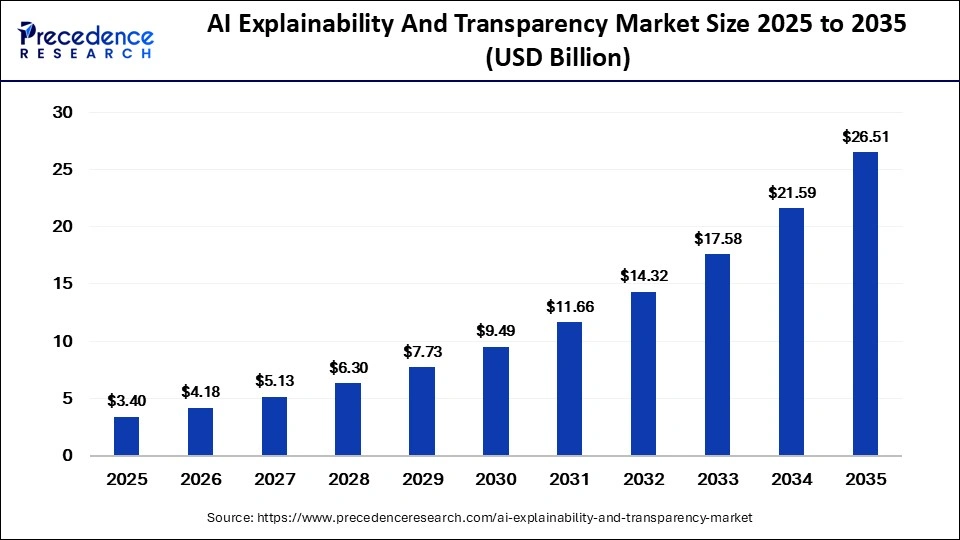
ICT industry specialist Shivani Zoting estimates the AI explainability and transparency market at USD 4.18 billion in 2026, with continued technology adoption expected to take the market to USD 26.51 billion by 2035 at a CAGR of 22.80%. Leading AI explainability and transparency market providers such as IBM, Microsoft, Google Cloud, Amazon Web Services are expanding their capabilities across segments including By Component, By Deployment Model, By Technology, By Organization Size, By Application, By End-Use Industry.
Source: https://www.precedenceresearch.com/ai-explainability-and-transparency-market
 Get a Sample
 Table Of Content


What is the AI Explainability and Transparency Market Size in 2026?
The global AI explainability and transparency market size accounted for USD 3.40 billion in 2025 and is predicted to increase from USD 4.18 billion in 2026 to approximately USD 26.51 billion by 2035, expanding at a CAGR of 22.80% from 2026 to 2035. The AI explainability and transparency market is poised for significant growth due to rising regulatory pressure for ethical AI, increasing adoption of AI-driven decision-making across industries, and growing demand for transparent, accountable, and bias-free artificial intelligence systems.
Key Takeaways
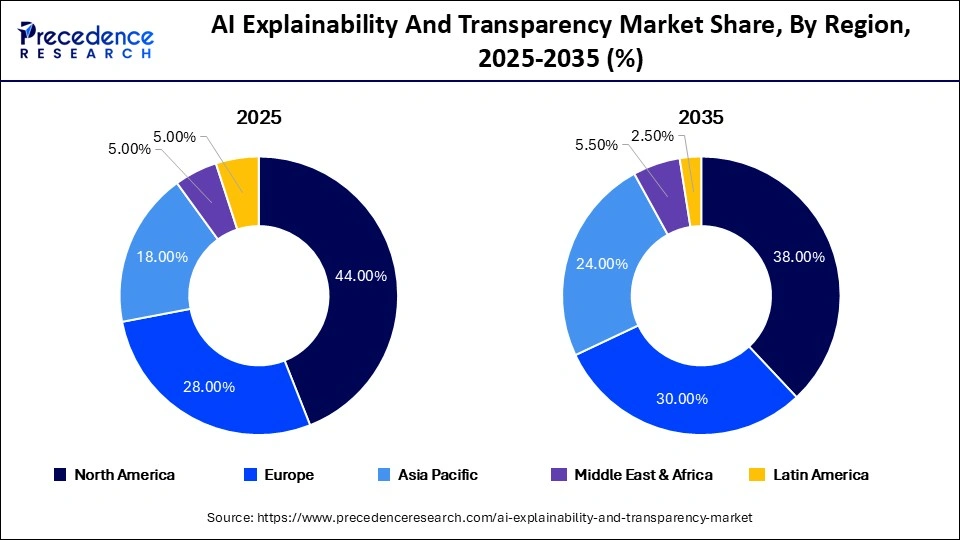
- North America dominated the global market with a share of 44% in 2025.
- Asia Pacific is expected to grow at the fastest CAGR of 26.5% during the forecast period.
- By component, the software segment held a dominant position in the market, accounting for 70% of the market share in 2025.
- By component, the services segment is the second-largest shareholder and is expected to grow at a CAGR of 20.5% between 2026 and 2035.
- By deployment model, the cloud-based segment accounted for a revenue share of 75% in the market in 2025.
- By deployment model, the on-premise segment is the second-largest shareholder and is expected to grow at a CAGR of 12.5% between 2026 and 2035.
- By technology, the model interpretability tools segment led the global market with a share of 28% in 2025.
- By technology, the bias detection & fairness tools segment is the second-largest shareholder and is expected to grow at a 25.5% CAGR between 2026 and 2035.
- By organization, the large enterprise segment accounted for the largest revenue share of 68% in the market in 2025.
- By application, the risk & compliance management segment led the market with a 28% share in 2025
- By application, the fraud detection segment is the second-largest shareholder and is expected to grow at a CAGR of 22.5% between 2026 and 2035.
- By end-user, the BFSI segment led the global market with a share of 30% in 2025.
- By end-user, the IT & telecom segment is the second-largest shareholder and is expected to grow at a 25.5% CAGR between 2026 and 2035.
Market Overview
The AI explainability and transparency market is positioned for robust growth, driven by increasing demand for transparency in artificial intelligence applications across various industries. As organizations aim to enhance trust in AI systems, the adoption of explainability tools and methods is becoming more critical. With a significant focus on regulatory compliance and ethical AI practices, the market is expected to witness substantial investments in software and services that facilitate interpretability and fairness. North America currently leads the market, but Europe is anticipated to emerge as a fast-growing region, reflecting a broader global shift towards adopting AI transparency solutions.
As AI systems grow more complex and integrated into enterprise operations and processes, there is a growing need for explainability and transparency solutions, which are being driven largely by AI. As Generative AI, Autonomous Systems, and Predictive Analytics are rapidly gaining in usage, concerns about bias, fairness, accountability, and transparency of decisions have grown. Trusted regulatory, consumer, and business acceptance of explainable AI frameworks is a growing focus for organizations as they look to reduce ethical and operational risk and build trust among their regulators, consumers, and business stakeholders. In addition, innovations with AI technologies are fueling innovation in interpretable models, visualization platforms, and automated governance tools, which are further fueling the overall market potential area.
AI Explainability and Transparency Market Trends
- Large Language Models (LLMs) are becoming more commonplace in the business world, and organizations are seeking transparency in their output generation processes. Layers of explainability are being integrated into the processes of developing AI tools, including providing traceability, confidence scoring, and source attribution. It can minimize a lack of information, hallucinations, and selective answers generated by GPTs.
- There is an increase in dedicated responsible AI teams and governance processes in firms for managing fairness, accountability, and transparency. Explanation tools are increasingly becoming part of enterprise AI governance platforms to help with ongoing monitoring of AI behavior. On the technical side, companies are investing in lifecycle management systems that keep a record of training data, model updates, and decision paths. What is being reinforced in enterprise-wide AI risk management practices is the trend.
- AI explainability solutions are being adopted by industries including banks, healthcare, insurance, and government, for their high operational and legal demands. The need for transparency exists in industries such as finance and healthcare, where organizations face heightened risks that demand clear and actionable AI systems. For companies in areas like finance and healthcare, transparency becomes crucial to justify an automated decision and lower liability risks.
- As for cybersecurity, AI explainability tools are becoming a common choice to enhance the understanding of the results of anomaly detection and threat intelligence delivered to analysts. Organizations can validate alerts, minimize false positives, and enhance incident response with transparent AI models. Furthermore, financial institutions are using explainability to convince customers and regulators of the reasonableness of fraud decision-making. This is boosting the trust in automated security systems.
Market Scope
| Report Coverage | Details |
| Market Size in 2025 | USD 3.40 Billion |
| Market Size in 2026 | USD 4.18 Billion |
| Market Size by 2035 | USD 26.51 Billion |
| Market Growth Rate from 2026 to 2035 | CAGR of 22.80% |
| Dominating Region | North America |
| Fastest Growing Region | Asia Pacific |
| Base Year | 2025 |
| Forecast Period | 2026 to 2035 |
| Segments Covered | Component, Deployment Model, Technology, Organization Size, Application, End-Use Industry, and Region |
| Regions Covered | North America, Europe, Asia-Pacific, Latin America, and Middle East & Africa |
Market Dynamics
Drivers
Rising Need for Trustworthy and Ethical AI Systems
As more and more industries increasingly rely on AI decision-making, the demand for clear and explainable AI systems is increasing. The rising expectations for how AI models make recommendations, predictions, and automated actions are putting more pressure on enterprises. With an explainability solution, organizations can build customer trust, minimize operational liability, and aid in strict adherence to new laws and regulations. Furthermore, the implementation of ethical AI guidelines and protocols is fostering the adoption of ethical AI practices, which help firms focus on fairness, accountability, and transparency in leveraging AI.
Restraint
Interpreting advanced AI models
One of the biggest hurdles in the market is the technical layer needed to interpret very advanced AI models, like deep learning models and neural networks. Many advanced AI systems are difficult to explain to humans and understand on the basis of their architecture. One of the main challenges for developers is to build models that are accurate and perform at a nearly optimum level while keeping the models transparent. Furthermore, there is no common measure of explainability or established framework that is widely available in various industries.
Opportunity
Emergence of Responsible AI Governance Ecosystems
This new focus on responsible AI practices is presenting a significant opportunity for growth in responsibility and transparency solution providers globally. Enterprises are building artificial intelligence (AI) governance ecosystems by including AI audit and monitoring, bias detection, and interpretability features. The adoption of AI in various sectors, such as healthcare, automated vehicles, finance, and public services, continues to increase the demand for clear and transparent AI infrastructure. Moreover, technological progress in the field of explainable and machine learning and visualization technologies is enabling additional opportunities to generate revenues for the markets.
Segment Insights
Component Insights
AI Explainability And Transparency Market Share, By Component, 2025-2035 (%)
| Component | 2025 | 2035 | CAGR (%) |
| Software | 70.00% | 72.00% | 24.5% |
| Services | 30.00% | 28.00% | 20.5% |
The Software Segment Held a 70% Market Share in 2025
The software segment dominated the AI explainability and transparency market by holding a share of 70%. This is because there is a growing demand for infrastructure solutions that offer AI model interpretability in real time, bias analysis, and governance features. AI explainability software is becoming widely used as businesses begin to implement it because of its ability to increase user trust and adherence to the continually changing regulatory environment. These solutions can let organizations see when AI is working and monitor its performance to see if it is holding back efficiency, along with support for accountability throughout the process. Adoption of machine learning and generative AI technologies is continuing to propel software adoption across industries.
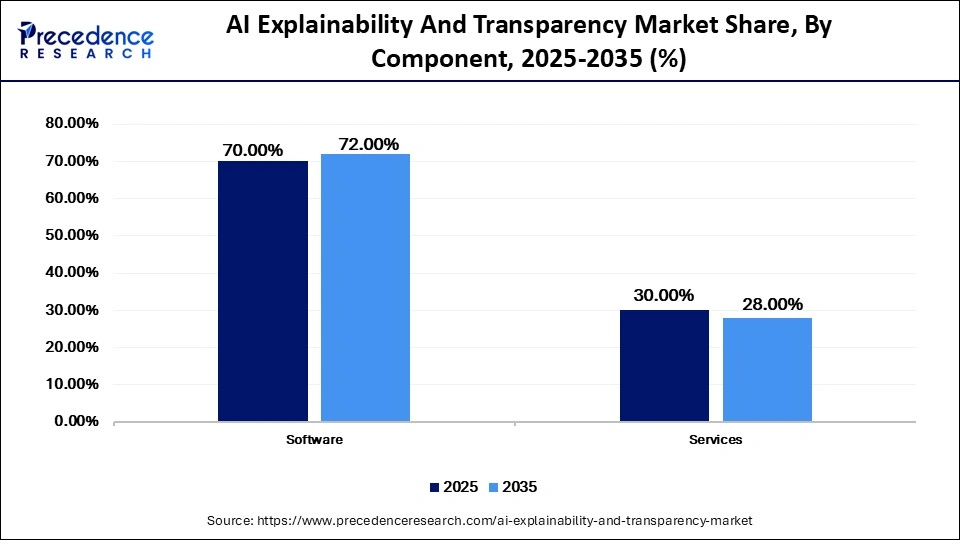
The services segment held a 30% market share in 2025 and is expected to grow at a CAGR of 20.5% in the coming year, as more organizations need help and guidance in implementing explainable AI solutions. As more and more companies become adept at using AI systems, the need for expert professionals who can seek to create clear AI frameworks has grown. Service providers can help organizations develop AI strategies that prioritize ethics, meet compliance standards, and incorporate governance into the overall workflow.
Complex AI-based systems require ongoing monitoring and optimization services, further emphasizing the need for sophisticated systems. The complexity of these AI systems is also driving the necessity to provide continuous monitoring and optimization services. Moreover, managed services are becoming increasingly popular, driven by the increasing popularity of businesses looking for cost-saving and scalable solutions for explainability.
Deployment Model Insights
AI Explainability And Transparency Market Share, By Deployment Model, 2025-2035 (%)
| Deployment Model | 2025 | 2035 | CAGR (%) |
| Cloud-based | 75.00% | 85.00% | 26.5% |
| On-premise | 25.00% | 15.00% | 12.5% |
Why Did the Cloud-Based Segment Lead the Market in 2025?
The cloud-based segment dominated the AI explainability and transparency market by holding a share of 75% in 2025, due to the infrastructure savings, flexibility, and scalability of implementing AI explainability in the cloud. Cloud platforms offer easy integration of explainability tools into current AI and analytics capabilities, which makes them a preferred option for institutions. Cloud deployment also enables real-time monitoring, centralized governance, and quicker software updates in geographically dispersed operations.
The rising prevalence of cloud-native applications of AI and the growth of SaaS implementing explainability platforms are also contributing to the segment's expansion. Also, cloud solutions help companies process a huge amount of data and decrease the complexity of their operation.
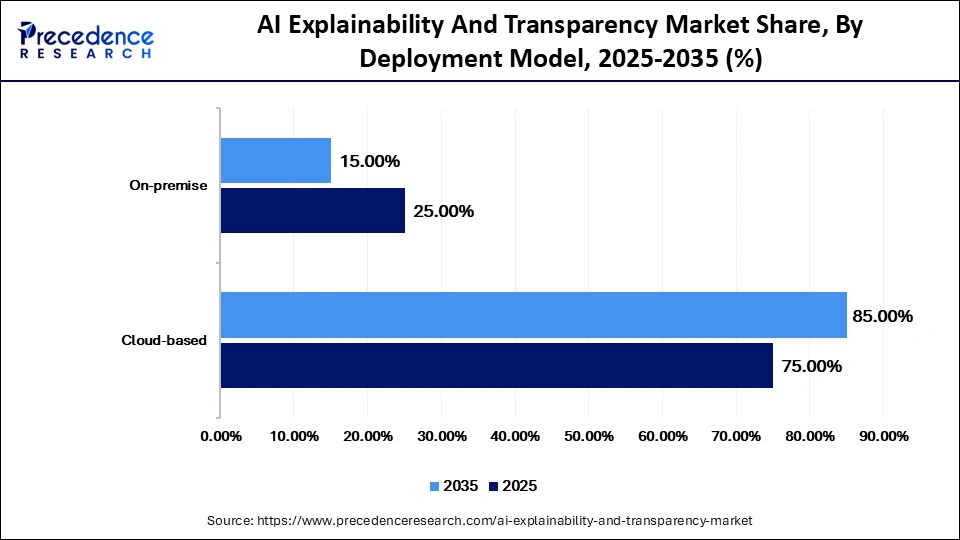
The on-premise segment held a 25% share of the market in 2025 and is expected to grow at a CAGR of 12.5% in the coming year, owing to the increasing concerns about data security, privacy, and regulatory requirements. For enterprises with sensitive data or government agencies that need to manage data and infrastructure themselves, on-premise deployments may be a better choice for centralized control. On-premise deployments are suitable for large enterprises and government agencies that wish to have more control over their AI infrastructure and data management.
On-premises solutions offer superior configuration options, security surveillance, and ongoing control. On-premise explainability platforms, which are generally complex and, therefore, expensive, are being used more widely in highly regulated sectors such as healthcare and banking. The growing number of specialized application areas, like healthcare and financial services, in which AI is being implemented, supports demand for on-premise explainability platforms, which tend to be more complex and therefore more expensive. Furthermore, enterprises that want to rely on cloud service providers less and less are moving towards local deployments more quickly.
Technology Insights
The Model Interpretability Tools Segment Led the Market with a 28% Share
The model interpretability tools segment led the AI explainability and transparency market by holding a share of 28%. This is because these tools allow users to understand the logic of their model, feature importance, and/or decision pathways, which enhances transparency and trust. Companies are using interpretability solutions that help mitigate risks posed by ‘black-box' AI technologies and to facilitate regulatory compliance. The increased penetration of machine learning in enterprise functions to deliver insights across vital business processes further bolsters the demand for interpretability technologies. As machine learning technology finds traction in their day-to-day critical processes, the demand for interpretability reaches an unprecedented high. Further, there is ongoing innovation in explainable machine learning frameworks, growing the abilities of these instruments.
The bias detection & fairness tools segment held a 22% market share in 2025 and is projected to grow at the fastest CAGR of 25.5% during the forecast period. This is because of rising awareness of potential ethical issues with AI and discriminatory outcomes. These tools identify and remediate biases in their training sets, algorithms, and automated decisions. The adoption of AI tools would also involve implementing some mechanism for the detection of bias, a practice that governments and regulatory bodies are encouraging; enterprises would have to start using those. The demand for fairness technology is rising because of the increasing use of AI tools in hiring, lending, insurance, and healthcare.
AI Explainability And Transparency Market Share, By Technology, 2025-2035 (%)
| Technology | 2025 | 2035 | CAGR (%) |
| Model Interpretability Tools | 28.00% | 26.00% | 21.5% |
| Bias Detection & Fairness Tools | 22.00% | 24.00% | 25.5% |
| Model Monitoring & Auditing | 25.00% | 27.00% | 24.5% |
| XAI Frameworks | 25.00% | 23.00% | 23.5% |
The model monitoring & auditing segment held a 25% market share in 2025, as these tools monitor model performance, identify outliers, and uncover performance degradation in deployed AI models. Auditing solutions are employed by organizations for legal reporting and filing, and to deliver views and to guarantee that they are transparent. The need for robust monitoring capabilities is rising with the growing use of AI in mission-critical operations. As AI becomes more common in mission-critical operations, there is a growing demand for robust monitoring capabilities. Moreover, businesses are adopting automated auditing solutions to boost risk management efforts and ensure the smooth functioning of operations.
The XAI frameworks segment held a 25% share of the market in 2025 due to the increasing demand for trustworthy AI systems across various sectors. Organizations are prioritizing transparency to foster confidence in their AI applications, especially in high-stakes industries like finance and healthcare. This trend has led to the integration of explainability tools and governance processes within enterprise AI frameworks, ensuring accountability and reliability in decision-making. As a result, the development of intuitive dashboards and human-centric design is making it easier for non-technical users to understand and interact with AI outputs, further enhancing the overall effectiveness and trust in these technologies.
Organization Size Insights
The Large Enterprises Segment Dominated the Market in 2025
The large enterprises segment dominated the AI explainability and transparency market by holding a share of 68% in 2025. This is because of their well-funded AI technology solutions and governance structures. These organizations often need advanced explainability capabilities to control advanced AI initiatives throughout their departments and across various regions. In addition, there is a growing drive from regulatory pressure and reputation implications for large enterprises to focus on transparent and ethical AI adoption.
The SMEs segment held a 32% share of the market in 2025 and is expected to grow at the fastest CAGR of 27.5% in the upcoming period, as adoption of AI spreads increasingly with the availability of Cloud and easily affordable explainability solutions. The insights gained from these experiences are leading SMEs to appreciate the need for transparency in AI to enhance customer confidence, streamline operations, and ensure compliance with regulations. The fact that AI can be accessed via subscription-based platforms is reducing the barrier for small businesses to access and utilize.
Furthermore, the increasing recognition of the importance of AI ethics and fairness is driving responsible AI adoption by small and medium enterprises. Additionally, the rise of sensitivity to ethical and fair uses of AI is leading SMEs to embrace responsible AI practices. Further, smaller companies are rapidly adopting AI thanks to government support programs and digital transformation efforts.
Application Insights
The Risk & Compliance Management Segment Held a 28% Market Share in 2025
The risk & compliance management segment dominated the AI explainability and transparency market with a 28% share in 2025, as organizations increasingly require transparent AI systems to meet regulatory standards and minimize operational risks. Explainability tools help businesses validate AI decisions, maintain accountability, and ensure compliance with data protection and governance regulations. Industries such as BFSI and healthcare are heavily investing in AI transparency to avoid legal liabilities and reputational damage. The growing complexity of AI-driven decision-making is further increasing the need for effective risk monitoring solutions. Additionally, enterprises are integrating explainability platforms into enterprise governance and compliance frameworks.
The fraud detection segment held a 20% market share in 2025 and is projected to grow at a 22.5% CAGR over the forecast period due to the increasing use of AI-powered systems for identifying suspicious transactions and cyber threats. Explainable AI solutions enable organizations to understand and justify fraud detection outcomes, improving trust and operational efficiency. Financial institutions are adopting transparent fraud analytics to comply with regulatory requirements and reduce false positives. The rapid growth of digital banking, online payments, and e-commerce is further driving demand for explainable fraud detection technologies. Moreover, AI-driven cybersecurity strategies are expanding the application scope of transparency solutions.
AI Explainability And Transparency Market Share, By Application, 2025-2035 (%)
| Application | 2025 | 2035 | CAGR (%) |
| Risk & Compliance Management | 28.00% | 30.00% | 25.5% |
| Fraud Detection | 20.00% | 19.00% | 22.5% |
| Customer Analytics | 18.00% | 17.00% | 23.5% |
| Healthcare Diagnostics | 18.00% | 19.00% | 26.5% |
| Autonomous Systems | 16.00% | 15.00% | 24.5% |
The customer analytics segment held a 18% share of the market in 2025 and is expected to expand at a 23.5% CAGR in the coming years, as businesses increasingly use AI to understand consumer behavior, preferences, and engagement patterns. Explainability tools help organizations interpret customer insights generated by AI models, enabling more accurate and transparent decision-making. Retailers, e-commerce platforms, and marketing firms are leveraging transparent AI systems to improve personalization and customer trust. The growing emphasis on ethical data usage and consumer privacy is also supporting the adoption of explainable customer analytics. Furthermore, businesses are utilizing interpretable AI to optimize marketing campaigns and enhance customer experiences.
The healthcare diagnostics segment held a 18% market share in 2025 and is expected to grow at the fastest CAGR of 26.5% during the projection period, due to the critical need for transparency and accuracy in AI-assisted medical decisions. Explainable AI solutions help clinicians understand diagnostic recommendations, increasing confidence in AI-driven healthcare systems. Hospitals and healthcare providers are increasingly adopting transparent AI platforms to improve patient safety and comply with medical regulations. The rising use of AI in medical imaging, disease prediction, and personalized medicine is driving segment growth. Additionally, explainability technologies support collaboration between healthcare professionals and AI systems by improving interpretability and accountability.
End-Use Industry Insights
What Made BFSI the Dominant Segment in the Market in 2025?
The BFSI segment dominated the AI explainability and transparency market with a 30% share, owing to its extensive use of AI in credit scoring, fraud detection, risk assessment, and customer analytics. Financial institutions require transparent AI systems to comply with strict regulatory standards and ensure accountability in automated decisions. Explainability tools help banks and insurers reduce bias, improve trust, and strengthen governance frameworks. The rising adoption of digital banking and AI-powered financial services is further accelerating demand for explainable AI solutions. Moreover, the sector's strong focus on risk mitigation and operational transparency continues to support market leadership.
AI Explainability And Transparency Market Share, By End-Use Industry, 2025-2035 (%)
| End-Use Industry | 2025 | 2035 | CAGR (%) |
| BFSI | 30.00% | 28.00% | 24.5% |
| IT & Telecom | 25.00% | 27.00% | 25.5% |
| Healthcare | 15.00% | 17.00% | 26.5% |
| Government | 12.00% | 13.00% | 25.0% |
| Retail & E-commerce | 10.00% | 9.00% | 23.5% |
| Automotive | 8.00% | 6.00% | 22.5% |
The IT & telecom segment held a 25% share of the market in 2025 and is expected to grow at a 25.5% CAGR over the studied period due to increasing deployment of AI for network optimization, cybersecurity, customer support, and predictive maintenance. Explainability solutions help telecom operators and IT firms monitor AI-driven processes and improve decision transparency. The rapid expansion of 5G infrastructure and cloud-based services is further driving AI adoption in this sector. Companies are also investing in transparent AI to enhance service reliability and customer trust. Furthermore, the growing need for ethical AI governance in digital ecosystems is accelerating segment growth.
The healthcare segment held a 15% market share in 2025 and is expected to grow at a 26.5% CAGR in the upcoming period, as medical institutions increasingly adopt AI for diagnostics, treatment planning, and patient monitoring. Explainable AI solutions are essential in healthcare because medical professionals require clear reasoning behind AI-generated recommendations. Regulatory requirements and patient safety concerns are encouraging healthcare providers to invest in transparent AI systems. The growing adoption of precision medicine and AI-powered imaging technologies is further supporting market expansion. In addition, explainability tools improve collaboration between clinicians and AI platforms, enhancing treatment accuracy and trust.
Regional Insights
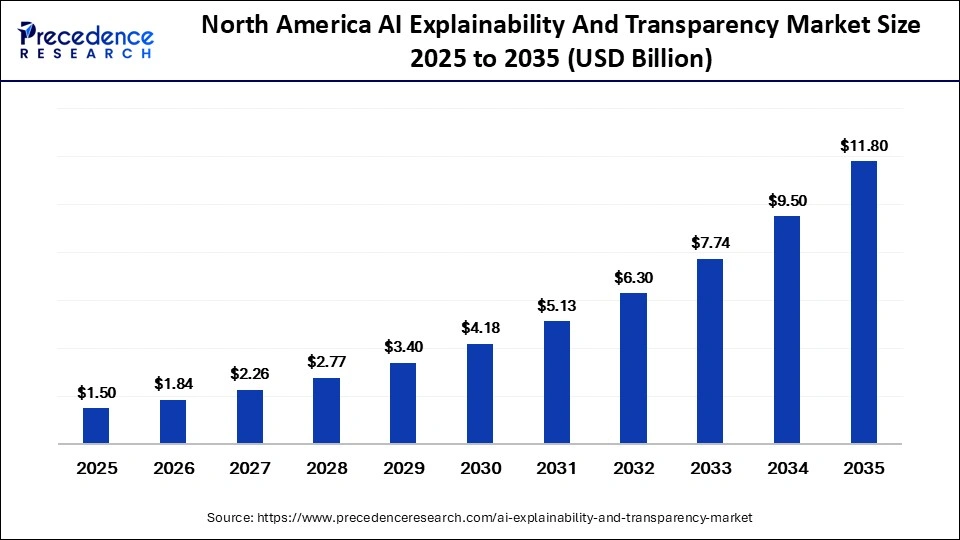
North America AI Explainability And Transparency Market Size and Growth 2026 to 2035
The North America AI explainability and transparency market size is estimated at USD 1.50 billion in 2025 and is projected to reach approximately USD 11.80 billion by 2035, with a 22.91% CAGR from 2026 to 2035.
Why Did North America Lead the AI Explainability And Transparency Market?
North America dominated the market by holding a share of 44% in 2025, primarily driven by the strong presence of leading AI technology companies and startups in the United States. Rising investments in AI research and development, along with increasing regulatory scrutiny over AI decision-making and algorithmic fairness, are encouraging organizations to adopt explainability and transparency solutions to build consumer trust and ensure compliance. Additionally, advanced digital infrastructure and a highly skilled workforce continue to support the region's market growth.
U.S. AI Explainability And Transparency Market Size and Growth 2026 to 2035
The U.S. AI explainability and transparency market size is calculated at USD 1.12 billion in 2025 and is expected to reach nearly USD 8.91 billion in 2035, accelerating at a strong CAGR of 23.05% between 2026 and 2035.
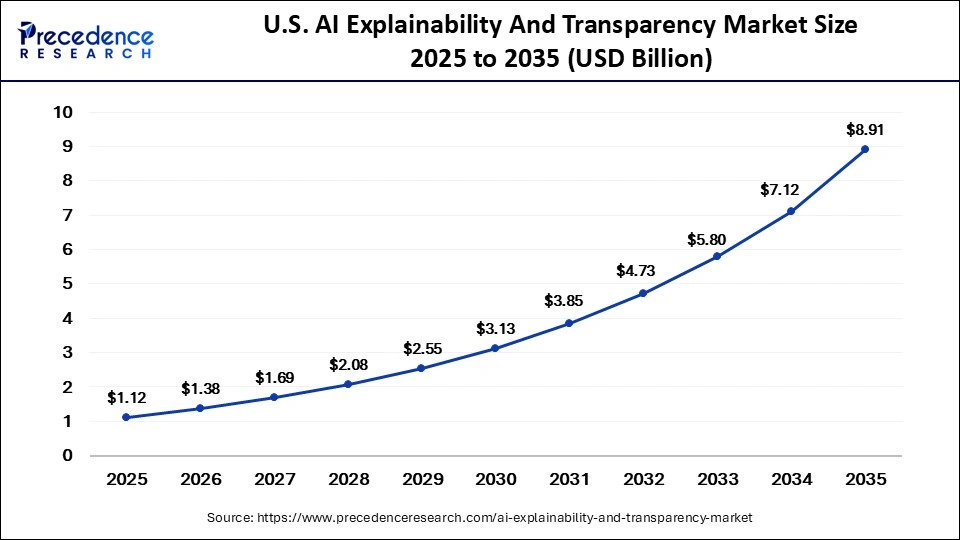
U.S. Market Analysis
In the U.S., the financial services sector is a major driver of the AI explainability and transparency market, as organizations focus on regulatory compliance, risk management, and improving accountability in automated decision-making systems. The healthcare industry is also witnessing strong adoption due to the critical need for transparent AI models in patient care, diagnostics, and treatment decisions. Additionally, leading technology companies are investing heavily in ethical and interpretable AI systems, driving demand for solutions that improve fairness, transparency, and consumer trust across industries.
Asia Pacific: The Fastest-Growing Region
Asia Pacific held a 18% share of the market in 2025 and is expected to grow at the fastest CAGR of 26.5% during the forecast period, driven by rapid digital transformation across various industries. Countries such as China and India are leading this growth, fueled by their increasing adoption of advanced technologies in sectors like finance, healthcare, and retail. As organizations in these nations strive to improve customer trust and regulatory compliance, the demand for explainable AI solutions is becoming more pronounced. Moreover, government initiatives promoting ethical AI practices and transparency further support this market expansion. The region's vast population and burgeoning tech-savvy consumer base create a fertile environment for innovative AI applications that prioritize clear and accountable decision-making.
China Market Analysis
In China, the government has been proactive in laying down regulations that necessitate the use of explainable AI in various applications, particularly within financial services and public administration. India's thriving startup ecosystem is also spurring advancements in AI transparency, as numerous tech companies focus on developing solutions tailored to local market demands. Additionally, the region's high growth in data generation and utilization is pushing organizations to seek AI tools that not only process vast amounts of data but do so transparently. With increased collaboration among businesses, academia, and government bodies, the development and adoption of AI explainability solutions are accelerating. Ultimately, as the Asia Pacific makes strides in harnessing AI technologies, the emphasis on explainability will be instrumental in driving sustainable market growth.
AI Explainability And Transparency Market Companies
- IBM
- Microsoft
- Google Cloud
- Amazon Web Services
- Fiddler AI
- DataRobot
- H2O.ai
- SAS
- Oracle
- Salesforce
- Accenture
- Deloitte
- PwC
- Infosys
- TCS
Recent Developments
- In May 2026, OpenAI is accelerating the launch of its first smartphone, with recent leaks revealing key specifications and a detailed timeline for its release. This move marks a significant expansion, showcasing OpenAI's commitment to advancing technology and innovation. Excitement is building around what features the device will offer.(Source: https://www.livemint.com)
- In April 2026, PayU is transforming its payment infrastructure to adapt to the AI era, enhancing efficiency and security. The company plans to leverage AI for improved fraud detection and personalized user experiences. This shift aims to streamline transactions and meet the evolving demands of consumers and merchants in a competitive landscape.(Source: https://economictimes.indiatimes.com)
Segments Covered in the Report
By Component
- Software
- Services
By Deployment Model
- Cloud-based
- On-premise
By Technology
- Model Interpretability Tools
- Bias Detection & Fairness Tools
- Model Monitoring & Auditing
- Explainable AI (XAI) Frameworks
By Organization Size
- Large Enterprises
- Small & Medium Enterprises (SMEs)
By Application
- Fraud Detection
- Risk & Compliance Management
- Customer Analytics
- Healthcare Diagnostics
- Autonomous Systems
By End-Use Industry
- BFSI
- IT & Telecom
- Healthcare
- Government
- Retail & E-commerce
- Automotive
By Region
- North America
- Latin America
- Europe
- Asia-pacific
- Middle and East Africa
For inquiries regarding discounts, bulk purchases, or customization requests, please contact us at sales@precedenceresearch.com
Frequently Asked Questions





Ask For Sample
No cookie-cutter, only authentic analysis – take the 1st step to become a Precedence Research client
 Get a Sample




 sales@precedenceresearch.com
 Schedule a Meeting
