



Anti-Snoring Devices Market Size, Companies, Share, Patient Volume, Treatment Adoption Rates, Pricing Analysis, Regulatory Landscape, Competitive Positioning, and Demand Forecast
Anti-Snoring Devices Market (By Product Type: Mandibular Advancement Devices (MADs), Tongue Stabilizing Devices (TSDs), Chin Straps, Nasal Devices, Positional Therapy Devices; By Material: Thermoplastic, Silicone, Acrylic, Rubber; By Distribution Channel: Online Stores, Retail Pharmacies, Specialty Sleep Clinics, Hospitals; By End User: Homecare Settings, Hospitals, Sleep Laboratories, Clinics) - Global Industry Analysis, Size, Trends, Leading Companies, Regional Outlook, and Forecast 2026 to 2035
Source: https://www.precedenceresearch.com/anti-snoring-devices-market
 Get a Sample
 Table Of Content


What is the Anti-Snoring Devices Market Size in 2026?
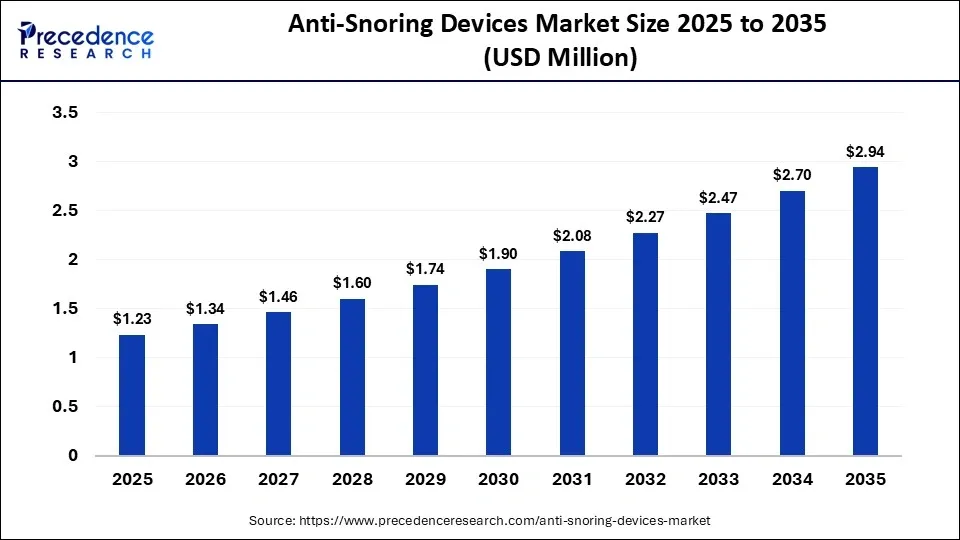
The global anti-snoring devices market size was calculated at USD 1.23 billion in 2025 and is predicted to increase from USD 1.34 billion in 2026 to approximately USD 2.94 billion by 2035, expanding at a CAGR of 9.12% from 2026 to 2035. Lifestyle changes, obesity linked snoring, aging, increasing incidence of sleep apnea, and increasing awareness of sleep health are boosting market growth.
Key Takeaways
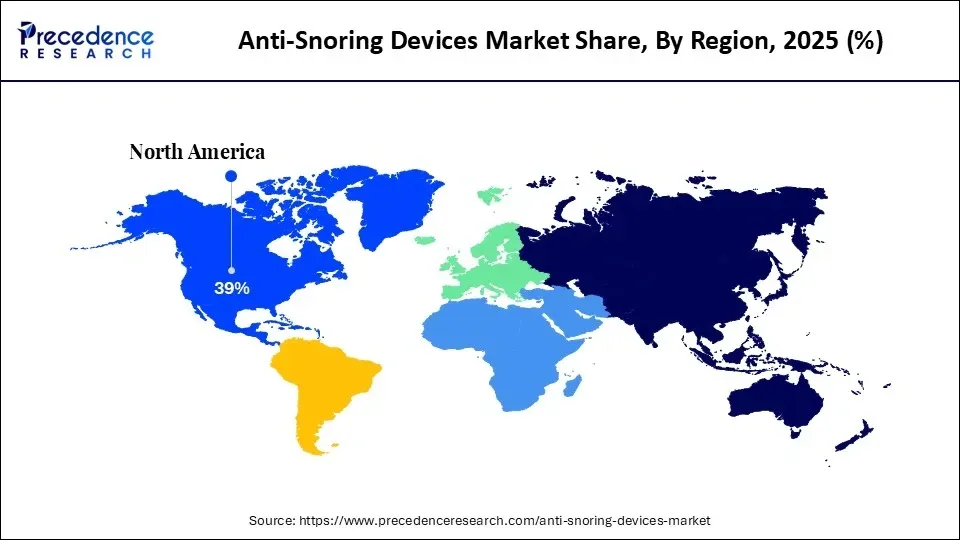
- North America dominated the anti-snoring devices market with the largest share of 39% in 2025.
- Asia Pacific is expected to grow at the fastest CAGR in the market during the forecast period.
- By product type, the mandibular advancement devices segment held a dominant position in the market with 43% of share in 2025.
- By product type, the tongue stabilizing devices segment is expected to grow at the fastest CAGR in the market during the forecast period.
- By material, the thermoplastic segment held a dominant position in the market with the highest share of 39% in 2025.
- By material, the silicone segment is expected to grow at the fastest CAGR in the market during the forecast period.
- By distribution channel, the specialty sleep clinics segment held a dominant position in the market with the largest share of 37% in 2025.
- By distribution channel, the online stores segment is expected to grow at the fastest CAGR in the market during the forecast period.
- By end-user, the homecare settings segment held a dominant position in the anti-snoring devices market with highest share of 42% in 2025.
- By end-user, the sleep laboratories segment is expected to grow at the fastest CAGR in the market during the forecast period.
Market Overview
Anti-snoring devices are designed to reduce or prevent snoring by keeping the airway open during sleep. These are non-invasive devices that address key causes of snoring, such as airway obstruction or vibration of throat soft tissues. They help promote quitter and more comfortable sleep, by improving airflow and stabilizing breathing. The anti-snoring devices market is witnessing steady growth, driven by the rising prevalence of sleep apnea and chronic snoring associated with obesity, aging, and lifestyle changes. Increasing awareness of sleep health is boosting demand for non-invasive, home-based treatment solutions. Further, the adoption is encouraged by technological advancements in nasal devices with improved comfort and customization.
Role of AI in the Anti-Snoring Devices Market
AI is transforming the anti-snoring devices market by enabling smarter monitoring, diagnosis, and real-time adaptive personalized therapy. AI-powered sleep tracking systems, smart pillows, and mattresses monitor breathing patterns, snoring intensity, and sleep sounds and stages, and automatically adjust position or pressure when snoring is detected to keep airways open. AI machine learning algorithms analyze individual sleep data to identify recurring causes of snoring and deliver personalized treatment settings in devices. Improving comfort and patient adherence. AI-assisted devices can inevitably detect snoring and activate corrective responses. These systems enhance comfort, minimize disruptions, support early diagnosis, and provide data-driven insights that help clinicians tailor treatment and improve long-term patient outcomes.
Anti-Snoring Devices Market Trends
- Devices are integrated with sensors, AI algorithms, and Bluetooth connectivity to monitor sleep in real time and automatically adjust settings for improved comfort and sleep quality.
- Data analytics are used to tailor treatment to individual snoring patterns and causes, boosting the demand for personalized and data-driven treatment.
- Rising health awareness and increased understanding of sleep disorders causes are boosting demand for effective snoring management solutions.
- Expansion of e-commerce and remote care provides access to online retail and telemedicine, enabling remote diagnosis, monitoring, and treatment.
- Broadening of product offerings with the expansion of the market from traditional mouthpieces to smart wearables and positional devices, catering to varied consumer needs and preferences.
Market Scope
| Report Coverage | Details |
| Market Size in 2025 | USD 1.23 Billion |
| Market Size in 2026 | USD 1.34 Billion |
| Market Size by 2035 | USD 2.94 Billion |
| Market Growth Rate from 2026 to 2035 | CAGR of 9.12% |
| Dominating Region | North America |
| Fastest Growing Region | Asia Pacific |
| Base Year | 2025 |
| Forecast Period | 2026 to 2035 |
| Segments Covered | Product Type, Material, Distribution Channel, End User, and region |
| Regions Covered | North America, Europe, Asia-Pacific, Latin America, and Middle East & Africa |
Segment Insights
Product Type Insights
How Did the Mandibular Advancement Devices Segment Lead the Mandibular Anti-Snoring Devices Market?
The mandibular advancement devices segment led the market in 2025, since they offer strong clinical effectiveness, patient compliance, and extensive medical recommendations. These are preferred, non-invasive, and travel-friendly devices, which work by repositioning the lower jaw to keep the airway open during sleep. Further, long-term adherence and improved comfort are achieved with custom and semi-custom designs with biocompatible materials and adjustable mechanisms. Collaborations with dentists and ENT specialists, post-market surveillance for adherence and follow-up services, further support adoption.
The tongue stabilizing devices segment is expected to grow at a higher CAGR from 2026 to 2035. They offer a non-invasive alternative to snoring solutions for people who cannot use mandibular advancement devices. They hold the tongue without changing jaw position to maintain airway openness. Their ease of use, minimal fitting requirements, compatibility with pediatric and adult patients, and availability through online channels and clinics are accelerating market adoption. Growing awareness of personalized treatment options, expanding clinical research, and direct-to-consumer education are driving the segment.
Material Insights
How did the Thermoplastic Segment Dominate the Anti-Snoring Devices Market?
The thermoplastic segment is dominating the anti-snoring devices market in 2025. It is highly appealing to consumers due to its easy customization, comfort, and affordability. These materials can be softened to mold according to the user's teeth, creating a personalized fit. It is widely adopted in homecare settings, with a chairside fitting process that makes these devices convenient and accessible. The medical-grade thermoplastic elastomers meet regulatory standards, hence are widely preferred. They are more affordable, non-invasive, and user-friendly, driving widespread adoption. Further, the market adoption is driven by ongoing material innovations.
The silicone segment is expected to grow at a higher CAGR during the forecast period. Compared to traditional materials, silicone offers more comfort, safety, and adaptability. For long-term use, medical-grade silicone is considered the best material, since it is biocompatible and hypoallergenic, reducing irritation in sensitive oral and nasal tissues. It can be molded into customized shapes, allowing better fit and effectiveness. It supports repeated cleaning and sterilization, since it is durable and resistant to degradation.
Distribution Channel Insights
How did the Specialty Sleep Clinics Segment Dominate the Anti-Snoring Devices Market?
The specialty sleep clinics segment dominated the market in 2025. They provide highly specialized and comprehensive end-to-end care for sleep disorders. These are focused on diagnosing and managing sleep disorders, with expert staff and advanced diagnostic tools. These are well known for their precise patient monitoring and accurate treatment selection, which improves clinical outcomes. They offer personalized device fitting and therapy customization, ensuring the devices are tailored to individual sleep disorder severity. These clinics often collaborate with dentists, ENT specialists, and device manufacturers to effectively manage sleep disorder solutions.
The online stores segment is expected to grow with the highest CAGR from 2026 to 2035. They provide greater accessibility and convenience to consumers, where they can easily compare products, prices, and features. The rapid growth of digital retail platforms and smartphone usage has expanded online medical device purchasing. Further, the availability of direct-to-customer devices, without prescription requirements, boosts the segment dominance. Online stores usually offer competitive pricing and subscription options, driving online adoption.
End-User Insights
What made the Homecare Settings Segment Dominate the Anti-Snoring Devices Market?
The homecare settings segment dominated the market in 2025, due to a growing shift toward home-based sleep solutions. Rising home sleep testing, telehealth consultations, and consumer sleep technology have made home treatment accessible, reducing dependency on clinical settings for routine snoring management. The convenience and comfort of the devices for users makes homecare the most preferred option for long-term use. The shift toward self-care and preventive healthcare drives individuals to purchase anti-snoring devices and use them independently. These devices, being compact, wearable, and easy to operate, are portable and user-friendly, making them ideal for daily home use rather than clinical settings.
The sleep laboratories segment is expected to grow at a higher CAGR during the forecast period, due to its crucial role in diagnosis and treatment planning. They perform advanced tests, which monitor multiple physiological signs and ensure precise diagnosis of sleep disorders. Rising awareness of the health risks of untreated sleep disorders and the rising prevalence of sleep apnea drive laboratory testing demand. For precise and accurate clinical evaluation, healthcare systems prioritize proper diagnosis before therapy selection, which boosts referrals to sleep laboratories. Technological advancements in sleep disorder diagnosis tools are expanding laboratory capabilities.
Regional Insights
North America Anti-Snoring Devices Market Size and Growth 2026 to 2035
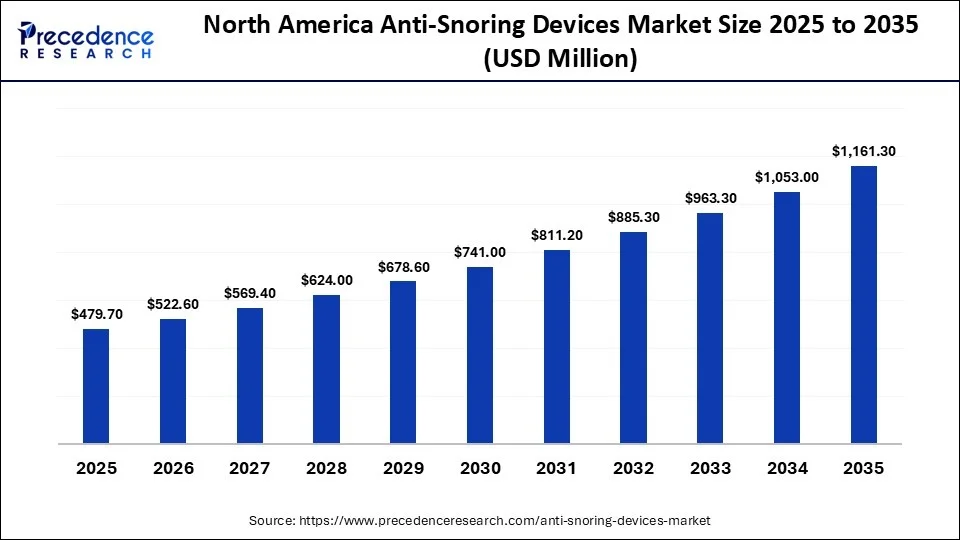
The North America anti-snoring devices market size is estimated at USD 479.70 million in 2025 and is projected to reach approximately USD 1,161.30 million by 2035, with a 9.24% CAGR from 2026 to 2035.
What Factors Have Driven the Dominance of North America in the Anti-Snoring Devices Market?
North America dominated the market in 2025, due to strong healthcare systems, high awareness of sleep-related disorders, and rapid technology adoption. The region has a large proportion of adults suffering from sleep disorders, especially snoring, creating demand for treatment solutions. Early diagnosis and device use are supported by well-established sleep medicine networks and specialized clinics. High awareness and the health-seeking nature of the population encourage the adoption of anti-snoring devices. The region hosts major market leaders and invests heavily in R&D, catering to continuous product innovation, smart devices, and improved comfort. The region prefers convenient homecare therapies and has greater access to e-commerce solutions. Further, the market is driven by higher disposable income and healthcare expenditure.
U.S. Anti-Snoring Devices Market Size and Growth 2026 to 2035
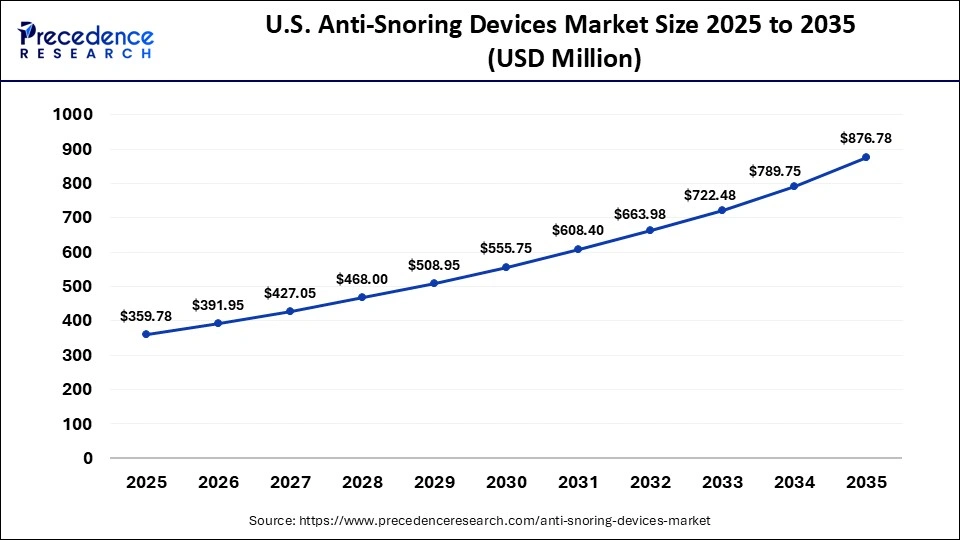
The U.S. anti-snoring devices market size is calculated at USD 359.78 million in 2025 and is expected to reach nearly USD 876.78 million in 2035, accelerating at a strong CAGR of 9.32% between 2026 and 2035.
U.S. Anti-Snoring Devices Market
The U.S. market is the most developed, supported by well-established healthcare settings, high awareness of sleep disorders, and access to advanced treatment options. The rising prevalence of snoring disorders and lifestyle-related risk factors, such as obesity, drives demand for anti-snoring devices and smart sleep technologies. The country is a hub for major market players such as ResMed and Philips Healthcare, which support innovation and product availability. Further, market penetration is expanded by rising healthcare expenditure and growing e-commerce distribution channels.
What makes Asia Pacific the Fastest Growing Region in the Anti-Snoring Devices Market?
Asia Pacific is expected to grow with a higher CAGR during the forecast period, since the region is experiencing rapid urbanization, rising healthcare awareness, and access to advanced medical technologies. Increasing sedentary lifestyle adoption and growing prevalence of sleep disorders are driving demand for effective snoring management solutions. A strong market potential is created in the region with a large untreated patient pool. Across urban and semi-urban regions, e-commerce platforms and affordable homecare settings are improving product accessibility. Government healthcare initiatives, rising healthcare spending, and innovation in the product are accelerating adoption and market growth.
Anti-Snoring Devices Market of China
China's market is expanding steadily, supported by strong demographic, economic, and healthcare settings. Demand for snoring management solutions is fueled by rising urbanization and an increasing sedentary lifestyle associated with sleep disorders. Greater public awareness, growing healthcare expenditure, and wider access to advanced medical technologies are encouraging the adoption of non-invasive treatment devices. Innovative and customized devices by local manufacturers further strengthen market growth. The E-commerce segment makes anti-snoring devices more accessible and affordable across the country. Increasing healthcare consciousness and growing healthcare infrastructure continue to drive the market growth.
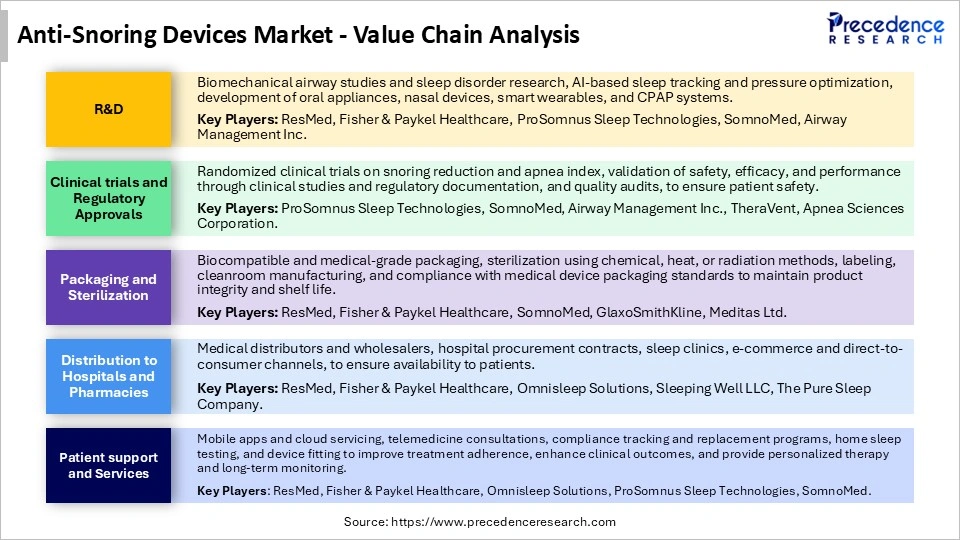
Anti-Snoring Devices Supply Chain Analysis
Anti-Snoring Devices Market Companies
- ResMed Inc.
- Koninklijke Philips N.V.
- Fisher & Paykel Healthcare Limited
- SomnoMed Ltd.
- GlaxoSmithKline plc
- Apnea Sciences Corporation
- ZQuiet (Sleeping Well, LLC)
- Airway Management Inc.
- ProSomnus Sleep Technologies
- Zyppah
- Tomed GmbH
- Meditas Ltd.
- Rotech Healthcare Inc.
- Mitsui Chemicals, Inc.
- SnoreMeds Inc.
- PureSleep Company Inc.
- Glidewell Laboratories
- MPowrx Health and Wellness Products Inc.
- DeVilbiss Healthcare
- Smart Nora
Recent Developments
- In March 2025, Fisher & Paykel Healthcare Corporation Limited announced the launch of the F&P Nova Nasal Mask for the treatment of obstructive sleep apnea in New Zealand and Australia. (Source: https://www.fphcare.com)
- In March 2025, Signifier Medical Technologies Limited announced a product update for its eXciteOSA device to meet Centers for Medicare & Medicaid Services (CMS) requirements for reimbursement.(Source: https://signifiermedical.com)
Segments Covered in the Report
By Product Type
- Mandibular Advancement Devices (MADs)
- Tongue Stabilizing Devices (TSDs)
- Chin Straps
- Nasal Devices
- Positional Therapy Devices
By Material
- Thermoplastic
- Silicone
- Acrylic
- Rubber
By Distribution Channel
- Online Stores
- Retail Pharmacies
- Specialty Sleep Clinics
- Hospitals
By End User
- Homecare Settings
- Hospitals
- Sleep Laboratories
- Clinics
By Region
- North America
- Asia Pacific
- Europe
- Latin America
- Middle East & Africa
For inquiries regarding discounts, bulk purchases, or customization requests, please contact us at sales@precedenceresearch.com
Frequently Asked Questions
Tags





Ask For Sample
No cookie-cutter, only authentic analysis – take the 1st step to become a Precedence Research client
 Get a Sample




 sales@precedenceresearch.com
 Schedule a Meeting
