



Biotechnology Instruments Market Size, Key Companies, Company Market Share, Manufacturing Capacity, Sales Performance, Regulatory Approvals, Patient Outcomes, Competitive Landscape, and Forecast
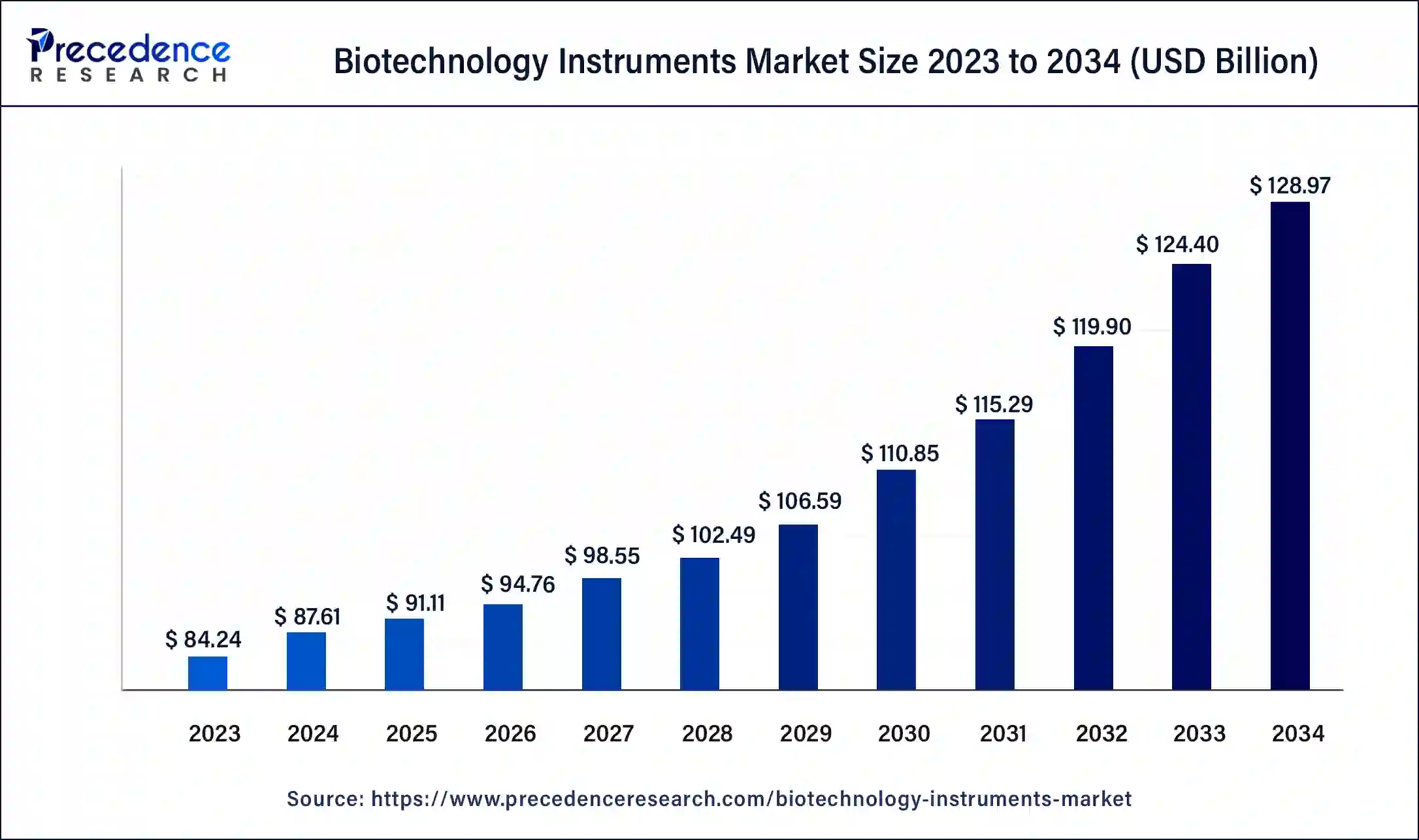
The global biotechnology instruments market is projected to grow from USD 94.76 billion in 2026 to USD 133.49 billion by 2035, registering a CAGR of 3.89%. Growth is fueled by rising investments in genomics, personalized medicine, laboratory automation, AI-powered research, and advanced diagnostic technologies. This report provides in-depth insights into market size, key trends, regional analysis, competitive landscape, growth drivers, challenges, and future opportunities across the biotechnology instruments industry through 2035.
Source: https://www.precedenceresearch.com/biotechnology-instruments-market
 Get a Sample
 Table Of Content


What is Driving the Growth of the Biotechnology Instruments Market?
The global biotechnology instruments market size is calculated at USD 91.11 billion in 2025 and is predicted to increase from USD 94.76 billion in 2026 to approximately USD 133.49 billion by 2035, expanding at a CAGR of 3.89% from 2026 to 2035. The market is witnessing substantial growth driven by streaming investments in genomics, the push toward personalized medicine, and the seamless adoption of automated analytical workflows.
Market Highlights
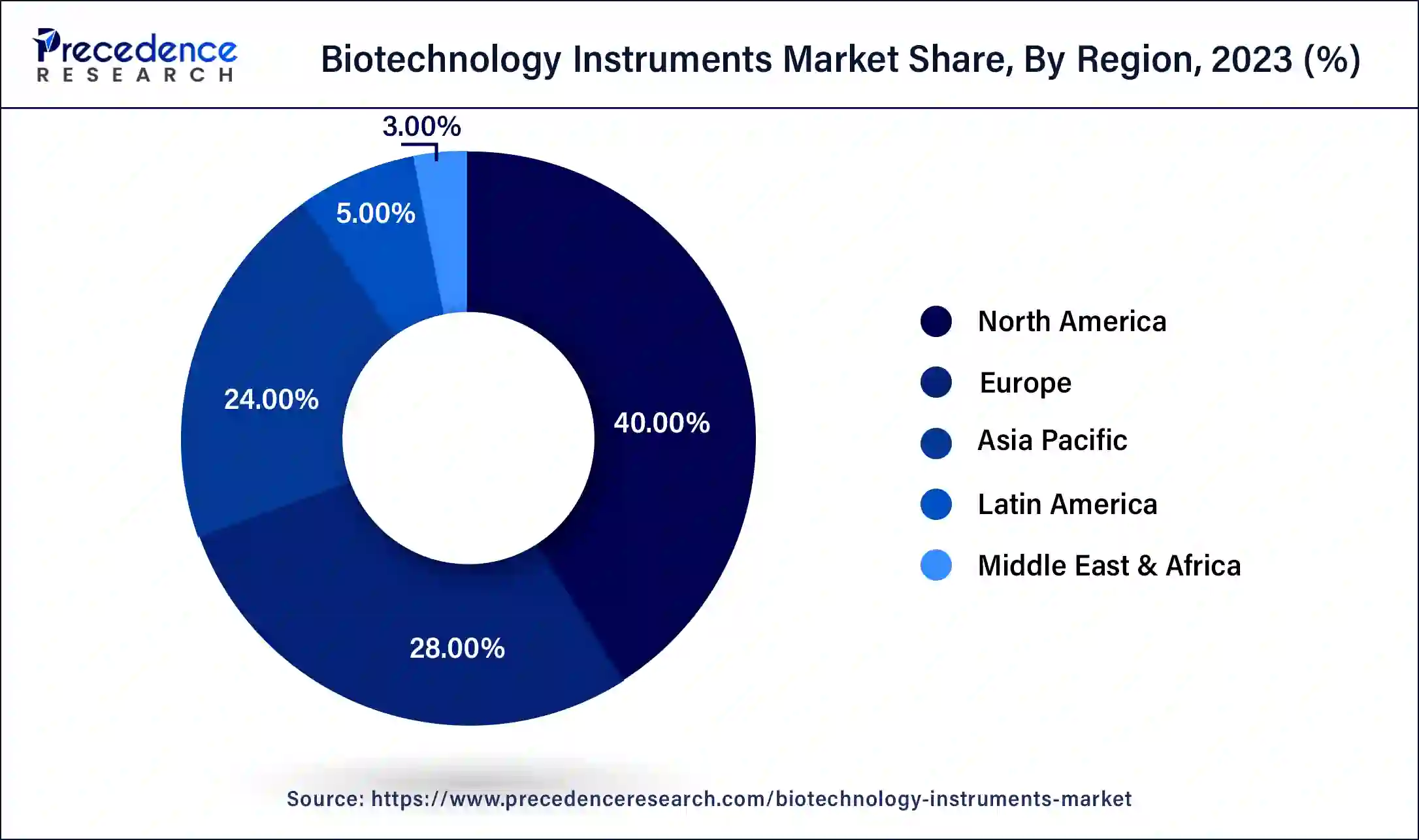
- North America led the global market with the largest market share of 40% in 2025.
- By product, the life science consumables segment has held the largest revenue share of 55% in 2025.
- By product, the medical laser segment held the largest share in the prepaid card market for 2025.
- By end user, the hospitals & healthcare facilities segment held the largest share in the prepaid card market for 2025.
Market Overview
The biotechnology instruments market involves the manufacturing, distribution, and servicing of tools and devices used in biological and life science applications. Sales of advanced laboratory equipment, including mass spectrometers, DNA sequencers, PCR systems, and incubators, play a crucial role in areas like genomics, drug discovery, and clinical diagnostics. This growth is driven by the increasing demand for personalized medicine, targeted molecular diagnostics, and advanced genomics. Additionally, the rise of lab automation technologies, including robotic liquid handlers, automated plate readers, and sample storage systems, is further fueling market adoption.
How is AI contributing to the Biotechnology Instruments Industry?
The presence of Artificial intelligence in the biotechnological field is something that has improved research considerably. It did this through better handling of data, faster design of experiments, and betterment of the processes involved in decision-making. Automated systems have taken care of all the repetitive tasks in the lab and have also combined the data from different sources for quick interpretation. The AI-driven processes have also minimized human errors and enabled the researchers to go deeper into the scientific world.
Major Trends in the Biotechnology Instruments Market
- Next-Generation Platforms for the Gene Editing Era: A significant shift toward highly specialized equipment to support the CRISPR revolution, genomics, and synthetic biology is creating unprecedented demand for benchtop sequencers and high-throughput analytical platforms.
- Expanding Demand for the Accelerating Discovery: The need for faster diagnostics and drug discovery has led to a strong push from both policymakers and industry for lab-on-a-chip technologies, AI-integrated data analytics, and automated robotics. These advancements help minimize human error and manage the massive volumes of data generated by modern research.
- Decarbonizing Production for a Sustainable Future: As countries focus on circular economies and decarbonization with a growing regulatory emphasis on sustainable laboratory operations. This shift is driving demand for culture-grown alternatives, bio-based chemicals, and low-energy laboratory devices.
- Regulatory-Ready Instruments for Personalized Care: Public health and safety agencies highlight the rapid growth of clinical diagnostics and personalized medicine, making compliance a critical aspect of instrument design to meet evolving standards.
Biotechnology Instruments Market Growth Factors
The increased adoption of the point of care diagnostic devices across the healthcare units is augmenting the growth of the global biotechnology instruments market. The growing needs for the development of vaccines, drugs, therapies, and diagnostic devices has fueled the demand for the biotechnology instruments across the globe. The rising investments in the research & development has improved the capabilities of the biotechnology instruments that further resulted in the enhancements of the point of care testing systems. The biotechnology instruments are extensively used in the production of various novel therapies, diagnostic devices, and gene modifications in the life science filed. The surging usage of the biotechnology instruments in the agricultural field has resulted in the development of the transgenic crops, which are resistant to pests and insects and provides higher yields. The growing concerns regarding the safety of environment from toxic and harmful chemicals is fueling the growth of the biotechnology instruments. The biotechnology instruments can help to degrade the toxicity of various harmful chemicals and thus help in resolving environmental issues. All these factors are expected to drive the growth of the global biotechnology instruments market during the forecast period.
The rising prevalence of various chronic diseases such as cancer, cardiovascular diseases, diabetes, and respiratory diseases is significantly boosting the usage of the biotechnology instruments in the production of various new drugs and therapies. Furthermore, the increasing investments by the biopharmaceutical companies towards the development of vaccines, medicines, and diagnostic tests is expected to have a positive and significant impact on the growth of the global biotechnology instruments market. The rising demand for the personalized medicines pertaining to the biological make up and the rising efforts to reduce the side-effects of the medicines is fueling the consumption of the biotechnology instruments. The rapid surge in the usage of the 2D and 3D cell cultures in the drug discovery and manufacturing of compounds is further driving the growth of the biotechnology instruments market across the globe.
The outbreak of the COVID-19 had a significant impact on the biotechnology instruments market in 2020. The pandemic spiked the demand for the biotechnology instruments as the demand for the RT-PCR tests were growing at a burgeoning rate across the globe. The demand for the RT-PCR is expected to sustain during the forecast period and hence, the growth will be significantly attributed to the impact of the COVID-19 pandemic on the global biotechnology instruments market.
Market Outlook
- Industry Growth Overview: Research as well as development of diagnostics continue to positively affect the uptake of biotechnology instruments in laboratories.
- Sustainability Trends: Sustainable production practices and the design of high-efficiency laboratory equipment are pushing the market towards being more environmentally friendly.
- Global Expansion: The Asia Pacific region is the fastest-growing area, while North America maintains its leading position due to technological innovation.
- Major Investors: The support of Orbimed Advisors and big companies comes in the form of technologies in advanced biotech instruments, as well as venture funding.
- Startup Ecosystem: Research-oriented hubs and venture-dependent development programs are the paths that innovative startups take to become successful.
Market Report Coverage and Key Metrics
| Report Coverage | Details |
| Market Size in 2025 | USD 91.11 Billion |
| Market Size in 2026 | USD 94.76 Billion |
| Market Size by 2035 | USD 133.49 Billion |
| Growth Rate from 2026 to 2035 | CAGR of 3.89% |
| Largest Market | North America |
| Base Year | 2025 |
| Forecast Period | 2026 to 2035 |
| Segments Covered | Product, End User, Region |
| Regions Covered | North America, Europe, Asia-Pacific, Latin America, and Middle East & Africa |
Market Dynamics
Driver
How does Biotechnology Innovation Drive the Biotechnology Instruments Market?
The U.S. attracts significantly more venture capital funding than the European Union across the different fields of biotechnology. The investor confidence can be strengthened by predictable and transparent regulations. The level of financing and well-functioning of government systems also boost regional collaborations.
Restraint
What are the Regulatory Hurdles in the Biotechnology Instruments Market?
The regulatory hurdles to biotechnology innovations include regulatory complexity, fragmented oversight, and lengthy approvals. These are found as major barriers to bringing innovations into the market. Governments are able to resolve bottlenecks by promoting agile regulation and collaboration, and early engagement between innovators and regulators.
Opportunity
How will the Biotechnology Instruments Market witness accelerated Innovation?
It is expected that smarter financing can potentially de-risk innovation and boost demand for biotechnology. Biosolutions as biotechnology innovations are emerging as major opportunities beyond biomedical applications. The policymakers across the globe are dedicated to strengthen the biotechnology capabilities of their economies.
Market Segmentation Insights
Product Insights
How did the Life Science Consumables Segment Dominate the Biotechnology Instruments Market?
The life science consumables segment dominated the market in 2025. This dominance is primarily driven by the high demand for large, recurring volumes of reagents, kits, and single-use labware. Consumables such as cell culture media, diagnostic assays, and pipette tips are required daily across biological, pharmaceutical, and clinical testing sectors. Rapid expansion in public health and basic research necessitates a steady replenishment of stock, with increased state-sponsored funding for molecular testing further boosting consumable demand.
The medical laser segment is expected to experience the fastest growth during the forecast period. This growth can be attributed to the rising demand for minimally invasive surgical procedures, along with government support for domestic medical device manufacturing and advancements in outpatient laser platforms. Extensive policy backing is enhancing the development of medical devices and biotech equipment, and innovations in diode and solid-state laser technology are making devices more portable and versatile, expanding their applications in hospitals and specialized cosmetic and dental clinics.
End User Insights
Why did the Hospitals and Healthcare Facilities Segment Dominate the Biotechnology Instruments Market?
The hospitals and healthcare facilities segment held the market dominance in 2025. This dominance is largely due to the intensive requirements for automated molecular testing systems and in vitro diagnostic instruments in healthcare and diagnostic laboratories. The need for rapid and accurate disease detection drives significant utilization of diagnostic analyzers in clinical settings, with routine clinical operations widely adopting automated nucleic acid extraction systems and clinical chemistry analyzers to enhance patient care and clinical screening.
The academic and government institutions segment is projected to be the fastest-growing during the forecast period. This growth is driven by rising public funding, strategic investments in national bio-manufacturing hubs, and transdisciplinary approaches. Interdisciplinary institutions are increasingly adopting tools such as DNA synthesizers and microarray systems to advance discoveries in proteomics, genomics, and synthetic biology. Public and private partnerships are prioritizing high-throughput tools such as Next-Generation Sequencing to shorten research timelines, fueled by targeted state investments.
Market Regional Insights: North America, Europe, Asia-Pacific
How is North America leading in the Biotechnology Instruments Market?
North America accounted for more than 40% of the market share in 2025 and dominated the global biotechnology instruments market. The higher adoption rate of the advanced technologies in the biopharmaceutical industries, increased demand for biotechnology instruments, high affordability, and the presence of numerous top market players in US are the prominent factors that drives the growth of the North America biotechnology instruments market. Moreover, the increased demand for the new and innovative drugs, rising investments in the research & development of vaccines, and favorable government support to the pharmaceutical industry has led to the dominance of North America in the global biotechnology instruments market.
North America is the frontrunner with its well-established research infrastructure and swift embracing of modern platforms for genomics and proteomics. The collaboration of academics and industry plays a vital role in the development of new instruments, which in turn leads to the wider use of high-throughput technologies in laboratories and among the organizations involved in research.
U.S. Biotechnology Instruments Market Trends
The U.S. of America is home to the biggest manufacturers of biotechnology instruments as well as the most influential research activity, which is technologically supported. Automation and artificial intelligence are the main drivers of the operating costs that have been cut in this sector, as well as of the enhanced analyses, and thus, overall, the entire advanced research and laboratory practice.
U.S. Biotechnology Instruments Market Size and Growth 2026 to 2035
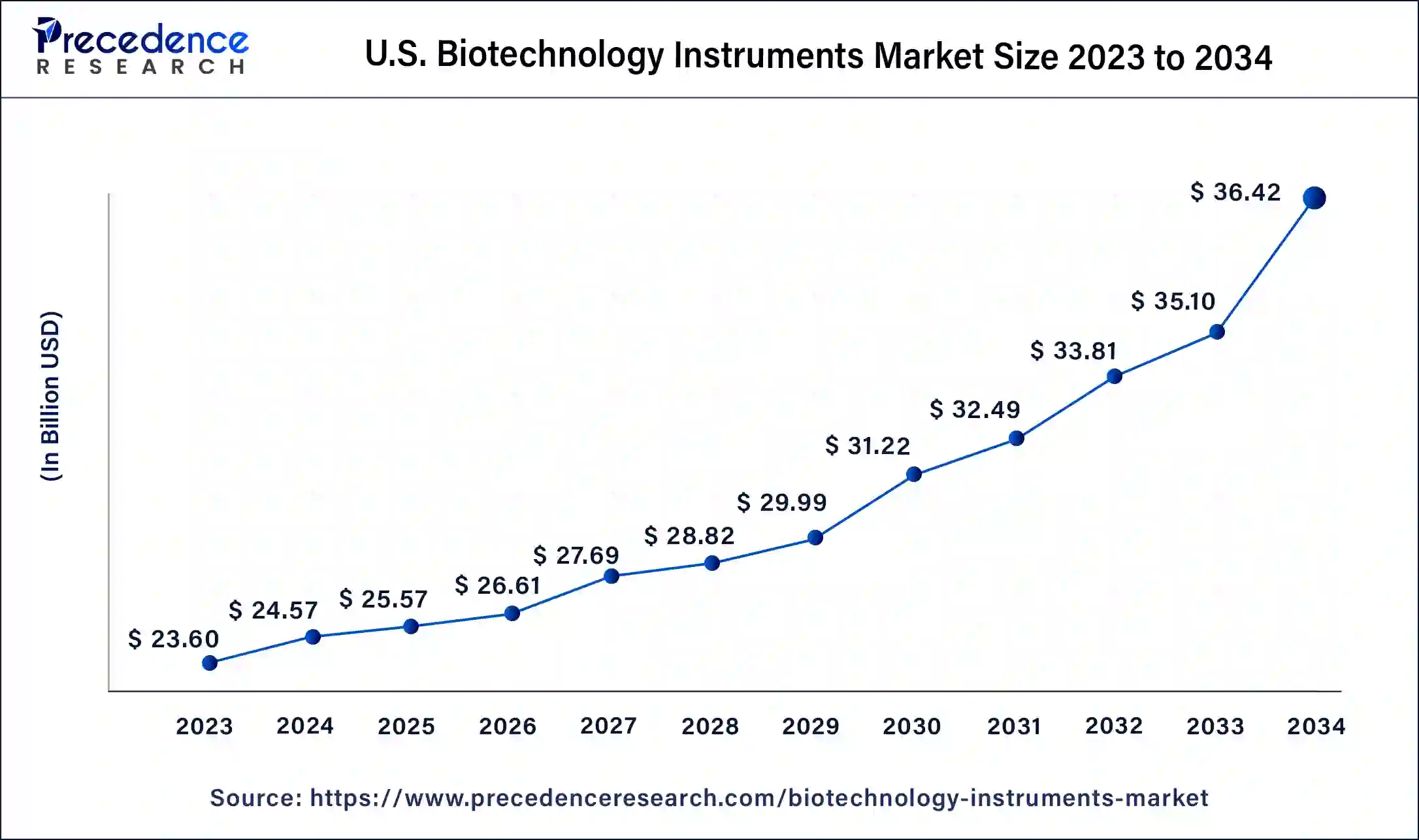
The U.S. biotechnology instruments market reached USD 25.57 billion in 2025 and is predicted to be worth around USD 37.72 billion by 2035, at a CAGR of 3.96% from 2026 to 2035.
How is Asia-Pacific performing in the Biotechnology Instruments Market?
Asia Pacific is estimated to be the most lucrative market during the forecast period. The favorable government investments is attracting FDIs and facilitating the collaborations of the local companies with the foreign companies. This is a major driving force of the biotechnology instruments market. Furthermore, the emerging countries like China, India, Australia, and Japan are inclining towards the utilization of the biotechnology instruments in the agriculture, energy, and environment protection fields, which is fueling the demand for the biotechnology instruments.
The Asia Pacific is a rapidly growing area that enjoys the support of governments and increasing investments in healthcare. One reason for the high demand for instruments in that area is an increase in research capacity and the opening of local life science initiatives
China/India Biotechnology Instruments Market Trends
On the one hand, China attracts more investments due to its growing innovation and biotech startups, while on the other hand, India is making its biotechnology output and manufacturing landscape stronger. Both countries are creating demand for instruments due to the growing R&D and rising need for analytical tools.
What are the driving factors of the Biotechnology Instruments Market in Europe?
Europe consistently shines with the establishment of research budgets and the adoption of advanced sequencing and imaging technologies. Regulatory clarity plays a significant role in ensuring that instruments of biotechnology are deployed and laboratories are modernized.
The regional market growth is also attributed to the region's strong pharmaceutical investments, extensive research and development, well-established academic research hubs, and the increasing adoption of molecular diagnostics across public healthcare systems.
Germany Biotechnology Instruments Market Trends
Germany, the U.K., and France are leading players in the market due to their high levels of funding for proteomics, synthetic biology, and translational research. The region also benefits from a robust regulatory framework that drives demand for compliant analytical and automation technologies. Additionally, advancements in bioreactors, flow cytometry, and spectroscopy tools push market development and innovation further.
Germany propels the demand for biotechnology instruments with a strong research orientation and academic-industry collaborations. The increased scientific development focus requires sophisticated analytical and laboratory devices across research and clinical environments.
What are the Major Factors Driving the Market in Latin America?
The biotechnology instruments market in Latin America is fueled by increasing investments in modernizing diagnostic infrastructure, pharmaceutical manufacturing, and infectious disease management. Brazil and Mexico are leading the region, supported by expanding private laboratory networks and a rising interest in biosimilars production. The adoption of PCR, immunoassay platforms, and centrifuges is increasing as healthcare systems aim to improve disease surveillance and decrease dependence on imported diagnostics. Partnerships with multinational companies and investments in local bioprocessing capacities are gaining traction, offering opportunities for long-term and steady growth.
Brazil Market Trends
Brazil plays a crucial role within the region, characterized by strong demand for agricultural biotechnology and biopharmaceutical production. The Brazilian government actively promotes this sector to ensure technological sovereignty in health and agriculture. The Ministry of Science, Technology and Innovation has launched a significant investment package aimed at national reindustrialization, while the National Technical Commission on Biosafety evaluates and approves new genetically modified organisms and biotechnological innovations for agricultural and commercial use.
How is the Opportunistic Rise of the Middle East & Africa?
The Middle East & Africa is experiencing a strategic rise in the biotechnology instruments market, driven by improvements in healthcare infrastructure, increasing chronic disease rates, and a stronger focus on genomic screening programs. The region demonstrates significant growth supported by the expansion of infectious disease diagnostics and donor-funded laboratory capacity initiatives. Additionally, the region is seeing rapid growth in research centers, technology transfer projects, and partnerships with global biotechnology companies. All these factors are expected to further boost the region's market potential.
UAE Market Trends
The UAE plays a distinctive role within the region by reducing its dependence on oil, designating biotechnology as a priority sector for economic growth. The country emphasizes precision medicine, advanced diagnostic infrastructure, and genomics. The national biotechnology strategy supports research and development, promotes public-private partnerships, and establishes world-class regulatory frameworks, attracting major multinational biotech firms and supplying advanced lab infrastructure for life sciences companies.
Government Initiatives in the Biotechnology Instruments Market
China
- In June 2026, the Ministry of Science and Technology (MOST) of China introduced ‘Intergovernmental International S&T Innovation Cooperation', which is a key special program supported by government. This initiative funds joint research and development projects between international partners and Chinese entities. Moreover, this program offers direct Chinese government funding to antibody developers, international IVD manufacturers, and biotechnology companies to co-develop products with a Chinese partner. (Source: https://www.sekbio.com)
United States
- In December 2025, the National Security Commission on Emerging Biotechnology (NSCEB) introduced 17 new provisions and celebrated the conference report for the FY2026 National Defense Authorization Act. These 17 provisions were designed to highly prioritize emerging biotechnology across the defense and intelligence communities. Moreover, committees embraced the integral role of biotechnology in shaping the future of national security. (Source: https://www.biotech.senate.gov)
Germany
- In October 2025, Germany launched a new strategy in the form of a €18 billion high-tech agenda to position the country to the cutting-edge in multiple technological fields, including biotechnology, fusion nuclear energy, and low-emissions transport. Germany has selected six key technologies such as biotechnology, microelectronics, AI, quantum technologies, climate neutral power, nuclear fusion, and climate neutral transport as crucial technologies to its future. (Source: https://sciencebusiness.net)
Brazil
- In May 2026, the Brazilian government launched the national bioeconomy development plan, established under the National Bioeconomy Strategy. This initiative aims to position Brazil's megabiodiversity as a response to climate crisis and a driver of social inclusion. It also aims to transform country's biodiversity into one of the structural pillars of Brazil's economic development by 2035. (Source: https://www.mayerbrown.com)
Saudi Arabia
- In July 2025, the Government of the Kingdom of Saudi Arabia reported that biotechnology has powered Saudi Arabia's journey from genomics to pharmaceutical security and a sustainable future. Furthermore, the National Biotechnology Strategy was built on four major pillars toward advancing biopharmaceutical manufacturing, localizing vaccine production, enhancing agricultural innovation through biotechnology, and driving genomic and gene therapy research. This strategy is aiming to create over 11,000 specialized jobs by 2030, which will grow to 55,000 by 2040. (Source: https://www.moh.gov.sa)
Collaborations in the Biotechnology Instruments Market
- In March 2026, Natural Biogenex made a partnership with Fermbox Bio for Rs. 60 Crore manufacturing deal. This strategic manufacturing partnership was made by Natural Capsules Limited through its subsidiary Natural Biogenex Private Limited. The investment of up to Rs. 60.00 crores was made in advanced fermentation technology and equipment at the Tumkur facility. This collaboration aims to strengthen fermentation-based contract development and manufacturing organization (CDMO) capabilities for biotechnology and pharmaceutical sectors. (Source: https://scanx.trade/stock-market-news)
- In April 2026, the European Commission reported that Health Biotechnology collaborative research funded by the European Commission powered next-generation therapies. It has also been reported that multiple R&D projects focus on boosting the delivery of innovative new treatments. These include automated systems to immediately assess stem cell-based treatments for osteoarthritis and a systems medicine approach to divide patients based on disease mechanics. (Source: https://cordis.europa.eu)
- In June 2026, Flagship Pioneering announced a research collaboration with Lean Business Services at the 2026 Biotechnology Innovation Organization conference in San Diego. These companies aim to advance AI-enabled biomedical research and healthcare innovation in Saudi Arabia. They will achieve this goal by uniting Lean's platform and ecosystem with Flagship's expertise in establishing and launching life science companies. (Source: https://www.fiercebiotech.com)
Investments in the Biotechnology Instruments Market
- In December 2025, the Germany fund created a framework that enables private and municipal companies to invest in Germany on a larger scale. The German federal government is committed to providing funds and ensures amounting to around EUR 30 billion for this initiative. It will enhance total investment of around EUR 130 billion. The Germany fund is intended to key areas to boost major future investments for the expansion of renewable energies, electricity grids, and heating networks. It will extend up to the financing of innovative technologies such as biotechnology, AI, and deep tech. (Source: https://www.kfw.de)
- In June 2026, J&J planned to acquire a biotechnology startup named Firefly Bio, producer of ‘degrader' antibody drugs, in a deal worth $1 billion in cash. This acquisition will hand over J&J a technology to make new types of therapies called degrader antibody conjugates. (Source: https://www.biopharmadive.com)
- In December 2025, the Information Technology and Innovation Foundation reported that NIH funded research supports the development of vaccines and therapies. The expansion of NIH funding will drive the protection of American health, ensure national power and security, and support U.S. biopharmaceutical competitiveness. (Source: https://itif.org)
Biotechnology Instruments Market Value Chain Analysis
- R&D: Identifying new drug candidates, performing initial research and safety testing, efficacy, and biological potential evaluation are all part of this process.
Key Players: Thermo Fisher Scientific, Agilent Technologies, Danaher - Clinical Trials & Regulatory Approvals: The process includes carrying out human clinical trials, creating dosage and safety data, and presenting the necessary documents to the regulatory bodies for obtaining product approval.
Key players: IQVIA, Parexel, ICON PLC, Labcorp, and Charles River Laboratories - Formulation & Final Dosage Preparation: This procedure involves mixing the active pharmaceutical ingredients with the excipients to make the final dosage forms, such as injections, pills, or solutions, that are stable and effective.
Key Players: Cambrex and Pharmaceutics International, Inc. (Pii) - Packaging & Serialization: The final products are packaged in a secure manner, and their unique codes are recorded to ensure integrity, allow tracking, and thwart counterfeiting throughout the supply chain.
Key Players: Dassault Systèmes (BIOVIA) - Distribution to Hospitals, Pharmacies: This refers to the activities of storing the inventory, managing the logistics, and performing the efficient delivery of the final products to healthcare facilities and pharmaceutical points of access.
Key players: Avantor and McKesson
Market Competitive Landscape: Leading Companies and Strategies
The global biotechnology instruments market is highly consolidated and established, and major key players like Thermo Fisher Scientific, Danaher Corporation, and Agilent Technologies are emphasizing laboratory automation and strategic acquisitions to enhance their portfolios. Such targeted developments allow them to capitalize on the increasing adoption of personalized medicine.
Looking ahead, many emerging players and startups, including Asimov, String Bio, and Antheia, are actively leveraging global clinical trial activities and AI integration to pursue future opportunities in advanced therapeutics. However, these are restrained by the high capital cost of advanced analytical instrumentation, strict regulatory frameworks, and the demand for specialized personnel.
Top Companies in the Biotechnology Instruments Market & Their Offerings
- Abbott: Immunoassay and PCR instrument systems for diagnosis are among the products supplied by this company, which operates mainly in the clinical testing market.
- Agilent Technologies: Genomics and life science laboratory research applications that involve chromatography and mass spectrometry are the analytical instruments offered by this company.
- Alcon, Inc.: They provide high-tech ophthalmic surgery systems and save vision care devices while staying away from general biotech instrumentation.
- Zeiss Group: The Zeiss Group is a global leader in optics and optoelectronics, providing advanced instruments for healthcare, research, and industrial applications. The company offers high-precision solutions in microscopy, medical technology, semiconductor manufacturing equipment, and quality assurance. In biotechnology, Zeiss is renowned for its innovative microscopy and imaging systems that support life science research, cell biology, and clinical diagnostics.
- Abbott Laboratories: Abbott Laboratories is a global healthcare company focused on diagnostics, medical devices, nutrition, and branded generic medicines. In biotechnology instruments, Abbott is known for its advanced diagnostic systems, immunoassay analyzers, and molecular testing platforms. The company plays a vital role in enhancing healthcare outcomes by offering reliable tools for disease detection, monitoring, and personalized medicine.
- Thermo Fisher Scientific, Inc.: Thermo Fisher Scientific, Inc. is a global leader in biotechnology instruments, life sciences, and laboratory solutions. Its extensive portfolio includes systems for DNA sequencing, mass spectrometry, chromatography, microscopy, and laboratory automation. Thermo Fisher empowers scientists, researchers, and healthcare providers to accelerate discoveries, improve diagnostics, and advance biopharmaceutical production.
- Illumina, Inc.: Illumina, Inc. is a pioneer in genomics and biotechnology instruments, specializing in DNA sequencing and array-based technologies. Its platforms enable researchers and clinicians to analyze genetic variation and function with unmatched accuracy and scale. Illumina's sequencing instruments are widely used in genomics research, oncology, reproductive health, and precision medicine.
Other Major Companies
- AngioDynamics
- Becton, Dickinson, and Company
- BioMerieux SA
- Bio-Rad Laboratories
- BioTek Instruments, Inc.
- Candela Medical
- Cynosure, LLC
- Danaher Corporation
- Endress+Hauser
- F. Hoffmann-La Roche Ltd.
- IIlumina Inc.
- IRIDEX
- Lumenis
Recent Developments
- In June 2026, Trinity Biotech plc announced the launch of Trinovium, a subsidiary focused on advanced liquid cooling solutions for AI data centers. As demand for liquid cooling rises with higher compute density and heat, Trinovium will leverage Trinity's strengths in fluid manufacturing and large-scale production to efficiently enter the liquid cooling market while optimizing existing assets. (Source: https://www.manilatimes.net)
- In November 2025, Emirates Biotech launched its Embio range of polylactic acid (PLA) biopolymers, offering sustainable alternatives to conventional plastics and aligning with the UAE's Net Zero 2050 goal and circular economy efforts. The Embio line offers various PLA grades for packaging and other applications, promoting local accessibility and faster delivery for businesses striving to incorporate sustainable materials. (Source: https://www.plasticsnews.com)
- In October 2025, Takara Bio USA updated its product portfolio, enhancing the Trekker Single-Cell Spatial Mapping Kits for use with formalin-fixed paraffin-embedded (FFPE) samples. This move aims to increase accessibility of spatial single-cell analysis for more researchers. (Source: genengnews.com)
- In June 2025, Molecular Instruments launches HCR Pro RNA-ISH, enhancing HCR imaging for manual workflows, enabling sensitive RNA imaging with chromogenic or fluorescent staining. Molecular Instruments is launching its unmatched performance and versatility of the HCR imaging platform. (Source: businesswire.com)
Segments Covered in the Report
By Product
- Life Science Consumables
- Medical Lasers
- Ophthalmic
- Therapeutics
- Ablation
- Lab Automation Instruments
- Genomics
- Proteomics
- Spatial Cell Analysis
- Sequencing
- Others
- IVD Instruments
By End User
- Pharmaceutical Companies
- Government & Academic Institutions
- Hospitals & Healthcare Facilities
- Others
By Region
- North America
- Europe
- Asia-Pacific
- Latin America
- Middle East & Africa (MEA)
For inquiries regarding discounts, bulk purchases, or customization requests, please contact us at sales@precedenceresearch.com
Frequently Asked Questions





Ask For Sample
No cookie-cutter, only authentic analysis – take the 1st step to become a Precedence Research client
 Get a Sample




 sales@precedenceresearch.com
 Schedule a Meeting
