



Cancer Biomarkers Market Revenue, Leading Companies, Company Technology / Innovation, Diagnostic Testing Volume, Adoption Rates, Pricing Metrics, Supply Chain Performance, Competitive Positioning, and Industry Trends
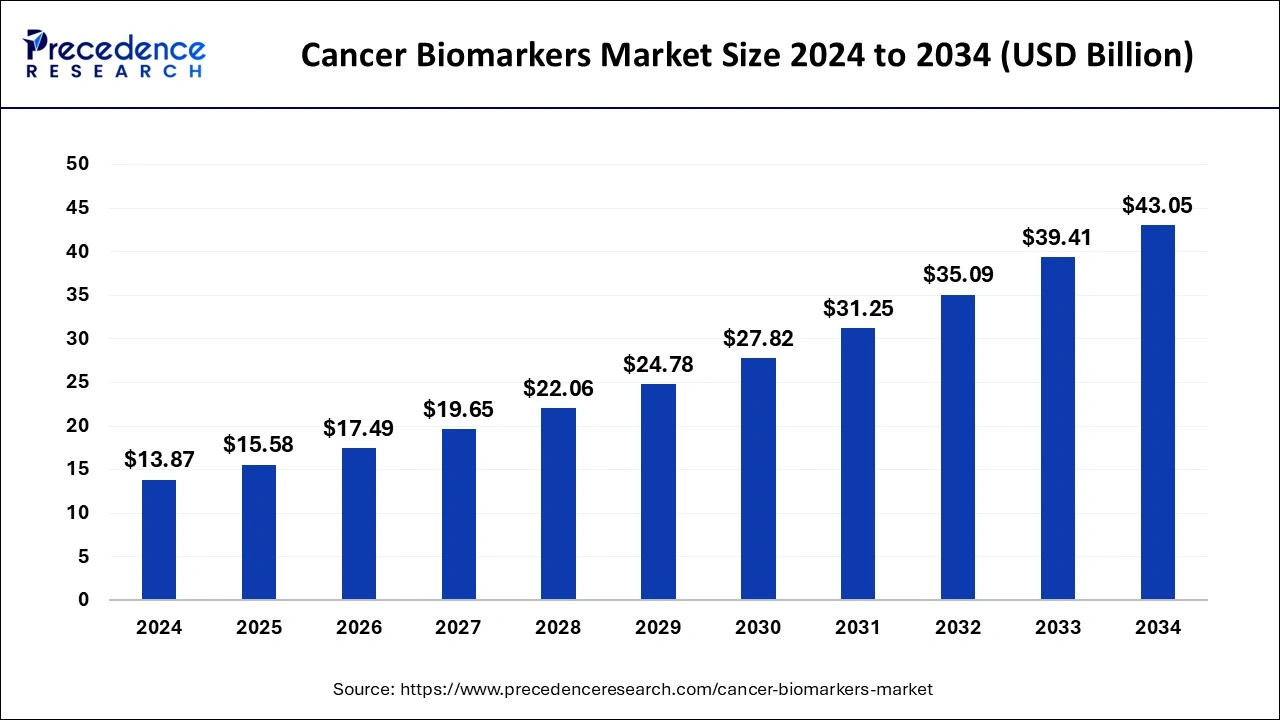
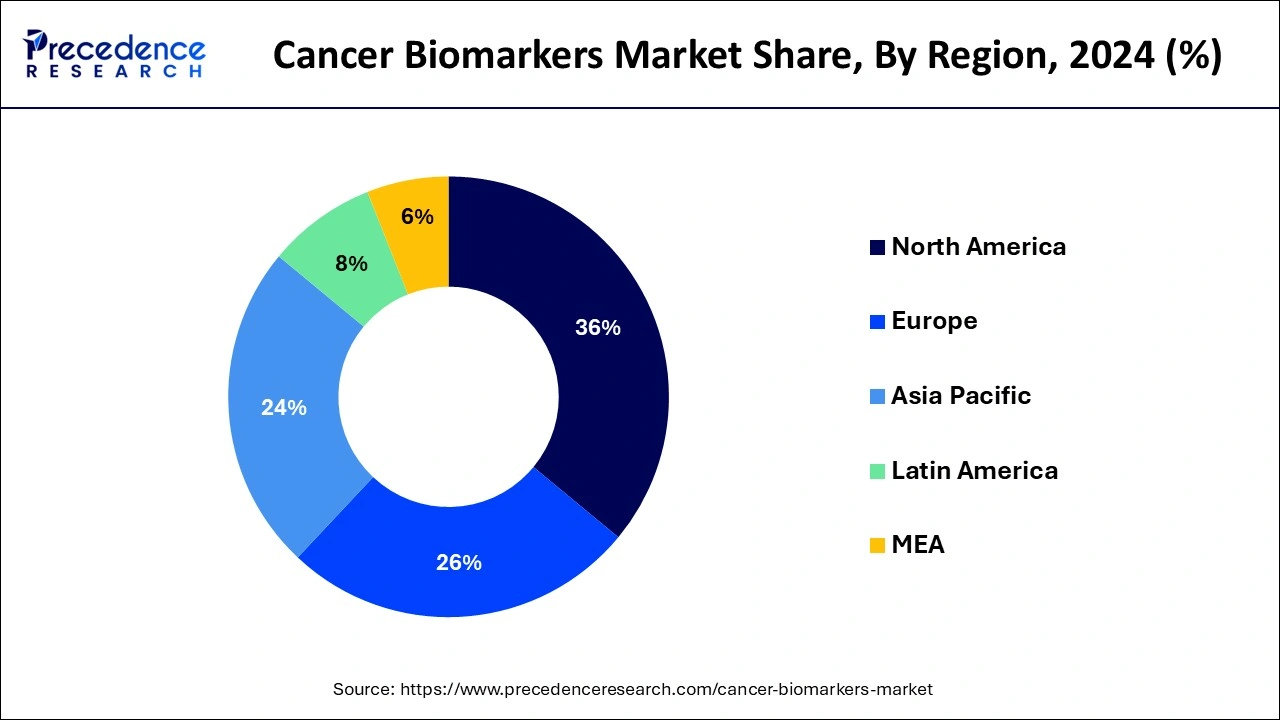
The global Cancer Biomarkers Market was valued at USD 17.49 billion in 2026 and is projected to grow from USD 17.49 billion in 2026 to USD 47.14 billion by 2035, registering a CAGR of 11.71% from 2026 to 2035. Growth is driven by the rising prevalence of cancer, increasing adoption of precision oncology, advancements in AI, liquid biopsy, and next-generation sequencing technologies. North America held the largest share of 36% in 2025, while Asia Pacific is expected to witness the fastest growth during the forecast period.
Source: https://www.precedenceresearch.com/cancer-biomarkers-market
 Get a Sample
 Table Of Content


What is the Cancer Biomarkers Market Size?
The global cancer biomarkers market size was calculated at USD 15.58 billion in 2025 and is predicted to increase from USD 17.49 billion in 2026 to approximately USD 47.14 billion by 2035, expanding at a CAGR of 11.71% from 2026 to 2035. The growing fluctuations in DNA sequences and structural alterations are expanding the footprint of the market in the healthcare spectrum. The metabolic transitions and biological changes are driving responsible innovations in the market. Following this, the metabolites, genes, or protein solutions support cancer progression and a favorable response to treatments.
Cancer Biomarkers Market Key Takeaways
- North America led the global market with the highest market share of 36% in 2025.
- By type, the breast cancer segment held the largest market share in 2025.
- By application, the diagnostics segment captured the biggest revenue share in 2025.
- By biomolecule, the genetic biomarkers segment registered the maximum market share in 2025.
Market Overview
Cancer biomarkers feature biological molecules like RNA patterns, proteins, or DNA mutations spotted in body tissue, fluids, or in the blood. Biomarker testing drives precision oncology that contributes to personalized care for a particular tumor. Advanced diagnostics and robust monitoring mark a seamless way to detect cancer symptoms, while treatment monitoring proves to be essential to assess treatment effectiveness. The apt prognostic and predictive directs the market towards reaching numerous patient populations with ideal treatments. The pharmaceutical companies and modernization in testing methods confirm fair expansion of biomarkers mainly for targeted drug development and efficient diagnosis. Whereas personalized drugs drive massive manufacturing of cancer biomarkers, bolstering the healthcare base.
AI's Reach in the Cancer Biomarkers Market
The oncology sector has been evolving with modern patterns and solutions, to which technological impact has proven to be an encouragement to the medical providers handling oncology/gene cases. AI fetches crucial possibilities via clinical data for further enhancing the identification of early cancer and predict the depth of healing. This robust advanced technology allows patients to assess the suitability or match its diseases extremity with the emerging best-in-class personalized therapies to continue with effective medications. The AI models address multi-dimensional patterns specifically in digital pathology and medical imaging. The accurate tumor subtyping, recurrence forecasting, and staging. AI supports automation mainly for crucial biomarker analysis. This contributes largely to small oncology centers, giving them the push to serve personalized treatments.
Cancer Biomarkers Market Growth Factors
The cancer biomarkers are used in the diagnosis and treatment of cancer. One of the prominent factors driving the growth of the global cancer biomarkers market is rising incidences of cancer all around the world. According to the World Health Organization (WHO), cancer is the biggest cause of death worldwide, with approximately 10 million fatalities expected in 2020, for almost one in every six deaths. The most frequent cancers are lung cancer, breast cancer, rectum cancer, and prostate cancer. Due to all these cancers, the development of cancer biomarkers has become necessity in the market.
Another factor driving the growth of the global cancer biomarkers market is rising geriatric population. The old people are more prone to life threatening disorders such as cancer. Thus, these people require utmost care and quick treatment against such diseases. In addition, the technological advancements are also creating growth prospects for the expansion of the global cancer biomarkers market. Thus, the adoption of innovative technologies is helping to develop novel cancer biomarkers in the global market.
Furthermore, the government from developing and developed nations is highly investing in the research and development projects for the development of cancer biomarkers. Moreover, market players from private and public sectors are collaborating with each other for the development of cancer biomarkers. All of these aforementioned factors are creating lucrative opportunities for the growth and development of the global cancer biomarkers market over the projected period.
Strategic Growth Opportunities for Cancer Biomarkers Market
High-Growth Commercial Opportunities
These opportunities involve non-invasive liquid biopsy assays, including circulating tumor DNA and cell-free DNA testing for real-time treatment tracking and minimal residual disease detection. The development of personalized medicine represents a turning point and a new paradigm in cancer management to tailor treatments based on the unique molecular profile of each patient's tumor. Furthermore, multi-cancer early detection aims to screen asymptomatic populations for high-value commercial scale.
Emerging Technology Opportunities
These opportunities prioritize integrating multi-omics data with AI, providing new avenues for precision medicine and scalable cancer diagnostics, pushing biomarker development into a new era of intelligent, data-driven oncology. Next-generation sequencing and digital PCR are also scaling ultra-sensitive genomic profiling as per-genome sequencing costs decline. AI-driven digital pathology is also interpreting complex spatial biology, tumor heterogeneity, and biomarker expression thresholds.
White Space Analysis
White space analysis mainly emphasizes the lack of screening-grade early detection biomarkers for low-incidence or hard-to-access solid tumors outside of breast, lung, and colorectal lines. Future research should further emphasize addressing current hurdles by encouraging multidisciplinary collaboration and developing standardized protocols to improve the clinical utility of this approach. Workflow interoperability also involves integrating raw genomic and biomarker outputs smoothly into localized electronic medical record systems.
Cancer Biomarkers Market Trends
- Digitized AI-influenced Pathology: Particularly gene expression profiling and machine learning models, is a tech backbone to the market that helps providers to keep a close eye on disease progression, predict therapeutic responses, and address particular molecular signatures.
- Multi-Omics Unification: Biomarkers have been sharply developed to cover proteomics, metabolomics, transcriptomics, and epigenomics for serving the full-fledged magnification of the immune microecosystem and tumor biology.
- Expanding Oncology Advancements: The promising liquid biopsy and next-generation sequencing (NGS) advances are a boon to market development since NGS platforms enable strong profiling of cancer genomes. Whereas liquid biopsy spots the circulating tumor DNA via general blood draws.
- Dominance of precision oncology: Precision oncology uses cancer biomarkers to alter treatments suitable to the biology of a person's tumor. This standard fit accelerates seamless treatment and survival rates.
Market Outlook
- Start-up Ecosystem: The start-up growth is measurably high due to its tech offerings for the discovery, the multi-omics unification, and innovations in the liquid biopsy. North America is leading the cancer biomarker start-ups. The robust and promising technologies are making space for smart minds to flourish in the cancer biomarker sector and contribute more intelligence to the traditional healthcare system.
- Industry growth overview: The industry growth is fuelled by the major transition into precision oncology. Alongside, the rising cancer cases are bringing new approaches, clinical innovations, and partnerships in the queue. The rising demand for multi-omics platforms and Next-Generation Sequencing (NGS) has changed the whole dynamic of the public and private hospitals for good.
Future Outlook and Strategic Recommendations for Cancer Biomarkers Market
Long-Term Industry Outlook
Long-term industry outlook generally involves the discovery of cancer-specific biomarkers in cancer diagnostics and therapeutics, thereby significantly lowering cancer-related morbidity and mortality, especially through multi-omics and AI integration. Genomics, proteomics, and AI-driven interpretation thus converge to upgrade risk stratification and predictive accuracy.
Furthermore, a rapid shift to non-invasive diagnostics like liquid biopsies tracking ctDNA, exosomes, and microRNAs, increasingly replacing traditional invasive tissue biopsies, with a strong emphasis on early detection to shift cancer management from reactive treatment to proactive screening, offering comprehensive genetic and epigenetic information from accessible blood samples.
Emerging Business Models
These business models prioritize data-driven companion diagnostics and particularly involve partnerships between diagnostic labs and AI companies to license proprietary real-world clinico-genomic datasets. Decentralized point-of-care testing is further shifting from centralized high-cost sequencing to accessible and rapid multiplex biosensors. Meanwhile, risk-sharing frameworks between test developers and payers are tied to proven therapy guidance and lower ineffectiveness with amplification and multiplexing capabilities.
Strategic Recommendations for Stakeholders
These recommendations involve researchers and developers focusing on multi-parameter panels and single-cell spatial profiling to address tumor heterogeneity. Healthcare providers should also adopt digital pathology and AI decision-support tools into clinical workflows. Policymakers must focus on establishing unified regulatory validation and equitable reimbursement policies to expand patient access. Overall, the use of multiplex biomarker panels, digital pathology, and the exploration of novel biomarkers represent hopeful areas for growth.
Market Report Coverage and Key Metrics
| Report Coverage | Details |
| Market Size in 2025 | USD 15.58 Billion |
| Market Size in 2026 | USD 17.49 Billion |
| Market Size by 2035 | USD 47.14 Billion |
| Growth Rate from 2026 to 2035 | CAGR of 11.71% |
| Largest Market | North America |
| Base Year | 2025 |
| Forecast Period | 2026 to 2035 |
| Segments Covered | Type, Biomolecule, Profiling Technology, End User, and Application |
| Regions Covered | North America, Europe, Asia-Pacific, Latin America, and Middle East & Africa |
Market Dynamics
Driver
Rising Prevalence of Cancer
The rising prevalence of cancer is a major growth factor in the market. Sedentary lifestyles, genetic conditions, and the rising prevalence of chronic diseases are primary factors for developing cancer. Globally, over 20 million new cancer cases are registered every year. Government organizations encourage healthcare professionals and patients to undergo early screening and detection, potentiating the detection of cancer biomarkers.
Restraint
High Cost and Lack of Trained Professionals
The market faces formidable challenges, including high diagnostic costs and a lack of trained professionals. The unavailability of suitable health insurance for every individual globally reduces access to quality care. Additionally, several low- and middle-income countries lack trained professionals, limiting the development and distribution of advanced diagnostic devices for cancer biomarkers.
Opportunity
Increasing Investments
The market's future is driven by the increasing investments by the government and private organizations. Funding is provided to support advanced research activities, clinical trials, manufacturing, and distribution of cancer biomarker tests. The growing demand for precision oncology, falling genetic sequencing costs, and AI-enabled diagnostics enable substantial high-growth investment opportunities.
Market Segmentation Analysis
Profiling Technology Insights
Which Profiling Technology Segment Dominated the Cancer Biomarkers Market?
The omic technologies segment dominated the market in 2025. The benefit of early cancer detection, prognosis, and well-tailored treatments can take a favorable turn for patients' good health via the robust intervention of this technology. NGS platforms and AI transitioning the personalized multi-omics panels signal a great impact of the segment excellence on the market. The extended studies on the omics unveiled commendable potential of the same, profiling and monitoring tumor movements over time.
The cytogenetics-based tests segment is expected to grow at a promising CAGR during the period 2026 to 2035. The identification of chromosomal alterations is fundamental for treatment selection, prognosis, and diagnosis. The growth of this robust solution is measured by old/existing FISH and Karyotyping expansion in optical genome mapping and microarrays, contributing as clinical biomarkers to the market. Following this, the diagnostic precision, risk stratification, prognosis, and treatment guidance meet the milestones required to promote the market in healthcare.
End User Insights
How the Hospitals Segment Dominated the Cancer Biomarkers Market?
The hospitals segment dominated the market in 2025 due to a unified forecasting biomarker test numbers spike for precision oncology that enhances patient outcomes. Following this, personalized precision drugs boosting convenient treatments are gaining traction in hospitals. Modern processes like liquid biopsies are highly deployed by hospitals for analysing treatment effectiveness and monitoring tumor status. Drug development and modern testing methodologies are driving an advanced spectrum, promoting hospitals' infrastructure.
The diagnostic laboratories segment is predicted to rise at a convincing CAGR during the period 2026 to 2035. The propelling predictive and diagnostic testing is a flagship for the labs that finalizes diagnosis and identifies tumors. Genetic testing is widely used by labs for evaluating and confirming the specific cancer news. Additionally, the favorable commercial scale and tech advancements enable integration, promoting best-in-class technologies in lab settings.
Type Insights
The breast cancer segment dominated the cancer biomarkers market in 2025. According to the World Health Organization (WHO), breast cancer affected 2.3 million women globally in 2020, with 685,000 fatalities. Breast cancer has been diagnosed in 7.8 million women in the previous five years as of the end of 2020, making it the most common cancer in the world. Thus, the growing prevalence of breast cancer is driving the growth of the segment.
The lung cancer segment is fastest growing segment of the cancer biomarkers market in 2025. Lung cancer is a disease that primarily affects the elderly population. The majority of those diagnosed with lung cancer are 65 or older; only a small percentage of those diagnosed are under 45. When persons are diagnosed, they are typically around 70 years old. Thus, growing geriatric population is boosting the segment growth.
Application Insights
The diagnostics segment dominated the cancer biomarkers market in 2025. The factors such as growing development of cancer biomarkers based on oncology tests with high efficiency and effectiveness and growing government initiatives are driving the growth of the segment during the forecast period.
The personalized medicine segment is fastest growing segment during the forecast period. The segment is growing due to the growing awareness among healthcare practitioners about cancer biomarkers. In addition, the demand for personalized medicines is also growing. One of the key factors driving the segment growth is approvals on diagnostic tests are quite easy nowadays which is creating demand for cancer biomarkers.
Biomolecule Insights
The genetic biomarkers segment dominated the cancer biomarkers market in 2025. The genetic biomarkers are used on a large scale and are very efficient and effective in nature. The genetic biomarkers are extensively used for the treatment and diagnosis of cancer. Thus, all of these factors are boosting the segment growth.
The epigenetics segment is fastest growing segment over the forecast period. One of the key drivers boosting the growth of the segment is growing research for development of novel biomarkers. In addition, market players are collaborating with pharmaceutical firms, which are contributing towards the segment growth.
Market Regional Analysis: North America, Europe, Asia-Pacific
North America Cancer Biomarkers Market Trends
North America dominated the cancer biomarkers market in 2025. The U.S. dominated the cancer biomarkers market in North America region. The North America region has a large number of market players operating in cancer biomarkers market. The U.S. government is heavily investing in research and development activities for the development of novel products. In addition, adoption of innovative and advanced technologies is driving the growth of the cancer biomarkers market in North America region.
U.S. Cancer Biomarkers Market Size and Growth 2026 to 2035
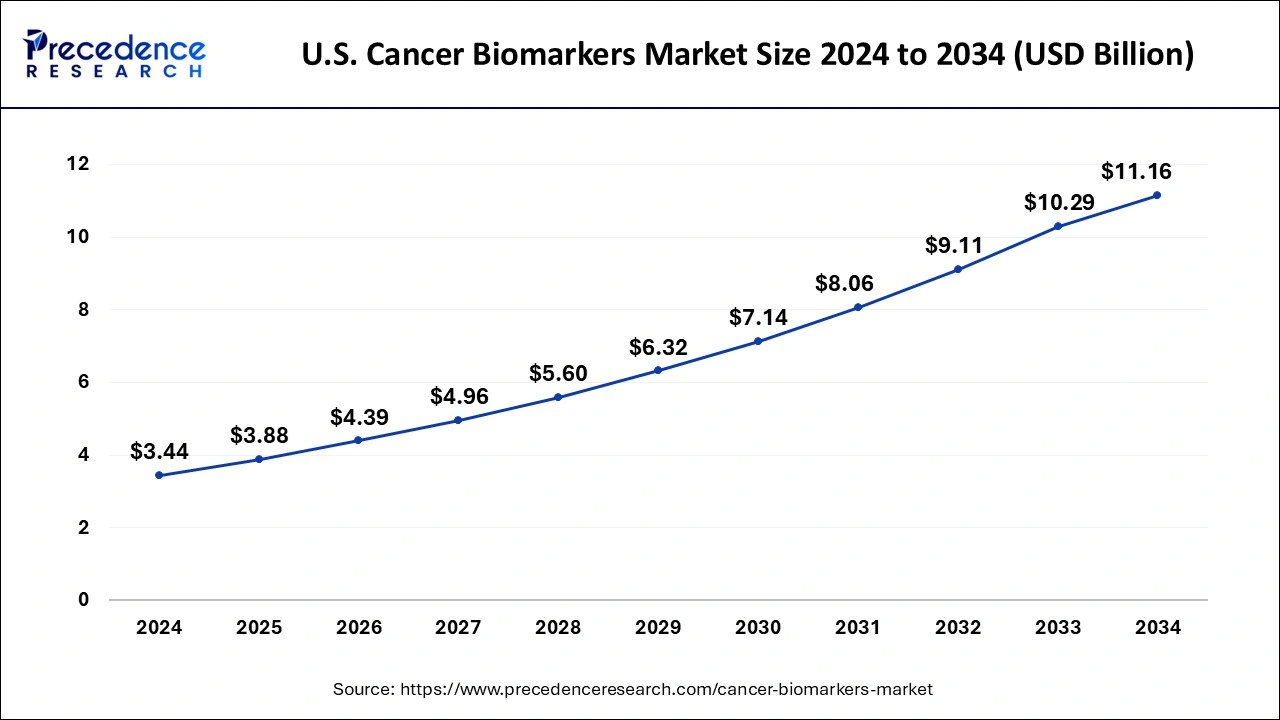
The U.S. cancer biomarkers market size was estimated at USD 3.88 billion in 2025 and is predicted to be worth around USD 12.24 billion by 2035, at a CAGR of 12.17% from 2026 to 2035.
Canada Market Trends
The Canadian market trends highlight the initiatives of the regional healthcare sector to provide quality molecular testing, highlighting the potential of comprehensive genomic profiling (CGP) unification. The advisory groups and Health Canada's consensus-related evaluation frameworks shape the market by confirming standardized assessment criteria to further fuel investments and adoption trends for genetic biomarkers, complementing regional market development. The transitions in CGP and long-standing Canadian researchers' efforts to analyse the potential of the advanced biomarkers support the regional market strategies.
Asia Pacific Emerges as a High-Growth Region for Cancer Biomarkers
Asia-Pacific, on the other hand, is expected to develop at the fastest rate during the forecast period. The cancer biomarkers market in Asia-Pacific region is being driven by growing prevalence of cancer. In addition, the government is constantly funding development activities for developing new products. Thus, rising awareness of cancer biomarkers is also boosting the growth of the market in Asia-Pacific region.
China Market Trends
The Chinese market trends are fuelled and influenced by the immense hype in research output that highlights massive international partnerships and publications. The dominance of harmless liquid biopsy technology supports providers in choosing the best personalized therapeutics as per the demand for effective medication for severe cancer conditions. Previously, traditional treatments were a nightmare for patients left with fewer alternatives. Recently, multiplex diagnostics and AI unification have been enhancing diagnostic accuracy throughout modern research centers and hospitals.
Europe's Advancements' Impact on Cancer Biomarkers
Europe's valuable advancements are bringing a transition to a one-for-all idea in the biomarker-driven precision drugs. Europe's Beating Cancer Plan made space for most of the effective technological advancements to bring equal access and early diagnosis to the biomarker testing space throughout the EU.
Alongside, the European Health Data Space (EHDS) framework helped researchers to choose its advanced idea at the right place without disturbing the drug discovery part. The impact on the clinical outcomes also mitigated toxicity.
Germany Market Trends
The German market trends measure the transitions in proteomic and genetic profiling due to the growing number of cancer cases. Comprehensive biomarker validation and high screening rates are bolstering the footprint of the regional market. Whereas the expansion of prostate cancer biomarker establishment ensures innovation and heavy revenue to the market, aligning with the need and subject of medication. Qiagen N.V. and BioNTech SE's impeccable molecular diagnostics allow efficiency to spur cancer treatments and promote the best-in-class solution to the oncology sector.
Latin America's Initiatives in the Cancer Biomarkers Sector
Latin America's major initiatives include the Consortium for Lung Cancer Research, Latin American Cooperative Oncology Group (LACOG), and US-Latin America Cancer Research Network (US-LACRN). The regional initiatives mainly aims on tightening the regional research via cooperative firms, identifying the genetic changes (study) of the general public, and evaluating molecular diagnostics.
The industry, public, and private collaborations are a boon to the regional initiatives. Brazil's Lighthouse Projects are on track to leverage clinical trials and biomarker development.
Brazil Market Trends
The Brazilian market trends are boosted by the expanding public sector that avails genetic testing mainly for ovarian and breast cancers. The specific rise in precision oncology and liquid biopsies, with the apt advocacy, is gaining traction in the regional market. Following this, the clinical lab engagements offer these services with a broad view of execution in the private and public care. The vast NGS panels prove to be an affordable pathway for the regional market to thrive in long-standing healthcare commitments.
Sheer Innovations and Partnerships in the MEA Cancer Biomarkers Market
The Middle East and Africa region is expected to grow at a notable CAGR over the studied period, with its innovation and hype of genomic profiling and NGS, featuring the combating private healthcare providers and tertiary hospitals. The deployment of minimally invasive liquid biopsies confirms quick treatment decisions that justifies this innovation tactics in regional healthcare. The diagnostic leaders and pharmaceutical companies' growing alliances develop new pathways to expand the accessibility of innovative solutions and personalized medicine. The extended trials assessing homologous recombination deficiency are refining the regional prognostic treatments.
Saudi Arabia Market Trends
The Saudi Arabian market trends are stimulated by the growing prevalence of cancer, which eventually transforms personalized oncology. Targeted screening, tissue-agnostic therapies, and next-generation biotherapeutics are the leading future milestones and trends confirming high revenue to the regional market, accompanying with the need for regional healthcare to promote development and expansion of the innovative solution therein, accelerating international alliances.
Value Chain Analysis of the Cancer Biomarkers Market
- R&D: R&D in cancer biomarkers is highly influenced by the multi-omics data, robust liquid biopsy technologies, and AI integration. The discovery of more markers in the biological evaluation is empowering precision oncology.
Key Players - QIAGEN, F. Hoffmann-La Roche Ltd, and Abbott Laboratories. - Formulation and Final Dosage Preparation: The formulation and final dosage preparation of the cancer biomarker is basically monitored to the biomarker-determined precision. The advanced drug formulations are in heavy demand in the cancer biomarker sector.
Key Players - Cipla Ltd., Getwell Pharma, and Pinnacle Life Science (India). - Distribution to Hospitals, Pharmacies: The distribution has many layers, like specialty distributors, diagnostic laboratories, and pharmaceutical manufacturers. As a part of the upgradation to the distribution channel, the Direct-to-Pharmacy models are developing direct interaction with the network speciality pharmacies bonded with purchase contracts.
Key Players - Thermo Fisher Scientific, Inc. (US), Guardant Health, Inc. (US), and Agilent Technologies, Inc. (US).
Market Competitive Landscape: Leading Companies and Strategies
The cancer biomarkers market is driven by market and healthcare champions and their innovations, accelerating smart businesses in the vast healthcare. The clinical and research initiatives focusing on discovery and advocacy of biomarkers straight bolsters the base of the market, featuring robust AI and digital pathology perks to the oncology advances. Popular key players such as Roche, QIAGEN, Labcorp, Thermo Fisher Scientific, and Illumina are covering the best of clinical and partnership deals to develop the core competition in the modern medical field.
Roche's AVENZIA Precision Oncology Suite, an AI-influenced platform, supports liquid biopsies to bring ease to immunotherapies or targeted therapies. Whereas Thermo focuses on multi-biomarker diagnostic platforms, driving dominance in targeted therapies specifically for cholangiocarcinoma and lung cancer. Collectively, the healthcare leaders and their approaches for seamless solutions are accelerating a specific innovative footprint in the market.
Cancer Biomarkers Market Companies
- F. Hoffmann-La Roche Ltd.
- Thermo Fisher Scientific Inc.
- QIAGEN N.V.
- Illumina Inc.
- Bio-Rad Laboratories Inc.
- Abbott Laboratories
- Exact Sciences
- Meso Scale Diagnostics LLC
- Seegene Technologies Inc.
- Siemens Healthineers
Recent Developments
- In June 2026, Nanowire was proven to be an appropriate solution to spot cancer biomarkers from the blood serum of patients suffering from ovarian cancer. It's a boon for researchers and their studies to further encourage excellence and shifts in the market. (Ref: https://www.oncology-central.com)
Segments Covered in the Report
By Type
- Breast Cancer
- Prostate Cancer
- Colorectal Cancer
- Cervical Cancer
- Liver Cancer
- Lung Cancer
- Others
By Biomolecule
- Genetic Biomarkers
- Epigenetic Biomarkers
- Metabolic Biomarkers
- Proteomic Biomarkers
- Others
By Application
- Drug Discovery and Development
- Diagnostics
- Personalized Medicine
- Others
By Profiling Technology
- Omic Technologies
- Imaging Technologies
- Immunoassays
- Cytogenetics-based Tests
By End User
- Hospitals
- Academic and Cancer Research Institutes
- Ambulatory Surgical Centres
- Diagnostic Laboratories
By Geography
- North America
- U.S.
- Canada
- Europe
- U.K.
- Germany
- France
- Asia-Pacific
- China
- India
- Japan
- South Korea
- Malaysia
- Philippines
- Latin America
- Brazil
- Rest of Latin America
- Middle East & Africa (MEA)
- GCC
- North Africa
- South Africa
- Rest of the Middle East & Africa
For inquiries regarding discounts, bulk purchases, or customization requests, please contact us at sales@precedenceresearch.com
Frequently Asked Questions
Tags





Ask For Sample
No cookie-cutter, only authentic analysis – take the 1st step to become a Precedence Research client
 Get a Sample
.webp)



 sales@precedenceresearch.com
 Schedule a Meeting
