



Cell-free Protein Expression Market Size, Key Companies, Company Market Share, Patient Volume, Treatment Adoption Rates, Pricing Analysis, Regulatory Landscape, Competitive Positioning, and Demand Forecast
Cell-free Protein Expression Market (By Application: Enzyme Engineering, High Throughput Production, Protein Labeling, Protein-Protein Interaction, Protein Purification; By Method: Transcription and translation systems, Translation systems; By End-User: Pharmaceutical and Biotechnology Companies, Academic and Research Institutes, Others; By Geography: North America, Europe, Asia-Pacific, Latin America, Middle East and Africa ) - Global Industry Analysis, Size, Trends, Leading Companies, Regional Outlook, and Forecast 2025 to 2034
Source: https://www.precedenceresearch.com/cell-free-protein-expression-market
 Get a Sample
 Table Of Content


What is the Cell-free Protein Expression Market Size?
The global cell-free protein expression market size is calculated at USD 290.63 million in 2025 and is predicted to increase from USD 313.88 million in 2026 to approximately USD 585.10 million by 2034, expanding at a CAGR of 8.07% from 2026 to 2034.
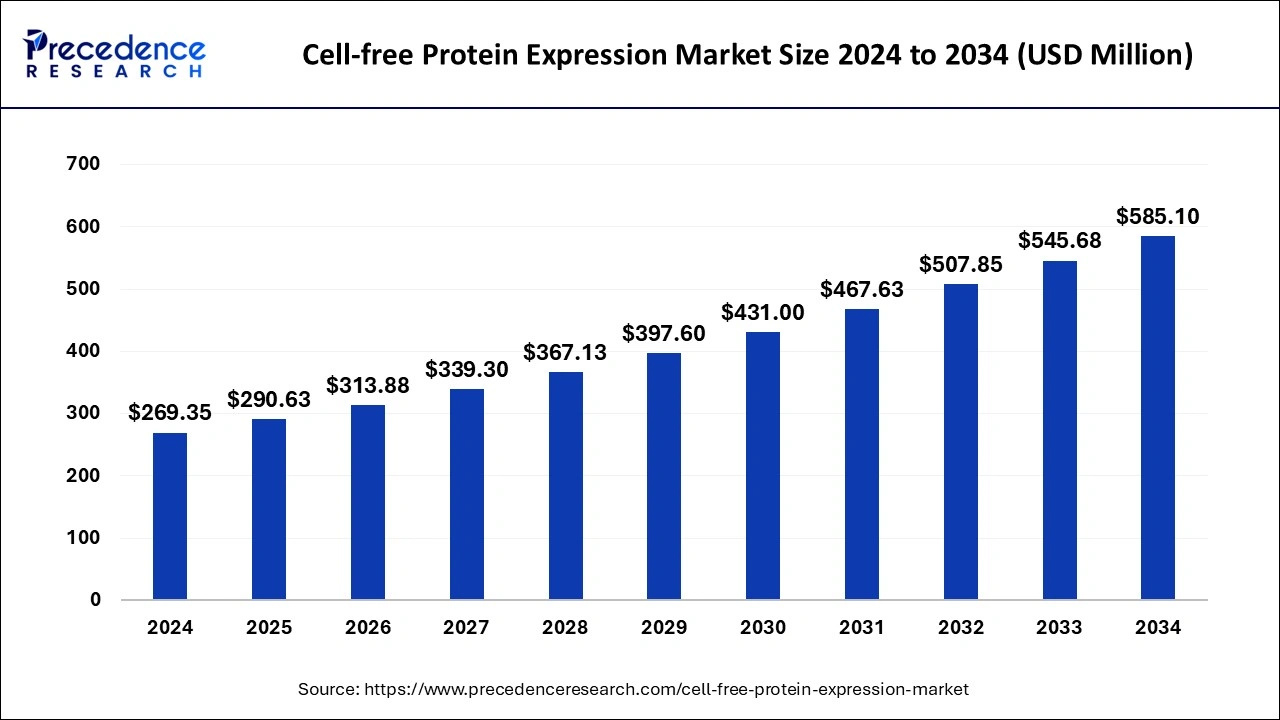
Cell-free Protein Expression Market Key Takeaways
- North America dominated the market with the largest market share of 33% in 2024.
- Asia Pacific is expected to witness the fastest rate of growth throughout the forecast period.
- By Product, the expression system segment dominated the market in 2024. The wheat germ cell-free protein expression system segment is expected to increase market growth during the forecast period.
- By Application, the enzyme engineering system segment dominated the market in 2024. While the high throughput production system segment is projected to register the highest CAGR during the predicted timeframe.
- By Method, the transcription and translation system segment dominated the market in 2024, the segment is expected to witness significant growth during the forecast period.
- By End-use, the pharmaceutical & biotechnological companies segment is expected to sustain its dominance throughout the forecast period.
Cell-free Protein Expression Market Outlook
Market Growth Overview:
Between 2025 and 2034, the cell-free protein expression market is expected to grow rapidly as researchers, biotech firms, and pharma companies seek ultra-fast protein synthesis workflows that traditional cell-based expression may not match. The need to avoid cell toxicity, enhance membrane protein expression, and shorten development times in enzyme engineering and structural biology drives demand. Additionally, increased use in high-throughput screening, rapid prototyping of genetic circuits, and functional protein assays further boost growth.
Platform Evolution and Innovation:
Development is progressing in lysate platforms, with companies competing to improve yield, stability, and efficiency in E. coli extracts, wheat germ systems, insect cell lysates, and PURE reconstituted systems. New England Biolabs and Takara Bio are developing improved systems using enzymes alone. They offer unprecedented experimental control over reaction components and reduce batch variability. Thermo Fisher and Merck KGaA are investing heavily in new substrate regeneration systems that can sustain longer reaction periods and increase protein production.
Global Expansion & Strategic Collaborations:
Global expansion is reshaping the market, with key players strengthening their manufacturing capabilities, distribution networks, and academic collaborations. Promega's expansion in the U.S. and Merck's scaling efforts in Europe are enhancing global supply security for core cell-free reagents and enzymes. In Asia, CellFree Sciences is advancing its wheat-germ expression partnerships with universities and pharmaceutical companies in Japan and Singapore to accelerate regional growth and innovation.
Major Investors:
Investment momentum in cell-free systems is intensifying as the technology is recognized as a foundational platform for next-generation biotech innovation. Venture capital funds, synthetic biology-focused investors, and corporate biotech facilities are funding startups developing on-demand protein generation, portable biosynthesis systems, and advanced diagnostic instruments. The sector's growing popularity is driven by its high scalability, complex technical potential, and alignment with the future of distributed biomanufacturing.
Startup Ecosystem:
The startup ecosystem in cell-free protein expression is rapidly expanding as innovators develop highly specialized systems tailored for advanced R&D workflows. Companies are focusing on AI-based template design, enzyme-engineered reaction components, and miniaturized expression reactors that facilitate real-time analysis. Startups in the U.S. and Germany are creating highly efficient systems for cell-free screening of structural biology, drug-target validation, and protein variant screening. These startups are driving a radical shift toward ultra-fast, modular, and decentralized protein synthesis in the leading global biotech sector.
Market Overview
Protein expression is the process in which the proteins are synthesized, modified, and managed in living organisms. The in-vitro process of protein by the use of transaction and compatible extraction of whole cell is known as the cell-free protein expression. It allows the production of target protein without use of living cells. The process of cell-free protein expression is done by researchers for manufacturing and expressing small quantities of functional proteins rapidly.
Cell-free protein expression market offers techniques for protein engineering and synthesis for biopharmaceutical and molecular biology sectors. Proteins are made frequently in these processes and are well-maintained compared to the conventional ones. Cell-free protein expression is a time-saving process for the development of proteins. Cell-free protein synthesis helps revolutionize the healthcare sector by transforming the manufacturing of medicinal products.
Cell-free Protein Expression Market Growth Factors
- Cell-free protein expression is finding applications in emerging fields such as synthetic biology, metabolic engineering and point-of-care diagnostics, which are driving the market's growth.
- Ongoing research and innovation in cell-free expression technologies, including cell-free lysates, cell-free extract preparation and novel expression vectors are expanding te market's capabilities.
- Cell-free synthesis of proteins provides the ability to incorporate the nonstandard amino acids (NSAAs) which allows the control over the potent toxins as loads, and prototyping of the proteins. The rising emphasis on personalized medicines and the rising requirement for biological therapies for cancer management are significantly driving the growth of the cell-free protein expression market.
Market Scope
| Report Coverage | Details |
| Growth Rate from 2026 to 2034 | CAGR of 8.07% |
| Market Size in 2025 | USD 290.63 Million |
| Market Size in 2026 | USD 313.88 Million |
| Market Size by 2034 | USD 585.10 Million |
| Largest Market | North America |
| Base Year | 2025 |
| Forecast Period | 2026 to 2034 |
| Segments Covered | By Product, By Application, By Method, and By End-User |
| Regions Covered | North America, Europe, Asia-Pacific, Latin America, and Middle East & Africa |
Market Dynamics
Driver
Rapid expansion of pharmaceutical industry
Cell-free protein synthesis (CFPS) methods have advanced from being lab-scale research tools to being used to manufacture biopharmaceuticals at a scale that adheres to good manufacturing practices (GMPs). With CFPS-based products, numerous clinical trials on humans are currently underway. Additionally, CFPS research applications have developed significantly over time and are now crucial to the discovery and development of new biopharmaceutical products.
The distinct and open character of CFPS has made it possible for non-natural amino acids (nnAA) to be effectively incorporated into protein products, broadening the pool of biotherapeutics that can be taken into account for innovative treatments. As the pharmaceutical industry expands in the upcoming period along with the rising requirement for novel therapeutics, the market for cell-free protein expression is observed to grow.
Restraint
Limited resources
Cell-free protein expression requires specific reagents and equipment, which can be expensive. Limited access to funding or resources can hinder research and development efforts in this field. Operating and optimizing cell-free expression systems requires knowledge and expertise. A shortage of skilled researchers and professionals can limit the market's expansion. Expanding cell-free protein expression from research to industrial-scale production can be resource-intensive. Scaling up often requires significant investments in infrastructure and resources. Thereby, limited resources for the technique act as a major restraint for the market.
Opportunity
Rising emphasis on personalized medicine
Personalized medicine often requires the development of specific therapeutic proteins, such as personalized cancer vaccines or patient-specific antibodies. Cell-free protein expression systems offer the flexibility to rapidly produce customized proteins, aligning perfectly with the individualized nature of personalized medicine. Cell-free protein expression enables quick and efficient production of proteins, reducing the time needed to develop personalized treatments. This aligns with the need for timely interventions in personalized medicine, where treatment decisions must be made promptly based on a patient's unique genetic profile. The emphasis on personalized medicine creates a definite opportunity for the cell-free protein expression market as it aligns with the tailored protein production essential for advancing personalized therapeutic approaches and diagnostics.
Product Insights
The expression system dominated the market in 2024. In the expression system, the E. coli system expression sub-segment carried the leading position. E. coli is one of the highly used expression systems for artificial protein production. The major advantages of E. coli for protein expression are high expression levels, lower cost, short turnaround time, and ease of scaling. E. coli is suitable for producing a large variety of proteins.
On the other hand, the wheat germ cell-free protein expression system sub-segment is expected to grow at a significant rate. In protein research, the wheat germ is a preferred choice which includes options like protein labeling and the expression of proteins like membrane proteins and multiple protein complexes. The wheat germ cell-free protein expression is used in a variety of expression studies such as the production of labeled proteins for protein mass spectroscopy and structural genomics, screening of enzymatic activities, and automated protein synthesis.
Application Insights
The enzyme engineering system segment dominated the market in 2024, the segment will continue to generate significant growth during the forecast period. Enzyme engineering systems have been optimized to improve protein expression efficiency. This allows researchers to produce higher yields of target proteins, making it a preferred choice for applications requiring large quantities of proteins, such as drug development and biotechnology.
Enzyme engineering systems offer versatility in terms of the types of proteins that can be expressed. They can accommodate a wide range of protein targets, including complex and difficult-to-express proteins, making them suitable for a broad array of research and industrial applications.
The high throughput production system segment is expected to register the highest CAGR during the forecast period. Researchers can tailor high throughput cell-free systems to specific protein expression needs, optimizing conditions for individual proteins or applications.
Method Insights
The transcription and translation system segment is expected to grow at a significant rate, the segment held a dominating share in 2024. Cell-free systems can produce proteins with fewer containments, as there are no living cells that could contribute unwanted biomolecules to the final product. Transcription and translation systems are amendable to incorporating modified amino acids, isotopic labels and other post-translational modifications, making them valuable for various research applications.
End-Use Insights
The pharmaceutical & biotechnology companies segment dominated the market in 2024, the segment is expected to sustain the position throughout the forecast period. These companies often require customized protein production for their research and development efforts. Cell-free systems offer flexibility and scalability, allowing for tailored protein expression, which is crucial in drug development.
Pharmaceutical and biotechnology companies demand high-quality protein for their research and clinical trials. Cell-free expression systems can produce proteins with high-purity and functionality, meeting these stringent requirements. Therefore, the segment is expected to continue to grow throughout the forecast period.
Regional Analysis
North America dominated the market in 2025
The growth of the market in the region can be attributed to the substantial number of pharmaceutical companies and research centers present in countries, especially in the United States. The availability of venture capital, government grants and funding agencies that support biotechnology research and development in North America has played a crucial role in the growth of the cell-free protein expression market.
The region has strong intellectual property laws and a supportive regulatory environment, which encourages companies to invest in developing and commercializing cell-free protein expression technologies. North America fosters collaboration among industry and government agencies, leading to the exchange of knowledge and expertise in protein expression technologies.
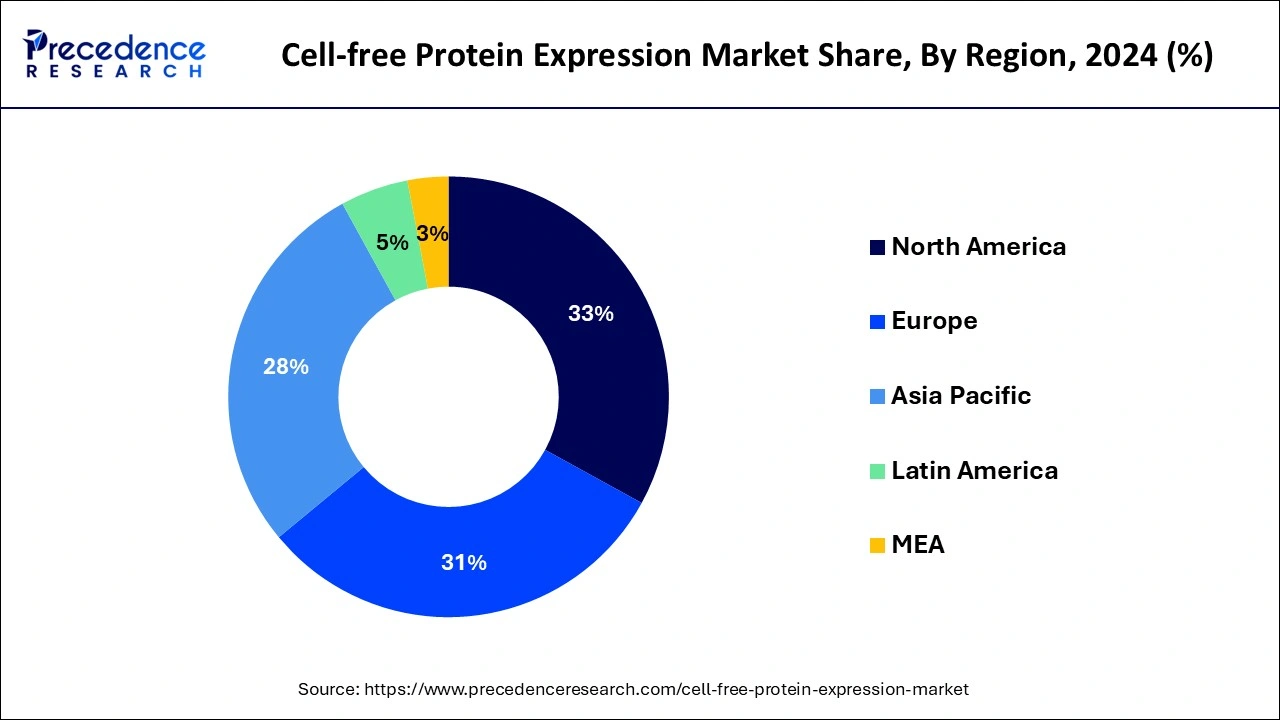
U.S. Cell-free Protein Expression Market Analysis
The U.S. cell-free protein expression market size accounted for USD 66.13 million in 2025 and is estimated to reach around USD 139.27 million by 2034, growing at a CAGR of 8.61% from 2025 to 2034.
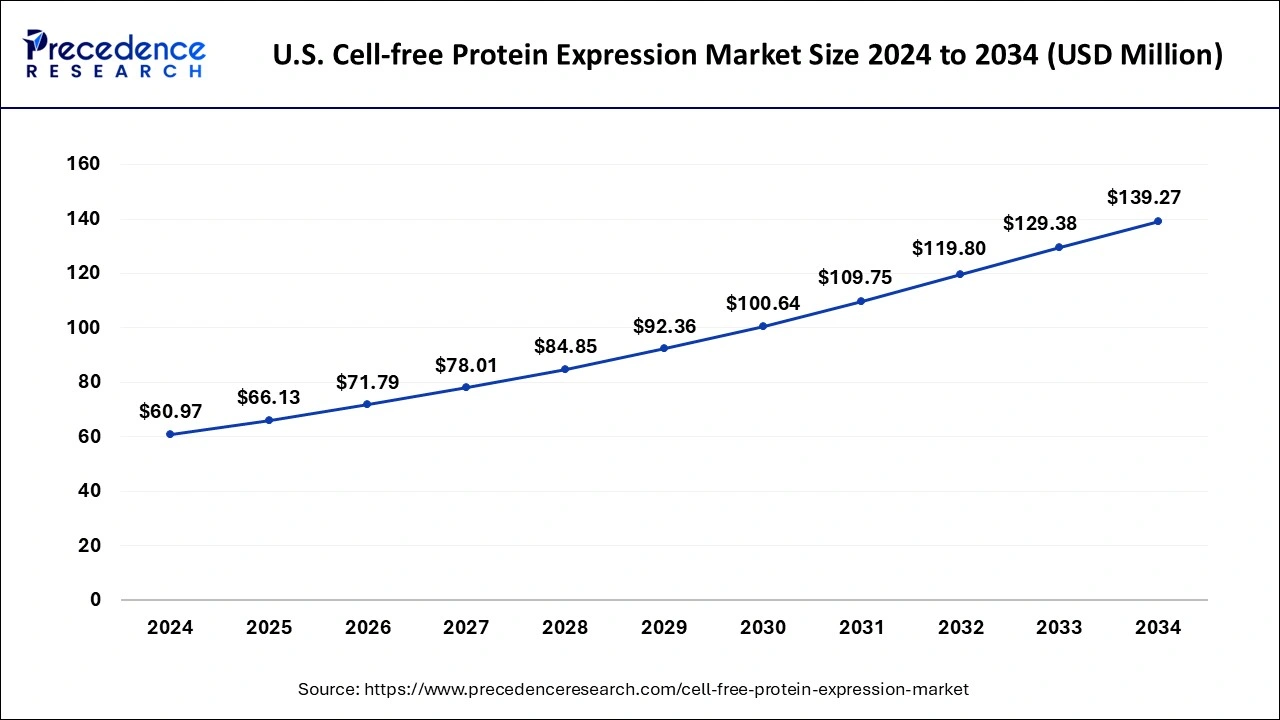
The U.S. is a key contributor to the North American market, driven by its advanced biotechnology ecosystem and widespread use of rapid protein synthesis platforms. The demand is expected to grow, fueled by NIH-supported structural genomics programs and the adoption of high-throughput expression systems in drug discovery. Additionally, the increasing interest of pharmaceutical companies in cell-free expression for studying toxic proteins and developing rapid assays is further propelling market growth.
What Makes Asia Pacific the Fastest-Growing Region in the Market?
Asia Pacific is expected to witness the fastest rate of growth during the forecast period. Collaborations between local and international biotech companies and academic institutions have fostered knowledge transfer and technology adoption, contributing to the growth of the cell-free protein expression market. Asia Pacific carries a well-educated and skilled workforce in the fields of biotechnology and molecular biology, making it easier for companies and research institutions to adopt and optimize cell-free protein expression technologies.
Countries such as Singapore, Japan and South Korea have actively supported biotechnology and biopharmaceutical sectors through funding, infrastructure and regulatory incentives. This has further stimulated the growth of the cell-free protein expression market.
Japan Cell-free Protein Expression Market Analysis
Japan maintained a leading position within Asia Pacific due to its pioneering efforts in wheat-germ cell-free systems and long-term advancements in high-fidelity protein expression. Local institutions and companies, such as CellFree Sciences and Takara Bio, are likely to continue leading innovation in complex protein synthesis. Furthermore, Japanese pharmaceutical companies use cell-free systems for screening and structural analysis in their early stages, resulting in high demand.
Why is Europe Considered a Notably Growing Area in the Market?
Europe is expected to grow at a notable rate over the projection period, driven by a high concentration of advanced life-science research facilities and robust regulatory support for biotechnology innovations. Germany, Switzerland, and the UK are expected to be key demand drivers, particularly given their extensive efforts in protein characterization and enzyme optimization. Additionally, the region's focus on high-quality, precision-controlled laboratory systems ensures Europe's continued growth in the market.
Germany Cell-free Protein Expression Market Analysis
Germany holds a significant share of the European market due to its strong research ecosystem, advanced scientific infrastructure, and leadership in protein chemistry and structural biology. High adoption of cell-free platforms is driven by prominent institutions such as the Max Planck Society, EMBL, and Helmholtz centers, which are intensive users of these technologies for enzyme engineering and proteomics. Research hubs in Berlin, Heidelberg, and Munich further ensure that Germany remains at the forefront of protein expression innovation in Europe.
What Potentiates the Growth of the Cell-free Protein Expression Market in Latin America?
The Latin American market is expanding due to the growing adoption of advanced molecular biology tools in national research programs, particularly in Brazil and Argentina. Government-supported modernization of laboratory infrastructure is expected to boost the use of cell-free systems for developing protein assays and advancing academic protein research. Increased focus on enzyme engineering, plant biotechnology, and diagnostic research is further driving demand for rapid expression platforms in the region.
Brazil Cell-free Protein Expression Market Analysis
Brazil has emerged as a key contributor to the Latin American market, driven by rising investment in molecular biology research and the modernization of scientific facilities at major universities. There is a strong focus on advancing molecular biology through improved infrastructure and increased funding for life science development. The long-term growth of the market is expected to be further supported by significant investments in scientific research.
What Opportunities Exist in the Middle East and Africa?
The Middle East and Africa (MEA) region offers immense opportunities for the cell-free protein expression market, driven by increased investments in biomedical research infrastructure in the Gulf region. The uptake of cell-free systems in institutions is projected to increase further, with universities integrating these technologies into genomics and structural biology courses. Additionally, initiatives like ACEGID in Nigeria are boosting omics and genomics research locally. This strengthens demand for protein expression tools, including cell-free platforms for proteomics and synthetic biology.
UAE Cell-free Protein Expression Market Analysis
The UAE leads the Middle East and Africa cell-free protein expression market, driven by significant government investment in advanced research infrastructure and biotechnology development. The UAE is investing heavily in advanced biotech research facilities. This provides a strong base for the adoption of cell-free systems for R&D, diagnostics, and biomanufacturing. There is growing government backing for life science innovation, synthetic biology, and biotech startups, which is supporting market growth.
Cell-free Protein Expression Market Value Chain Analysis
Raw Material & Reagent Sourcing
The value chain begins with sourcing high-purity biological materials, such as nucleotides, amino acids, enzymes, ribosomes, lysates, and energy systems that drive transcription–translation reactions. These foundational ingredients determine reaction efficiency, yield, and protein fidelity.
Key Players: Thermo Fisher Scientific, Merck KGaA, Promega Corporation, Jena Bioscience GmbH
Lysate & System Preparation
Raw biological components are processed into ready-to-use expression systems such as E. coli-based, wheat germ, rabbit reticulocyte, insect cell, or fully reconstituted systems like PURE. This stage focuses on optimizing extract purity, enzyme balance, and reaction stability.
Key Players: New England Biolabs, CellFree Sciences Co., Ltd., Takara Bio, Biotechrabbit GmbH
Expression Kit & Component Manufacturing
Prepared lysates are incorporated into comprehensive kits that include reaction buffers, expression vectors, templates, and energy substrates. These kits support rapid in vitro protein synthesis for research, diagnostics, or screening workflows.
Key Players: Thermo Fisher Scientific, Promega Corporation, Takara Bio, GeneCopoeia, Inc.
Protein Synthesis & Reaction Optimization
This stage includes the actual execution of cell-free reactions, template preparation (DNA/RNA), protein folding assistance, and optimization for yield, solubility, or functional activity. Automation and high-throughput platforms play a major role here.
Key Players: Cube Biotech GmbH, Jena Bioscience GmbH, New England Biolabs
Downstream Processing & Purification
Proteins produced through cell-free systems are purified, concentrated, and validated using chromatographic techniques, affinity tags, or membrane-binding technologies. Purification quality directly influences functional performance.
Key Players: Cube Biotech GmbH, Merck KGaA, Thermo Fisher Scientific
Distribution to End Users
Finalized kits, reagents, and expression systems are shipped to global research institutions, biotech companies, pharmaceutical developers, CROs, and diagnostic labs for applications in R&D, enzyme production, drug screening, structural biology, and synthetic biology.
Key Players: Thermo Fisher Scientific, Takara Bio, Promega Corporation
Cell-free Protein Expression Market Companies
- Thermo Fisher Scientific, Inc. (U.S.) – A global leader providing high-performance cell-free protein expression kits, reagents, and enzymatic systems widely used in structural biology, functional protein studies, and rapid expression workflows.
- Takara Bio Company (Japan) – Known for its advanced transcription–translation systems and robust in vitro expression technologies optimized for high-yield, research-grade protein synthesis.
- Merck KGaA (Germany) – Offers scalable, high-purity cell-free expression reagents and lysate-based systems that support enzyme production, assay development, and synthetic biology applications.
- New England Biolabs (U.S.) – Supplies reliable, enzyme-rich cell-free protein expression kits based on their proprietary PURExpress and extract-based systems trusted for precise, controlled in vitro translation.
- Promega Corporation (U.S.) – Provides high-efficiency TNT coupled transcription–translation systems used extensively for protein functional assays, screening, and rapid expression validation.
- Jena Bioscience GmbH (Germany) – Delivers specialized cell-free expression kits and reagents engineered for difficult-to-express proteins and high-throughput experimental needs.
- GeneCopoeia, Inc. (U.S.) – Offers customizable cell-free expression solutions integrated with gene synthesis and expression-ready constructs for fast, gene-to-protein workflows.
- Biotechrabbit GmbH (Germany) – Known for supplying high-quality recombinant enzymes and cell-free expression mixes optimized for reproducibility, speed, and cost-effective protein production.
- Cube Biotech GmbH (Germany) – Specializes in membrane protein expression and purification tools, including cell-free systems tailored for structural and functional membrane protein studies.
- CellFree Sciences Co., Ltd. (Japan) – A pioneer in wheat-germ cell-free expression technology, enabling scalable, high-yield protein synthesis for proteomics, drug discovery, and complex protein production.
Recent Developments
- In September 2023, a pharmaceutical discovery and development company “CCM Bioscience” which is currently confirming its launch of stealth announced the CCM Protein Upregulation its latest business unit. The launch of the new unit is dedicated to the advancement in the drugs that lead to conditions such as Parkinson's, Alzheimer's, and infertility as for the cases of genetically inherited diseases like cystic fibrosis by the use of highly technology platforms for the development of expression level of a rare protein implicated in the pathogenesis of this kind of disorders.
- In September 2023, VantAI a major key company that works in drug discovery by the application of artificial intelligence, announced the launch of its latest “Scientific Advisory Board” (SAB). The Scientific Advisory Board members have expertise in whole-proteome structural interactomics, generative AI for small molecule drug design, and protein design.
- In October 2023, scientists Louis Brus, Moungi Bawendi, and Alexei Ekimov won the Noble price in Chemistry 2023 for the discovery of the synthesis of quantum dots which lighten up television screens and computer monitors used by physicians or doctors for the detection of tumors.
Segments Covered in the Report
By Product
- Expression Systems
- E. coli Cell-free Protein Expression System
- Wheat Germ Cell-free Protein Expression System
- Rabbit Reticulocytes Cell-free Protein Expression System
- Insect Cells Cell-free Protein Expression System
- Human Cell-free Protein Expression System
- Others
- Reagents
By Application
- Enzyme Engineering
- High Throughput Production
- Protein Labeling
- Protein-Protein Interaction
- Protein Purification
By Method
- Transcription and translation systems
- Translation systems
By End-User
- Pharmaceutical and Biotechnology Companies
- Academic and Research Institutes
- Others
By Geography
- North America
- Europe
- Asia-Pacific
- Latin America
- Middle East and Africa
For inquiries regarding discounts, bulk purchases, or customization requests, please contact us at sales@precedenceresearch.com
Frequently Asked Questions





Ask For Sample
No cookie-cutter, only authentic analysis – take the 1st step to become a Precedence Research client
 Get a Sample
.webp)



 sales@precedenceresearch.com
 Schedule a Meeting
