


DNA Methylation Market Size, Key Companies, Company Product Portfolio, Hospital Procurement Trends, Manufacturing Capacity, Sales Performance, Regulatory Approvals, Company Market Share, and Forecast
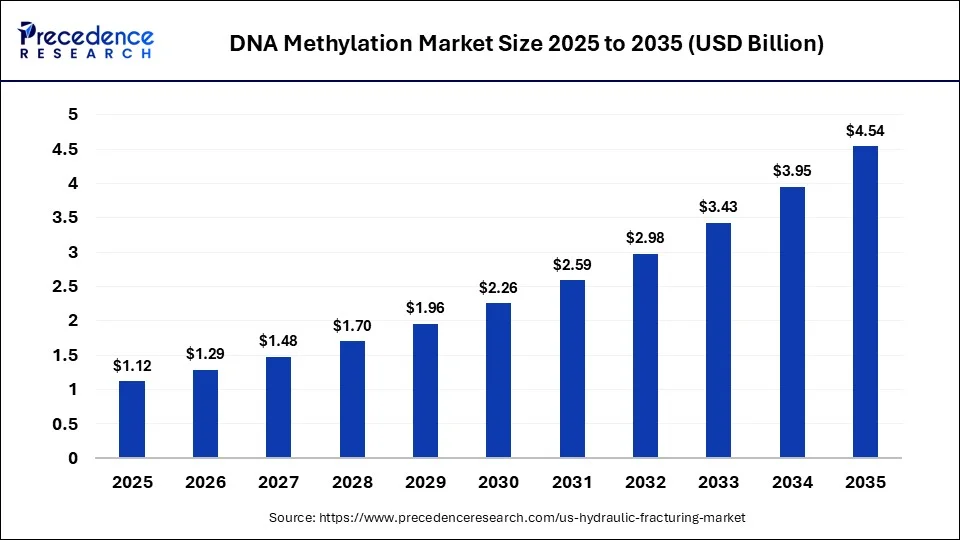
The DNA methylation market was valued at USD 1.29 billion in 2026 , Epigenetic information is increasingly being tapped as a means to better comprehend the mechanisms of diseases and uncover clinically relevant biomarkers. Making the DNA methylation market an exciting time of growth. The applications of these technologies are growing in cancer, neurological, developmental, and reproductive diseases. Deepa Pandey, senior research analyst, has analyzed these trends and curated this report. Her research enables companies in the fields of biotechnology, pharmaceuticals, diagnostics, healthcare, research institutions, and life sciences to understand the technological advancements, the trend of application, competitive strategies, and emerging opportunities.
Source: https://www.precedenceresearch.com/dna-methylation-market
 Get a Sample
 Table Of Content


DNA Methylation Market Size, Share, Trends, and Forecast Analysis 2035
The DNA methylation market is forecasted to expand from USD 1.29 billion in 2026 to USD 4.54 billion by 2035, growing at a CAGR of 15.03% from 2026 to 2035. As researchers and healthcare providers turn more to studying the chemical modifications of DNA for their effect on the expression of genes. The DNA methylation market is advancing the research of epigenetic regulation. The market encompasses methylation-specific PCR, bisulfite sequencing, next-generation sequencing, microarray based, mass spectrometry, and emerging single-cell and long-read sequencing technologies. These technologies enable more detailed characterization of methylation patterns.
Deepa Pandey has over 5 years of experience in market analysis in a medical technology-driven business. She sees a great paradigm shift in the study of molecules in the pharmaceutical industry, biotechnology companies, diagnostic laboratories, academia, and research institutes. The integration of epigenetic data in the investigation of disease and precision medicine is becoming more common. Her analysis assesses the changing competitive landscape, technological advances, research applications, diagnostic opportunities, regulatory trends, and investment trends influencing the DNA methylation market in the world.
Key Takeaways
- Illumina's USD 4.34B revenue, ~21,000 installed systems, and ~9,000 patents highlight the scale of competition in sequencing platforms.
- Exact Sciences generated USD 3.25B in 2025 and delivered over 5.5M test results, demonstrating the value of recurring clinical testing models.
- Oxford Nanopore reported £223.9M revenue in 2025, growing 22.2%, reflecting the rising adoption of long-read sequencing technologies.
- QIAGEN generated USD 2.09B in revenue, with consumables contributing approximately 90% of total sales, emphasizing recurring revenue streams.
- North America held nearly 45% of the market in 2024, while Asia-Pacific is projected to grow at over 16% annually through 2030.
- PacBio generated USD 160M in 2025 revenue, including USD 82M from consumables, underscoring the importance of post-installation revenue.
- PacBio's Revio platform achieved annualized consumable pull-through of approximately USD 233,000 per system, highlighting utilization-driven growth.
- The next competitive battleground is expected to shift from methylation read costs to delivering the lowest cost per clinically actionable result.
- Bio-Rad recorded approximately USD 2.58B in revenue, reinforcing the financial strength of key players competing in adjacent genomics markets.
- Industry forecasts for 2030-2035 are increasingly driven by AI interpretation, multi-omics integration, targeted cfDNA panels, and automated workflows.
The focused global DNA methylation market is estimated at approximately USD 1.9 billion in 2025, with historical demand concentrated in academic research, biomarker discovery, and pharmaceutical applications. A sustained 12-13% annual growth trajectory would increase the market to approximately USD 3.4-3.5 billion by 2030 and USD 6.2-6.6 billion by 2035. Our analysis indicates that the central growth question is not simply whether methylation analysis volumes will increase. But whether a larger proportion of those analyses will migrate from research-use workflows into higher-value clinical and diagnostic applications.
Our assessment is that clinical translation represents the most important structural lever behind the forecast, because diagnostic testing can generate substantially greater economic value per sample than conventional research workflows. The pace of market expansion will therefore depend on the conversion of validated biomarkers into reimbursed tests, rather than on research demand alone. We believe this creates a two-speed market: established research applications provide a recurring demand base, while oncology, liquid biopsy and other clinical applications have the potential to expand the addressable revenue pool more rapidly but remain more sensitive to clinical validation, regulatory and reimbursement timelines.
In our view, the most significant strategic implication is that market participants should evaluate growth through test volumes, revenue per test and recurring reagent pull-through, rather than market revenue alone. The full analysis separates research-use-only and clinical/diagnostic revenue and builds the forecast using test volume, average revenue per test, instrument utilization, reagent consumption, and outsourcing penetration. It further quantifies the contribution of technology, application, and geography to the incremental revenue opportunity and evaluates how changes in clinical adoption could shift the 2030 and 2035 market trajectory.
The underlying forecast can also be delivered as a granular market-sizing dataset, with fields for year, geography, application, technology, end user, research versus clinical use, test volume, revenue, average revenue per test, growth rate, and scenario. This enables users to filter and benchmark market growth across individual segments and geographies, while complementing the strategic report with a structured revenue bridge showing where the next USD 1.5 billion by 2030 and the subsequent USD 2.7-3.1 billion through 2035 could originate.
Market Size & Forecast - Clinical Translation Is Expanding the Addressable Revenue Pool
Historical DNA methylation demand was heavily concentrated in academic research, biomarker discovery, and pharmaceutical research. The market is now expanding into clinical laboratories and diagnostic workflows, increasing the value captured per sample. The focused market is estimated at approximately USD 1.9 billion in 2025, compared with roughly USD 1.6-1.8 billion around 2024-2025 in narrower market definitions. A 12-13% annual growth trajectory would place the market near USD 3.4-3.5 billion by 2030 and approximately USD 6.2-6.6 billion by 2035, assuming sustained clinical adoption.
The forecast is particularly sensitive to the rate at which methylation biomarkers move from discovery into reimbursed clinical testing. The report therefore separates research-use-only revenue from clinical/diagnostic revenue, and models adoption according to test volume, average revenue per test, instrument utilization, reagent pull-through, and outsourcing penetration.
Key Coverage
- 2020-2025 historical market reconstruction
- 2025 base-year estimate
- 2030 and 2035 forecasts
- Base/upside/downside scenarios
- Revenue contribution by technology and application
- Regional growth contribution
- Clinical-testing versus research-use economics
- Revenue bridge showing incremental opportunity
Segmentation Analysis - Kits Still Anchor the Market, While Services and Clinical Workflows Capture Faster Growth
Kits and reagents represent the largest recurring product pool, accounting for approximately 40%+ of DNA methylation analysis revenues in the current market structure. Services are developing faster because smaller laboratories increasingly outsource sequencing, methylation profiling, and bioinformatics rather than maintaining complete in-house infrastructure.
The technology segmentation distinguishes PCR/qPCR-based methylation detection, bisulfite sequencing, methylation arrays, enrichment-based approaches, pyrosequencing/digital PCR, and direct methylation detection using long-read platforms. The application structure separates oncology diagnostics, biomarker discovery, drug discovery, reproductive health, developmental biology, and other translational applications.
Liquid-biopsy workflows represent a particularly important emerging segment because methylated cfDNA can provide disease-specific signatures without tissue collection.
Key Coverage
- Product: kits/reagents, enzymes, instruments, software and services
- Technology: PCR, arrays, bisulfite sequencing, enrichment and direct detection
- Sample: tissue, FFPE, plasma/cfDNA, blood, saliva, urine and other samples
- Application: oncology, reproductive health, research and drug development
- End user: academia, pharma/biotech, hospitals, diagnostic laboratories and CROs
Market Dynamics - Oncology, Liquid Biopsy and Multi-Omics Are Moving Methylation Beyond Basic Epigenetic Research
Three structural forces are reshaping demand. Cancer diagnostics are creating a much larger commercial opportunity than traditional academic methylation research. Second, declining sequencing costs and higher analytical throughput are making genome-scale methylation profiling increasingly accessible. Third, methylation data are being combined with genomic, transcriptomic, and proteomics information, raising the value of the underlying sample rather than simply increasing sequencing volume.
The principal restraints are assay standardization, pre-analytical variability, interpretation complexity, reimbursement uncertainty, and the cost of validating methylation biomarkers for clinical use. The market therefore has a two-speed structure: research applications can commercialize rapidly, while regulated clinical applications require considerably longer validation cycles.
Key Coverage
- Oncology and early-detection demand drivers
- Liquid-biopsy adoption
- Sequencing cost curves
- Multi-omics integration
- Bioinformatics complexity
- Reimbursement and clinical-validation barriers
- Standardization and reproducibility
- Research-to-clinic conversion pipeline
Pricing Analysis - Clinical Value per Test Is Becoming More Important Than Reagent Cost Alone
DNA methylation pricing varies dramatically according to workflow complexity. Basic methylation PCR assays can operate at relatively low per-sample consumable costs, while whole-genome methylation sequencing, targeted sequencing panels, and outsourced bioinformatics can command substantially higher revenue per sample.
The report benchmarks pricing across sample, reaction, library, sequencing run, instrument acquisition cost, and annual reagent pull-through. It also separates the economics of research kits from clinical assays, where validation, interpretation, and reporting can materially increase the revenue per test.
Key Coverage
- Research-kit pricing
- Clinical assay economics
- Sequencing cost/sample
- Instrument and consumable economics
- Outsourced testing prices
- Bioinformatics/service pricing
- Regional pricing differences
- Gross-margin and price-pass-through dynamics
Demand-Supply Analysis - Capacity Is Broad, but Clinical-Grade Interpretation Remains a Bottleneck
The physical supply of sequencing and molecular-analysis capacity is increasingly adequate for research demand. The constraint is shifting toward qualified sample preparation, standardized methylation workflows, computational interpretation, and clinical reporting.
Long-read platforms are particularly relevant because they can detect methylation directly, potentially eliminating conversion steps and simplifying workflows. Direct-detection approaches are therefore being evaluated not only for analytical accuracy but also for turnaround time, sample preservation, and workflow economics.
Key Coverage
- Installed sequencing and methylation-analysis capacity
- Instrument utilization
- Sample-processing throughput
- Reagent supply
- Outsourcing capacity
- Bioinformatics capacity
- Regional laboratory availability
- Emerging capacity constraints
Value Chain & Supply Chain - Value Is Migrating Toward Integrated Workflows and Interpretable Data
The DNA methylation value chain begins with biological sample collection and DNA extraction, followed by conversion/enrichment, amplification or library preparation, sequencing/detection, computational analysis, and interpretation.
Margins differ materially across these stages. Commodity sample-preparation components face greater price competition, whereas specialized enzymes, validated assays, informatics, and clinically interpretable biomarkers can command stronger value capture.
Key Coverage
- Raw materials and enzymes
- Sample preparation
- Assay development
- Sequencing/detection
- Bioinformatics
- Clinical interpretation
- Distribution and laboratory channels
- Margin pools and bottlenecks
Technology & Innovation - Direct Methylation Detection Could Redefine the Workflow Economics
Bisulfite-based workflows remain a major technology foundation for DNA methylation analysis, but their requirement for chemical conversion adds processing steps and can contribute to DNA degradation. Against this established architecture, long-read sequencing platforms capable of detecting methylation directly from native DNA are emerging as one of the fastest-growing technology segments, with some market estimates indicating annual growth above 20%. Our analysis indicates that the significance of this shift extends beyond analytical performance: eliminating conversion could simplify workflows, reduce sample handling, and improve the feasibility of methylation analysis in lower-input samples such as circulating cell-free DNA.
In our view, the most important technology transition is therefore not simply from short-read to long-read sequencing, but from conversion-dependent methylation measurement toward native-DNA detection. This could alter the economics of testing by reducing workflow complexity while enabling methylation information to be captured alongside broader genomic characteristics. At the same time, innovation in single-cell methylomics, targeted methylation panels, automated sample preparation, AI-supported biomarker classification, and integrated multi-omics is expanding the addressable application base. We believe technologies that combine higher information density with lower sample-processing complexity are more likely to generate sustainable commercial differentiation than incremental improvements in standalone assay performance.
The strategic implication is that technology competition is increasingly moving toward cost per actionable biological insight rather than cost per methylation assay. We assess that direct detection could gain disproportionate relevance in applications where sample quantity, turnaround time, and workflow simplification are commercially important, particularly liquid biopsy and translational oncology. However, adoption will depend on analytical validation, compatibility with existing laboratory infrastructure, bioinformatics requirements, and demonstrated clinical utility. The full analysis therefore benchmarks bisulfite and native-DNA workflows across workflow steps, sample requirements, analytical capabilities, throughput, cost drivers, and commercialization maturity, while mapping emerging technologies against patents, R&D activity, partnerships, and application adoption.
The underlying technology intelligence can also be structured as a granular technology database, tracking technology platform, detection method, workflow architecture, sample type, application, development stage, patents, R&D activity, product launch, commercialization status, and geography. This enables filtering and benchmarking of established versus emerging technologies and complements the strategic report by providing a structured view of how rapidly individual technology approaches are progressing from research innovation toward commercially deployable DNA methylation workflows.
Regulatory, Clinical & Sustainability Analysis - Validation and Reimbursement Are Becoming Competitive Moats
The DNA methylation market is moving from a research-driven environment, where demonstrating analytical detection can be sufficient, toward clinical applications where analytical validity, clinical validity, reproducibility, and demonstrated patient benefit determine commercial adoption. This distinction is particularly important for liquid biopsy: population-scale screening requires evidence across broad and heterogeneous patient populations rather than the relatively small cohorts typically used for biomarker discovery. Our analysis indicates that the competitive barrier is therefore shifting from the ability to identify methylation patterns toward the ability to validate, standardize, and translate those patterns into clinically actionable tests.
Our assessment is that regulatory readiness and reimbursement evidence could become meaningful competitive moats as methylation-based diagnostics move closer to routine clinical use. Developers able to demonstrate reproducible performance across sample types, laboratories, and patient populations should be better positioned to convert promising biomarkers into commercially scalable testing workflows. In our view, reimbursement is equally important: even technically robust assays may face slower adoption if clinical utility and economic value are insufficiently demonstrated. This makes evidence generation, laboratory quality systems, data governance and standardized sample handling strategic components of market access rather than purely compliance functions.
The strategic implication is that the next phase of DNA methylation competition will increasingly be determined by clinical evidence and market-access capability alongside assay performance. The full analysis evaluates diagnostic regulatory pathways, laboratory-developed testing considerations, clinical-validation requirements, reimbursement dynamics, quality standards, patient-data governance and pre-analytical sample requirements, while assessing how these factors affect adoption timelines and commercialization risk across oncology, liquid biopsy and other clinical applications. It also examines the environmental implications of sequencing-intensive workflows, including laboratory consumables, energy use, and waste considerations, as sustainability requirements become increasingly relevant to large-scale molecular testing.
Where applicable, this regulatory intelligence can be structured into a granular regulatory and clinical-validation database, tracking application, indication, technology, sample type, regulatory status, validation stage, clinical evidence, laboratory requirements, reimbursement status, geography, and year. The dataset can be filtered by indication, market, and development stage and benchmark competing diagnostic approaches, complementing the strategic report with a structured view of the evidence and regulatory milestones required to move DNA methylation technologies from research into routine clinical practice.
Customer & Application Analysis - Oncology Generates the Highest Commercial Value
Oncology is the largest application pool, with methylation increasingly used to identify tumor-specific signatures, classify cancers, support early detection, and monitor disease. One market estimate attributes approximately 71% of 2024 DNA methylation analysis revenue to oncology diagnostics.
Research institutes remain important because they generate biomarker-discovery demand, while pharmaceutical and biotechnology companies purchase methylation capabilities for target discovery, translational research, and drug-response studies. Clinical laboratories represent the major long-term expansion opportunity.
Key Coverage
- Oncology
- Early cancer detection
- Minimal residual disease and monitoring
- Reproductive testing
- Biomarker discovery
- Drug discovery
- Academic research
- Pharma/biotech
- Clinical laboratories
- Outsourced testing
Competitive Intelligence
Competitive Landscape - Platform Scale Is Converging With Specialized Methylation Expertise
Competition is structurally fragmented because no single company controls the entire methylation value chain. Large sequencing and life-science platforms benefit from installed bases, distribution, and consumables pull-through, while specialist companies compete through assay sensitivity, methylation-specific reagents, biomarker panels, and workflow specialization.
The competitive structure is therefore best understood across four groups: global genomics platforms, diversified molecular-diagnostics suppliers, specialized epigenetics providers, and methylation-enabled diagnostic developers.
A current company universe spans approximately 20-25 strategically relevant participants rather than simply the largest life-science companies.
Tentative Leading Company Universe
| Company | Headquarters | Market Position | Core Strength | Major Applications/Segments |
| Illumina | U.S. | Global platform leader | NGS/arrays | Sequencing, methylation profiling |
| Thermo Fisher Scientific | U.S. | Diversified life-science leader | Molecular workflows | PCR, sequencing, reagents |
| QIAGEN | Netherlands/Germany | Molecular-analysis leader | Sample prep, PCR, NGS | Research/clinical |
| Agilent Technologies | U.S. | Analytical genomics player | Genomics/NGS | Methylation panels, research |
| Roche | Switzerland | Diagnostics leader | Molecular diagnostics | Oncology/clinical testing |
| Bio-Rad Laboratories | U.S. | PCR/diagnostics specialist | Digital PCR | Methylation detection |
| Merck KGaA | Germany | Reagent/platform supplier | Life-science reagents | Epigenetics research |
| New England Biolabs | U.S. | Specialist reagent leader | Enzymes/library prep | Methylation workflows |
| Zymo Research | U.S. | Methylation specialist | DNA conversion | Bisulfite/methylation assays |
| Abcam | U.K. | Research-reagent specialist | Epigenetic reagents | Research |
| Active Motif | U.S. | Epigenetics specialist | Chromatin/epigenomics | Research |
| Diagenode | Belgium | Epigenomics specialist | Chromatin/methylation | Research |
| EpiGentek | U.S. | Assay specialist | Epigenetic assays | Research/biomarker |
| EpigenDx | U.S. | Methylation specialist | Methylation services | Biomarker research |
| Pacific Biosciences | U.S. | Long-read challenger | SMRT sequencing | Direct methylation |
| Oxford Nanopore Technologies | U.K. | Long-read technology leader | Nanopore sequencing | Direct methylation |
| Exact Sciences | U.S. | Diagnostic developer | Cancer screening | Methylation-enabled diagnostics |
| Sysmex | Japan | Clinical diagnostics leader | Molecular diagnostics | Oncology/clinical |
| Takara Bio | Japan | Genomics/reagent supplier | Molecular biology | NGS/epigenetics |
| PerkinElmer | U.S | Life-science platform | Genomics/diagnostics | Research/clinical |
| Guardant Health | U.S | Liquid-biopsy specialist | cfDNA diagnostics | Cancer detection |
| GRAIL | U.S | Early-detection specialist | Multi-cancer screening | Methylation biomarkers |
| Burning Rock | China | Precision-oncology specialist | Liquid biopsy | Cancer testing |
| Singlera Genomics | China | Methylation diagnostic specialist | Early cancer detection | Methylation assays |
| EpiCypher | U.S. | Epigenomics specialist | Chromatin/epigenetic tools | Research/drug discovery |
This universe is tentative rather than a validated market-share ranking and is intended to demonstrate the competitive scope evaluated in the full study. The commercial relevance of each company is assessed using methylation product exposure, sequencing capability, diagnostic applications, installed base, technology ownership, and strategic activity.
Market Share & Competitive Ranking - Revenue Pools Are Concentrated at the Platform Layer
The competitive analysis distinguishes DNA methylation-specific revenue from total corporate revenue, an important distinction because many major participants derive only a fraction of corporate sales from methylation-related products.
For example, Illumina generated approximately USD 4.34 billion of 2025 revenue, supported by an installed base of roughly 21,000 systems and approximately 9,000 issued patents; QIAGEN generated approximately USD 2.09 billion, with consumables representing about 90% of sales; Bio-Rad generated approximately USD 2.58 billion; and Oxford Nanopore generated approximately £224 million, growing more than 22% in 2025. These figures demonstrate the financial scale supporting platform competition, while they should not be interpreted as DNA methylation revenue.
Exact Sciences provides a different competitive model: 2025 revenue reached approximately USD 3.25 billion, with more than 5.5 million test results delivered across its cancer-testing portfolio, illustrating the economic leverage created when methylation biomarkers become embedded in recurring clinical testing.
Key Coverage
- Estimated market share
- Top-5 and Top-10 concentration
- DNA methylation revenue exposure
- Company growth
- Recurring consumables exposure
- Platform installed base
- Diagnostic test volumes
- Share gain/loss analysis
Competitive Benchmarking - Installed Base, Recurring Consumables and Clinical Validation Create Structural Advantage
The benchmarking framework compares companies across methylation-product breadth, sequencing capability, assay menu, direct-detection technology, installed base, clinical exposure, R&D intensity, patents, geographic reach, manufacturing, customer relationships, and strategic activity.
The platform leaders benefit from recurring consumables and broad laboratory penetration. Specialist companies compensate through focused assay performance and application expertise. Diagnostic developers have a different advantage: once a methylation biomarker becomes embedded in a validated clinical test, switching costs and clinical evidence can become significantly more important than reagent price.
Product Portfolio Benchmarking - Broad Platforms Versus Methylation Specialists
Portfolio analysis maps companies across DNA extraction, conversion kits, methylation-specific enzymes, PCR assays, arrays, NGS library preparation, targeted methylation panels, long-read detection, and bioinformatics.
The resulting competitive map identifies broad-platform leaders, specialist methylation providers, clinical diagnostic specialists, and long-read technology challengers, while highlighting gaps in single-cell methylomics, low-input cfDNA analysis, automated workflows, and clinically validated multi-cancer panels.
Technology & Innovation Benchmarking - Long-Read Platforms Have Created a New Competitive Axis
Technology benchmarking evaluates patent activity, R&D intensity, direct methylation capabilities, single-cell workflows, assay sensitivity, throughput, and commercialization.
PacBio generated approximately USD 160 million of 2025 revenue, including USD 82 million of consumables, while its annualized Revio consumable pull-through was approximately USD 233,000 per system.
Oxford Nanopore generated £223.9 million in 2025 revenue, up 22.2%, demonstrating the increasing commercial scale of long-read platforms relevant to direct methylation analysis.
Application Competitive Benchmarking - Oncology Is the Primary Battleground
Competitive mapping evaluates company participation across:
- Early cancer detection
- Cancer screening
- Tumor classification
- Disease monitoring
- Reproductive testing
- Biomarker discovery
- Drug discovery
- Epigenetic research
The analysis distinguishes companies with validated clinical applications from those whose methylation exposure remains primarily research-oriented.
Geographic Competitive Landscape - North America Leads Commercialization While Asia-Pacific Builds the Fastest New Capacity
North America represents the largest regional market, with one estimate placing its 2024 share near 45%. Asia-Pacific is the fastest-growing major geography, with some market estimates projecting growth above 16% annually through 2030.
The competitive assessment therefore examines U.S./Canadian clinical adoption, European regulatory and research infrastructure, Chinese diagnostic development, Japanese molecular-diagnostics capabilities, and India's emerging genomics ecosystem.
Manufacturing & Capacity Benchmarking - Consumables Create the Most Attractive Recurring Economics
The analysis benchmarks manufacturing facilities, reagent production, sequencing capacity, instrument placements, consumable pull-through, geographic localization, and capacity expansion.
Particular attention is given to the difference between capital-equipment revenue and recurring consumables revenue. QIAGEN's 2025 revenue mix, approximately 90% consumables and related revenues, illustrates the recurring-revenue economics available to established molecular-analysis platforms. SEC
Customer & Channel Benchmarking - Qualification and Workflow Integration Increase Switching Costs
Competitive differentiation increasingly depends on application support, assay validation, bioinformatics, technical service and integration with laboratory workflows.
The benchmarking assesses direct sales versus distributors, academic relationships, pharmaceutical accounts, clinical laboratories, CROs, reference laboratories and diagnostic networks. Companies embedded across extraction, assay, sequencing and interpretation can create higher customer retention than single-product suppliers.
Strategic Developments & M&A - Integration Across Genomics, Diagnostics and Data Is Accelerating
Recent activity points toward three strategic themes: platform consolidation, clinical-diagnostic expansion and data integration.
The competitive review tracks product launches, sequencing upgrades, diagnostic partnerships, epigenomics collaborations, software investments, acquisitions, and geographic expansion over the latest 24-36 months. It also distinguishes acquisitions intended to obtain technology from transactions intended to obtain customers, clinical validation, or geographic access.
Key Coverage
- Product launches
- New sequencing platforms
- Diagnostic partnerships
- Biomarker collaborations
- Acquisitions
- Joint ventures
- Geographic expansion
- Technology licensing
Company Profiles - Financial Scale Is Supplemented by Methylation-Specific Exposure
Detailed profiles cover the 25-company universe, including corporate revenue, methylation-related products, sequencing platforms, assay portfolios, applications, R&D, patents, geographic footprint, manufacturing, partnerships, and M&A.
Financial benchmarking uses company-level figures where disclosed rather than manufacturing artificial methylation revenue estimates. For example, Illumina's 2025 R&D expenditure was approximately USD 967 million, while Exact Sciences invested approximately USD 523 million in R&D, reflecting substantially different innovation models: platform technology versus clinical-test development. Illumina Investor+1
Company Strategic Positioning - Competition is Splitting Between Scale, Technology and Clinical Specialization
The strategic-positioning assessment categorizes companies according to their observable competitive role:
- Market/platform leaders: broad sequencing, molecular analysis, and distribution infrastructure
- Technology leaders: direct detection and next-generation methylation technologies
- Clinical leaders: validated diagnostic and screening workflows
- Specialists: focused methylation assays, reagents, and epigenetic tools
- Regional leaders: strong local diagnostic or research ecosystems
- Emerging challengers: innovative liquid-biopsy and biomarker platforms
The assessment remains qualitative and focuses on current positioning, investment direction, and market exposure rather than a proprietary scoring index.
Opportunity & White-Space Analysis - The Largest Untapped Pools Sit Between Biomarker Discovery and Routine Clinical Testing
The highest-value opportunities identified include:
- Liquid-biopsy methylation testing, where clinical adoption remains substantially below the theoretical addressable screening population
- Direct methylation sequencing, where workflow simplification can reduce conversion-related complexity
- Clinical methylation panels, particularly oncology applications
- Single-cell methylomics, where biological resolution remains underpenetrated
- Asia-Pacific localization, particularly diagnostic capacity and reagent manufacturing
- Integrated bioinformatics, where interpretation remains a bottleneck
- Outsourced methylation services, benefiting laboratories without specialized sequencing infrastructure
The opportunity analysis quantifies each white space using addressable test volume, penetration gaps, expected ASP, and adoption scenarios.
Industry Structure - Technology Barriers: Moderate Entry, but Specialist Entry Remains Possible
Porter's Five Forces
- Supplier power - Medium: specialized enzymes, sequencing platforms, and proprietary reagents create dependence, although multiple suppliers exist for several workflow components.
- Buyer power - Medium: academic customers are price-sensitive, while clinical customers face higher switching costs once assays are validated.
- Threat of new entrants - Medium: assay development is accessible, but clinical validation, regulatory evidence, and distribution create substantial barriers.
- Threat of substitutes - Medium: conventional genomics, RNA-based biomarkers, and protein biomarkers compete for diagnostic applications.
- Competitive rivalry - High: established sequencing platforms, molecular-diagnostics companies, and specialized epigenetics providers increasingly overlap.
PESTLE Analysis - Clinical Regulation and Technology Economics Will Determine Market Conversion
- Political: Genomics funding and national precision-medicine programs.
- Economic: Sequencing costs, laboratory budgets, and reimbursement.
- Social: Demand for earlier and less invasive cancer detection.
- Technological: Long-read sequencing, single-cell analysis, AI and multi-omics.
- Legal: Diagnostic validation, patient-data governance and intellectual-property protection.
- Environmental: Laboratory consumables, energy-intensive sequencing and waste-management requirements.
Market Attractiveness - Clinical Applications Offer Higher Strategic Value Than Commodity Research Workflows
The market contains distinct attractiveness profiles. Established research-use products benefit from recurring demand but face pricing and substitution pressure. Clinical diagnostics offer larger long-term revenue pools and stronger switching barriers but require significantly higher validation, regulatory, and reimbursement investment.
The most attractive opportunity pockets are therefore evaluated through growth, achievable ASP, recurring consumables, clinical differentiation, entry barriers, customer concentration, regulatory complexity, and capital requirements, rather than market growth alone.
Future Outlook - DNA Methylation Is Moving From Measurement Technology Toward Clinical Decision Infrastructure
The base case places the focused DNA methylation market at approximately USD 3.4-3.5 billion by 2030, with a pathway toward more than USD 6 billion by 2035 if clinical adoption continues to compound at roughly 12-13%. Higher-growth scenarios could emerge if methylation-based early cancer detection achieves broad reimbursement and population-level screening adoption; downside scenarios arise from slower clinical validation, reimbursement delays, or substitution by competing biomarker technologies.
The next phase of competition is likely to center on cost per clinically actionable result rather than cost per methylation read. Long-read direct detection, automated workflows, targeted cfDNA panels, AI interpretation, and multi-omics integration are positioned to reshape the economics of testing.
The full outlook therefore models 2030/2035 revenue, technology migration, regional adoption, clinical-test volumes, ASPs, laboratory capacity, consumables pull-through, competitive share shifts, and M&A themes under base, upside, and downside cases.
Key Strategic Questions Addressed
- What is the focused global DNA methylation market size in 2025?
- How large can the market become by 2030 and 2035?
- How much growth will come from clinical diagnostics versus research?
- Which methylation technologies will gain share from bisulfite workflows?
- How rapidly will direct methylation sequencing commercialize?
- What proportion of future demand will come from liquid biopsy?
- Which oncology applications offer the largest revenue pools?
- How will methylation testing ASPs and laboratory economics evolve?
- Where are the largest regional penetration gaps?
- Which companies have the strongest recurring-consumables economics?
- Which competitors possess meaningful clinical-validation advantages?
- How will long-read sequencing alter the competitive structure?
- Where are the most significant technology and application white spaces?
- Which M&A themes are most relevant to methylation platforms and diagnostics?
- What market, technology, and competitive developments will determine the 2030-2035 profit pools?
Expert Insights
Epigenetic study tool DNA methylation is now shifting focus from being a specialized research tool to becoming a platform for biomarker discovery and precision medicine. I believe that there are exciting possibilities at the crossroads of high-throughput methylation profiling and more sensitive detection technologies.
As researchers gain a deeper understanding of the role of gene regulation. The growing acceptance of epigenetic changes associated with disease and scalable DNA methylation analysis. The need for efficient workflows, methylation assays, and integrated data analysis solutions will probably be rising as pharmaceutical and biotechnology companies make greater use of epigenetic information. Companies with solid methylation detection technology and scalable platforms, solid research skills, laboratory partnerships, and relevant clinical applications will likely be well equipped to meet the growing demand for DNA methylation analysis.
Our Experts
- Our senior research analyst, Deepa Pandey, carried out the in-depth market research, designed the methodology, and performed analytical work on market segmentation, regional analysis, competition, technological developments, and forecasts, laying the foundation for the analytical part of the report.
- Aman Singh, a senior researcher, handled the collection and validation of regulatory information, company financials, research data, technology advancements, and other independent sources of quantitative information, bolstering the evidence used to support the market estimates.
- Aditi Shivarkar, a senior researcher, read the entire research report, made quality checks, validated results, cleaned up content, corrected inconsistencies, and finalized the report to ensure its accuracy and clarity.
DNA Methylation Market Segments Covered in the Report
By Product
- Kits & Reagents
- Instruments
- Enzymes
- Software
- Services
By Technology
- PCR/qPCR-Based Methylation Detection
- Bisulfite Sequencing
- Methylation Arrays
- Enrichment-Based Approaches
- Pyrosequencing
- Digital PCR
- Direct Methylation Detection
- Long-Read Sequencing
- Single-Cell Methylomics
- Other Technologies
By Sample Type
- Tissue
- FFPE Samples
- Plasma / Cell-Free DNA (cfDNA)
- Blood
- Saliva
- Urine
- Other Samples
By Application
- Oncology
- Cancer Screening
- Early Cancer Detection
- Tumor Classification
- Disease Monitoring
- Reproductive Health
- Biomarker Discovery
- Drug Discovery & Development
- Developmental Biology
- Epigenetic Research
- Other Applications
By End User
- Academic & Research Institutes
- Pharmaceutical Companies
- Biotechnology Companies
- Hospitals & Clinical Laboratories
- Diagnostic Laboratories
- Contract Research Organizations (CROs)
- Other End Users
By Use
- Research Use Only
- Clinical / Diagnostic Use
By Region
- North America
- U.S.
- Canada
- Europe
- Germany
- U.K.
- France
- Italy
- Spain
- Rest of Europe
- Asia Pacific
- China
- Japan
- India
- South Korea
- Rest of Asia Pacific
- Latin America
- Brazil
- Mexico
- Rest of Latin America
- Middle East & Africa
- GCC Countries
- South Africa
- Rest of Middle East & Africa
For inquiries regarding discounts, bulk purchases, or customization requests, please contact us at sales@precedenceresearch.com
Frequently Asked Questions
Tags





Ask For Sample
No cookie-cutter, only authentic analysis – take the 1st step to become a Precedence Research client
 Get a Sample
.webp)



 sales@precedenceresearch.com
 Schedule a Meeting