



Fill Finish Manufacturing Market Size, Companies, Share, Patient Volume, Treatment Adoption Rates, Pricing Analysis, Regulatory Landscape, Competitive Positioning, and Demand Forecast
Payal Rabde is a healthcare research analyst, specialized in life sciences manufacturing research. Her focus is on aseptic and terminal sterilization filling technology, trends in the production of biologics and cell and gene therapies, and investment decisions for pharmaceutical companies, biotechnology firms, and contract development and manufacturing organizations (CDMOs). Her research provides a detailed picture of market intelligence, competitive benchmarking, and strategic input. Cell and gene therapies are expected to witness a CAGR of 16.8 between 2025 and 2035.
Source: https://www.precedenceresearch.com/fill-finish-manufacturing-market
 Get a Sample
 Table Of Content


Fill Finish Manufacturing Market Size and Forecast 2026 to 2035
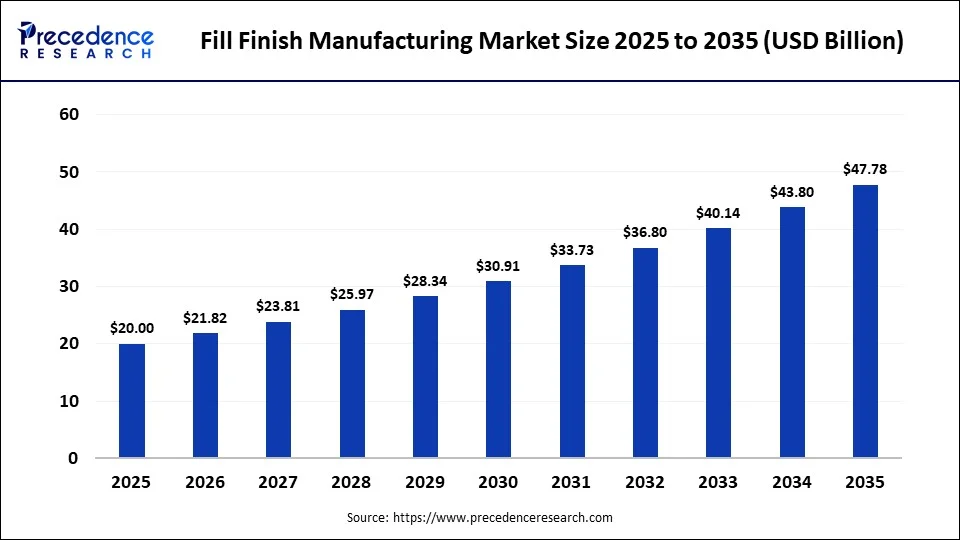
With over 5 years of pharmaceutical manufacturing and sterile injectable research experience into the trends of CDMO capacity, Payal Rabde believes that the market is poised to experience a real decade of capital investment instead of an incremental one. The fill finished manufacturing market for the global fill is estimated at USD 21.82 billion in 2026 and is expected to grow at 9.10% CAGR during the forecast period to reach approximately USD 47.8 billion by 2035. The commercialization of cell and gene therapies, the transition to prefilled syringes and self-administered injectables, and capacity investment in multi-billion-dollar deals like those of Novo Nordisk, Samsung Biologics, and Lonza all point to that growth, interpreted in her analysis.
Key Takeaways
- By product type, the vials segment led the market with a 39% share in 2025.
- By drug type, the biologics segment captured a major revenue share of 38% in 2025.
- By filling technology, the aseptic fill finish segment captured the largest commercial vehicle braking system market share of 78% in 2025.
- By scale of operation, the commercial scale manufacturing segment captured the largest market share of 73% in 2025.
- By packaging format, the liquid fill finish captured the largest market share of 61% in 2025.
Market Overview
Global Fill Finish Manufacturing Market Reaches USD 20.00 Billion in 2025
At 9.10% annual growth, I projected a value of about USD 47.8 billion for 2035. This is almost 2.4 times the current market size in 10 years. The type of expansion on top of an existing base supported by critical injectable products suggests a significant influx of new investments into aseptic filling lines. Rather than merely into pharmaceutical manufacturing capacity in general. Manufacturers, including Samsung Biologics, Lonza, and Novo Nordisk, all of whom are well on their way to multi billion dollar capacity builds, which this report covers in more detail later.
Key Insight: A projected 2.4 times expansion in ten years is as much a story about where capital is being deployed today as it is a forecast of future demand.
Source: Precedence Research Database
Prefilled Syringes Set to Draw Level With Vials by 2035
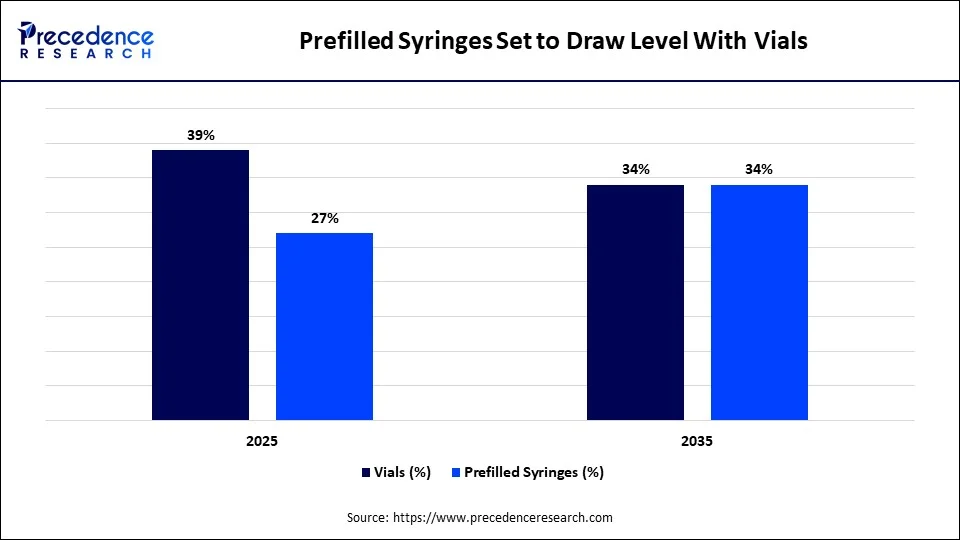
Vials are the dominant container format with a share of 27% in 2025 in the market and they are projected to reach equal strength to vials by 2035. Aditi interpreted that this leadership is based on their longstanding use in biologics, vaccines, and the classic injectable drugs that are prepared and administered by clinical staff. But she also notes a structural change that's actually taking place. Prefilled syringes are rapidly approaching vials at a meaningful rate, as the trend toward ready to use, self-administered injectables moves on. One obvious example of that transformation is with GLP-1 pens. They do not need vial-based clinical administration and are completely pre-filled, self-administered formats.
Key Insight: Prefilled syringes have grown by more than 50%, and they are projected to reach equal strength to vials by 2035, as compared with a vial-based clinical administration, which is viewed as having various advantages, including that patients are taught how to use them instead of learning how to prefill.
Source: Precedence Research Database
Cell & Gene Therapy Fill-Finish Demand Grows Nearly Twice as Fast as the Market
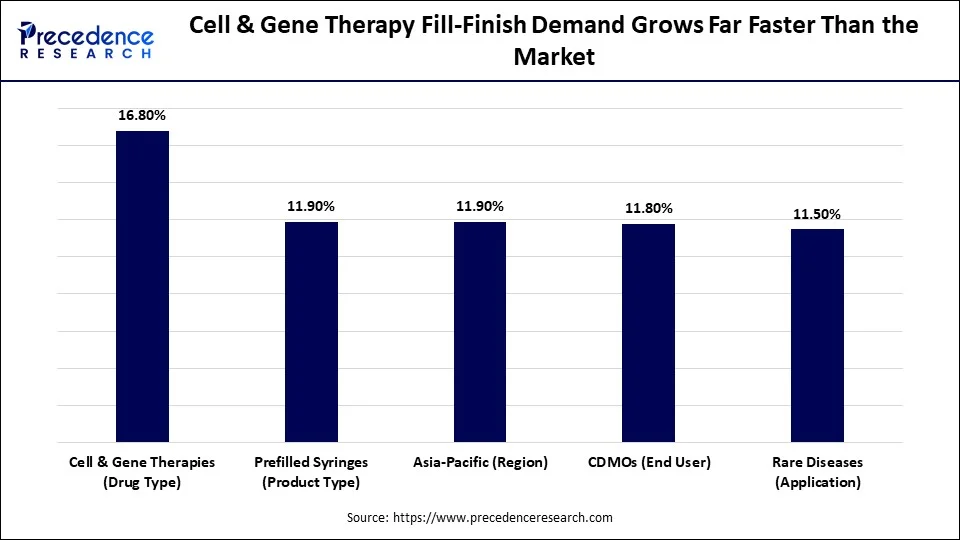
I compared the single fastest growing sub-segment from each of these categories in this report with each other. Cell and gene therapies are top on the list with a growing CAGR of 16.8 between 2025 and 2035. CDMOs led the pack for end-users, pre-filled syringes led for container format, the Asia Pacific region led among regions, and rare disease applications led among applications. I interpreted that text as direct evidence that the demand for advanced therapy commercialization is turning into a reality driver for high containment aseptic capacity and not only in the case of fill finish manufacturing.
Key Insight
Advanced therapy commercialization is a top-demand accelerator for high containment aseptic fill finish capacity. Directly linked to the buyer's firm TOC strategic vision that advanced therapy commercialization will drive the market's growth rate for the CAC in the region at almost double the average market growth rate of 9.10% CAGR over the coming years, which is well reflected in the growth rates of the CAC sub-segments in the region.
Source: Precedence Research Database
Asia-Pacific Set to Narrow the Gap With North America and Europe
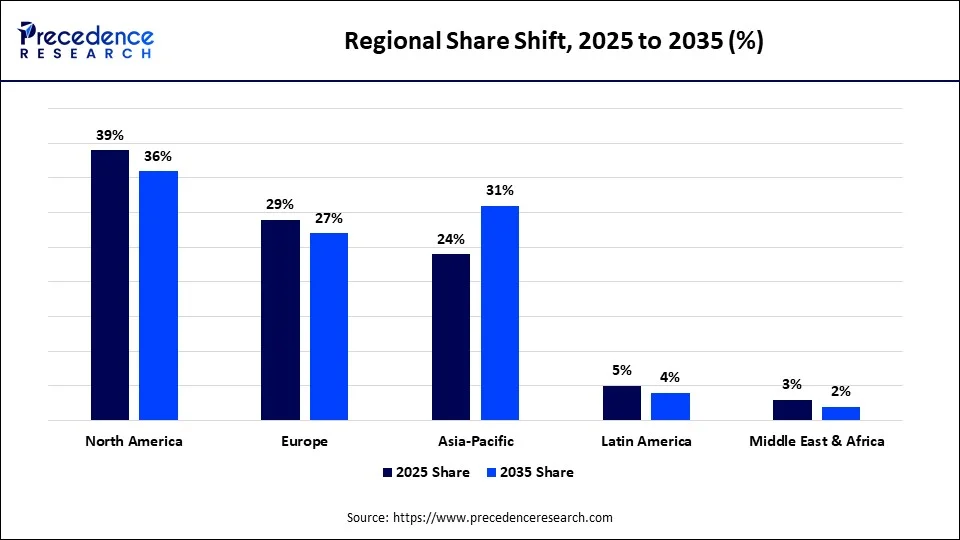
Asia Pacific's meaningful global market share increase from 24% to 31% between 2025 and 2035, driven by a CDMO capacity build-out by South Korea, China, and India that has been underway for several years now. North America held the largest regional share of 39% in 2025. This is supported by a strong current market for biologics manufacturing and CDMO infrastructure. While Europe, with a market share of 29% in 2025, is set to drive market growth owing to the burgeoning manufacturing sector and favourable government support.
Key Insight: Asia-Pacific is the only region that will secure meaningful gains through 2035 (11.9% regional CAGR versus 8.4–8.5% in North America/Europe), however North America will still maintain the largest single share for the five years ahead, thanks to its leading CDMO and biologics manufacturing footprint.
Source: Precedence Research Database
Asia-Pacific: 24.0% Share in 2025, Growing to 31.0% by 2035
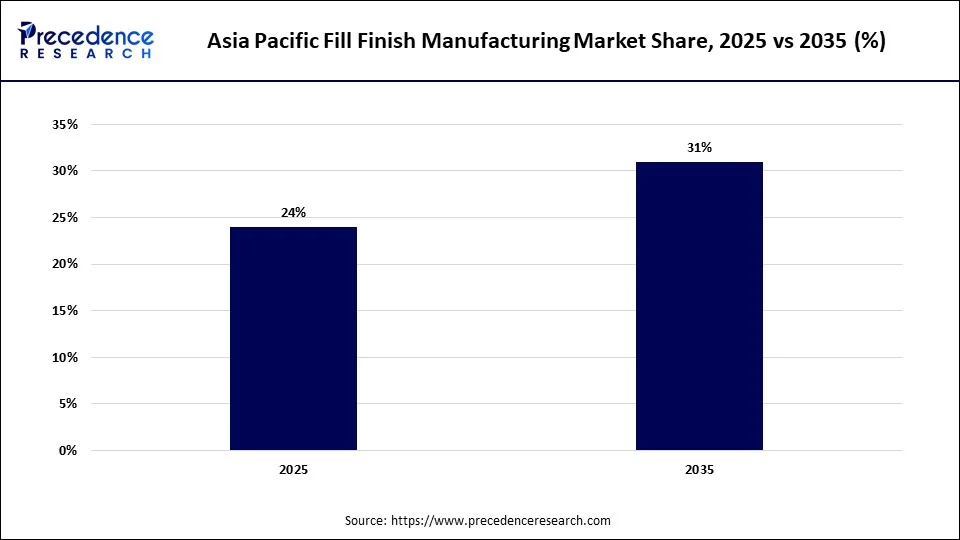
Asia Pacific held a 24% share in 2025. It is the smallest of the three largest regions. Otherwise, Aditi elaborated it as the clear growth story of this entire regional piece. Growing at a CAGR of 11.9% annually, significantly higher than the global average. Its share will rise to 31.0% by 2035 as the base of contract manufacturing expands rapidly throughout the region, particularly South Korea, China, and India, where biologics production is also growing. This region is expected to be the primary destination for new fill finish capacity investment over the next decade, ahead of both North America and Europe on a relative basis.
Key Insight: Asia Pacific's growth rate is more than three points above the global average, and Aditi believes that it's the sole region that will deliver new capacity additions this decade.
Source: Precedence Research Database
North America: 39.0% Share in 2025, Declining to 36.0% by 2035
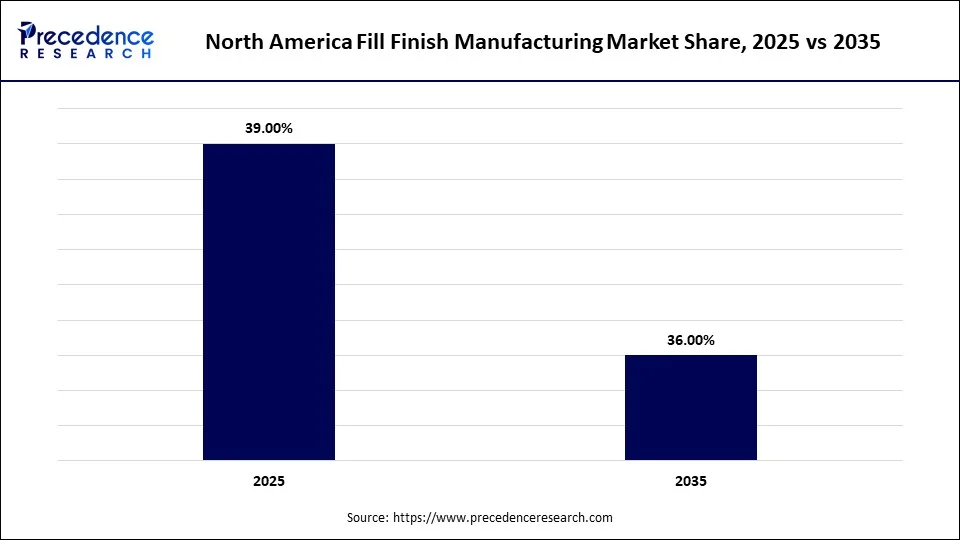
With its most dominated share of the global market at 39% in 2025, North America has a very good existing biologics manufacturing base, which is also supported by a large number of established CDMO players. This proportion is projected to fall slightly to 36.0% by 2035, with the region experiencing 8.5% annual growth, slightly less than the world average of 9.10%. Aditi sees no such thing as North America being irrelevant. Instead, Aditi believes that other parts of the world, mainly Asia Pacific, are just expanding out of a smaller base at a more rapid pace.
Key Insight: North America loses a few percentage points of global market share by 2035, but this is because its overall manufacturing base isn't necessarily declining. It's simply growing at a lower rate.
Source: Precedence Research Database
Europe: 29.0% Share in 2025, Declining to 27.0% by 2035
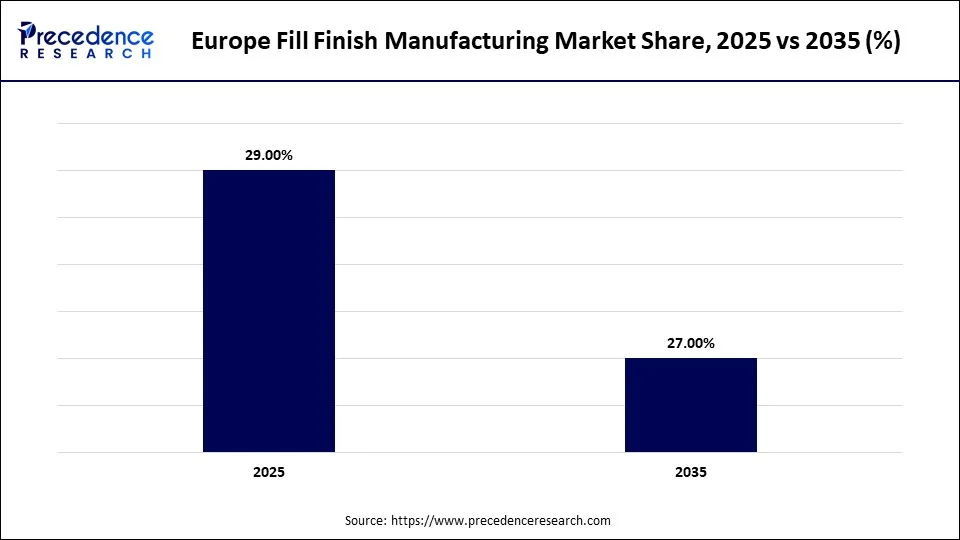
In 2025, Europe was the second largest region with a 29% share, based on a long time established pharmaceutical manufacturing infrastructure. This is older than most of the competitor regions in Asia. But that declines to 27.0% by 2035, when the region is projected to see the slowest growth rate of the three largest regions examined in this report at 8.4% per year. Europe's situation appears more a case of a well-ripened market being overridden by quicker growth in other side-of-the-Atlantic capacity increases, according to my research.
Key Insight: Europe's regional growth rate, at 8.4% CAGR, sits closest to the market's overall floor. This further explains why its share erodes gradually rather than sharply.
Source: Precedence Research Database
Latin America: 5.0% Share in 2025, Declining to 4.0% by 2035
| Years | Market Share |
| 2025 |
5.00% |
| 2035 | 4.00% |
In 2025, Latin America accounted for 5% of global market share, and Aman interpreted the growth of investment in pharmaceutical manufacturing in the region as contributing to real growth, albeit smaller. That rate relents a bit by 2035 to 4.0%, with the region growing at an 8.2% CAGR, which is lower than the global rate, but significant in absolute terms, because of the region's base.
Key Insight: Latin America growth is real, but low, and its slight decline in share is indicative of the rate of growth of the big regions rather than any lack of strength within Latin America.
Source: Precedence Research Database
Middle East & Africa: 3.0% Share in 2025, Declining to 2.0% by 2035
| Years | Market Share |
| 2025 |
3.00% |
| 2035 | 2.00% |
I believe that despite the small size of the market, which held 3% of market share in 2025. The region is getting a shot in growth factors from government investment in local manufacturing of pharmaceutical products. But that shrinks to 2% by 2035, the slowest growth rate of all five regions according to our research.
Key Insight: This region's market share in the world is declining from 3% to 2%. This region continues to grow in absolute numbers, with factors fuelling such growth including government initiatives and investment in the coming years.
Source: Precedence Research Database
EU's Revised Sterile Manufacturing Regulation Reshapes Aseptic Fill-Finish Operations
EU GMP Annex 1 (Sterile Medicinal Products): Implementation Timeline
| Date | Milestone |
| Aug-22 | Revised Annex 1 published |
| Aug-23 | General application begins |
| Aug-24 | Lyophilizer sterilization rule (§8.123) applies |
EU GMP Annex I is the major regulation that governs sterile medicinal product manufacturing in the European Union (EU). The first revision of the annex was made in August 2022, around 14 years after the annex was formed. The general application began in August 2023, while the lyophilizer sterilization rule was applied in August 2024. These regulatory changes directly affect every aseptic fill-finish operator selling into the EU and the UK.
Key Insight: The regulation applies to all sterile drug products sold in the EU regardless of where they are manufactured, i.e., U.S. and Asia-Pacific fill-finish operators serving European markets faced the same compliance deadline.
Source: European Commission, Public Health Directorate (health.ec.europa.eu, Aug 2022); West Pharma (Dec 2024); NSF; Contract Pharma (Sept 2024).
Broader Biologics CDMO Market Cross-Validates the Fill-Finish Growth Story
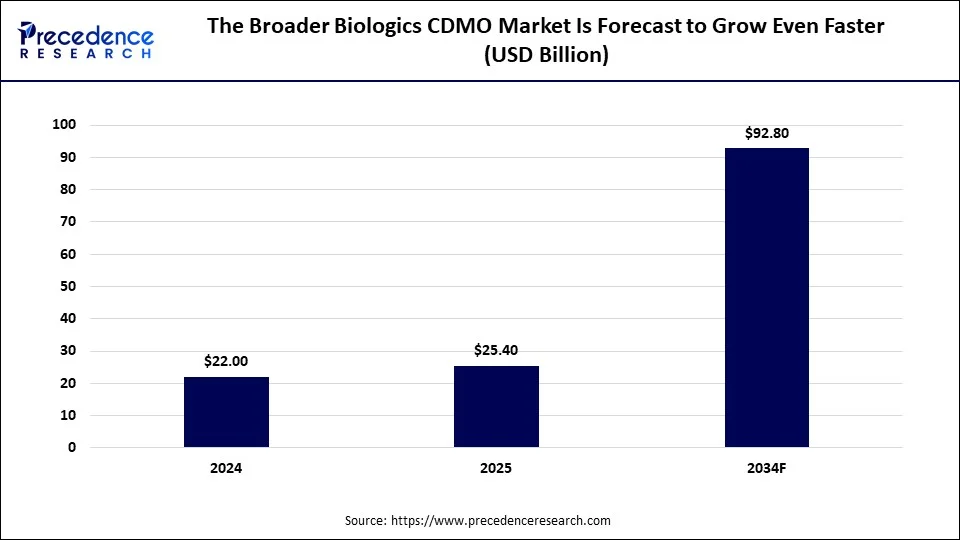
This market's growth trajectory, and I found that the broader biologics CDMO market, which includes fill-finish as one of its core service lines, tells a consistent and honestly even more aggressive story. The adjacent market is estimated at USD 22 billion in 2024 and is expected to reach USD 25.41 billion in 2025 and USD 92.79 billion in 2034, with a CAGR of 15.48%. The services that are one of the service lines within that larger CDMO offering seem to be growing at a similar pace as the other drug substance & biologics development services.
Key Insight: Weaker growth statistics compared to the broader biologics CDMO market (15.48% CAGR) are directionally consistent, since drug substance/biologics development services are marching along at the rate of development, if not faster.
Source: Precedence Research Database
Samsung Biologics Scales Toward 964,000 Liters of Total Manufacturing Capacity
| Period | Total Biomanufacturing Capacity |
| 2022 (Plants 1-3) | 604 kL |
| 2024 (+Plant 4) | 604 kL |
| Apr 2025 (+Plant 5) | 784 kL |
| Board-approved (+Plant 6) | 964 kL |
The 964,000 L/year of total manufacturing capacity is the goal that Samsung Biologics will be pushing toward with its new plant. Before 2024, the CDMO's total manufacturing capacity was 604,000 liters in its first three plants before April 2025, when its fifth plant went into operation. This would reach 784,000 liters once its sixth plant became operational after approval from its board in June.
That expansion is part of a larger investment of USD 5.7 to 6.0 billion (KRW 7.5 trillion) that is part of a Bio Campus II investment program. Referring to the name's development of a fully automated prefilled syringe drug product line. This is a clear example of a major CDMO making a named investment specifically to capture the market shift towards prefilled syringes.
Key Insight: CDMO efforts were evident from Samsung's planned prefilled-syringe line (cGMP-ready 2027). The same product-type change is visible in the client-supplied data, with a key example that the CDMO is investing specifically to capture that the shift is toward prefilled syringes from a 27% share to a 34% share.
Source: Samsung Biologics press releases (Jan 2025); BioPharm International (Jan 2025, May 2026); BioSpace (Jan 2025).
A Multi-Billion-Dollar Capacity Investment Wave Is Underway Industry-Wide
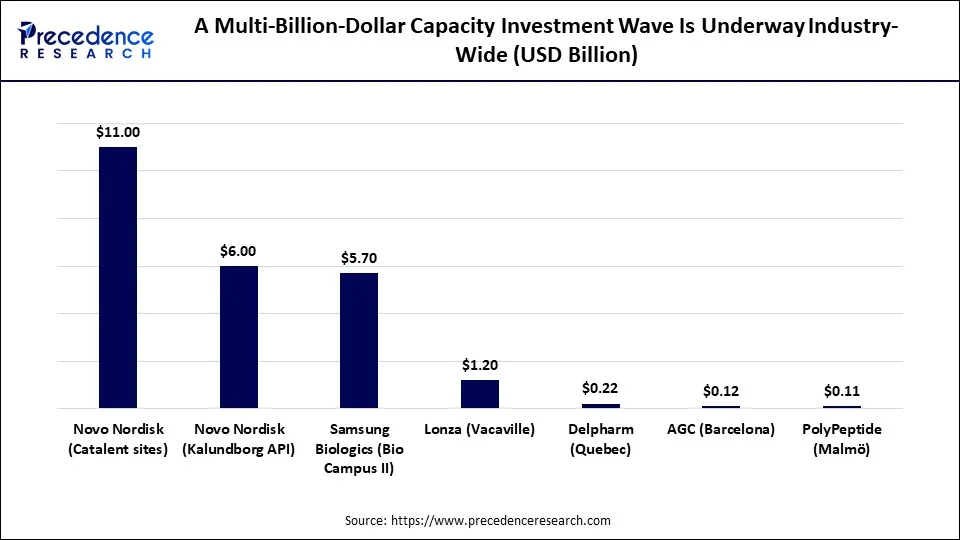
Other than the Novo Nordisk and Catalent transactions, I interpret a genuinely broad wave of capacity investment spanning multiple companies and regions at once. Novo Nordisk is also increasing the production of active pharmaceutical ingredients (APIs) at its Kalundborg plant in Denmark with an estimated investment of USD 6.0 billion. Lonza bought a biologics factory in Vacaville, California from Roche and Genentech for USD 1.2 billion and is investing an additional CHF 500 million, equivalent to USD 554 million, in the facility.
Other smaller, but still significant, investments are Delpharm's USD 220 million investment in Quebec, Canada. Further, AGC Biologics's investment of approximately USD 120 million in Barcelona, Spain, and PolyPeptide's investment of approximately USD 110 million in Malmö, Sweden. This investment wave is that it covers North America, Europe, and Asia Pacific at the same time, which leads to the market's forecasted growth being well underway. This is facilitated by a commitment of capital that has already been disclosed, and not by a commitment of capital that hasn't been announced yet.
Key Insight: This investment wave covers the three regions where the disclosed data shows the market is expected to grow fastest – North America, Europe, and Asia-Pacific, and it does this all at once, meaning the market's growth forecast is likely heavily pre-funded by disclosed investment, rather than based on predicted future investment.
Source: CHEManager, "The CDMO/CMO Report"; DCAT Value Chain Insights; industry analysis via nextfinancial.substack.com (Apr 2026).
GLP-1 Drugs are a Primary Structural Driver of Fill-Finish Capacity Demand
| Year | Global GLP-1 Drug Market Revenue |
| 2025 | USD 53 Billion |
| 2030F | USD 157 Billion |
Aman interpreted that the GLP-1 class of drugs like Ozempic, Wegovy, Mounjaro, and Zepbound should get their own dedicated study. Each one of these drugs currently in their dominant form relies on an injectable fill-finish manufacturing process. In 2025, the global market for GLP-1 generated revenue of USD 53 billion, which is expected to reach USD 157 billion by 2030, and prescription volume has been rising at an estimated 38% per year since 2022.
Approximately one in eight people in the U.S. may have now taken a GLP-1 drug. Aman believes this is one class of drugs, despite its relatively small population size. This is likely to account for a substantial proportion of the diabetes application growth rate. This is a significant portion of the total diabetes market's demand for high-volume prefilled syringe and autoinjector cartridge capacity in particular. A single drug class that's expanding at such a fast rate, and exclusively reliant on injectables production, is sufficient. Further demonstrating that capacity has become the limiting factor in this industry, not demand.
Key Insight: In terms of plausible explanations for this class' share of the client-supplied data, the CAGR for Diabetes application (8.3%) and the demand for high-volume prefilled-syringe and cartridge (autoinjector pen) capacity in the broader market are both tied to this single drug class, and, in favor of the GLP-1 class, both fit robustly.
Source: nextfinancial.substack.com, "Where the Money Really Is in Pharma" (Apr 2026), citing industry GLP-1 revenue tracking.
Important Segment Analysis
Product Type: Vials Lead Product Type Share as Prefilled Syringes Post the Fastest Growth
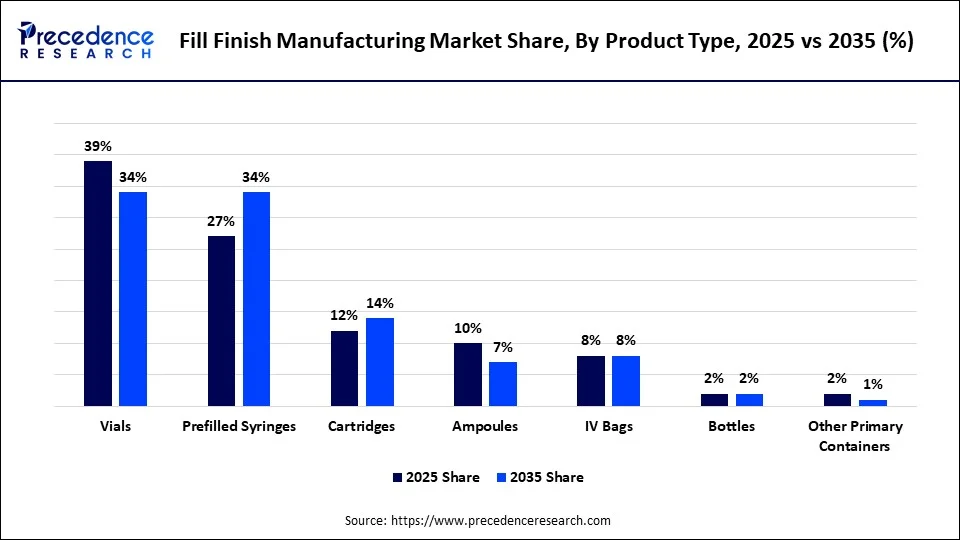
Vials accounted for the largest share of products in this category in 2025 with 39.0%. I interpret this as due to their high utilization in biologics, vaccines, and standard injectable drugs, in which preparing the drug is managed by clinical staff. This portion declines to 34% by 2035 but continues to increase by 7.8% per year. The fastest growing format is the prefilled syringe, increasing from 27% to a 34% share at 11.9% CAGR. Facilitated by more demand for ready to use, self-administered injectables.
Key Insight: Vials will continue to dominate during the forecast period here, but I believe pre-filled syringes will be the format to which new filling line investment flows.
Source: Precedence Research Database
Biologics Dominate Drug Type Share as Cell & Gene Therapies Grow Fastest by Far
Fill Finish Manufacturing Market Share, By Drug Type, 2025 vs 2035 (%)
| Drug Type | 2025 | 2035 |
| Biologics | 38% | 42% |
| Small Molecule Drugs | 24% | 20% |
| Vaccines | 16% | 14% |
| Cell & Gene Therapies | 8% | 13% |
| Biosimilars | 10% | 9% |
| Other Injectable Therapies | 4% | 2% |
Biologics led this category, accounting for 38% in 2025 and 42% in 2035, growing 10.8% a year, due to the expanding monoclonal antibody and protein therapeutic production. The market's traditional mature category of small molecule drugs moves down 24% to 20%, at a relatively modest 6.8% compound annual growth rate. The advanced therapy manufacturing demand trajectory is clearly poised to move toward cell and gene therapies, which are growing about twice as fast as the category's own leader, biologics, says Aditi.
Key Insight: Biologics holds the largest 2025 share (38%), while cell & gene therapies grows fastest at a 16.8% CAGR through 2035, as cell and gene therapies grow roughly twice as fast as biologics, the category's own leader.
Source: Precedence Research Database
Filling Technology: Aseptic Fill Finish Extends Its Dominance Over Terminal Sterilization
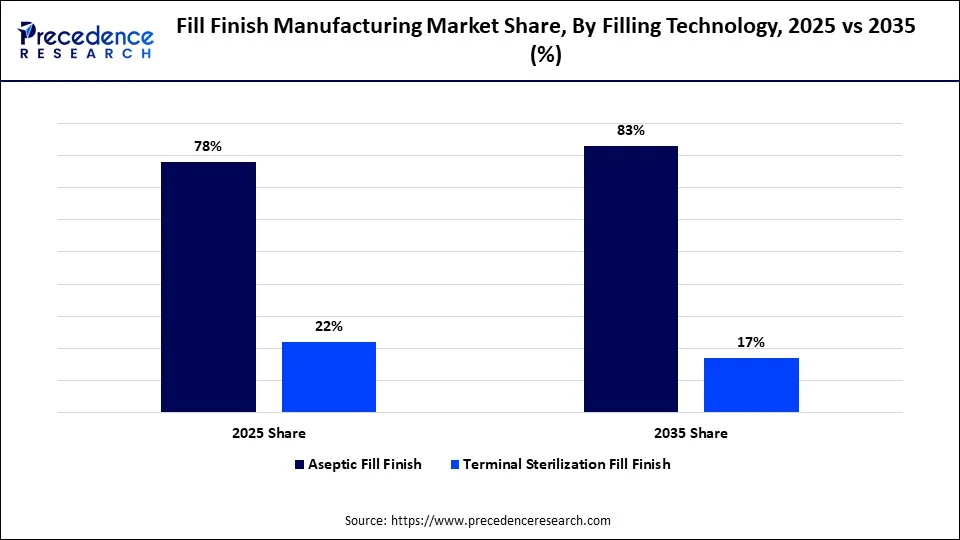
Aseptic fill finish already accounted for the large majority of this category in 2025 at a 78% share. Aman believes that its position keeps strengthening because most biologics and other sensitive sterile injectables simply cannot tolerate the heat involved in terminal sterilization. That share climbs further to 83% by 2035 while growing at 10.2% annually. Nearly double the pace of terminal sterilization fill finish, which eases from 22% to 17% share at just 5.8% growth, remaining relevant mainly for products that are chemically stable enough to withstand it.
Key Insight: Aseptic Fill Finish holds the largest 2025 share (78%) that leads by a wide margin today, while Aseptic Fill Finish grows fastest at a 10.2% CAGR through 2035.
Source: Precedence Research Database
Scale of Operation: Commercial Scale Manufacturing Extends Its Lead Over Clinical Scale
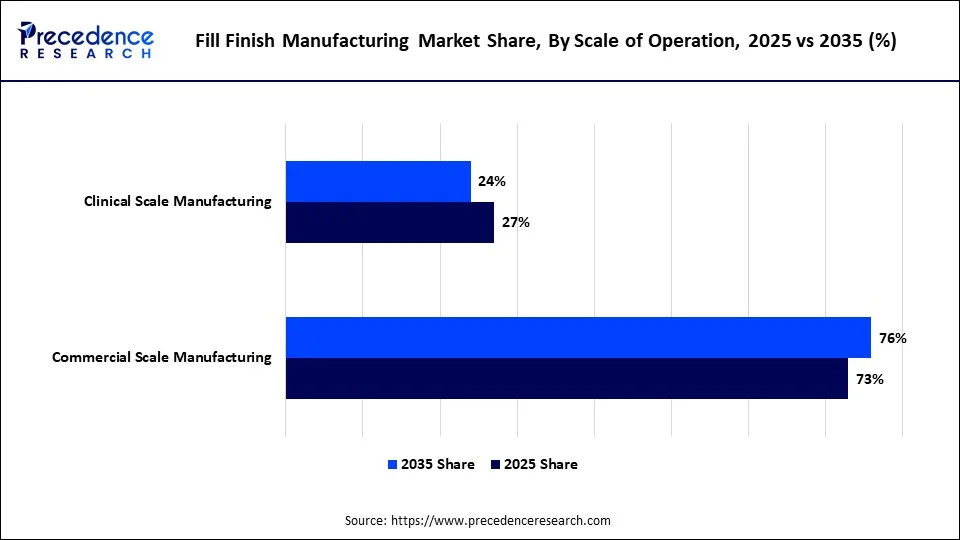
Commercial scale manufacturing led this category in 2025 with a 73% share, mainly because of the size of commercial scale manufacturing runs compared to the smaller clinical manufacturing runs. By 2035, it is projected to reach 76% at a 9.5% rate of increase annually. Clinical scale manufacturing holds steady at 24%, adding 8.1%, but slowing slightly from 27%. I found this gap is reflective of the number of drugs in a slow-moving clinical pipeline. That will enter the market, versus the absolute growth of the market itself.
Key Insight: Commercial scale production is pulling further ahead of clinical scale, which lines up with a market where already approved biologics and injectables are driving most of the near-term capacity build-out.
Source: Precedence Research Database
Packaging Format: Liquid Fill Finish Leads as Lyophilized Formats Grow Fastest
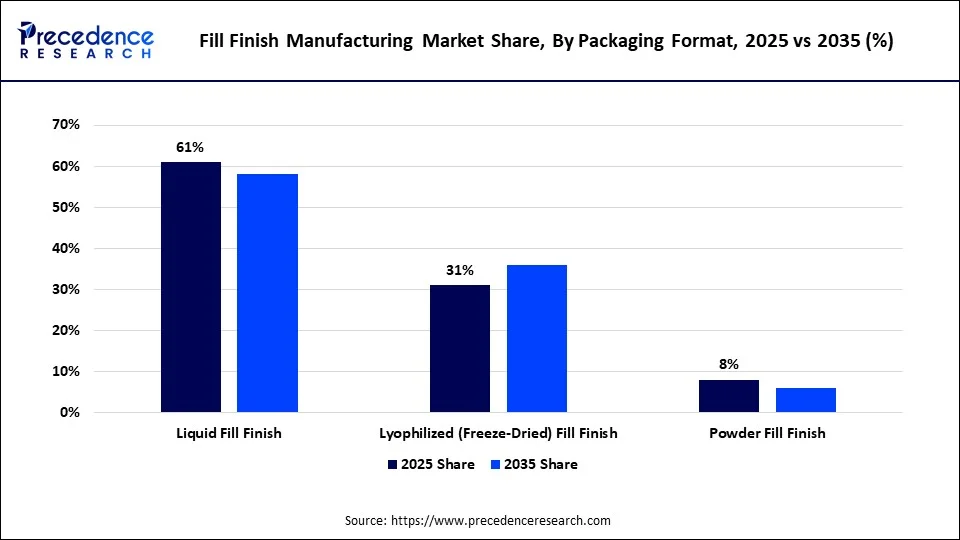
In 2025, liquid fill finish was the leading packaging format, accounting for a 61% share, with its ease of processing and lower processing costs making it the top choice in commercial injectable pharmaceutical manufacturing. This percentage drops a bit further to 58% in 2035, but still increases by 8.5% per year. I believe lyophilized or freeze dry product is the format to pay more attention to, as they grew from a 31.0% to 36.0% share with a 10.8% CAGR. While the demand for temperature-sensitive biologics continues to increase, the more practical option of freeze drying is gaining more traction for stabilizing these products for storage and shipping.
Key Insight: Liquid formats maintain their lead for the entire forecast period, but it highlights the faster growth in lyophilization as a direct result of the number of temperature sensitive biologics entering the pipeline.
Source: Precedence Research Database
Pharmaceutical Companies Lead End-User Share as CDMOs Grow Fastest
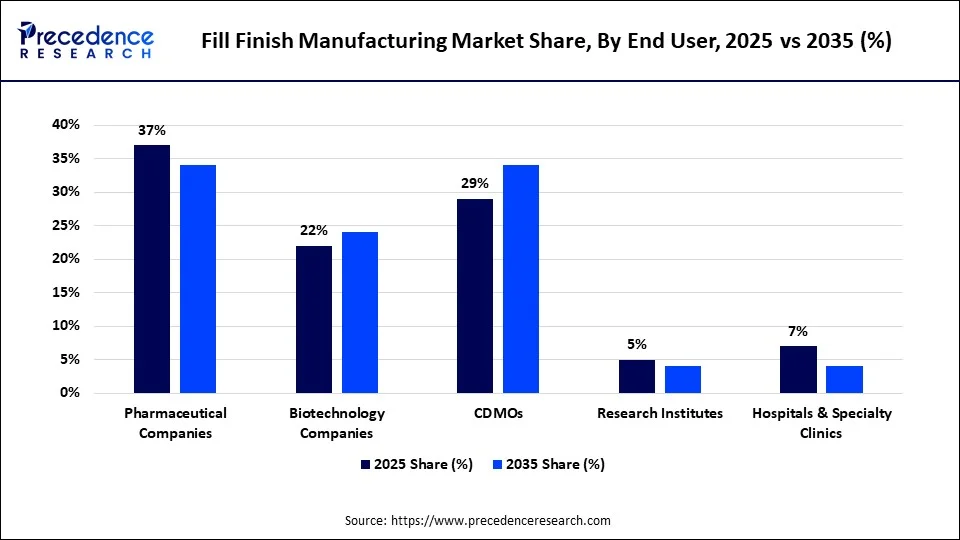
In this category, pharmaceutical companies accounted for the largest end-user share in 2025 with 37% of market share. This is driven by the production of branded injectable therapies. The biggest growth end user is by far contract development and manufacturing organizations, which jumped from 29% to 34% of the market at 11.8% year-over-year. Aman believes that this growth is directly linked to the ongoing trend of pharmaceutical and biotech companies outsourcing sterile manufacturing to contract partners rather than building it in-house.
Key Insight: By 2035, CDMOs are set to fill the vast majority of the gap with the pharmaceutical industry. Aman believes this convergence is the strongest sign yet of how outsourcing has become integral to this industry.
Source: Precedence Research Database
Oncology Anchors Application Demand as Rare Diseases Grow Fastest
Fill Finish Manufacturing Market Share, By Application, 2025 vs 2035 (%)
| Application | 2025 Share (%) | 2035 Share (%) |
| Oncology | 28% | 31% |
| Infectious Diseases | 18% | 16% |
| Autoimmune Diseases | 15% | 17% |
| Cardiovascular Diseases | 10% | 9% |
| Diabetes | 11% | 10% |
| Neurology | 8% | 8% |
| Rare Diseases | 7% | 8% |
| Other | 3% | 1% |
Oncology accounted for the biggest share at 28% in 2025, which Aditi attributes to the continued growth of oncology biologics and antibody therapies. They projected to reach 31.0% of the market by 2035 at 10.8% per year. The fastest growing application by a clear margin is rare diseases, climbing from a 7% to an 8% share at 11.5% annually as orphan drug development accelerates fill finish requirements.
Key Insight: Oncology has the highest application share all the way through, but Key Insight is that Aditi believes that rare disease and orphan drug development is a lesser known but important demand segment in this entire market.
Source: Precedence Research Database
Recent Developments in Fill Finish Manufacturing Market
| Date | Development | Source |
| Aug 2022 | The European Commission (EC) published the revised Annex 1 of the EU GMP for sterile medicinal product manufacturing, the first in 14 years to be fully revised. The guidance grew from 16 to 58 pages, as the level of complexity of sterile manufacturing and the expectations of contamination control during manufacturing increased. | European Commission (Aug 2022). |
| Aug 2023 | The revised Annex 1 is now generally applicable throughout the EU, immediately affecting operators of aseptic fill-finish services selling to European markets worldwide. | NSF; Contract Pharma (Sept 2024). |
| Feb 2024 | Novo Holdings announced a USD 16.5 billion acquisition of Catalent, which it described as a strategic bid to gain “key fill-finish capacity” for its fast-growing GLP-1 drugs like Wegovy and Ozempic. In addition to the general terms of the deal, Novo Nordisk separately agreed to pay USD 11 billion for three of Catalent's fill-finish facilities in the order. | CNBC; BioPharma Dive; Fierce Pharma (Feb 2024). |
| Aug 2024 | The Annex 1 requirement for sterilizing manually loaded or unloaded lyophilizers before each load (§8.123) will take effect one year after the rest of the regulation. | West Pharma (Dec 2024). |
| Q4 2024 | Lonza agreed to take over Genentech's large-scale biologics manufacturing plant in Vacaville, California for USD 1.2 billion. The company also invested an extra CHF 500 million (around USD 554 million) in upgrading the existing manufacturing facility and increasing its capacity after the closing of the transaction. | CHEManager, "The CDMO/CMO Report." |
| Dec 2024 | The acquisition of Catalent by Novo Holdings was granted clearance by the U.S. Federal Trade Commission and the European Commission later this year. Once completed, the three fill-finish manufacturing sites became part of Novo Nordisk's global manufacturing pipeline for GLP-1 drugs. | CNBC (Dec 2024); BioProcess International (Dec 2024). |
| Jan 2025 | Samsung Biologics saw solid progress in its operations during 2024 with the arrival of Plant 5 in April 2025 and the capacity of 180,000 liters of manufacturing. This expansion doubled the company's total biomanufacturing capacity to 784,000 litres. The company also gave approval for Plant 6, which will expand the total capacity to around 964,000 liters. Samsung Biologics also said it would launch a cGMP-ready, fully automated prefilled syringe drug-product line alongside the investments. | Samsung Biologics press release; BioSpace (Jan 2025); BioPharm International (Jan 2025). |
| 2024-2025 | The company consolidated its commercial position by securing some USD 1.3–1.4 billion in further manufacturing contracts, one of which was over USD 1.4 billion for a European pharmaceutical company. |
BioPharm International (Jan 2025). |
Fill Finish Manufacturing Market Key Companies
| Company | Headquarters | Core Business | Relevant Public Information | Source |
| Catalent, Inc. (now part of Novo Holdings) | Somerset, New Jersey, U.S. | Contract development and manufacturing (CDMO), including sterile fill-finish | Since the completion of Catalent's acquisition by Novo Holdings in December 2024, the company has moved into a new phase. In an additional USD 11 billion deal, three significant fill-finish facilities in Italy, Belgium and Indiana with over 3,000 employees were sold to Novo Nordisk to help the company scale up its GLP-1 production. | CNBC; BioPharma Dive (Feb 2024). |
| Samsung Biologics | Incheon, South Korea | Fully integrated biologics CDMO, including cell-line development through aseptic fill-finish | With the start-up of Plant 5, Samsung Biologics brought its large-scale biologics manufacturing capacity to 784,000 liters, further solidifying the company's position as a leader in this segment. Board approval has been obtained for Plant 6, and the overall capacity is projected to rise to 964,000 liters. The company also closed USD 4.3 billion in new contracts in 2024, resulting in USD 16.3 billion worth of new contracted business. At the same time, it is also investing in the Bio Campus II development, which currently totals around USD 5.7-6.0 billion, and is also working on an automated prefilled syringe production line to be ready for cGMP by 2027. | Samsung Biologics press releases; BioSpace; BioPharm International (Jan 2025). |
| Lonza Group AG | Basel, Switzerland | Biologics CDMO with end-to-end drug substance and drug product (fill-finish) services | Lonza has enhanced its commercial fill-finish production at its Stein, Switzerland, site with the addition of capacity in the manufacture of vials, prefilled syringes, cartridges and antibody-drug conjugates. Concurrently, its CHF 500 million investment in facility improvements and USD 1.2 billion acquisition of the biologics manufacturing plant in Vacaville, USA, greatly enhanced its long-term biologics manufacturing capabilities. | Lonza capacity updates; CHEManager, "The CDMO/CMO Report." |
| Novo Nordisk A/S | Bagsværd, Denmark | Pharmaceutical manufacturer (GLP-1 drugs Ozempic, Wegovy) and, following its Catalent site acquisition, in-house fill-finish operator | To bolster its fill finish business, Novo Nordisk has invested USD 11 billion to acquire three former Catalent fill finish facilities. The company also invested around USD 6 billion to scale up its API production at its Kalundborg, Denmark, facility, and the acquired fill-finish facilities are expected to contribute to the gradual ramping up of production starting in 2026. | Novo Nordisk Form 6-K (SEC, Feb 2024); Fierce Pharma (Feb 2024). |
| Fujifilm Diosynth Biotechnologies | Billingham, U.K. (Fujifilm subsidiary) | Biologics CDMO, including drug substance and drug product manufacturing | Fujifilm Diosynth Biotechnologies - Microbial Manufacturing continued its expansion of its microbial manufacturing network with the opening of a microbial fermentation facility in Billingham, United Kingdom during August 2024. With an investment of more than GBP 100 million (around USD 131 million), the expansion should increase microbial production throughput at the site by a factor of three and boost the company's capacity to manufacture biopharmaceutical products internationally. | DCAT Value Chain Insights; CHEManager. |
Expert Insights
The fill finish manufacturing market is no longer limited to drug filling and is shifting well into the realm of highly specialized, flexible, technology-driven sterile drug manufacturing. I believe there are some great market opportunities out there for manufacturers that can integrate the following, including advanced aseptic processing, automated inspection, flexible filling lines, and reliable cold-chain capabilities. As I see it, the rising biologics pipeline, increasing demand for injectable drugs, and even more stringent contamination-control requirements. This will help drive competitiveness over the next 10 years. I also believe that the market for prefilled syringes, cartridges, vials, and other ready-to-deliver products will grow due to the emphasis on pharmaceutical companies putting the convenience, accuracy, and efficiency of their product manufacturing into production. Fill-finish providers with scalable capacity and strong regulatory capabilities should respond well to fill-finish demand for more complex biologics, vaccines, and potentially high-value therapies as these commercialize.
Our Experts
Payal Rabde led the primary market research, developed the methodology, and analyzed segmentation, regional trends, competition, and forecasts, forming the report's analytical foundation.
Aman was responsible for collecting and validating regulatory filings, company financial data, commodity pricing, and other independently sourced quantitative datasets, strengthening the evidence base behind the market estimations.
Aditi reviewed the complete research document, performed quality checks, validated findings, refined content, corrected inconsistencies, and finalized the report, ensuring accuracy and clarity.
Fill Finish Manufacturing Market Segmentation
By Product Type
- Vials
- Prefilled Syringes
- Cartridges
- Ampoules
- IV Bags
- Bottles
- Other Primary Containers
By Drug Type
- Biologics
- Small Molecule Drugs
- Vaccines
- Cell & Gene Therapies
- Biosimilars
- Other Injectable Therapies
By Filling Technology
- Aseptic Fill Finish
Terminal Sterilization Fill Finish
By Scale of Operation
- Clinical Scale Manufacturing
- Commercial Scale Manufacturing
By Packaging Format
- Liquid Fill Finish
- Lyophilized (Freeze-Dried) Fill Finish
- Powder Fill Finish
By End User
- Pharmaceutical Companies
- Biotechnology Companies
- Contract Development and Manufacturing Organizations (CDMOs)
- Research Institutes
- Hospitals & Specialty Clinics
By Application
- Oncology
- Infectious Diseases
- Autoimmune Diseases
- Cardiovascular Diseases
- Diabetes
- Neurology
- Rare Diseases
- Other Therapeutic Applications
By Region
- North America - U.S., Canada, Mexico
- Europe - Germany, U.K., France, Italy, Spain, Switzerland, Rest of Europe
- Asia-Pacific - China, Japan, India, South Korea, Singapore, Australia, Rest of Asia-Pacific
- Latin America - Brazil, Argentina, Rest of Latin America
- Middle East & Africa - GCC, South Africa, Rest of Middle East & Africa
References
[1] Precedence Research Database - Fill Finish Manufacturing Market: market value, forecast CAGR, and seven segmentation tables (Product Type, Drug Type, Filling Technology, Scale of Operation, Packaging Format, End User, Application) plus regional segmentation, 2025-035.
[2] Novo Nordisk A/S - Form 6-K, U.S. Securities and Exchange Commission filing (Feb 2024), sec.gov.
[3] CNBC - "Novo Nordisk parent to buy Catalent for $16.5 billion to expand Wegovy supply" (Feb 2024); "Healthy Returns: Novo Nordisk Catalent deal closer to closing" (Dec 2024).
[4] BioPharma Dive - "Novo Holdings to buy contract drugmaker Catalent for $16.5B" (Feb 2024).
[5] Fierce Pharma "Novo antes up $16.5B to poach CDMO giant Catalent amid Wegovy surge" (Feb 2024).
[6] BioProcess International - "Novo Catalent deal clears regulatory hurdles" (Dec 2024); "Catalent paves the way for Novo's US GLP-1 expansion" (Sept 2024).
[7] European Commission, Public Health directorate - Revision of Annex 1, Manufacture of Sterile Medicinal Products (Aug 2022), health.ec.europa.eu.
[8] West Pharma; NSF; Contract Pharma; Zamann Pharma Support; Symbiosis; Hogan Lovells; GMP Publishing - EU GMP Annex 1 revision analysis (2022–2025).
[9] Samsung Biologics - Q4/FY2024 financial results press release (Jan 2025); BioSpace (Jan 2025); BioPharm International (Jan 2025, May 2026).
[10] CHEManager, "The CDMO/CMO Report" - Lonza, Samsung Biologics, Fujifilm Diosynth, Delpharm, AGC, PolyPeptide capacity investment tracking.
[11] DCAT Value Chain Insights - "Tracking Expansions in Biomanufacturing."
[12] Towards Healthcare - "Lonza vs Samsung Biologics vs Catalent: Top Biologics CDMOs in 2026" market sizing.
[13] nextfinancial.substack.com - "Where the Money Really Is in Pharma: The $260 Billion Factory Shortage" (Apr 2026).
[14] IntuitionLabs - "GLP-1 Drug Manufacturing: Expansion & Tech Transfer" (Apr 2026).
For inquiries regarding discounts, bulk purchases, or customization requests, please contact us at sales@precedenceresearch.com
Frequently Asked Questions





Ask For Sample
No cookie-cutter, only authentic analysis – take the 1st step to become a Precedence Research client
 Get a Sample
.webp)



 sales@precedenceresearch.com
 Schedule a Meeting
