



Fluoroquinolones Market Size, Share and Trends 2026 to 2035
Fluoroquinolones Market (By Drug Generation: Third Generation (Levofloxacin), Fourth Generation (Moxifloxacin, Delafloxacin), Second Generation (Ciprofloxacin); By Application: Respiratory Tract Infections (RTI), Urinary Tract Infections (UTI), Others (Skin, Bone, Gastrointestinal); By Distribution Channel: Hospital Pharmacies, Online Pharmacies, By Route of Administration: Oral, Injectable (IV)) - Global Industry Analysis, Size, Trends, Leading Companies, Regional Outlook, and Forecast 2026 to 2035
Source: https://www.precedenceresearch.com/fluoroquinolones-market
 Get a Sample
 Table Of Content


What is the Fluoroquinolones Market Size?
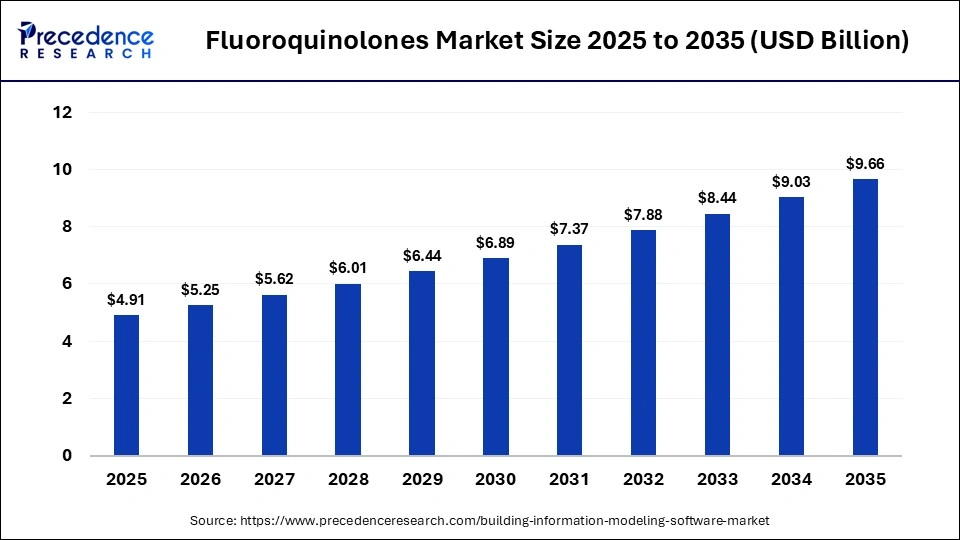
The global fluoroquinolones market size accounted for USD 4.91 billion in 2025 and is predicted to increase from USD 5.25 billion in 2026 to approximately USD 9.66 billion by 2035, expanding at a CAGR of 7.00% from 2026 to 2035. The fluoroquinolones are a class of antibiotics with broad activity against a variety of bacteria. They inhibit DNA synthesis, which is essential for DNA replication, preventing bacteria from spreading. They are effective against various common infections, including urinary tract infections and pneumonia.
Market Highlights
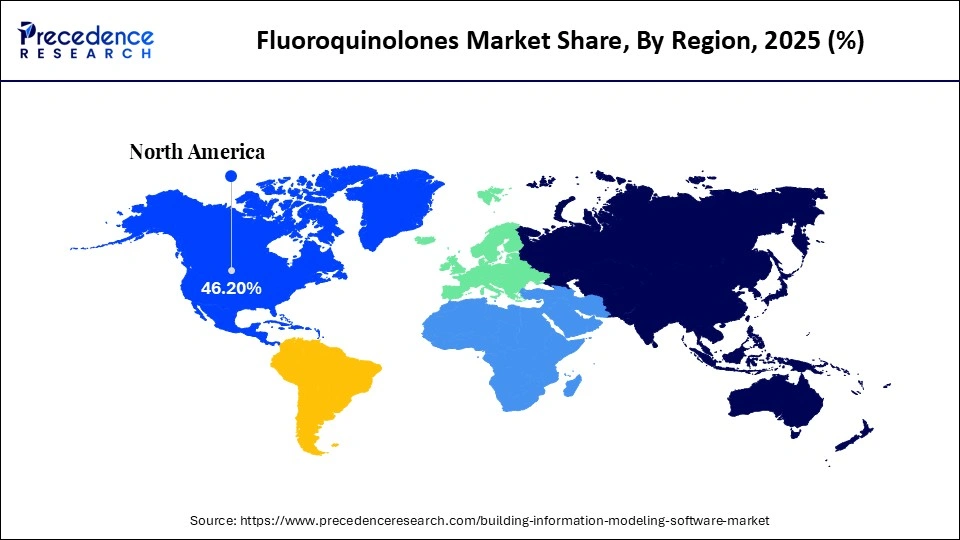
- North America dominated the global market with a share of approximately 46.2% in 2025.
- Asia-Pacific is expected to grow at the fastest CAGR of approximately 8.5% in the market during the forecast period.
- By drug generation, the third generation segment held a dominant position in the fluoroquinolones market with a share of approximately 48.2% in 2025.
- By drug generation, the fourth generation segment is expected to grow with the highest CAGR in the market between 2026 and 2035.
- By application, the respiratory tract infections (RTI) segment held a dominant position in the market in 2025.
- By application, the urinary tract infections (UTI) segment is expected to grow with the highest CAGR in the market between 2026 and 2035.
- By distribution channel, the hospital pharmacies segment held a dominant position in the market with a share of approximately 48.6% in 2025.
- By distribution channel, the online pharmacies segment is expected to grow with the highest CAGR of approximately 5.3% in the market between 2026 and 2035.
- By route of administration, the oral segment held a dominant position in the market with a share of approximately 54.3% in 2025.
- By route of administration, the injectable (IV) segment is expected to grow with the highest CAGR in the market between 2026 and 2035.
What are Fluoroquinolones?
The fluoroquinolones market encompasses the development and distribution of novel candidates in the fluoroquinolone (FQ) class, as well as the prescription and use of FQs in patients with certain types of infections. FQs exhibit concentration-dependent bactericidal activity by inhibiting the activity of DNA gyrase and topoisomerase enzymes, which are essential for bacterial DNA replication. They are highly used in complex urinary tract infections (UTIs), pneumonia, and certain gastrointestinal (GI) infections. As they reach deep tissues such as the prostate, lungs, and bones, making them ideal for deep-seated infections.
Ciprofloxacin, levofloxacin, and moxifloxacin are some common examples of FQs. As they are very potent, they are usually reserved for infections where other options are unavailable, due to their severe side effects. While fluoroquinolones remain a cornerstone for treating severe respiratory tract infections (RTIs) and UTIs, the market is shifting toward "stewardship-driven" utilization due to rising antimicrobial resistance (AMR) and FDA black-box warnings.
What is the Role of AI in the Fluoroquinolones Market?
Artificial intelligence (AI) models are promising tools for predicting various antimicrobial susceptibility in bloodstream infections. These innovations have unlocked various opportunities for the acceleration of drug discovery and delivery, optimization of treatment, and improvement of patient outcomes. AI also revolutionized the pharmaceutical industry from drug development and discovery to personalized medicine, including target identification, validation, and prediction of synthetic routes.
AI is also playing a critical role in supply chain optimization, monitoring continuous manufacturing processes along with maintenance to enhance efficiency, cost reduction, and improvement in both medicine and patient health. Therefore, AI has become an indispensable tool in accelerating drug discovery, optimizing clinical trials, and personalizing treatments, marking a shift toward more efficient, data-driven pharmaceutical research and development.
Fluoroquinolones Market Trends
- Demand for Broad-Spectrum Antibiotics: The growing demand for broad-spectrum FQ antibiotics is driven by their wide-ranging activity against both gram-positive and gram-negative bacteria, their high potency, and unprecedented tissue penetration. It also possesses high efficacy in treating complex and severe infections such as RTIs and UTIs. They are well absorbed orally, making them a convenient choice for outpatient treatment.
- Expansion in Emerging Markets: Bacterial diseases are one of the leading causes of mortality around the world. The burden of infectious diseases is high in low and middle-income countries, where a rapid increase in AMR is seen. Unregulated over-the-counter access to antibiotics, contaminated water and poor sanitation, limited healthcare access, and weak infrastructure, along with the presence of low-quality antibiotics, are some of the major reasons for first bacterial infections, creating an opportunity for market growth.
- Shift In Clinical and Distribution Dynamics: The shift in clinical dynamics and distribution is driven by their potent nature and broad-spectrum efficacy in the rising bacterial resistance. The approval of new agents like delafloxacin, finafloxacin, and zabofloxacin has led to improved Gram-positive coverage and activity against resistant strains, including MRSA. The new generation of this antibiotic focuses on improving tissue penetration and lower sensibility of efflux pumps, making them more effective in complex hospital settings.
Market Scope
| Report Coverage | Details |
| Market Size in 2025 | USD 4.91 Billion |
| Market Size in 2026 | USD 5.25 Billion |
| Market Size by 2035 | USD 9.66 Billion |
| Market Growth Rate from 2026 to 2035 | CAGR of 7.00% |
| Dominating Region | North America |
| Fastest Growing Region | Asia Pacific |
| Base Year | 2025 |
| Forecast Period | 2026 to 2035 |
| Segments Covered | Drug Generation, Application, Distrubution Channel, Route of Administration, and Region |
| Regions Covered | North America, Europe, Asia-Pacific, Latin America, and Middle East & Africa |
Segmental Insights
Drug Generation Insights
Which Drug Generation Segment Dominated the Fluoroquinolones Market?
The third generation segment dominated the market with a share of approximately 48.2% in 2025, due to the rising global burden of bacterial pneumonia and chronic bronchitis. Third generation FQs like levofloxacin have a wide spectrum of activity compared to earlier generations against gram-positive bacteria like Staphylococcus pneumonia. They are also recognized as respiratory quinolones. They are used against a wide range of infections, including acute sinusitis, chronic bronchitis exacerbations, community-acquired pneumonia, and UTIs.
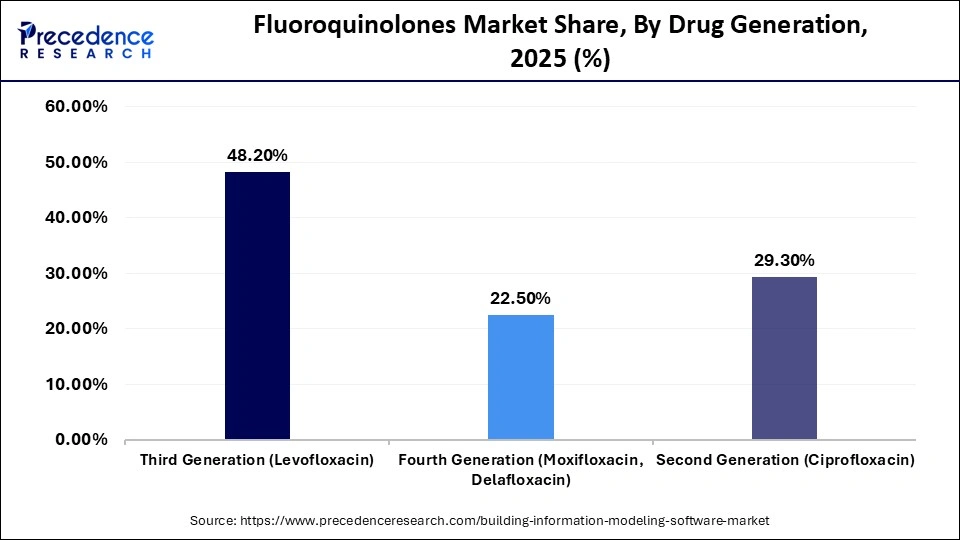
The fourth generation segment is expected to grow at the fastest CAGR in the market between 2026 and 2035, driven by improved activity against resistant pathogens like MRSA. They also provide enhanced, much-needed anaerobic coverage, making them more versatile in treating complex infections. They are evaluated for expanded applications in ophthalmic infections. They are comparatively more effective than older generation FQs, as they are derived based on structure-activity relationships.
Application Insights
Which Application Segment Led the Fluoroquinolones Market?
The respiratory tract infections (RTI) segment accounted for a considerable revenue share of approximately 51.1% in the market in 2025, due to the high efficacy of respiratory FQs. Moxifloxacin and levofloxacin have high efficacy against key pathogens, including bacteria such as Streptococcus pneumonia. With high tissue penetration, high bioavailability, and convenient dosing, it is in high demand for treating RTIs. The segmental growth is attributed to the rising global burden of bacterial pneumonia and chronic bronchitis.
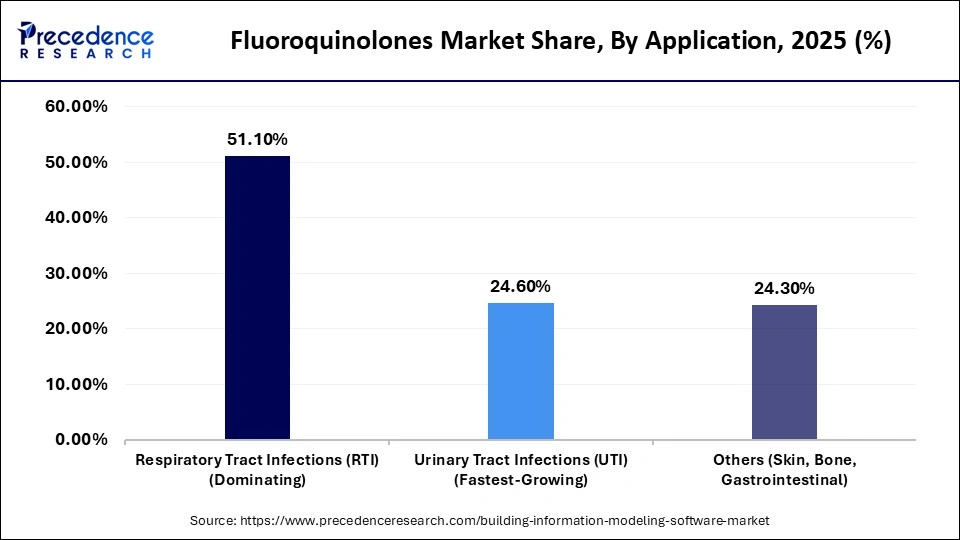
The urinary tract infections (UTI) segment is expected to expand rapidly in the market in the coming years, as UTIs are the most frequent bacterial infections with high occurrence rates in women. FQs achieve high concentrations in UTIs and are highly bioavailable, making them effective for the treatment of both uncomplicated and complicated UTIs. According to a recent study, the 12-month UTI incidence was 19.8% among women and 6.4% among men in community-living seniors.
Distribution Channel Insights
Why Did the Hospital Pharmacies Segment Dominate the Fluoroquinolones Market?
The hospital pharmacies segment held the largest revenue share of approximately 48.6% in the market in 2025, due to high volume use of injectable (IV) formulations in acute care. Hospitals use an in-house pharmacy team to monitor and control the use of broad-spectrum antibiotics like FQs, which ensure proper dosing and manage resistance in the hospital setting. They possess suitable infrastructure to support inpatient admissions.
The online pharmacies segment is expected to witness the fastest growth in the market over the forecast period, due to factors such as convenience, cost-effectiveness, and enhanced accessibility. As online platforms provide home delivery, patients do not need to visit stores. It is particularly very useful in cases where patients are feeling unwell. In long-term conditions, online pharmacies offer easy, recurring, and automated refills, making it convenient for patients.
Route of Administration Insights
How the Oral Segment Dominated the Fluoroquinolones Market?
The oral segment held a major revenue share of approximately 54.3% in the market in 2025, as FQs have exceptionally high oral bioavailability, which practically mirrors IV efficacy. Oral FQs are more affordable and convenient. They are widely preferred for outpatient versatility. They are available in various forms, such as immediate release and sustained release, making them suitable for patients of all age groups. Oral drugs eliminate the need for skilled professionals.
The injectable (IV) segment is expected to show the fastest growth over the forecast period, as IV administration guarantees 100% bioavailability, avoiding issues with GI absorption and allowing for achieving high serum concentrations faster. In hospital settings, IVs are the preferred choice in case of serious infections, such as hospital-acquired pneumonia, sepsis, and urinary tract infections, where immediate high concentration of antibiotics is necessary to ensure efficacy.
Regional Insights
How Big is the North America Fluoroquinolones Market Size?
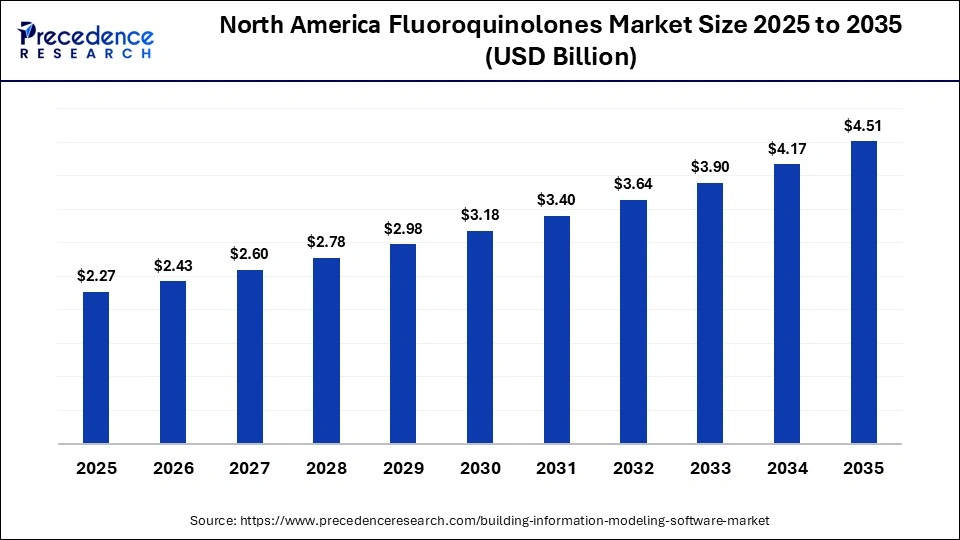
The North America fluoroquinolones market size is estimated at USD 2.27 billion in 2025 and is projected to reach approximately USD 4.51 billion by 2035, with a 7.11% CAGR from 2026 to 2035.
Which Factors Drive the Fluoroquinolones Market in North America?
North America held the largest revenue share of approximately 46.2% in the market in 2025. The region's growth is fueled by an increasing incidence of bacterial infections, such as UTIs, RTIs, and skin infections, which need effective antibiotics. Government and private organizations provide funding to healthcare organizations to develop novel FQs and improve their drug delivery and pharmacokinetic properties. The presence of numerous pharmaceutical and biotech companies and an advanced healthcare infrastructure boosts the market.
What is the Size of the U.S. Fluoroquinolones Market?
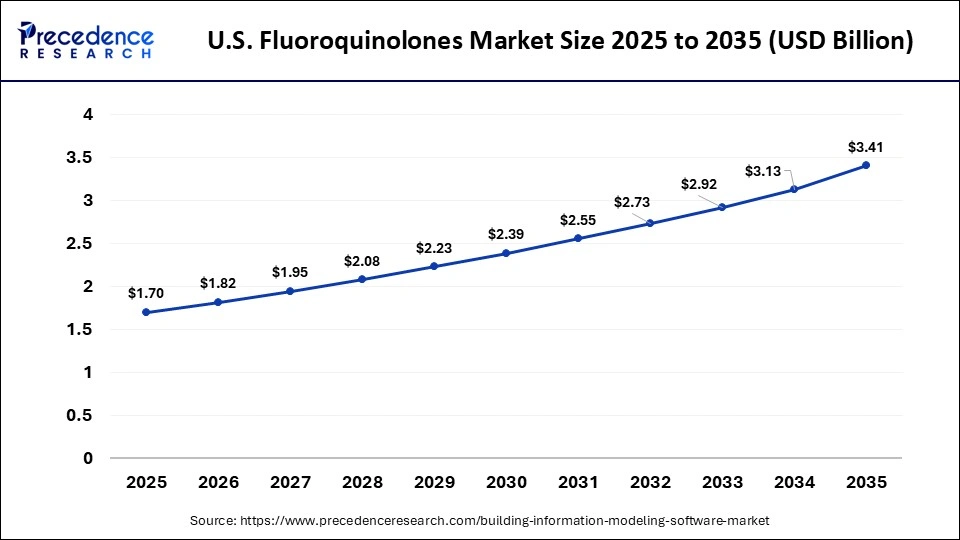
The U.S. fluoroquinolones market size is calculated at USD 1.70 billion in 2025 and is expected to reach nearly USD 3.41 billion in 2035, accelerating at a strong CAGR of 7.21% between 2026 and 2035.
U.S. Market Trends
The U.S. accounts for the largest market share in North America, due to a robust healthcare infrastructure, high consumption rates, and the presence of major pharmaceutical companies. The rising prevalence of infectious diseases potentiates the demand for FQs and antibiotic prescriptions. In 2024, approximately 255.9 million oral antibiotic prescriptions were filled in the U.S. Also, because of robust research and development facilities, high investment in R&D, and an established healthcare system, the adoption of antibiotics is high in the U.S.
How Will Asia-Pacific Grow in the Fluoroquinolones Market?
Asia-Pacific is expected to witness the fastest growth during the predicted timeframe, due to burgeoning healthcare infrastructure and high infectious disease burden in emerging countries. Rapid urbanization and improved infrastructure, along with increased healthcare expenditure, potentiate the demand for FQs. Countries like China, India, and South Korea have a suitable manufacturing infrastructure, allowing foreign companies to set up their manufacturing facility in the region. The availability of generic medications enhances the affordability of the local population.
China Market Trends
China holds a majority market share due to its vast population and rapidly developing healthcare infrastructure. China is a global hub for active pharmaceutical ingredients with massive manufacturing, accounting for a significant share of global antibiotic exports. High rates of tuberculosis, pneumonia, and other infections play a significant role in the market. Also, the production of cost-effective generic drugs acts as a major driver in the Chinese market.
How is Europe Growing in the Fluoroquinolones Market?
Europe is expected to grow substantially in the market. The prevalence of community-acquired pneumonia and the rising UTI burden increases demand for fluoroquinolones. The strong presence of generic formulations and the focus on treating severe infections increase fluoroquinolones adoption. The rise in respiratory infections drives the market growth.
France Market Trends
France is robustly expanding in the market in the European region. The high rate of gastrointestinal infections and focus on treatment of specific infections increase the adoption of fluoroquinolones. The high expenditure on pharmaceutical treatments and the rise in infection awareness increase the use of fluoroquinolones. The chronic infection burden supports the overall growth of the market.
What Drives the Growth of the Fluoroquinolones Market in Latin America?
Latin America is expected to grow notably in the market. The growing bacterial infection burden and the increased use of affordable generic drugs increase the adoption of fluoroquinolones. The improved healthcare coverage and the investment in domestic production increase the manufacturing of fluoroquinolones. The surging UTI rate and the adoption of cost-effective drugs increase the use of fluoroquinolones, boosting the market growth.
Brazil Market Trends
Brazil is substantially growing in the market. The growing medication access and strong focus on the treatment of UTI increase the adoption of fluoroquinolones. The burgeoning antibiotic resistance and the need for effective treatment for bacterial infection increase fluoroquinolones adoption. The expanding geriatric drug industry and the expansion of anti-infectives drive the overall growth of the market.
Why is the Middle East and Africa Growing in the Fluoroquinolones Market?
The Middle East and Africa is expected to expand significantly in the market due to the growing tuberculosis prevalence. The strong medical care availability and the rising domestic generic drug manufacturing increase the production of fluoroquinolones. The rising hygiene challenges and the shift to cost-efficient alternatives increase fluoroquinolones adoption. The surging urinary tract infection cases drive the market growth.
Saudi Arabia Market Trends
Saudi Arabia is a robust contributor to the market in the MEA region. The huge antibiotic consumption and demand for authorized antimicrobial treatments increase the adoption of fluoroquinolones. The surging common bacterial infections help with expansion. The high density of population increases the risk of infections, which directly contributes to the market growth.
Fluoroquinolones Market Value Chain Analysis
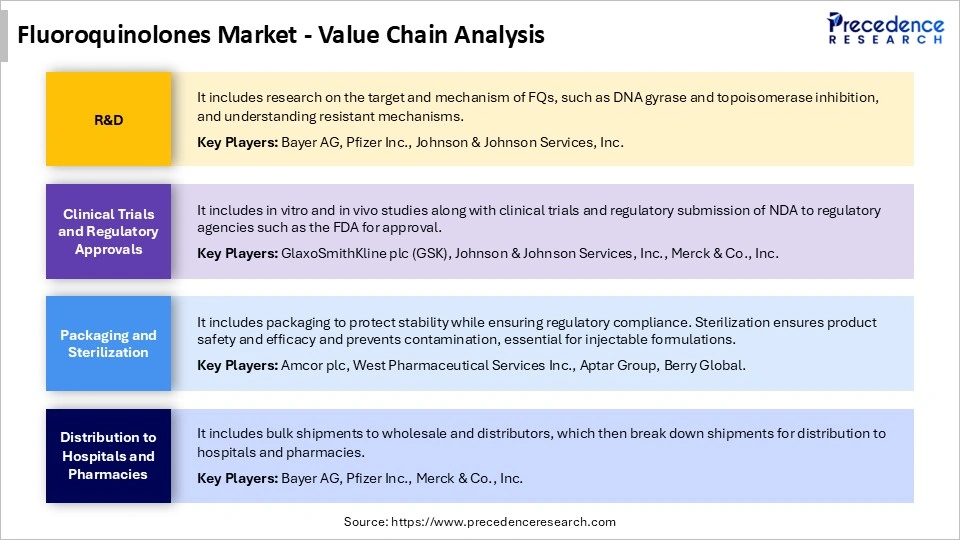
Who are the major players in the global fluoroquinolones market?
The major players in the fluoroquinolones market include Bayer AG, Pfizer Inc., Sanofi S.A., Novartis AG (Sandoz), Teva Pharmaceutical Industries Ltd., GlaxoSmithKline plc (GSK), Johnson & Johnson Services, Inc., Merck & Co., Inc., Sandoz Group AG, Teva Pharmaceutical Industries Ltd., Cipla Limited, and Astellas Pharma Inc.
Recent Developments
- In January 2026, researchers from Lancaster University found that FQs can directly alter the potential bacterial killing ability of macrophages. Researchers found that macrophages had a higher level of an enzyme, inducible Nitric Oxide Synthase (iNOS), by examining multiple lung immune cell types.(Source: https://medicalxpress.com)
- In March 2025, the Therapeutic Goods Administration (TGA) issued a safety update of FQ antibiotics to strengthen product warnings to highlight their disabling and irreversible side effects. Some prominent warnings include CNS stimulation, tendonitis, tendon ruptures, and psychiatric reactions. (Source: https://www1.racgp.org.au)
- In November 2024, researchers from Ulster University, Cairo University, October 6 University, and University for Modern Sciences and Arts synthesized a series of novel FQ analogs from Ciprofloxacin hydrazide and assessed their cytotoxicity potential against the NCI-60 Human Tumor Cell Line Screening assay. The IC50 values of the synthesized compounds were significantly lower than those of the standard drug. (Source: https://www.news-medical.net)
Segments Covered in the Report
By Drug Generation
- Third Generation (Levofloxacin)
- Fourth Generation (Moxifloxacin, Delafloxacin)
- Second Generation (Ciprofloxacin)
By Application
- Respiratory Tract Infections (RTI)
- Urinary Tract Infections (UTI)
- Others (Skin, Bone, Gastrointestinal)
By Distribution Channel
- Hospital Pharmacies
- Online Pharmacies
By Route of Administration
- Oral
- Injectable (IV)
By Region
- North America
- Europe
- Asia-Pacific
- Latin America
- Middle East & Africa
For inquiries regarding discounts, bulk purchases, or customization requests, please contact us at sales@precedenceresearch.com
Frequently Asked Questions
Tags





Ask For Sample
No cookie-cutter, only authentic analysis – take the 1st step to become a Precedence Research client
 Get a Sample
.webp)



 sales@precedenceresearch.com
 Schedule a Meeting
