



UTI Drugs Market Size, Companies, Share, Patient Volume, Treatment Adoption Rates, Pricing Analysis, Regulatory Landscape, Competitive Positioning, and Demand Forecast
UTI Drugs Market (By Drug Class: Fluoroquinolones, Cephalosporins, Nitrofurantoin, Trimethoprim-sulfamethoxazole, Fosfomycin, Penicillins, Carbapenems, Aminoglycosides; By Route of Administration: Oral, Intravenous, Intramuscular; By Indication Type: Uncomplicated UTI, Complicated UTI, Pyelonephritis, Recurrent UTI prophylaxis; By Distribution Channel: Hospital pharmacy, Retail pharmacy, Online pharmacy, Clinic dispensing) - Global Industry Analysis, Size, Trends, Leading Companies, Regional Outlook, and Forecast 2026 to 2035
Source: https://www.precedenceresearch.com/uti-drugs-market
 Get a Sample
 Table Of Content


What is the UTI Drugs Market Size in 2026?
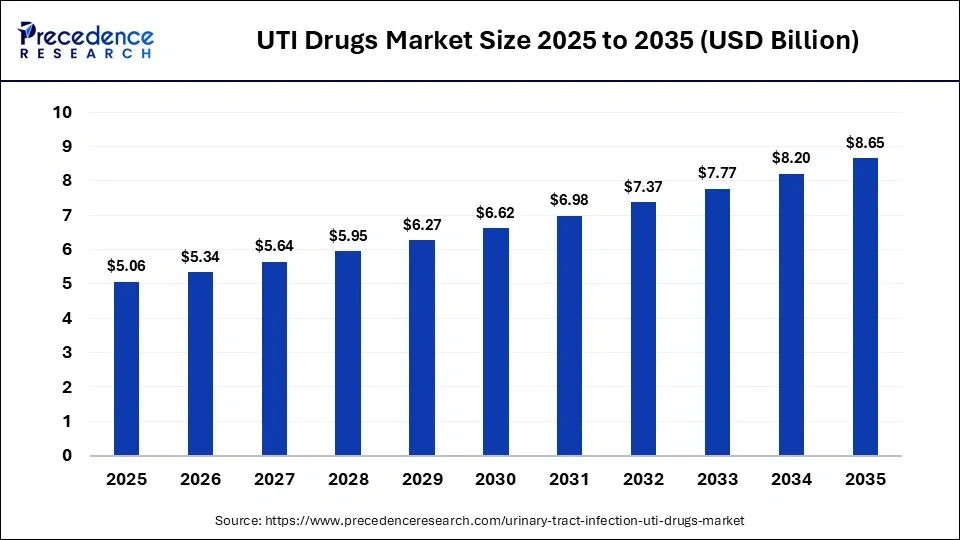
The global UTI drugs market size was calculated at USD 5.06 billion in 2025 and is predicted to increase from USD 5.34 billion in 2026 to approximately USD 8.65 billion by 2035, expanding at a CAGR of 5.50% from 2026 to 2035. The market comprises prescription therapies used to treat and prevent urinary tract infections across uncomplicated cystitis, complicated infections, pyelonephritis, and recurrent prophylaxis. The market is further driven by high UTI rates in women and older adults, antibiotic resistance, and better diagnostic methods, leading to a growing interest in targeted and combination therapies.
Key Takeaways
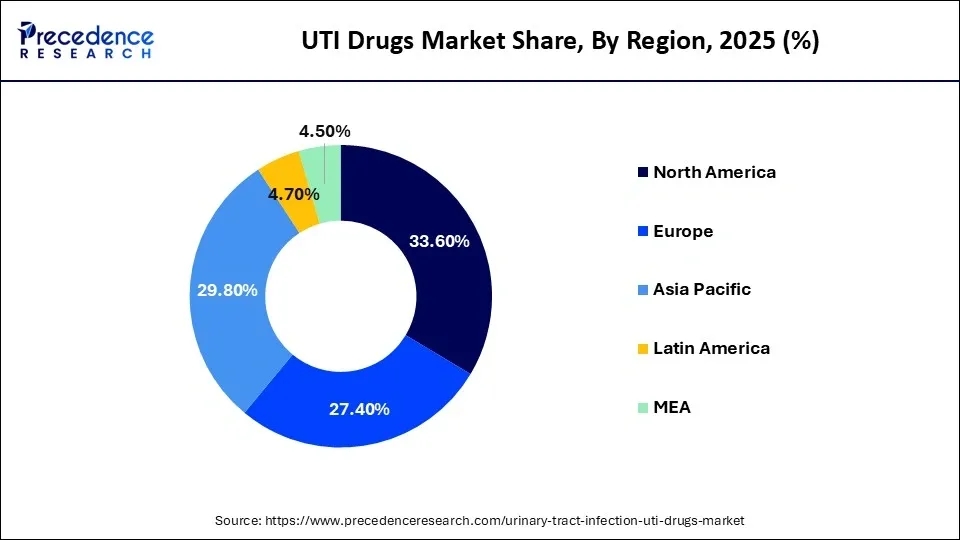
- North America held a dominant position in the UTI drugs market with a share of 33.6% in 2025.
- Asia-Pacific is expected to show the fastest growth with the highest CAGR over the forecast period.
- By drug class, the fluoroquinolones segment led the global market with a share of 22.4% in 2025.
- By drug class, the carbapenems segment is expected to expand rapidly in the market with a CAGR of 6.2% in the coming years.
- By route of administration, the oral segment held a dominant position in the market with a share of 63.7% and is expected to grow at the fastest CAGR of 3.6% in the market between 2026 and 2035.
- By indication type, the uncomplicated UTI segment accounted for the highest revenue share of 68.6% in the market in 2025.
- By indication type, the complicated UTI segment is expected to show the fastest growth with a CAGR of 4.7% over the forecast period.
- By distribution channel, the hospital pharmacy segment held a major revenue share of 39.6% in the market in 2025.
- By distribution channel, the online pharmacy segment is expected to witness the fastest growth in the market with a CAGR of 7.9% over the forecast period.
What is the UTI Drugs Market?
The UTI drugs industry is expanding due to the high rate of urinary tract infections (UTIs), especially in women and older adults, along with the growing issue of antibiotic resistance. The market is expected to grow further, driven by the development of effective treatments, including new antibiotics for resistant strains. UTIs are among the most common bacterial infections, necessitating ongoing antibiotic and alternative treatments. UTI medications are essential to eliminate the bacteria that cause the infection, preventing serious issues like kidney damage or sepsis. Quick antibiotic treatment helps relieve symptoms, lowers the chance of recurrence, and protects against complications such as preterm labor in pregnant women.
Unattended infection leads to progression of kidney infections (pyelonephritis) and sepsis. Recurrent UTIs cause long-term urinary problems, which makes treatment crucial to stop the cycle and ensure urinary health. Treating a simple UTI is cost-effective instead of dealing with complications from untreated infections. Also, early action avoids expensive hospital stays and long-term health issues. The market is shifting from standard antibiotic treatments to specialized options for both simple and complex infections, fueled by greater healthcare awareness, improved diagnostic tools, and increased investment in new pharmaceuticals.
What is the Role of AI in the UTI Drugs Market?
Artificial Intelligence (AI) is revolutionizing the market by shifting from reactive treatments to proactive and personalized approaches. AI helps enhance drug discovery, improve diagnostic accuracy, and optimize the use of antibiotics to fight multidrug-resistant pathogens. It also accelerates the identification of new antimicrobial agents, cutting down discovery time from years to just hours.
AI also assists in selecting the right antibiotic on the first attempt, while minimizing the need for broad-spectrum options. Machine learning helps examine patient data to forecast the most effective antibiotics for each individual. Moreover, AI evaluates urine tests and patient details for fast, precise diagnoses, making traditional methods more efficient. It also predicts the properties of drug formulations, removing the need for trial-and-error. Thus, AI is improving personalized UTI care, boosting treatment effectiveness while addressing antibiotic resistance.
What Are the Trends in the UTI Drugs Market?
- Rising Incidence of UTIs: The rise in UTIs is linked to an aging population, increasing diabetes rates, and antibiotic resistance. This necessitates new antibiotics, rapid diagnostic methods, and innovative non-invasive treatments due to high recurrence rates. Multi-drug-resistant bacteria, especially E. coli, significantly contribute to this rise. As traditional antibiotics like quinolones become less effective, the focus shifts towards newer options such as cephalosporins, along with novel treatment approaches. Increased awareness and case numbers have accelerated the adoption of rapid diagnostic tools and home testing kits, resulting in faster treatment and market growth.
- Rapid Diagnostics and Precision Treatment: Rapid diagnostics and precise treatments are transforming the UTI pharmaceutical market by shifting from broad-spectrum antibiotics to targeted therapies, addressing antimicrobial resistance (AMR). This reduces dependency on overprescribed antibiotics and boosts personalized strategies such as probiotics and phage therapy. By accurately identifying pathogens and their susceptibilities, diagnostics enable the use of narrow-spectrum antibiotics. Additionally, the recent shift from cost-driven to value-focused diagnostics guides the targeted therapies.
- Growth of Non-Antibiotic Therapies: The market is increasingly favoring non-antibiotic solutions such as probiotics, vaccines, and D-mannose for long-term UTI management. Non-antibiotic treatments focus on a more integrated, prevention-focused approach meeting individuals' needs. As antibiotic resistance grows, people are looking for non-antibiotic options like D-mannose, cranberry extracts, vaccines, and methenamine to reduce antibiotic use and tackle chronic, recurring UTIs.
Market Scope
| Report Coverage | Details |
| Market Size in 2025 | USD 5.06 Billion |
| Market Size in 2026 | USD 5.34 Billion |
| Market Size by 2035 | USD 8.65 Billion |
| Market Growth Rate from 2026 to 2035 | CAGR of 5.50% |
| Dominating Region | North America |
| Fastest Growing Region | Asia Pacific |
| Base Year | 2025 |
| Forecast Period | 2026 to 2035 |
| Segments Covered | Drug Class, Route of Administration, Indication Type, Distribution Channel, and region |
| Regions Covered | North America, Europe, Asia-Pacific, Latin America, and Middle East & Africa |
Segmental Insights
Drug Class Insights
Which Drug Class Segment Dominated the UTI Drugs Market?
The fluoroquinolones segment held a dominant position in the market with a share of 22.40% in 2025 due to its broad-spectrum effectiveness, excellent tissue penetration, and easy dosing. They are commonly used to treat uncomplicated cystitis, complicated UTIs, and pyelonephritis, providing better cure rates against common pathogens such as E. coli and Pseudomonas aeruginosa. Also, they are quickly absorbed and reach high levels in urine and kidney tissues. Many allow for once daily dosing, helping patients adhere to their treatment. Additionally, as earlier generations showed lower resistance rates, this contributed to their widespread use.
The carbapenems segment is expected to show the fastest growth with a CAGR of 6.2% over the forecast period, as they act as the last line of defense against multidrug-resistant (MDR) Gram-negative bacteria. With increasing resistance to traditional antibiotics such as fluoroquinolones, healthcare providers are relying more on carbapenems.
They are also preferred due to their high effectiveness, broad activity range, and ability to treat severe, hospital-acquired, or catheter-associated UTIs. They are very effective in treating complex systemic infections, such as pyelonephritis. Also, carbapenems are usually better tolerated and deemed safer. They are often included in hospital treatment guidelines as the first-line empiric therapy for critically ill patients suspected of having infections caused by resistant bacteria.
Route of Administration Insights
What Made the Oral Segment Dominate the UTI Drugs Market?
The oral segment registered its dominance in the market with a share of 63.7% in 2025 and is expected to expand rapidly in the market with a CAGR of 3.6% in the coming years, mainly due to its convenience, cost-effectiveness, and easy accessibility for treating most uncomplicated UTIs. As over 90% of UTI cases are uncomplicated, they are effectively treated with self-administered oral antibiotics. This allows patients to manage infections from home without needing medical supervision, making it suitable for the high-volume outpatient setting of UTIs. The development of new, fast-acting, and extended-release oral formulations has enhanced their effectiveness, reinforcing their leading role in the market.
The intramuscular segment is expected to show notable growth with a CAGR of 2.10% over the forecast period. It plays a crucial role in the UTI pharmaceutical sector, especially in clinical environments and developing countries. It allows for quick and consistent absorption of antibiotics, which is essential for treating acute UTIs needing prompt treatment.
By avoiding first-pass metabolism, it provides a more stable and higher drug absorption in the bloodstream, effectively targeting the urinary tract. They are mostly utilized as single-dose treatments in outpatient settings, which improves treatment adherence. In emerging healthcare markets, IM injections are commonly employed for serious or recurrent infections due to their effectiveness against resistant bacteria.
Indication Type Insights
Why Did the Uncomplicated UTI Segment Dominate the UTI Drugs Market?
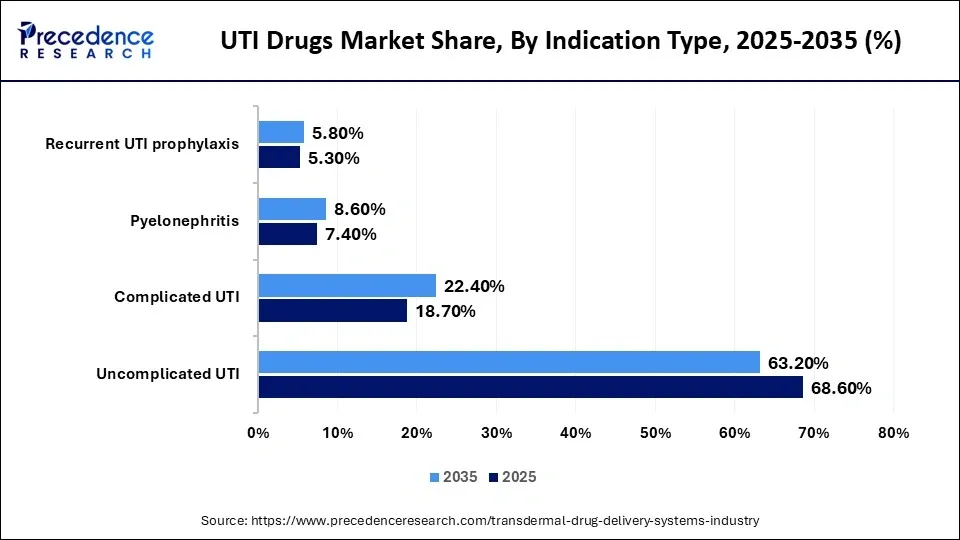
The uncomplicated UTI segment accounted for the highest revenue share of 68.6% in the market in 2025 because of its high frequency, especially in women and older adults, and the ease of treatment. It is further driven by quick-acting oral antibiotics, increased awareness, and the growth of fast diagnostic tests.
They are effectively treated with short courses of oral antibiotics as the preferred choice, as it ensures patient adherence. Also, improved diagnostic techniques and health awareness have led to earlier detection rates, boosting demand further. Moreover, the increase in conditions like diabetes makes individuals susceptible to infections, further driving the market for these treatment options.
The complicated UTI segment is expected to gain the highest market share with a CAGR of 4.7% between 2026 and 2035, due to high treatment failure rates, rising antibiotic resistance, and an aging population needing specialized care. These infections often arise from structural issues, health conditions, or catheter use, necessitating more intensive and costly treatments than uncomplicated UTIs. The growing elderly demographic, along with increasing diabetes and kidney stone cases, contributes to the rise in cUTIs, as older adults are more prone to complications.
Distribution Channel Insights
Which Distribution Channel Led the UTI Drugs Market?
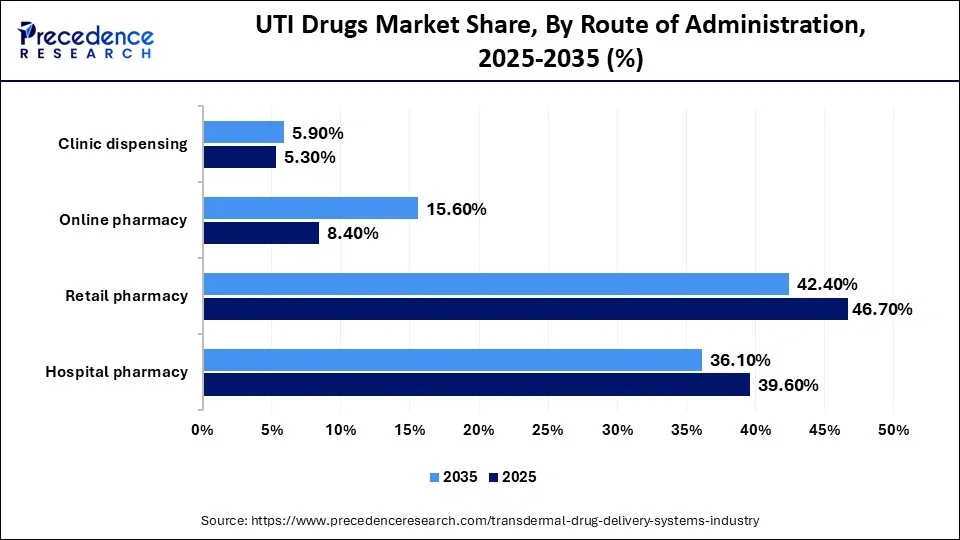
The hospital pharmacy segment led the market with a share of 39.60% in 2025, due to the prevalence of complicated cases requiring inpatient care, IV antibiotics, and treatment for CAUTIs. Hospitals manage severe, recurrent, and HAIs that necessitate more expensive and specialized treatments. They also offer rapid access to essential diagnostic tools and care for acute UTIs. ICUs focused severe infections needs costly, specialized medications, leading to higher revenue per patient, increasing the value of hospital pharmacies for these critical cases.
The online pharmacy segment is expected to expand rapidly in the market with a CAGR of 7.9% in the coming years. The online pharmacy is emerging as a key distribution channel alongside traditional pharmacies. Recurring infections lead patients to prefer discreet home delivery over in-person visits. Online platforms offer 24/7 ordering and fast delivery, ideal for urgent and frequent infections. Many e-pharmacies include telemedicine services, allowing patients to receive prescriptions and antibiotics seamlessly. Furthermore, online pharmacies also offer better discounts, subscription refills, and a broader selection of products for UTI treatment, expanding their market reach.
Regional Insights
North America UTI Drugs Market Size and Growth 2026 to 2035
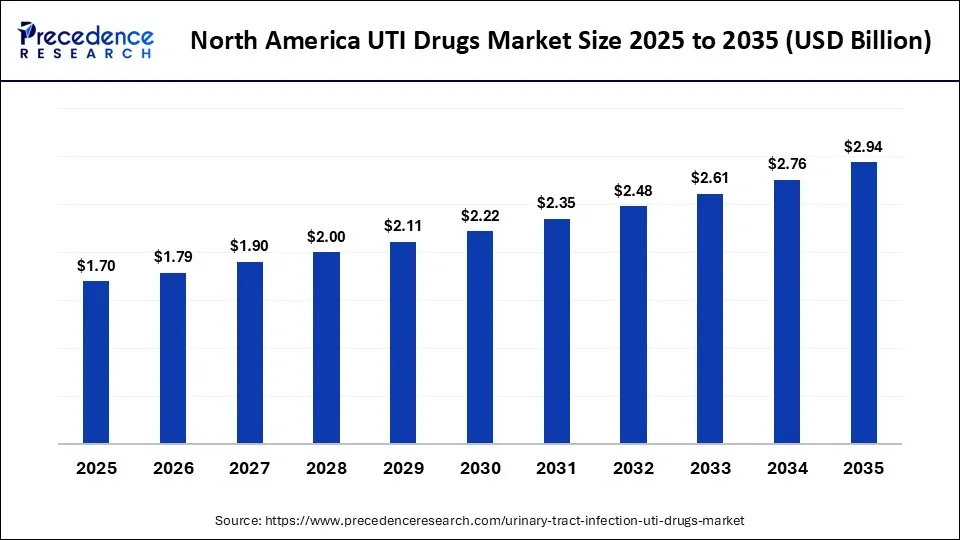
The North America UTI drugs market size is estimated at USD 1.70 billion in 2025 and is projected to reach approximately USD 2.94 billion by 2035, with a 5.63% CAGR from 2026 to 2035.
Which Factors Drive the UTI Drugs Market in North America?
North America held the largest revenue share of approximately 33.6% in the market in 2025, due to high infection rates, advanced healthcare systems, and significant healthcare spending. Key factors also include rapid adoption of diagnostic tools, robust R&D for new treatments, and major pharmaceutical companies. Additionally, robust healthcare systems and favorable reimbursement policies enhance treatment access. With advanced diagnostic technologies and point-of-care testing, results in faster treatment processes. Also, high investment in new therapies and vaccines provides a competitive advantage.
U.S. UTI Drugs Market Size and Growth 2026 to 2035
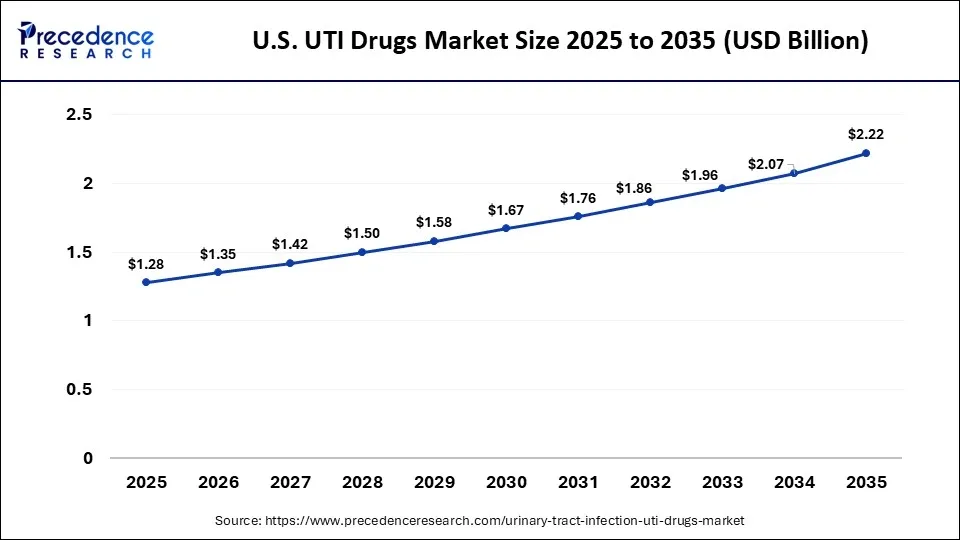
The U.S. UTI drugs market size is calculated at USD 1.28 billion in 2025 and is expected to reach nearly USD 2.22 billion in 2035, accelerating at a strong CAGR of 5.66% between 2026 and 2035.
U.S. Market Trends
The U.S. dominated the market due to its high infection rates, a robust healthcare system, and significant R&D investments. It is further fueled by rising antibiotic resistance and the rapid adoption of new therapies. Advanced diagnostic technologies, such as rapid PoC testing, improve treatment speed and accuracy. Also, major pharmaceutical companies, including Pfizer and Merck, are investing in next-gen antibiotics and vaccines to tackle resistant strains. Additionally, the growth of retail pharmacies and telehealth services provides easier access to diagnosis and medication for treatment.
How Will the Asia-Pacific Region Grow in the UTI Drugs Market?
Asia-Pacific is expected to grow at a considerable CAGR in the upcoming period, due to its large population, rising UTI cases, and enhanced healthcare infrastructure. Rapid urbanization, dietary changes, and lifestyle are increasing the UTI cases, especially among the aging population, who are vulnerable due to weaker immune systems. Furthermore, investments in healthcare in developing economies enhanced the accessibility to diagnosis and treatment. The market is further driven by a strong demand for effective treatments, such as antibiotics like fluoroquinolones, and over-the-counter medications.
China Market Trends
China's market is driven by its control over the global pharmaceutical supply chain, especially in the production of active pharmaceutical ingredients (APIs). Also, massive investments in large and specialized pharmaceutical industrial zones resulted in higher market demand. It also provides a close network of suppliers and advanced fermentation technologies in the industry. China is also a key supplier of the upstream production of raw materials for making antibiotics, such as amoxicillin, which allows them to manufacture drugs at significantly lower costs. Additionally, with a growing elderly population, it is one of the large built-in markets for UTI treatments.
UTI Drugs Market Supply Chain Analysis
- R&D
It includes identification of new drug compounds and research targeting antimicrobial resistance, next-generation antibiotics, and vaccines for recurrent UTIs.
Key Players - GSK, Bayer AG, AstraZeneca, Merck and Co.
- Clinical Trials and Regulatory Approval
It includes clinical trials for antibiotics and non-antibiotic therapies to evaluate safety and efficacy, and regulatory approval for new drug investigations.
Key Players - AstraZeneca, Merck and Co., Bayer AG
- Formulation and Final Dosage Preparation
It includes formulation and conversion of API into finished dosage forms such as tablets, capsules, injectables, or oral suspensions.
Key Players - Teva Pharmaceutical Industries, Sun Pharmaceutical Industries, Cipla
- Distribution to Hospitals, Pharmacies
It includes distribution to pharmaceutical wholesalers, hospital procurement, and pharmacy distribution networks, ensuring drug supply to hospitals, pharmacies, and clinics worldwide
Key Players - Cardinal Health, Phoenix Group, AbbVie, Lupin, AstraZeneca, Merck and Co.
- Patient Support and Services
It includes end consumers, such as women, elderly patients, hospitalized patient and recurrent UTI patients receiving their treatment support and services.
Key Players - Pfizer Inc., AbbVie Inc., Allergan Plc, Bayer AG, Novartis International AG.
UTI Drugs Market Companies
- Pfizer Inc.
- AbbVie Inc.
- Allergan Plc
- Bayer AG
- Novartis International AG.
- Sanofi S.A.
- Teva Pharmaceutical Industries Ltd
- Sun Pharmaceutical Industries Ltd
- Dr. Reddy's Laboratories Ltd.
- Bristol-Myers Squibb Company
- Thermo Fisher Scientific Inc.
- AstraZeneca plc
- Merck & Co. Inc
- GlaxoSmithKline PLC
- Eli Lilly and Company
- Boehringer Ingelheim GmbH
- Glenmark Pharmaceuticals Limited
- Mylan N.V.
- Bio-Rad Laboratories Inc.
- Cipla Ltd
Recent Developments
- In August 2025, Dublin-based Iterum Therapeutics launched Orlynvah (sulopenem etzadroxil and probenecid), an oral tablet, with FDA approval for treating uncomplicated UTIs in adult women. Orlynvah is the first commercially available oral penem antibiotic in the U.S., and the first new branded uUTI treatment in over 25 years.(Source: https://www.biopharminternational.com)
- In August 2025, the British regulatory body approved GSK's Blujepa for treating UTIs in females, including women and girls. Blujepa's main ingredient, gepotidacin, blocks two enzymes that are essential for bacterial replication, making it effective against various drug-resistant infections, including E.coli.(Source: https://pharma.economictimes.indiatimes.com)
Segments Covered in the Report
By Drug Class
- Fluoroquinolones
- Cephalosporins
- Nitrofurantoin
- Trimethoprim-sulfamethoxazole
- Fosfomycin
- Penicillins
- Carbapenems
- Aminoglycosides
By Route of Administration
- Oral
- Intravenous
- Intramuscular
By Indication Type
- Uncomplicated UTI
- Complicated UTI
- Pyelonephritis
- Recurrent UTI prophylaxis
By Distribution Channel
- Hospital pharmacy
- Retail pharmacy
- Online pharmacy
- Clinic dispensing
By Region
- North America
- Latin America
- Europe
- Asia-pacific
- Middle and East Africa
For inquiries regarding discounts, bulk purchases, or customization requests, please contact us at sales@precedenceresearch.com
Frequently Asked Questions
Tags





Ask For Sample
No cookie-cutter, only authentic analysis – take the 1st step to become a Precedence Research client
 Get a Sample




 sales@precedenceresearch.com
 Schedule a Meeting
