



Healthcare Information Systems Market Size, Key Companies, Company Market Share, Hospital Procurement Trends, Manufacturing Capacity, Sales Performance, Regulatory Approvals, Patient Outcomes, Competitive Landscape, and Forecast
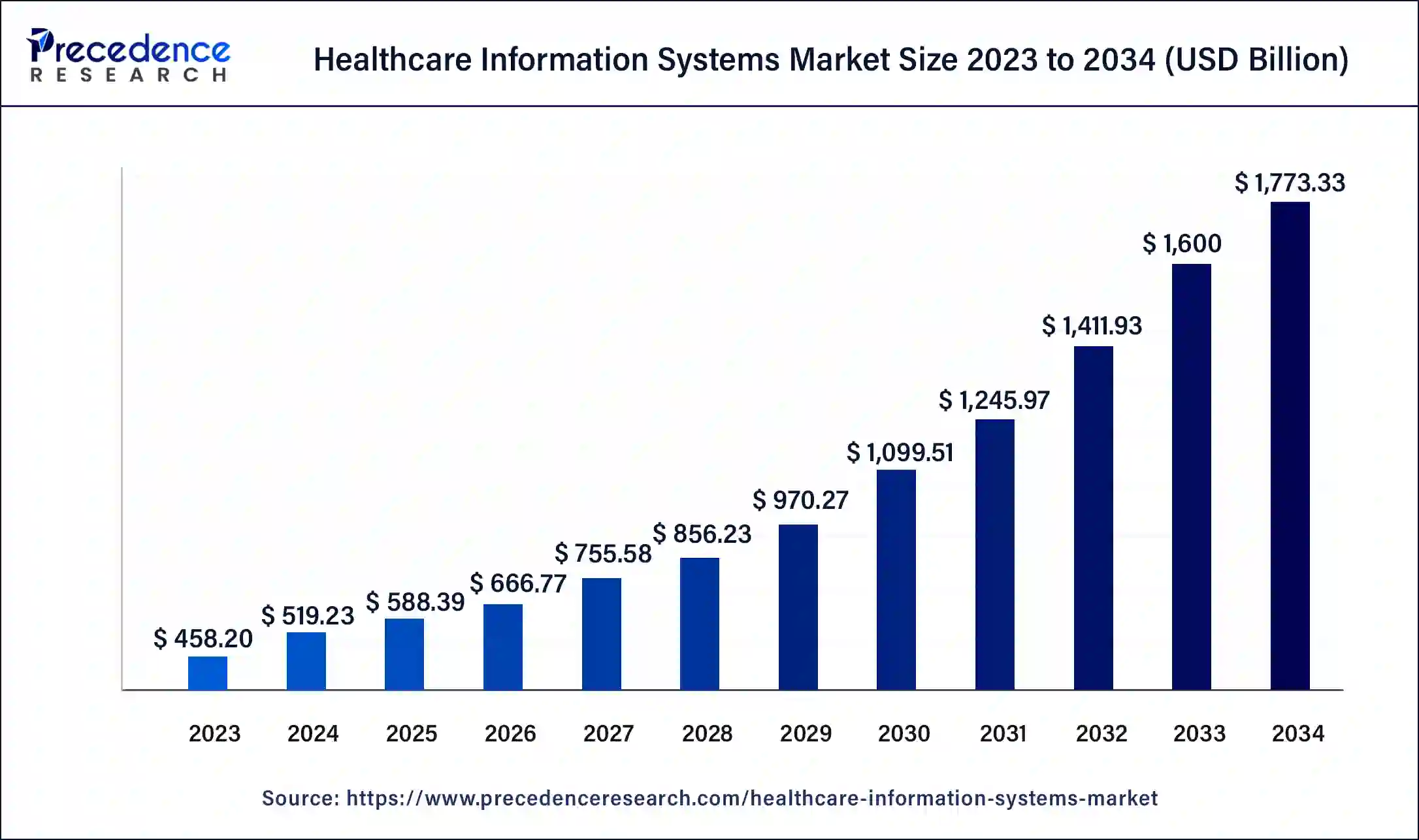
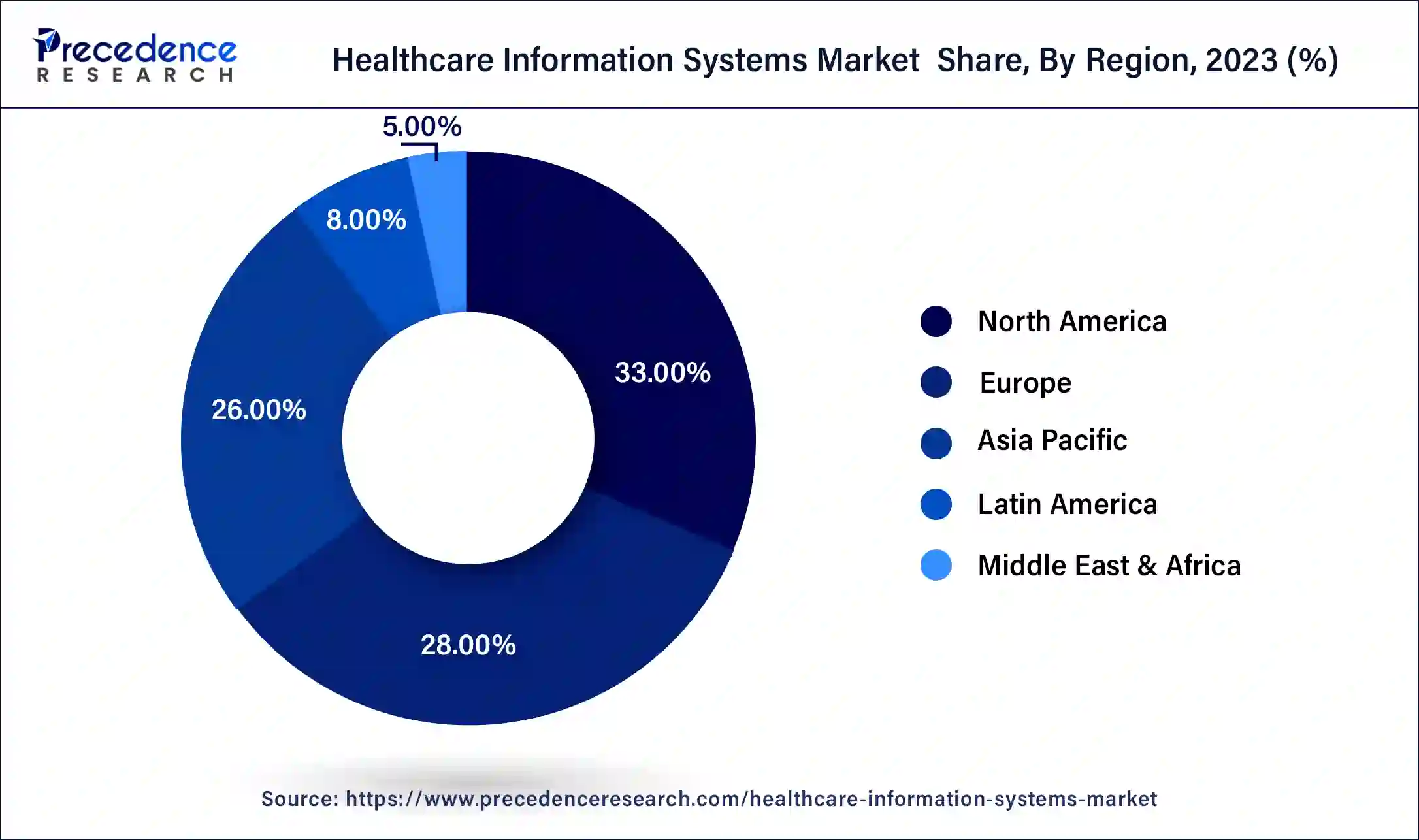
The global healthcare information systems market is projected to grow from USD 666.77 billion in 2026 to USD 1,956.49 billion by 2035, registering a CAGR of 12.77%. Growth is driven by increasing healthcare digitalization, rising patient data volumes, government investments in electronic health records, and growing demand for efficient data management. North America dominated the market in 2025 with a 33% share, supported by advanced digital healthcare infrastructure, while Asia Pacific is expected to be the most opportunistic region due to rising healthcare investments, increasing hospital admissions, and growing adoption of digital health technologies.
Source: https://www.precedenceresearch.com/healthcare-information-systems-market
 Get a Sample
 Table Of Content


What is the Healthcare Information Systems Market Size?
The global healthcare information systems market size accounted for USD 666.77 billion in 2026 and is predicted to reach around USD 1,956.49 billion by 2035, growing at a CAGR of 12.77% from 2026 to 2035. The strong financial backing from regional regulators for the execution of digital ideas is a potential pathway for the market to expand with responsibility. Automation is a fundamental asset to market development.
Healthcare Information Systems Market Key Takeaways
- North America dominated the market with the largest market share of 33% in 2025.
- By application, the revenue cycle management segment contributed more than 60 of the market share in 2025.
- By component, the services segment generated the highest market share of 46% in 2025.
- By component, the software segment is anticipated to grow significantly in the market during the forecast period.
- By end-use, the hospitals segment recorded more than 76% of market share in 2025.
- By end-use, the diagnostic centers segment is anticipated to grow significantly in the market during the forecast period.
Market Overview
Healthcare information systems are a source, software and tools engineered for securing and managing the patient population's healthcare data. It also has a share option under a referral scenario. The various types of systems are close to providing quality patient care, highlighting the ease for doctors, staff and networks that promise precision, sustainable contribution, safety and security to the patient's confidential details. The availability of compatible technologies and rising acceptance of virtual patient care accelerates the market growth and expansion.
Healthcare Information Systems Market Growth Factors
The rising adoption of the information technology in the healthcare industry is the major driver of the global healthcare information systems market. The healthcare information systems offers data management and security of data related to the healthcare and exponentially influences the cost and quality of the healthcare operations. The most commonly used healthcare information systems includes electronic health records and personal health records. The increased government investments in the development and digitalization of the healthcare infrastructure have significant contributions towards the development of the global healthcare information systems market. For instance, My Health Record is a digital health record platform for the Australian citizens. These health records can enhance the patient care in the hospitals as the past medical and health records of a particular patient can be analyzed to provide better treatment to the patient. Thus, the government initiatives is boosting adoption of digital health record platforms among the hospitals, clinics, and diagnostic labs is expected to boost the growth of the global health information systems market.
The rising prevalence of chronic diseases, growing geriatric population, and rising incidences of road traffic accidents is resulting in the increasing number of hospital admissions. The huge volume of patient related data needs to be efficiently managed and economically stored. The growing need for eliminating paperwork is boosting the growth of the global healthcare information systems market. The government initiatives to digitalize the healthcare facilities are a major contributor to the growth of the market. Moreover, the developmental strategies such as new product launches, partnerships, and collaborations are major factors that influence the growth of the healthcare information systems market. For instance, Allscripts Healthcare Solutions entered into a strategic partnership with the US Orthopedic Alliance to introduce improved healthcare information system.
Market Scope
| Report Coverage | Details |
| Market Size by 2035 | USD 1,956.49 Billion |
| Market Size in 2026 | USD 666.77 Billion |
| Market Size in 2025 | USD 588.39 Billion |
| Market Growth Rate from 2026 to 2035 | CAGR of 12.77% |
| Largest Market | North America |
| Base Year | 2025 |
| Forecast Period | 2026 to 2035 |
| Segments Covered | Application, Component, End User, and Region |
| Regions Covered | North America, Europe, Asia-Pacific, Latin America, and Middle East & Africa |
Segment Insights
Application Insights
The revenue cycle management segment accounted for more than 60% of the market share in 2025. The government's role is considered to be crucial in the growth of this segment. For example, in US, the enactment of the Affordable Care Act, aims to provide reimbursements to the low income patients for their healthcare expenditure. The rising adoption of healthcare insurances is further expected to drive the growth of this segment in the upcoming years. The rising needs for the management of revenue cycles is estimated to positively impact the segment growth and hence, this segment is also anticipated to be the fastest growing segment during the forecast period. Furthermore, the healthcare units like hospitals are outsourcing the revenue cycle management tasks to the third party service providers in order to focus on its core operations and reduce their operational costs.
Component Insights
The services segment accounted for around 46% of the market share in 2025. This is simply due to the lack of proper knowledge regarding the healthcare information systems amongst the healthcare professionals. Therefore, the third-party services are adopted for the efficient utilization of healthcare information services while achieving cost efficiency.
The software is estimated to be the most opportunistic segment during the forecast period. This is attributed to the increasing need to reduces the healthcare costs and improve the data management systems. Further, the increasing adoption of healthcare information systems like revenue cycle management and electronic health records is increasing the demand for the healthcare information software.
End User Insights
The hospitals segment accounted for around 76% of the market share in 2025. This can be attributed to the enhanced financial, clinical, and administrative services are offered by the healthcare information systems. The rising number of hospital admissions across the globe owing to various reasons, is generating a huge volume of data. These data is required to be stored and managed so that these data can provide useful insights during the treatment of the patient in future. This helps to improve the patient care services in the hospitals. Hence, the hospitals segment dominated the market owing to the increased adoption of the health information systems.
The diagnostic centers is expected to be the fastest-growing segment during the forecast period. This is attributed to the rising demand for the diagnostic services owing to the rising prevalence of chronic diseases among the global population. Further, the growing demand for the automation and integration of healthcare information for efficient patient care, and rising adoption of the laboratory information systems across the globe is expected to foster the growth of this segment.
Deployment Insights
The web-based segment accounted for around 41% of the market share in 2025. This can be attributed to the increased adoption of the web-based segment in the medium and small healthcare units. The improved workflow process, low cost, easy installation, and remote access are the major features provided by the web-based systems that fosters its adoption among the small healthcare organizations across the globe.
The cloud-based is estimated to be the most opportunistic segment during the forecast period. The rapidly growing popularity of the cloud-based information systems owing to its enhanced storage spaces along with quicker access to the healthcare data in real-time, and rapidly growing penetration of internet connectivity across the globe. This type of deployment provides remote access to data through internet connection.
Regional Insights
Why Does North America Dominate the Global Healthcare Information Systems Market?
North America accounted for a significant market share of around 46% in 2025. The government initiatives in the North America to eliminate the paperwork and increase the use of digital technologies for storing data of the patients has significantly contributed towards the growth of the healthcare information systems market. The higher adoption rate of digital technologies and rising investments in the development of smart hospitals in the region are the prominent drivers of the North America healthcare information systems market.
U.S. Healthcare Information Systems Market Size and Growth 2026 To 2035
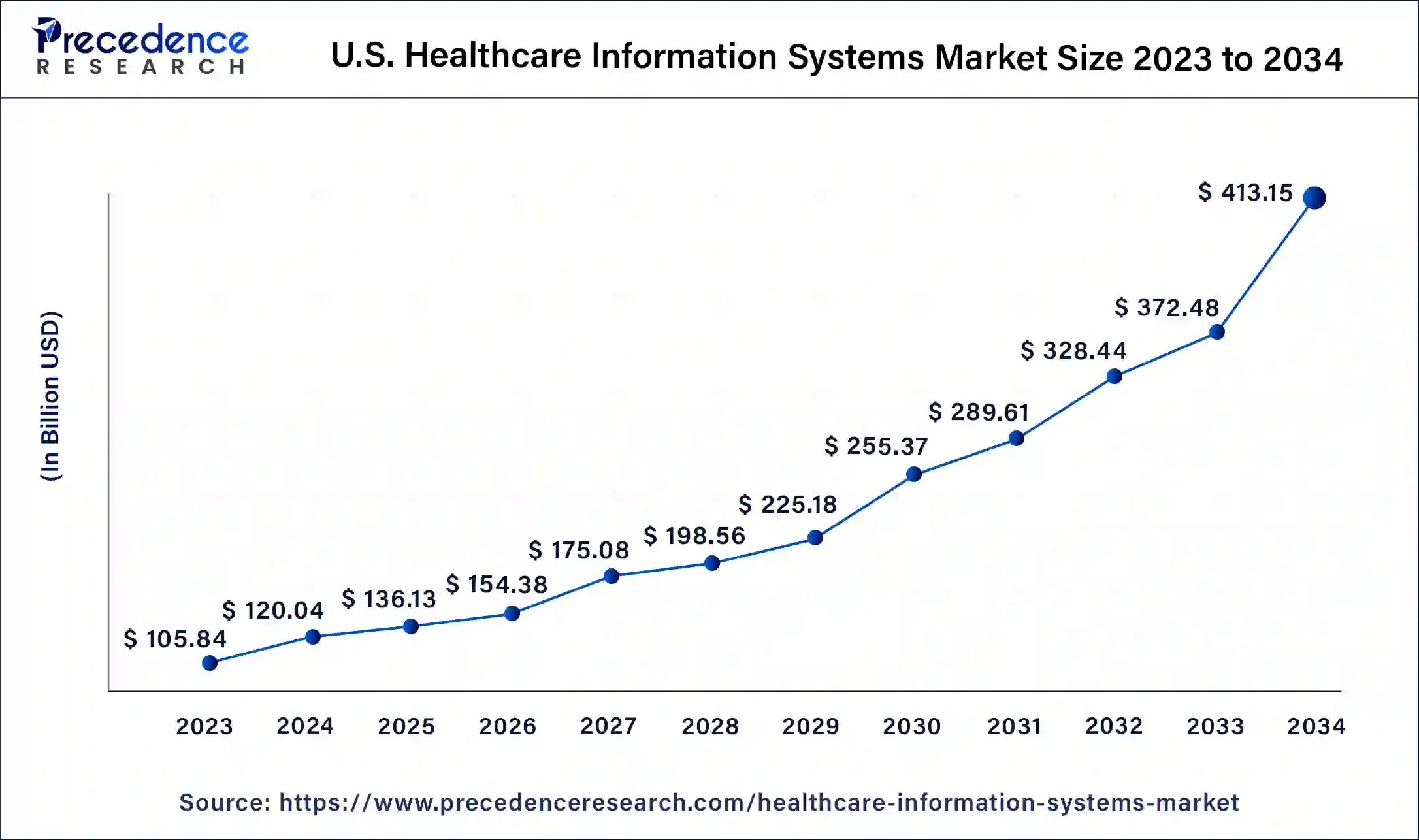
The U.S. healthcare information systems market size was valued at USD 136.13 billion in 2025 and is projected to be worth around USD 456.07 billion by 2035, at a CAGR of 12.85% between 2026 and 2035.
U.S. Market Trends
The U.S. market trends are at the forefront with the growing system facilities and remote patient monitoring advantage that unlocks the fundamental potential use of healthcare information systems. The transitions in existing medical devices, management and systems bring digitization to power with more maturity to the integration trends. The compulsion of this new power is in the regional market limelight. The intelligent build-up of automation, cloud solutions, and AI is a progressive approach to date, which is still in action serving supporting clinical management and the medical framework.
What Factors Are Driving the Growth of the Healthcare Information Systems Market in Asia Pacific?
Asia Pacific is estimated to be the most opportunistic market during the forecast period. The increasing investments of both the government and corporate sector in the advancements of the healthcare sector in the nations like China, Japan, India, and South Korea is exponentially driving the growth of the healthcare information systems market in Asia Pacific. The growing burden of diseases and increasing number of road traffic accidents is resulting in the rising number of hospital admissions, which in turn, is fueling the growth of the market.
China Market Trends
China has been consistently following the regulatory mandates for continuing with the electronic system solutions. Whereas in the health condition phase, a wave of patient admissions highlights the role of smart e-records that eventually precise the contribution of the CIS and laboratory systems that commands ideal clinical decisions. Intelligent management is moved by the transitional facts that deliver accuracy and confidentiality to the hospital procedure data, and effective grip on the patient medical records.
What Factors Are Driving the Growth of the Healthcare Information Systems Market in Europe?
Europe is expected to grow significantly in the healthcare information systems market during the forecast period. The increasing diseases is increasing the demand for healthcare information systems. At the same time, aging population is also contributing to the same. Hence, the demand for healthcare information systems increases as it provides accurate diagnosis as well as helps the clinician in decision-making, depending on the data gathered, which can be further used for providing effective treatment options. Moreover, the technological advancements are also being utilized, which are enhancing the various parameters of the healthcare information systems. Thus, all these factors, along with the government support, promote the market growth.
Germany Market Trends
Germany's modern healthcare sector has evolved with the new technology integration and robust hospital systems. The hospitals are the primary head to the massive operations and clinical services that require high-tech, advanced services at the first place of patient care. Whereas the DiGAs trends are herein a helpful application for the legal health insurers. The web-based systems and AI intervention are an advantage to the hospital management settings that are accountable for the diagnostic, documentation, cloud solution deployment and pathology. Tele-healthcare is gaining traction in the regional market.
Latin America's Initiatives in the Market
Latin America market is considered to be a significantly growing area, due to its commendable adaptability for innovations and confident technology deployment. Virtual healthcare introduces medical advances to the vast population in rural areas that lack awareness and face negligence frequently. Moreover, connectivity devices are a companion to the health management plan that promotes home care. The utilization of AI tools delivers precision in administrative finances and other operations, framing the management in a skilled way.
MEA's Progress in the Market
MEA market is expected to grow at a notable CAGR in the foreseeable future. The modern privilege to health tracking interconnects the progress of the digitized solution. Tech-evolved care operations are covering popular conditions like obesity and diabetes. The regional market is meeting progressive parameters since robust electronic system access and tech intervention have become seamless.
Healthcare Information Systems Market Companies
- Cerner Corporation
- Orion Health
- Philips Healthcare, Inc.
- Seimens
- NextGen Healthcare
- Epic Systems
- Mckesson Corporation
- Carestream Health
- AllScripts
- Medidata Solutions, Inc.
- Agfa Gevaert N.V.
Key Companies & Market Share Insights
The market is moderately fragmented with the presence of several local companies. These market players are striving to gain higher market share by adopting strategies, such as investments, partnerships, and acquisitions & mergers. Companies are also spending on the development of improved products. Moreover, they are also focusing on maintaining competitive pricing.
In July 2020, Cerner launched a cloud-based electronic health record system the rural healthcare units to improve their operational efficiency and reduce costs.
The various developmental strategies like acquisition, partnerships, mergers, and government policies fosters market growth and offers lucrative growth opportunities to the market players.
Recent developments
- In May 2025, a memorandum of cooperation (MoU) was signed by Jordanian National Centre for Epidemics and Communicable Diseases Control (JCDC) and Electronic Health Solutions (Hakeem program) to spread awareness about community-related health in numerous areas.
- In May 2025, to install electronic medical records (EMR) in all local hospitals, a plan was announced by the Hanoi People's Committee. To enhance various aspects such as operation process, management, quality of healthcare, as well as to build a modern digital health system, is the aim of this plan. Furthermore, for the installation of EMR, the hospitals should consist of image storage and transmission RIS-PACS, hospital information system, information security and safety, citywide data interconnection, and a laboratory information system.
- In May 13, 2025, Labbit, a product developed by the Semaphore Solution, which is the leading supplier of laboratory informatics platforms, was named as a Representative Vendor in the Gartner?Market Guide for Laboratory Information Management Systems (LIMS) which is authored by analysts Lynn Rice, Michael Shanler, and Reuben Harwood.
(Source: https://www.msn.com)
(Source: https://vir.com.vn)
(Source: https://finance.yahoo.com)
Segments Covered in the Report
By Application
- Hospitals Information Systems
- Pharmacy Information Systems
- Laboratory Information Systems
- Revenue Cycle Management
- Medical Imaging Information System
By Component
- Hardware
- Software
- Services
By End User
- Hospitals
- Diagnostic Centers
- Academic & Research
By Deployment
- Web-Based
- Cloud-Based
- On-Premises
By Region
- North America
- U.S.
- Canada
- Europe
- U.K.
- Germany
- France
- Asia Pacific
- China
- India
- Japan
- South Korea
- Rest of the World
For inquiries regarding discounts, bulk purchases, or customization requests, please contact us at sales@precedenceresearch.com
Frequently Asked Questions





Ask For Sample
No cookie-cutter, only authentic analysis – take the 1st step to become a Precedence Research client
 Get a Sample
.webp)



 sales@precedenceresearch.com
 Schedule a Meeting
