



Metastatic Non-small Cell Lung Cancer Market Size, Companies, Share, Patient Volume, Treatment Adoption Rates, Pricing Analysis, Regulatory Landscape, Competitive Positioning, and Demand Forecast
Metastatic Non-small Cell Lung Cancer Market (By Histology (Cancer Type): Adenocarcinoma, Squamous Cell Carcinoma, Large Cell Carcinoma, Others; By Treatment Type: Chemotherapy, Targeted Therapy, Immunotherapy, Combination Therapy, Radiotherapy/Others; By Drug Class: PD-1/PD-L1 Inhibitors, EGFR Inhibitors, ALK/ROS1/RET Inhibitors, Antibody-Drug Conjugates (ADCs), Others; By Line of Therapy: First-Line Therapy, Second-Line Therapy, Third-Line & Later; By Distribution Channel: Hospital Pharmacy, Retail Pharmacy, Online Pharmacy) - Global Industry Analysis, Size, Trends, Leading Companies, Regional Outlook, and Forecast 2026 to 2035
Source: https://www.precedenceresearch.com/metastatic-non-small-cell-lung-cancer-market
 Get a Sample
 Table Of Content


What is the Metastatic Non-small Cell Lung Cancer Market Size in 2026?
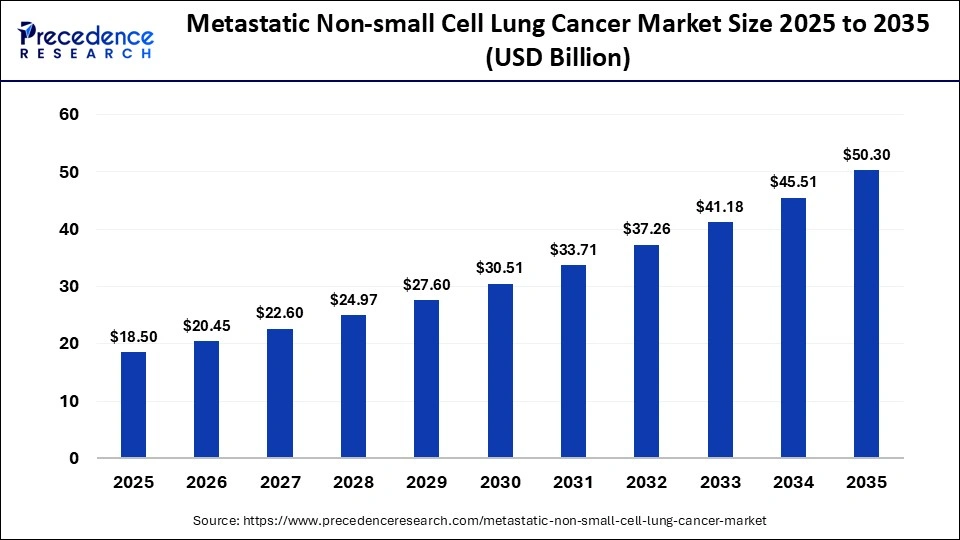
The global metastatic non-small cell lung cancer market size was calculated at USD 18.50 billion in 2025 and is predicted to increase from USD 20.45 billion in 2026 to approximately USD 50.30 billion by 2035, expanding at a CAGR of 10.52% from 2026 to 2035.The market is driven by rising global lung cancer incidence and late-stage diagnosis. Advances in targeted therapies, immunotherapies, and precision diagnostics are significantly improving survival outcomes and accelerating market growth.
Key Takeaways
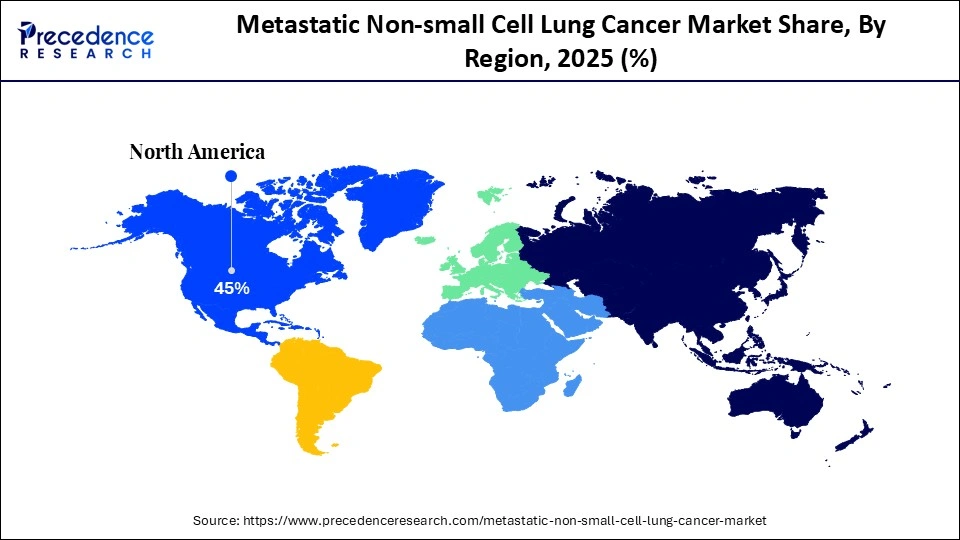
- North America dominated the global metastatic non-small cell lung cancer market with largest share of 45% in 2025.
- Asia-Pacific is expected to grow at the fastest CAGR in the market during the forecast period.
- By histology (cancer type), the adenocarcinoma segment held a dominant position in the market in 2025.
- By histology (cancer type), the squamous cell carcinoma segment is expected to grow at the fastest CAGR in the market between 2026 and 2035.
- By treatment type, the targeted therapy segment led the global market in 2025.
- By treatment type, the immunotherapy segment is expected to grow with the highest CAGR in the market during the studied years.
- By drug class, the PD-1/PD-L1 inhibitors segment dominated the global market in 2025.
- By drug class, the antibody-drug conjugates (ADCs) segment is expected to expand rapidly in the metastatic non-small cell lung cancer market in the coming years.
- By line of therapy, the first-line therapy segment held the largest revenue share of the market in 2025.
- By line of therapy, the third-line and later segment is expected to witness the fastest growth in the market over the forecast period.
- By distribution channel, the hospital pharmacy segment contributed the biggest revenue share of the market in 2025.
- By distribution channel, the online pharmacy segment is expected to gain the highest market share between 2026 and 2035.
Targeted Innovation Reshaping Advanced Lung Cancer Care
The metastatic non-small cell lung cancer market is a booming business because of the innovations in the biomarker-based therapy and immune checkpoint inhibitors. The growing uptake of personalized medicine has changed treatment algorithms, especially in the case of patients with certain genetic mutations. Pharmaceutical firms are paying attention to combination regimens to increase progression-free survival (PFS). Market penetration is further being promoted by the availability of more molecular testing and by the better reimbursement structures in both developed and emerging economies.
Impact of AI on the Metastatic Non-small Cell Lung Cancer Market
The use of artificial intelligence (AI) is transforming the management of metastatic non-small cell lung cancer (NSCLC) by improving imaging diagnostics and predictive analytics. AI-based systems can speed up the process of drug discovery by discovering new molecular targets and improving clinical trial design. Machine learning (ML) models can aid in early detection of mutations and selection of therapeutic options based on genomic profiling. The use of AI in radiology and pathology is enhancing the level of diagnostic accuracy and personalization of treatment. Moreover, AI and ML streamlines the diagnostic process of metastatic NSCLC by detecting minor changes that are not easily observable by healthcare providers.
Metastatic Non-small Cell Lung Cancer Market Trends
- Demand for Antibody-Drug Conjugates: The use of antibody-drug conjugates (ADCs) is becoming increasingly popular because of their directed cytotoxic release and improved safety profiles. These therapies are new and provide alternative treatments for patients who are unresponsive to standard therapies.
- New Product Launches: Accelerating product launches is being promoted by faster regulatory approvals and designations of breakthrough therapies. Accelerated avenues are also reducing the time-to-market of new oncology medications.
- Applications of AI in Diagnostics and Drug Discovery: The biomarker analysis using AI will increase the process of mutation identification and treatment matching. Predictive modelling is being used to optimize drug development timelines.
- Increasing Therapeutics Horizon: The pipeline comprises targeted therapies, immunotherapies, bispecific antibodies, and next-generation kinase inhibitors. The combination strategies are increasing treatment opportunities.
- Generic Alternatives: Treatment costs are being reduced by using biosimilars, value-based pricing, and patient assistance programs. Cost-containment systems are being embraced by healthcare systems to enhance accessibility.
Market Scope
| Report Coverage | Details |
| Market Size in 2025 | USD 18.50 Billion |
| Market Size in 2026 | USD 20.45 Billion |
| Market Size by 2035 | USD 50.30 Billion |
| Market Growth Rate from 2026 to 2035 | CAGR of 10.52% |
| Dominating Region | North America |
| Fastest Growing Region | Asia Pacific |
| Base Year | 2025 |
| Forecast Period | 2026 to 2035 |
| Segments Covered | Histology, Treatment Type, Drug Class, Line of Therapy, Distribution Channel, and Region |
| Regions Covered | North America, Europe, Asia-Pacific, Latin America, and Middle East & Africa |
Segmental Insights
Histology (Cancer Type) Insights
How the Adenocarcinoma Segment Dominated the Metastatic Non-small Cell Lung Cancer Market?
The adenocarcinoma segment dominated the market in 2025 due to the rising prevalence of adenocarcinoma. It is mostly diagnosed in both smokers and non-smokers. Mutations of EGFR, ALK, and KRAS are actionable, which supports the adoption of targeted therapy. The development of molecular profiling has also reinforced personalized treatment. The dominance of this segment is maintained by constant innovation in precision oncology.
The squamous cell carcinoma segment is expected to be the fastest-growing segment in the forecast period because squamous cell carcinoma is the second-most common type of lung cancer, especially among women. Smoking is the primary cause of squamous cell carcinoma, accounting for 80% of all lung cancer cases in men and 90% of all cases in women. Advancements in diagnostic technologies, including clinical examination, CT scans, and immunohistochemistry analysis, propel the segment's growth.
Treatment Type Insights
Which Treatment Type Segment Dominated the Metastatic Non-small Cell Lung Cancer Market?
The targeted therapy segment registered its dominance over the global market in 2025, because of its mechanism of action based on precision. EGFR, ALK, ROS1, and BRAF-targeted drugs have better results in terms of survival. Such therapies are usually more tolerable than conventional chemotherapy and can treat a disease from its root cause rather than just relieving symptoms. Expanding the use of biomarkers contributes to the wider identification of patients. It has been leading based on strong clinical evidence and laid down guidelines.
The immunotherapy segment is expected to show the fastest growth over the forecast period, driven by the growing demand for precision therapeutics. Immunotherapy alters the immune system more aggressive towards cancer cells. The use of extended signals in first-line and maintenance settings drives its uptake. Clinical confidence is enhanced by the fact that they have better long-term survival. The sustainability of the growth is based on continuous pipeline development.
Drug Class Insights
What Made the PD-1/PD-L1 Inhibitors Segment Dominate in the Market?
The PD-1/PD-L1 inhibitors segment held the largest metastatic non-small cell lung cancer market share in 2025 because they are used in advanced NSCLC models. They are accepted in a variety of courses of action and combination regimens. The good results of clinical trials indicate strong survival advantages. Wide regulatory approvals in the regions increase accessibility. The fact that they are included in conventional treatment regimens makes them dominant.
The antibody-drug conjugates (ADCs) segment is expected to gain the highest market share between 2026 and 2035, followed by treatments that include cytotoxic agents directly into cancer cells, enhancing efficacy and decreasing systemic toxicity. ADCs are being used more in patients who are resistant and have already treated. Indications are growing because of ongoing clinical trials. Growth is being enhanced by innovation in linker technology and payload design.
Line of Therapy Insights
How the First-Line Therapy Segment Dominated the Market?
The first-line therapy segment accounted for the highest revenue share in the market in 2025 because of the high rate of patient initiation during diagnosis. The issue of early treatment decision plays a major role in the progression and survival of the disease. This segment is dominated by targeted therapies and combinations of immunotherapy. Doctors put more emphasis on biomarker testing and then use it to choose treatment. Vigorous reimbursement contribution augments uptake in the initial application.
The third-line and later segment is expected to witness the fastest growth in the metastatic non-small cell lung cancer market over the forecast period, due to the rise in survival and prolonged life expectancy. New drugs dealing with resistance mechanisms augment the segment's growth. Major ones are ADCs and new targeted agents. There is a growing trend to use clinical trials on the refractory population. This segment is accelerating because of increasing therapeutic choices.
Distribution Channel Insights
Which Distribution Channel Segment Led the Market?
The hospital pharmacy segment led the market in 2025, owing to the complexity of the oncology drugs. Physicians supervise and administer most metastatic NSCLC therapies through infusion. Reimbursement documentation and insurance coordination are handled in hospitals. Oncology centers provide adequate storage and management of biologics. Hospital channel dominance is promoted by established procurement networks.
The online pharmacy segment is expected to expand rapidly in the market in the coming years, driven by the fact that oral targeted therapies are being prescribed more often via specialty online pharmacies. Patients enjoy convenience and home delivery. Prescription management is supported by the integration of telemedicine. The growth of digital infrastructure is enriching this segment of distribution.
Regional Insights
North America Metastatic Non-small Cell Lung Cancer Market Size and Growth 2026 to 2035
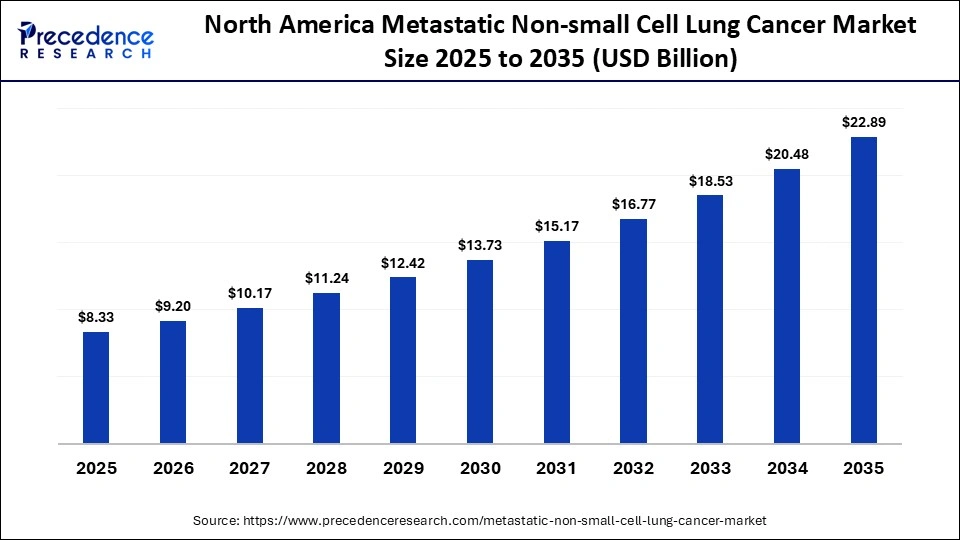
The North America metastatic non-small cell lung cancer market size is estimated at USD 8.33 billion in 2025 and is projected to reach approximately USD 22.89 billion by 2035, with a 10.64% CAGR from 2026 to 2035.
Why North America Dominated the Metastatic Non-small Cell Lung Cancer Market?
North America held a major revenue share of the market in 2025, because of a proper healthcare facility and the level of cancer screening. Countries increasingly use biomarker-based therapies, fostering the market. Positive reimbursement programs promote the prompt consumption of novel drugs. The area has huge R&D investments and a quick-paced regulatory approval. There is high awareness and access to accurate diagnostics, leading to increased uptake of treatment. Regional leadership is maintained by a high number of major pharmaceutical firms.
U.S. Metastatic Non-small Cell Lung Cancer Market Size and Growth 2026 to 2035
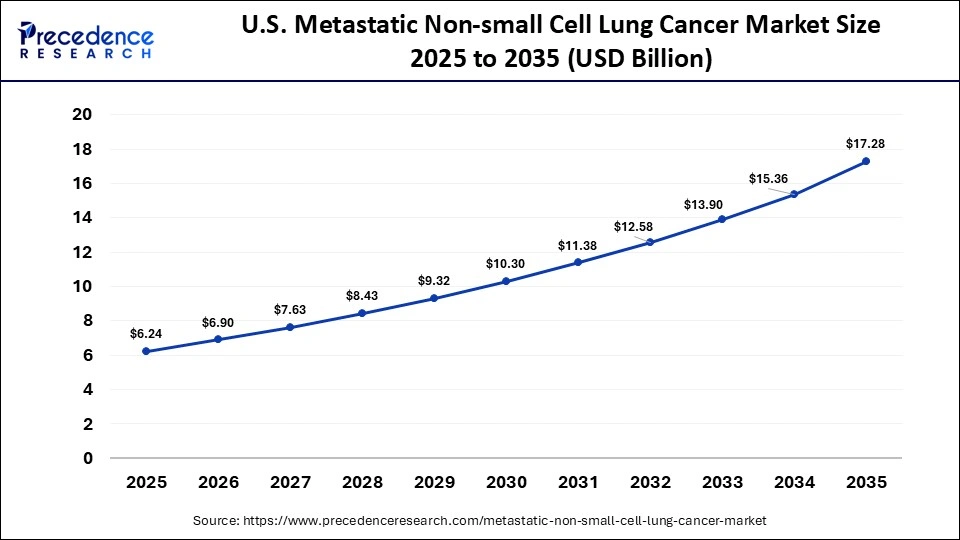
The U.S. metastatic non-small cell lung cancer market size is calculated at USD 6.24 billion in 2025 and is expected to reach nearly USD 17.28 billion in 2035, accelerating at a strong CAGR of 10.72% between 2026 and 2035
Country-Level Analysis
The U.S. holds the biggest share at the country level because it has well developed oncology ecosystem. Large healthcare expenditures favor the early use of targeted and immunotherapies. Canada has shown a stable growth with the help of public healthcare coverage. Strong clinical trial practices boost innovation pipelines. Cancer programs in the government encourage early treatment and diagnosis. All these contribute to the superiority of North America.
Why is Asia-Pacific the Fastest-Growing Region in the Market?
Asia-Pacific is expected to witness the fastest growth during the predicted timeframe, because of the increased rates of lung cancer and the extended healthcare coverage. There is growing urbanization and smoking issues, and this makes patient volumes increase. Governments are putting efforts into cancer care facilities and precision medicine programs. Increased knowledge on the use of molecular testing increases the uptake of therapy. The growth of multinational pharmaceuticals enhances the availability of improved treatment in the region. Further development in reimbursement systems spurs further growth.
Country-Level Analysis
China is a significant source of growth at the country level because of the high population of patients and the local drug development in China. Japan has the best technology in oncology treatment and research. Increasing use of targeted therapies in metropolitan centers is being witnessed in India. South Korea is developing precision oncology. More clinical trials are conducted in the region, increasing competitiveness among key players. All these contribute to the accelerated growth of the Asia Pacific.
Will Europe Grow in the Metastatic Non-small Cell Lung Cancer Market?
Europe is expected to grow at a considerable CAGR in the upcoming period, driven by the presence of well-organized cancer care systems and high regulatory principles. The elderly populations raise the rates of lung cancer in the area. Extensive biomarker testing enhances the adoption of personalized therapy. Oncology drugs are accessible and facilitated by the public health systems. Joint research projects enhance innovation streams. Constant market growth is ensured by stable reimbursement policies.
Country-Level Analysis
Germany is the leader in Europe, due to the increasing oncology drug adoption and clinical research. The UK enjoys systematized screening and cancer care pathways. The availability of immunotherapies and targeted agents is increasing in France and Italy. In Spain, there is an increasing clinical trial enrolment. Nordic countries focus on the incorporation of precision medicine. These are the country-level dynamics that are facilitating the long-term growth of Europe.
Metastatic Non-small Cell Lung Cancer Market Value Chain Analysis
- R&D
This stage involves the discovery of new biomarkers, targeted molecules, and immunotherapies to attain a competitive advantage in cancer therapy.
Key Players: Roche, AstraZeneca, Merck and Co., and Bristol Myers Squibb.
- Clinical Trials and Regulatory Approvals
Phase I-III trials detect safety, efficacy, and optimum dosing regimens before regulatory filing and commercialization.
Key Players: Pfizer, Novartis, Eli Lilly, and Amgen.
- Formulation
Manufacturing guarantees sterile manufacturing, biologics stability, and scalable development of oncology therapeutics and diagnostics.
Key Players: LifeScan, ARKRAY, and Nipro Diagnostics.
- Patient Support and Services
Financial support, compliance, and patient education on long-term cancer care are offered as programs.
Key Players: Roche Patient Support, AstraZeneca Access 360, Merck Patient Assistance, and BMS Support Services.
Recent Developments
- In January 2026, Saudi Arabia's Food and Drug Authority (SFDA) approved ANKTIVA (nogapendekin alfa inbakicept) for the treatment of metastatic NSCLC, becoming the first regulator globally to authorize the therapy for this indication. The approval marks the first approval of ImmunityBio, Inc.'s Innovative treatment for this indication globally.(source: https://immunitybio.com)
- In January 2026, Nuvalent announced that the U.S. Food and Drug Administration (FDA) approved zidesamtinib for the treatment of adults with locally advanced or metastatic NSCLC who received at least 1 prior ROS1 tyrosine kinase inhibitor (TKI). The approval is part of the company's OnTarget 2026 operating plan.(source: https://investors.nuvalent.com)
- In January 2026, the U.S. Food and Drug Administration approved the breakthrough therapy designation for sevabertinib to use as the first-line treatment of unresectable or metastatic HER2-mutant NSCLC. This classification is based on the ability of the agent to fulfil an unmet medical need, and it can be expedited to develop and undergo regulatory review to deliver an effective targeted therapy to patients more quickly.(Source: https://www.targetedonc.com)
Metastatic Non-small Cell Lung Cancer Market Companies
- F. Hoffmann-La Roche Ltd.
- Bristol-Myers Squibb Company
- Pfizer Inc.
- AstraZeneca
- Novartis AG
- GlaxoSmithKline
- Bayer AG
- AstraZeneca
- Syneos Health
- Boehringer Ingelheim GmbH
- Teva Pharmaceutical Industries Ltd.
Segments Covered in the Report
By Histology (Cancer Type)
- Adenocarcinoma
- Squamous Cell Carcinoma
- Large Cell Carcinoma
- Others
By Treatment Type
- Chemotherapy
- Targeted Therapy
- Immunotherapy
- Combination Therapy
- Radiotherapy/Others
By Drug Class
- PD-1/PD-L1 Inhibitors
- EGFR Inhibitors
- ALK/ROS1/RET Inhibitors
- Antibody-Drug Conjugates (ADCs)
- Others
By Line of Therapy
- First-Line Therapy
- Second-Line Therapy
- Third-Line & Later
By Distribution Channel
- Hospital Pharmacy
- Retail Pharmacy
- Online Pharmacy
By Region
- North America
- Europe
- Asia-Pacific
- Latin America
- Middle East & Africa
For inquiries regarding discounts, bulk purchases, or customization requests, please contact us at sales@precedenceresearch.com
Frequently Asked Questions





Ask For Sample
No cookie-cutter, only authentic analysis – take the 1st step to become a Precedence Research client
 Get a Sample
.webp)



 sales@precedenceresearch.com
 Schedule a Meeting
