



Nerve Blocks Market Size, Companies, Share, Patient Volume, Treatment Adoption Rates, Pricing Analysis, Regulatory Landscape, Competitive Positioning, and Demand Forecast
Rohan Patil, a Healthcare Industry Expert, highlights that the nerve blocks market has reached USD 9.00 billion in 2026 and is on track to reach USD 32.15 billion by 2035, advancing at a CAGR of 15.20%. Key nerve blocks market companies shaping the market include B. Braun Melsungen AG, Fresenius Kabi AG, Novartis AG, while major growth segments span By Product Type, By Drug/Agent Type, By Application, By End User, By Technique.
Source: https://www.precedenceresearch.com/nerve-blocks-market
 Get a Sample
 Table Of Content


What is the Nerve Blocks Market Size in 2026?
The global nerve blocks market size accounted for USD 7.81 billion in 2025 and is predicted to increase from USD 9.00 billion in 2026 to approximately USD 32.15 billion by 2035, expanding at a CAGR of 15.20% from 2026 to 2035. The increased surgical procedure numbers and rapid shift toward opioid-sparing pain management are key drivers of the global nerve blocks market.

Key Takeaways
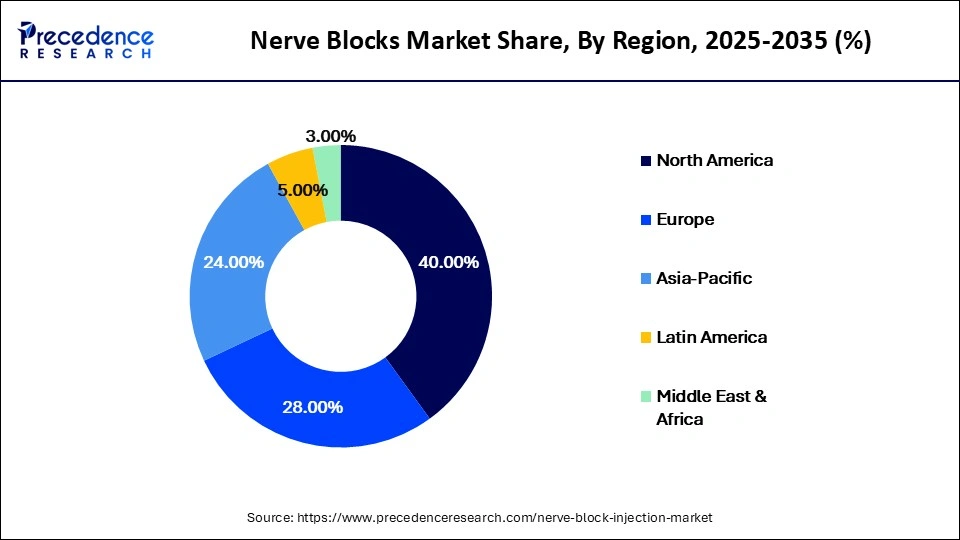
- North America held the largest nerve blocks market share of 40.0% in 2025.
- Asia Pacific is expected to have rapid growth over the forecast period.
- By product type, the Single-Injection Nerve Blocks segment dominated the market in 2025 with 58% of market share.
- By product type, the product type segment is notably growing with 42% of market in.
- By drug/agent type, Bupivacaine-based blocks accounted for the dominating share of 34% in the year 2025.
- By drug/agent type, the Ropivacaine-based Blocks segment accounted for the considerable growth over the forecast period.
- By application, the surgical procedure segment held the 52% share of the nerve block market in 2025.
- By application, the pain management (chronic & acute) segment is expected to grow significantly during the forecast period.
- By end user, the hospitals segment accounted for the highest revenue share of 66% in the market in 2025.
- By end user, the ambulatory surgical centers (ASCs) segment is expected to grow noably over the forecast period.
- By technique, ultrasound-guided nerve blocks accounted for the dominating share of 62% in the year 2025.
- By technique, the nerve stimulator-guided blocks segment accounted for the considerable growth over the forecast period.
What are Nerve Blocks?
Nerve Blocks are used for local and sustained pain management of patients. They are used as local anesthetics by applying to specific peripheral nerves for an extended duration. These nerve blockers have various applications in postoperative pain relief, chronic pain relief, post-traumatic pain relief, and surgical or labor pain relief. Furthermore, constant and targeted pain management can provide much more thorough management with fewer side effects than other systemic analgesics.
The nerve blocks market is experiencing notable growth, driven by a confluence of factors emphasizing enhanced patient outcomes and efficient pain management. A primary driver is the increasing global surgical volume across various specialties, particularly orthopedics, where effective postoperative pain control is paramount for early mobilization and recovery. As healthcare systems increasingly prioritize rapid patient discharge and reduced hospital stays, offering a solution that facilitates ambulation and diminishes the need for prolonged inpatient care.
What is the Impact of AI on the Nerve Blocks Industry?
Artificial Intelligence is revolutionizing the nerve blocks industry. AI-integrated technologies are helping in enhancing clinical decision-making by providing anesthesia providers with real-time data as well as predictive analytics to help improve accuracy and outcomes. Machine learning algorithms can also analyze patient demographics, medical history, imaging data, and prior treatment responses and recommend optimal nerve block types, thus increasing procedural success rates.
AI's contributions also extend to training and simulation for clinicians and healthcare professionals. Virtual reality and AI-powered simulators allow providers to practice complex nerve block treatments in a risk-free environment, receive feedback, and refine their skills based on their objectives. This leads to more efficient training and continuous performance improvements.
What are the Key Market Trends in the Nerve Blocks Market?
- Growing Adoption of Ultrasound-Guided Placement: The market is witnessing an increasing adoption of ultrasound guidance for catheter placement. This technique offers real-time visualization of nerves, surrounding anatomy, and the needle tip, which helps in enhancing accuracy and reducing the risk of complications such as nerve injury or vascular puncture.
- Focus on Outpatient Pain Management: There is an increasing trend towards facilitating outpatient pain management, thus reducing the need for prolonged hospital stays. This trend is strongly supported by healthcare policy shifts that are aimed at reducing costs and improving overall patient convenience.
- Advancements in anesthetic formulations: Development of longer-acting and combination anesthetic agents, including sustained-release and targeted delivery formulations, is enhancing the effectiveness and duration of nerve block pain control.
- Technological integration and digital solutions: Adoption of smart infusion systems, AI-assisted imaging, and digital anesthesia planning tools is improving procedural precision and efficiency.
- Increasing prevalence of chronic pain conditions and surgical procedures: The growing incidence of musculoskeletal disorders, cancer-related pain, and elective surgeries such as orthopedic and cardiovascular procedures is fueling market demand.
Market Scope
| Report Coverage | Details |
| Market Size in 2025 | USD 7.81 Billion |
| Market Size in 2026 | USD 9.00 Billion |
| Market Size by 2035 | USD 32.15 Billion |
| Market Growth Rate from 2026 to 2035 | CAGR of 5.80% |
| Dominating Region | North America |
| Fastest Growing Region | Asia Pacific |
| Base Year | 2025 |
| Forecast Period | 2026 to 2035 |
| Segments Covered | Product Type, Drug/Agent Type, Application, End User, Technique, and Region |
| Regions Covered | North America, Europe, Asia-Pacific, Latin America, and Middle East & Africa |
Market Dynamics
Drivers
The rising global prevalence of chronic pain conditions is a major driver for the growth of nerve block therapy. With an increasing number of patients seeking minimally invasive and targeted pain management solutions, nerve blocks are becoming the preferred method because they provide rapid and localized relief while also offering fewer systemic side effects compared to oral medications.
Restraint
A key restraint in the growth of the nerve blocks market is the lack of skilled professionals who are trained to administer these procedures. Nerve blocks require precision and expertise, often guided by imaging technologies like ultrasound. In many regions, especially developing areas, the lack of trained anesthesiologists and pain specialists restricts widespread adoption, leading to inconsistent treatment outcomes and slower market growth.
Opportunity
The continued advancement of technology in the field of medicine provides significant opportunities for the growth of the nerve blocks market. Examples include ultrasound-guided nerve blocks and long-acting anesthetic formulations which increase accuracy, safety, and duration of pain relief. This increase in clinician confidence will lead to an expansion of the applications available for nerve blocks to be used in outpatient or ambulatory services, therefore creating additional opportunities for growth within the overall market.
Segmental Insights
Product Type Insights
Nerve Blocks Market Share, By Product Type, 2025-2035 (%)
| Product Type | 2025 |
| Single-Injection Nerve Blocks | 58.00% |
| Continuous Nerve Blocks | 42.00% |
Which Product Type Dominate the Nerve Blocks Market?
Single-injection nerve blocks dominated the nerve blocks market in 2025 with 58% of the total market share because they are simple to perform, quick to administer, and allow easy post-operative recovery after a short surgery. Outpatient (or quick-service), same-day surgeries prefer single-injection nerve blocks due to their cost effectiveness and low cost of equipment.
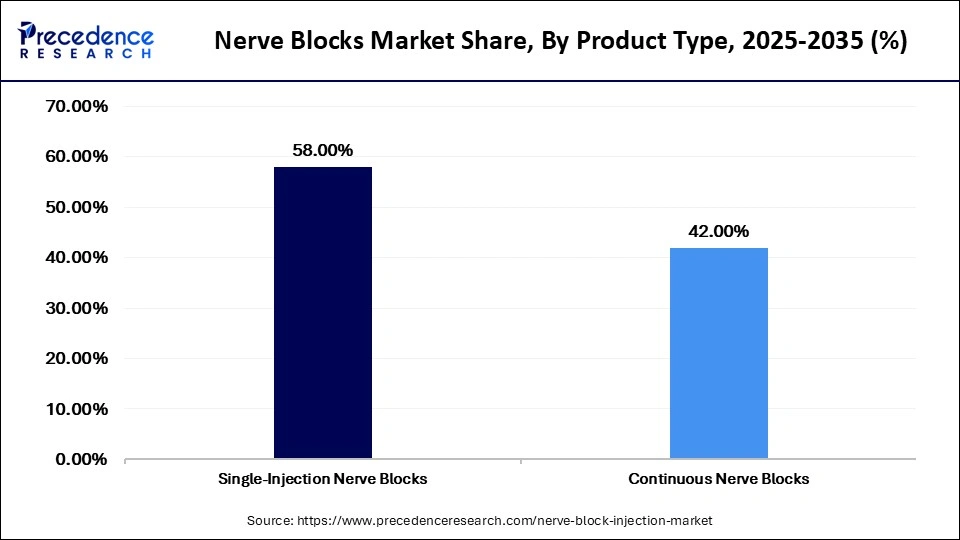
Continuous injection nerve blocks second largest segment with 42% of the total market share. This is primarily because they're effective for controlling long-lasting pain caused by major orthopedic or abdominal surgeries. A catheter is placed during the procedure to provide an ongoing supply of anesthetics. They improve patient comfort and decrease the need for opioids. There is an increasing emphasis on enhanced recovery protocols; therefore, they will continue to grow in popularity among hospitals and ambulatory surgical centers.
Drug/Agent Type Insights
Nerve Blocks Market Share, By Drug/Agent Type, 2025-2035 (%)
| Drug/Agent Type | 2025 |
| Bupivacaine-based Blocks | 34.00% |
| Ropivacaine-based Blocks | 26.00% |
| Lidocaine-based Blocks | 18.00% |
| Other Local Anesthetics | 22.00% |
Which Drug/Agent Type Segment Leads the Nerve Blocks Market?
The bupivacaine-based blocks are the biggest drug class with a market share of 34% for this class of drugs, as bupivacaine has long-acting length of time and thus is used frequently to manage post-surgery pain. Bupivacaine nerve blocks are being used more broadly in large surgeries because of their long action and the growing trend to decrease the dependence on opioids as a method of managing pain in the clinical setting.
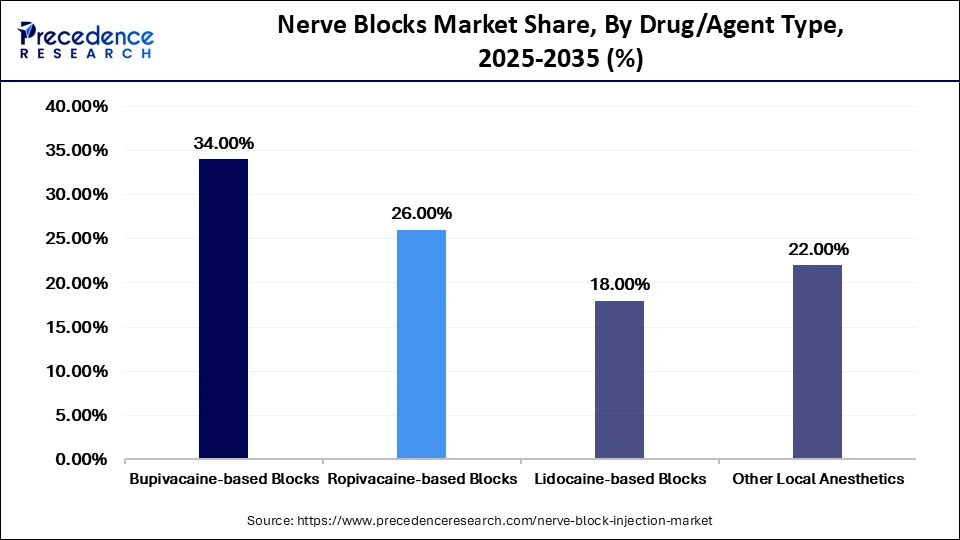
Ropivacaine-based blocks is the second largest drug segment by market share at 26%, this class of drugs has seen significant growth due to their superior safety profile and less cardiotoxicity in comparison to bupivacaine making them popular in regional anesthesia and pain management procedures. Ropivacaine is becoming widely used in modern surgical practices as they can produce a sufficient sensory block while limiting motor impairment.
Application Insights
Which Application Segment is Dominating the market in 2025
The surgical procedures is dominant segment of nerve block market with 52.0%, share due to the large extent that nerve blocks are used for targeted anesthesia during orthopedic (bone), cardiovascular (heart), or general surgery. It is expected that the demand for nerve blocks will continue to increase due to their ability to reduce complications during surgery and improve recovery outcomes. Additionally, with surgical volume increasing and patient preference for minimally invasive techniques, this segment is projected to continue growing.
Nerve Blocks Market Share, By Application, 2025-2035 (%)
| Application | 2025 |
| Surgical Procedures | 52.00% |
| Pain Management (Chronic & Acute) | 33.00% |
| Obstetrics & Gynecology | 9.00% |
| Dental & Others | 6.00% |
Pain management makes up the second largest segment at 33.0% of total sales by application in North America. Continued growth in the number of patients suffering from chronic pain and musculoskeletal disorders will fuel the growth of this market segment. Nerve blocks are increasingly being used as alternatives to traditional systemic analgesics for targeted pain relief in patients. Additionally, the expansion of pain clinics and increasing awareness of alternative methods of managing pain, such as through the use of non-opioid analgesics, will support the continued growth of this segment.
End User Insights
Why Hospitals are the Dominant End User Segment?
Hospitals are the dominant end user segment in 2025 with 66% of market share, because of high number of patients treated, advanced equipment for anesthesia, etc. Hospitals do the most complex surgical cases, many of which will require nerve blocks for perioperative pain relief. Availability of skilled staff and use of advanced imaging systems also enhance their position as the leader in this category.
Nerve Blocks Market Share, By End User, 2025-2035 (%)
| End User | 2025 |
| Hospitals | 66.00% |
| Ambulatory Surgical Centers (ASCs) | 18.00% |
| Specialty Clinics | 12.00% |
| Others | 4.00% |
Ambulatory Surgical Centers (ASCs) is second largest segment with 18% of market share. Many ASCs do many outpatient surgeries. Outpatient surgeries are less expensive than inpatient and ASCs offer these procedures at competitive prices. ASCs see an increase in use of minimally invasive procedures, allowing them to utilize nerve blocks in order to facilitate faster recoveries and same day discharges. The increase in number and efficiency of ASCs will allow for more ASCs to adopt the use of nerve block techniques in the future.
Technique Insights
How Ultrasound-Guided Nerve Blocks Leading the Market?
Ultrasound guided nerve blocks hold the largest segment of the nerve block market, having a 62% market share for their ability to provide real-time visualization of nerves and nearby structures, allowing for accurate placement of blocks, reducing complications, and increasing success rates. Furthermore, the trends towards more training programs and advances in technology have accelerated the adoption of ultrasound-guided nerve blocks in healthcare facilities around the world.
Nerve Blocks Market Share, By Technique, 2025-2035 (%)
| Technique | 2025 |
| Ultrasound-Guided Nerve Blocks | 62.00% |
| Nerve Stimulator-Guided Blocks | 28.00% |
| Landmark-Based Techniques | 10.00% |
The second largest segment in the nerve block market is nerve stimulator-guided blocks, which represents a 28% market share. These blocks are still routinely performed in various practice settings, particularly where access to ultrasound capabilities is limited. When using this technique, nerves are located and identified through electrical stimulation of the nerve being blocked. Although the use of ultrasound to guide nerve blocks is gradually replacing the use of nerve stimulators to location the intended nerve, the low cost and the established familiarity clinically with the technique continue to make them an important option for locating the intended nerve.
Regional Insights
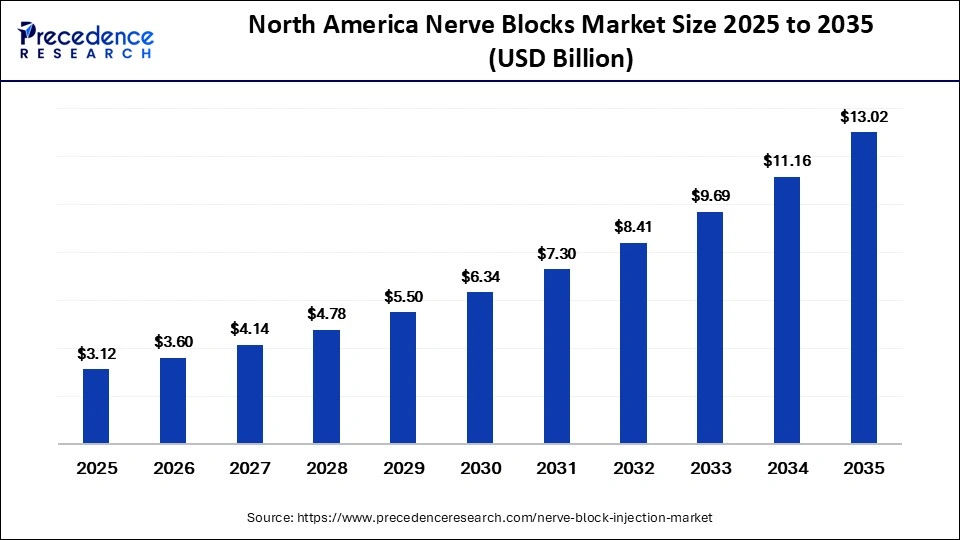
North America Nerve Blocks Market Size and Growth 2026 to 2035
The North America nerve blocks market size is estimated at USD 3.12 billion in 2025 and is projected to reach approximately USD 13.02 billion by 2035, with a 15.36% CAGR from 2026 to 2035.
Which Region Dominates the Nerve Blocks Market?
North America dominated the nerve blocks market in 2025 with 40% of market share. This dominance is driven by the high prevalence of chronic pain conditions, its advanced healthcare infrastructure, and the strong presence of key market players. The region also benefits from a well-established healthcare system, and the availability of cutting-edge medical technologies facilitates the widespread adoption of nerve block injections.
The growing focus on opioid-sparing pain management strategies is driving demand for nerve block therapies as safer alternatives to conventional pain medications. Overall, the factors that are majorly contributing to the North American market are technological advancements, high healthcare spending, and continuous research in pain management.
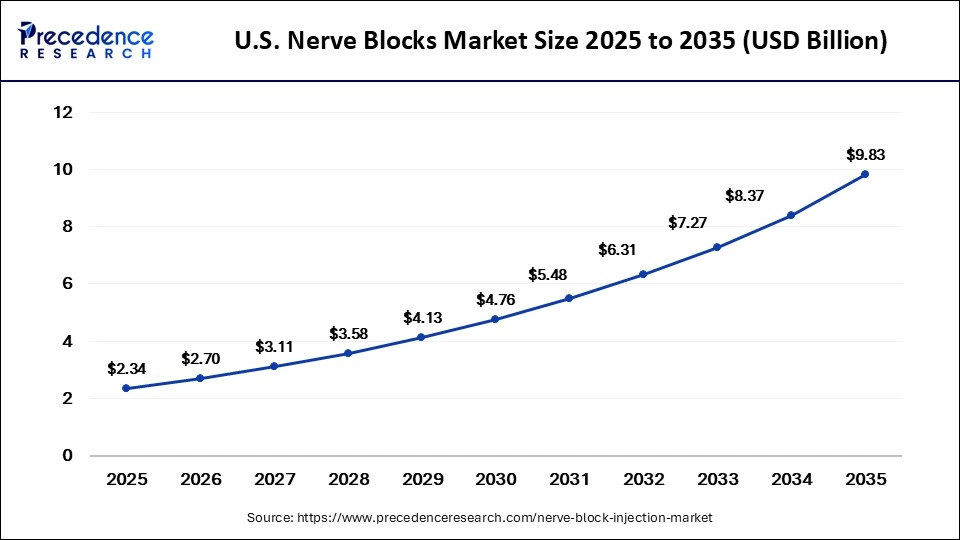
U.S. Nerve Blocks Market Size and Growth 2026 to 2035
The U.S. nerve blocks market size is calculated at USD 2.34 billion in 2025 and is expected to reach nearly USD 9.83 billion in 2035, accelerating at a strong CAGR of 15.43% between 2026 and 2035.
U.S. Nerve Blocks Market Trends
The U.S. is a major contributor to the region's market, owing to the high number of surgical procedures and the increasing demand for effective pain management solutions. The growing adoption of ultrasound-guided nerve block techniques is improving procedural accuracy and safety, encouraging wider use in hospitals and outpatient surgical centers.
Additionally, healthcare providers are promoting opioid-sparing pain management strategies, which is accelerating the use of nerve blocks as an alternative to traditional pain medications.
What are the Advancements in the Asia-Pacific Nerve Blocks Treatment and Diagnostics?
Asia Pacific is anticipated to witness the fastest growth in the market during the forecast period. The region's large patient pool, increasing healthcare expenditure, and growing awareness about pain management solutions help to drive the demand for nerve block injections. Countries such as China, Japan, and India are leading players in the region.
The market demands are rapidly increasing as the awareness among healthcare professionals is growing about regional anesthesia techniques and pain management strategies. Also, the use of minimally invasive pain management solutions has been encouraged through the expansion of ambulatory surgical centers and increasing healthcare investments across Asia.
China Nerve Blocks Market Trends
China's market is witnessing significant growth due to the growing prevalence of chronic diseases, an aging demographic, and increasing access to advanced medical treatments. There is also a rising awareness among healthcare professionals and patients about the benefits of regional anesthesia and advanced postoperative pain management.
How is the Opportunistic Rise of Europe in the Nerve Blocks Market?
Europe is expected to grow at a notable rate in the market, driven by several key factors, including the growing demand for minimally invasive pain management solutions, increasing awareness of nerve block procedures, and advancements in technology that enhance the precision and safety of these treatments. As Europe's aging population expands, the need for effective pain management, particularly in chronic conditions like cancer, orthopedic disorders, and neuropathic pain, is driving the market. Additionally, favorable reimbursement policies, a well-established healthcare infrastructure, and the rise of advanced medical technologies, including ultrasound-guided nerve blocks, are positioning Europe as a competitive player in the global market for nerve block treatments.
Germany Nerve Blocks Market Trends: Germany's nerve block market is expanding, with regional anaesthesia being used more frequently in outpatient and orthopedic procedures. Hospitals are better equipped and have more experienced anesthesiologists, which supports the use of nerve blocks. Overall, the improved quality of care and outcomes resulting from advancements in ultrasound-guided nerve block placement will add to Germany's existing growth, as will improvements in efficacy for providers and patients throughout Germany.
Nerve Blocks Market-Supply Chain Analysis
- Raw Material Sourcing
The initial stage begins with sourcing active ingredients for local anesthetics such as lidocaine, bupivacaine, ropivacaine, etc.
Key Players: Pfizer, Hikma, Fresenius Kabi
- Manufacturing Process
Here, the raw materials are formulated into sterile injectable solutions under GMP-certified environments.
Key Players: Baxter, Pfizer, Hikma
- Distribution Process
Here, the finished injectables are distributed through pharmaceutical wholesalers, hospital procurement systems, and specialty distributors.
Key Players: McKesson, Cardinal Health, Pacira
Nerve Blocks Market & Their Offerings
Tier 1:
- Pfizer Inc. – Provides injectable local anesthetics such as bupivacaine and lidocaine used in nerve block procedures.
- AstraZeneca plc – Develops pain management therapies that support postoperative care and nerve block treatments.
- Johnson & Johnson – Offers anesthetics and surgical solutions supporting regional anesthesia and nerve block procedures.
- Teva Pharmaceutical Industries Ltd. – Manufactures generic anesthetics like lidocaine used in regional anesthesia and nerve blocks.
- Sanofi S.A. – Provides analgesic and anti-inflammatory drugs used alongside nerve block therapies.
- Baxter International Inc. – Supplies injectable anesthetics and infusion systems for administering nerve block treatments.
Tier 2:
- B. Braun Melsungen AG
- Fresenius Kabi AG
- Novartis AG
- GlaxoSmithKline plc
- Merck & Co., Inc.
- AbbVie Inc.
- Mylan N.V.
Recent Developments
- In February 2026, NYSORA unveiled its 2026 NYSORA Nerve Blocks App, which is redesigned with features like practice-oriented guidance. This version is developed to provide navigation, enhanced, and real-time clinical technologies. (Source: https://www.instagram.com)
- In January 2026, ASA and Pain Medicine Coalition conducted a meeting with MACS to express their strong opposition to the elimination of coverage of peripheral nerve blocks. PMC has offered a partnership with MACs to overcome this problem.(Source: https://www.asahq.org)
Segments Covered in the Report
By Product Type
- Single-Injection Nerve Blocks
- Continuous Nerve Blocks
By Drug/Agent Type
- Bupivacaine-based Blocks
- Ropivacaine-based Blocks
- Lidocaine-based Blocks
- Other Local Anesthetics
By Application
- Surgical Procedures
- Pain Management (Chronic & Acute)
- Obstetrics & Gynecology
- Dental & Others
By End User
- Hospitals
- Ambulatory Surgical Centers (ASCs)
- Specialty Clinics
- Others
By Technique
- Ultrasound-Guided Nerve Blocks
- Nerve Stimulator-Guided Blocks
- Landmark-Based Techniques
By Region
- North America
- Latin America
- Europe
- Asia-pacific
- Middle and East Africa
For inquiries regarding discounts, bulk purchases, or customization requests, please contact us at sales@precedenceresearch.com
Frequently Asked Questions
Tags





Ask For Sample
No cookie-cutter, only authentic analysis – take the 1st step to become a Precedence Research client
 Get a Sample




 sales@precedenceresearch.com
 Schedule a Meeting
