



Neurofeedback Systems Market Size, Companies, Share, Patient Volume, Treatment Adoption Rates, Pricing Analysis, Regulatory Landscape, Competitive Positioning, and Demand Forecast
Neurofeedback Systems Market (By Product Type: Devices, EEG-Based, FNIRS-Based, More, Software and Services; By Application: ADHD, Anxiety and Depression, Cognitive Performance, More; By Modality: In-Clinic Fixed, Portable/Wearable Systems, Tele-Neurofeedback Platforms; By End-User: Hospitals and Specialty Clinics, Mental Health Centers, More) - Global Industry Analysis, Size, Trends, Leading Companies, Regional Outlook, and Forecast 2026 to 2035
Source: https://www.precedenceresearch.com/neurofeedback-systems-market
 Get a Sample
 Table Of Content


What is Neurofeedback Systems Market Size in 2026?
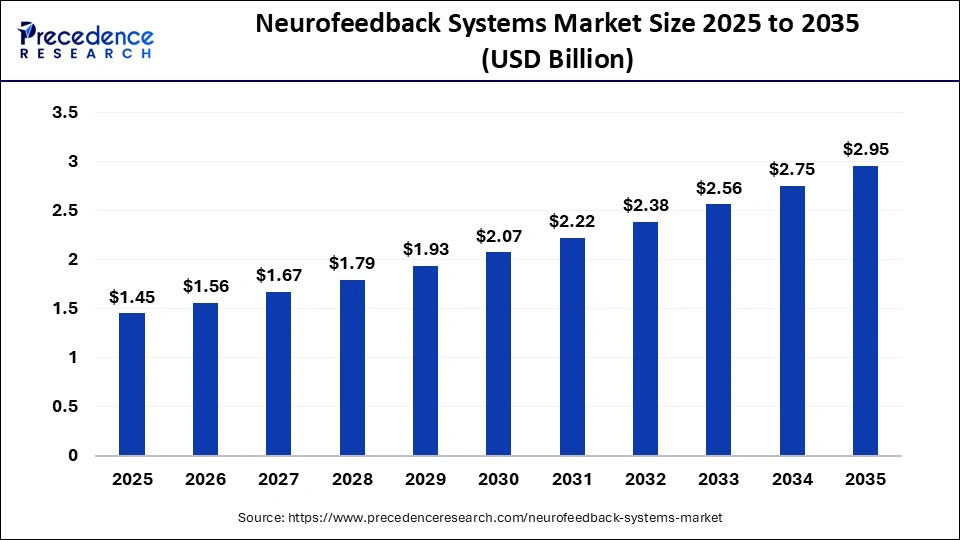
The global neurofeedback systems market size was calculated at USD 1.45 billion in 2025 and is predicted to increase from USD 1.56 billion in 2026 to approximately USD 2.95 billion by 2035, expanding at a CAGR of 7.35% from 2026 to 2035. The global market is witnessing steady growth driven by increasing clinical focus on ADHD, anxiety, epilepsy, and sleep disorders. Advancements in real-time EEG analytics, portable headsets, and software-based training platforms are enhancing therapeutic precision, supporting adoption across hospitals, specialty clinics, and home-based neurotherapy programs.
Key Takeaways
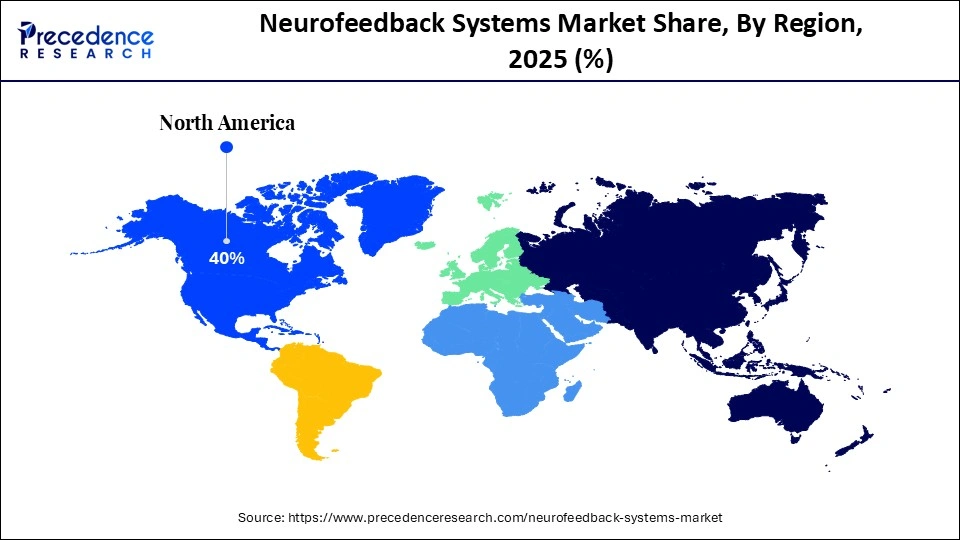
- North America led the neurofeedback systems market of 40% in 2025.
- Asia-Pacific is expected to expand at the highest CAGR in the market between 2026 and 2035.
- By product type, the devices segment held a dominant market share of 70% in the market in 2025.
- By product type, the software and services segment is expected to grow at the highest CAGR between 2026 and 2035.
- By application, the ADHD segment led the market with 32% in 2025.
- By application, the cognitive performance enhancement segment is expected to expand rapidly from 2026 to 2035.
- By modality, the portable/wearable systems segment held a dominant market share of 48% in 2025.
- By modality, the tele-neurofeedback platforms segment is expected to grow at a solid CAGR between 2026 and 2035.
- By end-user, the hospitals and specialty clinics segment held the largest market share in 2025.
- By end-user, the mental health centers segment is expected to grow at the highest CAGR between 2026 and 2035.
Neurofeedback Systems Market: Shaping the Future of Brain Monitoring and Therapy
Neurofeedback systems use real-time brainwave monitoring to train individuals to self-regulate neural activity, improving cognitive and emotional functioning. By combining EEG sensors with feedback software, these systems enable non-invasive brain monitoring and personalized therapy. Growing clinical acceptance, advancements in portable and AI-enhanced platforms, and expanding applications in mental health, neurological disorders, and peak performance are driving broader adoption and shaping the future of brain-based diagnostics and treatment.
How Can AI Integration Transform the Neurofeedback Systems Market?
Artificial intelligence (AI) integration can significantly enhance neurofeedback systems by improving real-time EEG signal processing, filtering artifacts, and identifying complex neural patterns with higher precision. Machine learning algorithms enable adaptive training protocols that automatically adjust difficulty based on individual brain responses, increasing therapeutic effectiveness. AI-driven analytics also support predictive insights, remote monitoring, and personalized treatment plans, transforming neurofeedback into a more scalable, data-driven, and outcome-oriented brain training solution.
Primary Trends Influencing the Neurofeedback Systems Market
- Integration of Artificial Intelligence
AI is increasingly integrated into neurofeedback systems to improve signal processing, pattern recognition, and adaptive training protocols. AI algorithms help filter noise from EEG data, personalize feedback based on user performance, and enable predictive insights for clinicians. This enhances accuracy, reduces training time, and makes systems more effective for tailored therapeutic goals across diverse conditions. - Portable and Wearable Devices
The shift toward portable and wearable neurofeedback devices is transforming accessibility. Lightweight EEG headsets and integrated sensors allow users to undergo neurofeedback outside clinics, such as at home or during daily routines. This convenience encourages consistent use, reduces dependency on clinical appointments, and broadens market reach by appealing to consumers focused on wellness, performance enhancement, and mental health. - Tele-Neurofeedback and Remote Therapy
Remote neurofeedback platforms have grown alongside telemedicine adoption. Clinicians can now monitor sessions virtually, adjust protocols in real time, and provide support without in-person visits. This trend in the neurofeedback systems market improves access for patients in remote or underserved regions, reduces travel burden, and supports long-term engagement in therapeutic programs, making neurofeedback more scalable and integrated with digital health care. - Multi-Modal Brain Training Approaches
Neurofeedback systems are increasingly combined with other modalities, such as biofeedback, cognitive training software, and VR environments. These multi-modal approaches engage multiple sensory pathways and reinforce learning through immersive experiences. By diversifying training stimuli, users may achieve deeper neural adaptation, leading to broader application in areas such as anxiety management, ADHD support, and peak cognitive performance. - Consumer-Driven Wellness Adoption
There's growing consumer interest in brain-health technologies for stress reduction, focus improvement, and emotional balance. Wellness brands and app-based neurofeedback products are catering to non-clinical users who want self-guided training. This trend expands the market beyond traditional medical settings, encourages innovation in user-friendly interfaces, and drives demand for subscription-based digital neurotherapy services.
Market Scope
| Report Coverage | Details |
| Market Size in 2025 | USD 1.45 Billion |
| Market Size in 2026 | USD 1.56 Billion |
| Market Size by 2035 | USD 2.95 Billion |
| Market Growth Rate from 2026 to 2035 | CAGR of 7.35% |
| Dominating Region | North America |
| Fastest Growing Region | Asia Pacific |
| Base Year | 2025 |
| Forecast Period | 2026 to 2035 |
| Segments Covered | Product Type, Application, Modality, End-User, and region |
| Regions Covered | North America, Europe, Asia-Pacific, Latin America, and Middle East & Africa |
Segmental Insights
Product Type Insights
Why Did the Devices Segment Dominate the Neurofeedback Systems Market?
The devices segment held the largest revenue share of the market in 2025, due to strong demand for advanced EEG headsets, multi-channel amplifiers, and portable brain-monitoring equipment essential for accurate signal acquisition. Continuous hardware innovation, integration with AI-based analytics, expanding clinical applications, and rising adoption in home-based therapy and performance training programs further strengthen device-driven revenue generation.
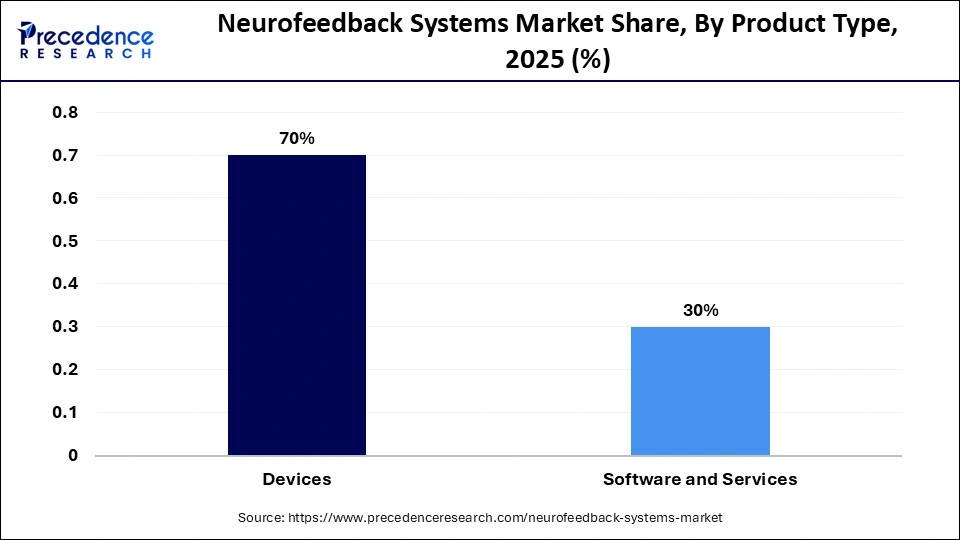
The software and services segment is expected to be the fastest-growing segment in the market due to increasing demand for AI-driven EEG analytics, cloud-based data storage, and adaptive training algorithms that personalize therapy sessions in real time. Growth is further supported by tele-neurofeedback platforms, subscription-based clinical software models, practitioner training programs, remote monitoring services, and continuous software upgrades that enhance usability, treatment precision, and long-term patient engagement.
Application Insights
How the ADHD Segment Dominated the Neurofeedback Systems Market?
The ADHD segment contributed the biggest revenue share of the market in 2025, due to the strong clinical focus on attention regulation, impulse control, and behavioral stabilization. Neurofeedback is increasingly used as a complementary or alternative therapy to medication, particularly among children and adolescents. Growing awareness among parents, expanding school-based intervention programs, and continuous refinement of attention-training EEG protocols further reinforce demand within specialized neurotherapy and behavioral health practices.
The cognitive performance enhancement segment is expected to expand rapidly in the market in the coming years, as demand rises for targeted brain training that enhances executive functions, working memory, and processing speed beyond clinical therapy. This growth is propelled by increased use in corporate wellness programs, elite athlete performance optimization, and consumer neuroenhancement platforms that leverage real-time EEG feedback, personalized training protocols, and adaptive learning algorithms tailored to individual cognitive profiles.
Modality Insights
Why Did the Portable/Wearable Systems Segment Dominate the Neurofeedback Systems Market?
The portable/wearable systems segment registered its dominance over the global market in 2025, because demand is driven by user preference for convenient, non-clinical therapy outside traditional settings. Lightweight EEG headsets, wireless connectivity, and mobile app integration enable on-the-go brain training, boosting adherence and opening new consumer use-cases beyond clinics. Integration with wellness platforms, real-time feedback, and remote clinician monitoring further solidifies its leading position across healthcare and personal performance markets.
The tele-neurofeedback platforms segment is expected to witness the fastest growth in the market over the forecast period, due to rising demand for remote therapy delivery and real-time clinician supervision without in-clinic visits. Secure cloud connectivity, live session monitoring, protocol adjustments, and digital progress tracking enhance accessibility and continuity of care. Increased adoption among rural populations, cross-border consultations, and hybrid care models further accelerate the expansion of tele-neurofeedback platforms.
End-User Insights
Which End-User Segment Led the Neurofeedback Systems Market?
The hospitals and specialty clinics segment led the market in 2025, due to their strong clinical infrastructure, availability of neurologists and mental health specialists, and capacity to manage complex neurological and psychiatric conditions. These facilities ensure accurate diagnosis, continuous patient monitoring, and structured therapy sessions. Their multidisciplinary treatment approach, higher patient footfall, established reimbursement pathways, and ability to invest in advanced neurotechnology further strengthen their leading position in the market.
The mental health centers segment is expected to grow with the highest CAGR in the market during the studied years, due to rising awareness of non-pharmacological therapies, increasing demand for personalized mental health treatment, and broader acceptance of neurofeedback for conditions like anxiety and ADHD. Expanding outpatient services, improving access to care, and investments in advanced neurotherapy tools also drive adoption. Additionally, supportive initiatives for mental wellness and patient preference for holistic approaches contribute to rapid growth.
Regional Insights
North America Neurofeedback Systems Market Size and Growth 2026 to 2035
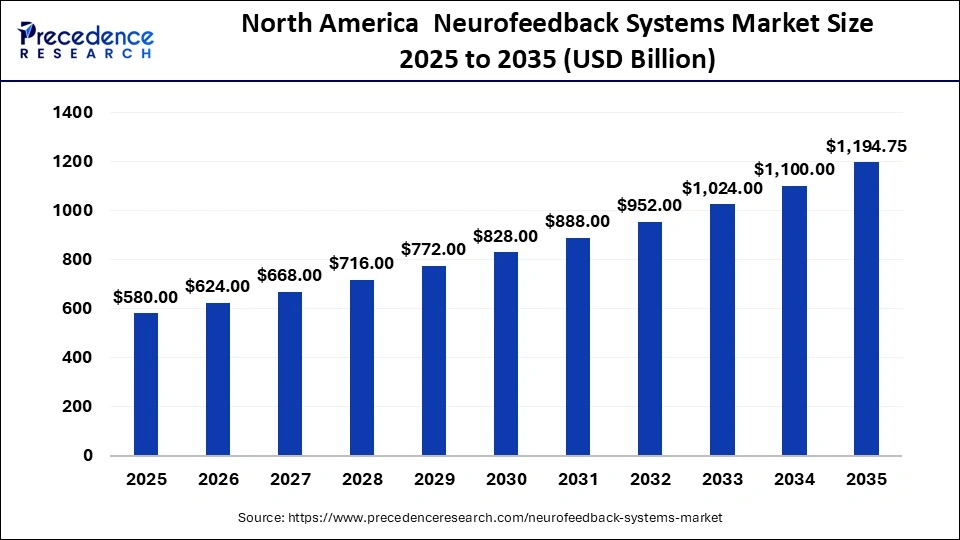
The North America neurofeedback systems market size is estimated at USD 580.00 million in 2025 and is projected to reach approximately USD 1,194.75 million by 2035, with a 7.49% CAGR from 2026 to 2035.
Why North America Dominated the Neurofeedback Systems Market?
North America held a major revenue share of the market in 2025, due to strong clinical research infrastructure, high diagnosis rates of ADHD and anxiety disorders, and widespread acceptance of non-invasive brain training therapies. Advanced healthcare facilities, early adoption of AI-integrated EEG technologies, favorable reimbursement frameworks, and the presence of specialized neurotherapy clinics further strengthen regional leadership in both clinical and performance-oriented applications.
U.S. Neurofeedback Systems Market Size and Growth 2026 to 2035
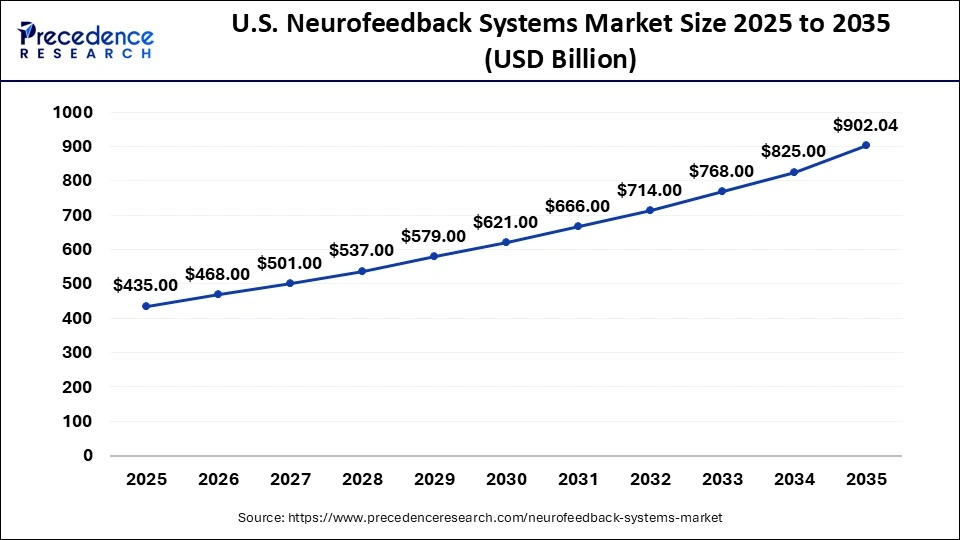
The U.S. neurofeedback systems market size is calculated at USD 435.00 million in 2025 and is expected to reach nearly USD 902.04 million in 2035, accelerating at a strong CAGR of 7.57% between 2026 to 2035.
U.S. Market Trends
In the U.S., AI-driven personalization and cloud integration are major trends reshaping neurofeedback, enabling real-time EEG data analysis and tailored feedback for improved therapeutic outcomes. Wearable and mobile EEG headsets with adaptive training protocols are being adopted for at-home cognitive enhancement and remote therapy, reflecting a shift toward hybrid care models.
Integration with virtual reality and telehealth platforms is enhancing engagement and accessibility, while robust R&D investment by technology firms and healthcare institutions accelerates innovation. Consumer-focused solutions with advanced analytics and remote clinician support continue to expand market reach beyond clinical settings.
Why is Asia-Pacific Experiencing the Fastest Growth in the Neurofeedback Systems Market?
Asia-Pacific is expected to host the fastest-growing market in the coming years, due to expanding mental health infrastructure, rising awareness of non-invasive brain training therapies, and increasing diagnosis of attention and stress-related disorders. Rapid digitalization of healthcare, growth in telehealth platforms, and rising demand for affordable wearable EEG devices are accelerating adoption. Additionally, strong investments in neuroscience research and emerging local technology developers are strengthening regional innovation and accessibility.
China Market Trends
China's neurofeedback systems industry major trends include rapid advancement of brain-computer interface (BCI) innovations that influence neurofeedback technology, with companies like Shanghai-based startups accelerating clinical trials and pushing toward non-invasive wearable EEG-driven interfaces.
Government-led standards and regulatory frameworks for BCI and neurofeedback devices support commercialization and integration with AI analytics. This ecosystem is driving increased adoption in healthcare, rehabilitation, and consumer cognitive enhancement applications.
Will Europe Grow in the Neurofeedback Systems Market?
Europe is considered to be a significantly growing area, due to the rising prevalence of neurological disorders and favorable government support. The burgeoning medical device sector and increasing investments facilitate the development of novel and advanced neurofeedback systems. The European Union is making constant efforts to establish the region as a global hub for human clinical trials, enabling the assessment of novel drugs and devices. Evolving regulatory landscapes also bolster market growth.
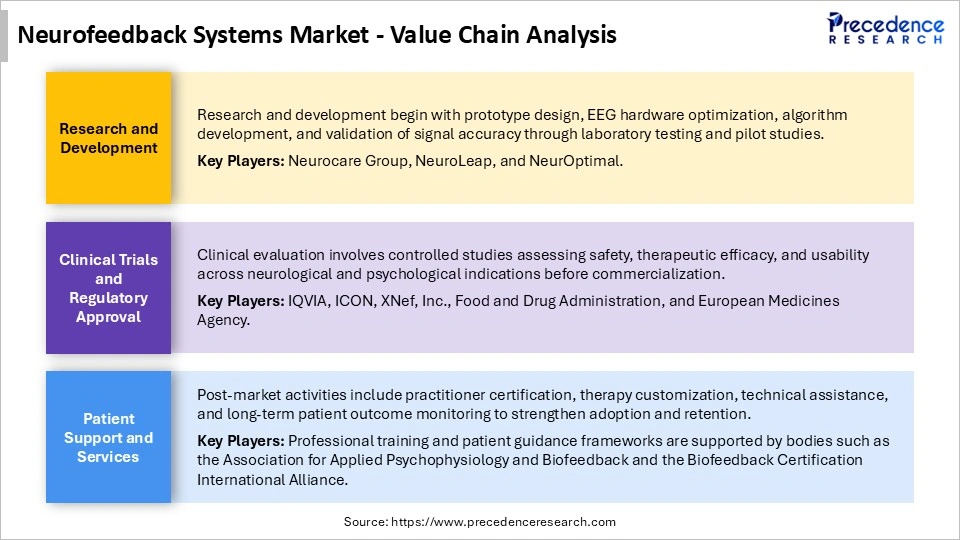
Neurofeedback Systems Market Value Chain Analysis
Top Companies in the Neurofeedback Systems Market
- BrainMaster Technologies, Inc.
- NeuroSky, Inc.
- Thought Technology Ltd.
- BEE Medic GmbH
- Mind Media B.V.
- Mitsar Co. Ltd.
- Neuroelectrics Corporation
- EEG Info
- Myndlift Ltd.
- NeuroCare Group GmbH
- NeuroField, Inc.
- Brainquiry Ltd
- Brain Vision LLC
- Neurobit Systems
- OpenBCI, LLC
- Zengar Institute, Inc.
- Mindfield Biosystems Ltd.
- BrainCore, Inc.
- InteraXon Inc. (Muse)
- NIRx Medical Technologies LLC
Recent Developments
- In February 2026, Emotiv Inc. released Insight Flex, a modular EEG headset featuring adaptive sensor placement and real-time neurofeedback that supports integration with mobile and VR platforms, enabling personalized stress, focus, and sleep training across clinical, research, and consumer wellness segments.
- In October 2025, BrainBit received a 2025 Global Recognition Award for its first AI-powered cross-species neurofeedback platform, integrating machine learning with real-time EEG hardware, enabling synchronized brainwave interaction research for both humans and animals.
[Source: https://brainbit.com] - In March 2025, InteraXon Inc. launched its Muse S Athena, the first consumer wearable combining EEG and functional near-infrared spectroscopy (fNIRS) sensors for advanced brain activity and oxygenation monitoring, alongside AI-enhanced cognitive training and sleep optimization tools, broadening neurofeedback beyond meditation into comprehensive everyday brain performance tracking.
[Source: https://www.businesswire.com] - In February 2025, NeuroCare Group AG announced a major capital raise of EUR 19.3 million to enhance its integrated mental health platform that combines QEEG, rTMS, cloud-based analytics, and neurofeedback tools, setting the stage for next-generation clinical applications.
[Source: https://www.biospace.com]
Segments Covered in the Report
By Product Type
- Devices
- EEG-Based
- FNIRS-Based
- More
- Software and Services
By Application
- ADHD
- Anxiety and Depression
- Cognitive Performance
- More
By Modality
- In-Clinic Fixed
- Portable/Wearable Systems
- Tele-Neurofeedback Platforms
By End-User
- Hospitals and Specialty Clinics
- Mental Health Centers
- More
By Region
- North America
- Europe
- Asia-Pacific
- Latin America
- Middle East & Africa
For inquiries regarding discounts, bulk purchases, or customization requests, please contact us at sales@precedenceresearch.com
Frequently Asked Questions





Ask For Sample
No cookie-cutter, only authentic analysis – take the 1st step to become a Precedence Research client
 Get a Sample
.webp)



 sales@precedenceresearch.com
 Schedule a Meeting
