



North America Enzyme Replacement Therapy Market Size, Key Companies, Company Market Share, Patient Volume, Treatment Adoption Rates, Pricing Analysis, Regulatory Landscape, Competitive Positioning, and Demand Forecast
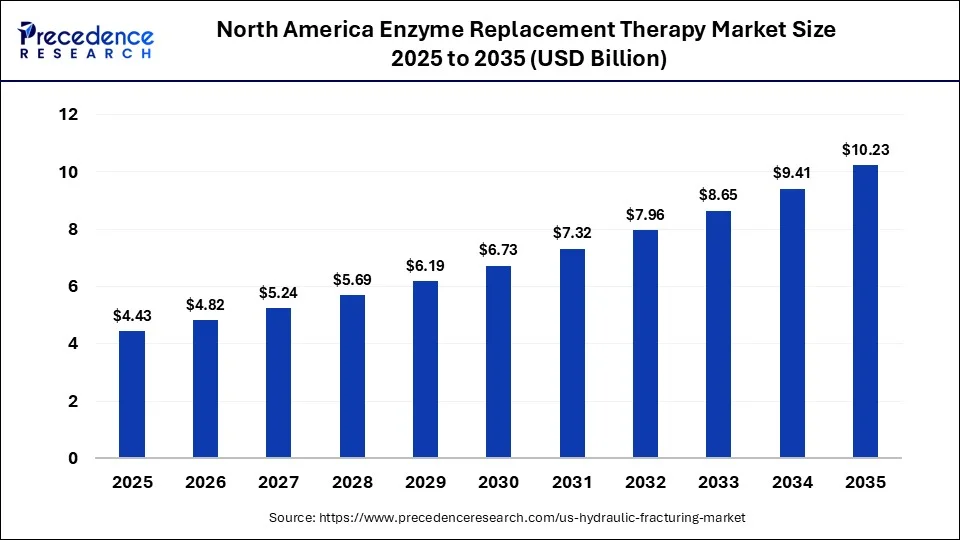
The North America enzyme replacement therapy market reached USD 4.82 billion in 2026. The rising prevalence of rare diseases and growing research and development activities drive the market, encouraging stakeholders to develop innovative enzyme replacement therapy (ERT). These trends were analyzed by Deepa Pandey, Senior Research Analyst, to curate this report. Her report benefits drug manufacturers, research firms, delivery technology developers, and specialized service providers.
Source: https://www.precedenceresearch.com/north-america-enzyme-replacement-therapy-market
 Get a Sample
 Table Of Content


North America Enzyme Replacement Therapy Market Size, Share, Trends, and Growth Forecast 2035
The North America enzyme replacement therapy market is forecasted to expand from USD 4.82 billion in 2026 to USD 10.23 billion by 2035, growing at a CAGR of 8.73% from 2026 to 2035. The market is driven by favorable government support to promote screening and early disease detection, increased investments to support advanced research and clinical trials, and suitable reimbursement policies for patients. Deepa Pandey, who has over 5 years of experience in healthcare market research, suggests the market is growing due to improved diagnosis, earlier treatment initiation, treatment expansion, and high-value therapies.
Key Takeaways
- By product, the imiglucerase segment dominated the market with a share of 21.9% in 2025.
- The U.S. government's CMS has developed the Medicare Drug Price Negotiation Program for reimbursement of ERT.
- BioMarin generated total revenue of USD 2.105 billion for its enzyme therapies product portfolio, including Vimizim, Naglazyme, Aldurazyme, and Brineura.
- Strensiq's sales reached USD 1.332 billion in 2025, representing an increase of 14% from 2024.
- Canada is expected to expand at a CAGR of approximately 9.9% from 2026 to 2035.
- Portfolio adjacency and technology differentiation are likely to remain important drivers of companies transaction strategy.
What is the Size and Forecast of the North America Enzyme Replacement Therapy Market?
The market reached USD 4.43 billion in 2025 and is expected to expand at a CAGR of 8.73% from 2026 to 2035. The forecast is supported by a combination of increasing diagnosis, longer treatment duration, expanded eligibility, improved disease awareness, specialist referral networks, and the introduction of differentiated enzyme products. The commercial model is particularly attractive because many ERT products are administered repeatedly, creating recurring treatment revenue rather than one-time pharmaceutical sales. Our analysis indicates that this recurring treatment model is an important differentiator from one-time or short-duration pharmaceutical therapies and provides greater revenue visibility as treated-patient populations expand and remain on therapy.
Segmentation Analysis
ERT demand is concentrated across disease-specific therapies rather than a single homogeneous product category. Major commercial segments include Gaucher disease, Fabry disease, Pompe disease, MPS, alpha-mannosidosis, hypophosphatasia, ADA-SCID, neuronal ceroid lipofuscinosis, and exocrine pancreatic insufficiency.
By product, the North American market includes imiglucerase, agalsidase beta, taliglucerase alfa, velaglucerase alfa, laronidase, alglucosidase alfa, galsulfase, idursulfase, and other recombinant or modified enzymes. Under broader definitions, pancreatic enzymes are also included. Imiglucerase was the largest identified product segment in 2025.
The competitive segmentation is nevertheless shifting as newer products target improved pharmacokinetics, tissue distribution, dosing frequency, immunogenicity, convenience, or disease-specific clinical outcomes. Oral substrate-reduction or chaperone therapies also create indirect competitive pressure against lifelong infusion-based ERT.
What are the Growth Factors and Challenges of the North America Enzyme Replacement Therapy Market?
The central growth driver is the expansion of the diagnosed-and-treated population, rather than broad population prevalence alone. Rare metabolic disorders frequently require specialist evaluation, genetic testing, enzyme activity testing, and longitudinal disease monitoring before treatment is initiated.
The clinical rationale for ERT remains strong because treatment directly addresses the underlying enzyme deficiency. FDA records, for example, identify enzyme replacement as an established treatment approach for confirmed Fabry disease, while the approval of Lamzede created a U.S. ERT option for alpha-mannosidosis.
Key restraints include high lifetime treatment costs, infusion burden, treatment-site availability, immunogenicity, reimbursement complexity, and the possibility of alternative modalities such as substrate reduction, chaperone therapy, hematopoietic transplantation, or gene therapy.
The principal opportunity is therefore not simply more patients; it is earlier diagnosis, broader treatment eligibility, improved persistence, home-based administration, better enzyme engineering and conversion from older therapies to differentiated products.
Key Coverage
- Diagnosis and screening
- Treatment penetration
- Patient persistence
- Infusion burden
- Immunogenicity
- Disease progression
- Next-generation ERT
- Alternative treatment modalities
- Rare-disease awareness
- Unmet clinical needs
What are the Pricing Trends of ERT in North America?
ERT pricing is fundamentally different from conventional high-volume medicines. Annual treatment economics depend on patient weight, dosing frequency, enzyme dose, disease severity, treatment duration, and negotiated reimbursement, rather than a simple per-tablet or per-prescription price.
For many systemic ERTs, treatment is administered repeatedly over a patient's lifetime. Consequently, even a small increase in treated patients can produce substantial incremental revenue. Conversely, payer restrictions, prior authorization, site-of-care requirements, or treatment discontinuation can materially affect product revenue.
The commercial environment is also being reshaped by changes in U.S. drug-pricing policy. CMS continues to develop the Medicare Drug Price Negotiation Program, including rules affecting drugs payable under Part B and Part D. At the same time, expanded orphan-drug protections are relevant to the rare-disease sector.
Key Coverage
- Annual treatment-cost benchmarks
- Dose-based economics
- Price per infusion
- Payer reimbursement
- Medicare/Medicaid exposure
- Commercial insurance
- Patient-support programs
- Prior authorization
- Site-of-care economics
- Home-infusion economics
- Pricing outlook
What Does the Demand-Supply & Value Chain Indicate?
The ERT value chain extends from recombinant protein development and cell-line engineering through bioprocessing, purification, formulation, quality testing, cold-chain distribution and specialist administration.
Supply is constrained by the technical requirements of producing biologically active enzymes at commercial scale while maintaining consistency, glycosylation profiles, potency, purity and stability. Manufacturing interruptions can therefore have disproportionate consequences in ultra-rare diseases where alternative suppliers may be limited.
Demand is comparatively predictable because established patients often require recurring treatment. The principal supply-demand risk is consequently manufacturing continuity rather than uncontrolled demand volatility.
Key Coverage
- Recombinant enzyme production
- Cell culture and bioprocessing
- Purification
- Fill-finish
- Cold chain
- Specialty distribution
- Infusion infrastructure
- Capacity constraints
- Supply continuity
- Inventory and lead times
How are Enzyme Engineering and Administration Flexibility Redefining the Next ERT Generation?
ERT innovation is increasingly focused on improving the limitations of first-generation replacement therapies. Key development areas include longer half-life enzymes, improved cellular uptake, optimized glycosylation, reduced immunogenicity, increased tissue penetration, alternative dosing schedules, and improved administration convenience.
The market is also moving toward differentiated approaches that compete with conventional weekly or biweekly infusions. For example, the current portfolio includes therapies specifically designed around altered dosing or administration approaches, while some disease areas now have both ERT and non-ERT treatment modalities.
Lamzede illustrates continued expansion into ultra-rare indications: the therapy is administered by intravenous infusion once weekly and was approved in the U.S. for alpha-mannosidosis.
Key Coverage
- Recombinant enzyme technologies
- PEGylation and half-life extension
- Glycoengineering
- Enzyme targeting
- Immunogenicity management
- Dosing optimization
- Subcutaneous and home-based delivery
- Oral alternatives
- Combination therapy
- Patent and pipeline analysis
Which Competitive Advantages are Consolidating Market Power across North America's ERT Market?
The North America enzyme replacement therapy market is concentrated among a relatively small group of specialized rare disease portfolios, with competitive strength increasingly determined by disease-franchise breadth, recurring product revenue, manufacturing scale, and depth of commercial infrastructure rather than by individual product presence alone.
The scale of established franchises is evident in disclosed 2025 revenues: BioMarin's total enzyme therapies segment generated USD 2.105 billion in enzyme-therapy revenue, including USD 792 million from Vimizim, USD 485 million from Naglazyme, USD 209 million from Aldurazyme, and USD 186 million from Brineura.
Sanofi's 2025 global sales included EUR 1.019 billion for Fabrazyme, EUR 790 million for Nexviazyme/Nexviadyme, and EUR 695 million for Cerezyme, while Takeda reported JPY 97.2 billion from Elaprase, JPY 77.9 billion from Replagal, and JPY 53.5 billion from Vpriv.
Our analysis indicates that scale is increasingly translating into portfolio-level competitive resilience. Revenue concentration across multiple disease franchises suggests that companies with exposure to several rare metabolic indications can diversify lifecycle, reimbursement, and product-specific risks while leveraging common capabilities in specialist commercialization, regulatory affairs, patient support, and biologic manufacturing. At the same time, the USD 1.332 billion in U.S. Strensiq sales in 2025, up 14%, demonstrates that substantial commercial value can also be created in specialized ERT categories outside the traditional lysosomal-storage disease core. In our view, this indicates that disease-franchise depth and the ability to establish differentiated positions in high-value indications are becoming as important as absolute corporate scale.
According to our Senior Researcher, Aman Singh, the most significant competitive shift is the increasing importance of portfolio consolidation and complementary disease coverage. The approximately USD 4.8 billion BioMarin acquisition of Amicus, completed in April 2026, expanded BioMarin's exposure into Fabry and Pompe through Galafold and Pombiliti + Opfolda, illustrating how strategic transactions can accelerate entry into adjacent rare-disease franchises rather than relying exclusively on internal pipeline development. We believe this dynamic is likely to increase the strategic value of established products, differentiated technologies, manufacturing capabilities, and commercial access infrastructure, while intensifying competition for assets with proven revenue streams and complementary indications.
Which Companies Shape the North American ERT Industry?
| Company | Headquarters | Market Position | Core Strength | Major Applications/Segments |
| Sanofi | France | Global leader | Lysosomal ERT | Fabry, Gaucher, Pompe |
| BioMarin | U.S. | Major rare-disease player | Specialty ERT | MPS, CLN2, Fabry/Pompe |
| Takeda | Japan | Major global player | Rare metabolic diseases | Gaucher, Fabry, Hunter |
| AstraZeneca/Alexion | UK/U.S. | Major rare-disease player | Metabolic ERT | Hypophosphatasia, lysosomal disorders |
| AbbVie | U.S. | Major enzyme-replacement participant | Pancreatic enzymes | EPI |
| Chiesi | Italy | Rare-disease specialist | ERT and rare diseases | Alpha-mannosidosis, Fabry, ADA-SCID |
| Protalix Biotherapeutics | Israel/U.S. | ERT specialist | Plant-cell recombinant enzymes | Fabry, Gaucher |
| Amicus/BioMarin | U.S. | Integrated rare-disease franchise | Fabry/Pompe | Fabry, Pompe |
| Ultragenyx | U.S. | Rare-disease specialist | Metabolic disorders | MPS VII, metabolic disease |
| Recordati | Italy | Rare-disease specialist | Orphan metabolic therapies | Lysosomal/metabolic disorders |
| Leadiant Biosciences | U.S. | Ultra-rare specialist | ADA replacement | ADA-SCID |
| Horizon/Amgen | U.S. | Rare-disease participant | Metabolic disease | Rare metabolic disorders |
| Pfizer | U.S. | Large biopharma participant | Specialty biologics | Metabolic/rare disease |
| Sobi | Sweden | Rare-disease specialist | Specialty biologics | Metabolic/rare disease |
| Krystal Biotech | U.S. | Emerging rare-disease player | Genetic/metabolic platform | Rare disease |
| Inozyme Pharma | U.S. | Emerging metabolic specialist | Mineral metabolism | Ultra-rare metabolic disease |
| Ionis Pharmaceuticals | U.S. | Rare-disease innovator | Genetic medicines | Metabolic alternatives |
| Vertex Pharmaceuticals | U.S. | Advanced rare-disease player | Genetic disease | Alternative modalities |
| Regenxbio | U.S. | Emerging gene-therapy competitor | Gene therapy | Metabolic disorders |
| Orchard Therapeutics | U.S./UK | Rare-disease specialist | Genetic therapies | Metabolic disorders |
| CSL | Australia | Specialty-biologics participant | Plasma/rare disease | Metabolic/rare disease |
| Nestlé Health Science | Switzerland | Enzyme/nutrition participant | Digestive enzyme therapies | EPI |
| Vivus/Recordati Rare Diseases | U.S./Italy | Specialty rare disease | Orphan therapeutics | Metabolic disease |
| PTC Therapeutics | U.S. | Rare-disease innovator | Genetic/metabolic disease | Alternative therapies |
| Sangamo Therapeutics | U.S. | Emerging genetic-medicine player | Genomic technologies | Rare metabolic disorders |
Which Competitive Capabilities Give Leading ERT Companies a Structural Advantage in North America?
Leading ERT companies are differentiated not only by revenue exposure and product breadth, but also by the depth of their disease coverage, R&D capabilities, manufacturing infrastructure, regulatory experience, geographic reach, infusion networks, and patient-support services. Because ERT is typically administered repeatedly over extended treatment periods, commercial performance depends on maintaining reliable access throughout the patient journey rather than simply securing initial product adoption.
Our analysis indicates that competitive advantage increasingly extends beyond the enzyme itself to the broader treatment-delivery ecosystem. Manufacturers with established reimbursement assistance, treatment coordination, specialty distribution, and patient-support capabilities can address several practical barriers associated with recurring infusion therapy, including access, site-of-care coordination, and treatment continuity. Our assessment is that these capabilities can become particularly important in rare disease markets where specialist referral networks and treatment infrastructure are concentrated.
In our view, the most significant implication is that scale and patient-access capabilities can reinforce one another. Companies with broader product portfolios and established commercial infrastructure can potentially leverage existing relationships, regulatory expertise, distribution networks, and manufacturing capabilities when expanding into additional disease franchises. The competitive assessment therefore benchmarks participants across revenue exposure, product breadth, disease coverage, R&D intensity, manufacturing capabilities, regulatory approvals, geographic presence, infusion infrastructure, patient services, and strategic activity.
What are Some Emerging Product Portfolio and Technology Benchmarks for ERT?
Portfolio benchmarking compares companies across enzyme class, indication, administration frequency, treatment setting, disease coverage, and lifecycle stage.
BioMarin's portfolio demonstrates the breadth of the category, spanning MPS I, MPS VI, CLN2, and other metabolic conditions, while its 2026 acquisition of Amicus expanded its Fabry and Pompe exposure.
Protalix's Elfabrio illustrates another competitive pathway: the Fabry ERT received U.S. approval in 2023, while 2025 sales to its commercialization partner reached USD 22.5 million.
Which Geographic Markets Offer the Strongest Combination of Commercial Scale and Growth?
The United States accounts for the majority of North American ERT commercial value, supported by higher pharmaceutical spending, established specialist rare disease infrastructure, and broader commercial coverage. However, the growth profile is not uniform across the region: Canada is projected to expand at approximately 9.9% annually from 2025 to 2035, versus approximately 8.7% for the overall North American ERT market. This divergence indicates that market scale and growth momentum are concentrated in different geographic pockets.
Our analysis indicates that Canada's faster projected growth makes geographic strategy more nuanced than simply prioritizing the largest revenue pool. While the U.S. provides greater commercial scale and a broader treatment ecosystem, Canada's higher growth trajectory suggests potential for incremental expansion where reimbursement pathways, specialist access, and treatment infrastructure continue to develop. In our view, the most significant implication is that manufacturers need to optimize separately for scale in the U.S. and growth acceleration in Canada, with market access, infusion capacity, and distribution infrastructure becoming important determinants of regional performance.
How Biologic Complexity Makes Reliable Production a Competitive Asset?
ERT manufacturing requires specialized biologics production, purification, and quality-control infrastructure. Capacity is therefore evaluated alongside product revenue rather than independently.
The benchmarking examines manufacturing locations, internal versus outsourced production, production technologies, capacity expansion, fill-finish capabilities, supply continuity, cold-chain requirements, and manufacturing redundancy.
The strategic implication is that manufacturing capability can become a commercial differentiator in ultra-rare disease markets where a single product may serve a relatively small patient population but generate hundreds of millions of dollars in recurring revenue.
How is Rare Disease Portfolio Consolidation Reshaping Growth Strategies in the North American ERT Market?
The approximately USD 4.8 billion acquisition of Amicus by BioMarin represents a defining recent transaction in the rare-disease therapeutics landscape, combining two established portfolios while strengthening exposure to Fabry and Pompe diseases. The transaction illustrates how strategic capital is increasingly being deployed to acquire established orphan-drug revenues while simultaneously expanding disease coverage and access to differentiated treatment technologies.
Our Senior Researcher, Aditi Shivarkar, indicates that M&A in ERT and adjacent rare-disease markets is increasingly serving as a portfolio-expansion mechanism rather than simply a scale-building exercise. The strategic rationale extends across four key areas: acquiring established orphan-drug revenue streams, entering adjacent lysosomal disease franchises, adding differentiated administration technologies, and strengthening commercial and manufacturing capabilities. Our assessment is that these transactions can provide companies with a faster route to broaden disease exposure and capabilities than relying solely on internally developed assets.
In our view, the most significant implication is that portfolio adjacency and technology differentiation are likely to remain important drivers of transaction strategy. Companies seeking growth can use acquisitions, licensing agreements, partnerships, and product-rights transactions to gain access to established patient populations, complementary rare-disease assets, and differentiated administration approaches. This creates strategic opportunities for both established ERT players seeking portfolio expansion and emerging companies possessing commercially relevant technologies or specialized disease assets.
Which are Some Opportunity Areas of the North America Enzyme Replacement Therapy Market?
The most important opportunity areas include:
- Earlier diagnosis through genetic and biochemical testing
- Expansion of newborn-screening programs
- Undiagnosed Fabry, Pompe, and MPS populations
- Home-based infusion
- Less frequent administration
- Subcutaneous delivery
- Improved tissue targeting
- Reduced immunogenicity
- Pediatric-to-adult treatment continuity
- Underserved ultra-rare indications
- Next-generation ERT replacing older enzymes
- Expansion of treatment into earlier disease stages
The opportunity analysis quantifies addressable patient populations, treatment penetration gaps, potential incremental revenue and country-level access gaps.
Why Does High Entry Barriers and Specialized Buyers Create a Defensible but Highly Competitive Market?
- Supplier power: Medium-High - biologic manufacturing, specialized raw materials, and validated production infrastructure create meaningful technical barriers.
- Buyer power: Medium-High - individual patients have limited bargaining power, but sophisticated institutional and government payers exert substantial influence over reimbursement and utilization.
- Threat of new entrants: Low-Medium - regulatory complexity, clinical evidence requirements, manufacturing investment, orphan-disease recruitment, and commercial infrastructure create high barriers.
- Threat of substitutes: Medium and increasing - substrate-reduction therapies, pharmacological chaperones, transplantation, and gene therapies can compete with lifelong ERT in selected indications.
- Competitive rivalry: High - established disease franchises increasingly face next-generation enzymes, alternative modalities, and lifecycle-management strategies.
What is the PESTLE Analysis of the North America Enzyme Replacement Therapy Market?
- Political: government support for rare-disease diagnosis, newborn screening, and orphan-drug development.
- Economic: high treatment costs, payer budgets, specialty-pharmacy economics, and healthcare expenditure.
- Social: rare-disease awareness, patient advocacy, and demand for earlier diagnosis.
- Technological: recombinant protein, enzyme engineering, genomics diagnosis, and alternative delivery technologies.
- Legal: orphan-drug regulation, biologic approval requirements, patent protection, and reimbursement rules.
- Environmental: biologic manufacturing, cold-chain logistics, waste management, and sustainability requirements.
What is the Future Outlook of the North America Enzyme Replacement Therapy Market?
Our assessment is that market growth will be driven less by a single demand catalyst and more by the interaction of earlier diagnosis, expanding treatment penetration, product innovation, and portfolio consolidation. As more rare-disease patients are identified and connected to specialist care, the addressable treated population can expand while established therapies continue generating recurring treatment demand.
Our analysis indicates that treatment expansion will remain a foundational growth driver, while product differentiation is likely to increasingly influence competitive performance. Improvements in diagnostic capabilities can increase the number of patients entering therapy, but longer dosing intervals, improved tissue delivery, lower immunogenicity, and more convenient administration can influence treatment attractiveness and continuity. This suggests that the next phase of ERT competition will extend beyond enzyme efficacy toward the broader balance of clinical performance, treatment burden and delivery convenience.
In our view, the most significant strategic implication is that market growth and competitive consolidation will increasingly reinforce one another. The 2026 USD 4.8 billion BioMarin-Amicus transaction illustrates how larger rare-disease companies are using portfolio consolidation to broaden disease coverage and strengthen commercial scale. We believe this dynamic could increase the strategic value of complementary ERT assets, differentiated delivery technologies, and established rare-disease commercial infrastructure, particularly as companies seek growth beyond individual mature franchises.
Key Strategic Questions Addressed
- What is the current size of the North American ERT market, and how much incremental revenue will be created through 2030?
- How much of the market is attributable to systemic rare-disease ERT versus pancreatic enzyme replacement?
- Which disease indications represent the largest current revenue pools?
- Which ERT products are gaining share through differentiated efficacy, dosing, or administration?
- How large is the diagnosed-versus-treated patient gap across Fabry, Gaucher, Pompe, and MPS?
- How are annual treatment economics evolving across major ERT categories?
- How will reimbursement and Medicare policy influence high-cost ERT access?
- What role will home infusion play in reducing treatment burden?
- Which companies control the largest ERT revenue pools in North America?
- How is the BioMarin-Amicus transaction changing competitive concentration?
- Which manufacturers possess the strongest disease-franchise and manufacturing positions?
- Where are the most important product and technology white spaces?
- Which alternative modalities pose the greatest long-term threat to conventional ERT?
- Which geographic and patient populations remain underserved?
- What technologies, products, partnerships, and M&A themes will determine the North American ERT market through 2030-2035?
Experts Insights
The North America enzyme replacement therapy market should be regarded as a high-value, specialty-driven market where sustainable growth will increasingly depend on treatment differentiation rather than simply increasing patient volume. Companies able to demonstrate better organ protection, lower immunogenicity, reduced infusion frequency, improved patient convenience, and stronger health-economic value will be better positioned to capture incremental demand. At the same time, the competitive landscape is likely to become more dynamic as established ERT products face competition from improved formulations, alternative therapies, and emerging non-ERT modalities.
Our Experts
- The primary research process was carried out by Deepa Pandey, Senior Research Analyst, who also designed the methodology and did market segmentation and regional analysis.
- Aman Singh, Head of Research, has gathered and checked regulatory policies, competitive analysis, and company financial information, which were obtained independently, thereby increasing the quality of evidence supporting the calculations of the market values.
- Aditi Shivarkar, VP Research, has validated and refined the research material, verified facts, corrected inconsistencies, and completed the research document, making it accurate and to the point.
North America Enzyme Replacement Therapy Market Segments Covered in the Report
By Product Type
- Imiglucerase
- Agalsidase Beta
- Taliglucerase Alfa
- Velaglucerase Alfa
- Laronidase
- Alglucosidase Alfa
- Galsulfase
- Idursulfase
- Asfotase Alfa
- Velmanase Alfa
- Eladocagene/Other Emerging Enzyme Therapies
- Other Enzyme Replacement Products
- Pancreatic Enzyme Replacement Products
By Disease Indication
- Gaucher Disease
- Fabry Disease
- Pompe Disease
- Mucopolysaccharidosis (MPS)
- Hypophosphatasia
- Alpha-Mannosidosis
- ADA-SCID
- Neuronal Ceroid Lipofuscinosis
- Exocrine Pancreatic Insufficiency
- Other Enzyme-Deficiency Disorders
By Route of Administration
- Intravenous
- Subcutaneous
- Intramuscular
- Oral
- Other Routes
By Treatment Setting
- Hospitals
- Specialty Clinics
- Infusion Centers
- Homecare/Home Infusion
- Other Treatment Settings
By Patient Age
- Pediatric
- Adult
- Geriatric
By Disease Severity
- Moderate
- Severe
By Therapy Generation
- First-Generation ERT
- Next-Generation ERT
By Distribution Channel
- Specialty Pharmacies
- Hospital Pharmacies
- Retail Pharmacies
- Direct Distribution
- Other Channels
By Country
- U.S.
- Canada
For inquiries regarding discounts, bulk purchases, or customization requests, please contact us at sales@precedenceresearch.com
Frequently Asked Questions





Ask For Sample
No cookie-cutter, only authentic analysis – take the 1st step to become a Precedence Research client
 Get a Sample
.webp)



 sales@precedenceresearch.com
 Schedule a Meeting
