



Power EPC Market Trends, Companies, Contract Wins / Project Pipeline, Installed Capacity, Power Generation, Government Investment, Technology Adoption, Competitive Positioning, and Growth Forecast
Power EPC Market (By Type: Thermal Power, Renewable Energy (Solar, Wind, Hydro), Nuclear Power; By Service Type: Engineering, Procurement, Construction, Commissioning; By Equipment Type: Steam Turbines, Gas Turbines, Boilers, Control System, Generators, Others) - Global Industry Analysis, Size, Trends, Leading Companies, Regional Outlook, and Forecast 2026 to 2035
Source: https://www.precedenceresearch.com/power-epc-market
 Get a Sample
 Table Of Content


What is Power EPC Market Size in 2026?
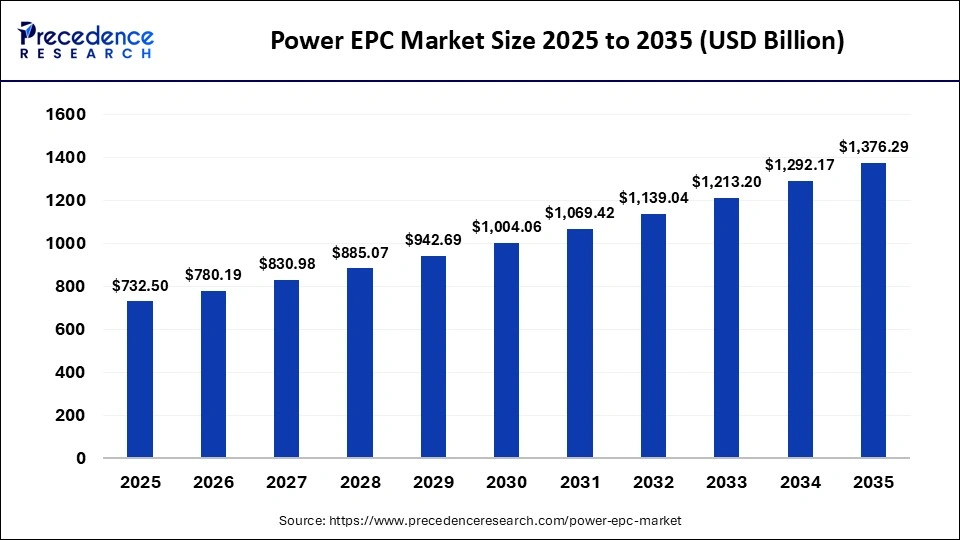
The global power EPC market size was calculated at USD 732.50 billion in 2025 and is predicted to increase from USD 780.19 billion in 2026 to approximately USD 1,376.29 billion by 2035, expanding at a CAGR of 6.51% from 2026 to 2035. The power EPC market is growing rapidly, driven by growth factors including accelerating energy demand, global grid modernization efforts, and massive transition towards renewable energy sources.
Key Takeaways
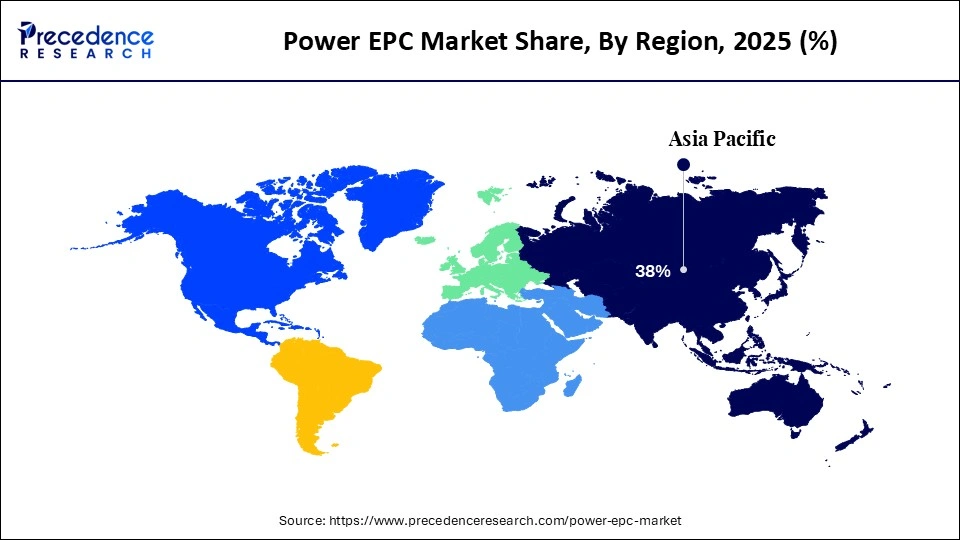
- Asia-Pacific dominated the market shre of 38% in 2025 and is expected to grow at the fastest CAGR in the market during the forecast period.
- By type of power generation, the thermal power segment held a dominant position in the power EPC market in 2025.
- By type of power generation, the renewable energy (solar, wind, hydro) segment is expected to grow with the highest CAGR in the market between 2026 and 2035.
- By service type, the engineering segment led the global market in 2025.
- By service type, the procurement segment is expected to grow with the highest CAGR in the market between 2026 and 2035.
- By equipment type, the steam turbines segment held the largest revenue share in the market in 2025.
- By equipment type, the gas turbines segment is expected to expand rapidly in the market in the coming years.
What is the Power EPC Market?
EPC stands for Engineering, Procurement, and Construction. The power EPC model of project delivery assigns contractors the duty of managing a project from inception to completion. EPC contractors are responsible for overseeing the entire project. EPC delivery is widely used for complex industrial projects in power, oil and gas, chemicals, and manufacturing. It allows project owners to focus on their core business while relying on specialized contractors for project management.
EPC contracts are crucial for advancing industrial and infrastructure development, particularly for large-scale projects. The market comprises firms that offer comprehensive services for the development of power generation, transmission, and distribution systems. These companies are responsible for project planning, design, and procurement of EPC. This market is experiencing rapid growth, fueled by investments in renewable energy, modernization of the grid, and a rising demand for electricity.
What is the Role of AI in the Power EPC Market?
Artificial Intelligence is transforming various industries, including the EPC industry, where it is used to analyze past project data predicting potential issues in current projects. This enables workers to proactively address problems, reducing negative impacts on schedules. By minimizing human error, these systems improve accuracy, efficiency, and speed, which is vital in time-critical environments like construction management. AI-driven EPC project management software can independently manage routine, labor-intensive tasks, allowing human managers to focus on more complex responsibilities. Advanced AI models also identify which tasks require human intervention and alert managers only when necessary.
Using advanced natural language processing (NLP) and machine learning, AI helps in analyzing various contractual documents, including primary contracts, subcontracts, service orders, specific conditions, schedules, modifications, claims, technical communications, and additional correspondence, such as letters and emails. After processing, the system extracts and organizes key information, which creates a contractual knowledge graph, a structured and searchable representation of rights and responsibilities aligned with the project's operational framework, helping in the long term in the market.
What Are the Trends in the Power EPC Market?
- Renewable Energy Expansion
- The growth of renewable energy is vital for the power EPC sector, driving infrastructure development and revenue opportunities through solar, wind, and grid modernization. As traditional energy sources decline, EPC companies are shifting to clean energy to meet global demand, achieve decarbonization goals, and ensure profitability. Increased investment is making renewable energy projects a key revenue source for EPC contractors, enabling them to manage projects from design to commissioning. Renewable energy sources, supported by EPC, enhance grid reliability and often lead to lower electricity costs over time.
- Digitization and Technology Adoption
Digitalization streamlines workflows from design to construction, reduces engineering hours, minimizes rework, and prevents costly delays. Building Information Modeling (BIM) supports 3D modeling and 7D BIM, which includes cost and sustainability factors, enhancing design accuracy and enabling clash detection. Moreover, advanced software solutions optimize resource use, cut material waste significantly, and foster the creation of energy-efficient, sustainable infrastructure. - Sustainability in Execution
Innovative technologies are crucial drivers of this change, as the construction and industrial sectors work to lower their environmental impact. These advancements improve the planning, execution, and maintenance of EPC projects, emphasizing waste reduction, energy efficiency, and green building initiatives. Many projects incorporate smart technologies to earn certifications like LEED, WELL, and BREEAM. Circular construction models are also being adopted for supply chain transparency and material recycling. Companies are prepared to meet client expectations and regulatory standards, ensuring their long-term sustainability and contributing to a healthier environment.
Market Scope
| Report Coverage | Details |
| Market Size in 2025 | USD 732.50 Billion |
| Market Size in 2026 | USD 780.19 Billion |
| Market Size by 2035 | USD 1,376.29 Billion |
| Market Growth Rate from 2026 to 2035 | CAGR of 6.51% |
| Dominating Region | Asia-Pacific |
| Fastest Growing Region | North America |
| Base Year | 2025 |
| Forecast Period | 2026 to 2035 |
| Segments Covered | Type of Power Generation, Service, Equipment, and region |
| Regions Covered | North America, Europe, Asia-Pacific, Latin America, and Middle East & Africa |
Segmental Insights
Type of Power Generation Insights
Which Type of Power Generation Segment Dominated the Power EPC Market?
The thermal power segment dominated the market in 2025, due to its ability to provide reliable baseload power at lower initial costs compared to alternatives. It offers high efficiency, eliminates the need for energy storage, and supports flexible, continuous power generation, crucial for meeting the rising energy demands of urban and industrial areas.
Thermal power plants deliver stable electricity, forming the backbone of the power grid, with the lowest setup costs and historically affordable rates. The rapid industrialization in developing countries further increases the demand for large-scale power generation that thermal plants can efficiently supply, catalyzing market growth.
The renewable energy (solar, wind, hydro) segment is expected to be the fastest-growing segment in the coming years, due to its economic viability, rapid technological progress, and rigorous environmental regulations that require decarbonization. Driven by global sustainability goals, EPC firms are making significant investments in solar and wind projects, which offer higher returns and faster deployment.
Additionally, solar photovoltaic (PV) and wind energy are increasingly becoming more cost-effective than coal or gas. Global efforts to combat climate change encourage nations to reduce fossil fuels in favor of clean energy, boosting the demand for green initiatives within industry. Furthermore, favorable policies, subsidies, and incentives for solar parks and green energy initiatives promote significant investments in renewable infrastructure.
Service Insights
Why Did the Engineering Segment Dominate the Power EPC Market?
The engineering segment held the largest revenue share of the market in 2025, due to the need for advanced design in large projects, rapid renewable energy growth, and the demand for efficient infrastructure. Strict carbon reduction goals and smart city requirements add to this complexity. The shift to solar, wind, and hydropower also requires specialized engineering for site selection and integration, increasing the need for expertise. Additionally, modern power grids and smart technology integration necessitate sophisticated engineering solutions before construction. Thus, it plays a crucial role in executing complex power projects efficiently, safely, and within budget, reinforcing its leading role.
The procurement segment is expected to grow with the highest CAGR of XX% in the market during the studied years, due to the substantial costs and the critical importance of acquiring essential, specialized equipment such as turbines, generators, and solar components. The increase in large-scale renewable energy initiatives requires extensive, specialized, and often prompt supply chain management. Additionally, the emergence of turnkey EPC solutions, where a single contractor manages all aspects from design to final delivery, imposes considerable pressure on procurement management to prevent cost overruns and delays.
Also, the increase in global renewable energy initiatives increases demand for specialized, rapid, and cost-efficient procurement of equipment. Additionally, in extensive power projects, especially within the renewable energy (solar, wind) and traditional sectors, procurement is capital-intensive and accounts for a considerable portion of the total budget.
Equipment Insights
How the Steam Turbines Segment Dominated the Power EPC Market?
The steam turbines segment held a dominant position in the market in 2025, due to its reliability, high efficiency in large-scale generation, and versatility with various fuels like coal, nuclear, biomass, and solar thermal. They are also crucial for base-load generation, offering long lifespans, low vibration, and key roles in combined heat and power (CHP) plants, leading to cost savings.
Additionally, they efficiently convert thermal energy into mechanical work for large utility power facilities, and they are more reliable and long-lasting than other generation methods. They also have fewer moving parts, reducing maintenance needs. The segment is further driven by the demand for new power infrastructure to meet rising energy needs, ensuring continued investment in steam turbine technology.
The gas turbines segment is expected to expand rapidly in the market in the coming years. They are in high demand due to their efficient, reliable, and adaptable power generation, often serving as a greener alternative to coal and stabilizing renewable energy sources. Also, combined-cycle gas turbines are driven by the need for improved efficiency, lower emissions, and quick ramp-up capabilities for renewable systems. Gas turbine facilities are built faster than traditional coal or nuclear plants, providing essential rapid-start and flexible power solutions crucial for grid stability.
Regional Insights
Asia Pacific Power EPC Market Size and Growth 2026 to 2035
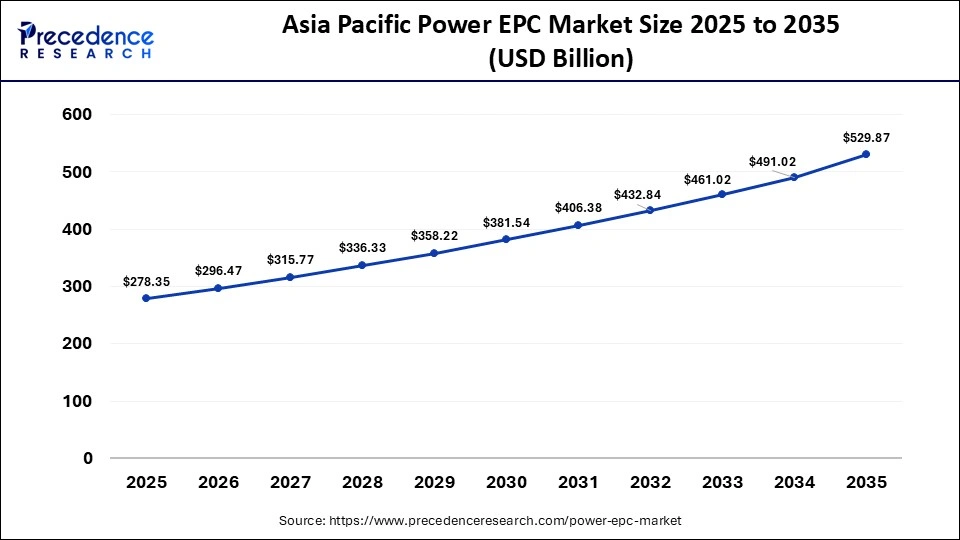
The Asia Pacific power EPC market size is expected to be worth USD 529.87 billion by 2035, increasing from USD 278.35 billion by 2025, growing at a CAGR of 6.65% from 2026 to 2035
Which Factors Drive the Power EPC Market in Asia-Pacific?
Asia-Pacific held a major revenue share of the market in 2025 and is expected to host the fastest-growing market in the coming years due to high energy demand from rapid urbanization, industrialization, and population growth. This is further supported by significant investments in renewable energy, grid modernization, and favorable government policies, which are crucial in infrastructure development. The growing industrial bases and populations in emerging economies require new power plants and grid infrastructure, while favorable regulations are accelerating power project advancements, boosting the market.
India Market Trends
India is rapidly growing in the sector, due to its skilled and cost-effective workforce and extensive experience in managing large infrastructure projects. The rapid growth of renewable energy sources, like solar and wind, and the urgent need for grid modernization, supported by government initiatives such as the National Electricity Plan, have further bolstered the market. Indian companies provide end-to-end solutions, from manufacturing transmission equipment to building substations and high-voltage lines, allowing them to effectively handle complex, large-scale projects.
How Will South America Grow in the Power EPC Market?
South America is expected to grow at a notable CAGR in the foreseeable future. The region has a strong foothold in the sector, driven by its diverse and rapidly expanding renewable energy infrastructure, particularly in hydropower, wind, and solar. The region benefits from abundant natural resources, including the Itaipu Dam in Brazil and Paraguay, and high-potential solar and wind areas in the Atacama Desert. Additionally, supportive regulations, like Brazil's free-market power initiatives and Chile's commitment to reducing coal use, encourage the growth of valuable EPC projects further.
Brazil Market Trends
Brazil is a global leader in clean energy, with almost 90% of its electricity production derived from renewable sources such as hydropower, wind, and solar energy, making it an attractive center for EPC projects. The government also provides robust support through advantageous regulations and incentive programs aimed at promoting renewable energy adoption, which includes significant investments in wind and solar power facilities, with a substantial number of projects and a strong presence of leading companies, fostering innovations and efficiency within the industry.
Power EPC Market Value Chain Analysis
- Project Development and Financing: It includes feasibility studies, permit and regulatory approvals, financial structuring, and environmental impact assessment.
Key Players – Enel, Adani Green Energy, Black Rock, and Brookfield Asset Management - Engineering and Design: It includes basic and detailed engineering, grid integration design, and plant layout optimization.
Key Players - Technip Energies, Larsen and Toubro, and Jacobs Solution - Procurement, Construction, and Installation: It includes supplier selection, contract negotiation, logistic management, mechanical erection, electrical work, and grid connectivity.
Key Players - Bechtel Corporation, Fluor Corporation, Hyundai Engineering and Construction - Testing and Commissioning: It includes performance testing, grid synchronization, safety testing, and certification.
Key Players - Siemens Energy, Hitachi Energy, and General Electric - Operation and Maintenance: It includes long-term service agreements, spare parts, remote monitoring, and predictive maintenance.
Key players – RWE, ENGIE, Mitsubishi Power, and Siemens Energy
Power EPC Market Companies
- Bechtel Corporation
- Fluor Corporation
- Siemens AG
- Larsen & Toubro (L&T)
- Hyundai Heavy Industries Co. Ltd.
- Mitsubishi Heavy Industries, Ltd.
- Honeywell International
- Samsung Engineering
- Waaree Energies
- Sterling and Wilson Solar
- Tata Power Solar
- Adani Solar
- Vikram Solar
- Azure Power
Recent Developments
- In February 2026, Adani Energy Solutions Ltd. (AESL), India's largest private energy services firm, secured long-term financing from a group of Japanese banks for its high-voltage direct current (HVDC) transmission project. This green corridor aims to enhance the transmission of renewable energy from Rajasthan's solar-rich regions into the national grid to meet the rising demand for clean energy. (Source - https://www.adani.com)
- In November 2025, HyperStrong International GmbH and LEAG Clean Power GmbH entered into an EPC agreement to implement a 1.6 GWh utility-scale battery energy storage system (BESS) project in Germany. With its completion, this initiative will rank among the largest battery storage facilities in Europe.
(Source - https://www.prnewswire.com)
Segments Covered in the Report
By Type
- Thermal Power
- Renewable Energy (Solar, Wind, Hydro)
- Nuclear Power
- Others
By Service Type
- Engineering
- Procurement
- Construction
- Commissioning
By Equipment Type
- Steam Turbines
- Gas Turbines
- Boilers
- Control System
- Generators
- Others
By Region
- North America
- Europe
- Asia-Pacific
- Latin America
- Middle East & Africa
For inquiries regarding discounts, bulk purchases, or customization requests, please contact us at sales@precedenceresearch.com
Frequently Asked Questions
Tags





Ask For Sample
No cookie-cutter, only authentic analysis – take the 1st step to become a Precedence Research client
 Get a Sample




 sales@precedenceresearch.com
 Schedule a Meeting
