



Autoimmune Neurological Disorders Market Revenue to Attain USD 17.79 Bn by 2035
Published: 05 Jun 2026
Author: Precedence Research



Autoimmune Neurological Disorders Market Revenue and Trends 2026 to 2035
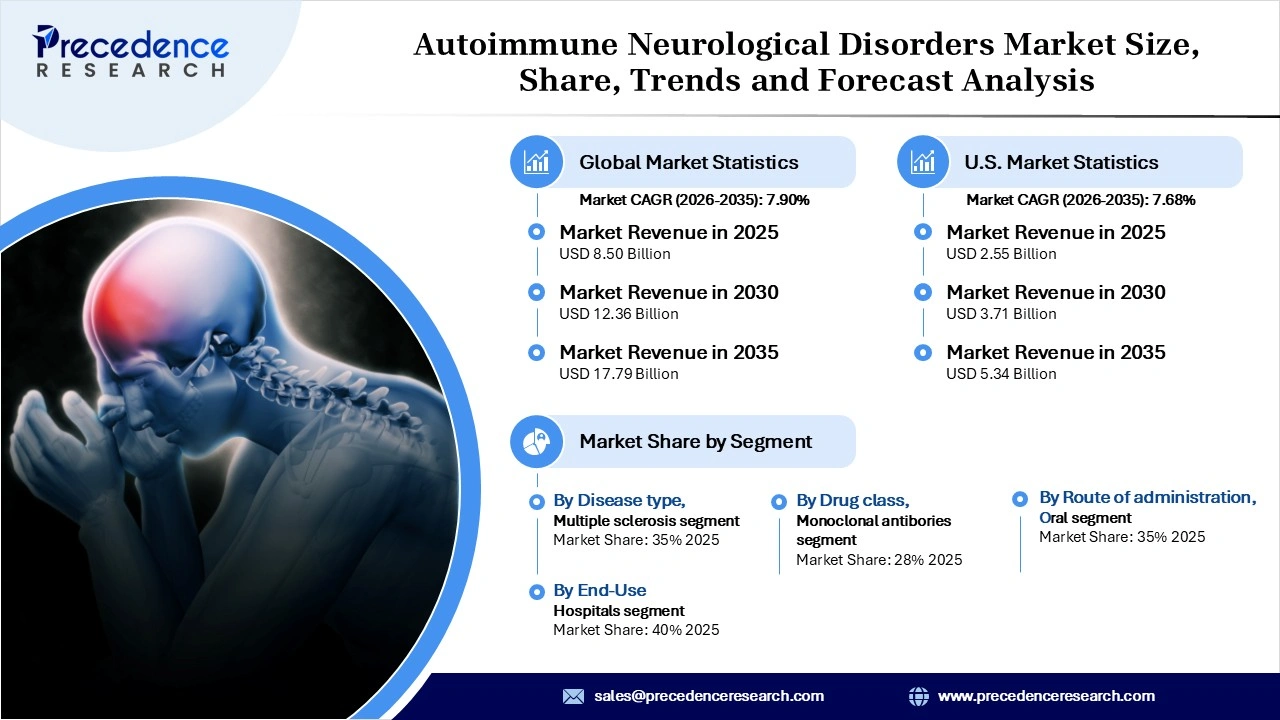
The global autoimmune neurological disorders market revenue was valued at USD 8.50 billion in 2025 and is expected to attain around USD 17.79 billion by 2035, growing at a CAGR of 7.90% during forecast period. The market is gaining commercial traction as rising diagnoses of conditions such as multiple sclerosis, neuromyelitis optica, and myasthenia gravis collide with a new generation of biologics, precision diagnostics, and long-acting immune therapies that are changing relapse management from reactive care to sustained disease control.
Market at a Glance
The autoimmune neurological disorders market consists of various therapeutic approaches, diagnostic tools, and supportive management methods used to treat diseases where the immune system mistakenly targets regions of the nervous system, such as the brain, spinal cord, peripheral nerves, or neuromuscular junction. The market represents a number of drugs and products, from biologics to immunosuppressants and monoclonal antibodies to plasma treatments and advanced neurodiagnostic techniques for various types of neurological diseases such as multiple sclerosis, myasthenia gravis, autoimmune encephalitis, and neuromyelitis optica spectrum disorder.
Rising clinical mindfulness and the development of neuroimmunology research are expanding therapeutic and commercial applications in this branch of the field. In addition, this market covers everything from essential high-value biologics and immune-modifying therapeutics to AI-empowered diagnostics and even longer-term disease management systems, such as biomarker testing. It now incorporates rare neuroimmune diseases and what’s needed for in-hospital infusion therapy; specialty neurology clinics; and novel cell therapies, making pathways to innovate in medicaments, and developing precision care of neurological diseases (more on the possibilities of pharmaceuticals) available to them.
Market Forecast for the Autoimmune Neurological Disorders Market
- Rising Global Disease Burden: The long-term commercial outlook for autoimmune neurological therapies remains closely tied to increasing disease prevalence and improved diagnosis rates. According to the World Health Organization, more than 1.8 million people worldwide are living with multiple sclerosis, with incidence rising particularly among young adults and women. Earlier diagnosis and broader MRI access are expected to sustain long-term demand for disease-modifying therapies and neurological monitoring tools.
- Rising Demand for AI-Based Biomarker Discovery: Artificial intelligence is beginning to reshape neuroimmunology research by helping scientists identify disease biomarkers and patient subtypes faster than traditional methods. A 2025 machine learning study analyzing multiple sclerosis datasets identified biologically relevant immune pathways linked to disease progression, including Th1/Th17 signaling and Epstein-Barr virus activity.
Rare Autoimmune Disorders are Attracting Premium-Priced Therapies
- US $ 379 million (worldwide sales): UPLIZNA, the Amgen therapy for rare diseases. These are classic examples of the journey of autoimmune neuro disorders, of how, as specialized diseases with limited uses evolve into well-established biologic franchises with long-term demand. Sales figures also demonstrate greater confidence among physicians that B-cell-targeted neuroimmune therapies are working better than ever before.
- Analysts foresee that UPLIZNA is expected to generate approx USD 1.3 billion in annual revenue by 2030 solely for IgG4-related disease, according to Reuters. This represents a sizable potential growth area based on the potential revenue stream for pharmaceutical companies in autoimmune neurology and associated immune disorders.
- This treatment, with a list price topping USD 140,000 per dose in the U.S., epitomizes the high cost of rare autoimmune neurological therapies and demonstrates the willingness of healthcare systems to afford expensive biologics intended for people with chronic neuroimmune conditions with high efficacy.
- FDA expansion of UPLIZNA into generalized myasthenia gravis strengthened the commercial outlook for autoimmune neurological therapies by broadening treatment eligibility across both AChR-positive and MuSK-positive patient populations, two clinically important autoimmune neuromuscular subgroups.
Market Segmentation Overview
- By disease type, the multiple sclerosis segment accounted for a considerable revenue share of 35% in the autoimmune neurological disorders market in 2025, due to the high prevalence of MS across North America and Europe. Strong adoption of disease-modifying therapies, along with growing demand for advanced diagnostic and therapeutic options expanding the availability of high-efficacy biologic therapies.
- By disease type, the neuromyelitis optica spectrum disorder (NMOSD) segment is expected to grow at the fastest CAGR of 8% in the market between 2026 and 2035, due to rising clinical recognition of NMOSD as a distinct autoimmune neurological disorder. The expanding use of monoclonal antibody therapies, improving antibody-based diagnostics, and increasing awareness and diagnosis among neurologists are anticipated to accelerate diagnosis rates and treatment adoption across global healthcare systems.
- By drug class, the monoclonal antibodies segment dominated the market with a 28% market share in 2025 and is expected to maintain its leading position with a CAGR of 10.5% in the coming years, due to the rising success of monoclonal antibody therapies for autoimmune diseases. Therapies such as eculizumab and rituximab gained substantial clinical adoption because of their targeted mechanisms and improved efficacy profiles. Expanding indications for monoclonal antibody use in neurological diseases further strengthened the segment’s commercial position.
- By route of administration, the oral segment held a major revenue share of 35% in the autoimmune neurological disorders market in 2025, because patients showed a stronger preference for convenient self-administered treatment options. Growing use of oral immunosuppressive and biologic therapies supported wider long-term adherence. The segment also benefited from increased availability of oral disease-modifying drugs with improved safety and efficacy profiles.
- By route of administration, the subcutaneous segment is steadily growing with a CAGR of 8% in the market between 2026 and 2035, due to the increasing use of subcutaneous biologics in outpatient settings. Rising demand for self-administration and ease of use are anticipated to accelerate the adoption of subcutaneous biologics. Expanding availability of subcutaneous treatment options in autoimmune neurology is also expected to support segment growth.
- By end-use, the hospitals segment accounted for a considerable revenue share of 40% in the market in 2025, due to high patient volume for autoimmune neurological disorders. Widespread administration of biologics and intravenous immunoglobulin within hospital settings sustained the segment’s leadership. Strong clinical adoption of advanced therapeutic regimens further reinforced hospital-based treatment adoption.
- By end-use, the homecare settings segment is expected to expand rapidly with a CAGR of 9% in the market during the forecast period, due to the growing adoption of home-based treatment models. Growing preference for self-administered therapies, rising telemedicine integration, and expanding remote patient monitoring capabilities are anticipated to support this transition.
Regional Analysis
North America dominated the global autoimmune neurological disorders market with a market share of 40% in 2025, due to the region’s high prevalence of diagnosed autoimmune neurological diseases. Strong clinical adoption of advanced biologic therapies and substantial investments in neurological healthcare infrastructure reinforced market leadership across the region. The United States accounted for the largest regional share because of rapid biologic commercialization and favorable reimbursement access, while Canada witnessed growing diagnosis rates supported by expanding neuroimmunology awareness programs and improved specialist neurological care networks.
Asia-Pacific held a market share of 18% in 2025 and is expected to grow at the fastest CAGR of 11.5% in the market during the forecast period, due to strong growth in health care spending and expansion in countries like China and India, leading the way in healthcare expenditure. Novel therapies, improved access to diagnostics, and lifestyle-related immune disorders should spur growing demand in this domain for biological therapies. This leads China, especially with large-scale healthcare system development and increased enthusiasm for neurology research, forward.
Autoimmune Neurological Disorders Market Coverage
| Report Attribute | Key Statistics |
| Market Revenue in 2025 | USD 8.50 Billion |
| Market Revenue by 2035 | USD 17.79 Billion |
| CAGR from 2026 to 2035 | 7.90% |
| Quantitative Units | Revenue in USD million/billion, Volume in units |
| Largest Market | North America |
| Base Year | 2025 |
| Regions Covered | North America, Europe, Asia-Pacific, Latin America, and the Middle East & Africa |
Top Companies in the Autoimmune Neurological Disorders Market
Biogen Inc continues to hold a strong position in multiple sclerosis therapeutics, while F. Hoffmann-La Roche Ltd. has expanded aggressively through high-efficacy biologics and progressive MS research. BTK inhibitors and immune response targeting are on the rise among companies like Novartis AG, Sanofi S.A., and Eli Lilly and Company. Alexion Pharmaceuticals, Inc. significantly contributes to the treatment of rare autoimmune neurological conditions with therapies that block complement pathways. In addition, AbbVie Inc., UCB Pharma, Mitsubishi Tanabe Pharma Corporation, ImmunoGen, Inc., and Roche Diagnostics are accelerating progress at the frontier of new biologics development, diagnostics for autoimmune diseases, and infrastructure for neuroimmune research.
Segments Covered in the Report
By Disease Type
- Multiple Sclerosis
- Neuromyelitis Optica Spectrum Disorder (NMOSD)
- Myasthenia Gravis
- Autoimmune Encephalitis
- Guillain-Barré Syndrome (GBS)
- Chronic Inflammatory Demyelinating Polyneuropathy (CIDP)
- Other Autoimmune Neurological Disorders
By Drug Class
- Immunomodulators
- Immunosuppressants
- Monoclonal Antibodies
- Corticosteroids
- Plasma Exchange (PLEX)
- Intravenous Immunoglobulin (IVIG)
- B-cell Depleting Therapies
- Other Targeted Therapies
By Route of Administration
- Oral
- Injectable
- Intravenous (IV)
- Subcutaneous
By End-use
- Hospitals
- Specialty Neurology Clinics
- Research & Academic Institutes
- Homecare Settings
By Region
- North America
- Latin America
- Europe
- Asia-pacific
- Middle and East Africa
Get this report to explore global market size, share, CAGR, and trends, featuring detailed segmental analysis and an insightful competitive landscape overview @ https://www.precedenceresearch.com/sample/8451
You can place an order or ask any questions. Please feel free to contact us at sales@precedenceresearch.com |+1 804 441 9344