



Autoimmune Neurological Disorders Market Size, Share, Trends, Companies, and Forecast 2026-2035
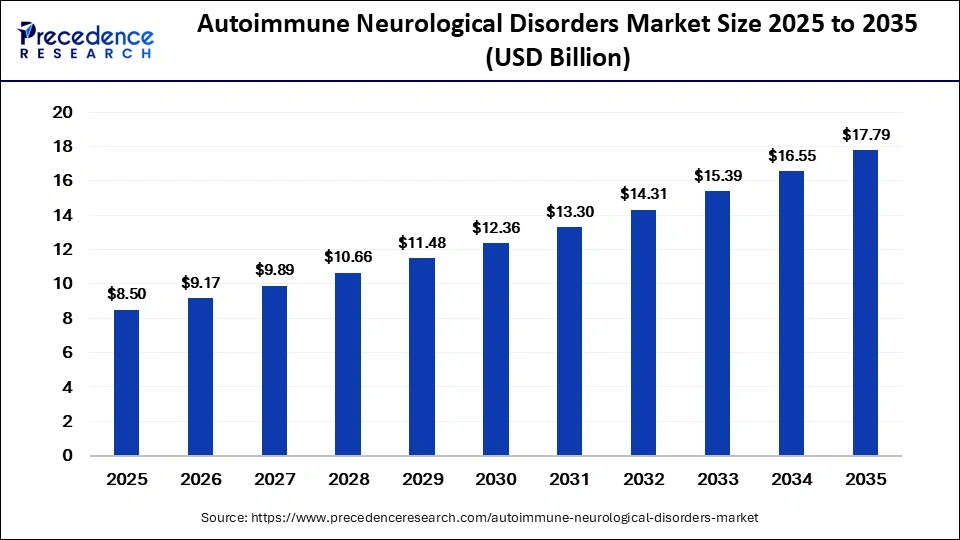
Deepa pandey, a Healthcare Industry Expert, highlights that the autoimmune neurological disorders market has reached USD 9.17 billion in 2026 and is on track to reach USD 17.79 billion by 2035, advancing at a CAGR of 7.90%. Key autoimmune neurological disorders market companies shaping the market include Biogen Inc., F. Hoffmann-La Roche Ltd., Novartis AG, Sanofi S.A., while major growth segments span By Disease Type, By Drug Class, By Route of Administration, By End-Use.
Source: https://www.precedenceresearch.com/autoimmune-neurological-disorders-market
 Get a Sample
 Table Of Content


What is the Autoimmune Neurological Disorders Market Size in 2026?
The global autoimmune neurological disorders market size is predicted to increase from USD 9.17 billion in 2026 to approximately USD 17.79 billion by 2035, expanding at a CAGR of 7.90% from 2026 to 2035. This market is accelerating as advancements in targeted, patient-friendly biologics and novel delivery systems transform the long-term management of autoimmune neurological diseases.
Key Takeaways
- North America dominated the global market with a share of 40% in 2026.
- Asia-Pacific is expected to grow at the fastest CAGR of 11.5% during the forecast period.
- By disease type, the multiple sclerosis segment contributed the highest autoimmune neurological disorders market share of 35% in 2026.
- By disease type, the neuromyelitis optica spectrum disorder (NMOSD) segment is expected to grow at the highest CAGR of 8% in the coming years.
- By drug class, the monoclonal antibodies segment held a major market share of 28% in 2026 and is expected to sustain its dominance with a CAGR of 10.5% over the studied period.
- By route of administration, the oral segment captured the highest market share of 35% in 2026.
- By route of administration, the subcutaneous segment is poised to grow at a healthy CAGR of 8% between 2026 and 2035.
- By end-use, the hospitals segment generated the biggest market share of 40% in 2026.
- By end-use, the homecare settings segment is expected to expand at the fastest CAGR of 9% between 2026 and 2035.
Autoimmune Neurological Disorders Market Overview
Autoimmune neurological disorders are a group of conditions in which the body's immune system mistakenly attacks healthy cells and tissues in the central or peripheral nervous system. The market focuses on early biomarker identification, symptom management, and slowing disease progression using immunosuppressants and targeted biologic therapies. Market growth is driven by an aging population and rising rates of conditions like multiple sclerosis and myasthenia gravis, and is rapidly expanding through advanced therapeutics and diagnostics for conditions where autoantibodies cause significant neurological damage, offering life-changing solutions worldwide.
Key AI Integration in the Autoimmune Neurological Disorders Industry
Artificial intelligence (AI) is transforming the market by enabling precision medicine, predictive diagnostics, and rapid drug discovery. AI algorithms analyze complex MRI and CT scans to detect subtle, early-stage neurological damage that might go undetected by the human eye. Pharmaceutical companies use AI to rapidly screen potential molecular interactions, test targeted combination therapies in virtual models, and repurpose existing drugs. AI clusters large patient cohorts based on their specific genetic and clinical profiles, guiding physicians in tailoring therapies to individual immune responses.
Autoimmune Neurological Disorders Market Trends
- Rise of Targeted Biologics and Biosimilars: Highly targeted monoclonal antibodies and biologics are dominating treatment by selectively blocking disease-causing pathways, while biosimilars are democratizing patient access by reducing treatment costs.
- Expansion of CAR-T Cell Therapy: Groundbreaking research is adapting chimeric antigen receptor CAR T-cell therapies to reset the patient's immune system, showing immense promise for inducing long-term remission in refractory neuro-autoimmune patients.
- AI-Driven Diagnostics: AI and advanced ML are radically improving the speed and accuracy of early diagnosis, detecting nuanced biomarker profiles and MRI signatures long before severe neurological damage occurs.
- Shift to Biomarker-Based Personalization: The market is increasingly relying on specific autoantibody panels and genetic profiling to predict disease progression and tailor therapeutic interventions to an individual patient's unique immune profile.
Market Dynamics
Drivers
Rising Prevalence and Early-Onset Incidence of Autoimmune Neurological Conditions
The escalating incidence of disorders like multiple sclerosis, myasthenia gravis, and other neuro-inflammatory diseases globally is driving market growth. Because these illnesses require rigorous, long-term therapeutic and diagnostic attention, this increasing patient pool, combined with a growing understanding of disease pathology, creates a continuous need for specialized neurological treatments and diagnostics.
Restraint
High Costs of Advanced Therapeutic and Diagnostic Complexity
A major drawback in the market is the steep financial burden associated with specialized treatments, including biologics and targeted immunotherapies. Furthermore, the complexity of these disorders, often characterized by overlapping symptoms, makes accurate, early diagnosis highly difficult and costly, which restricts overall patient accessibility in low-income regions.
Opportunity
Expansion of Precision Medicine and Biomarker Technologies
The market is well-positioned for expansion through the rapid development of targeted cell-based therapies and AI-assisted multiplex diagnostic platforms. The shift from broad, traditional immunosuppression toward precision medicine, backed by growing healthcare investments and supportive reimbursement policies in emerging economies, offers substantial avenues for sustained growth.
Segmental Insights
Disease Type Insights
The Multiple Sclerosis Segment Held 35% of Market Share in 2026
The multiple sclerosis segment generated approximately USD 2.98 billion in 2026 and is projected to reach nearly USD 5.87 billion by 2035, growing at a CAGR of 6.5% during the forecast period. The multiple sclerosis segment dominated the autoimmune neurological disorders market with a share of 35% in 2026. This growth is primarily attributed to the high uptake of expensive monoclonal antibodies, the increasing prevalence of the disease, and a strong pipeline of next-generation regenerative and symptom-management therapies. Blockbuster medications contribute billions in global sales and significantly inflate market value. Targeted immunosuppressants lead revenue in this drug class, as MS is a chronic, lifelong condition without a cure, necessitating continuous, long-term administration of disease-modifying therapies.
Autoimmune Neurological Disorders Market Share, By Disease Type, 2026-2035 (%)
| Disease Type | 2026 | 2035 | CAGR (%) |
| Multiple Sclerosis | 35.00% | 33.00% | 6.5% |
| Neuromyelitis Optica Spectrum Disorder (NMOSD) | 24.00% | 26.00% | 8.0% |
| Myasthenia Gravis | 12.00% | 10.00% | 5.2% |
| Autoimmune Encephalitis | 8.00% | 9.00% | 7.2% |
| Guillain-Barré Syndrome (GBS) | 7.00% | 6.00% | 5.0% |
| Chronic Inflammatory Demyelinating Polyneuropathy (CIDP) | 5.00% | 5.50% | 6.0% |
| Other Autoimmune Neurological Disorders | 9.00% | 11.00% | 7.5% |
The neuromyelitis optica spectrum disorder (NMOSD) segment generated approximately USD 2.04 billion in 2026 and is expected to reach around USD 4.63 billion by 2035, expanding at the fastest CAGR of 8.0% during the forecast period. The segment accounted for 24% of the market share in 2026. This growth is largely due to the recent launch of targeted monoclonal therapies and the widespread availability of specific biomarker tests. Previously, standard treatments were limited to off-label immunosuppressants and steroids, but the market has been boosted by FDA and EMA-approved biologics specifically for NMOSDs, suppressing autoimmune responses and significantly reducing relapse rates, making them highly valuable.
The myasthenia gravis segment generated approximately USD 1.02 billion in 2026 and is anticipated to reach nearly USD 1.78 billion by 2035, growing at a CAGR of 5.2%. The segment represented 12% of the market share in 2026. This growth can be attributed to an increase in targeted FDA approvals, an aging global population, and a shift towards profitable biologics over traditional therapies. The therapeutic landscape is moving away from conventional immunosuppressants and cholinesterase inhibitors. The approval and widespread adoption of novel biologics are commanding premium prices and driving strong market value, while improving awareness and advanced diagnostic criteria.
Drug Class Insights
The Monoclonal Antibodies Segment Led the Market with 28% of Market Share in 2026
The monoclonal antibodies segment generated approximately USD 2.38 billion in 2026 and is projected to reach nearly USD 6.05 billion by 2035, growing at a CAGR of 10.5%. The segment dominated the market with a 28% share in 2026. This increase is driven by the unique, targeted, and disease-altering efficacy of mAbs, along with continuous advancements in precision immunology and biopharmaceutical innovation. mAbs are highly engineered to bind to specific disease-causing antigens, such as CD20, CD52, and integrins, halting disease progression while minimizing the adverse effects commonly associated with traditional immunosuppressants. Today, fully human mAbs dominate the market due to their lower immunogenicity and improved safety profiles.
Autoimmune Neurological Disorders Market Share, By Drug Class, 2026-2035 (%)
| Drug Class | 2026 | 2035 | CAGR (%) |
| Immunomodulators | 22.00% | 20.00% | 6.8% |
| Immunosuppressants | 18.00% | 16.00% | 6.5% |
| Monoclonal Antibodies | 28.00% | 34.00% | 10.5% |
| Corticosteroids | 16.00% | 14.00% | 5.2% |
| Plasma Exchange (PLEX) | 8.00% | 6.00% | 7.0% |
| Intravenous Immunoglobulin (IVIG) | 6.00% | 5.50% | 5.5% |
| B-cell Depleting Therapies | 4.00% | 5.50% | 9.2% |
The immunomodulators segment generated approximately USD 1.87 billion in 2026 and is expected to reach around USD 3.56 billion by 2035, expanding at a CAGR of 6.8%. The segment accounted for 22% of the market share in 2026, This growth is facilitated by their targeted suppression of overactive immune cells and inflammation. Biologics in this category act as immunomodulators, interfering with specific inflammatory pathways to reduce relapses and neurological damage while maintaining higher specificity. The innovation of home-administered, injectable, and subcutaneous formulations allows patients to avoid lengthy clinic visits.
The immunosuppressants segment generated approximately USD 1.53 billion in 2026 and is projected to reach nearly USD 2.85 billion by 2035, growing at a CAGR of 6.5%. The segment represented 18% of the market share in 2026. This growth is primarily driven by their role as foundational disease-modifying therapies that prevent immune attacks on the nervous system. There is a growing reliance on targeted monoclonal antibodies and antiproliferative agents. Established immunosuppressive agents, such as azathioprine, mycophenolate, and calcineurin inhibitors, are long-standing treatments designed to disrupt the autoimmune processes affecting the central and peripheral nervous systems.
Route of Administration Insights
Autoimmune Neurological Disorders Market Share, By Route of Administration, 2026-2035 (%)
| Route of Administration | 2026 | 2035 | CAGR (%) |
| Oral | 35.00% | 38.00% | 7.2% |
| Injectable | 28.00% | 24.00% | 6.8% |
| Intravenous (IV) | 26.00% | 28.00% | 7.5% |
| Subcutaneous | 11.00% | 10.00% | 8.0% |
The Oral Segment Held the Largest Market Share of 35% in 2026
The oral segment generated approximately USD 2.98 billion in 2026 and is projected to reach nearly USD 6.76 billion by 2035, growing at a CAGR of 7.2%. The segment dominated the market with a 35% share in 2026. This dominance is mainly due to enhanced patient compliance and comfort associated with long-term treatment. The shift from invasive parenteral therapies to oral pills and capsules directly improves treatment consistency. Research and development have rapidly progressed towards oral small-molecule inhibitors that specifically target neurological and autoimmune pathways. Additionally, oral generic drugs are relatively straightforward and cost-effective to manufacture, making them widely accessible in global healthcare systems.
The injectable segment generated approximately USD 2.38 billion in 2026 and is expected to reach around USD 4.27 billion by 2035, expanding at a CAGR of 6.8%. The segment accounted for 28% of the market share in 2026. This growth is attributed to the rise of targeted biologic therapies and a shift toward patient-friendly, at-home self-administration devices. The increasing popularity of injectable treatments is significantly supported by the rising demand for prefilled syringes and smart autoinjectors. These devices enable patients with chronic autoimmune conditions to manage their treatments independently at home, reducing the need for frequent hospital visits ensures immediate and effective disease management.
The subcutaneous segment generated approximately USD 0.94 billion in 2026 and is expected to reach around USD 1.78 billion by 2035, growing at the fastest CAGR of 8.0%. The segment accounted for 11% of the market share in 2026. This growth is driven by the convenience for patients with chronic autoimmune conditions to administer medications at home or in outpatient settings, thereby reducing the need for frequent, time-consuming hospital visits. Pharmaceutical companies are actively transitioning standard intravenous biologic treatments to SC formulations, which reduces healthcare facilities' burden and lowers systemic delivery costs for the consistent administration of larger-volume medications.
The intravenous segment generated approximately USD 2.21 billion in 2026 and is projected to reach nearly USD 4.98 billion by 2035, registering a CAGR of 7.5%. The segment represented 26% of the market share in 2026. This segment is crucial in treating acute neurological crises and relies heavily on intravenous immunoglobulin as a primary treatment. Many autoimmune neurological conditions require IV administration because it delivers high, immediate therapeutic doses directly into the bloodstream. Due to the complexity of many neurological biologics and IVIG concentrates, medical supervision is typically required, making hospital pharmacies the primary sales channels for managing neuroinflammation.
End-Use Insights
The Hospitals Segment Dominated the Market with 40% of Market Share in 2026
The hospitals segment generated approximately USD 3.40 billion in 2026 and is projected to reach nearly USD 6.76 billion by 2035, growing at a CAGR of 6.2%. The segment dominated the market with a 40% share in 2026. This results from the advanced diagnostic infrastructure, multidisciplinary care teams, and comprehensive reimbursement networks for managing complex neurological cases. Such conditions necessitate intricate testing, such as lumbar punctures, MRI scans, and autoantibody panels. These are equipped with the capital resources to support these high-tech systems and in-house laboratories. They serve as central hubs for coordinated care from immunologists, neurologists, and specialized nursing staff who provide intensive management.
The specialty neurology clinics segment generated approximately USD 2.55 billion in 2026 and is expected to reach around USD 5.69 billion by 2035, expanding at a CAGR of 8.5%. The segment accounted for 30% of the market share in 2026. This growth is due to the provision of highly specialized diagnostic, therapeutic, and long-term management services for complex, antibody-driven conditions. The intricate nature of neural autoantibodies requires expertise in neuro-immunology, which specialty clinics provide through integrated care from neurologists, psychiatrists, and physical rehabilitation therapists in a single location for controlling immune attacks on the nervous system.
Autoimmune Neurological Disorders Market Share, By End-Use, 2026-2035 (%)
| End-Use | 2026 | 2035 | CAGR (%) |
| Hospitals | 40.00% | 38.00% | 6.2% |
| Specialty Neurology Clinics | 30.00% | 32.00% | 8.5% |
| Research & Academic Institutes | 12.00% | 11.00% | 6.5% |
| Homecare Settings | 8.00% | 10.00% | 9.0% |
| Rehabilitation Centers | 10.00% | 9.00% | 5.2% |
The homecare settings segment generated approximately USD 0.68 billion in 2026 and is expected to reach around USD 1.78 billion by 2035, registering the fastest CAGR of 9.0%. The segment accounted for 8% of the market share in 2026. This trend is driven primarily by a shift toward patient-centric care, reduced healthcare costs, and the availability of advanced remote monitoring systems that allow for safe management of chronic conditions from home. The integration of telehealth and wearable devices enables healthcare professionals to monitor disease progression and treatment adherence in real time, significantly diminishing the need for routine hospital visits.
The research and academic institutes segment generated approximately USD 1.02 billion in 2026 and is projected to reach nearly USD 1.96 billion by 2035, growing at a CAGR of 6.5%. The segment represented 12% of the market share in 2026. This segment plays a crucial role in early-stage disease pathology, biomarker discovery, and clinical trial initiatives. These institutions conduct fundamental research that identifies specific autoantibodies and biomarkers associated with neurological conditions, paving the way for the development of novel therapeutics. Significant funding from government bodies and non-profit organizations sustains demand in this research area.
Regional Insights
North America Autoimmune Neurological Disorders Market Size and Growth 2026 to 2035
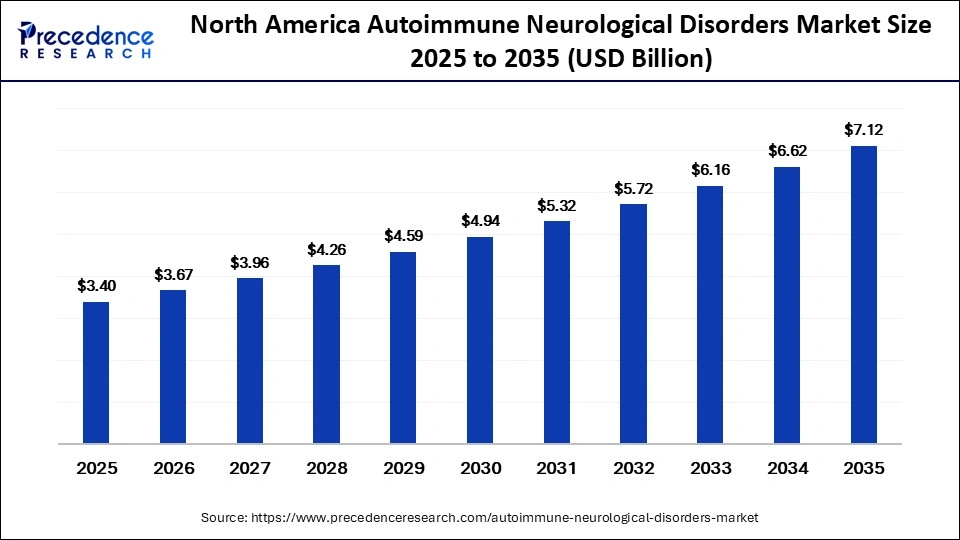
The North America autoimmune neurological disorders market size was exhibited at USD 3.67 billion in 2026 and is projected to be worth around USD 7.12 billion by 2035, growing at a CAGR of 7.67% from 2026 to 2035.
Which Factors Supported North America's Dominance in the Autoimmune Neurological Disorders Market?
North America dominated the market with a major share of 40% in 2026. The region's dominance is supported by its advanced healthcare infrastructure, high prevalence of diseases, strong reimbursement policies, and significant investments in neurological research. The region exhibits a high incidence of autoimmune neurological conditions, such as multiple sclerosis and neuromyelitis optica, particularly among growing geriatric and female patient demographics. Comprehensive insurance coverage encourages patients to seek early diagnoses and utilize costly biologic and targeted therapies, accelerating therapeutic innovation.
U.S. Autoimmune Neurological Disorders Market Size and Growth 2026 to 2035
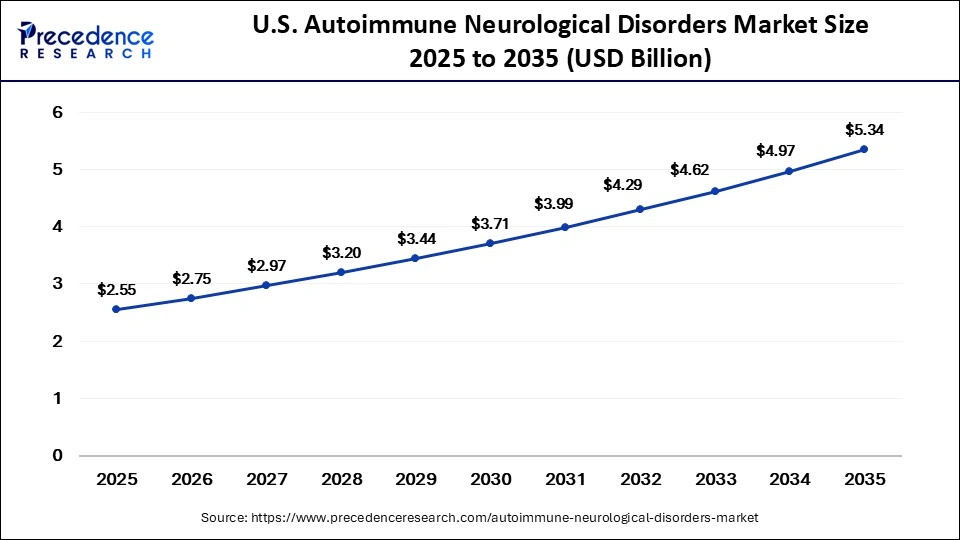
The U.S. autoimmune neurological disorders market size was evaluated at USD 2.75 billion in 2026 and is projected to reach around USD 5.34 billion by 2035, growing at a CAGR of 7.68% from 2026 to 2035.
U.S. Market Trends
The U.S. is a major contributor to the North American market, supported by billion-dollar annual investments from the National Institutes of Health and substantial development in AI and precision medicine. This growth is further bolstered by pioneering initiatives like the AXIS Registry for rare neurological diseases and the Accelerated Cure Project, which harnesses AI to transform treatments for multiple sclerosis.
How is Asia-Pacific Growing in the Autoimmune Neurological Disorders Market?
Asia-Pacific held 18% of the market share in 2026 and is expected to experience the fastest growth with a CAGR of 11.5% during the predicted timeframe. This is driven by large, previously underserved patient populations, an expanding geriatric demographic, and increasing healthcare expenditures. The rapid shift towards advanced, targeted therapies with a rising preference for cost-effective biosimilars and generic treatment alternatives in emerging markets such as India and China. Developing nations are upgrading their clinical facilities, expanding specialized care centers, and adopting advanced testing technologies.
India Market Trends
India is rapidly evolving from a traditional manufacturing base into a global innovation-led health hub. This transformation is spurred by significant drug launches, the integration of artificial intelligence (AI), and the establishment of advanced rehabilitation centers. Initiatives like NITI Aayog are pioneering therapeutics, robotics, and indigenous MedTech, which are transforming care for chronic and neurological conditions across the country through extensive biosimilar production.
How is the Opportunistic Rise of Europe in the Autoimmune Neurological Disorders Market?
Europe held a 32% market share in 2026 and is expected to grow at a notable CAGR of 7% during the projection period. This growth is largely fueled by an aging population, environmental triggers, increased awareness, and heightened healthcare investments. The rising prevalence of autoimmune diseases in Europe is often linked to Western diets, processed foods, reduced sunlight exposure, and urban air pollution. European laboratories are increasingly adopting highly sensitive multiplex biomarker and AI-driven diagnostic platforms to detect complex neuro-immune markers with greater accuracy.
Germany Market Trends
Germany is positioning itself as Europe's leading hub for autoimmune neurology by leveraging its robust healthcare system and research strength, exemplified by Charite, Universitatsmedizin Berlin. Through initiatives like the DFG-funded BecauseY unit and pioneering CAR-T cell therapies at Uniklinikum Erlangen and Ruhr-University Bochum, the country is shifting focus from merely managing symptoms to curing rare conditions.
What Drives the Autoimmune Neurological Disorders Market in Latin America?
Latin America held a 6% share of the market in 2026 and is expected to grow at a CAGR of 6% in the coming years. This is mainly due to the growing prevalence of autoimmune neurological diseases. Growing awareness regarding disease and enhanced diagnostic capabilities are leading to early detection in various countries in the region. The rising demand for biologics, monoclonal antibodies, and immunotherapeutic medications is also driving the market in the region.
Brazil Market Trends
Brazil represents one of the leading markets for autoimmune neurological disorders in Latin America, driven by the rising prevalence of autoimmune neurological diseases and increasing demand for specialized treatment options. Government initiatives aimed at strengthening public healthcare services and improving access to neurological care are supporting market growth. Additionally, growing investments in pharmaceutical research and development are fostering the development of innovative therapies and more affordable treatment solutions, further boosting the market.
How is the Middle East & Africa Growing in the Autoimmune Neurological Disorders Market?
The Middle East & Africa held a 4% share of the market in 2026 and is expected to grow at a strong CAGR of 8% in the upcoming years. This growth is being supported by technological advancements, increasing research and development activities, and ongoing improvements in healthcare infrastructure across the region. Enhanced access to healthcare services is facilitating earlier diagnosis and treatment of complex neurological conditions, while advanced diagnostic and therapeutic approaches for disorders such as Multiple Sclerosis and Autoimmune Encephalitis are gaining wider adoption.
Saudi Arabia Market Trends
Saudi Arabia is emerging as a significant market for autoimmune neurological disorders due to rising healthcare expenditures and growing awareness of neurological diseases. The country's ongoing healthcare transformation initiatives under Saudi Vision 2030 have strengthened diagnostic and treatment capabilities, improving patient access to specialized neurological care. Furthermore, hospitals and specialty clinics are increasingly adopting advanced diagnostic technologies to support early disease detection and improve long-term patient management outcomes.
Competitive Landscape
The autoimmune neurological disorders market is moderately fragmented, with a mix of established pharmaceutical companies and biotechnology firms competing through innovative immunology and neurology-focused therapies. Major players such as Roche, Novartis, Biogen, Pfizer, and Sanofi are strengthening their market positions through biologics, monoclonal antibodies, and precision medicine approaches. Strategic collaborations are also shaping the competitive landscape.
- For instance, in January 2026, Repertoire Immune Medicines announced a collaboration focused on developing tolerizing therapies for autoimmune diseases using its DECODE platform.
As competition intensifies, companies are expected to increase investments in next-generation immunotherapies, support earlier disease diagnosis, and expand research into the relationship between the immune system and neurological disorders. Organizations that successfully combine AI-driven research, precision medicine, and targeted therapeutic development are likely to gain a significant competitive advantage in the market.
Autoimmune Neurological Disorders Market Companies
- Biogen Inc.
- F. Hoffmann-La Roche Ltd.
- Novartis AG
- Sanofi S.A.
- Eli Lilly and Company
- Merck KGaA
- Teva Pharmaceutical Industries Ltd.
- AstraZeneca PLC
- Bristol-Myers Squibb
- ImmunoGen, Inc.
- Alexion Pharmaceuticals, Inc.
- AbbVie Inc.
- UCB Pharma
- Mitsubishi Tanabe Pharma Corporation
- Roche Diagnostics
Recent Developments
- In May 2026, Kyverna Therapeutics initiated a rolling BLA submission for miv-cel in treating Stiff Person Syndrome, following positive feedback from the FDA on a single-arm trial. This milestone marks Kyverna as the first company to file for an autoimmune CAR T therapy, with hopes of a launch in 2027 as it aims to establish a leading neuroimmunology franchise promising durable, drug-free remission for patients. (Source: https://www.globenewswire.com)
- In April 2026, Alira Health and the Autoimmune Neurology Alliance (AiNA) launched the AXIS Registry to revolutionize autoimmune neurological care, particularly for myasthenia gravis (MG). By bringing together patients and clinicians, this shared platform captures real-world data to optimize treatments, accelerate essential research, and empower patients to actively influence their healthcare journeys.(Source: https://www.biospace.com)
- In December 2025, the European Commission approved Johnson & Johnson's IMAAVY (nipocalimab) as a new add-on therapy for generalized myasthenia gravis. Supported by phase 3 clinical trials, this first-in-class FcRn blocker provides adolescents and adults with targeted, long-lasting symptom control by reducing the autoantibodies responsible for the condition. (Source: https://www.jnj.com)
Segments Covered in the Report
By Disease Type
- Multiple Sclerosis
- Neuromyelitis Optica Spectrum Disorder (NMOSD)
- Myasthenia Gravis
- Autoimmune Encephalitis
- Guillain-Barré Syndrome (GBS)
- Chronic Inflammatory Demyelinating Polyneuropathy (CIDP)
- Other Autoimmune Neurological Disorders
By Drug Class
- Immunomodulators
- Immunosuppressants
- Monoclonal Antibodies
- Corticosteroids
- Plasma Exchange (PLEX)
- Intravenous Immunoglobulin (IVIG)
- B-cell Depleting Therapies
- Other Targeted Therapies
By Route of Administration
- Oral
- Injectable
- Intravenous (IV)
- Subcutaneous
By End-use
- Hospitals
- Specialty Neurology Clinics
- Research & Academic Institutes
- Homecare Settings
By Region
- North America
- Latin America
- Europe
- Asia-Pacific
- Middle East and Africa
For inquiries regarding discounts, bulk purchases, or customization requests, please contact us at sales@precedenceresearch.com
Frequently Asked Questions





Ask For Sample
No cookie-cutter, only authentic analysis – take the 1st step to become a Precedence Research client
 Get a Sample
.webp)



 sales@precedenceresearch.com
 Schedule a Meeting
