



Stem Cell Therapy for Neurological Disorders Market Size, Share, Trends, Companies, and Forecast 2026-2035
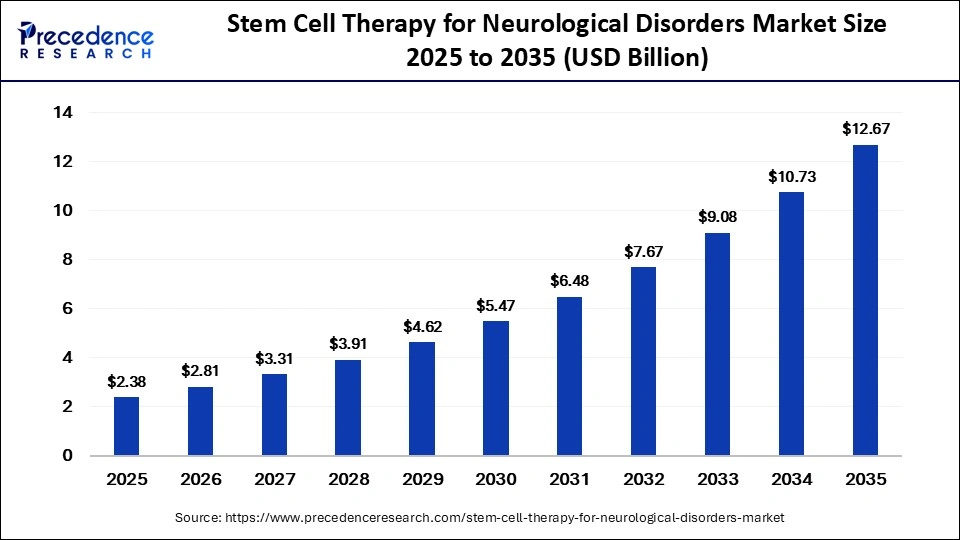
Deepa Pandey, a Healthcare Industry Expert, highlights that the stem cell therapy for neurological disorders market has reached USD 2.81 billion in 2026 and is on track to reach USD 12.67 billion by 2035, advancing at a CAGR of 17.90%. Key stem cell therapy for neurological disorders market companies shaping the market include BrainStorm Cell Therapeutics, Mesoblast, ReNeuron Group, while major growth segments span By Cell Type, By Disorder Type, By Therapy Type, By End-Use, By Route of Administration.
Source: https://www.precedenceresearch.com/stem-cell-therapy-for-neurological-disorders-market
 Get a Sample
 Table Of Content


Stem Cell Therapy for Neurological Disorders Market Size and Forecast 2026 to 2035
The global stem cell therapy for neurological disorders market size is predicted to increase from USD 2.81 billion in 2026 to approximately USD 12.67 billion by 2035, expanding at a CAGR of 17.90% from 2026 to 2035. The market is driven by technological advances in stem cell therapy manufacturing, a growing number of clinical trials, and the rising prevalence of neurological disorders.
Key Takeaways
- North America led the stem cell therapy for neurological disorders market in 2026 with a 41% share.
- Asia Pacific is expected to grow at the fastest CAGR of 21.4% between 2026 and 2035.
- By cell type, the mesenchymal stem cells (MSCs) segment led the market with a 42% share in 2026.
- By cell type, the induced pluripotent stem cells (iPSCs) segment is expected to grow at the fastest CAGR of 22.4% in the upcoming period.
- By disorder type, the Alzheimer's disease segment held a market share of 24% in 2026 and is expected to grow at the fastest CAGR of 19.6% during the projection period.
- By therapy type, the allogeneic stem cell therapy segment accounted for the highest share of 61% in 2026 and is expected to grow at the fastest CAGR of 19.1% in the foreseeable period.
- By end-use, the hospitals segment held the largest market share of 44% in 2026.
- By end-use, the regenerative medicine centers segment is expected to grow at the fastest CAGR of 19.4% between 2026 and 2035.
- By route of administration, the intrathecal segment held the largest market share of 38% in 2026 and is expected to expand at the fastest CAGR of 19.3% in the coming years.
Market Overview
The stem cell therapy for neurological disorders market revolves around the use of stem cells that can transform into various types of cells, including human neural stem cells, for the treatment of diseases or damaged tissues. These stem cells can self-renew and differentiate into specialized cells, making them an excellent candidate for treating neurological conditions. Their therapeutic potential includes a range of applications in neurological diseases, including immunomodulation, cell replacement, paracrine signaling, and stimulation of natural repair mechanisms. Due to their effectiveness, stem cell-based therapies are emerging as a promising option to treat a range of neurological diseases.
Impact of Artificial Intelligence on the Stem Cell Therapy for Neurological Disorders Market
Artificial intelligence has ushered in exciting new opportunities for research in stem cell therapy. Its potential to enhance and speed up advancements in various facets of stem cell research and therapeutic applications is significant. AI can optimize the design of nanobiological materials for improving stem cell survival rates, targeted delivery, differentiation, and control of loaded medication release. In the future, AI may have a pivotal role in post-transplant monitoring and prognosis management of neurological disorders.
Stem Cell Therapy for Neurological Disorders Market Trends
- Precision Delivery Technology: Growing adoption of advanced technologies such as 3D bioprinting, nanocarriers, and scaffold-based delivery systems is improving the precision of stem cell delivery and enhancing tissue integration efficiency.
- Targeted Injection Therapy: Direct stem cell injection techniques are gaining traction due to their ability to enable precise tissue repair and improve therapeutic outcomes, particularly in neurological disorders.
- Combination Therapy Advancement: Combination stem cell therapies are emerging as a key trend, where supportive bioactive agents are used alongside stem cells to enhance treatment efficacy and improve clinical outcomes.
Market Dynamics
Drivers
Technological Advancements
Technological advancements such as 3D bioprinting, nanocarriers, and advanced scaffold systems are improving the precision, survival, and targeted delivery of stem cells to affected neural tissues. These innovations enhance cell integration and functional recovery, thereby increasing the clinical effectiveness and adoption of stem cell therapies for neurological disorders. Moreover, the rising prevalence of neurological disorders, expanding clinical research activities, and increasing biotechnological investment are driving market growth.
Restraint
Economic and Compliance Challenges
High treatment costs and limited affordability continue to restrict patient access to stem cell therapies. In addition, strict regulatory requirements, lengthy approval timelines, and complex clinical validation processes can slow investment and limit the overall growth of the stem cell therapy market for neurological disorders.
Opportunity
Universal Donor and Preservation-Driven Opportunities
Growing research on universal donor stem cells and immune response suppression technologies is creating significant opportunities in the stem cell therapy for neurological disorders market. In addition, increasing adoption of stem cell preservation and advances in regenerative medicine are expected to drive future therapeutic innovation and expand long-term treatment potential.
Market Segmentation Analysis
Cell Type Insights
Stem Cell Therapy for Neurological Disorders Market Share, By Cell Type, 2026-2035 (%)
| Cell Type | 2026 | 2035 | CAGR (%) |
| Mesenchymal Stem Cells (MSCs) | 42.00% | 40.00% | 16.9% |
| Neural Stem Cells (NSCs) | 24.00% | 25.00% | 18.8% |
| Induced Pluripotent Stem Cells (iPSCs) | 18.00% | 23.00% | 22.4% |
| Hematopoietic Stem Cells (HSCs) | 11.00% | 8.00% | 13.8% |
| Embryonic Stem Cells (ESCs) | 5.00% | 4.00% | 14.9% |
The MSCs Segment Led the Market in 2026 With a 42% Share
The mesenchymal stem cells (MSCs) segment held the largest share of 42% in the stem cell therapy for neurological disorders market in 2026. This is mainly due to their remarkable anti-inflammatory properties. These cells are crucial in regenerative medicine due to their advantages such as self-renewal, pluripotency, and immunomodulatory capabilities. The increased clinical trial activities and simple manufacturing process of MSCs further supported segmental dominance.
The neural stem cells (NSCs) segment held the second-largest market share of 24% in 2026, fueled by advancements in central nervous system (CNS) repair research. These multipotent cells possess the unique ability to self-renew and proliferate indefinitely, differentiating into neurons, astrocytes, and oligodendrocytes. Their potential for direct neuronal regeneration and the growing field of cell replacement therapies are driving their adoption.
The induced pluripotent stem cells (iPSCs) segment held around 18% market share in 2026 and is projected to expand at the fastest CAGR of 22.4% during the forecast period, owing to innovation in personalized medicine. iPSCs are amenable to genetic engineering, capable of differentiating into a wide range of somatic cell types, and able to expand almost indefinitely. The growth of this segment is driven by growing applications in disease modelling and increasing interest in regenerative neurology research.
Disorder Insights
The Alzheimer's Disease Segment Held a 24% Market Share in 2026
The Alzheimer's disease segment led the stem cell therapy for neurological disorders market with a 24% share in 2026 and is anticipated to grow at the fastest CAGR of 19.6% during the forecast period. This is mainly due to the increasing global burden of dementia, as Alzheimer's disease accounts for approximately 50%-70% of dementia cases worldwide. Additionally, promising preclinical studies indicate that therapies involving the replacement of neural cells derived from embryonic and induced pluripotent stem cells (iPSCs) could offer effective treatment for patients with Alzheimer's disease. The rise in regenerative medicine research further bolsters this segment.
Stem Cell Therapy for Neurological Disorders Market Share, By Disorder Type, 2026-2035 (%)
| Disorder Type | 2026 | 2035 | CAGR (%) |
| Alzheimer's Disease | 24.00% | 27.00% | 19.6% |
| Parkinson's Disease | 21.00% | 22.00% | 18.4% |
| Amyotrophic Lateral Sclerosis (ALS) | 12.00% | 12.00% | 17.8% |
| Multiple Sclerosis | 14.00% | 12.00% | 15.9% |
| Stroke | 17.00% | 16.00% | 17.2% |
| Spinal Cord Injury | 8.00% | 8.00% | 18.6% |
| Others | 4.00% | 3.00% | 15.1% |
The Parkinson's disease segment held around 21% share of the market in 2026 and is projected to grow with a CAGR of 18.4% in the coming years, driven by the rising prevalence of movement disorders and robust research into neuronal replacement therapies. Stem cell therapy for Parkinson's disease utilizes pluripotent cells that differentiate into neural cells, facilitating neuronal replacement and the restoration of brain function. The increasing number of dopaminergic stem cell programs and heightened activity in clinical trials are key factors supporting this segment's growth.
The amyotrophic lateral sclerosis (ALS) segment held about 12% market share in 2026 and is expected to grow at a CAGR of 17.8% from 2026 to 2035, driven by the rising approvals of cell therapies and ongoing studies. ALS is a neurodegenerative disease that affects motor neurons in the cortex, brainstem, and spinal cord, leading to progressive muscle weakness, atrophy, respiratory failure, and ultimately, death. The expanding research focused on neuroprotection is a crucial factor driving this segment's growth.
Therapy Type Insights
Stem Cell Therapy for Neurological Disorders Market Share, By Therapy Type, 2026-2035 (%)
| Therapy Type | 2026 | 2035 | CAGR (%) |
| Allogeneic Stem Cell Therapy | 61.00% | 65.00% | 19.1% |
| Autologous Stem Cell Therapy | 39.00% | 35.00% | 15.8% |
Why Did the Allogeneic Stem Cell Therapy Segment Dominated the Market in 2026?
The allogeneic stem cell therapy segment dominated the stem cell therapy for neurological disorders market, holding a 61% share in 2026, and is anticipated to grow at the fastest CAGR of 19.1% from 2026 to 2035. This is mainly due to lower risks of immune rejection associated with this therapy, which makes it the preferred option. Allogeneic stem cell transplants work by replacing unhealthy stem cells in the bone marrow with healthy cells from a donor. The strong clinical acceptance of this treatment for certain disorders is driving its adoption.
In 2026, the autologous stem cell therapy held approximately 39% share of the market and is expected to grow at a CAGR of 15.8% in the upcoming years, supported by the availability of off-the-shelf treatments and the ease of large-scale commercialization. Autologous stem cell therapy utilizes healthy blood stem cells from an individual's own body to replace malfunctioning bone marrow. The expansion of this segment is further supported by reduced manufacturing turnaround times and increasing investments in biotechnology.
End-Use Insights
What Made Hospitals the Leading Segment in the Market in 2026?
In 2026, the hospitals segment led the stem cell therapy for neurological disorders market with a 44% share. This is mainly due to the widespread and easy availability of advanced neurological treatments, including stem cell therapies, in these facilities. The rise of stem cell therapy programs and the expansion of specialty neurology departments have contributed to robust patient treatment volumes and enhanced reimbursement support.
Stem Cell Therapy for Neurological Disorders Market Share, By End-Use, 2026-2035 (%)
| End-Use | 2026 | 2035 | CAGR (%) |
| Hospitals | 44.00% | 41.00% | 16.8% |
| Specialty Neurology Clinics | 21.00% | 22.00% | 18.5% |
| Research Institutes & Academic Centers | 25.00% | 26.00% | 18.2% |
| Regenerative Medicine Centers | 10.00% | 11.00% | 19.4% |
The specialty neurology clinics segment held around 21% market share in 2026 and is projected to grow at a CAGR of 18.5% during the forecast period. The growth of the segment is mainly driven by the increasing demand for targeted neurological care and a greater adoption of regenerative therapies, alongside the rise of outpatient treatment models and the expansion of specialty centers.
The regenerative medicine centers segment accounted for approximately 10% of the market share in 2026 and is anticipated to expand at the fastest CAGR of 19.4% from 2026 to 2035. This growth is supported by the growing commercialization of stem cell therapies, heightened patient awareness about the benefits of regenerative medicines, and the expansion of specialized regenerative facilities.
Route of Administration Insights
Stem Cell Therapy for Neurological Disorders Market Share, By Route of Administration, 2026-2035 (%)
| Route of Administration | 2026 | 2035 | CAGR (%) |
| Intrathecal | 38.00% | 40.00% | 19.3% |
| Intravenous | 34.00% | 30.00% | 15.9% |
| Intracerebral | 20.00% | 22.00% | 18.7% |
| Others | 8.00% | 8.00% | 15.4% |
The Intrathecal Segment Dominated the Market With a 38% Share in 2026
The intrathecal segment dominated the stem cell therapy for neurological disorders market in 2026 by holding a 38% share and is expected to grow at the fastest CAGR of 19.3% during the forecast period. This is mainly due to the advantages of direct delivery to the central nervous system (CNS). This segmental growth is bolstered by an increase in studies focused on ALS and spinal cord injuries, enhanced therapeutic targeting, and greater clinical adoption.
The intravenous segment held approximately 34% of the market share in 2026 and is anticipated to grow at a CAGR of 15.9% in the coming years, driven by its minimally invasive administration and wide applicability across various disorders. The established clinical workflows and reduced procedural complexity further support this method of administration.
The intracerebral segment captured a 20% share of the market in 2026 and is projected to grow at a CAGR of 18.7% in the upcoming years, due to its precise neuronal delivery capabilities. This segment is benefiting from an increase in programs focused on Parkinson's disease and a rise in brain repair applications. Additionally, the expansion of advanced neurosurgical procedures is expected to further promote this market segment.
Market Regional Analysis: North America, Europe, Asia-Pacific
North America Stem Cell Therapy for Neurological Disorders Market Size and Growth 2026 to 2035
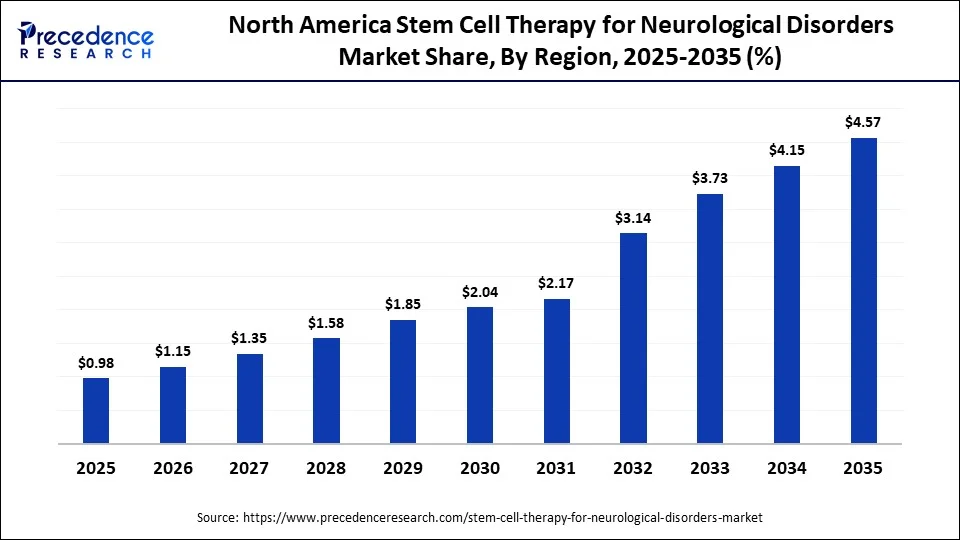
The North America stem cell therapy for neurological disorders market size was exhibited at USD 1.15 billion in 2026 and is projected to be worth around USD 4.57 billion by 2035, growing at a CAGR of 16.20% from 2026 to 2035.
North America Held a 41% Share of the Market in 2026
North America dominated the stem cell therapy for neurological disorders market while holding a major share of 41% in 2026. The region's dominant position is attributed to an increase in GMP-certification approvals for stem therapy production facilities, a burgeoning biotechnology sector, and a rise in clinical trials focused on stem-cell-based therapies. Additionally, robust funding for regenerative medicine and a high concentration of clinical trials further bolster this dominance.
U.S. Stem Cell Therapy for Neurological Disorders Market Size and Growth 2026 to 2035
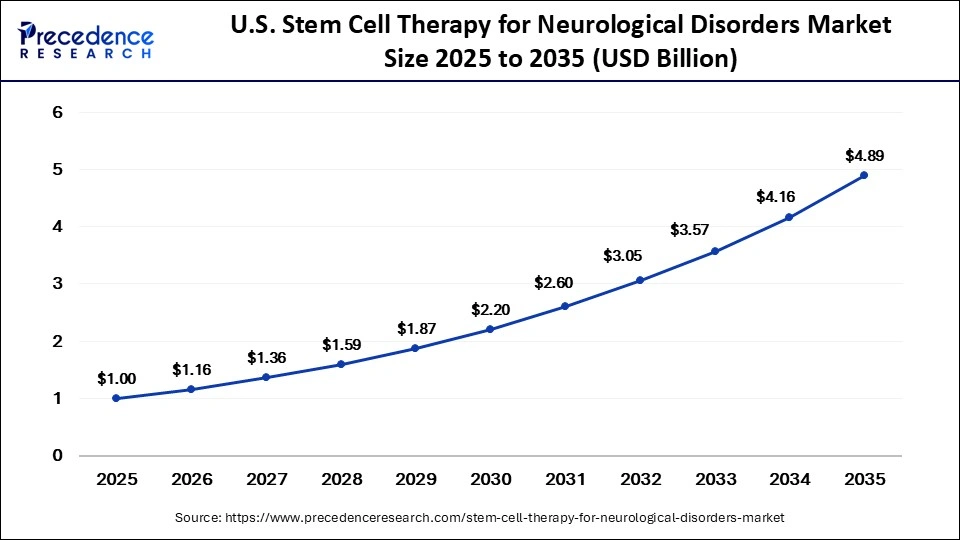
The U.S. stem cell therapy for neurological disorders market size was evaluated at USD 1.16 billion in 2026 and is projected to reach around USD 4.89 billion by 2035, growing at a CAGR of 16.35% from 2026 to 2035.
U.S. Market Analysis
The U.S. leads the North American stem cell therapy for neurological disorders market, owing to the FDA's RMAT designation program, which has notably sped up the approval timelines for cell-based therapies. Additionally, supportive FDA frameworks, fast-track approvals, and growing backing for advanced therapy medicinal products are fostering the market's growth.
Europe: The Second-Largest Market
Europe is considered the second-largest market for stem cell therapy for neurological disorders, holding a 27% market share in 2026. The region is projected to expand at a CAGR of 16.8% in the upcoming years, supported by rising investments in biotechnology infrastructure, along with increased funding from government and institutional sources. There is significant government backing for stem cell therapy research, coupled with a rising burden of neurodegenerative diseases. Furthermore, a robust academic research ecosystem is enhancing the regional market.
Germany Market Analysis
Germany is thriving in the stem cell therapy for neurological disorders market, with regulatory support and innovation playing a crucial role in shaping the future of stem cell therapy. Additionally, growing collaboration between research institutions and private companies is boosting the development of stem cell therapies for neurological disorders.
Asia Pacific: The Fastest-Growing Region
Asia Pacific held a 24% share of the market in 2026 and is projected to expand at the fastest CAGR of 21.4% throughout the forecast period. This is mainly due to the rising prevalence of chronic diseases, advancements in stem cell research, and strong governmental support for clinical trials in regenerative medicine. Additionally, the rapid expansion of the biotechnology sector and increasing healthcare expenditures are bolstering the regional market.
China Market Analysis
China is leading the stem cell therapy for neurological disorders market, driven by a combination of strong government support for regenerative medicine, rising prevalence of neurological conditions, and rapid expansion of biotechnology infrastructure. Favorable policies and increased funding for clinical research are accelerating innovation and clinical trials in stem cell-based treatments.
What Drives the Market Within the Middle East & Africa?
The Middle East & Africa (MEA) held approximately 3% share in 2026 and is expected to grow at a CAGR of 15.7% in the coming years. The market in the region is driven by enhancements in specialty neurology infrastructure, rising adoption of advanced therapies, and ongoing healthcare modernization initiatives. Additionally, increased investment in biotechnology research is set to further bolster the region's market growth.
UAE Market Analysis
The market in the UAE is growing due to advancements in regenerative medicine, gene editing, and biotechnology that are opening new treatment options for neurological conditions. An increasing number of stem cell-based therapies are gaining regulatory approval for issues such as graft-versus-host disease and spinal cord injuries, which is fueling the market growth.
How is the Opportunistic Rise of Latin America in the Market?
Latin America held around 5% share of the stem cell therapy for neurological disorders market in 2026 and is projected to grow at a lucrative CAGR of 16.1% in the coming years. This growth is fueled by a rising awareness of neurological diseases and the expansion of stem cell research programs. Additionally, increasing investments in private healthcare are contributing to the region's development.
Brazil Market Analysis
Brazil is flourishing in the stem cell therapy for neurological disorders market as government entities, healthcare institutions, and private investors are directing substantial funding towards stem cell therapy research and infrastructure. Initiatives are in place to create a supportive research environment, empowering regions to strengthen their capabilities.
Competitive landscape
The stem cell therapy for neurological disorders market is highly fragmented and innovation-driven, with a mix of biotechnology companies, pharmaceutical firms, and academic spin-offs competing alongside specialized regenerative medicine startups. Key players are primarily focusing on strategic collaborations with research institutes, expansion of clinical trial pipelines, and investments in advanced delivery technologies such as gene-edited stem cells and scaffold-based systems. Partnerships, licensing agreements, and mergers and acquisitions are also common strategies to strengthen product portfolios and accelerate regulatory approvals.
To compete effectively, key players must focus on improving the scalability and cost efficiency of stem cell manufacturing while advancing late-stage clinical evidence to support regulatory approvals and reimbursement. Emphasis should also be placed on developing universal donor and immune-evasive stem cell lines, expanding geographic presence in high-growth regions, and building strong clinical differentiation through combination therapies and targeted neurological applications such as Parkinson's disease, Alzheimer's disease, and spinal cord injuries.
Stem Cell Therapy for Neurological Disorders Market Companies
- BrainStorm Cell Therapeutics
- Mesoblast
- ReNeuron Group
- Neuroplas
- Stempeutics Research
- CorestemChemon
- Medipost
- Anterogen
- Pluri
- Aspen Neuroscience
- BlueRock Therapeutics
- Century Therapeutics
- Fujifilm Cellular Dynamics
- Lineage Cell Therapeutics
- Sana Biotechnology
Recent Developments Stem Cell Therapy for Neurological Disorders Market (2025-2026)
- In March 2026, the International Society for Stem Cell Research (ISSCR) announced the launch of Stem Cell Medicine: Parkinson's Disease, a new continuing education course designed to equip clinicians with an evidence-based understanding of emerging stem cell therapies for Parkinson's disease (PD).(Source: https://www.eurekalert.org)
- In March 2026, Oryon Cell Therapies announced it had emerged from stealth and had closed a new $21 million tranche of its Series A financing, bringing its total funding in equity and grants to $42 million. Investors included Neuro.VC, Byers Capital, and others. The company's initial program is a neuron replacement therapy designed to restore dopaminergic function in the brains of people with Parkinson's disease.(Source: https://www.businesswire.com)
Segment Covered in the Report
By Cell Type
- Mesenchymal Stem Cells (MSCs)
- Neural Stem Cells (NSCs)
- Induced Pluripotent Stem Cells (iPSCs)
- Hematopoietic Stem Cells (HSCs)
- Embryonic Stem Cells (ESCs)
By Disorder Type
- Alzheimer's Disease
- Parkinson's Disease
- Amyotrophic Lateral Sclerosis (ALS)
- Multiple Sclerosis
- Stroke
- Spinal Cord Injury
- Others
By Therapy Type
- Autologous Stem Cell Therapy
- Allogeneic Stem Cell Therapy
By End-Use
- Hospitals
- Specialty Neurology Clinics
- Research Institutes & Academic Centers
- Regenerative Medicine Centers
By Route of Administration
- Intrathecal
- Intravenous
- Intracerebral
- Others
By Region
- North America
- Latin America
- Europe
- Asia-Pacific
- Middle East and Africa
For inquiries regarding discounts, bulk purchases, or customization requests, please contact us at sales@precedenceresearch.com
Frequently Asked Questions





Ask For Sample
No cookie-cutter, only authentic analysis – take the 1st step to become a Precedence Research client
 Get a Sample
.webp)



 sales@precedenceresearch.com
 Schedule a Meeting
