



Precision Neurology Market Revenue to Attain USD 70.63 Bn by 2035
Published: 29 May 2026
Author: Precedence Research



Precision Neurology Market Revenue and Trends 2026 to 2035
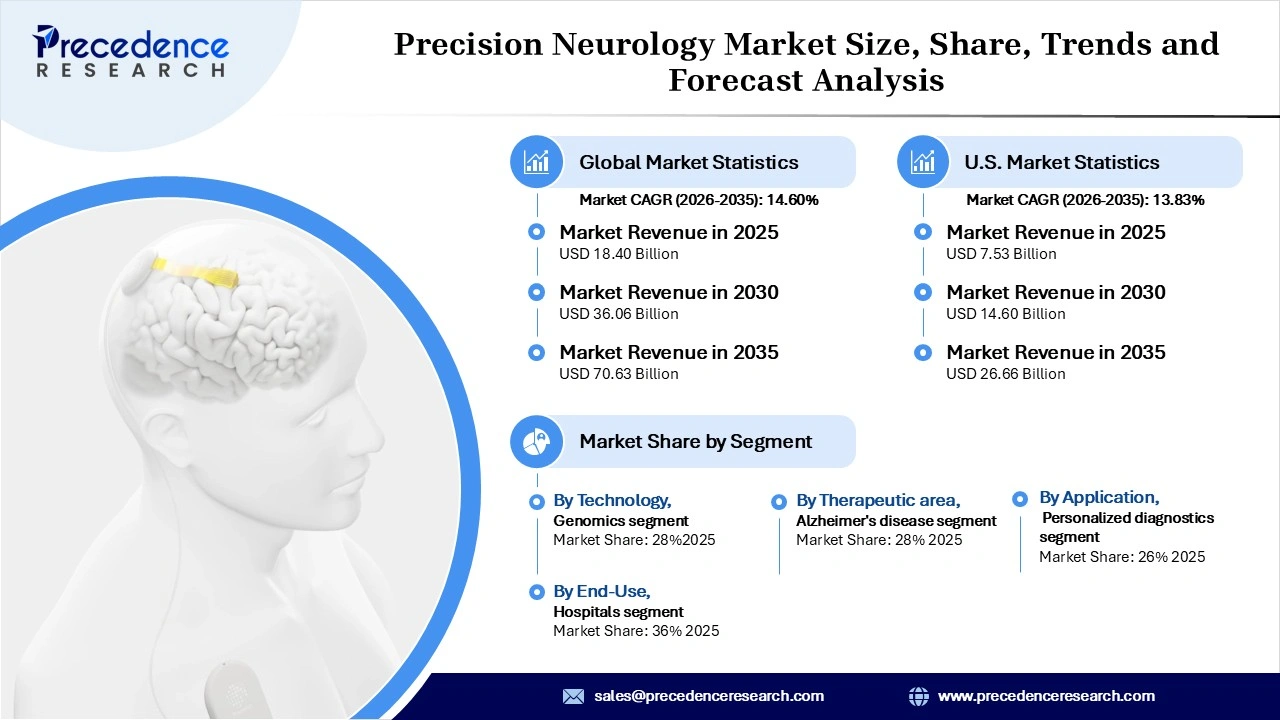
The global precision neurology market revenue surpassed USD 18.40 billion in 2025 and is predicted to attain around USD 70.63 billion by 2035, growing at a CAGR of 14.60%. The market is gaining momentum as neurologists move away from trial-and-error processes toward AI-powered diagnostics, biomarker-driven therapies, and personalized brain care. The significant rise of neurodegenerative diseases, rapid uptake of digital health innovations, and the urgent demand for accurate and responsive neurological measures largely contribute to this transition.
Market at a Glance
The precision neurology market specializes in technologies and solutions that provide personalized neurological therapy using genetic, biomarker, artificial intelligence, high-definition imaging, and data-driven real-time patient management. This approach also attempts to explore the differential pathophysiology of disease among patients from different neurological subgroups, rather than treating the same symptom with identical treatment measures. It covers areas like precision diagnostics and targeted therapeutics, neuroinformatics platforms, wearables, and AI-based decision-making systems across disorders such as Alzheimer’s disease, epilepsy, Parkinson’s disease, stroke, and multiple sclerosis.
The market scope extends from early disease detection and predictive analytics to personalized treatment planning and long-term neurological monitoring. It includes AI-enabled diagnostics, genomic profiling, biomarker testing, smart neuroimaging, digital therapeutics, and wearable technologies used across hospitals, specialty clinics, research institutes, and home-based neurological care settings.
Market Forecast for the Precision Neurology Market
- Rising Demand for AI-Based Neurology Platform: The growing number of FDA-authorized AI-enabled medical devices is opening commercial opportunities for precision neurology companies working in neuroimaging, seizure monitoring, stroke detection, and cognitive analytics. Hospitals are increasingly integrating AI into neurological workflows to reduce diagnostic delays and improve decision-making accuracy.
- Rehabilitation Medicine is Driving the Demand: Precision neurology has evolved from just diagnosis and monitoring. It is against this backdrop that the current focus on brain-computer interfaces (BCIs) is dedicated to stroke rehabilitation, paralysis recovery, and cognitive restoration. CorTec earned FDA Breakthrough Device Designation for its implantable BCI system introduced in 2026 that can be used to enhance motor rehabilitation in patients with chronic strokes, attesting to a rapidly emerging level of regulatory review of neuro-restorative technologies.
Secondary Data
- More than 3 billion people worldwide were living with a neurological condition in 2021, making neurological disorders the leading cause of illness and disability globally. This is creating stronger demand for AI-guided diagnostics, biomarker testing, precision imaging, and individualized neurological therapies.
- Neurological conditions contributed to approximately 443 million disability-adjusted life years (DALYs), highlighting the mounting economic and clinical burden linked to long-term brain disorders.
- Since 1990, neurological disability and premature death combined have increased by nearly 18%, reflecting a sustained rise in demand for earlier and more accurate neurological intervention technologies.
- Additionally, it was noted that advancements in prevention and treatment could potentially alleviate up to half of the burden linked with neurological illnesses. Such progress would have a favorable impact on future development in predictive and personalized neurology systems.
Market Segmentation Overview
- By technology, the genomics segment accounted for a considerable revenue share of 28% in the precision neurology market in 2025, due to the increasing adoption of genomic sequencing by healthcare providers caring for neurological disorders. The increased use of pharmacogenomics to tailor therapeutic decisions and the increasing requirement for family-based disease risk assessments have emphasized the value of genomic profiling for personalized treatment of neurological disorders.
- By technology, the AI and machine learning analytics segment is expected to grow at the fastest CAGR of 24.5% in the market between 2026 and 2035, due to rising integration of AI into neurological data analysis, increasing demand for predictive disease modelling, and expanding investments in digital neurology platforms, which are likely to accelerate adoption across diagnostics, imaging, and disease progression monitoring.
- By therapeutic area, the Alzheimer’s disease segment dominated the market with a 30% market share in 2025 and is expected to maintain its leading position with a CAGR of 17% in the coming years, due to the high global prevalence of Alzheimer’s disease. Increased focus on biomarker-guided therapeutics, along with rising investments in disease-modifying treatments, encouraged wider adoption of personalized neurological diagnostics and targeted intervention strategies in dementia care.
- By application, the personalized therapeutics segment held a major revenue share of 26% in the precision neurology market in 2025, as demand for individualized neurological diagnosis increased across hospitals and specialty care centers. The rising adoption of biomarker testing, genomic testing, and AI-enabled diagnostic analytics supported more precise identification of neurological disorders, reducing reliance on generalized diagnostic approaches.
- By application, the precision therapeutics segment is steadily growing with a CAGR of 18.5% in the market between 2026 and 2035, due to advancements in targeted therapies for neurological disorders. This would drive further commercial opportunities for personalized solutions in neurological care, with increasing uptake of pharmacogenomics-informed treatments and increased investment in disease-modifying therapies in commercial development.
- By end-use, the hospitals segment accounted for a considerable revenue share of 36% in the market in 2025, due to strong patient inflow for neurological diagnosis and treatment procedures. Increasing integration of precision medicine platforms, coupled with growing adoption of advanced neuroimaging systems, strengthened hospital-based demand for personalized neurological assessment and treatment technologies.
- By end-use, the pharmaceutical and biotechnology companies segment is expected to expand rapidly in the market with a CAGR of 18.8% in the coming years, as investments in precision neurology drug pipelines continue to rise. Increasing use of AI and biomarkers in neurological research and development, along with expanding strategic partnerships and licensing activities, is likely to accelerate innovation in targeted neurological therapeutics.
Regional Analysis
North America dominated the global precision neurology market with a share of 41% in 2025, due to the strong adoption of precision medicine, genomic diagnostics, and AI-supported neurological research across major healthcare systems. The region witnessed rising use of personalized treatment models for Alzheimer’s disease, epilepsy, and Parkinson’s disease, particularly among its rapidly aging population. In the same year, Canada’s support for regional expansion continued; it increased its efforts to support neuroscience research funding by raising a higher level of investments towards neural research and improved the implementation of AI-driven neurological diagnostic technology in academic institutions and hospitals.
Asia-Pacific held 21% of the market share in 2025 and is expected to grow at the fastest CAGR of 19.8% in the market during the forecast period, as countries across the region rapidly expand genomic medicine infrastructure and digital healthcare capabilities. Growing investment in healthcare services, heightened attention to personalized neurological care, and more widespread use of artificial intelligence technologies will lead to considerable market development. China is likely to remain a key enabler with a large influx of funds directed to AI healthcare investments and precision medicine initiatives.
Precision Neurology Market Coverage
| Report Attribute | Key Statistics |
| Market Revenue in 2025 | USD 18.40 Billion |
| Market Revenue by 2035 | USD 70.63 Billion |
| CAGR from 2026 to 2035 | 14.60% |
| Quantitative Units | Revenue in USD million/billion, Volume in units |
| Largest Market | North America |
| Base Year | 2025 |
| Regions Covered | North America, Europe, Asia-Pacific, Latin America, and the Middle East & Africa |
Top Companies in the Precision Neurology Market
Novartis AG and Pfizer Inc. are increasingly using precision medicine and AI-enhanced drug discovery for neurological disorders. Eli Lilly and Company, on the other hand, has received more buzz with its developments in Alzheimer’s treatment guided by biomarkers, and AbbVie Inc. is building on its neuroscience pipelines for chronic neurodegenerative diseases. And on the diagnostics end of the spectrum, Thermo Fisher Scientific, Illumina Inc., and Qiagen N.V. are all playing a major part in contributions to genomic profiling, molecular testing, and biomarker analysis, and are employed in personalized neurology research and clinical decision-making.
Segments Covered in the Report
By Technology
- Genomics
- Whole Genome Sequencing
- Targeted Gene Panels
- Pharmacogenomics
- Proteomics
- Biomarker-based Diagnostics
- AI & Machine Learning Analytics
- Neuroimaging Technologies
- MRI
- PET
- Functional Neuroimaging
By Therapeutic Area
- Alzheimer's Disease
- Parkinson's Disease
- Multiple Sclerosis
- Epilepsy
- Amyotrophic Lateral Sclerosis (ALS)
- Autism Spectrum Disorders
- Stroke
- Other Neurological Disorders
By Application
- Personalized Diagnostics
- Precision Therapeutics
- Drug Discovery & Development
- Disease Risk Prediction
- Patient Stratification
- Monitoring & Prognostics
By End-use
- Hospitals
- Specialty Neurology Clinics
- Academic & Research Institutes
- Pharmaceutical & Biotechnology Companies
- Diagnostic Laboratories
By Delivery Model
- Hospital-based Precision Neurology
- Cloud-based Neurology Platforms
- AI-assisted Neurology Solutions
By Region
- North America
- Latin America
- Europe
- Asia-pacific
- Middle and East Africa
Get this report to explore global market size, share, CAGR, and trends, featuring detailed segmental analysis and an insightful competitive landscape overview @ https://www.precedenceresearch.com/sample/8434
You can place an order or ask any questions. Please feel free to contact us at sales@precedenceresearch.com |+1 804 441 9344