



SCADA Market Size, Key Companies, Company Product Portfolio, Digital Transformation, Technology Investment, Adoption Rates, Customer Acquisition, Company Market Share, and Market Outlook
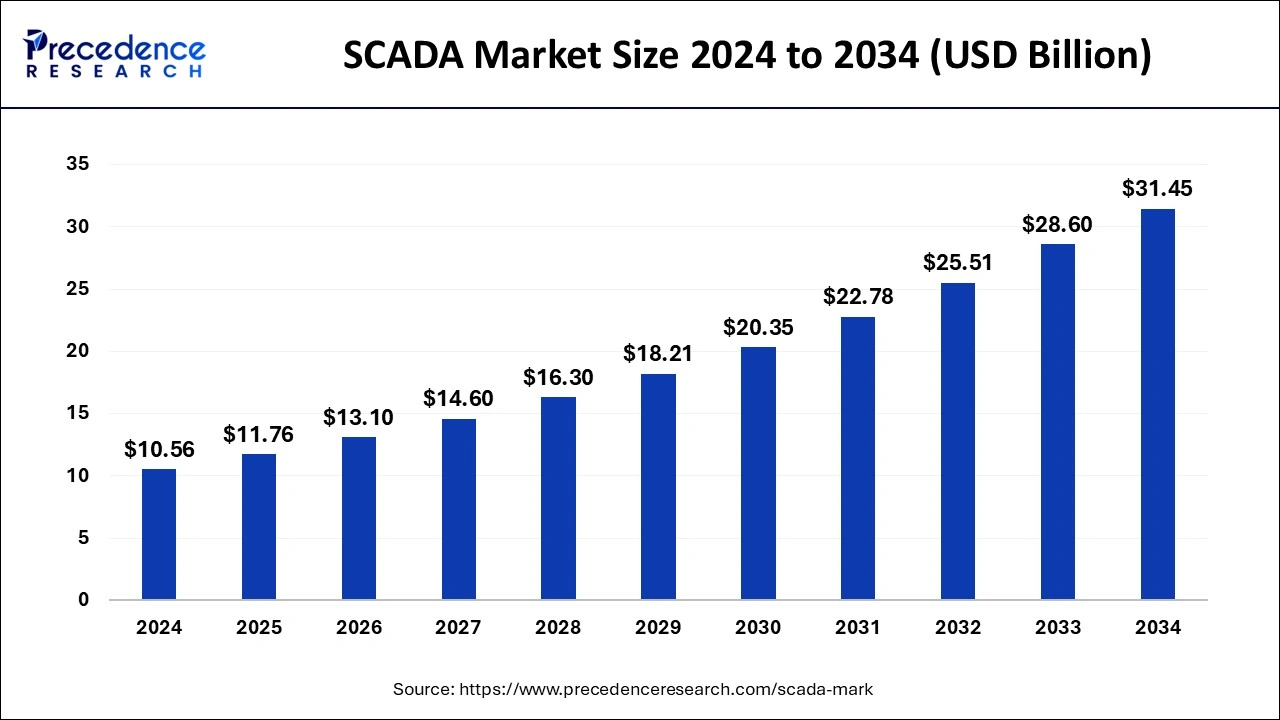
The global Supervisory Control and Data Acquisition (SCADA) market is projected to grow from USD 13.10 billion in 2026 to USD 34.46 billion by 2035, registering a CAGR of 11.35%. Growth is driven by increasing industrial automation, rising adoption of Industry 4.0, expanding smart city and smart grid projects, growing deployment of Industrial IoT (IIoT), and AI-powered predictive maintenance, real-time monitoring, and operational optimization. North America dominated the market in 2025 with a 36% share, supported by advanced industrial infrastructure and widespread automation across utilities, manufacturing, and oil & gas sectors, while Asia Pacific is expected to witness the fastest growth due to rapid industrialization, expanding infrastructure investments, and increasing adoption of smart manufacturing and automation technologies.
Source: https://www.precedenceresearch.com/scada-market
 Get a Sample
 Table Of Content


What is Supervisory Control and Data Acquisition (SCADA) Market Size?
The global supervisory control and data acquisition (SCADA) market size is estimated at USD 13.10 billion in 2026 and is anticipated to reach around USD 34.46 billion by 2035, expanding at a CAGR of 11.35% from 2026 to 2035. The rise in number of smart city projects around the world has boosted the growth of the supervisory control and data acquisition (SCADA) market.
Market Highlights
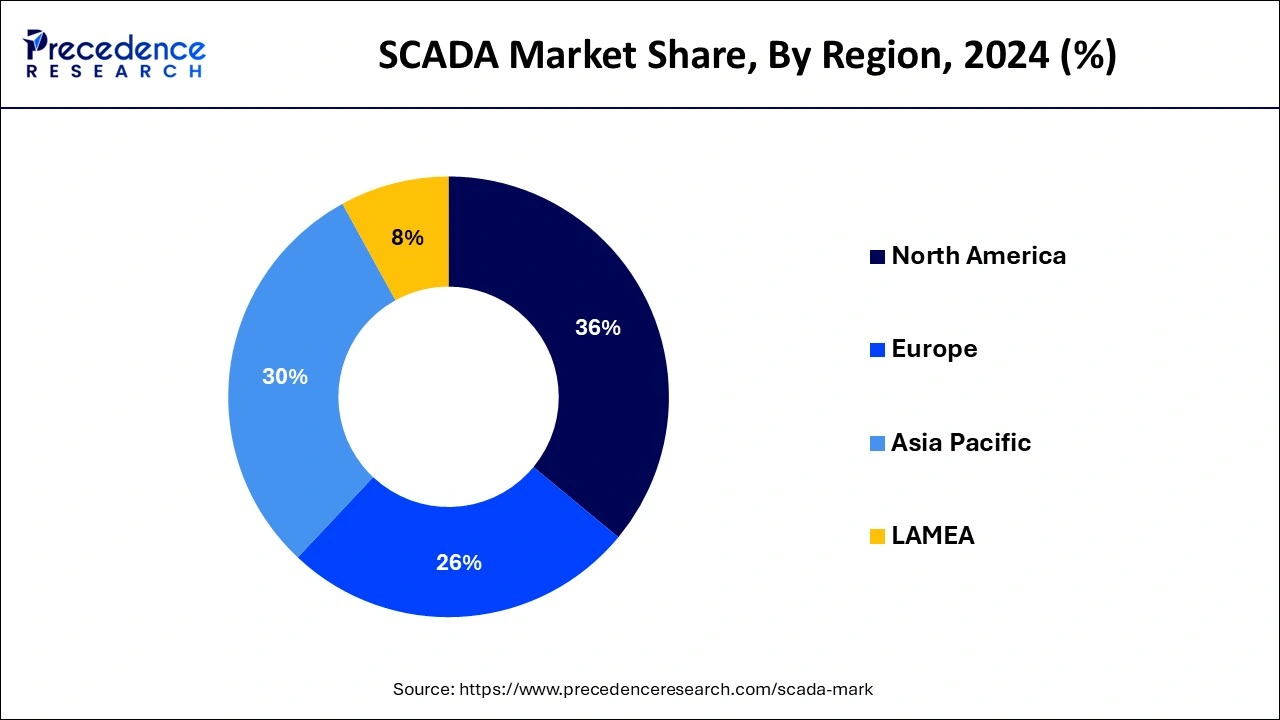
- North America dominated the SCADA market with the largest market share of 36% in 2025.
- Asia Pacific is expected to grow at a notable CAGR during the forecast period.
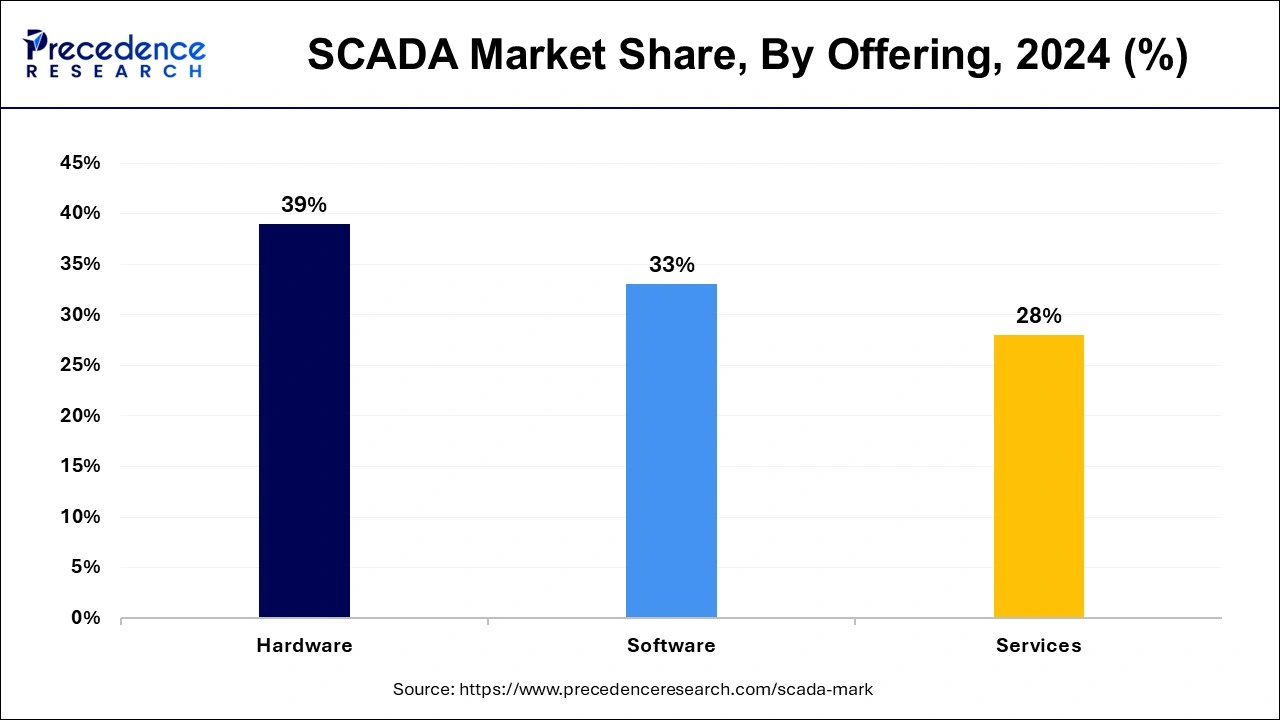
- By offering, the hardware segment accounted for the highest market share of 39% in 2025.
Market Size and Forecast
- Market Size in 2025: USD 11.76 Billion
- Market Size in 2026: USD 13.10 Billion
- Forecasted Market Size by 2035: USD 34.46 Billion
- CAGR (2026-2035): 11.35%
- Largest Market in 2025: North America
- Fastest Growing Market: Asia Pacific
Market Overview
The supervisory control and data acquisition (SCADA) market refers to the development of software and hardware tools for controlling and monitoring industrial processes locally or in remote locations. SCADA systems are used for multiple applications, such as manufacturing processes, water treatment and distribution, electric power generation, and transportation & traffic management. They are widely used to enhance efficiency and reduce downtime. Key components of a SCADA system include remote terminal units (RTUs), human machine interface (HMI), communications network, and inputs.
How Dees AI Influence the SCADA Market?
AI is transforming the SCADA market by enhancing system intelligence, predictive maintenance, and real-time decision-making capabilities. By integrating machine learning algorithms, AI enables SCADA systems to analyze large volumes of operational data, detect anomalies, and predict equipment failures before they occur. This improves operational efficiency, reduces downtime, and lowers maintenance costs. Additionally, AI-driven analytics empower industries to optimize energy consumption and process performance, making SCADA systems smarter and more adaptive.
Supervisory Control and Data Acquisition (SCADA) Market Growth Factors
SCADA stands for supervisory control and data acquisition, and it is used to monitor and control field devices at remote locations. The supervisory control and data acquisition (SCADA) systems are important because they collect and process real-time data, which helps preserve efficiency.
The supervisory control and data acquisition (SCADA) market expansion is being fueled by factors such as the increasing adoption of solutions for industrial mobility. To monitor the production flow, several sectors have shifted to automated operations. The industries are increasingly embracing the supervisory control and data acquisition (SCADA) system to defend the system from cyber threats.
The supervisory control and data acquisition (SCADA) is a control system that employs PCs, graphical user interfaces, and networked data communications to provide high-level process supervisory management and real-time data, especially from topographically remote places. It is utilized in a variety of industries, including oil and gas, power, pharmaceuticals, water and wastewater treatment, chemical and petrochemical, automotive and electrical, and electronics, to improve efficiency and production.
The increased acceptance of industry 4.0 solutions using supervisory control and data acquisition (SCADA) systems, rising demand for industrial mobility solutions for effective process industry management, and use of software platforms such as internet of things (IOT) and artificial intelligence (AI) are all driving the growth of the supervisory control and data acquisition (SCADA) market during the forecast period.
The supervisory control and data acquisition (SCADA) system has simplified the machines necessary for operational technology and machine technology, resulting in improved cyber-security. The software segment of SCADA is expected to grow in upcoming years. The expansion is also influenced by investments by key market players in SCADA systems.
SCADA Market Outlook
- Market Growth Overview The SCADA market is projected to grow at the fastest rate from 2025 to 2034 due to increasing automation in industrial, utility, and infrastructure sectors. There is a growing demand for advanced SCADA systems to enable real-time monitoring, process optimization, and predictive maintenance, contributing to market growth. Moreover, the growth of the manufacturing, oil and gas, and water treatment industries worldwide is also strengthening market growth.
- Technology Innovation & Digitalization Trends: Due to rapid technological advancement, SCADA systems are evolving, and cloud computing, edge analytics, and AI-based decision-making are being integrated into them. The integration of industrial IoT (IIoT) allows for real-time data collection and predictive analytics across distributed devices. Cybersecurity vendors are implementing advanced security measures to safeguard industrial networks from emerging cyber threats targeting critical infrastructure. Additionally, the rise of digital twins in SCADA platforms allows operators to simulate, analyze, and optimize processes virtually before applying changes to the physical system.
- Sustainability & Efficiency Initiatives: sustainability is a main reason for SCADA adoption, with businesses aiming to reduce energy use, emissions, and resource consumption. SCADA enables efficient management of industrial equipment's energy use. Its role in ESG reporting and sustainability compliance is likely to grow faster due to the increasing enforcement of environmental regulations worldwide by governments.
- International Growth: SCADA vendors are actively entering new markets to capitalize on opportunities in industrialization and infrastructure modernization. ABB, Siemens, and Yokogawa are expanding their efforts in Southeast Asia, the Middle East, and Latin America, where governments are investing in smart grids, industrial parks, and transportation networks. Additionally, the international market growth allows suppliers to offer customized solutions that comply with local regulations and industry standards.
- Major Investors and Strategic Alliances: SCADA and industrial automation are emerging as high-growth, high-margin opportunities for investors. Companies offering AI-driven SCADA, cloud-based control, and industrial cybersecurity solutions are attracting funding from private equity and strategic investors. Firms like KKR, Blackstone, and Carlyle Group have made strategic investments in industrial IoT and SCADA software vendors. Vendors are accelerating their R&D through these strategic investments to expand their geographic reach and devel
- Startup Ecosystem: The SCADA startup ecosystem is rapidly evolving in areas like cloud-based SCADA, AI-driven monitoring, digital twins, and industrial cybersecurity. Emerging companies such as Inductive Automation (USA), Bright Machines (USA), and CyberX (Israel, acquired by Microsoft) are offering scalable, secure connected automation solutions. The rise of cost-effective, flexible, and modular platforms is challenging traditional SCADA models driven by startups. Many of these startups partner with established vendors to develop next-generation systems and introduce them into international markets.
Market Scope
| Report Coverage | Details |
| Market Size in 2025 | USD 11.76 Billion |
| Market Size in 2026 | USD 13.10 Billion |
| Market Size in 2035 | USD 34.46 Billion |
| Growth Rate From 2026 to 2035 | CAGR of 11.35% |
| Largest Market | North America |
| Base Year | 2025 |
| Forecast Period | 2026 to 2035 |
| Segments Covered | Offering, Component, Application and Region |
| Regions Covered | North America, Europe, Asia-Pacific, Latin America, and Middle East & Africa |
Segment Insights
Offering Insights
The hardware segment accounted for the highest market share of 39% in 2025. In terms of revenue and is estimated to sustain its dominance during the forecast period. The supervisory control and data acquisition (SCADA) system is mainly used for the collection of data. The software is the computer program that helps to monitor factory and plant operations.
On the other hand, the hardware segment is estimated to be the most opportunistic segment during the forecast period. The functions of supervisory control and data acquisition (SCADA) hardware are data collection, data transfer, data processing, information display, and control actions.
Component Insights
The remote terminal units (RTU) segment dominated the market in 2025, in terms of revenue. The main task of RTU is to control and collect data from remote process equipment and send it back to a central station. It usually has the ability to dynamically download its setup and control program from a central station.
On the other hand, the programmable logic controller (PLC) segment is estimated to be the most opportunistic segment during the forecast period. The increased deployment of robots for automation across the automotive manufacturing, electrical, and electronics industries is a major growth indication for PLCs in the manufacturing sectors.
Application Insights
The oil and gas segment dominated the global supervisory control and data acquisition (SCADA) market in 2025, in terms of revenue. The automation technologies are being implemented by oil and gas industries all around the world to improve resource utilization and field visibility. Supervisory control and data acquisition (SCADA) provides a proactive and enhanced technique of diagnosing problems with real-time data, enabling quick decisions and profit maximization.
On the other hand, the food and beverage segment is estimated to be the most opportunistic segment during the forecast period. In the food and beverage sector, the supervisory control and data acquisition (SCADA) is used for a variety of tasks, including visualizing production, maintaining quality standards, creating reports, and packaging. It improves food safety and quality while reducing product waste by providing greater alarming capabilities, improved integration, traceability, and predictive and preventative maintenance. The constantly growing food and beverage industry around the world will lead to an increase in the utilization of SCADA.
Regional Insights
Why Does North America Dominate the Global SCADA Market?
North America dominated the SCADA market with the largest market share of 36% in 2025. The North America region is the dominant region as it is production and technical center, which will help supervisory control and data acquisition (SCADA) applications to develop.
The Asia Pacific is estimated to be the most opportunistic segment during the forecast period. The advanced solutions and rapid technology advancements are critical factors for tremendous growth in North America region
North America dominated the SCADA market in 2025 due to its advanced industrial infrastructure, widespread adoption of automation technologies, and strong presence of leading SCADA solution providers. The region's well-established utilities, oil and gas, and manufacturing sectors rely heavily on SCADA systems for real-time monitoring and control. Continuous investments in smart grid development, industrial IoT integration, and modernization of legacy systems have further strengthened market growth. Additionally, strict regulatory standards and a focus on operational efficiency continue to drive demand for advanced SCADA solutions across industries.
U.S. Supervisory Control and Data Acquisition (SCADA) Market Size and Growth 2026 to 2035
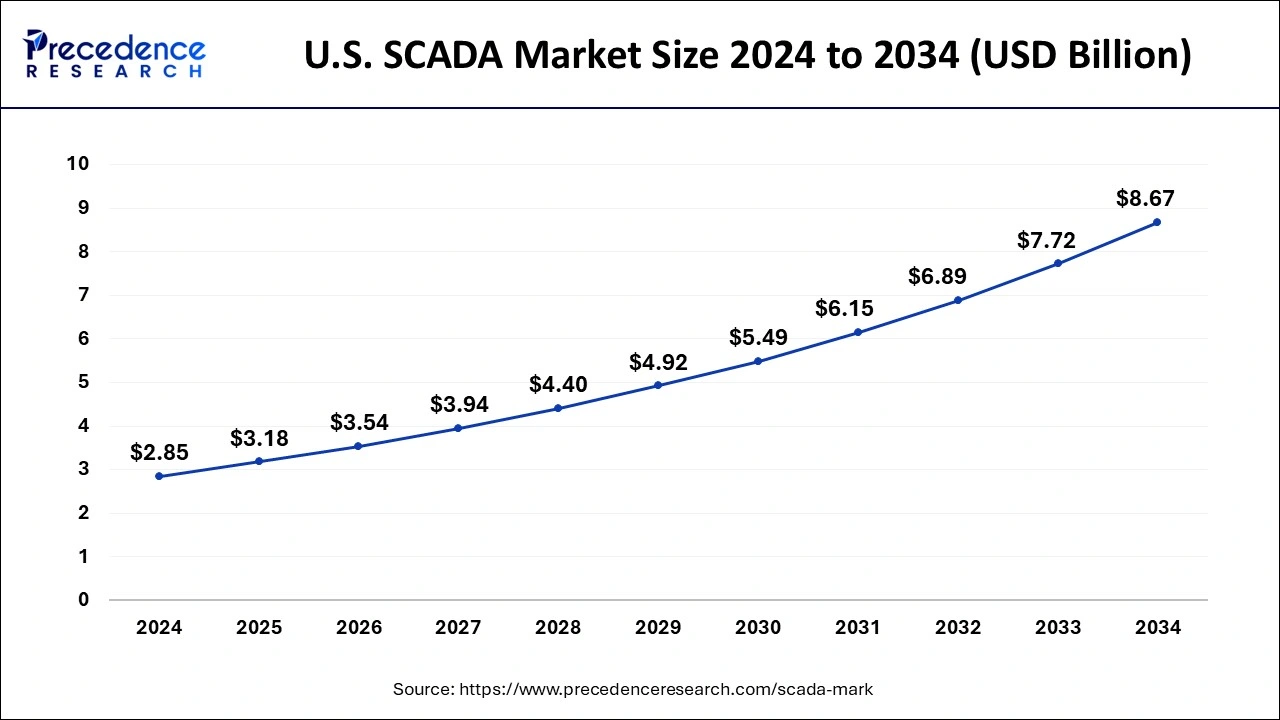
The U.S. supervisory control and data acquisition (SCADA) market size is evaluated at USD 3.18 billion in 2025 and is predicted to be worth around USD 9.54 billion by 2035, rising at a CAGR of 11.61% from 2026 to 2035.
U.S. SCADA Market Trends
The U.S. accounted for the largest share of the North American SCADA market, driven by its highly industrialized infrastructure and advanced utility networks. Widespread adoption of automation technologies across the manufacturing, oil and gas, and power generation sectors continues to fuel demand. Additionally, collaborations between system integrators and SCADA vendors with utilities are enhancing real-time monitoring, predictive analytics, and overall operational efficiency.
How is Europe Growing in the Supervisory Control and Data Acquisition (SCADA) Market?
Europe is expected to grow at a notable CAGR in the foreseeable future due to the rapidly expanding manufacturing sector, favorable government support, and increasing investments. The rising development of smart cities and the rapid integration of advanced technologies in the industrial sector propel the market. This is supported by the growing demand for smart manufacturing and green energy.
Germany leads the market in Europe, driven by the rapid adoption of renewable energy sources has increased the need for SCADA systems as essential tools for grid and asset management. Additionally, the rise of networked and cloud-enabled SCADA architectures is expected to drive further market growth across the region.
What Makes Asia Pacific the Fastest-Growing Region in the Market?
Asia Pacific is the fastest-growing region in the SCADA market due to rapid industrialization, expanding utility infrastructure, and increasing adoption of automation technologies across manufacturing, energy, and water treatment sectors. Governments in countries like China and India are investing heavily in smart grids, industrial IoT, and renewable energy projects, driving demand for advanced SCADA solutions. The growing focus on operational efficiency, real-time monitoring, and predictive maintenance further accelerates market growth. Additionally, the presence of emerging SCADA vendors and system integrators in the region supports faster deployment and technological adoption.
China SCADA Market Trends
China is a major contributor to the Asia Pacific SCADA market, driven by its rapid industrialization and large-scale infrastructure development across power, water, and manufacturing sectors. The government's investment in smart grids, renewable energy, and industrial automation projects further fuels demand for advanced SCADA systems. Additionally, the presence of both domestic and international SCADA vendors supports widespread adoption and technological integration.
What Potentiates the Growth of the SCADA Market in Latin America?
Latin America is experiencing robust growth in the SCADA market, with Brazil, Mexico, and Chile leading adoption due to utility modernization, mining automation, and infrastructure upgrades. Market growth is supported by foreign investments, regulatory reforms, and initiatives to reduce operational costs across industrial sectors. Brazil is leading the market, driven by modernization in the power sector, industrial plants, and mining operations. The integration of SCADA platforms is increasingly needed to support renewable energy projects, particularly hydroelectric and wind power. Strategic partnerships with global vendors are facilitating technology transfer and the adoption of advanced monitoring solutions across the country.
Brazil Market Trends
The Brazilian government recently established the Legal Framework for Urban Public Transportation to plan, regulate, finance, and operate urban and metropolitan public transportation services. A recent study identified 187 medium- and high-capacity public transportation projects across the nation's 21 largest metropolitan regions, representing estimated investments of approximately BRL 430 million.
What Factors Support the SCADA Market Growth in the Middle East & Africa?
The market in the Middle East & Africa is driven by large-scale oil and gas infrastructure in the Gulf (UAE, Saudi Arabia), automation of desalination and utilities, and modernization of water, wastewater, and mining infrastructure in Africa. The region's harsh operational conditions make remote asset monitoring and edge SCADA solutions crucial. The UAE is a leader in the market, driven by modernization projects in oil and gas, water desalination, and utilities. Growth is fueled by large-scale infrastructure, smart city initiatives, and investments in industrial automation. Vendors are increasingly offering integrated SCADA solutions with AI analytics and wireless connectivity to optimize operations and reduce downtime.
UAE Market Trends
The UAE market is driven by the growing adoption of SCADA systems by local municipalities and increasing government funding and grants for private companies. Abu Dhabi City Municipality has introduced SCADA systems for rainwater drainage network maintenance contractors. The use of SCADA systems is high in smart cities of the MEA, like Dubai and Abu Dhabi.
Supervisory Control and Data Acquisition (SCADA) Market – Value Chain Analysis
- Hardware & Sensor Manufacturing
The foundation of SCADA systems lies in high-quality industrial hardware such as sensors, programmable logic controllers (PLCs), remote terminal units (RTUs), and communication devices.
Key Players: Siemens AG, Schneider Electric, ABB Ltd, Yokogawa Electric Corporation, Omron Corporation - Communication & Networking Infrastructure
Collected data is transmitted via robust industrial networks, including wired, wireless, and IoT-enabled protocols, ensuring secure and real-time connectivity between field devices and control centers.
Key Players: Cisco Systems, Ericsson, Advantech, Huawei, Belden Inc. - SCADA Software & Control Platform Development
Raw process data is processed, visualized, and analyzed through SCADA software platforms, HMI (Human-Machine Interface) systems, and industrial automation software, enabling operators to monitor, control, and optimize operations.
Key Players: Wonderware (AVEVA), Rockwell Automation, GE Digital, Honeywell Process Solutions, Inductive Automation - System Integration & Engineering Services
Hardware, networking, and software components are integrated into a complete SCADA solution, customized to meet industry-specific requirements across power, oil & gas, water treatment, manufacturing, and transportation.
Key Players: Siemens AG, Schneider Electric, Emerson Electric Co., ABB Ltd, Yokogawa Electric Corporation - Maintenance, Upgrades & Cybersecurity Services
After deployment, SCADA systems require ongoing maintenance, firmware/software updates, cybersecurity protection, and remote monitoring to ensure operational continuity and safety.
Key Players: Honeywell, ABB, Rockwell Automation, Siemens, CyberX (acquired by Microsoft), Nozomi Networks - Distribution & End-User Deployment
Fully integrated SCADA solutions are delivered to industrial clients, utilities, and infrastructure operators for installation and commissioning, forming the final link of the value chain.
Key Players: National Grid, Shell, BP, General Electric Power, municipal water authorities
Competitive Landscape
The supervisory control and data acquisition (SCADA) market is highly consolidated, with the presence of hardware providers, software developers, and turnkey automation conglomerates. They serve several industries like water treatment, energy, oil & gas, and manufacturing. Key players, such as Siemens, ABB, Schneider Electric, Emerson Electric, and Rockwell Automation, hold the majority market share. Apart from this, some pure-play and independent software vendors include AVEVA, COPA-DATA, and ICONICS.
The market faces formidable challenges, such as cybersecurity threats, massive data overload, high integration complexity, and strict uptime demands that make patching and upgrades difficult. Despite these challenges, the market's future is promising, driven by the shifting trend towards isolated local networks to smart, cloud-connected ecosystems. The increasing integration of advanced sensors in the industrial sector and the growing development of digital twins drive the future of SCADA systems.
Key Players in Supervisory Control and Data Acquisition (SCADA) Market and Their Offerings
- Schneider Electric SE (France): Schneider Electric provides comprehensive SCADA and automation solutions, including energy management, building automation, industrial software, and connected devices for utilities and manufacturing.
- ABB Ltd (Switzerland): ABB specializes in electrification, robotics, and industrial automation systems, providing SCADA solutions for power grids, process industries, and smart manufacturing.
- Rockwell Automation Inc. (USA): Rockwell delivers industrial automation, control, and SCADA software, along with intelligent motor control and real-time monitoring solutions for diverse sectors.
- Honeywell International Inc. (USA): Honeywell offers SCADA and distributed control systems (DCS), industrial cybersecurity solutions, and process automation software for oil & gas, chemicals, and manufacturing industries.
- Mitsubishi Electric Corporation (Japan): Mitsubishi Electric provides SCADA systems, programmable logic controllers (PLCs), HMI solutions, and integrated factory automation technologies.
- Yokogawa Electric Corporation (Japan): Yokogawa focuses on industrial automation and control solutions, including SCADA software, DCS, measurement instruments, and industrial IoT integration.
- Emerson Electric Co. (USA): Emerson delivers SCADA and process automation solutions, industrial analytics, control valves, and smart instrumentation for oil & gas, power generation, and chemical industries.
- Omron Corporation (Japan): Omron specializes in factory automation, SCADA software, industrial sensors, robotics, and control systems for automotive and electronics manufacturing.
- Hitachi Ltd.: Provides advanced SCADA solutions integrated with IoT, AI, and predictive analytics to optimize industrial operations, energy management, and utility monitoring.
- IBM Corporation: Offers SCADA-related services through its industrial IoT and AI platforms, enabling real-time data analytics, remote monitoring, and enhanced automation for utilities, manufacturing, and critical infrastructure.
Key Companies & Market Share Insights
The market is moderately fragmented with the presence of several local companies. These market players are striving to gain higher market share by adopting different marketing strategies, such as new product launch, investments, partnerships, and mergers & acquisitions. The companies are also spending on the development of improved products. Moreover, they are also focusing on competitive pricing.
The various developmental strategies such as acquisition, business expansion, investments, new product launches, partnerships, joint venture, and mergers fosters market growth and offers lucrative growth opportunities to the market players.
Latest Announcements by Industry Leaders
- In April 2024, Michihiro Imada, the executive officer of Mazda mentioned that in the cockpit HMI area, Mazda will continuously evolve in the automotive HMI sector for delivering superior mobility experiences.
Recent Developments
- In November 2025, Emerson unveiled Movicon.NExT Version 4.4, a major update to its next-generation HMI and SCADA platform built for discrete and process manufacturing, industrial, and municipal operations. The new release focuses on enhanced performance, flexibility, and development efficiency while enabling seamless system interoperability. This update strengthens Emerson's position in delivering cutting-edge automation solutions optimized for smarter and more connected industrial environments.
- In November 2025, Algeria announced a landmark initiative to upgrade its national power grid with a new SCADA system, scheduled for completion in 2026. The project aims to boost grid efficiency, sustainability, and reliability, establishing Algeria as the first North African nation to implement this advanced control technology. The upgrade forms a core part of the country's strategy to modernize its energy infrastructure and align with global smart grid standards.
Segments Covered in the Report
By Offering
- Hardware
- Software
- Services
By Component
- Human-machine Interface (HMI)
- Programmable Logic Unit (PLC)
- Remote Terminal Units (RTU)
By Application
- Electrical Power
- Oil & Gas
- Water & Wastewater
- Manufacturing
- Transportation
- Telecommunication
- Chemicals
- Food & Beverages
- Pharmaceuticals
- Others
By Region
- North America
- Europe
- Asia Pacific
- Latin America
- Middle East
- Africa
For inquiries regarding discounts, bulk purchases, or customization requests, please contact us at sales@precedenceresearch.com
Frequently Asked Questions





Ask For Sample
No cookie-cutter, only authentic analysis – take the 1st step to become a Precedence Research client
 Get a Sample




 sales@precedenceresearch.com
 Schedule a Meeting
