



T-Cell Engagers Market Size, Companies, Share, Patient Volume, Treatment Adoption Rates, Pricing Analysis, Regulatory Landscape, Competitive Positioning, and Demand Forecast
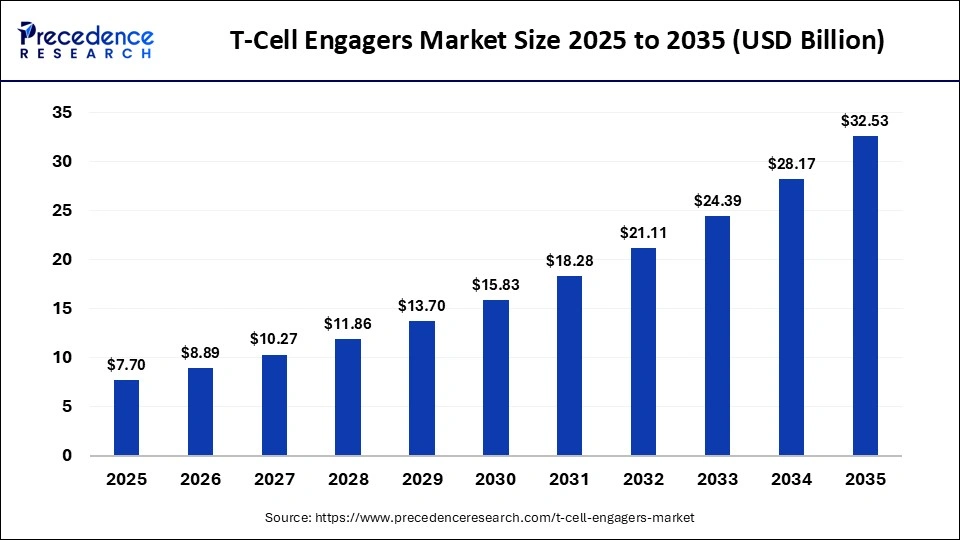
Rohan Patil, a Healthcare Industry Expert, highlights that the t-cell engagers market has reached USD 8.89 billion in 2026 and is on track to reach USD 32.53 billion by 2035, advancing at a CAGR of 15.50%. Key t-cell engagers market companies shaping the market include Amgen Inc., AstraZeneca plc, Roche (Genentech), Johnson & Johnson (Janssen)., while major growth segments span By Product Type, By Indication, By Route of Administration, By End User.
Source: https://www.precedenceresearch.com/t-cell-engagers-market
 Get a Sample
 Table Of Content


What is the T-Cell Engagers Market Size in 2026?
The global T-cell engagers market size accounted for USD 7.70 billion in 2025 and is predicted to increase from USD 8.89 billion in 2026 to approximately USD 32.53 billion by 2035, expanding at a CAGR of 15.50% from 2026 to 2035. The market is driven by advancements in medical science, which lead to the development of innovative therapies, such as bispecific T-cell engagers, that link immune cells to tumors. The market is also driven by the growing demand for innovative and effective cancer treatments.
Key Takeaways
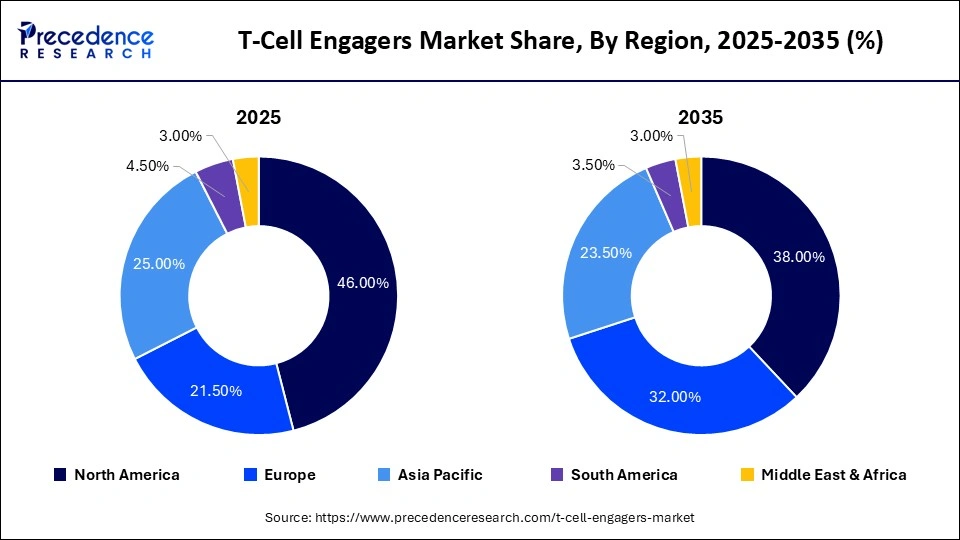
- North America dominated the T-cell engagers market, accounting for approximately 46% share in 2025.
- Asia Pacific is expected to grow at the fastest CAGR of approximately 21% in the upcoming period.
- By product type, the bispecific T-cell engagers segment dominated the market in 2025.
- By indication, the hematologic malignancies segment led the market with approximately 82.5% share in 2025.
- By indication, the solid tumors segment is the second-largest shareholder and is expected to grow significantly in the coming years.
- By route of administration, the intravenous segment held a major market share of 76% in 2025.
- By route of administration, the subcutaneous segment is observed to grow at a significant rate in the foreseen period.
- By end user, the hospitals segment dominated the market with approximately 58.2% share in 2025.
- By end user, the oncology clinics segment is observed to grow at a significant rate over the forecast period.
Market Overview
The global T-cell engagers market comprises bispecific and multispecific antibodies that link T-cells to target cells, enabling targeted immune-mediated cell destruction. The market encompasses the development and distribution of these advanced therapies used to treat cancer and autoimmune diseases by directing a patient's cytotoxic T-cells toward diseased cells. The growth of the market is further driven by the increasing adoption of advanced medical technologies across hospitals, oncology clinics, research institutions, and specialized care centers.
How is AI Influencing the T-Cell Engagers Market?
AI significantly impacts the market for T-cell engagers by accelerating drug discovery and reducing the time and cost required to identify viable therapeutic candidates, while enabling precise prediction of complex antibody structures for better antigen binding. AI enhances clinical trial efficiency and outcome predictability by optimizing testing methods, improving understanding of patient responses, and supporting smoother clinical adoption of T-cell engagers. AI helps maintain patient safety by narrowing the gap between effective and toxic doses, predicting potential adverse events, and identifying toxic elements early in the drug design phase.
T-Cell Engagers Market Trends
- Shift Toward Multispecific and Next-Generation Engagers: Companies are increasingly developing trispecific and multispecific T-cell engagers to improve targeting precision, enhance efficacy, and reduce toxicity compared to earlier bispecific formats.
- Expansion Beyond Hematologic Cancers to Solid Tumors: While initially focused on blood cancers, there is a strong trend toward expanding applications into solid tumors, driven by unmet clinical needs and ongoing clinical trials.
- Growing Focus on Personalized and Precision Medicine: Tailored therapies based on biomarkers and patient-specific profiles are becoming more common, enhancing treatment effectiveness and adoption.
Market Scope
| Report Coverage | Details |
| Market Size in 2025 | USD 7.70 Billion |
| Market Size in 2026 | USD 8.89 Billion |
| Market Size by 2035 | USD 32.53 Billion |
| Market Growth Rate from 2026 to 2035 | CAGR of 15.50% |
| Dominating Region | North America |
| Fastest Growing Region | Asia-Pacific |
| Base Year | 2025 |
| Forecast Period | 2026 to 2035 |
| Segments Covered | Product Type, Indication, Route of Administration, End User, and Region |
| Regions Covered | North America, Europe, Asia-Pacific, Latin America, and Middle East & Africa |
Market Dynamics
Drivers
Growing Prevalence of Cancer and Demand for Advanced Therapies
The rising global incidence of cancer is a key factor driving the growth of the market, as it increases demand for advanced and more effective therapies compared to traditional chemotherapy. This shift is accelerating the adoption of such treatments across oncology clinics, hospitals, and research institutions. Consequently, it is also boosting the demand for targeted immunotherapies.
Restraint
Concerns Over Safety Profile and Toxicity
T-cell engagers are associated with significant side effects, including cytokine release syndrome and immune effector cell-associated neurotoxicity syndrome, requiring close patient monitoring. These safety concerns often limit the maximum tolerated dose, which impacts overall treatment efficacy.
Opportunity
Advancements in Delivery Methods
Advancements in delivery methods are creating significant opportunities in the T-cell engagers market by improving drug stability, extending half-life, and enabling more convenient administration routes such as subcutaneous delivery. These innovations enhance patient compliance, reduce the need for continuous infusions or hospital stays, and lower overall treatment burden. As a result, they expand the potential patient pool and support broader clinical adoption of T-cell engager therapies.
Segment Insights
Product Type Insights
The Bispecific T-Cell Engagers Segment Dominated the Market in 2025
The bispecific T-cell engagers (BiTEs) segment held the dominant share of the T-cell engagers market in 2025 due to their strong clinical validation and proven efficacy in redirecting T-cells to target and destroy cancer cells. Their relatively simpler design, established regulatory approvals, and wider adoption in treating hematologic malignancies have supported their leading position. Additionally, continuous advancements and expanding clinical applications have further reinforced their market dominance.
The dual-affinity re-targeting (DARTs) segment is the second-largest shareholder in 2025 due to its enhanced stability and improved binding affinity compared to earlier bispecific formats. DARTs offer more precise targeting of tumor antigens while maintaining strong immune activation, making them attractive for ongoing clinical development. Their growing adoption in clinical trials and expanding pipeline of therapies contribute to their significant market share.
The multispecific/trispecific engagers segment is expected to grow at the fastest rate in the coming years due to its ability to simultaneously target multiple antigens, enhancing therapeutic efficacy and overcoming tumor resistance. These next-generation T-cell engagers offer improved precision and broader applicability, attracting strong interest in clinical development. Additionally, ongoing R&D and increasing investment in innovative immunotherapies are accelerating the segment's growth.
Indication Insights
T-Cell Engagers Market Share, By Indication, 2025-2035 (%)
| Indication | 2025 | 2035 |
| Hematologic | 82.50% | 68.00% |
| Solid Tumors | 12.00% | 25.50% |
| Autoimmune | 5.50% | 6.50% |
The Hematologic Malignancies Segment Held the Largest Market Share of 82.5% in 2025
The hematologic malignancies segment dominated the T-cell engagers market with approximately 82.5% share in 2025. This is because of the proven record of T-cell engagers in treating blood cancers effectively and with higher success rates. Several studies suggest that 8 out of 10 bispecific T-cell engagers approved on a global basis target hematologic cancer. Advances in therapeutics have made it possible to treat relapsed B-cell malignancies, such as acute lymphoblastic leukemia and multiple myeloma. The accessibility of circulating cancer cells in the blood allows T-cells to engage more efficiently, enhancing therapeutic outcomes.
The solid tumors segment held about 12.0% share of the market in 2025 and is expected to grow at the fastest rate over the projection period. The segment growth is driven by advances in bispecific designs that can navigate immunosuppressive tumor environments and the increasing number of clinical trials targeting advanced solid tumors. The rising prevalence of late-stage solid malignancies is boosting demand for innovative therapies, prompting greater investment in research and development.
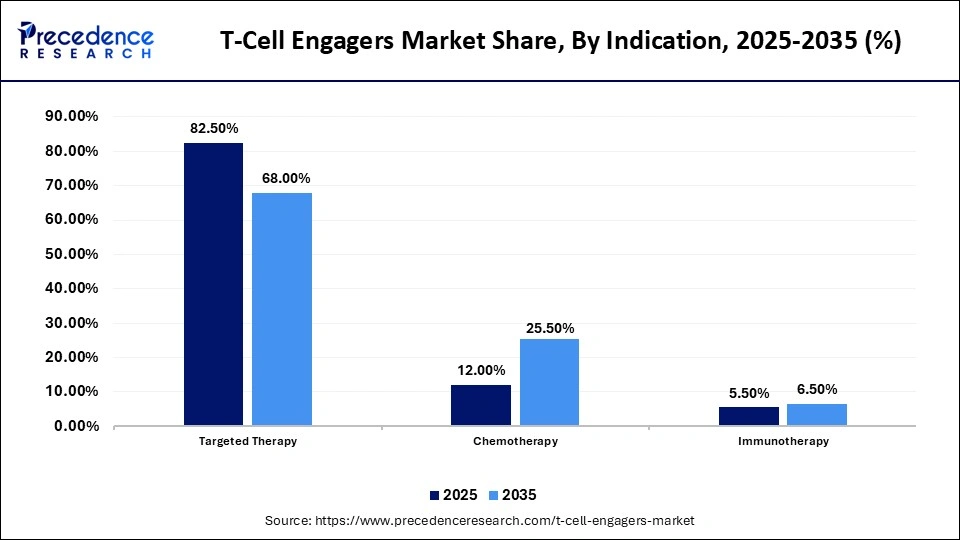
The autoimmune disorders segment held a share of 5.5% in 2025. This is because of the increased focus on developing targeted therapies for chronic, non-malignant conditions that are often resistant to conventional treatments. T-cell engagers offer precise immune modulation, enabling treatment of diseases like rheumatoid arthritis, lupus, and myasthenia gravis with improved efficacy. Additionally, the rising prevalence of autoimmune disorders and growing investment in R&D for novel immunotherapies are driving market expansion.
Route of Administration Insights
T-Cell Engagers Market Share, By Route of Administration, 2025-2035 (%)
| Route of Administration | 2025 | 2035 |
| Intravenous | 76.00% | 55.00% |
| Subcutaneous | 24.00% | 45.00% |
The Intravenous Segment Led the Market with Approximately 76% Share in 2025
The intravenous segment registered its dominance in the T-cell engagers market with the largest share of approximately 76% in 2025, as it provides precise dosing, enhanced safety for monitoring adverse events like cytokine release syndrome (CRS), and is suitable for administering potent constructs. The prevalence of FDA-approved T-cell engagers for hematologic malignancies, designed for IV infusion, further supports market growth. Additionally, well-established hospital and clinic infrastructure and advanced medical settings contribute to the segment's dominance.
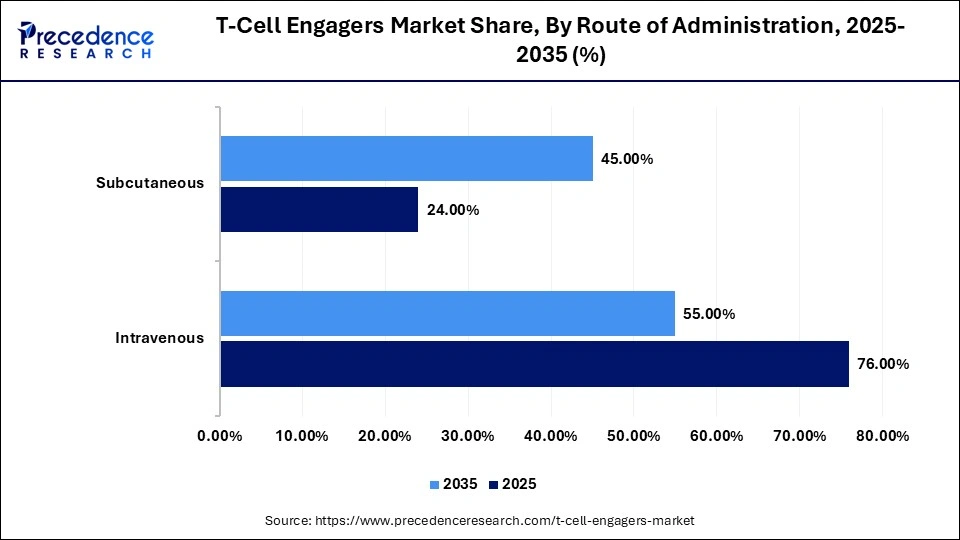
The subcutaneous segment held a 24.0% share in 2025 and is expected to expand at a significant rate in the coming years. This is mainly due to its convenience and patient-centric advantages, such as reduced “chair time” and easier outpatient administration. It also improves patient adherence, lowers healthcare costs, and enhances quality of life. Furthermore, the slower absorption rate compared to intravenous dosing reduces peak drug concentrations, making treatments safer and more manageable.
End User Insights
The Hospitals Segment Led the Market with a Share of Approximately 58.2% in 2025
The hospitals segment registered dominance in the T-cell engagers market by holding approximately 58.2% share in 2025. This is because hospitals, with expert, professional, and advanced setups, play a crucial role in managing toxicities such as cytokine release syndrome (CRS). Hospitals are also the main setting for the administration of highly potent T-cell engager therapies. Hospitals can manage complex dosing, monitor adverse events such as cytokine release syndrome, and provide immediate medical support if needed. Additionally, the majority of FDA-approved T-cell engagers are designed for hospital-based intravenous infusion, reinforcing their central role in the market.
T-Cell Engagers Market Share, By End-User, 2025-2035 (%)
| End-User | 2025 | 2035 |
| Hospitals | 58.20% | 52.00% |
| Oncology Clinics | 32.50% | 38.00% |
| Research/Academia | 9.30% | 10.00% |
The oncology clinics segment held a 32.5% share of the market in 2025 and is expected to grow at a significant rate during the projection period. This is because these clinics serve as primary centers for administering FDA-approved T-cell engagers and managing potential side effects like cytokine release syndrome. They also act as hubs for clinical trials of next-generation multispecific antibodies and provide specialized, decentralized access to advanced immunotherapies, supporting broader adoption, improved patient adherence, and enhanced care through expanded clinic networks.
The research/academia segment held a share of 9.3% in 2025, driven by a high volume of investigator-initiated trials for novel combination therapies. The segment's growth is further supported by expanding applications into solid tumors and non-oncology areas, increasing R&D investments, and clinical trial activities. Additionally, AI-driven advancements that improve epitope interactions, reduce immunogenicity risks, and enhance design efficiency are fueling the segment's expansion.
Regional Insights
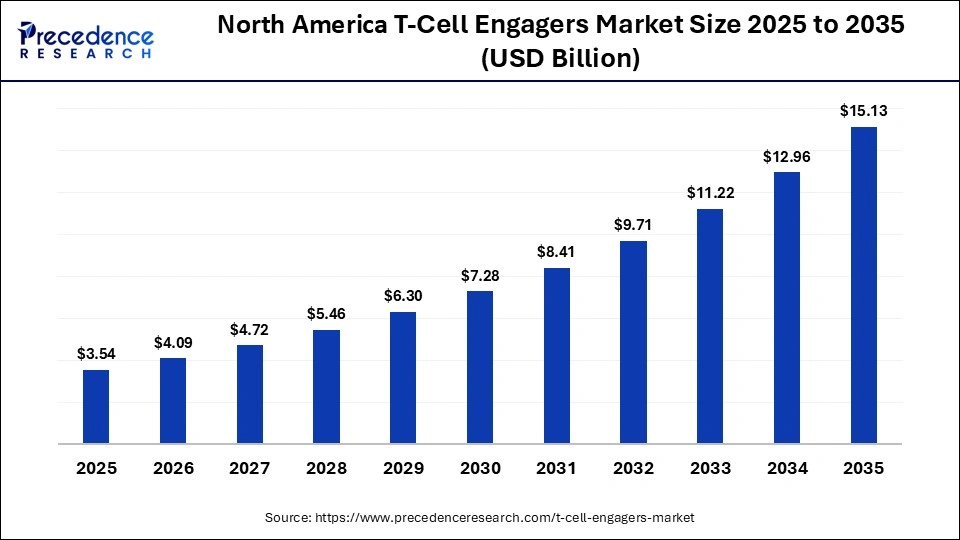
North America T-Cell Engagers Market Market Size and Growth 2026 to 2035
The North America T-cell engagers market size is estimated at USD 3.54 billion in 2025 and is projected to reach approximately USD 15.13 billion by 2035, with a 15.63% CAGR from 2026 to 2035.
Why Did North America Lead the Global T-Cell Engagers Market?
North America led the market by holding approximately 46% share in 2025. This is because of the rapid clinical adoption, advanced research infrastructure, and a supportive regulatory environment. The region is also known as the hub for innovation, contributing to the development and commercialization of T-cell engager therapies. The presence of renowned clinical research centers, academic institutions, and biotechnology companies also supports the region's dominance in the market.
U.S. T-Cell Engagers Market Market Size and Growth 2026 to 2035
The U.S. T-cell engagers market size is calculated at USD 2.66 billion in 2025 and is expected to reach nearly USD 11.42 billion in 2035, accelerating at a strong CAGR of 15.69% between 2026 and 2035.
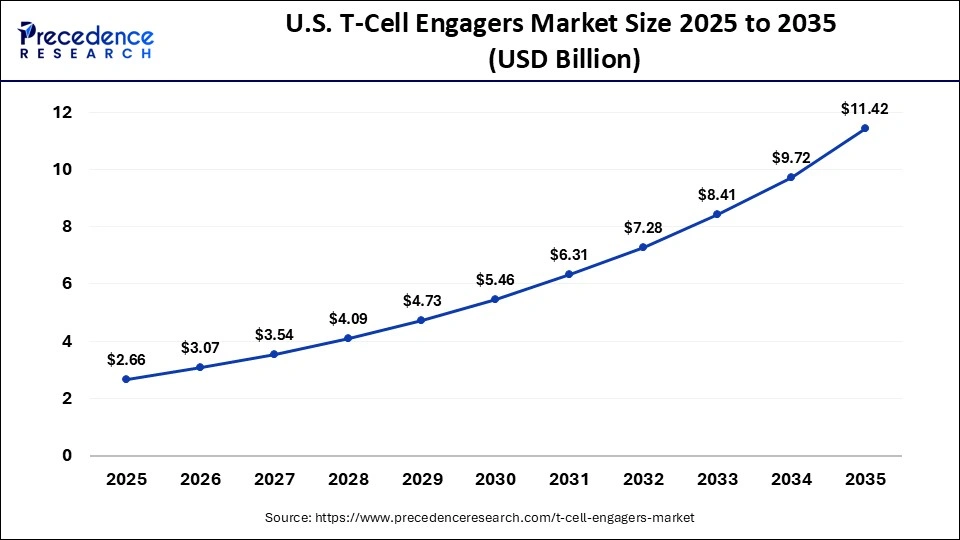
U.S. T-Cell Engagers Market Analysis
The U.S. is a major contributor to the North American market, driven by the FDA's support through fast track and breakthrough therapy designations that provide early access to innovative treatments. The country serves as a central hub for clinical development, high-value therapy investments, and treatment innovation, supported by a dense network of biotech clusters and academic institutions. Additionally, its advanced healthcare infrastructure enables rapid commercial adoption, further boosting market expansion.
Why is Asia Pacific Considered the Fastest-Growing Region in the T-Cell Engagers Market?
Asia Pacific held a 21.5% share of the market in 2025 and is expected to grow at the fastest CAGR in the upcoming period. This is primarily due to factors such as high cancer incidence rates, rapid adoption of advanced therapies, significant government investment in biotechnology infrastructure, and a large number of clinical trials. Countries like China, Japan, South Korea, and Singapore are modernizing healthcare facilities and establishing advanced immunotherapy centers. The rising prevalence of malignancies and solid tumors further fuels demand for T-cell-based therapies in the region.
China T-Cell Engagers Market Trends
China is a major contributor to the market's growth due to high-volume clinical trials, rapid biotech innovation, cost-effective manufacturing, and supportive regulatory policies. The country hosts the world's largest number of registered CAR-T trials and is actively developing bispecific T-cell engagers for solid tumors. Additionally, China is expanding cell therapy trials, particularly in the bispecific and trispecific antibody space, further driving market growth in the foreseeable future.
How is the Opportunistic Rise of Europe in the Market?
Europe is observed to be a significantly growing region in the market, driven by strong research and development, a supportive regulatory environment, and the presence of leading pharmaceutical and biotech companies. Market growth is further fueled by innovations from major players and strategic collaborations between research institutions and biotech firms. These factors collectively enhance the region's contribution to the development and adoption of T-cell engager therapies.
Germany T-Cell Engagers Market
The market in Germany is expanding rapidly, as it acts as a leading hub for immunotherapy research, clinical development, and biotech innovation. Collaborations among major companies on immune cell engager platforms to develop next-generation bispecifics targeting solid tumors and glyco-epitopes further drive market expansion in the area.
T-Cell Engagers Market Companies
- Amgen Inc.
- AstraZeneca plc
- Roche (Genentech)
- Johnson & Johnson (Janssen)
- AbbVie Inc.
- Pfizer Inc
- Genmab A/S
- Regeneron Pharmaceuticals
- Bristol Myers Squibb (BMS)
- GlaxoSmithKline (GSK)
- BeiGene, Ltd.
- Context Therapeutics Inc.
- Purple Biotech Ltd
- Macrogenics, Inc.
- Excalipoint
Recent Developments
- In January 2026, Bristol Myers Squibb (BMS) and Janux Therapeutics formed a partnership to co-develop a noel tumor-activated T cell engager therapy for solid tumors. The partnership involves Janux applying its proprietary technology through a late-preclinical development submission to allow BMS to lead the clinical trials and global commercialization.(Source: https://oncodaily.com)
- In March 2026, Kali Therapeutics announced an exclusive licensing agreement with Sanofi for KT501, a next-generation tri-specific T-cell engager being developed for B-cell-mediated autoimmune diseases. The agreement highlights the global rights of Sanofi to KT501.(Source: https://www.biopharminternational.com)
Segments Covered in the Report
By Product Type
- Bispecific T-cell Engagers (BiTEs)
- Dual-Affinity Re-Targeting (DARTs)
- Tandem scFv Antibodies (TandAbs)
- Multispecific/Trispecific Engagers
By Indication
- Hematologic Malignancies (Leukemia, Lymphoma, Myeloma)
- Solid Tumors (Lung, Ovarian, Prostate, Gastric)
- Autoimmune Disorders (Systemic Lupus Erythematosus)
By Route of Administration
- Intravenous (IV) Infusion
- Subcutaneous (SC) Injection (Fastest growing due to reduced hospital time)
By End User
- Hospitals
- Oncology clinics
- Research/Academia
By Region
- North America
- Latin America
- Europe
- Asia-pacific
- Middle and East Africa
For inquiries regarding discounts, bulk purchases, or customization requests, please contact us at sales@precedenceresearch.com
Frequently Asked Questions
Tags





Ask For Sample
No cookie-cutter, only authentic analysis – take the 1st step to become a Precedence Research client
 Get a Sample




 sales@precedenceresearch.com
 Schedule a Meeting
