



Targeted Protein Degradation Analysis Market Size, Companies, Share, Patient Volume, Treatment Adoption Rates, Pricing Analysis, Regulatory Landscape, Competitive Positioning, and Demand Forecast
Targeted Protein Degradation Analysis Market (By Degradation Platform: Molecular Glue Degraders, Autophagy-targeted Degraders, Antibody-based targeted Degraders, Hydrophobic Tagging–based Degraders, Others; By Drug: Thalidomide,Elacestrant, Others; By Route of Administration: Oral, Parenteral; By Distribution Channel: Hospital Pharmacy, Retail Pharmacy, Online Pharmacy) - Global Industry Analysis, Size, Trends, Leading Companies, Regional Outlook, and Forecast 2026 to 2035
Source: https://www.precedenceresearch.com/targeted-protein-degradation-analysis-market
 Get a Sample
 Table Of Content


What is the Targeted Protein Degradation Analysis Market Size in 2026?
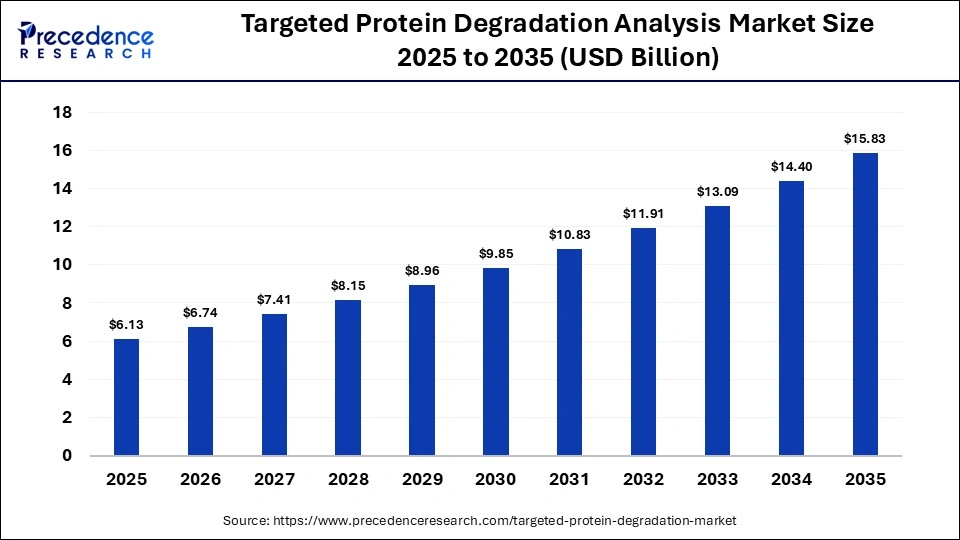
The global targeted protein degradation analysis market size was calculated at USD 6.13 billion in 2025 and is predicted to increase from USD 6.74 billion in 2026 to approximately USD 15.83 billion by 2035, expanding at a CAGR of 9.95% from 2026 to 2035. This market is experiencing robust growth, due to the ability of targeted protein degradation analysis to revolutionize the treatment by targeting previously 'undruggable' proteins in cancer and neurodegenerative diseases.
Key Takeaways
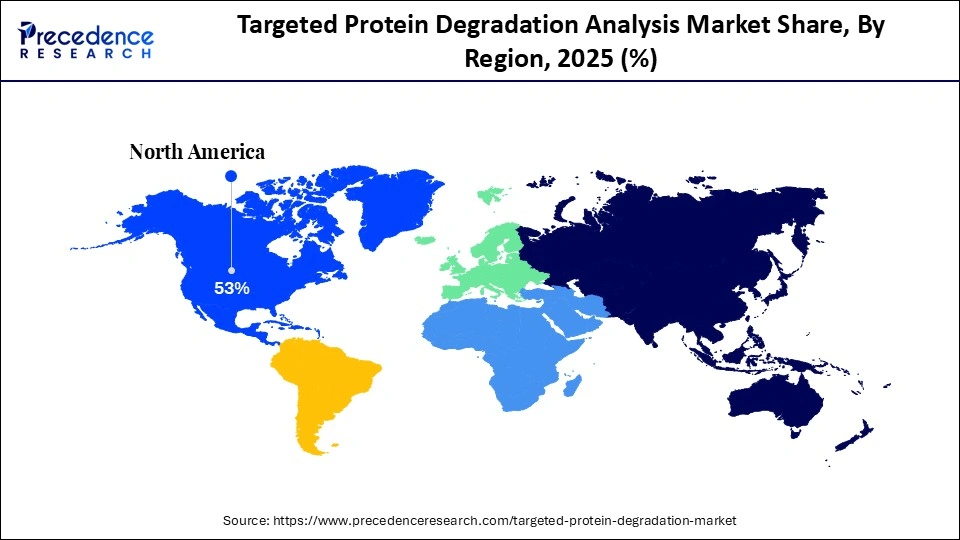
- North America dominated the market with highest share of 53% in 2025.
- Asia-Pacific is expected to be the fastest-growing region during the forecast period.
- By degradation platform, the molecular glue degraders segment held the largest share of 90% targeted protein degradation analysis market share in 2025.
- By degradation platform, the PROTACs segment is expected to grow at a remarkable CAGR between 2026 and 2035.
- By drug, the lenalidomide segment held a major market share of 61% in 2025.
- By drug, the thalidomide segment is expected to be the fastest-growing segment between 2026 and 2035.
- By route of administration, the oral segment led the market with largest share of 88% in 2025.
- By route of administration, the parenteral segment is expected to show the fastest growth in the forecast period.
- By distribution channel, the retail pharmacy segment contributed the biggest market share of 54% in 2025.
- By distribution channel, the hospital pharmacy segment is expected to grow swiftly between 2026 and 2035.
What is the Landscape of the Targeted Protein Degradation Analysis Market?
The targeted protein degradation analysis industry focuses on developing novel drugs that are utilized by the body to destroy the disease-causing protein. The industry is witnessing rapid growth, focused on targeted therapies with reduced dosage requirements. This market expansion is further driven by its ability to target the undruggable protein, high therapeutic efficacy, surge in incidence of diseases like cancer and neurodegenerative diseases, and technological advancements. Pharmaceutical development is driven by a focus on precision medicine for rare diseases and oncology. The significant R&D investments, along with investment from pharmaceutical giants, have boosted this market.
What is the Role of AI in the Targeted Protein Degradation Analysis Market?
Aartificial intelligence is transitioning the market by accelerating novel drug discovery, streamlining PROTACs' molecular design, and predicting the stability and structure of the ternary complex, which has inadvertently decreased R&D preclinical development times. AI improves preclinical development by optimizing molecular linkers and predicting ADMET profiles, thereby raising the probability of clinical approval. It is essential for novel, disease-specific proteins, thus expanding the therapeutic landscape. The integration of AI with targeted protein degradation allows for the analysis of extensive, multi-omics data to enhance the success rate in developing new therapies for chronic diseases, boosting productivity, and reducing the development cycle.
Targeted Protein Degradation Analysis Market Trends
- Dominance of PROTACs and Molecular Glues: It is expanding rapidly in the market due to their ability to remove disease-causing proteins. Recently, it has been gaining a lot of attention due to its lower molecular weight and better cell permeability.
- Oncology Lead & Therapeutic Expansion: The market is focusing on the cancer sector due to its strong therapeutic efficacy, huge R&D investments, and strong clinical pipeline targeting solid tumors and hematological malignancies.
- Technological Advancements: It hinges on developing highly specific protein degraders to minimize off-target interactions and optimize pharmacological profiles.
Market Scope
| Report Coverage | Details |
| Market Size in 2025 | USD 6.13 Billion |
| Market Size in 2026 | USD 6.74 Billion |
| Market Size by 2035 | USD 15.83 Billion |
| Market Growth Rate from 2026 to 2035 | CAGR of 9.95% |
| Dominating Region | North America |
| Fastest Growing Region | Asia Pacific |
| Base Year | 2025 |
| Forecast Period | 2026 to 2035 |
| Segments Covered | Degradation Platform, Drug, Route of Administration, and region |
| Regions Covered | North America, Europe, Asia-Pacific, Latin America, and Middle East & Africa |
Market Dynamics
Driver
Rising Demand for Targeted Therapies and Precision Medicine
Advancements in target protein degradation and the growing demand for precision medicine and targeted advanced therapeutics in complex diseases such as cancer, neurological disorders, and autoimmune disorders are major growth drivers. The escalating cost of chronic disease and the rising investment in personalised medicine solutions for drug discovery and therapeutic development. The Advanced Protein Analysis Platforms for Drug Discovery and Therapeutic Development are gaining momentum due to the growing burden of chronic diseases and the rising investments in personalised medicine.
Restraint
High Research Costs and Complex Drug Development Processes
Despite the good growth prospects, there are a number of challenges in the targeted protein degradation analysis market, including the high cost of research and development and the complex nature of protein degradation drug discovery processes. Targeted Protein Degradation drugs require sophisticated analytical tools, advanced lab facilities, and highly specialised scientific expertise, which makes them costly for drug and biotechnology companies. In addition, the protein degradation pathways are complex, and the identification of suitable target proteins is difficult, thus making it challenging to optimise drugs.
Opportunity
Expansion of PROTAC Research and AI-Driven Drug Discovery
The targeted protein degradation platform is a focus of the pharmaceutical industry's investments aimed at developing next-generation therapeutics to target disease targets that have not been available for the drug development pipeline. Recent advances in computational modelling with AI, machine learning, and predictive analytics have helped researchers in the field of protein interaction analysis, drug compound optimisation, and biomarker discovery. Protein Degradation will become more precise and efficient with the advancing mass spectrometry, proteomics technologies, and high content screening techniques.
Segmental Insights
Degradation Platform Insights
Which Degradation Platform Segment Led the Targeted Protein Degradation Analysis Market?
bioavailability, and enhanced blood-brain barrier penetration. The reason for its dominance in the market is its superior pharmacological properties, undruggable target access, high efficiency, and versatile therapeutic applications. AI-driven approaches are revolutionizing molecular glue degrader development from chance findings to rational design, accelerating the pipeline and boosting efficiency.
The PROTACs segment is expected to show the fastest growth over the forecast period. This segment is experiencing tremendous growth due to its specialized ability to eliminate disease-causing proteins, including previously undruggable targets. These are transforming drug development by enabling lower dosing, higher selectivity, and the ability to overcome resistance, leading to major investment and a rapid expansion of clinical trials. This segment is expected to see massive ongoing expansion as they establish themselves as a cornerstone of next-generation drug discovery.
Drug Insights
Why Did the Lenalidomide Segment Dominate the Targeted Protein Degradation Analysis Market?
The lenalidomide segment held the largest market share in 2025. It acts as a potent molecular glue to target and destroy major cancer-causing proteins via the ligase system. It dominates the market with its proven high-potency treatment in multiple myeloma and its crucial role in PROTACs development. This segment's market position is bolstered by its accessibility, proven safety, and widespread approval, paired with the introduction of generic versions.
The thalidomide segment is expected to gain the highest market share between 2026 and 2035. Its rapid growth in the market is propelled by serving as a core molecular glue that enhances the selective removal of disease-related proteins, providing a new therapeutic option for formerly untreatable diseases.
Route of Administration Insights
What Made the Oral Segment Lead the Targeted Protein Degradation Analysis Market?
The oral segment held the largest market share in 2025. The rapid growth in the market is due to its unique blend of patient convenience, enhanced chronic treatment adherence, and high manufacturing scalability. The pivot towards patient-friendly therapies that do not require frequent hospital visits has boosted the segment's growth. Oral formulations provide a cost-effective alternative for manufacturers and health systems, as they are cheaper to produce and require no specialized, professional administration, which reduces the burden on the healthcare system.
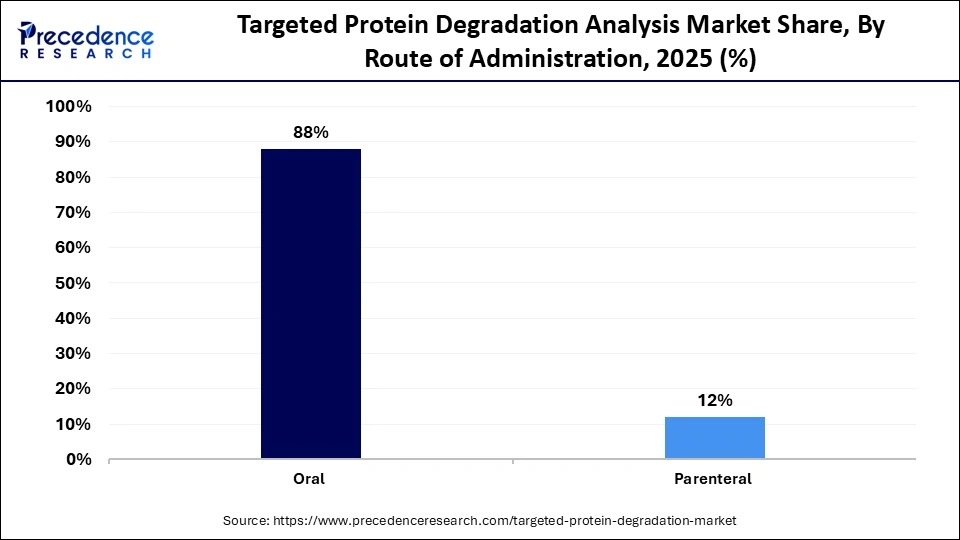
The parenteral segment is expected to rise with the highest CAGR between 2026 and 2035. These parenteral routes provide a reliable, direct route into systemic circulation, which is essential to overcome this pharmacokinetic limitation, ensuring effective therapeutic concentration. The parenteral route improves adherence by providing sustained release and reducing the frequency of dosing, propelling the segment's growth. The segmental growth is also attributed to the need for immediate, high-potency outcomes in clinical trials.
Distribution Channel Insights
Which Distribution Channel Segment Dominated the Targeted Protein Degradation Analysis Market?
The retail pharmacy segment accounted for the highest market share in 2025. It dominates this market due to ease of accessibility, patient convenience, and compliance. The retail channel is expanding due to an increase in the incidence of cancer that demands accessible, prolonged, and effective treatment that can be easily accessed through this channel. Retailers are pivoting towards a patient-centric model by improving the network to better support specialized therapies, boosting the segment's growth.
The hospital pharmacy segment is expected to witness the fastest growth in the market over the forecast period. It is witnessing massive growth due to the increasing adoption of precision medicine that requires specialized handling of complex, high-cost therapies. The hospital pharmacy is leading the way in targeted protein degradation trials and diagnostic tools, managing the complex, specialized requirements of these new treatments. Hospital pharmacies improve long-term treatment adherence by providing patient-centered care through proper medication administration and monitoring, which further boosts this segment.
Regional Insights
North America Targeted Protein Degradation Analysis Market Size and Growth 2026 to 2035
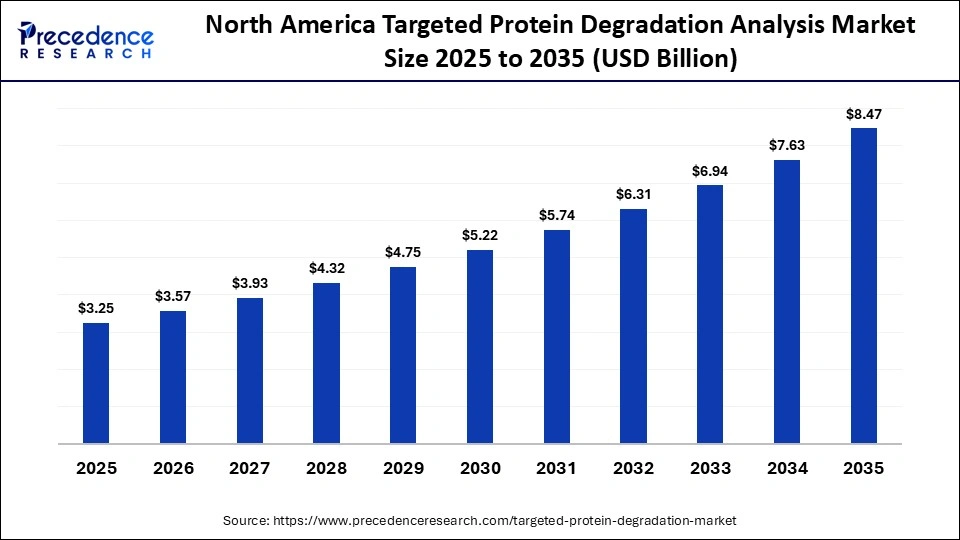
The North America targeted protein degradation analysis market size is estimated at USD 3.25 billion in 2025 and is projected to reach approximately USD 8.47 billion by 2035, with a 10.05% CAGR from 2026 to 2035.
Why Did North America Dominate the Targeted Protein Degradation Analysis Market?
North America held a major market share in 2025, due to a high concentration of biotech firms, huge R&D investments, and well-established clinical trial infrastructure. The regional leadership is further expanded by favorable regulatory standards, robust intellectual property protection, and early and rapid adoption of advanced technologies. Massive investments from private, public, and partner sources are driving rapid innovation and pipeline growth, which further boost the market.
U.S. Targeted Protein Degradation Analysis Market Size and Growth 2026 to 2035
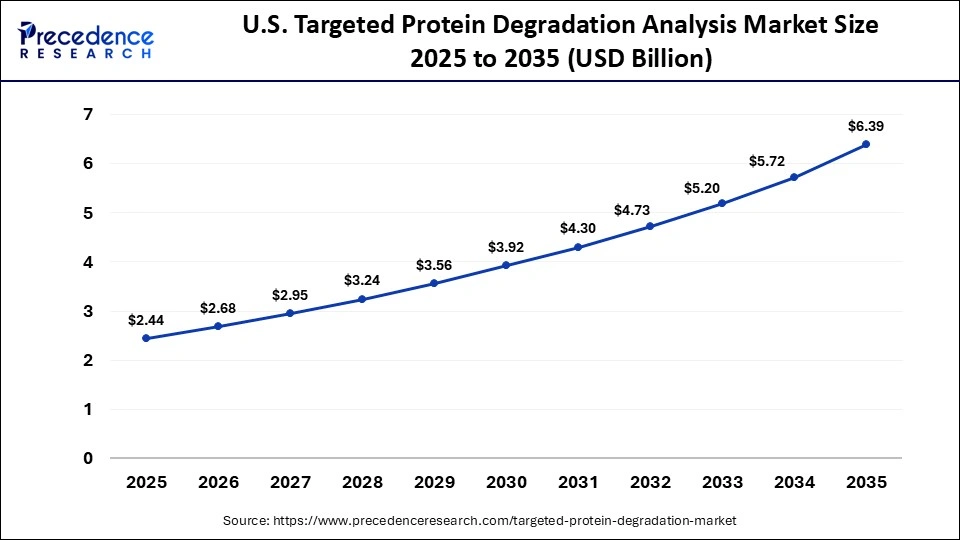
The U.S. targeted protein degradation analysis market size is calculated at USD 2.44 billion in 2025 and is expected to reach nearly USD 6.39 billion in 2035, accelerating at a strong CAGR of 10.11% between 2026 and 2035.
U.S. Market Trends
The U.S. dominates the market in North America due to a well-established biotech infrastructure, massive investment in drug discovery, and a high concentration of clinical trials. The integration of advanced AI, machine learning, and high-throughput screening is remarkably shortening the time-to-market for targeted protein degradation therapies. The market is fueled by a supportive regulatory framework, the presence of major companies, advanced technologies, robust venture capital, and mature R&D infrastructure.
How is Asia-Pacific Growing in the Targeted Protein Degradation Analysis Market?
Asia-Pacific is expected to grow with the highest CAGR during the forecast period. It is witnessing massive growth due to huge investments in biotechnology, an increase in the incidence of cancer and chronic diseases, and increased R&D capabilities. A surge in the adoption of advanced and newer technologies, paired with favorable government support for innovative therapies, fuels market growth. An increasing number of clinical trials and strategic partnerships between local pharmaceutical companies and global firms are further boosting the market.
China Market Trends
China leads this market in this region due to rapid, huge investments in biotech R&D, a surge in the prevalence of cancer cases, and advanced drug discovery. The government is actively backing biotech innovation, bolstering clinical trials, and promoting research that expands the market. China is a primary hub for targeted protein degrader development, as it lowers the manufacturing and research cost, along with the surge in partnerships between local firms and global pharma companies.
Which Region Shows Notable Growth in the Targeted Protein Degradation Analysis Market?
Europe is expected to grow at a notable CAGR in the foreseeable future. The market is propelled by massive R&D investments, robust collaborative infrastructure between academia and pharma, and the treatment of formerly untreatable diseases. The supportive regulatory framework and focus on personalized medicine further expand the market. Driven by a platform-as-a-product model, European biotech firms are accelerating their pipelines by utilizing proprietary technologies to create a diverse range of drug candidates.
United Kingdom Market Trends
The United Kingdom dominates the market due to robust pharmaceutical R&D, strong academic-industry collaboration, and massive investment in research. Government support through grants and incentives for innovative therapies, along with a focus on precision medicine, accelerates the market. Domestic demand and investment in targeted protein degraders are rising, propelled by increasing awareness of their potential to treat resistant cancers and protein misfolding diseases.
What are the Key Trends in the Targeted Protein Degradation Analysis Market in Latin America?
Latin America is expected to have significant growth in the market, due to increased investments in biotechnology research, the prevalence of chronic diseases, and a rise in interest in advanced drug discovery technologies. Research in other countries, such as Brazil, Mexico, and Argentina, is expanding in a variety of therapeutic areas, such as oncology, autoimmune disorders, and neurodegenerative disorders, showing that targeted degradation of proteins has significant therapeutic potential. These teams from universities and other research institutions are also making increasingly close ties with biotech firms globally for access to the latest in proteomics platforms and tools.
Brazil Market Trends
Brazil is emerging as a key market for targeted protein degradation analysis in Latin America, with an increased budget for pharmaceutical innovations and a strong academic research environment. As the burden of cancer and chronic diseases reaches colossal proportions, Pharma companies are investing in other improved platforms for drug discovery, which include the PROTAC-based drug discovery platform and the molecular glue-based drug discovery platform. Additionally, Brazil is a partner member in international clinical research collaborations to improve access to advanced analysis tools and methods.
How is the Middle East and Africa Region Growing in the Targeted Protein Degradation Analysis Market?
The Middle East and Africa are expected to have significant market growth in the upcoming years, due to the widespread rise of investments for healthcare research, focus on biotechnology development, and adoption of novel drug discovery technologies. The UAE, Saudi Arabia, and South Africa are investing in life science and pharmaceutical research initiatives and partnerships to bolster their research capacity. Innovative therapeutic approaches such as targeted protein degradation technologies are becoming increasingly important.
Saudi Arabia Market Trends
Saudi Arabia is emerging as an important market for targeted protein degradation analysis, driven by growing momentum in the country due to the government's support for the development of the sector. The development of advanced biomedical research facilities, such as centres for genomics, proteomics, and molecular biology, is further driving innovative drug discovery efforts. As chronic diseases with crippling consequences, such as cancer, diabetes-related disorders, and genetic diseases, have become more prevalent, the demand for advanced therapeutic research methods is growing.
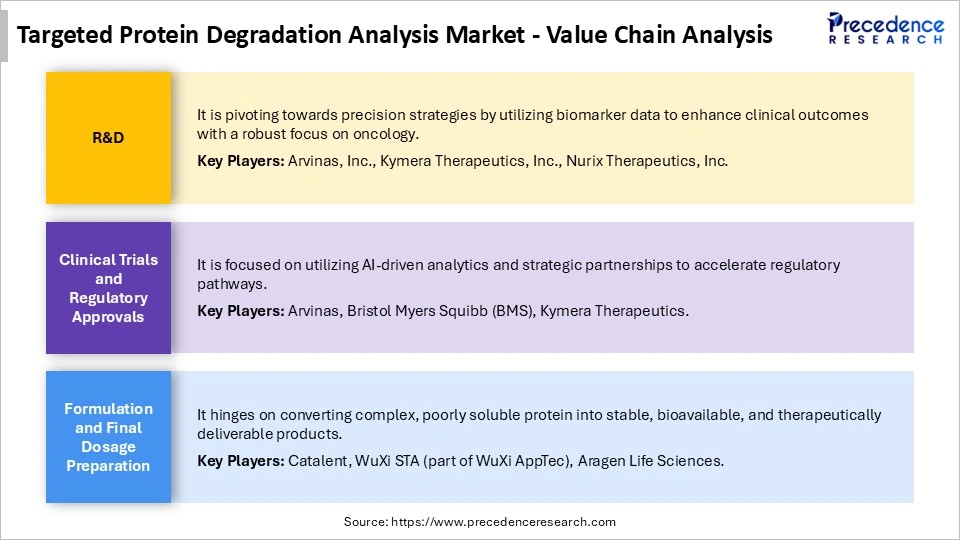
Targeted Protein Degradation Analysis Market Value Chain Analysis
Targeted Protein Degradation Analysis Market Companies
- Arvinas, Inc.
- Bristol Myers Squibb (BMS)
- Kymera Therapeutics, Inc.
- Nurix Therapeutics, Inc
- C4 Therapeutics, Inc.
- Monte Rosa Therapeutics
- Foghorn Therapeutics, Inc.
- Bayer AG
- Roche Holding AG (Genentech)
- Pfizer Inc
- Sanofi
- Amgen Inc.
- Novartis AG
- AbbVie Inc.
- Merck & Co., Inc. (MSD)
Recent Developments
- In January 2026, Enodia Therapeutics secured €20.7M ($25 million) to advance a small-molecule platform for targeted protein degradation enabled by proteomics and machine learning. The platform could modulate the SEC61 translocon, where secreted and transmembrane proteins are directed into the secretory pathway. (Source: https://www.businesswire.com)
- In December 2025, Kymera Therapeutics, Inc. announced a new class of oral small molecule degrader medicines for immunological diseases that the FDA has granted Fast Track designation to KT-621, its first-in-class oral STAT6 degrader, for the treatment of moderate to severe atopic dermatitis (AD). The company develops novel medicines using targeted protein degradation (TPD). (Source: https://investingnews.com)
- In September 2025, Monte Rosa Therapeutics Inc., a developer of novel molecular glue degrader-based medicine, announced an agreement to collaborate with Novartis to develop novel degraders for immune-mediated disease. Monte Rosa aims to use their proprietary AI/ML-enabled QuEEN product engine for the discovery and development of degraders. (Source: https://medicaldialogues.in)
- In March 2025, the FDA granted orphan drug designation to bexobrutideg (NX-5948), an orally bioavailable, brain-penetrant BTK degrader, for the treatment of patients with Waldenström macroglobulinemia. The drug was recognized by the USAN Council as a uniqu entity and a member of targeted protein degraders. (Source: https://www.onclive.com)
Segments Covered in the Report
By Degradation Platform
- Molecular Glue Degraders
- Lysosome-targeted Degraders
- PROTACs
- Autophagy-targeted Degraders
- Antibody-based targeted Degraders
- Hydrophobic Tagging–based Degraders
- Others
By Drug
- Thalidomide
- Lenalidomide
- Fulvestrant
- Elacestrant
- Others
By Route of Administration
- Oral
- Parenteral
By Distribution Channel
- Hospital Pharmacy
- Retail Pharmacy
- Online Pharmacy
By Region
- North America
- Asia Pacific
- Europe
- Latin America
- Middle East & Africa
For inquiries regarding discounts, bulk purchases, or customization requests, please contact us at sales@precedenceresearch.com
Frequently Asked Questions





Ask For Sample
No cookie-cutter, only authentic analysis – take the 1st step to become a Precedence Research client
 Get a Sample
.webp)



 sales@precedenceresearch.com
 Schedule a Meeting
