



Theranostics Market Size, Companies, Share, Patient Volume, Treatment Adoption Rates, Pricing Analysis, Regulatory Landscape, Competitive Positioning, and Demand Forecast
Theranostics Market (By Application: Oncology, Neurology, Cardiology, Infectious Diseases, Autoimmune Diseases; By Technology: Molecular Imaging, Biomarkers, Genomics, Proteomics, Metabolomics; By End User: Hospitals, Diagnostic Laboratories, Research Institutions, Pharmaceutical Companies, Academic Institutions) - Global Industry Analysis, Size, Trends, Leading Companies, Regional Outlook, and Forecast 2026 to 2035
Source: https://www.precedenceresearch.com/theranostics-market
 Get a Sample
 Table Of Content


What is the Theranostics Market Size?
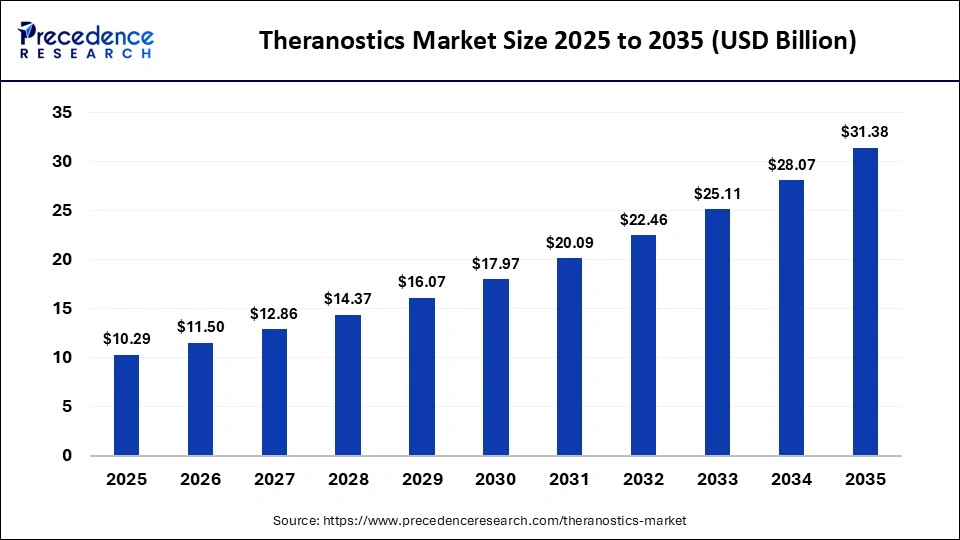
The global theranostics market size was calculated at USD 10.29 billion in 2025 and is predicted to increase from USD 11.50 billion in 2026 to approximately USD 31.38 billion by 2035, expanding at a CAGR of 11.8% from 2026 to 2035. The market combines diagnostic imaging with targeted therapy for a personalized approach to the detection and treatment of the disease, particularly cancer. The market growth is driven by the rising incidence of chronic diseases, the shift toward personalized medicine, and advances in molecular imaging and radiopharmaceuticals.
Key Takeaways
- North America held a dominant position in the theranostics market in 2025.
- Asia-Pacific is expected to grow at the fastest CAGR in the market between 2026 and 2035.
- By application, the oncology segment dominated the global market in 2025.
- By application, the neurology segment is expected to witness the fastest growth in the market over the forecast period.
- By technology, the molecular imaging segment contributed the biggest revenue share in the market in 2025.
- By technology, the biomarkers segment is expected to expand rapidly in the market in the coming years.
- By end use, the hospitals segment held the largest revenue share in the market in 2025.
- By end use, the diagnostic laboratories segment is expected to show the fastest growth over the forecast period.
What is the Theranostics Market?
Theranostics is emerging as a strong tool in the battle against cancer, marking a significant advancement in precision medicine for patients with exhausted standard treatments. This method integrates diagnostic and therapeutic capabilities into a single agent, while using a targeting molecule that binds to cancer cells to deliver both imaging and therapeutic radiation directly to tumors. This focused approach minimizes damage to healthy tissues and enables a real-time assessment of treatment. Moreover, the diagnostic allows for tailored treatment planning by determining whether patients' cancer expresses the target molecule or not. Theranostics provide crucial progress in cancer treatment for patients with advanced or metastatic cancers.
The market combines diagnostic imaging with targeted therapies, mainly using radiopharmaceuticals to locate, track, and treat cancer. It also uses a single molecular targeting agent to identify disease locations and ensure treatment with a powerful radioactive particle. The increasing need for personalized therapies, progress in molecular biology, and the demand for improved outcomes in metastatic cancer are fueling this expansion. It generally leads to fewer or less severe side effects compared to conventional chemotherapy. Theranostics is considered a significant breakthrough in oncology, frequently applied when other treatments are unsuccessful.
What is the Role of AI in the Theranostics Market?
Artificial Intelligence is significantly transforming the market by combining molecular imaging with targeted therapies to enhance precision medicine, particularly in oncology. It accelerates drug discovery, improves personalized dose selection, refines image reconstruction, and helps in developing advanced nanoplatforms for real-time drug delivery monitoring. AI also improves the design of complex nanocarriers for targeted drug delivery. It allows for real-time tracking, adaptive release mechanisms, and reduces toxicity. Additionally, generative AI accelerates the discovery of new therapeutic targets and helps in repurposing existing drugs, which reduces costs.
Machine learning algorithms analyze complex data of patient-specific molecular profiles, increasing the accuracy of cancer detection and evaluations. Furthermore, the combination of AI with nuclear medicine and nanotechnology promotes more accurate, efficient, and personalized patient care, turning diagnostic images into actionable treatment strategies. AI also predicts and mitigates treatment-related side effects, with timely interventions. Thus, the current uses of AI in theranostics intend to broaden the potential for future research and innovation.
What are the Trends in the Theranostics Market?
- Shift Towards Personalized Medicine: The shift to personalized medicine in theranostics is crucial for providing targeted cancer care, increasing treatment efficacy, and minimizing toxicity. By integrating molecular imaging with targeted therapy, this method enables precise dose adjustments based on individual genetic and biological markers. Also, personalized theranostics optimize therapies, which improves outcomes and survival rates in patients. Additionally, a precision focus on tumor cells reduces harm to healthy tissues, significantly lowering the side effects. This approach also reduces dependency on ineffective treatments, helping in cutting healthcare costs and enhance the streamlining of drug development.
- Rapid Growth of Radiopharmaceuticals: The rapid expansion of radiopharmaceuticals is vital for the market, as it enables targeted and personalized cancer treatments, increases patient outcomes, and minimizes toxicity. This growth is fueled by rising cancer rates, advancements in targeted radionuclide therapy (TRT), and the acceleration of the development of precise diagnostic imaging tracers. Radiopharmaceuticals also allow healthcare providers to identify specific cancer tissues through PET or SPECT, which delivers targeted radiation, protecting healthy cells. Thus, it is revolutionizing cancer treatment by facilitating real-time assessments of treatment efficacy.
- Advances in Molecular Diagnostics: Advancements in molecular diagnostics are crucial for theranostics as they enable precise identification and monitoring of molecular biomarkers, which are essential for selecting patients for targeted therapies. Innovations like next-generation sequencing (NGS), digital PCR, and liquid biopsies allow clinicians to customize treatments, minimizing toxicity and increasing patient outcomes. Progress in genomics, proteomics, and biomarker assays facilitates the identification of disease-specific molecular targets, helping in the development of targeted drugs. Molecular diagnostics also provide real-time, non-invasive evaluations of therapy's efficacy, which allows clinicians to adjust the treatment strategies as needed.
Market Scope
| Report Coverage | Details |
| Market Size in 2025 | USD 10.29 Billion |
| Market Size in 2026 | USD 11.50 Billion |
| Market Size by 2035 | USD 31.38 Billion |
| Market Growth Rate from 2026 to 2035 | CAGR of 11.8% |
| Dominating Region | North America |
| Fastest Growing Region | Asia Pacific |
| Base Year | 2025 |
| Forecast Period | 2026 to 2035 |
| Segments Covered | Technology, End Use, Application, and region |
| Regions Covered | North America, Europe, Asia-Pacific, Latin America, and Middle East & Africa |
Market Dynamics
Driver
Growing Demand for Personalized Medicine
The rising demand for individualized medicine and targeted therapeutic strategies for oncology and chronic diseases is fueling the market. The growing incidence of cancer and cardiovascular diseases has contributed to the rising adoption of diagnostic-guided therapies to enhance treatment precision and outcomes for the patient. The benefit of theranostic solutions is further bolstered by the development of molecular imaging, radiopharmaceuticals, and the use of biomarkers to facilitate diagnostics. Further, increased research in precision medicine and supportive regulatory efforts are driving pharmaceutical and biotechnology companies to increase their theragnostic development pipelines.
Restraint
High Cost and Lack of Trained Professionals
High costs of developing the radiopharmaceuticals, imaging systems, and specific therapeutic procedures restrict market growth. Strict regulatory approvals and complicated production needs for radioactive materials can slow down product commercialization and make operations difficult. Moreover, the market may be limited in developing areas due to a lack of trained personnel in the field of nuclear medicine and the lack of infrastructure. Other potential risks and constraints to market growth include concern about radiation exposure, reimbursement restrictions, and the short shelf life of some radiopharmaceuticals.
Opportunity
Expansion of Nuclear Medical Infrastructure
Market opportunities are significant with the expansion of the nuclear medicine infrastructure and growing clinical applications of theranostics in cancer management. Healthcare systems are continuing to invest in new diagnostic technologies and targeted therapies, presenting the emerging economies with robust growth opportunities. In addition, the adoption of AI, genomic profiles, and companion diagnostics is anticipated to drive better patient selection and speed up innovation in the market. There is also an increasing level of cooperation between pharmaceutical companies, diagnostic developers, and research institutions, which is expected to pave the way for the commercialization of new theranostic agents and radioligand therapies.
Segmental Insights
Application Insights
Which Application Segment Dominated the Theranostics Market?
The oncology segment held the largest market share in 2025 due to the increasing global cancer crisis, personalized treatments, and the success of radio-theranostics with targeted radiation. This position is further fueled by the capability of theranostics to accurately identify, treat, and monitor tumors in real-time, protecting healthy tissues.
The increase in cancer cases has heightened the demand for advanced diagnostic and treatment options, which facilitate molecular diagnostics to detect genetic mutations and tailor treatments, which are essential for modern cancer care. Additionally, significant investments in cancer research, new radiopharmaceuticals, and a strong pipeline of clinical trials have further boosted the segment's growth.
The neurology segment is expected to gain the highest market share between 2026 and 2035, mainly because of the growing prevalence of chronic neurological disorders such as Alzheimer's, Parkinson's, and epilepsy, which require precise, customized, and prompt treatments. Advancements in molecular imaging methods, such as PET/MRI, neural implants, and targeted radiopharmaceuticals, enable simultaneous, less invasive diagnosis and therapy.
Additionally, the increasing demand for less invasive neurosurgical instruments, such as flow diverters for cerebral aneurysms, drives the market towards more advanced and specialized treatments. Advancements in deep-brain stimulation (DBS) implants for conditions like Parkinson's disease increased the adoption of these technologies, augmenting the segment's growth.
Technology Insights
Why Did the Molecular Imaging Segment Dominate the Theranostics Market?
The molecular imaging segment held a dominant position in the market in 2025, as it helps to accurately identify biological targets and monitor treatment responses in real-time, vital in precision medicine. It is an early and measurable diagnostic method for advancing targeted therapies, detecting diseases, help strengthen patient outcomes.
Also, techniques like PET/CT assist in real-time evaluation of treatment efficacy. Furthermore, advances in AI, hybrid imaging, and new radiotracers have increased diagnostic accuracy and speed. Additionally, the rising incidence of cancers, particularly prostate cancer, necessitating targeted therapies, is a key driver of market growth.
The biomarkers segment is expected to show the fastest growth over the forecast period, due to its vital role in personalized medicine, facilitating precise disease identification and monitoring at the molecular level. Their dual function in diagnosis and targeted therapy in oncology contributes to the segment's growth. Biomarkers also help identify specific molecular targets, allowing for tailored treatments that reduce trial-and-error and side effects. Additionally, pharmaceutical companies are increasingly partnering with diagnostic firms to develop therapies based on biomarkers, integrating diagnostic, prognostic, and predictive markers into treatment. Furthermore, advances in 'omics' technologies and liquid biopsy have enhanced the efficiency and accuracy of biomarker diagnostics.
End Use Insights
Which End Use Segment Led the Theranostics Market?
The hospitals segment led the market in 2025 due to its advanced infrastructure, high patient volume, and capability to integrate complex diagnostic imaging like PET/CT and MRI with targeted therapies. Hospitals are the main setting for managing radiopharmaceuticals and personalized medicine in oncology and cardiology.
The surge in rates of cancer and chronic diseases increases the need for specialized and high-capacity care facilities that hospitals can offer. Additionally, strong collaborations between major industry players and hospitals, especially linked with universities, help in the adoption of innovative and advanced therapeutic solutions.
The diagnostic laboratories segment is expected to witness the fastest growth in the market over the forecast period, as it acts as a main gatekeeper for personalized medicine, offering necessary infrastructure for molecular testing, biomarker analysis, and precise imaging. Laboratories are essential for enabling early and accurate disease detection, particularly in cancer cases.
There is a significant rise in the need for advanced testing techniques in diagnostic laboratories, such as NGS and PCR, which are vital for detecting genetic mutations for targeted theranostics treatments. Additionally, diagnostic laboratories are increasingly implementing AI-based molecular diagnostics and liquid biopsies to provide less invasive and highly accurate testing, accelerating the segment's growth.
Regional Insights
Which Factors Drive the Theranostics Market in North America?
North America held a major market share in 2025 due to its advanced healthcare system, high rates of chronic diseases, including cancer, and rapid adoption of personalized medicine. Strong R&D investments, favorable reimbursement policies, and key industry players in clinical trials boost this leadership further. Also, the high prevalence of cancer and heart diseases necessitates advanced diagnostic and treatment methods. Furthermore, significant funding from the government and private sectors fosters innovation in radiopharmaceuticals and molecular diagnostics with strong university-industry partnerships. Additionally, established nuclear medicine facilities and advanced imaging technologies facilitate the quick implementation of innovations in the region.
U.S. Market Trends
The U.S. leads the market in North America due to its advanced healthcare system, high cancer rates, and rapid adoption of precision medicine. Key factors include significant R&D investments, numerous FDA approvals, a strong presence of major industry players, and favorable reimbursement policies for molecular diagnostics.
The U.S. also offers established nuclear medicine facilities and advanced imaging technologies, which are crucial for theranostics. Additionally, it serves as an innovation hub, supported by pharmaceutical companies in oncology and neurology. Regular FDA approvals for new radiopharmaceuticals and molecular imaging agents are increasing awareness and usage in the industry.
How Will the Asia-Pacific Region Grow in the Theranostics Market?
Asia-Pacific is expected to host the fastest-growing market in the coming years, driven by a high occurrence of chronic diseases, fast improvements in healthcare infrastructure, and large investments in biotechnology. The region is witnessing a rising incidence of cancer, heart disorders, and brain disorders. Countries are heavily investing in their healthcare systems, including advanced nuclear medicine facilities.
Also, governments are actively supporting the use of precision medicine and molecular diagnostics with favorable policies and increased healthcare funding. Furthermore, increasing partnerships between global pharmaceutical companies and local stakeholders and rising investments in local radioisotope production are helping to improve access and reduce logistical issues.
Japan Market Trends
Japan's market is driven by an aging population, substantial government R&D funding, and a robust healthcare system. The country excels in genomic testing, molecular imaging, and radiopharmaceuticals, with innovators like Astellas, Daiichi Sankyo, and Ono. As the elderly demographic increases, the demand for personalized cancer treatments is high. The market also benefits from PMDA regulations, which ensure efficient use of validated technologies. Additionally, collaborations between academic centers and industry further promote clinical trials and next-gen targeted therapies.
What are the Advancements in the Theranostics Market in Europe?
Europe is witnessing significant growth in the market. This growth and development are due to increasing investments being made in healthcare technology and rising awareness about the benefits of theranostics. Countries like Germany, France, and the UK are leading players in the region as they are supported by favorable policies and funding for innovative healthcare solutions.
Germany Market Trends
The country has a strong emphasis on research and development and the presence of supportive regulatory bodies that ensure compliance and safety, fostering a conducive environment for market growth.
What are the Key Trends in the Theranostics Market in Latin America?
Latin America is expected to have significant growth throughout the forecast years, due to rising adoption rates and constantly improving healthcare infrastructure. Countries like Brazil and Mexico are leading players in the region as they are seen investing heavily in the healthcare domain, which is expected to boost the adoption of theranostics technologies. Regulatory support is also improving, facilitating market entry for innovative solutions.
Brazil Trends
Companies like Illumina and AstraZeneca are expanding their presence in the region, capitalizing on the growing demand for advanced diagnostic solutions. The increasing prevalence of chronic diseases further propels the need for personalized treatment options, making the Asia-Pacific a key region for future growth in the Theranostics market.
How is the Middle East and Africa Region Growing in the Theranostics Market?
The Middle East and Africa region is anticipated to have significant market growth in the upcoming years, driven by increased healthcare investments and the rising awareness about personalized medicine. Countries like South Africa and the UAE are leading players in the region as they are seen making strides in improving healthcare access, which will further enhance the adoption of theranostic solutions in the future.
Saudi Arabia Trends
Local companies in the country are beginning to collaborate with international firms to enhance their capabilities. As healthcare systems evolve and regulatory frameworks improve, the region is expected to see gradual yet steady growth in the market.
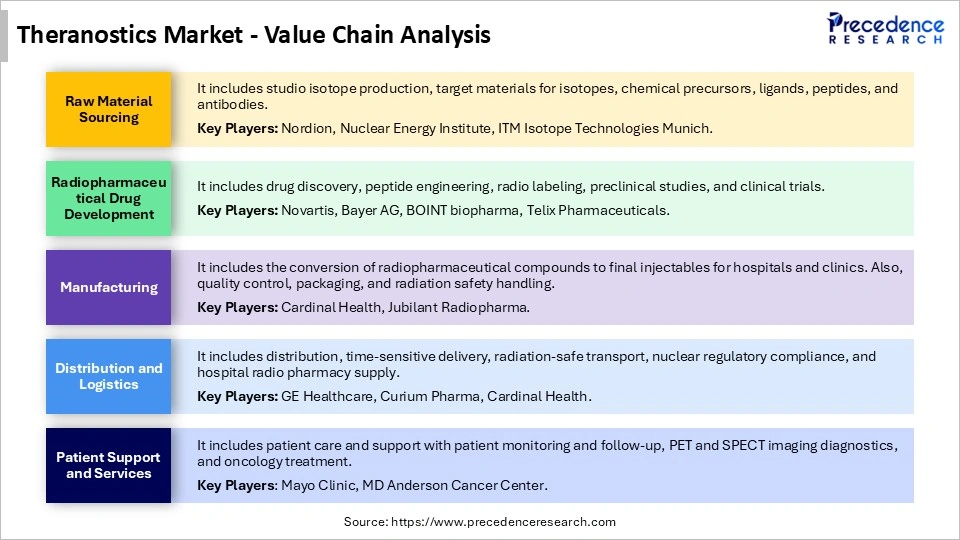
Theranostics Market Value Chain Analysis
Theranostics Market Companies
- Bayer AG
- Novartis / Advanced Accelerator Applications (AAA)
- GE HealthCare Technologies Inc.
- Telix Pharmaceuticals Ltd.
- Curium Pharma
- Siemens Healthineers AG
- Lantheus Holdings, Inc.
- Cardinal Health, Inc.
- Jubilant Pharmova Ltd. (Jubilant Radiopharma)
- ITM Isotope Technologies Munich SE
Recent Developments
- In February 2026, the University of Kansas Health System, the University of Kansas Medical Center, Children's Mercy, and Bold Advanced Medical Future announced a collaboration to develop a fully integrated theranostics platform for adults and children in Kansas City. The platform aims to enable molecular imaging, radioligand clinical trials, radiopharmaceutical production, and radiopharmaceutical therapy.
(Source: https://www.mobihealthnews.com) - In November 2025, UCLA announced the launch of a new Department of Nuclear Medicine and Theranostics, aimed at integrating advanced imaging with treatment strategies to enhance scientific progress and precision health. Plans also include expanding theranostic programs, creating new educational opportunities, and strengthening research partnerships.
(Source - https://radiologybusiness.com)
Segments Covered in the Report
By Application
- Oncology
- Neurology
- Cardiology
- Infectious Diseases
- Autoimmune Diseases
By Technology
- Molecular Imaging
- Biomarkers
- Genomics
- Proteomics
- Metabolomics
By End User
- Hospitals
- Diagnostic Laboratories
- Research Institutions
- Pharmaceutical Companies
- Academic Institutions
By Region
- North America
- Asia Pacific
- Europe
- Latin America
- Middle East & Africa
For inquiries regarding discounts, bulk purchases, or customization requests, please contact us at sales@precedenceresearch.com
Frequently Asked Questions
Tags





Ask For Sample
No cookie-cutter, only authentic analysis – take the 1st step to become a Precedence Research client
 Get a Sample
.webp)



 sales@precedenceresearch.com
 Schedule a Meeting
