



U.S. Cardiovascular Drugs Market Size, Companies, Share, Patient Volume, Treatment Adoption Rates, Pricing Analysis, Regulatory Landscape, Competitive Positioning, and Demand Forecast
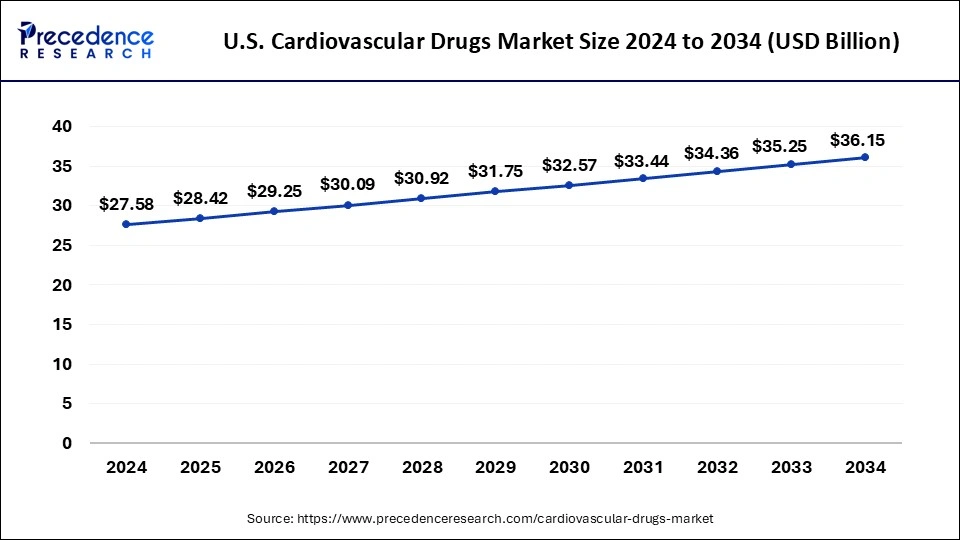
Rohan Patil, a Healthcare Industry Expert, highlights that the U.S. cardiovascular drugs market has reached USD 29.25 billion in 2026 and is on track to reach USD 37.03 billion by 2035, advancing at a CAGR of 2.68%. Key U.S. cardiovascular drugs market companies shaping the market include Bristol-Myers Squibb, Bayer AG, Pfizer Inc., while major growth segments span By Drug Type, By Disease Indication, By Route of Administration, By Distribution Channel.
Source: https://www.precedenceresearch.com/us-cardiovascular-drugs-market
 Get a Sample
 Table Of Content


US Cardiovascular Drugs Market Size and Forecast 2026 to 2035
The US cardiovascular drugs market size accounted for USD 28.42 billion in 2025 and is predicted to increase from USD 29.25 billion in 2026 to approximately USD 37.03 billion by 2035, expanding at a CAGR of 2.68% from 2026 to 2035. The market is witnessing substantial growth, mainly driven by the increasing prevalence of hypertension and heart failure, paired with a high demand for convenient oral medications and next-generation combination therapies that enhance patient compliance.
Key Takeaways
- By drug type, the anticoagulants segment held a major market share in 2025.
- By drug type, the antihypertensive segment is expected to expand at the fastest CAGR from 2026 to 2035.
- By disease indication, the hypertension segment contributed the highest market share in 2025.
- By disease indication, the arrhythmias segment is growing at a strong CAGR between 2026 and 2035.
- By route of administration, the oral segment generated the biggest market share in 2025.
- By route of administration, the parenteral segment is expanding at the fastest CAGR between 2026 and 2035.
- By distribution channel, the retail stores segment accounted for the largest market share in 2025.
- By distribution channel, the hospital pharmacies segment is projected to grow at a solid CAGR between 2026 and 2035.
Market Overview
The U.S. cardiovascular drugs market comprises pharmaceutical compounds and therapeutics used to treat and manage heart disorders and vascular diseases. These drugs are designed to target the heart, blood vessels, and the circulatory system. Their primary goals are to manage underlying conditions, prevent life-threatening events, and improve patient survival rates. This is driven by an aging population and a high prevalence of conditions such as hypertension and hyperlipidemia, along with significant investments in clinical research and new drug launches.
How is AI Transforming the U.S. Cardiovascular Drugs Industry?
Artificial intelligence (AI) is playing a transformative role in the market by accelerating drug discovery, optimizing clinical trial designs, and personalizing patient pharmacotherapy. AI tools enhance patient recruitment, predict responsiveness to treatment, and automate data collection, thereby reducing the time needed for cardiovascular clinical trials. By analyzing electrocardiograms and imaging scans, AI can detect heart failure and arrhythmias before symptoms manifest, identifying the populations to benefit from specific medications.
Market Report Coverage and Key Metrics
| Report Coverage | Details |
| Market Size in 2025 | USD 28.42 Billion |
| Market Size in 2026 | USD 29.25 Billion |
| Market Size by 2035 | USD 37.03 Billion |
| Growth Rate from 2026 to 2035 | CAGR of 2.68% |
| Base Year | 2025 |
| Forecast Period | 2026 to 2035 |
| Segments Covered | Drug Type, Disease Indication, Route of Administration, and Distribution Channel, |
Market Dynamics
Drivers
The Rise of RNA Therapeutics and Precision Genomics
Precision medicine and RNA-targeted therapeutics are revolutionizing cardiology by addressing previously intractable lipid and metabolic pathways. Innovations such as CRISPR-mediated pharmacokinetic modifications and novel lipid nanoparticles enable targeted drug delivery, significantly reducing off-target risks and improving bioavailability. This shift, accelerated by AI-driven computational drug design, moves away from traditional trial-and-error approaches for treating heart failure and hyperlipidemia.
Restraint
Patent Cliffs and Generic Erosion
Despite these transformative advances, the market faces constraints from routine patent expirations and aggressive competition from generics. These factors erode profit margins and limit long-term revenue growth for blockbuster drugs. Additionally, the pharmaceutical industry is experiencing a challenging transition from traditional, low-cost oral small-molecule medications to highly complex biologics, stifling market penetration and increasing compliance costs for novel interventions.
Opportunity
Cardiovascular Gene Editing and Regenerative Nanomedicines
The development of in vivo gene editing and biocompatible nanomaterials presents a significant opportunity to shift from symptom management to curative, one-time treatments for severe genetic heart diseases and cardiovascular degeneration. By utilizing advanced vectors and targeted delivery platforms, researchers can potentially correct hereditary arrhythmias and cardiomyopathies at their genetic root for lucrative commercial opportunities for early adopters in the biopharmaceutical sector.
How are Government Initiatives Supporting the U.S. Cardiovascular Drugs Market?
Government initiatives are playing a crucial role in reducing financial barriers for cardiovascular patients, particularly through the Inflation Reduction Act. This legislation allows Medicare to negotiate prices directly with manufacturers for widely used cardiovascular drugs. It caps annual out-of-pocket prescription costs for beneficiaries, ensuring better access to standard-of-care treatments for drugs addressing hypertension, heart failure, and atherosclerotic cardiovascular disease.
- For instance, under the Inflation Reduction Act, the Centers for Medicare and Medicaid Services is authorized to negotiate maximum fair prices with manufacturers for a targeted list of high-cost, single-source drugs.
Market Segmentation Analysis
Drug Type Insights
The anticoagulants segment dominated the market in 2025. This leadership is primarily due to its superior patient compliance, safety, and efficacy compared to older treatments, particularly in stroke prevention and against expensive brand-name medications. The rising prevalence of cardiovascular diseases and myocardial infarctions among the aging geriatric population increases the demand for these medications. Anticoagulants are also being used more extensively in prophylactic and post-operative treatments, ensuring steady, long-term prescription usage.
The antihypertensive segment is expected to experience the fastest growth during the forecast period. This growth is driven by the rapid increase in lifestyle-related hypertension, an aging population, and a proactive shift toward preventative daily medication use to avoid severe complications. The FDA's initiative to grant OTC and more accessible statuses to certain blood pressure treatments enables patients to manage their conditions conveniently. Improved public health initiatives and early screening campaigns have raised diagnosis rates.
Disease Indication Insights
The hypertension segment led the market in 2025. This is primarily due to sedentary lifestyles, a strong patient base, and routine blood pressure screening efforts. Hypertension is among the leading causes of premature death, resulting in a continuous demand for antihypertensive drugs. To enhance medication adherence and manage resistant blood pressure, the market is shifting toward fixed-dose combination drugs. High obesity rates, poor dietary habits, and a growing elderly population in the U.S. support long-term market demand.
The arrhythmias segment is expected to see the fastest growth during the forecast period. This development is largely driven by the increasing prevalence of atrial fibrillation, more sedentary lifestyles, and an aging population. The pharmaceutical pipeline is focusing on novel antiarrhythmic agents, such as ADP receptor blockers and advanced rhythm-control therapies, to minimize the risk of strokes and maintain normal sinus rhythm. There is a clinical shift towards proactive and preventive care, which promotes ongoing medication adherence.
Route of Administration Insights
The oral segment led the market in 2025, due to its high patient compliance, the cost-effectiveness of large-scale manufacturing, and the availability of long-term medications that can be safely self-administered at home. Cardiovascular conditions require long-term chronic management, and oral medications, such as tablets and capsules, are non-invasive and taken daily without the need for routine medical supervision. This is the preferred delivery method for most cardiovascular drug classes, including ACE inhibitors, ARBs, calcium channel blockers, and diuretics.
The parenteral segment is projected to see the fastest growth during the forecast period, due to its rapid therapeutic onset and 100% bioavailability for intravenous treatments, along with the increasing demand for emergency and acute cardiac care. These drugs bypass the gastrointestinal tract with immediate effects, vital in myocardial infarctions, severe arrhythmias, and acute heart failure, and intervention saves lives. The development of novel biologics, monoclonal antibodies, and peptide therapies has enhanced the need for injectable delivery methods.
Distribution Channel Insights
The retail stores segment held market dominance in 2025. This is largely because managing chronic heart conditions necessitates consistent, long-term medication and frequent prescription refills. The chronic nature of conditions such as hypertension, hyperlipidemia, and arrhythmias requires steady medication adherence, which is greatly facilitated by local community-based retail drug stores. The expansion of large pharmacy networks and supermarket pharmacy counters makes accessing cardiac medications more convenient for patients.
The hospital pharmacies segment is projected to experience the fastest growth during the forecast period, as it serves as a crucial channel for inpatient, acute, and specialized care. This is fueled by ongoing healthcare trends. Hospitals are often the first point of care for heart attacks, strokes, and acute arrhythmias. The continuous influx of emergency patients requires immediate, round-the-clock availability of expensive, life-saving intravenous and oral cardiovascular medications, along with careful management of complex drug dosing and direct patient education.
U.S. Cardiovascular Drugs Market: Country-Level Analysis
- GLP-1s Target Heart Failure in California and Texas: Beyond standard beta-blockers and anticoagulants, pharmaceutical companies are exploring broader applications of GLP-1 agonists, such as tirzepatide, targeting non-diabetic heart failure patients in heavily populated areas like California and Texas.
- CVD Surges and Medication Demands in the Southern U.S.: With heart disease as the leading cause of death nationally, the Southern U.S. faces a significant disease burden. States like Mississippi, Alabama, and Oklahoma have high rates of cardiovascular mortality, driving a continuous demand for antihypertensive and cholesterol-lowering medications.
- Massachusetts and New Jersey Billion-Dollar Biotech Alliances: Major medical companies and biotechnology innovators are collaborating to produce next-generation heart therapies. Research parks in Massachusetts, particularly in the Cambridge area, and New Jersey, are at the forefront of these high-quality clinical trial investments.
- Expanding Hospital Networks across Florida and Arizona: To combat chronic heart conditions, large hospital chains are expanding their regional networks. States like Florida and Arizona are experiencing rapid healthcare infrastructure growth to accommodate their influx of elderly residents.
- New York and Illinois Lead the Charge in Preventive Care: Organizations like the American Heart Association have launched campaigns emphasizing that cardiovascular diseases are preventable. Local healthcare funding in states like New York and Illinois focuses on early education and preventive drug therapy.
- Navigating FDA Trials from Pennsylvania to Minnesota: The U.S. Food and Drug Administration (FDA) continuously monitors drug efficacy and safety in the cardiovascular market. Companies frequently conduct clinical trials in major medical centers located in Pennsylvania and Minnesota to support new commercial drug rollouts.
US Cardiovascular Drugs Market Value Chain Analysis
- Research and Development
This focuses on disease pathology, identifies target genes, designs gene-editing and therapeutic vectors, and conducts rigorous in vitro and in vivo preclinical testing.
Key Players: Pfizer, Novartis, Sarepta Therapeutics, Charles River Laboratories, and IQVIA.
- Clinical Trials and Regulatory Approval
This involves navigating clinical trial phases in human subjects to establish safety and efficacy, followed by the rigorous FDA approval process to recruit patients and collect biometric data.
Key Players: Sarepta Therapeutics, Pfizer, Novartis, and Bluebird Bio.
- Manufacturing
This focuses on the highly regulated, scalable production of active pharmaceutical ingredients, specialized drug delivery systems, and sterile vial-filling.
Key Players: Catalent, Lonza, FUJIFILM Diosynth Biotechnologies, Biogen, and Gilead Sciences.
- Logistics and Patient Delivery
This involves securely distributing therapies from CDMO facilities to hospitals, clinics, and specialized pharmacies to maintain product integrity.
Key Players: DHL Group, FedEx Logistics, Marken, and UPS Healthcare.
Market Competitive Landscape: Leading Companies and Strategies
The U.S. cardiovascular drugs market is highly consolidated, dominated by major players such as Pfizer, Novartis, and AstraZeneca, which drive steady growth. These companies focus on impactful research and development, personalized therapies, and strategic acquisitions to mitigate the effects of the patent cliff. For example, AstraZeneca is expanding the indication for Farxiga to treat chronic kidney disease, a move fueled by rising obesity rates and an aging population.
Emerging companies like Verve Therapeutics, Bitterroot Bio, and Anthos Therapeutics have promising opportunities to develop personalized therapies using AI-driven biomarker discovery. However, these newer players face significant challenges due to the substantial clinical and financial risks associated with patent cliffs and the heavy competition from generics affecting blockbuster drugs.
US Cardiovascular Drugs Market Companies
- Bristol-Myers Squibb
- Bayer AG
- Pfizer Inc
- Janssen Pharmaceuticals
- Novartis AG
- Merck & Co
Recent Developments US Cardiovascular Drugs Market (2025-2026)
- In May 2026, AstraZeneca's Baxfendy (baxdrostat) received FDA approval as a first-in-class aldosterone synthase inhibitor for treating hypertension when used with other medications. Hypertension is a cardiovascular risk factor that contributes to numerous deaths and disabilities by inhibiting aldosterone production, helping lower blood pressure, and reducing the risk of heart and kidney issues.(Source: https://www.astrazeneca.com)
- In June 2026, Cosmos Health Inc. launched Oliv18™, a nutraceutical made from a whole-olive polyphenol extract sourced from Moroccan olive trees. The extract is USDA and EU organic certified, produced without solvents, and standardized for hydroxytyrosol and oleuropein. A daily dose of Oliv18™ is equivalent to about 11 teaspoons of extra virgin olive oil.(Source: https://briefglance.com)
Segments Covered in the Report
By Drug Type
- Antihypertensive
- Anticoagulants
- Antihyperlipidemic
- Antiplatelet Drugs
- Others
By Disease Indication
- Hypertension
- Coronary Artery Disease
- Hyperlipidaemia
- Arrhythmia
- Others
By Route of Administration
- Oral
- Parenteral
- Others
By Distribution Channel
- Hospital Pharmacies
- Online Pharmacies
- Retail Pharmacies
- Others
For inquiries regarding discounts, bulk purchases, or customization requests, please contact us at sales@precedenceresearch.com
Frequently Asked Questions





Ask For Sample
No cookie-cutter, only authentic analysis – take the 1st step to become a Precedence Research client
 Get a Sample




 sales@precedenceresearch.com
 Schedule a Meeting
