



US Dermatology Market Size, Companies, Share, Patient Volume, Treatment Adoption Rates, Pricing Analysis, Regulatory Landscape, Competitive Positioning, and Demand Forecast
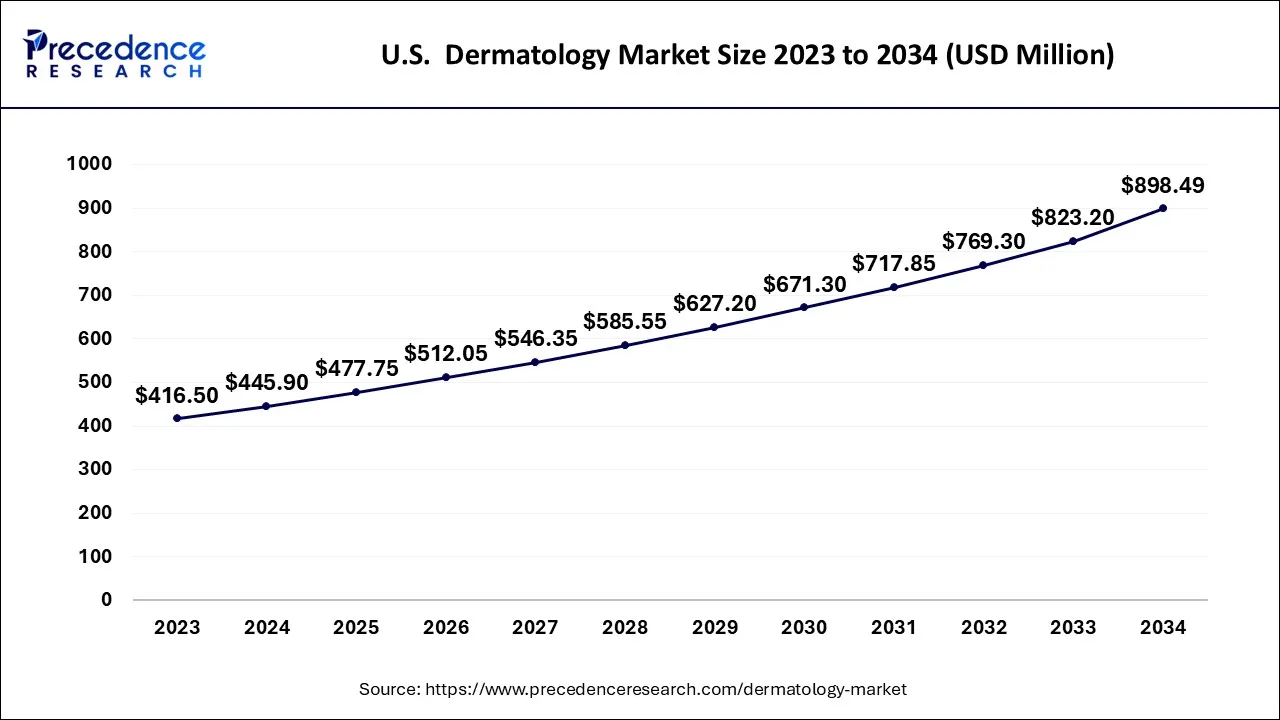
Rohan Patil, a Healthcare Industry Expert, highlights that the US dermatology market has reached USD 512.05 million in 2026 and is on track to reach USD 973.78 million by 2035, advancing at a CAGR of 7.38%. Key US dermatology market companies shaping the market include AbbVie Inc., Pfizer Inc., GSK plc, while major growth segments span type, application, end-use.
Source: https://www.precedenceresearch.com/us-dermatology-market
 Get a Sample
 Table Of Content


US Dermatology Market Size and Forecast 2026 to 2035
The US dermatology market size accounted for USD 477.75 million in 2025 and is predicted to increase from USD 512.05 million in 2026 to approximately USD 973.78 million by 2035, expanding at a CAGR of 7.38% from 2026 to 2035. The market is driven by the increasing prevalence of chronic skin diseases, growing awareness of skin health, and rising demand for minimally invasive cosmetic procedures.
Key Takeaways
- By type, the cosmetic dermatology segment dominated the market in 2025.
- By type, the surgical dermatology segment is expected to grow at the fastest CAGR during the forecast period.
- By application, the acne segment held the largest market share in 2025.
- By application, the psoriasis segment is projected to grow at the fastest CAGR between 2026 and 2035.
- By end-use, the skin clinics segment contributed the highest revenue share in 2025.
- By end-use, the hospitals segment is expected to register the fastest CAGR during the forecast period 2026 to 2035.
Market Overview
The U.S. dermatology market includes products, services, and technology used to diagnose, treat, and manage diseases of the skin, hair, and nails, as well as acne, psoriasis, eczema, skin cancer, and other cosmetically related conditions. This sector is growing steadily primarily because chronic conditions of the skin, on the rise, are generating greater interest in skin health and increased demand for aesthetics through minimally invasive methods.
Other elements contributing to the growth of this sector are access to innovative biologic treatments, lasers, and tele-dermatology platforms, and artificial intelligence (AI) to help with the diagnosis of conditions. The increasing number of elderly people, along with the rising incidence of skin cancer, has led to an increase in the number of researchers developing new drugs and improving existing devices used in dermatology, thereby expanding product opportunities available in the marketplace. Lastly, as there continues to be a large investment within the U.S. in research, there will be continued improvements in the overall health care delivery system for those needing dermatological services.
AI-Powered Precision: Transforming Dermatology Care in the U.S.
AI is revolutionizing the market by providing improved diagnostic accuracy, automation of clinical processes, and providing each patient with personalized treatment options. AI-powered image assessment tools enable dermatologists to detect skin cancers, acne, psoriasis, and additional skin diseases earlier than they could without AI. Therefore, through the early diagnosis of dermatological diseases, AI has improved patient outcomes.
The increasing adoption of tele-dermatology platforms integrated with AI has increased the availability of dermatological care services to those who live in less populated communities. Through ongoing advancements in machine learning algorithms and cloud-based technology used in healthcare, there has been an increase in the speed of decision-making and a reduction in diagnostic variances. The continued strong financial support of health care providers, technology companies, and research institutions accelerates the pace of innovation relative to the use of AI, which is driving efficiencies, accuracy, and growth within the market.
U.S. Dermatology Market Trends
- Among the countries in the world, the U.S. has the largest dermatology market due to its high incidence of skin diseases, increasing popularity of aesthetics, and its large use of advanced dermatologic treatments. The increase in awareness of skin health and the increase in preventive screening have continued to support the growth of the market in the U.S
- Skin cancer remains a serious issue in healthcare. According to the American Academy of Dermatology, skin cancer affects approximately 9500 people per day, highlighting demand for dermatology services and solutions for diagnosing and treating these conditions.
- The U.S. continues to make substantial investments in dermatologic research, with NIH-funded research programs continuing to actively fund dermatology and skin disease research. For example, in February 2026, Duke University's Department of Dermatology alone received $7.88 million in NIH grant funding in 2025, which indicates an ongoing trend supporting research in this area.
- The demand for dermatologic procedures is increasing as a result of an increased incidence of diseases such as acne, atopic dermatitis, psoriasis, and age-related conditions of the skin. The AAD has run a skin cancer screening initiative for over a decade, making more than 2 million skin cancer screenings, indicating how many dermatology services are accessed and used throughout the U.S.
Market Report Coverage and Key Metrics
| Report Coverage | Details |
| Market Size in 2025 | USD 477.75 Million |
| Market Size in 2026 | USD 512.05 Million |
| Market Size by 2035 | USD 973.78 Million |
| Growth Rate from 2026 to 2035 | CAGR of 7.38% |
| Base Year | 2025 |
| Forecast Period | 2026 to 2035 |
| Segments Covered | Type, Application, and End-Use |
Market Dynamics
Drivers
Rising Incidence of Skin Diseases
Rising rates of acne, eczema, psoriasis, rosacea, and skin cancer have become one of the primary drivers of growth within the U.S. dermatology marketplace. The rise in awareness of early diagnosis and the increased willingness of patients to access both medical and cosmetic dermatology services drive more people to seek professional care and advanced therapies.
Restraint
High Cost of Advanced Therapies
The high costs of biologic, laser, and aesthetic dermatology services (which may require a number of sessions or long-term treatment) pose a key restraint to growth. The need for many advanced therapies requires ongoing sessions, creating numerous affordability issues for patients, which in turn limits adoption among the millions of underinsured Americans in the U.S.
Opportunity
Growth of AI-Based Dermatology Solutions
AI and teledermatology solutions are poised for rapid and significant growth within the market. AI-assisted skin assessments, remote consultations, and digital diagnostic tools will provide enhanced access to care, lessen diagnostic delays, and improve therapeutic success rates in regions with limited access to healthcare, including rural areas.
Market Segmentation Analysis
Type Insights
Why the Cosmetic Dermatology Segment Dominated the U.S. Dermatology Market?
The cosmetic dermatology segment led the market in 2025, due to increased aesthetic awareness, an increase in demand for cosmetic skincare procedures that do not require surgery, improvements in the technology used for cosmetic procedures, and an increase in overall spending for cosmetics.
The surgical dermatology segment is expected to grow with the highest CAGR in the market during the studied years, due to increased prevalence of skin cancer, increased number of procedures to remove skin lesions, and continued growth of the use of less invasive forms of surgical dermatologic procedures within both hospitals and specialized dermatologic facilities.
Application Insights
Why Did the Acne Segment Dominate the U.S. Dermatology Market?
The acne segment generated the highest revenue share in 2025, due to the prevalence of acne in children and adolescents, the level of prescription medications, over-the-counter treatments, and numerous clinics for the treatment of acne and education regarding how to access a dermatologist at an earlier age are all driving the segment's growth.
The psoriasis segment is expected to expand rapidly in the market in the coming years, due to increasing prevalence of psoriasis, the introduction of new biologic treatments, expanding access to biologics, and the increasing number of patients receiving sufficient medical care.
End-Use Insights
How the Skin Clinics Segment Dominated the U.S. Dermatology Market?
The skin clinics segment accounted for the largest revenue share in 2025, due to the increased number of patients seeking specialized dermatology care, improved access for patients to be treated at outpatient facilities, increased volume of cosmetic procedures, and advanced diagnostic and therapeutic services offered through dedicated clinics.
The hospitals segment is expected to grow at the fastest CAGR during the forecast period, as more patients with complex skin diseases are being admitted to hospitals. Many hospitals are expanding their multidisciplinary team approach to treating skin diseases and are now utilizing advanced technology to treat their patients with dermatology-related issues. An increase in direct investment has led to extensive growth in hospitals' dermatology departments in their health care systems.
Market Competitive Landscape: Leading Companies and Strategies
The U.S. dermatology market is fragmented with moderate competition from pharmaceutical companies, dermatology clinics, medical device manufacturers, and specialty skincare providers. Competitive environment is driven by factors such as new product development, efficacy of treatment options, and approval of new drugs by regulatory bodies, as well as the number of patients being treated, providing moderate entry barriers for new entrants.
The current leaders in the market include AbbVie Inc., Johnson & Johnson, Galderma, and Pfizer. For these organizations, competitiveness is achieved through extensive product portfolios, R&D resources, and commercial presence throughout the country. Emerging biotechnology companies have begun to compete by developing focused therapies and new treatment options.
Factors that shape competition are related to new product launches, strategic alliances and acquisitions, and investments in biologics, teledermatology, and overall digital dermatology solutions. Significant barriers remain due to regulatory pressure and high costs associated with drug development. Advances in precision medicine and teledermatology will further drive competitive activity in the future.
US Dermatology Market Companies
- AbbVie Inc.
- Pfizer Inc.
- GSK plc
- LEO Pharma A/S
- Sun Pharmaceutical Industries Ltd
- Galderma S.A.
- Amgen Inc.
- DermBiont, Inc.
- Johnson & Johnson Services Inc.
- Roivant Sciences Ltd
Recent Developments U.S. Dermatology Market (2025-2026)
- In March 2026, Biogen reported positive Phase 2 AMETHYST trial results for litifilimab in cutaneous lupus erythematosus (CLE). The investigational BDCA2-targeting monoclonal antibody significantly reduced skin disease activity, reinforcing earlier findings and supporting its FDA Breakthrough Therapy Designation as a potential first targeted CLE treatment.(Source: https://investors.biogen.com)
- In May 2025, Elanco Animal Health announced the phased U.S. launch of Befrena (tirnovetmab), a novel anti-IL-31 monoclonal antibody for canine allergic and atopic dermatitis. The therapy provides itch control within 24 hours and offers 6–8 weeks of relief, expanding treatment options in the $1.3 billion U.S. canine dermatology industry.(Source: https://www.prnewswire.com)
Segments Covered in the Report
By Type
- Medical Dermatology
- Surgical Dermatology
- Pediatric Dermatology
- Cosmetic Dermatology
- Cutaneous Lymphoma
- Dermatoimmunology
- Others
By Application
- Acne
- Dermatitis
- Psoriasis
- Skin Cancer
- Rosacea
- Alopecia
- Others
By End-Use
- Hospitals
- Skin Clinics
- Others
For inquiries regarding discounts, bulk purchases, or customization requests, please contact us at sales@precedenceresearch.com
Frequently Asked Questions





Ask For Sample
No cookie-cutter, only authentic analysis – take the 1st step to become a Precedence Research client
 Get a Sample




 sales@precedenceresearch.com
 Schedule a Meeting
