



U.S. Nutraceuticals Market Size, Share and Trends 2026 to 2035
U.S. Nutraceuticals Market (By Type: Dietary Supplements, Functional Beverages, Functional Food, Personal Care; By Form: Tablets, Hard Capsules, Soft Capsules, Oil, Powder, Others; By Sales Channel: Offline, Online Retail Stores) - U.S. Industry Analysis, Size, Trends, Leading Companies, and Forecast 2026 to 2035
Source: https://www.precedenceresearch.com/us-nutraceuticals-market
 Get a Sample
 Table Of Content


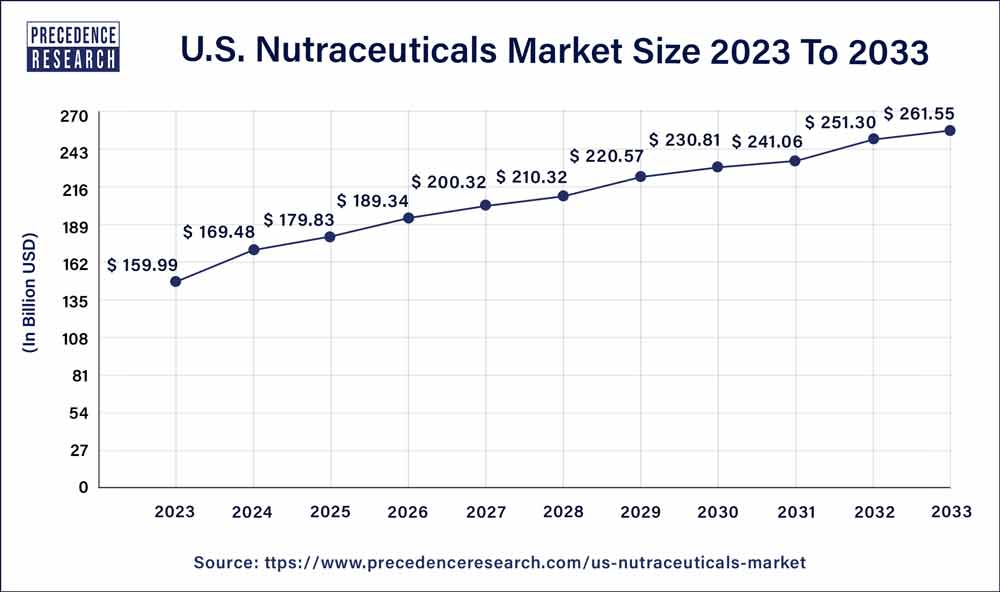
The U.S. nutraceuticals market size is accounted at USD 179.83 billion in 2025 and predicted to increase from USD 189.34 billion in 2026 to approximately USD 282.04 billion by 2035, representing a CAGR of 4.6% from 2026 to 2035. The U.S. nutraceuticals market is driven by the increasing need for preventative healthcare strategies and the growing prevalence of chronic diseases.
Key Takeaways
- By type, the functional food segment dominated the market in 2025.
- By type, the dietary supplements segment is observed to grow at a faster rate during the forecast period.
- By form, the tablets & soft gels segment dominated the U.S. nutraceuticals market in 2025.
- By sales channel, the offline segment dominated the market in 2025.
- By sales channel, the online segment is expected to witness the fastest rate of expansion during the forecast period.
U.S. Nutraceuticals Market Overview
The U.S. nutraceuticals market is experiencing strong growth, driven by increasing consumer focus on preventive healthcare, holistic wellness, technological advancements, product innovation, and the rapid expansion of e-commerce channels. Growing awareness of the link between nutrition and long-term health outcomes is encouraging consumers to adopt dietary supplements, functional foods, and other nutraceutical products as part of their daily wellness routines. Additionally, demographic trends such as an aging population and rising prevalence of chronic diseases are creating sustained demand for products that support immunity, metabolic health, cardiovascular wellness, and healthy aging.
Government initiatives aimed at improving public health are further supporting market expansion. The U.S. Food and Drug Administration (FDA) and other federal agencies are promoting greater transparency in food and nutrition, empowering consumers to make informed dietary choices and helping address diet-related chronic conditions. Similarly, updated nutrition recommendations from the U.S. Department of Health and Human Services emphasize reducing consumption of highly processed foods and added sugars while prioritizing fruits, vegetables, whole grains, healthy fats, and high-quality protein. These efforts are strengthening consumer interest in nutraceutical products that align with healthier dietary patterns and preventive health objectives.
Growth Factors
- An increasing emphasis on individualized nutrition and preventive healthcare drives demand for items targeting specific health issues.
- E-commerce platforms make products more easily accessible and convenient for customers, which increases sales.
- The pandemic's increased emphasis on immunity and general health could support growth.
- Nutraceuticals tailored to sports performance are in high demand due to growing interest in fitness and athletic performance.
- The use of nutraceuticals could be encouraged by government programs and insurance policies that support preventative care.
- Nutraceuticals are no exception to the consumer preference for natural, organic, and minimally processed goods.
- The market reach and credibility of nutraceutical companies can be increased by collaboration with medical professionals.
What are the Major Trends in the Market?
- Growing Demand for Personalized Nutrition: Consumers are increasingly seeking nutraceutical products tailored to their individual health goals, lifestyles, and nutritional needs. Advances in health monitoring technologies, genetic testing, and digital wellness platforms are enabling companies to offer customized supplement and nutrition solutions, driving demand for personalized products.
- Rising Popularity of Plant-Based and Clean-Label Products: Consumers are becoming more conscious about ingredient transparency and are favoring nutraceuticals made from natural, plant-based, and minimally processed ingredients. This trend is encouraging manufacturers to reformulate products with clean-label claims, free from artificial additives, preservatives, and synthetic ingredients.
- Expansion of Functional Foods and Beverages: Consumers are increasingly preferring to obtain health benefits through everyday foods and drinks rather than traditional supplements alone. As a result, demand is growing for functional products enriched with probiotics, protein, vitamins, minerals, and other bioactive ingredients that support immunity, digestive health, energy, and overall wellness.
How is AI Contributing to the Growth of the U.S. Nutraceuticals Market?
AI is transforming the nutraceuticals industry in the U.S. AI-enabled nutrition assessment tools have immense potential to assist consumers in identifying nutrient gaps early, building baseline intake, and prioritizing foundational nutrition, backed by healthcare professionals. AI is widely used to shorten R&D timelines, predict ingredient functionality, support faster responses to consumer needs, and optimize formulations. AI-based systems have been implemented in human nutritional interventions, and they greatly influence health outcomes.
AI-assisted nutrition tools are integrated into chronic disease management programs, specifically for type 2 diabetes, obesity, and metabolic syndrome. AI is embedded within supportive behavioral and policy frameworks. The nutraceuticals field is moving toward equitable, scalable, and impactful nutrition interventions globally.
U.S. Nutraceuticals Market Scope
| Report Coverage | Details |
| U.S. Market Size in 2025 | USD 179.83 Billion |
| U.S. Market Size in 2026 | USD 189.34 Billion |
| U.S. Market Size by 2035 | USD 282.04 Billion |
| Growth Rate from 2026 to 2035 | CAGR of 4.6% |
| Base Year | 2025 |
| Forecast Period | 2026 to 2035 |
| Segments Covered | By Type, By Form, and By Sales Channel |
U.S. Nutraceuticals Market Dynamics
Drivers
Rising demand for proactive health management
Nutraceuticals are becoming increasingly popular among consumers as a proactive approach to wellness as they become more conscious of the significance of preserving general health and preventing illnesses. These products promote multiple facets of health, including heart health, immunological function, and cognitive function, and offer preventive advantages.
Natural and plant-based products are becoming increasingly preferred by consumers over synthetic ones since they are considered safer and more sustainable. Herbs, botanicals, and plant extracts are natural sources of nutraceuticals that appeal to this trend and fit with consumer desires for holistic approaches to health and wellness. Thereby, the rising demand for proactive health management is observed to act as a driver for the U.S. nutraceuticals market.
Growing awareness of personalized nutrition
Personalized nutrition considers each person's particular nutritional requirements based on their genetics, way of life, and medical problems. The demand for customized nutraceutical goods is rising as people become more aware of the possible advantages of customizing their diets to meet their unique demands. This trend is encouraging businesses in the nutraceutical sector to create cutting-edge goods and services that meet each client's unique dietary needs and propel the market forward. Furthermore, technological developments like genetic testing and digital health platforms make it easier to customize nutrition, driving the growth of the U.S. nutraceuticals market.
Restraint
Insurance coverage and affordability
Nutraceuticals are generally not covered by health insurance plans, even though they are frequently regarded as a preventative measure or a supplement to conventional therapy. Customers' inability to pay out-of-pocket due to this lack of coverage restricts accessibility, particularly for those with limited funds or disposable income. Furthermore, affordability becomes a worry for many consumers when faced with expensive pricing for high-quality products, as nutraceuticals are often perceived as supplements rather than necessary drugs. Therefore, constraints to affordability and restricted insurance coverage prevent nutraceuticals from being widely adopted and accessed.
Opportunities
Focus on mental wellbeing
The connection between mental health and nutrition is becoming more widely recognized. There's been an increase in demand for nutraceuticals goods designed to address this requirement as consumers look for natural solutions to enhance their mental well-being. A more holistic approach to health is being adopted by consumers, who understand the connection between psychological and physical wellness. Nutraceutical businesses can benefit from this trend by providing goods that support mental health and general wellness.
Integration with digital health
Digital health platforms can provide individualized nutraceutical recommendations by analyzing personal health data, including genetics, lifestyle, and food habits. The items' efficacy and customer happiness increase with this customized strategy. Through subscription services, telemedicine consultations, and online marketplaces, digital platforms facilitate consumer access to nutraceuticals. Customers will find this improved accessibility handy and an extension of the market reach. Thereby, the integration of digital health platforms is observed to offer lucrative opportunities for the U.S. nutraceuticals market.
Segments Insight
Type Insights
How Did the Functional Food Segment Dominated the U.S. Nutraceuticals Market in 2025?
The functional food segment dominated the market with the largest share in 2025, owing to the growing consumer preference for pill-free wellness formats, a major shift toward preventive healthcare, and demand for clean-label and protein-dense staples. Consumers in the U.S. have shifted from traditional foods to wholesome foods, healthy fats, and high-quality animal and dairy proteins. This significantly bolstered segmental growth. With the rising demand for convenience and cost-effective options, consumers are opting for functional and protein-rich alternatives.
The dietary supplements segment is expected to grow at the fastest CAGR in the market during the forecast period, driven by a rapid shift toward preventive and proactive healthcare among consumers seeking to avoid lifestyle-related and chronic conditions. Consumers are actively choosing a proactive approach, focusing on immune and gut health, managing long-term health, and avoiding chronic lifestyle diseases such as obesity and diabetes. Moreover, a surge in personalized nutrition and rising wellness trends is also driving demand for dietary supplements.
Form Insights
What Made Tablets the Dominant Segment in the U.S. Nutraceuticals Market in 2025?
The tablets segment dominated the market in 2025, owing to their cost-effectiveness, long shelf life, and ease of manufacturing compared to other formats such as gummies, powders, and liquids. Consumers also favor tablets because they provide precise dosage, are convenient to store and transport, and are widely available across vitamins, minerals, and herbal supplement categories. Additionally, strong consumer familiarity with tablet-based supplements and their ability to accommodate a wide range of active ingredients have helped maintain their leading market position.
The powder segment is expected to grow at a significant rate in the market during the forecast period due to consumer preference for highly customizable delivery formats, surging demand for sports nutrition, and the rise of clean-label plant-based formulations. Powders offer greater flexibility in dosage customization and can incorporate higher concentrations of active ingredients than many traditional formats, making them particularly attractive to fitness enthusiasts and health-conscious consumers. Additionally, the rising popularity of functional beverages and convenient mix-and-drink formulations has further accelerated the adoption of powdered nutraceutical products across a wide range of health applications.
Sales Channel Insights
The Offline Segment Led the U.S. Nutraceuticals Market in 2025?
The offline segment dominated the U.S. nutraceuticals market in 2025, supported by the continued expansion of pharmacies, drug stores, specialty nutrition stores, and other retail outlets. Many consumers prefer purchasing nutraceutical products through offline channels because they can receive personalized recommendations from pharmacists, healthcare practitioners, and in-store specialists regarding supplement selection, metabolic health, and product safety. Additionally, immediate product availability and the trust associated with face-to-face professional guidance continue to strengthen the position of offline distribution channels.
The online segment is anticipated to grow at a notable rate in the market during the upcoming period due to increasing consumer preference for convenient purchasing options and subscription-based delivery services. E-commerce platforms are enhancing accessibility through auto-replenishment programs, personalized product recommendations, and competitive pricing, while advancements in logistics enable faster and more reliable deliveries. Furthermore, flexible subscription models help brands improve customer retention by offering discounts, seamless reordering, and recurring product deliveries, contributing to the rapid expansion of online nutraceutical sales.
State-Level Insights
California
California holds a leading position in the U.S. nutraceuticals market due to its large health-conscious population, strong presence of wellness-focused consumers, and concentration of nutraceutical manufacturers and innovation hubs. The state's demand is driven by growing adoption of plant-based supplements, functional foods, sports nutrition products, and personalized wellness solutions. California also benefits from a mature e-commerce ecosystem and high consumer spending on preventive healthcare and premium nutrition products.
Texas
Texas is emerging as one of the fastest-growing nutraceutical markets, driven by rapid population growth, increasing health awareness, and rising disposable incomes. Consumers are increasingly adopting dietary supplements, protein powders, sports nutrition products, and functional beverages to support active lifestyles and preventive health goals. The expansion of retail chains and online distribution channels is further strengthening market growth across the state.
New York
New York remains a major market due to its large urban consumer base and strong demand for premium, organic, and clean-label nutraceutical products. Consumers in the state are increasingly seeking functional foods, probiotics, personalized nutrition solutions, and wellness supplements that align with busy lifestyles and preventive healthcare practices. The presence of advanced healthcare facilities and strong retail penetration also supports market expansion.
Competitive Landscape
The U.S. nutraceuticals market is highly competitive and is characterized by the presence of global food and nutrition companies, specialized wellness brands, and major pharmaceutical manufacturers. Key market participants include Abbott Laboratories, Amway Corporation, Herbalife Ltd., Nestlé Health Science, Pfizer Inc., and Archer Daniels Midland. These companies are strengthening their market positions through investments in scientifically validated nutritional products, functional foods and beverages, clinical nutrition solutions, and direct-to-consumer distribution channels.
Several emerging trends are shaping the competitive landscape, including preventive self-care, healthy aging, personalized nutrition, and microbiome-based wellness solutions. Leading companies are increasingly investing in advanced bioactive ingredients, personalized supplement packs, traceable botanical sourcing, and targeted formulations designed to support immunity, digestive health, cognitive function, and active lifestyles. Furthermore, research and development efforts across the industry are focused on precision nutrition, women's health, healthy aging, gut microbiome science, plant-based ingredients, and next-generation functional nutrition products, creating new opportunities for innovation and market expansion.
Recent Developments
- In February 2026, at Expo West 2026, Morinaga Nutritional Foods planned to introduce key nutrition innovations in gut microbiome that translate science into scalable solutions for healthy aging. At this expo, nutraceutical, food, and beverage companies like Nexira and Now Health Group planned to launch the latest solutions in health and wellness.
U.S. Nutraceuticals Market Companies
- DSM
- Amway
- Pfizer Inc.
- Nestle
- Nature's Bounty
- General Mills Inc.
- Danone
- The Kraft Heinz Company
- The Hain Celestial Group, Inc.
- Tyson Foods
Segments Covered in the Report
By Type
- Dietary Supplements
- Vitamins
- Botanicals
- Minerals
- Proteins & Amino Acids
- Fibers & Specialty Carbohydrates
- Omega Fatty Acids
- Others
- Functional Beverages
- Energy Drinks
- Sports Drinks
- Functional Juices
- Others
- Functional Food
- Carotenoids
- Dietary Fibers
- Fatty Acids
- Minerals
- Prebiotics & Probiotics
- Vitamins
- Others
- Personal Care
By Form
- Tablets
- Hard Capsules
- Soft Capsules
- Oil
- Powder
- Others
By Sales Channel
- Offline
- Specialty Stores
- Supermarkets/Hypermarkets
- Convenience Stores
- Drug Stores/Pharmacies
- Online Retail Stores
For inquiries regarding discounts, bulk purchases, or customization requests, please contact us at sales@precedenceresearch.com
Frequently Asked Questions





Ask For Sample
No cookie-cutter, only authentic analysis – take the 1st step to become a Precedence Research client
 Get a Sample




 sales@precedenceresearch.com
 Schedule a Meeting
