



US Peptide Therapeutics Market Size, Companies, Share, Patient Volume, Treatment Adoption Rates, Pricing Analysis, Regulatory Landscape, Competitive Positioning, and Demand Forecast
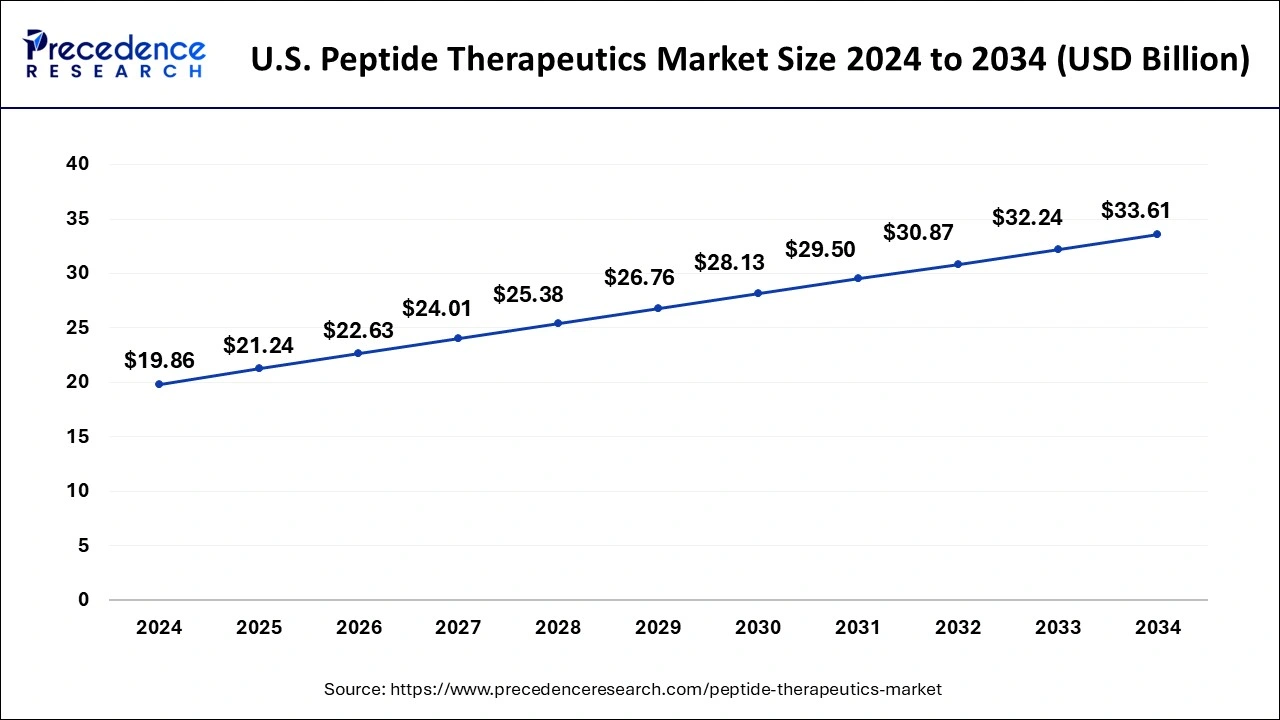
Rohan Patil, a Healthcare Industry Expert, highlights that the US peptide therapeutics market has reached USD 22.63 billion in 2026 and is on track to reach USD 34.98 billion by 2035, advancing at a CAGR of 5.12%. Key US peptide therapeutics market companies shaping the market include AbbVie, GlaxoSmithKline plc., Amgen, Inc., while major growth segments span application, type, route of administration, distribution channel, synthesis technology.
Source: https://www.precedenceresearch.com/us-peptide-therapeutics-market
 Get a Sample
 Table Of Content


US Peptide Therapeutics Market Size and Forecast 2026 to 2035
The US peptide therapeutics market size accounted for USD 21.24 billion in 2025 and is predicted to increase from USD 22.63 billion in 2026 to approximately USD 34.98 billion by 2035, expanding at a CAGR of 5.12% from 2026 to 2035. The market growth is attributed to rising obesity and diabetes prevalence, expanding peptide drug innovation, increasing GLP-1 therapy adoption, and growing investments in advanced peptide manufacturing technologies.
Key Takeaways
- By application, the metabolic disorder segment held the largest market share in 2025.
- By application, the gastrointestinal disorder segment is expected to expand with the highest CAGR during the forecast period.
- By type, the innovative segment held the largest share of the market in 2025.
- By type, the generic segment is expected to grow with a notable CAGR between 2026 and 2035.
- By route of administration, the parenteral segment held the highest share of the U.S. peptide therapeutics market in 2025.
- By route of administration, the oral segment is expected to grow with the highest CAGR during the forecast period.
- By distribution channel, the hospital pharmacies segment held the highest share of the market in 2025.
- By distribution channel, the online drug stores segment is expected to grow with the highest CAGR during the forecast period.
- By synthesis technology, the liquid phase peptide synthesis (LPPS) segment held the largest share of the market in 2025.
- By synthesis technology, the solid phase peptide synthesis (SPPS) segment is expected to grow with a significant CAGR between 2026 and 2035.
Market Overview
The U.S. peptide therapeutics market is driven by the rising prevalence of obesity, diabetes, and other chronic metabolic disorders. Peptide therapeutics are short chains of amino acids that resemble natural hormones and biological signalling molecules. These therapies allow the targeted treatment of diseases with increased efficacy and safety. Furthermore, the large population possibly encourages the utilization of innovative peptide therapeutics in the U.S. market.
Impact of Artificial Intelligence on the U.S. Peptide Therapeutics Industry
Artificial intelligence (AI) is reshaping the market by improving drug discovery and clinical development efficiency. AI models are used in companies to extract insights from vast, complex biological datasets and find potentially viable peptide candidates more quickly. Major biotech and drug companies are bringing machine learning to the design of peptides to create next-generation treatments for obesity, diabetes, cancer, and rare diseases.
Market Report Coverage and Key Metrics
| Report Coverage | Details |
| Market Size in 2025 | USD 21.24 Billion |
| Market Size in 2026 | USD 22.63 Billion |
| Market Size by 2035 | USD 34.98 Billion |
| Growth Rate from 2026 to 2035 | CAGR of 5.12% |
| Forecast Period | 2026 to 2035 |
| Segments Covered | Application, Type, Route of Administration, Distribution Channel and Synthesis Technology |
Market Dynamics
Drivers
Rising Prevalence of Obesity and Metabolic Disorders
The rising prevalence of obesity, type 2 diabetes, and related metabolic disorders is projected to accelerate demand for peptide-based therapies across the U.S. The use of peptide therapeutics, such as GLP-1 receptor agonists, has become a focus in the management of weight and glycemic control.
- According to the NIH, by 2025, approximately 36% of adults and 17% of children in the U.S. were estimated to be classified as obese.
Increased use of prescribed peptide medications in healthcare due to the targeted mechanism of action and safe and effective clinical response. The cost of obesity is coupled with the rising expenses for obesity-related complications, which are driving increased implementation of more sophisticated metabolic therapies.
Restraint
High Manufacturing Complexity and Production Costs
High manufacturing complexity and production costs are expected to hinder the market in the coming years. High raw material, quality control, and plant expansion prices put pressure on market players. Furthermore, the limited oral bioavailability of peptide drugs is anticipated to impede broader therapeutic adoption across several treatment areas.
Opportunity
Increasing Adoption of Advanced Drug Delivery Technologies
Increasing adoption of advanced drug delivery technologies is anticipated to improve accessibility and utilization of peptide-based medicines, thus creating immense opportunities for the players competing in the market. New technology platforms for oral delivery, sustained-release, and improved peptide stability are emerging in the development of new peptides. Furthermore, the surging investments in peptide drug research and development are likely to accelerate clinical innovation and pipeline expansion.
Market Segmentation Analysis
Application Insights
The Metabolic Disorder Segment Dominated the Market in 2025
The metabolic disorder segment dominated the U.S. peptide therapeutics market in 2025, as peptide-based therapies are gaining adoption in obesity, type 2 diabetes, and associated cardiometabolic indications.
- The CDC reported in 2026 that approximately 40.1 million people in the U.S. had been diagnosed with diabetes.
These GLP-1 receptor agonists and dual-action peptide therapies demonstrated promising weight loss and glycemic control benefits. They became an increasingly favored therapy option by healthcare providers. The segment benefited from rising prescription volumes across endocrinology clinics, primary care settings, and specialized metabolic disease centers.
The gastrointestinal disorder segment is expected to grow at the fastest CAGR from 2026 to 2035, due to increasing development of peptide-based treatments for inflammatory and functional digestive conditions. There is growing recognition in the medical field of the benefits that are achieved using targeted peptides, which can target disease mechanisms that are quite complicated.
Type Insights
The Innovative Segment Led the Market in 2025
The innovative segment led the U.S. peptide therapeutics market in 2025 due to the strong commercial adoption of branded peptide therapies across obesity, diabetes, endocrine disorders, and specialty disease indications. Furthermore, the increasing amount of clinical data and the increased confidence among physicians in the effectiveness of the results will thus fuel the segment growth in the coming years.
The generic segment is expected to show the fastest growth over the forecast period, driven by increasing demand for cost-effective peptide therapies across chronic disease treatment areas. The Association for Accessible Medicines reports that generic drugs were about 91% of the number of U.S. medications dispensed in 2025, reflecting high levels of physician and payer acceptance of this lower-cost option.
Route of Administration Insights
The Parenteral Segment Dominated the Market in 2025
The parenteral segment held the largest U.S. peptide therapeutics market share in 2025 due to the widespread use of injectable peptide therapies across metabolic, endocrine, oncology, and gastrointestinal indications. Injectable remained the preferred dosage option for healthcare professionals for its known bioavailability and dose-response in therapy. These factors propelled the segment to ensure its dominance in the peptide therapeutics landscape.
The oral segment is expected to gain the highest market share with a CAGR of XX% between 2026 and 2035, supported by advancements in peptide delivery technologies and formulation science. Healthcare providers and patients increasingly prefer oral therapies because they simplify treatment routines and reduce dependence on injections.
Distribution Channel Insights
The Hospital Segment Dominated the Market in 2025
The hospital segment dominated the U.S. peptide therapeutics market with a share in 2025 due to high utilization of peptide therapeutics in specialized treatment settings requiring clinical supervision and ongoing patient monitoring. Hospital systems also had plans for more obesity, diabetes, and specialty care programs, resulting in elevated demand for peptide medicines in the inpatient and outpatient areas.
The online drug stores segment is expected to grow at a significant CAGR between 2026 and 2035, driven by growing adoption of Digital Healthcare, alongside the rising preference of customers for convenient drug fulfillment services. The increase in the number of telehealth services reinforces this digital link between consultations and medicine distribution.
Synthesis Technology Insights
The Liquid Phase Peptide Synthesis (LPPS) Segment Dominated the Market in 2025
The liquid phase peptide synthesis (LPPS) segment dominated the U.S. peptide therapeutics market in 2025 due to the rising trend of utilizing cost-effective production methods for specific peptide molecules.
The solid phase peptide synthesis (SPPS) segment is expected to witness the fastest growth in the market over the forecast period, owing to the widespread commercial production of complex therapeutic peptides using highly efficient and scalable manufacturing processes.
U.S. Peptide Therapeutics Market: Country-Level Analysis
Why Is California Leading the U.S. Peptide Therapeutics Industry?
The market in California is growing due to its concentration of biotechnology companies, pharmaceutical innovators, peptide drug developers, and academic research institutions. Top firms, such as Amgen, Gilead Sciences, Genentech, Pfizer, Bristol Myers Squibb, and Neurocrine Biosciences, have a prominent presence in California. The state also supports a wide range of clinical trial activities, a high healthcare infrastructure, and good industry-academic linkage, thus facilitating California's position at the forefront of peptide therapeutics.
Why Is Massachusetts Emerging as the Fastest-Growing State in the U.S. Peptide Therapeutics Industry?
The market in Massachusetts is supported by its rapidly expanding biotechnology sector and outstanding concentration of pharmaceutical research. The Massachusetts Biotechnology Council (MassBio) has estimated that some USD 6.85 billion was raised in venture capital investments in Massachusetts in 2025. Major companies such as Novo Nordisk, AstraZeneca, Takeda Pharmaceutical Company, Pfizer, Sanofi, Roche, and Bristol Myers Squibb have extensive research programs across the state.
U.S. Peptide Therapeutics Market Value Chain Analysis
- Peptide Synthesis & API Manufacturing
Peptide active pharmaceutical ingredients are synthesized, purified, and tested under stringent quality standards.
Key Players: Bachem, PolyPeptide Group, CordenPharma, AmbioPharm, CPC Scientific.
- Drug Formulation & Fill-Finish Operations
Peptide APIs are formulated into injectable or oral dosage forms and packaged for commercial use.
Key Players: Catalent, Recipharm, Fujifilm Diosynth Biotechnologies, AGC Biologics.
- Distribution & Healthcare Delivery
Finished peptide therapeutics are distributed through specialty channels to hospitals, clinics, and pharmacies.
Key Players: McKesson Corporation, Cencora, Cardinal Health, CVS Health.
Market Competitive Landscape: Leading Companies and Strategies
The U.S. peptide therapeutics market is moderately consolidated, featuring global pharmaceutical companies and specialized biotechnology developers. Key players, such as Novo Nordisk, Eli Lilly and Company, Amgen, Takeda Pharmaceutical Company, Pharma Dynamics, AstraZeneca, Pfizer, and Novartis, have positioned themselves well in the peptide sector. They progressively have large clinical programs, broad peptide portfolios, and wide networks. Strategic licensing agreements and research collaborations continue to intensify competitive activity across the industry.
Innovation remains a major competitive factor across the peptide therapeutics ecosystem. Developing new drugs using computational biology, machine learning, structural models, and biomarker–based development strategies is becoming more common among market participants. This speeds up the discovery of new drugs and increases the success rate of clinical trials. Increasing links between the pharmaceutical sector and academic research institutions and ongoing investment in obesity and metabolic disease therapeutics also contribute to the competitiveness of the US market.
U.S. Peptide Therapeutics Market Companies
- AbbVie and GlaxoSmithKline plc.
- Amgen, Inc.
- AstraZeneca plc
- Eli Lilly and Company
- Pfizer, Inc.
Recent Development U.S. Peptide Therapeutics Market (2025-2026)
- In June 2026, LG AI Research partnered with D&D Pharmatech to accelerate the development of oral peptide therapeutics. The collaboration combines artificial intelligence for drug discovery with D&D's peptide development expertise to create treatments for unmet medical needs, optimizing candidate molecules for safety, efficacy, and oral bioavailability.(Source: https://www.biopharminternational.com)
Segments Covered in the Report
By Application
- Gastrointestinal Disorder
- Metabolic Disorder
- Neurological Disorder
- Cancer
- Others
By Type
- Generic
- Innovative
By Route of Administration
- Oral
- Parenteral
- Pulmonary
- Mucosal
- Others
By Distribution Channel
- Hospital Pharmacies
- Retail Pharmacies
- Online Drug Stores
By Synthesis Technology
- Solid Phase Peptide Synthesis (SPPS)
- Liquid Phase Peptide Synthesis (LPPS)
- Hybrid Technology
For inquiries regarding discounts, bulk purchases, or customization requests, please contact us at sales@precedenceresearch.com
Frequently Asked Questions





Ask For Sample
No cookie-cutter, only authentic analysis – take the 1st step to become a Precedence Research client
 Get a Sample




 sales@precedenceresearch.com
 Schedule a Meeting
